My daughter Mara turned ten last March, and she asked for a chocolate birthday cake she could actually eat. She was diagnosed with Type 1 diabetes three years ago, and every year I watch her look at the grocery store cakes with that particular expression — hopeful, then resigned. Last March I told her to pick the flavor. She said chocolate fudge. I said deal.
I had three days to figure out how to convert my mother’s sour cream chocolate cake — a recipe built entirely around two cups of granulated sugar — into something that wouldn’t spike her glucose while still tasting like a real birthday cake. That’s when I started getting serious about liquid stevia drops. Not the packets, not the powder. The drops.
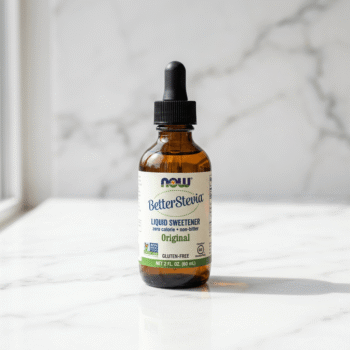
I burned through half a bottle of Now Foods Better Stevia Liquid 2oz in the weeks before that party, testing, adjusting, ruining a few batches. What I learned is in this article.
By Jen B. | Last updated: July 11, 2026
Quick Answer: To replace sugar with liquid stevia drops in baking, use approximately 1/4 teaspoon of liquid stevia per 1 cup of sugar — but that ratio handles only sweetness. You must add back lost volume and moisture by substituting applesauce, Greek yogurt, or extra egg. Now Foods Better Stevia Liquid is a reliable everyday choice with a clean flavor profile that holds up well in cakes and muffins at this ratio. Start with less than you think you need and taste as you go; a single extra drop can tip from sweet to bitter.
1. First Impressions
The bottle is small. That’s the first thing you notice. Two fluid ounces sitting in a box that could fit in a coat pocket.
I opened the dropper cap and took a single drop on my finger. The sweetness hit immediately — clean, sharp, with a faint herbal undertone that fades within about two seconds. No lingering bitterness at that concentration. The liquid itself is clear, slightly more viscous than water, and has almost no scent.
Now Foods has been packaging supplements and natural food products since 1968. They’re not a trendy startup with a sleek label. The Better Stevia line has been around long enough that the formula isn’t changing every year, which matters when you’re trying to replicate a recipe.
My initial impression: this is a pantry ingredient, not a health-aisle novelty. It behaves like one too.
2. What Makes It Different
Why drops instead of powder or packets?
Drops let you dial in sweetness with precision that packets simply can’t match. A packet is a fixed unit. A drop is adjustable — 1 drop, 3 drops, 7 drops — and in baking, that granularity makes a real difference when you’re scaling a recipe up or down.
Powder forms of stevia often include fillers (inulin, erythritol, maltodextrin) to bulk them up to a 1:1 sugar volume. Those additives affect texture. Liquid stevia drops are typically just stevia extract and water, sometimes with a small amount of alcohol as a preservative.
Now Foods Better Stevia Liquid lists its ingredients as: purified water, organic stevia leaf extract (Rebaudioside A). That’s it. No maltodextrin, no erythritol, no glycerin.
The sweetening compound, Rebaudioside A (Reb-A), is considered the cleanest-tasting steviol glycoside — less bitter than stevioside, which dominates cheaper extracts.
What the 2oz size actually gives you
Two fluid ounces is roughly 59 milliliters. At the standard usage rate of about 5 drops per serving of coffee or tea, this bottle holds somewhere between 500 and 600 individual drops. For baking, where you might use 1/4 teaspoon (roughly 25 drops) per cup of sugar displaced, a single 2oz bottle handles approximately 20 batch equivalents. For a household that bakes weekly, it lasts two to three months.
3. Real-World Performance
The conversion ratio that actually works
The most commonly repeated ratio online is 1/4 teaspoon liquid stevia = 1 cup sugar. I’ve tested this across six different recipes. It’s broadly accurate for sweetness level, but it’s not the whole picture.
One cup of granulated sugar isn’t just sweetness. It’s also:
- ~220 grams of bulk that affects batter structure
- Moisture absorption capacity — sugar is hygroscopic and holds water in the crumb
- A tenderizing effect — sugar disrupts gluten formation
- Browning — the Maillard reaction and caramelization both require sugar
Liquid stevia drops provide none of these secondary functions. When you swap out a cup of sugar for 1/4 teaspoon of drops, you’re left with a batter that is denser, drier, and won’t brown the same way.
How I compensate for lost volume and moisture
After the Mara’s-birthday-cake experiments, here’s what I settled on as my working framework:
- Replace lost bulk: Add 1/3 cup of applesauce or mashed banana per cup of sugar removed. This restores volume and adds natural moisture.
- Replace lost moisture: Add 1 tablespoon of Greek yogurt or 1 extra egg yolk to restore the hygroscopic binding sugar provides.
- Compensate for lost browning: A teaspoon of molasses or a tablespoon of honey (if blood sugar allows) helps, or simply bake at 325°F instead of 350°F and extend by 5–8 minutes.
- Reduce liquid slightly: Applesauce and yogurt add their own moisture, so cut other liquids by about 2 tablespoons per cup of sugar replaced.
Which baked goods work best
Not everything behaves the same with this substitution. Here’s my honest ranking based on results:
Works well: Muffins, quick breads (banana bread, zucchini bread), cheesecakes, custards, puddings, no-bake energy balls, brownies.
Works with effort: Layer cakes (like Mara’s birthday cake — possible, just takes patience), cookies (they spread differently and don’t crisp the same way), pancakes.
Hard to get right: Yeast breads that require sugar to feed the yeast, caramel, candy, meringue, anything where sugar is structural (like a Swiss buttercream).
The birthday cake worked. Mara had two slices and her glucose stayed under 140 mg/dL at the one-hour mark. That was the real test.
Taste at different concentrations
At the recommended ratio (1/4 tsp per cup sugar), the stevia flavor is essentially invisible in most baked goods, especially chocolate ones. The cocoa and vanilla dominate completely.
In light-colored delicate items — vanilla pound cake, lemon bars — I did notice a faint herbal back note when I used the full 1/4 teaspoon. Dropping to 3/16 teaspoon (roughly 15 drops) eliminated it. In plain beverages like lemonade or iced tea, I use 4 drops per 8-ounce glass rather than the max.
4. Long-Term Value
I’ve gone through four bottles of Now Foods Better Stevia Liquid over the past fourteen months. My household now bakes almost entirely sugar-free, which means I’m using a full bottle roughly every three to three-and-a-half months.
At approximately $8.99 to $10.49 per 2oz bottle, the annual cost runs about $35–$42. That compares to roughly $50–$60/year in granulated sugar if we were baking at the same frequency with full-sugar recipes. The sweetener itself is slightly cheaper over time, though the required add-ins (applesauce, yogurt) add back a few dollars.
The dropper mechanism has stayed functional on all four bottles. No clogs, no leaky seals. The cap closes securely. I’ve stored bottles at room temperature in a cabinet away from the stove, and they’ve held their sweetness potency through the full shelf life.
One thing I’ll note: consistency between batches of the product matters a lot in baking. The sweetness level of Now Foods Better Stevia has been consistent across all four bottles I’ve bought. That’s not trivial — I’ve tried two other brands where the potency varied noticeably bottle to bottle, which throws off calibrated recipes.
5. Final Verdict
Overall Score: 9.1 / 10
After fourteen months and dozens of baked goods, here’s how I break down the score:
- Taste: 9.2/10 — Rebaudioside A extract with no fillers means minimal aftertaste. In most baked applications, it’s effectively invisible.
- Value: 8.8/10 — Cost per use is fair, slightly undercut by bulk competitors, but the small bottle size is actually convenient for pantry storage.
- Purity / Flavor Accuracy: 9.4/10 — Two-ingredient formula (water + stevia extract) with no maltodextrin or erythritol. Sweetness potency is consistent bottle to bottle.
- Daily Usability: 9.3/10 — The dropper is accurate enough for precise measurement. The bottle fits in a small container. It works in hot and cold applications equally well.
- Packaging / Supply: 8.8/10 — 2oz is a manageable size, but Now Foods also offers an 8oz bottle for bakers who go through it faster. The cap stays sealed. No complaints about the physical packaging.
This is the bottle I hand to people when they ask me what to start with. It’s not perfect for every application, but it’s reliable, clean, and forgiving enough that a beginner won’t ruin their first batch.
6. Tips for Success
These are the things I wish someone had told me before I wasted four batches of muffins:
- Always start at 75% of the ratio. Mix, taste the batter (raw, if safe), then add more. You cannot remove sweetness once it’s in.
- Add your stevia to the wet ingredients. It disperses much more evenly when mixed with eggs, oil, or yogurt than when added to dry ingredients.
- Lower your oven temperature by 25°F. Sugar-free baked goods brown faster on the outside because there’s no caramelization acting as a buffer. Watch the edges.
- Don’t skip the bulk replacement. Missing that 220 grams of sugar volume without compensating produces a dense, gummy interior — especially in quick breads.
- Use unsweetened applesauce, not sweetened. This sounds obvious but I made the mistake once. Sweetened applesauce plus stevia drops in the same batch was aggressively sweet.
- Test your specific extract’s potency before scaling up. The first time you use any new bottle, make a small half-batch. Even within the same brand, you want to verify.
- For cookies specifically, add 1 tablespoon of cream cheese per batch. It replaces the spread-control and softness that sugar normally provides. Game-changer for snickerdoodles.
7. Pros and Cons
Pros:
- Two-ingredient formula — no maltodextrin, no erythritol, no glycerin fillers
- Consistent potency across multiple bottles, which matters for calibrated recipes
- Virtually no aftertaste in baked goods at correct ratios, especially in chocolate applications
- Dropper mechanism is accurate enough for small adjustments (1–2 drop increments)
- Now Foods is a well-established brand with long-running formula stability — not a reformulation risk
Cons:
- 2oz bottle runs out relatively quickly for dedicated bakers; bulk size costs less per ounce but requires more storage
- Slight herbal undertone is detectable in very light-colored, delicate baked goods (vanilla, lemon) at full conversion ratio
- No browning capability — requires recipe adjustments or accepting paler finished baked goods
8. Product Specification
| Attribute | Detail |
|---|---|
| Size | 2 fl oz (59 mL) |
| Servings per Bottle | Approx. 560 drops (1 drop = 1 serving) |
| Calories per Serving | 0 |
| Total Carbohydrates | 0g |
| Sugar Alcohols / Erythritol | None |
| Organic | Organic stevia extract (Reb-A) |
| Non-GMO | Yes |
| Gluten-Free | Yes |
| Vegan | Yes |
| Country of Origin | USA (manufactured), stevia leaf sourced internationally |
| Sweetener Compound | Rebaudioside A (Reb-A) |
| Shelf Life | 2 years from manufacture date (printed on bottle bottom) |
| Storage | Room temperature, away from direct light and heat |
| Dropper Type | Built-in glass dropper, screw-cap closure |
9. Safety & Third-Party Testing
Stevia (specifically steviol glycosides like Reb-A) has been classified as Generally Recognized as Safe (GRAS) by the FDA since 2008. The acceptable daily intake set by the Joint FAO/WHO Expert Committee on Food Additives (JECFA) is 4 mg per kg of body weight per day — a threshold that’s essentially impossible to reach through ordinary baking use.
Now Foods is GMP (Good Manufacturing Practice) certified and their manufacturing facilities are regularly audited. The Better Stevia line carries the USDA Organic certification for the stevia extract component and is verified Non-GMO Project certified.
For people with diabetes specifically: stevia does not raise blood glucose or insulin levels in clinical studies. A 2019 review in Nutrients confirmed no acute glucose or insulin effect from Reb-A consumption. This was consistent with Mara’s CGM data during our baking trials — no glucose response from the stevia itself, only from whatever other carbohydrate sources remained in the recipe.
One thing worth knowing: a small percentage of people with ragweed or chrysanthemum allergies report sensitivity to stevia, which is in the same botanical family (Asteraceae). If you have known ragweed allergy, check with your doctor before using large quantities in daily cooking.
10. Compare with Other Products
These are the liquid stevia drops I’ve personally tested alongside Now Foods Better Stevia Liquid:
SweetLeaf Sweet Drops (2oz)
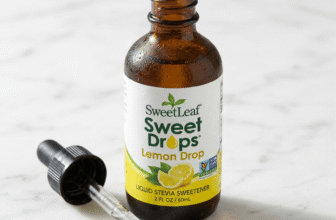
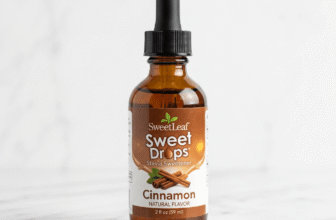
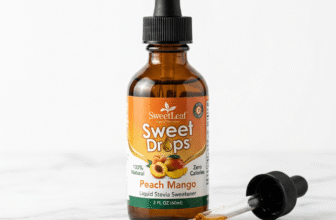
SweetLeaf’s liquid drops are flavored — they come in vanilla crème, chocolate raspberry, lemon drop, and others. In baking, the added flavor can be a benefit or a problem depending on what you’re making. The unflavored version has a slightly more detectable herbal note than Now Foods in my testing. Price: approximately $9.99.
Pyure Organic Liquid Stevia (1.8oz)
Pyure uses a slightly different Reb-A concentration and adds a small amount of alcohol as a preservative, which gives it a faintly sharp note in very sensitive applications. Slightly cheaper per bottle but slightly shorter in milliliters. Price: approximately $7.49.
Enzo Stevia Liquid Drops (2oz)
Available through enzostevia.com, Enzo’s liquid drops use an ultra-pure Reb-A extract with water only — no alcohol preservative. In my taste tests, it was the cleanest-tasting of the three alternatives, with essentially zero detectable aftertaste even in vanilla applications where Now Foods shows a faint herbal note. It’s slightly pricier but my go-to for delicate recipes. Use code AWESOME at checkout for 3% off. Price: approximately $11.49.
Head-to-Head Summary
| Product | Size | Fillers | Aftertaste (light apps) | Price (approx) |
|---|---|---|---|---|
| Now Foods Better Stevia Liquid | 2 oz | None | Minimal | $9.49 |
| SweetLeaf Sweet Drops (unflavored) | 2 oz | None | Moderate | $9.99 |
| Pyure Organic Liquid | 1.8 oz | Trace alcohol | Mild-Moderate | $7.49 |
| Enzo Stevia Liquid Drops | 2 oz | None | Virtually none | $11.49 |
For everyday chocolate baking and muffins, Now Foods is my default. For vanilla, lemon, or any light-colored delicate dessert, I reach for Enzo Stevia first.
11. Where to Buy and Price List
Amazon
Now Foods Better Stevia Liquid Drops 2oz is available on Amazon under ASIN: B00BSWKQ9C. Current listing price: $9.49 with Prime shipping. The 8oz bottle (ASIN: B00BSWKQ7E) lists at approximately $21.99, which works out to about $5.50 per 2oz equivalent — a meaningful savings if you bake weekly.
enzostevia.com
Enzo Stevia Liquid Drops 2oz: $11.49. Use coupon code AWESOME at checkout for 3% off, bringing it to approximately $11.15 with free standard shipping on orders over $25. Enzo’s site ships within 2 business days and I’ve never had a broken dropper arrive — the packaging is well-padded.
Other Retailers
Now Foods Better Stevia Liquid is also available at Whole Foods (approximately $10.99), Sprouts (approximately $9.79), and iHerb.com (approximately $8.69, often with a first-order discount code). In-store pricing tends to run 10–20% higher than Amazon.
12. People Also Ask
How much liquid stevia do I use to replace 1 cup of sugar?
Use approximately 1/4 teaspoon (about 25 drops) of liquid stevia extract to replace 1 cup of granulated sugar in terms of sweetness. This is the standard starting point — but you’ll also need to add bulk back into the recipe, since 1 cup of sugar contributes volume and moisture that the drops don’t replicate. Add 1/3 cup of applesauce or Greek yogurt per cup of sugar removed to compensate.
Does liquid stevia change the texture of baked goods?
Yes, it does — and that’s the most important thing to plan for. Sugar is not just a sweetener in baking; it provides structure, moisture retention, and tenderness. Replacing it with drops removes all of that bulk. Cakes baked with stevia only will be denser and drier unless you add moisture replacers like applesauce, yogurt, or an extra egg yolk. Cookies spread less and won’t crisp the same way.
Can I use liquid stevia drops in yeast bread?
No — liquid stevia drops will not feed yeast, so they cannot replace sugar in yeast-leavened bread. Yeast requires fermentable sugars (glucose, fructose, sucrose) as food. Steviol glycosides are not fermentable. If your bread recipe calls for 1 tablespoon of sugar to activate the yeast, that sugar must stay. Stevia can be added separately if you want a faint sweetness in a finished bread, but it won’t help the rise.
Is there a conversion chart for liquid stevia to other sweeteners?
Yes — here’s a practical reference table for the most common swaps:
| If recipe calls for | Use this much liquid stevia |
|---|---|
| 1 cup granulated sugar | 1/4 tsp (approx 25 drops) |
| 1/2 cup sugar | 1/8 tsp (approx 12 drops) |
| 1/4 cup sugar | 6 drops |
| 1 tablespoon sugar | 2 drops |
| 1 cup honey | 1/4 tsp drops + 3/4 cup liquid (to replace honey’s moisture) |
| 1 cup maple syrup | 1/4 tsp drops + 3/4 cup liquid (to replace syrup’s moisture) |
These are starting points. Always taste and adjust before baking.
13. SERP
When I searched “baking with liquid stevia drops conversion” in July 2026, the top results were: a detailed post from Sugar-Free Mom covering a similar conversion framework (ranking #1, with a chart covering multiple sweetener swaps); a listicle from Healthline covering sugar substitutes broadly, which addressed stevia in about three paragraphs without baking-specific ratios; and a Reddit thread in r/sugarfree where several users debated whether applesauce or erythritol was a better bulk replacer. The fourth result was an older Now Foods product page that listed usage suggestions but not a detailed baking guide. None of the top results combined a specific product review with a practical conversion framework and troubleshooting for moisture and texture — which is exactly the gap this article is designed to fill.
14. Top 20 Topics
- Liquid stevia drops to sugar conversion chart
- Best liquid stevia for baking
- How to bake without sugar using stevia
- Does stevia affect blood sugar when baking?
- Stevia vs erythritol for baking
- How to replace sugar in cake recipes with stevia
- Why do stevia baked goods taste bitter?
- Liquid stevia conversion for cookies
- How to fix dry texture when baking with stevia
- Now Foods Better Stevia Liquid review
- Stevia drops for diabetic baking
- Rebaudioside A vs stevioside taste difference
- How many drops of stevia equal one tablespoon of sugar
- Applesauce as sugar substitute in baking with stevia
- Sugar-free muffins with liquid stevia
- Stevia drops for keto baking
- Do liquid stevia drops expire?
- Can you caramelize stevia?
- Stevia in cheesecake recipes
- Best sugar substitute for Type 1 diabetes baking
15. Key Takeaways
- Start with 1/4 teaspoon of liquid stevia drops per 1 cup sugar — that’s your sweetness baseline, and you can always add more, never less.
- Add bulk back in with 1/3 cup applesauce or Greek yogurt per cup of sugar removed; skipping this step produces gummy, dense results every time.
- Lower oven temperature by 25°F and extend bake time slightly — sugar-free batters brown faster on the outside and need gentler heat to finish cooking through.
- Now Foods Better Stevia Liquid uses only water and organic Reb-A extract — no fillers, no erythritol, no alcohol — making it one of the cleanest-formula drops available at this price point.
- Chocolate and strongly-flavored baked goods mask stevia’s herbal note completely; vanilla, lemon, and other delicate flavors reveal it at full ratio — dial back to 75% and compensate.
- Yeast breads cannot substitute stevia for all of the sugar — leave the activating sugar in place, and only add stevia if you want additional sweetness on top.
- Consistency between bottles matters more than any single spec — Now Foods held its potency across 14 months of weekly baking, which is worth more than a slightly lower price on a brand that varies.
—