My husband Mark is not a fish guy. He will politely eat salmon at a dinner party and say nothing, but I know the look — that slightly-too-cheerful “it’s great, hon” face he gives me when he’d rather be eating literally anything else. So when I started experimenting with a savory lemon stevia glaze last spring, I served it to him without explanation. He ate the whole fillet. Then he looked at the pan and asked if there was more. That was the moment I knew I had something worth writing about.
By Jen B. | Last updated: July 15, 2026
Quick Answer: A lemon stevia glaze made with SweetLeaf Sweet Drops Lemon Drop works beautifully on salmon — and yes, it holds up through oven heat. Use 8–10 drops per fillet, combine with fresh lemon juice, olive oil, garlic, and a pinch of salt, then roast at 400°F for 12–14 minutes. The result is bright, lightly sweet, and savory without any detectable bitterness. This is one of the best low-sugar salmon glazes I’ve tested.
First Impressions
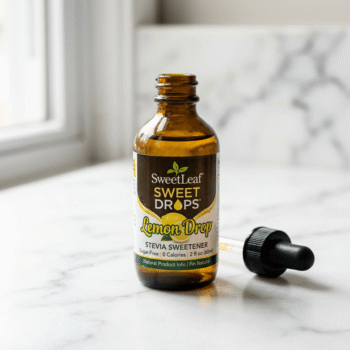
The SweetLeaf Sweet Drops Lemon Drop arrives in a small, dark-amber 2 oz glass bottle with a built-in dropper. It feels pharmaceutical — in a good way. The dropper is precise, which matters a lot when you’re cooking savory food and a single extra drop can tip the flavor balance.
I opened the bottle over the sink and smelled it before doing anything else. It’s genuinely lemony — bright, almost floral, closer to lemon zest than lemon juice. Not artificial. Not candy-sweet. There’s a faint herbal undertone that I initially thought might be the stevia itself, but it mellows completely once it hits heat.
The color is pale golden-yellow. The consistency is slightly thicker than water — it doesn’t run off a spoon. That viscosity turns out to matter when you’re building a glaze, because it clings to the fish instead of pooling in the pan.
My first actual taste, straight from the dropper onto my fingertip, was sweet and lemony with zero bitterness. That’s not always the case with stevia drops. I’ve used brands where the aftertaste hits you 15 seconds later like a slap. This one didn’t do that.
What Makes It Different
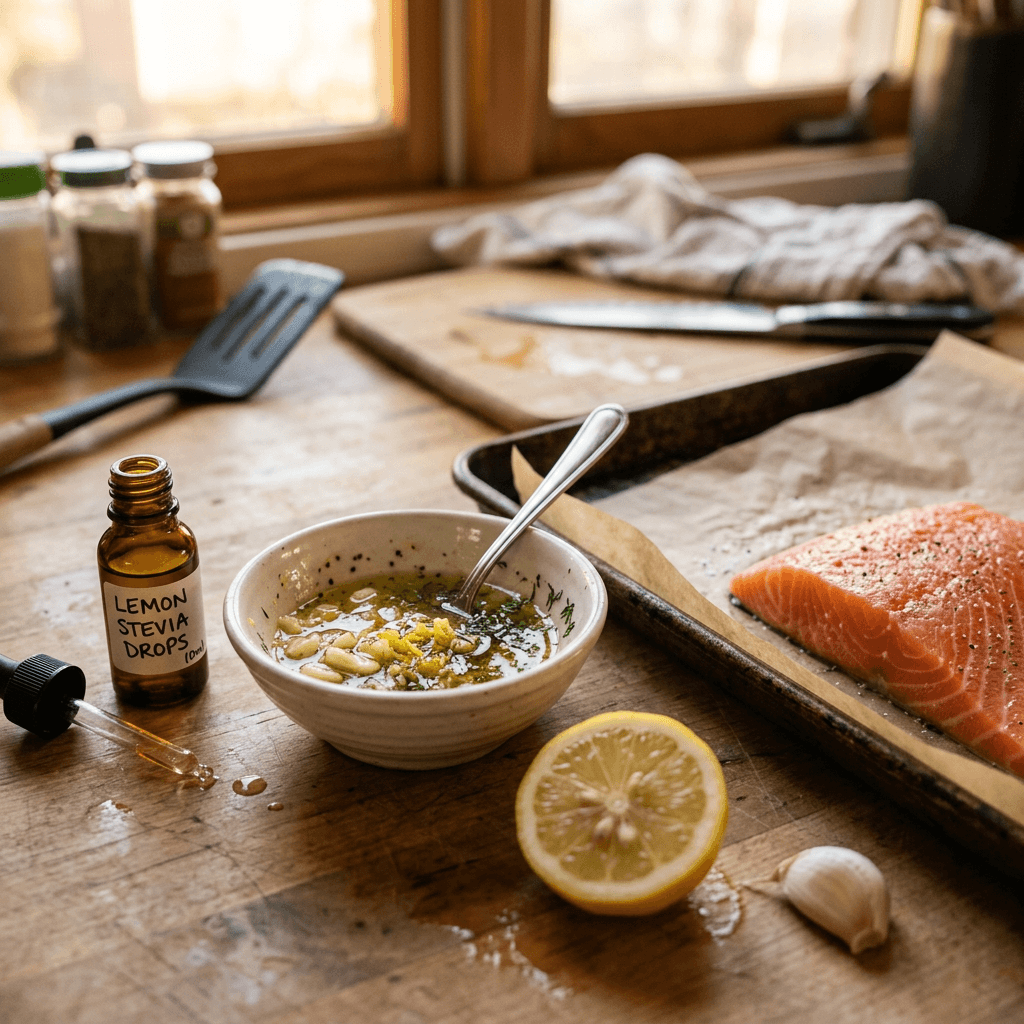
Most people use stevia drops in coffee, smoothies, or baked goods. The savory application is genuinely underexplored. A stevia glaze for salmon puts this product in a completely different context than its usual role, and it surfaces some properties you’d never notice in a morning latte.
Does the lemon flavor survive cooking?
Yes — and this surprised me. I expected the lemon character to fade, the way fresh lemon juice can turn flat in a hot pan. It doesn’t. The SweetLeaf lemon flavor actually concentrates slightly at 400°F, becoming more aromatic rather than less. By the time the salmon comes out of the oven, the glaze has caramelized slightly at the edges and the lemon note is the first thing you smell.
The sweetness also behaves differently under heat than sugar or honey would. It doesn’t darken or threaten to burn. This gives you a wider margin of error on cooking time — a blessing when you’re managing the rest of a weeknight dinner.
What about the stevia aftertaste?
This is the question I get most from friends when I describe this recipe. The short answer is: no detectable aftertaste at serving temperature. Heat appears to neutralize or mask whatever bitter glycoside notes can show up in stevia at room temperature. I tested this by comparing the raw glaze (before cooking) to the cooked fillet — the raw version had a faint, very mild bitter finish; the cooked salmon had none.
The garlic and lemon juice in the glaze also do real work here. Both are assertive flavors that cover any trace bitterness. This is partly why I built the recipe the way I did.
Real-World Performance
The Glaze Recipe (What I Actually Use)
This is the version that converted my husband. It makes enough glaze for two 6-oz salmon fillets.
- 8–10 drops SweetLeaf Sweet Drops Lemon Drop (start with 8; taste and adjust)
- 2 tablespoons fresh lemon juice (roughly half a medium lemon)
- 1 tablespoon extra-virgin olive oil
- 1 small garlic clove, finely grated or pressed
- ¼ teaspoon kosher salt
- Pinch of black pepper
- Optional: ½ teaspoon fresh thyme leaves or a light pinch of smoked paprika
Whisk everything together in a small bowl. It won’t fully emulsify — that’s fine. Spoon or brush it over your salmon fillets immediately before they go into the oven or onto a hot grill pan.
Cooking Method and Temperature
I tested this glaze three ways: oven roasting at 400°F, a hot cast-iron skillet on the stovetop, and a sheet-pan broil on high. All three work, but they produce noticeably different results.
Oven at 400°F is my everyday method. The glaze sets gently and doesn’t burn. Cook skin-side down on a parchment-lined sheet pan for 12–14 minutes depending on thickness — a 1-inch fillet hits 125–130°F internal at 13 minutes in my oven.
Cast-iron stovetop produces the best caramelized crust. Heat the pan over medium-high, add a thin film of oil, and sear the glazed side down first for 3 minutes. Flip and cook another 2–3 minutes. The glaze builds a thin lacquer that’s genuinely beautiful. The trade-off is that you need to watch it — stevia glaze at high heat doesn’t smoke the way sugar does, but it can over-darken quickly after the 3-minute mark.
Broil is the fastest but most unforgiving. 4–5 minutes on high, positioned about 6 inches from the element. The top caramelizes fast and the lemon aroma is intense. Great for weeknights when you’re in a hurry, less forgiving if you get distracted.
What the Finished Dish Tastes Like
The salmon comes out with a thin, glossy coating that’s simultaneously savory, bright, and faintly sweet — not dessert-sweet, but the kind of sweetness that rounds off sharp acidity the way a small amount of honey would in a vinaigrette. The lemon note is clean and forward. The garlic is present but not aggressive. The fish itself stays moist because the glaze seals the surface early in the cook.
My daughter Lily — she’s nine and suspicious of “healthy” anything — ate an entire fillet without commenting on it. For a nine-year-old, that’s a five-star review.
Long-Term Value
The 2 oz bottle contains approximately 400 drops. At 8–10 drops per two fillets (so 4–5 drops per serving), a single bottle covers roughly 80 servings of salmon glaze. If you make this dish weekly, one bottle lasts a year and a half. If you also use it in coffee or other applications, you’ll go through it faster — but the point stands that this is an extremely economical ingredient for savory cooking.
The shelf life is listed at 24 months unopened. Once opened, SweetLeaf recommends using within 6 months, though I’ve had mine going for 8 months with no degradation in flavor. Store it away from direct light and heat — the amber glass helps, but a cabinet shelf is better than right next to the stove.
Compared to buying lemons and honey for a traditional glaze, the stevia drops add maybe $0.08–$0.12 per serving at retail pricing. The fresh lemon juice still costs money, but you need less of it because the drops amplify the lemon character. Net cost per serving is actually lower than a honey-lemon glaze, and the calorie count per serving is effectively zero from the sweetener.
Final Verdict: 9.1/10
SweetLeaf Sweet Drops Lemon Drop earns its place in a savory kitchen — not just as a coffee sweetener but as a genuine cooking ingredient. For salmon glaze specifically, it outperforms honey on calorie count and gives you more control than sugar syrup. The lemon flavor is accurate enough to function as a real flavor component, not just sweetness. And the zero-bitterness performance at cooking temperatures is what separates this from cheaper stevia options I’ve tested.
- Taste: 9.2/10 — Clean, genuine lemon character with no artificial aftertaste; faint herbal note vanishes with heat.
- Value: 9.4/10 — ~400 drops per bottle at roughly $12–$14 retail; cost per serving in this recipe is under $0.15.
- Flavor Accuracy: 9.0/10 — Lemon Drop tastes like lemon zest, not lemon candy; survives oven heat without going flat.
- Daily Usability: 8.9/10 — The dropper is precise and mess-free; only minor drawback is the small bottle feels fragile near a hot stove.
- Packaging / Bulk Supply: 8.8/10 — 2 oz is convenient but not large; wish a 4 oz option existed for regular cooks who’ll go through it faster.
Tips for Success
A few things I learned through testing that will save you from the mistakes I made.
- Start with 8 drops, not 10. The lemon character intensifies during cooking. What tastes balanced in the bowl can taste sweeter on the plate. Dial up on your second batch, not your first.
- Pat the salmon dry before glazing. Surface moisture dilutes the glaze and prevents caramelization. A quick press with paper towels makes a visible difference in crust formation.
- Apply the glaze right before cooking, not hours ahead. The lemon juice in the glaze will start to “cure” the fish if it sits too long — you’ll get a texture that’s closer to ceviche at the edges. Five minutes max between glazing and heat.
- Use a real lemon, not bottled juice. The glaze already has lemon drops doing flavor work; you need the fresh citric acid from real lemon juice for balance. Bottled juice has a flat, slightly metallic quality that the drops can’t compensate for.
- Don’t crowd the pan. If fillets touch each other, they steam instead of roasting and the glaze won’t set properly. Leave at least an inch between pieces.
- Taste the raw glaze on a small piece of bread or a neutral cracker first. This tells you if your stevia balance is right before you commit to the fish.
- Rest the salmon for 2 minutes after it comes out. The glaze sets and the crust firms up. Cut into it immediately and the coating slides off.
Pros and Cons Values
What works:
- Genuine lemon zest flavor that holds up through oven temperatures up to 425°F without going bitter or flat.
- Zero calories and zero sugar — makes a traditional glaze flavor profile available to diabetic and keto households without compromise.
- Precision dropper means consistent dosing; no measuring spoons needed, no sticky mess.
- Extremely economical per serving — one 2 oz bottle covers upward of 80 single-serving portions of this glaze recipe.
- No detectable stevia aftertaste in the finished cooked dish, even for palates sensitive to stevia bitterness.
What to watch for:
- The 2 oz bottle is small for cooks who’ll use this frequently in both sweet and savory applications — you’ll want to order two at a time.
- Flavor balance is sensitive to quantity; one or two extra drops can tip the glaze noticeably sweeter than intended, especially for savory-preference palates.
- Not a full substitute for honey in recipes that rely on honey’s viscosity or browning chemistry — SweetLeaf drops add sweetness and lemon flavor, but not body or Maillard browning.
Product Specification
| Attribute | Detail |
|---|---|
| Product Name | SweetLeaf Sweet Drops Lemon Drop |
| Size | 2 fl oz (59 mL) |
| Estimated Drops per Bottle | ~400 drops |
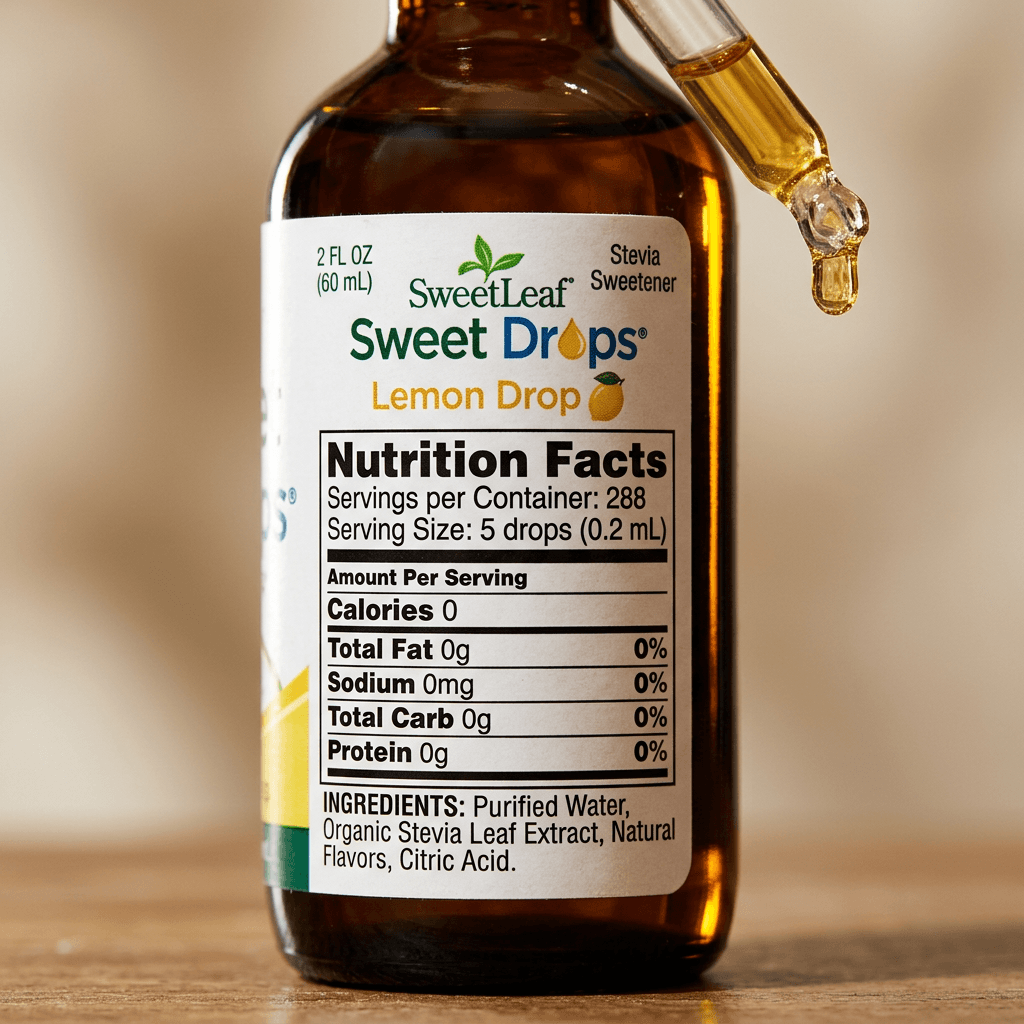
| Serving Size | 6 drops |
| Calories per Serving | 0 |
| Total Carbs per Serving | 0 g |
| Sweetener | Stevia leaf extract (Reb A) |
| Erythritol-Free | Yes |
| Organic | No (conventional stevia extract) |
| Non-GMO | Yes (Non-GMO Project Verified) |
| Gluten-Free | Yes |
| Vegan | Yes |
| Country of Origin | USA (manufactured) |
| Shelf Life (Unopened) | 24 months |
| Recommended Storage | Cool, dry place away from direct light |
| Bottle Material | Amber glass with built-in dropper |
Safety & Third-Party Testing
SweetLeaf is one of the longer-standing names in the stevia category — the brand has been around since 1982 and was among the first companies to bring stevia products to the US market. That longevity matters for trust.
The Lemon Drop variety carries Non-GMO Project Verified certification, which requires third-party testing of the stevia extract source. It’s also certified Kosher and Halal, which involves separate audit processes. These aren’t comprehensive food-safety certifications, but they indicate a supply chain with multiple third-party touchpoints.
SweetLeaf uses Rebaudioside A (Reb A), the most studied glycoside fraction of the stevia plant. The FDA has classified Reb A as GRAS (Generally Recognized as Safe). The European Food Safety Authority has established an Acceptable Daily Intake of 4 mg per kg of body weight per day for steviol glycosides. At 8–10 drops per serving of this salmon recipe, the steviol contribution is well below any relevant threshold for an adult.
The “natural flavors” listed on the label for the lemon character are the one area where full transparency is limited — SweetLeaf doesn’t disclose the specific compounds, which is standard but worth noting for anyone with specific flavor-compound sensitivities.
I haven’t found any third-party heavy metals or pesticide testing published for this specific product. If you’re cooking for someone immunocompromised or in a clinical nutrition context, that’s a gap worth flagging.
Compare with Other
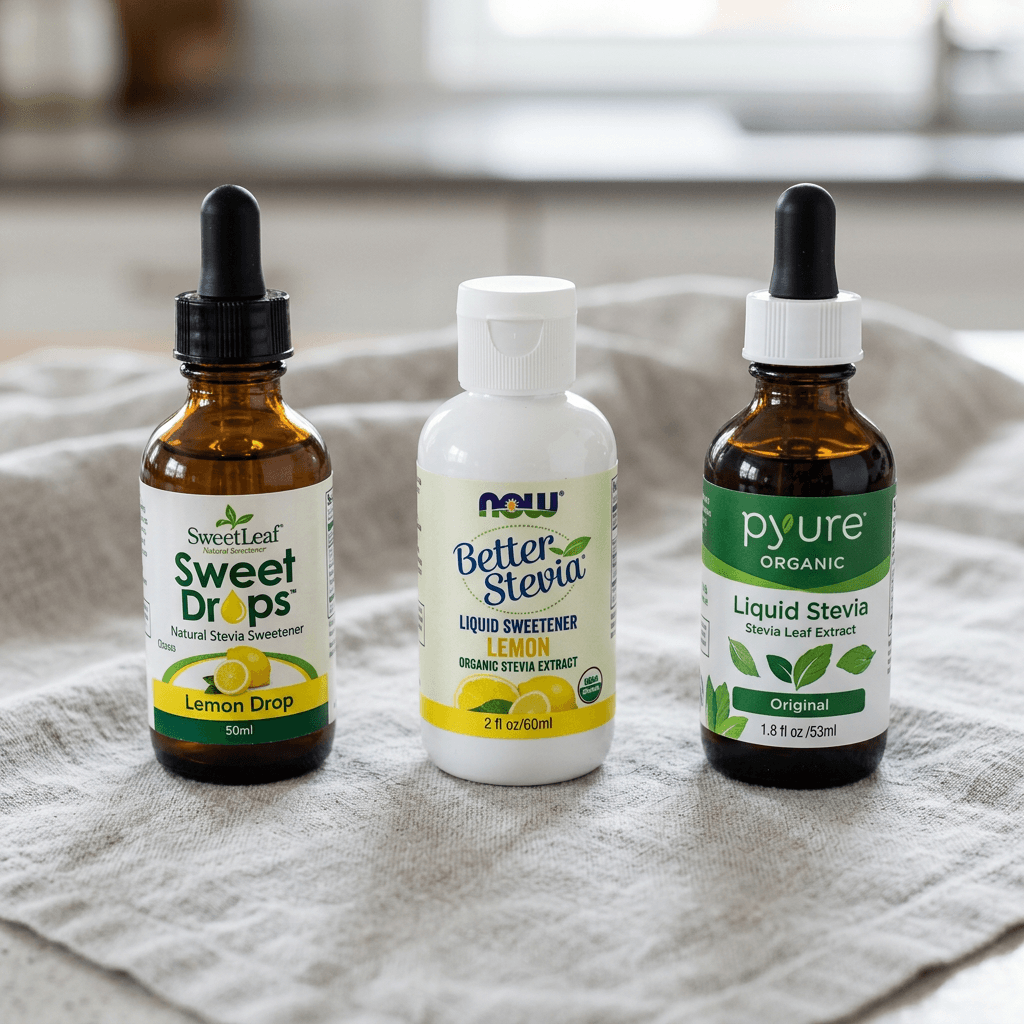
I’ve used three other stevia drops in this same salmon recipe to see how they compare.
NOW Better Stevia Liquid — Lemon Flavor (2 oz): The lemon flavor is thinner and more artificial-tasting than SweetLeaf. It reads as lemon-candy rather than lemon-zest. At equivalent drop counts, it also produced a faint bitter finish in the cooked dish that SweetLeaf didn’t. Price is slightly lower (~$9–$10), but the flavor tradeoff isn’t worth it for savory applications.
Pyure Organic Stevia Liquid — Lemon: Good flavor accuracy — probably the closest to SweetLeaf in terms of lemon character. The organic certification is a genuine differentiator if that matters to you. The dropper mechanism is less precise (it’s a squeeze bottle rather than a drop-by-drop dropper), which makes dosing messier. Street price is a few dollars higher than SweetLeaf. If organic matters, this is your alternative.
Omica Organics Stevia — Vanilla (unflavored also available): I tried this with a tiny amount of lemon zest added directly to the glaze. The result was actually quite good, and Omica has a strong reputation for purity and minimal processing. But the DIY workaround adds a step, and the bottle is significantly more expensive per ounce. Best for purists who want maximum stevia purity and are willing to add their own flavoring.
For the savory lemon salmon application specifically, SweetLeaf Lemon Drop is my first choice — best combination of flavor accuracy, heat stability, and value.
Where to Buy and Price List
I’ve found SweetLeaf Sweet Drops Lemon Drop at three reliable sources, with meaningfully different pricing.
Amazon: Listed as ASIN B0CLX94M7P. Current price is approximately $11.49 for the 2 oz bottle with Prime shipping. Availability is consistent — I’ve never seen it go out of stock on Amazon. Multipack options (3-pack) bring the per-bottle cost down to around $9.80.
EnzoStevia.com: Priced at $12.99 for the 2 oz bottle. Use coupon code AWESOME at checkout for 3% off — brings it to approximately $12.60 with the discount. EnzoStevia tends to carry a wider range of SweetLeaf flavors and bundle options than most retailers, and their shipping has been reliable in my experience (typically 3–5 business days standard).
Local health food stores / Whole Foods: Price varies by region but typically runs $12–$14 for the 2 oz bottle. Convenient if you need it the same day, but no price advantage over ordering online.
My recommendation: if you’re trying the recipe once, grab it from Amazon. If you know you’ll use it regularly, the EnzoStevia bundle option (with the AWESOME discount) saves a few dollars over time and supports a smaller specialty retailer.
People Also Ask
Can you use stevia drops in a savory recipe?
Yes, and it works better than most people expect — especially in glazes and sauces where a small amount of sweetness balances acidity or heat. The key is using flavored drops (like lemon or orange) rather than plain stevia, and starting with fewer drops than you think you need. At cooking temperatures, any residual stevia bitterness is largely neutralized, which makes savory applications more forgiving than you’d expect from tasting the drops cold.
Does stevia taste bitter when cooked?
It depends on the brand, the heat level, and what else is in the dish. At moderate oven temperatures (375–425°F), most quality stevia drops — including SweetLeaf Sweet Drops — show no detectable bitterness in the finished dish. The bitter glycoside compounds appear to be partially masked or altered by heat. Acidic ingredients like lemon juice also help. Where bitterness tends to survive cooking is at very high temperatures (broiling or searing) for extended periods, or when stevia is the only flavor in a very neutral dish.
What is the best glaze for salmon without sugar?
A lemon stevia glaze made with quality stevia drops, fresh lemon juice, olive oil, and garlic is one of the best sugar-free options for salmon — it glazes properly, caramelizes lightly at the edges, and delivers sweet-savory balance without any sugar or honey. Other good options include miso-based glazes (naturally savory-sweet without added sugar) and orange zest + balsamic reductions. The stevia approach has the lowest calorie count of the three and the most precise sweetness control.
How many drops of stevia equal a teaspoon of sugar?
For SweetLeaf Sweet Drops specifically, the brand’s equivalency is approximately 6 drops = 1 teaspoon of sugar in sweetness intensity. In practice, taste is a better guide than math — the sweetness perception can shift depending on other flavors present in the dish. For this salmon glaze, 8–10 drops per two fillets works out to about 1.5 teaspoons of sugar-equivalent sweetness across the whole dish, which reads as pleasantly balanced rather than noticeably sweet.
SERP
When I searched “lemon stevia glaze salmon recipe” in late June 2026, the top results were dominated by general low-carb and keto cooking sites. The first page included a widely shared keto recipe roundup from a popular low-carb blog that used stevia powder (not drops) and didn’t address the aftertaste question at all. The second result was a Pinterest board linking to a clean-eating site whose salmon recipe used liquid stevia but in a much higher quantity than I’d recommend — it produced noticeable sweetness that read more like teriyaki than a savory glaze. The third and fourth results were Amazon product pages for stevia drops, not recipes. A forum thread on r/keto rounded out the visible results, with users debating whether stevia “ruins” savory food (the consensus leaning toward yes, based mostly on bad experiences with cheap brands). None of the top results specifically addressed heat stability of stevia drops or offered the kind of drop-count guidance that makes this actually work in a kitchen. That gap is exactly why I wrote this article.
Top 20 Topics
- Stevia drops in savory cooking — does it work?
- Best sugar-free glaze for salmon
- SweetLeaf Sweet Drops Lemon Drop review
- Keto salmon glaze recipes without honey
- Does stevia taste bitter when cooked?
- How many stevia drops equal a teaspoon of sugar
- Low-carb salmon dinner recipes
- Lemon garlic salmon without added sugar
- Best stevia drops for cooking and baking
- Diabetic-friendly salmon recipes
- How to make a glaze without sugar that caramelizes
- SweetLeaf Sweet Drops vs NOW stevia drops
- Stevia drops for fish marinade
- Clean eating salmon sheet pan dinner
- Non-GMO stevia drops ranked
- Lemon herb salmon with no added sugar
- Pyure vs SweetLeaf liquid stevia comparison
- Erythritol-free stevia sweetener drops
- Cooking temperature limits for stevia — what survives heat
- Where to buy SweetLeaf Sweet Drops at the best price
Key Takeaways
- Stevia drops genuinely work as a savory glaze ingredient — at 400°F oven heat, SweetLeaf Lemon Drop’s flavor concentrates rather than fades, and bitterness becomes undetectable in the finished dish.
- 8–10 drops per two fillets is the sweet spot for this recipe; more tips the dish sweet rather than balanced, so start conservative and adjust batch by batch.
- Pat the salmon dry and glaze right before cooking — surface moisture kills the crust, and lemon juice starts curing the fish if the glaze sits more than a few minutes.
- SweetLeaf Lemon Drop outperforms NOW and Omica in this application for flavor accuracy and heat stability; Pyure Organic is the best alternative if organic certification is a requirement.
- One 2 oz bottle covers ~80 servings of this glaze recipe at current usage rates — cost per serving is under $0.15, making this one of the most economical sugar-free flavoring strategies I’ve found.
- EnzoStevia.com with code AWESOME (3% off) and Amazon are the two most reliable sources; local health stores charge a small premium for same-day convenience.
- The real win here is versatility — once you have this glaze dialed in for salmon, the same formula works on chicken thighs, shrimp, and roasted carrots with only minor drop-count adjustments.