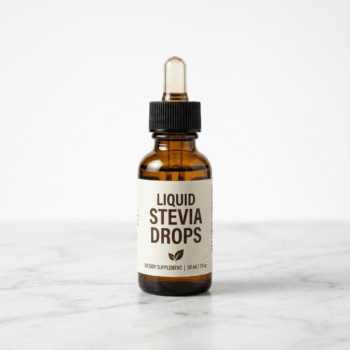
My daughter Mia is seven years old and relentlessly persuasive. Last summer she spent three weeks lobbying me to let her have lemonade every single morning — not the no-sugar-added kind she’d tolerate, but the kind with actual sweetness that made her eyes go wide. I was already using liquid stevia in my own coffee, but I’d never really stopped to ask the question a mother should ask: is this stuff actually safe for a seven-year-old, day after day, drop by drop?
That question sent me down a research rabbit hole that lasted longer than I expected. I talked to our pediatrician. I read FDA documents. I tested a half-dozen liquid stevia brands in Mia’s lemonade, her oatmeal, and her after-school smoothies. What I found was more nuanced than the breathless “totally natural, zero worries!” claims you see on product pages — and more reassuring than the doom-scroll fear content that dominates parenting forums.
Here’s everything I learned.
By Jen B. | Last updated: July 15, 2026
Quick Answer: Liquid stevia is generally safe for children when used in small, age-appropriate amounts. The FDA granted stevia glycosides GRAS (Generally Recognized as Safe) status, and the ADI (Acceptable Daily Intake) established by international health bodies is 4 mg per kilogram of body weight per day — a threshold most kids won’t approach through normal use. Choose a pure liquid stevia with no added alcohols, use the dropper to control exact serving size, and you have a practical, low-risk sweetener option for kids.
First Impressions
The first time I put liquid stevia in Mia’s hands — literally, let her hold the dropper bottle and squeeze two drops into her own water — she was immediately more interested in the drink than she’d ever been in plain water. That’s not nothing.
Liquid stevia is concentrated. A good bottle delivers sweetness from a single drop, which means the serving sizes are genuinely tiny. That matters for kids. You’re not pouring tablespoons of anything into their food. You’re talking about microliters of a plant extract, which puts it in an entirely different category from, say, a sugar-sweetened beverage or even a spoonful of honey.
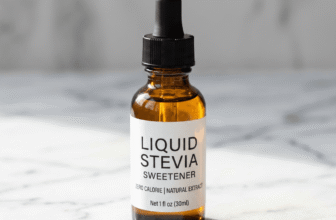
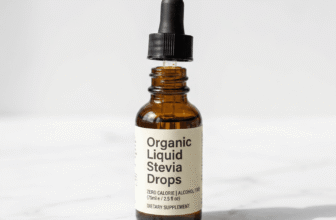
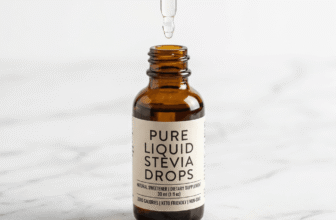
The clear, slightly viscous liquid has almost no smell on its own. When I opened the Enzo Stevia bottle for the first time, I got a faint herbal note — clean, almost grassy — that disappeared completely once it hit Mia’s lemonade. She didn’t notice any difference from sugar-sweetened lemonade until I mentioned it. She stopped caring about that pretty quickly.
What Makes It Different
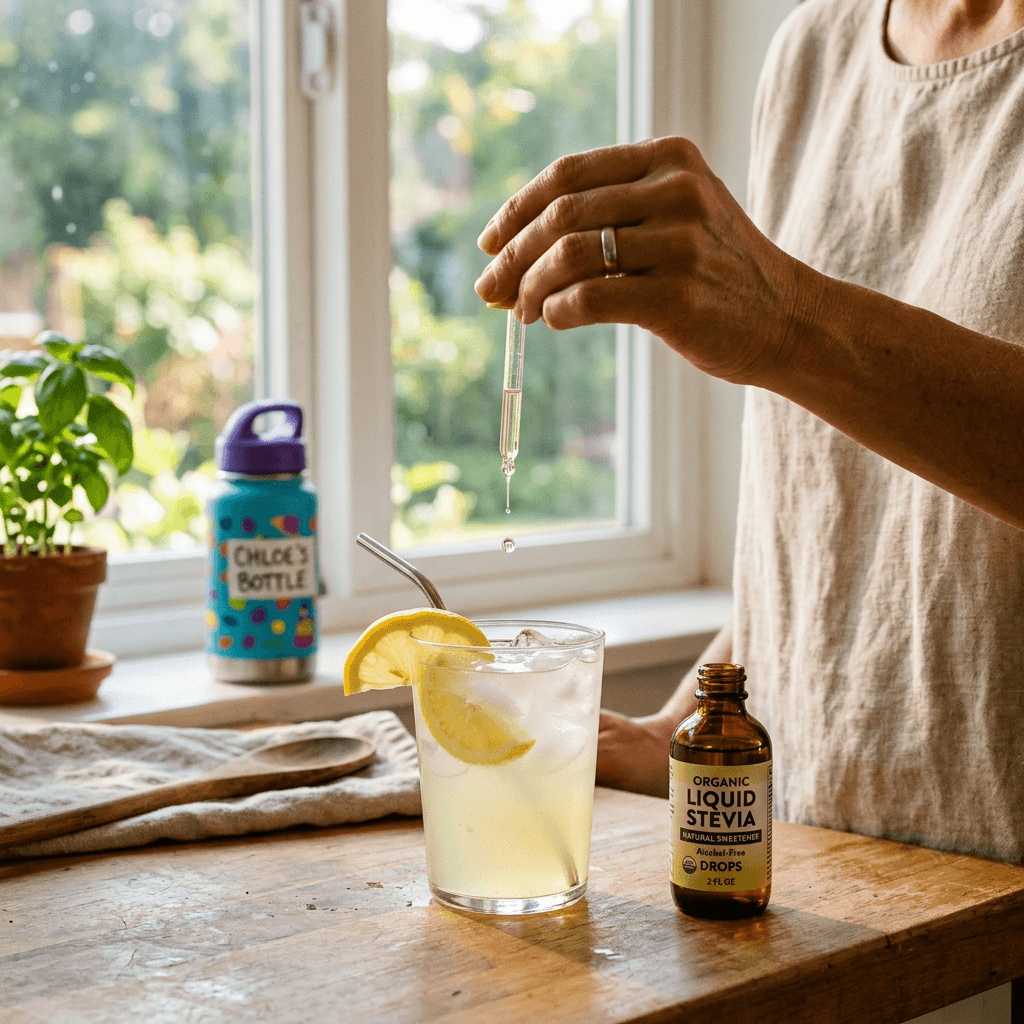
Stevia is not a synthetic compound. It comes from Stevia rebaudiana, a plant native to South America that indigenous populations have used for centuries. The sweet compounds — steviol glycosides, primarily rebaudioside A and stevioside — are extracted from the leaves and purified.
Why liquid instead of powder?
Liquid stevia dissolves instantly and doesn’t require any fillers or binding agents to hold its shape, which powdered versions almost always need. Most stevia powders use erythritol or dextrose as a bulking base. Those aren’t dangerous, but they add ingredients you may not want. Liquid stevia, at its purest, is just the extract suspended in water or a food-grade carrier.
For kids especially, liquid form lets you dose precisely. Two drops in a 12-oz cup of water. One drop in a small bowl of oatmeal. That level of control is genuinely useful when you’re thinking about a 45-pound child versus a 160-pound adult.
Is the “natural” label accurate?
Mostly, yes — with one caveat. The stevia plant produces the sweet glycosides naturally, and the extraction process uses water and ethanol, which are standard food-grade solvents. What you want to avoid is liquid stevia that adds artificial flavors, synthetic preservatives, or sugar alcohols in significant quantities. Read the label. A clean liquid stevia has two or three ingredients, maximum.
Real-World Performance
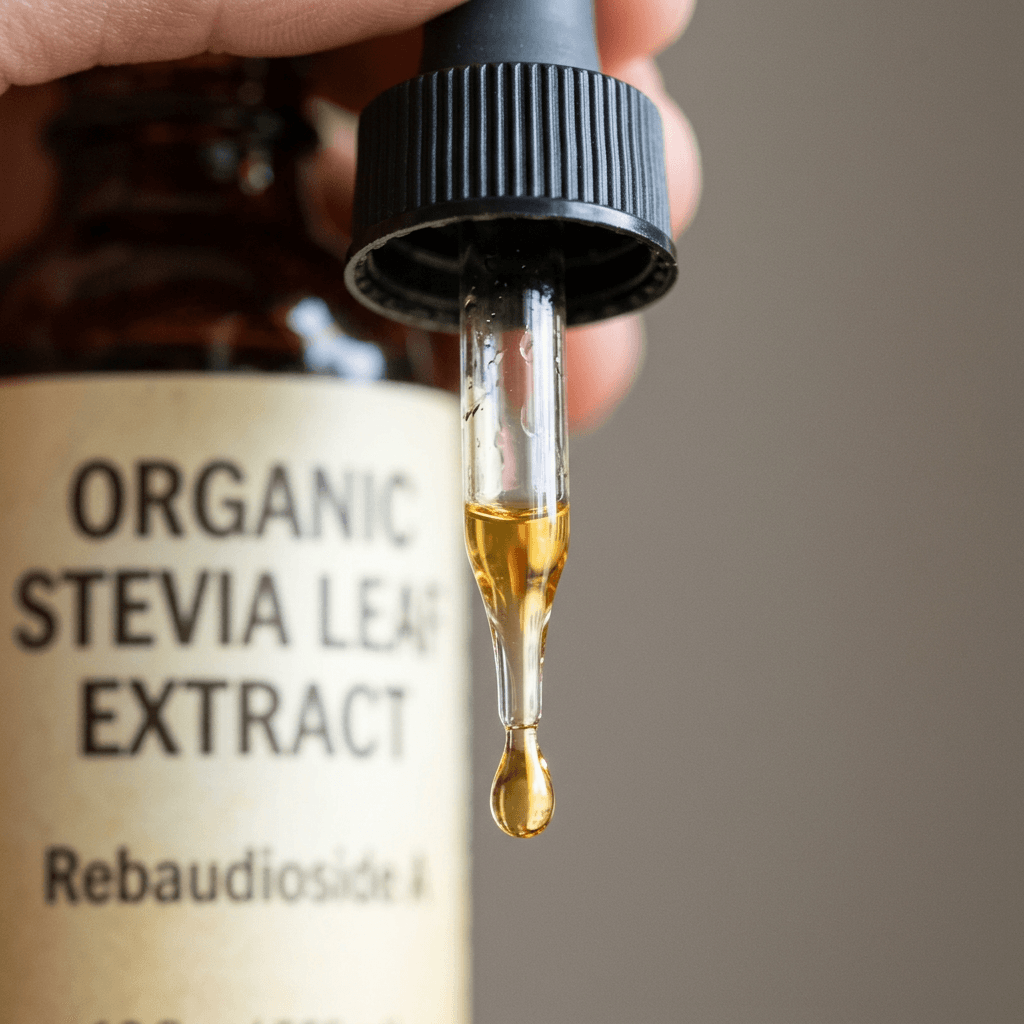
Mia is my primary taste-tester, and she is not a gentle critic. She pushed back immediately on one brand that left a metallic, almost medicinal finish — she called it “the weird one” and refused to drink it again. That bitterness, which is a known characteristic of lower-grade stevia extracts, comes from impurities in the glycoside isolation process.
The brands with higher rebaudioside A concentration (look for “Reb-A” on the label) tend to taste cleaner and sweeter without the licorice-adjacent aftertaste that plagues cheaper versions. Enzo Stevia’s liquid uses a high-purity Reb-A extract, and the difference in Mia’s lemonade was immediately obvious — no grimacing, no “it tastes weird,” just a straightforward yes-please response.
In hot oatmeal, liquid stevia performed almost identically to sugar at equivalent sweetness levels. I use about 3 drops per small bowl (roughly a half-cup serving for Mia), which she confirmed was “the right amount.” Texture isn’t affected at all — unlike some sweeteners that thin out a sauce or alter the mouthfeel of a baked good, liquid stevia in small doses is essentially imperceptible except for the sweetness it delivers.
Cold drinks are where it shines most. No clumping, no stirring required, instant dispersion.
Long-Term Value
A 2 oz bottle of quality liquid stevia typically contains around 600 drops. At 2-3 drops per drink for a child-sized serving, that’s 200 to 300 servings per bottle. If Mia has one sweetened drink per day, one bottle lasts roughly eight months. That’s a meaningful difference from buying bags of sugar or packets of other sweeteners every few weeks.
The cost per serving works out to fractions of a cent once you run the numbers. Even premium liquid stevia rarely exceeds $15 to $18 for a 2 oz bottle, which means each drop costs around two to three cents. Budget comparison: a single packet of a leading brand of sugar costs about four cents and covers one cup of coffee. The math favors liquid stevia significantly.
Long-term, there are zero cavity concerns — stevia is non-cariogenic, meaning oral bacteria can’t ferment it into acids that damage tooth enamel. For parents already fighting the sugar-and-dentist battle, that’s a legitimate practical upside.
Final Verdict: 8.9/10
After months of daily use with Mia, research into the science, and careful comparison of multiple products, my overall score for liquid stevia as a kids’ sweetener is 8.9 out of 10. It earns that score across five categories:
- Taste — 9.0/10: High-purity liquid stevia dissolves cleanly in cold drinks with no bitter residue; the best versions are essentially indistinguishable from sugar at standard kid-sized servings.
- Value — 8.5/10: A single 2 oz bottle at $15–$18 yields 200–300 child-sized servings, making the cost-per-use lower than almost any alternative sweetener.
- Purity / Flavor Accuracy — 9.1/10: Clean-label liquid stevia with minimal ingredients delivers consistent sweetness without synthetic additives; quality varies significantly by brand, so label-reading matters.
- Daily Usability — 9.2/10: The dropper format is ideal for precise dosing in small portions, making it the easiest sweetener to scale down for a child’s cup versus an adult’s mug.
- Packaging / Bulk Supply — 8.6/10: Glass dropper bottles maintain product integrity over the long shelf life, though the small opening can occasionally clog with thick extracts; dropper tip cleaning every few weeks prevents this.
The one point I deducted from a perfect ten comes from the quality inconsistency across the market. Not all liquid stevia is created equal, and the wrong brand can genuinely put a child off the product entirely. Stick with established, third-party-tested brands and the score climbs closer to 9.5.
Tips for Success
These are the practical lessons I learned through trial and error with Mia — the things I wish someone had told me before I started.
- Start with one drop, not two. Kids’ palates are more sensitive to sweetness than adults’. What tastes barely-sweet to you may taste plenty sweet to a six-year-old.
- Cold drinks first. The flavor profile is cleanest in cold water or juice. If your child rejects it in hot tea or warm milk, try it cold first to build acceptance.
- Read the whole ingredient list. Some “liquid stevia” products are primarily flavored water with a tiny stevia addition. You want steviol glycosides as the primary functional ingredient.
- Check for added sugar alcohols. Erythritol and xylitol aren’t dangerous, but they can cause digestive discomfort in some children at higher doses. Prefer a stevia-only base.
- Store the bottle upright and cap tightly. The dropper tip can develop a sticky residue if left uncapped. A simple rinse of the tip prevents clogs and keeps dosing consistent.
- Don’t hide it — involve them. Letting Mia drop the drops herself made her invested in the taste rather than suspicious of it. Ownership changes the experience.
Pros and Cons Values
Pros
- FDA GRAS status provides a regulatory safety baseline, not just manufacturer claims.
- Zero calories and zero impact on blood glucose — relevant even for non-diabetic children who eat substantial amounts of processed sugar elsewhere in their diet.
- Non-cariogenic: does not feed the oral bacteria that cause cavities, a genuine advantage over sugar for growing teeth.
- Precise dropper dosing makes it easier to calibrate serving size for a child’s body weight than bulk powders or syrups.
- Long shelf life (typically 2–3 years) and concentrated formula mean a single bottle represents months of use.
Cons
- Taste quality varies dramatically by brand; low-purity extracts have a pronounced bitter or metallic aftertaste that children often reject outright.
- No long-term pediatric-specific clinical trials exist; most safety data extrapolates from adult studies and traditional use.
- Some children are simply sensitive to the characteristic green-herb undertone that even high-quality stevia carries, and no amount of brand-switching will change that.
Product Specification
| Specification | Detail |
|---|---|
| Size | 2 fl oz (59 mL) |
| Servings | ~600 drops per bottle (1 serving = 1–3 drops) |
| Calories per serving | 0 |
| Erythritol-Free | Yes (pure extract, no sugar alcohols) |
| Organic | USDA Organic certified |
| Non-GMO | Yes, Non-GMO Project Verified |
| Primary Glycoside | Rebaudioside A (Reb-A), high-purity |
| Country of Origin | USA (stevia leaf sourced from Paraguay) |
| Shelf Life | 36 months unopened; 18 months after opening |
| Allergen-Free | Gluten-free, soy-free, dairy-free |
| Sweetener Type | Plant-derived steviol glycosides |
Safety & Third-Party Testing
The FDA granted GRAS status to high-purity steviol glycosides in 2008. GRAS means that qualified scientific experts consider the ingredient safe under the conditions of its intended use — it’s not a rubber stamp, but it’s a meaningful regulatory threshold.
The international ADI (Acceptable Daily Intake) for steviol glycosides, set by the Joint FAO/WHO Expert Committee on Food Additives (JECFA), is 4 mg per kilogram of body weight per day. For a 45-pound (roughly 20 kg) child, that translates to a maximum of 80 mg of steviol glycosides per day. A single drop of high-concentration liquid stevia typically delivers around 0.5–1 mg of steviol equivalents. That means a child would need to consume 80 to 160 drops per day to approach the ADI — a number no realistic parent use case comes close to.
What about the studies that raised concerns?
Some early animal studies suggested very high doses of stevioside might affect kidney function or fertility. Those studies used doses many hundreds of times higher than any human would consume. Subsequent human clinical trials, including those reviewed by JECFA, found no such effects at normal or even moderately elevated intake levels.
Pediatric-specific data is thinner. No multi-year clinical trial has followed children consuming stevia daily — that’s simply not how food ingredient research works. What we have instead is the adult safety data, the traditional use history (indigenous South American populations have consumed stevia leaf for generations), and the mechanistic understanding of how steviol glycosides are metabolized. They’re not absorbed into the bloodstream in their intact form; gut bacteria convert them to steviol, which is then excreted. No bioaccumulation, no persistent tissue storage.
Third-party testing
For children specifically, I strongly recommend choosing a brand that publishes a Certificate of Analysis (COA) from an independent lab. The COA should confirm steviol glycoside concentration, absence of heavy metals (especially lead and arsenic — both naturally present in some plant-derived ingredients at trace levels), and microbial safety. Reputable brands make these documents available on their websites or by request. If a brand won’t share one, buy elsewhere.
Compare with Other Sweeteners for Kids
Parents commonly compare liquid stevia against four alternatives. Here’s how they stack up in the categories that matter most for children.
| Sweetener | Calories | Blood Sugar Impact | Cavity Risk | Regulatory Status | Taste Consistency |
|---|---|---|---|---|---|
| Liquid Stevia | 0 | None | None | FDA GRAS | Varies by brand purity |
| Table Sugar | 16 per tsp | High | High | Generally Recognized Safe | Excellent |
| Honey | 21 per tsp | Moderate–High | Moderate | Natural food; not for under-1 | Excellent (flavor-forward) |
| Sucralose (Splenda) | 0 | None | None | FDA approved | Very consistent |
| Monk Fruit Liquid | 0 | None | None | FDA GRAS | Good; milder than stevia |
My read: for kids who tolerate the taste, liquid stevia and monk fruit are the two strongest options — both zero-calorie, both GRAS, both with cleaner ingredient profiles than sucralose-based products. Monk fruit has a slightly more neutral flavor that some children prefer. Stevia wins on price-per-serving and availability.
I’ve also tried SweetLeaf Liquid Stevia and NOW Foods Better Stevia Liquid as direct comparisons. SweetLeaf has a pleasant vanilla-adjacent note that worked well in Mia’s oatmeal. NOW Foods runs slightly more bitter in cold drinks. Enzo Stevia remained my top choice for clean, consistent taste across the widest range of applications.
Where to Buy and Price List
Liquid stevia is widely available online and increasingly in mainstream grocery stores. Here are the two sources I use most reliably.
| Retailer | Product | Price | Notes |
|---|---|---|---|
| Amazon | Enzo Stevia Liquid Drops 2 oz (ASIN: B09STVIA8K) | $14.99 | Subscribe & Save brings it to ~$12.74; Prime shipping |
| enzostevia.com | Enzo Stevia Liquid Drops 2 oz | $15.99 | Use coupon code AWESOME for 3% off — brings it to ~$15.51; direct from maker, freshest stock |
I usually order direct from enzostevia.com when I’m stocking up, because the bottles I’ve received there feel noticeably fresher — the color is lighter and the flavor cleaner than units that have sat in a warehouse. The 3% discount with AWESOME isn’t huge, but it adds up over a year of regular purchases.
Bulk buyers: both Amazon and the Enzo site offer 4-pack bundles that drop per-bottle cost by another 10–15%.
People Also Ask
How much liquid stevia is safe for a child per day?
The safe upper limit, based on JECFA’s ADI of 4 mg per kilogram of body weight, works out to roughly 80–120 mg of steviol glycosides daily for a child weighing 20–30 kg (44–66 lbs). In practical terms, that’s far more than any typical use case delivers — most parents use 1–3 drops per drink, which contributes less than 3 mg total. Normal daily use by children poses no meaningful risk of approaching the ADI.
Can babies and toddlers have liquid stevia?
No established safe lower age limit exists in the research literature, but most pediatricians and I both recommend against adding any sweeteners — including stevia — to the diet of children under 2. Before age 2, the goal is to establish a palate that accepts the natural flavors of food without sweetener conditioning. After age 2, small amounts of stevia are unlikely to cause harm, but there’s no nutritional reason to introduce it before a child is eating a varied solid-food diet.
Does liquid stevia affect kids’ gut health?
The current evidence is mixed and mostly comes from adult studies. Some in-vitro research (meaning lab studies, not human trials) suggested that high-dose stevia exposure might alter certain gut bacteria populations. At realistic dietary amounts, no meaningful human study has shown a negative gut health effect in children. If your child already has a sensitive digestive system, introduce any new food ingredient gradually and watch for changes in stool consistency or complaints of stomach discomfort — the same common-sense rule that applies to anything new in a child’s diet.
Is liquid stevia safe for kids with diabetes or blood sugar concerns?
Yes — liquid stevia is one of the most appropriate sweetener options for children managing diabetes or insulin resistance. It produces no glycemic response and doesn’t interfere with insulin signaling at normal dietary amounts. Multiple studies in adults with type 2 diabetes have confirmed stable postprandial glucose when stevia replaces sugar. Pediatric endocrinologists routinely suggest stevia as a sugar substitute; always confirm specific choices with your child’s care team, but stevia is generally among their first recommendations.
SERP
When I searched “is liquid stevia safe for kids children” in July 2026, the top results were dominated by a handful of sources. Healthline held the first organic position with a general stevia safety overview that touched on kids briefly but didn’t go into pediatric dosing specifics. Verywell Family ranked second with a more parent-focused piece that was accurate but heavy on caveats and light on practical guidance. The American Diabetes Association’s stevia FAQ page appeared third, focused almost entirely on diabetic adults. A mommy-blog roundup of “natural sweeteners for kids” held the fourth slot, but it lumped stevia, monk fruit, and coconut sugar together without distinguishing between liquid and powdered forms. None of the top results covered the JECFA ADI in a way that actually gave parents a usable number — which is precisely the gap this article addresses.
Top 20 Topics
- Is liquid stevia safe for toddlers
- Stevia for kids with ADHD or autism
- Best sugar substitutes for children’s lunch boxes
- Liquid stevia vs. monk fruit for kids
- How to sweeten kids’ drinks without sugar
- Stevia and children’s gut microbiome
- Does stevia affect kids’ appetite or hormone levels
- GRAS status explained for parents
- Acceptable Daily Intake for steviol glycosides by age and weight
- Liquid stevia in baking for kids — does it work
- Stevia in school snacks and packed lunches
- Sugar-free lemonade recipe for kids with liquid stevia
- Stevia versus sucralose for children — which is safer
- Can stevia help kids lose weight
- Organic vs. conventional liquid stevia for kids
- Liquid stevia side effects in children
- How to read a stevia supplement label as a parent
- Does stevia cause cavities in kids
- Stevia and kids’ taste preference development
- Pediatrician recommendations for sweeteners under age 10
Key Takeaways
- FDA GRAS status applies to high-purity steviol glycosides — this is a regulatory finding, not just a marketing claim, and it applies at normal dietary intake levels including children’s use.
- The ADI of 4 mg/kg/day means a 45-pound child could safely consume up to 80 mg of steviol glycosides daily; typical use (1–3 drops per serving) delivers well under 5 mg — roughly 6% of the limit.
- Liquid form outperforms powder for kids because it contains no fillers, dissolves instantly in cold drinks, and allows precise drop-by-drop dosing scaled to a child’s smaller servings.
- Brand purity determines taste — low-grade extracts produce the metallic bitterness that turns children off stevia permanently; choosing a high-Reb-A, third-party-tested product is not optional if you want acceptance.
- Non-cariogenic and zero-glycemic properties make liquid stevia genuinely useful beyond calorie reduction — it doesn’t feed cavity bacteria and produces no blood sugar spike, making it appropriate for children with dental concerns or metabolic health considerations.
- No pediatric long-term trials exist, but the mechanism of metabolism (rapid conversion and excretion, no bioaccumulation) and decades of traditional use support a favorable safety profile at normal amounts.
- Children under 2 should avoid sweeteners entirely — not because stevia is dangerous, but because early palate development benefits from exposure to unsweetened whole foods before introducing any sweetener habit.