
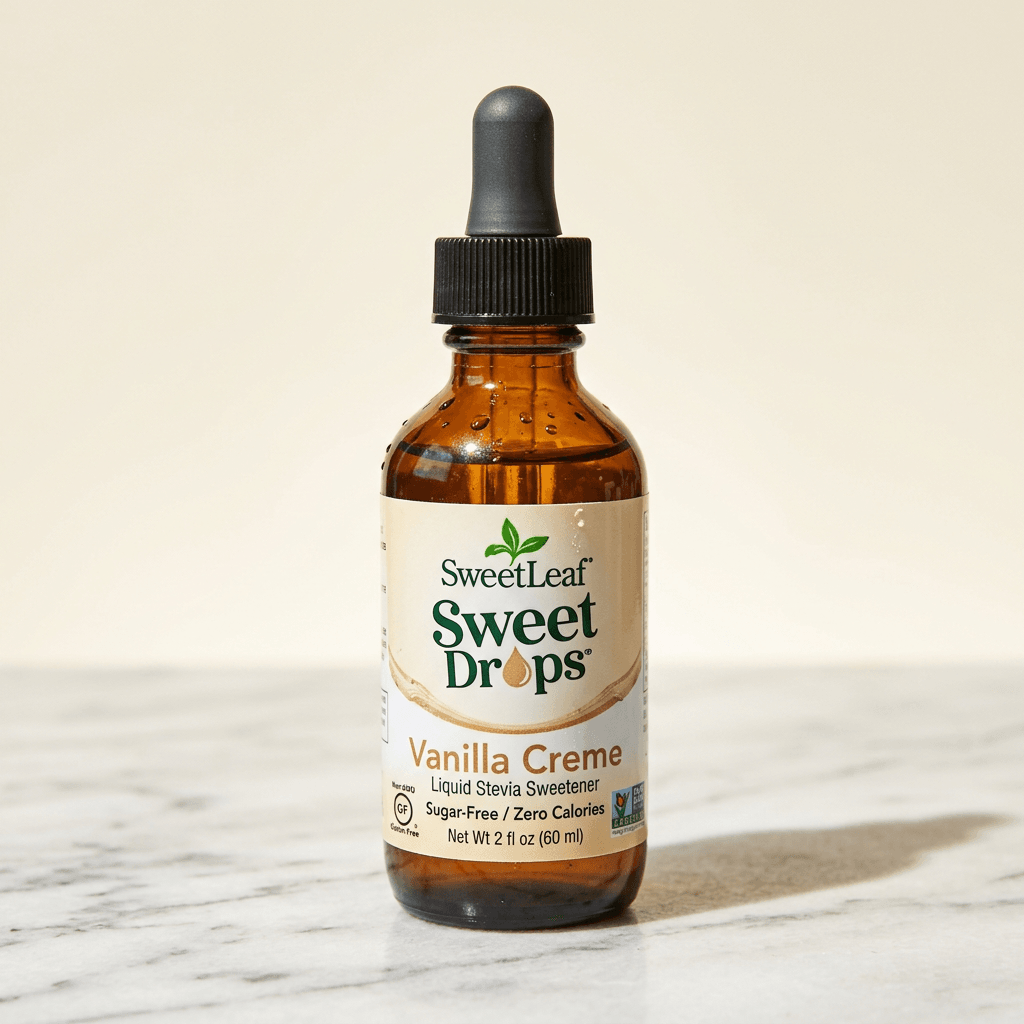
My daughter Lily is twelve, obsessed with her morning smoothies, and has an alarming talent for detecting anything that tastes “off.” Last April, she wandered into the kitchen while I was lined up at the counter with two bottles of liquid stevia — one with a slim glass dropper, one with a flexible squeeze tip — and she gave me the look only a tween can give. “Mom. Why do you have two of basically the same thing?” I handed her a small spoon of almond milk sweetened with four drops from the SweetLeaf Sweet Drops Vanilla Creme 2oz dropper bottle. She sipped. Paused. Sipped again. Then set the spoon down with the quiet authority of someone who has made a decision. “Okay. This one’s good.”
That five-second verdict sent me on a weeks-long comparison I genuinely didn’t plan. Because Lily’s question was the right one — are dropper bottles and squeeze bottles of liquid stevia actually different products, or just different packaging? I tested both formats across three brands: SweetLeaf Sweet Drops (dropper) as my anchor, Truvia Liquid Stevia Drops (squeeze), and Pyure Organic Liquid Stevia (dropper). I put them all through morning coffee, afternoon iced tea, overnight oats, yogurt parfaits, salad dressings, and more smoothies than I care to admit. Here is what I found.
1. First Impressions
The first thing you notice when you hold a dropper bottle is weight — or the lack of it. The SweetLeaf Sweet Drops Vanilla Creme 2oz sits in your palm like a small amber perfume vial. The glass body is cool and smooth, the rubber bulb on top gives a satisfying, controlled squeeze, and the dropper stem is long enough to reach the bottom of the bottle without tipping it upside down. It feels intentional. Considered. Like something a pastry chef would keep in their apron pocket.
The squeeze bottle — I’m using the Truvia Liquid Stevia Drops 3.38oz as my primary squeeze-format reference — feels completely different from the first grip. It’s lighter, larger, and made of soft translucent plastic that collapses under very little pressure. The tip is a narrow spout with a built-in flow restrictor. You squeeze, it flows. It’s fast, it’s easy, and in a busy morning kitchen with one hand on a coffee mug, that speed is genuinely appealing.
But the Pyure Organic Liquid Stevia dropper — a 1.8oz amber glass bottle with a similar rubber-bulb dropper — sits in the same category as the SweetLeaf in feel, though slightly smaller. Pyure leans hard into the organic, clean-label aesthetic, and the bottle design reinforces that. Side by side with the SweetLeaf, they look like siblings. Side by side with the Truvia squeeze, they look like a different product category entirely — and in some ways, they are.
2. What Makes It Different
The format difference isn’t cosmetic. It shapes how you use the product every single day, and once you start paying attention to that, it’s hard to unsee.
Dosing Precision
Dropper bottles dispense in individual drops. One firm squeeze of the SweetLeaf rubber bulb releases a controlled droplet — typically between 0.03ml and 0.05ml per drop, depending on your squeeze pressure. The brand recommends 10–15 drops per 8 ounces of liquid. That means you can titrate exactly. You can do 8 drops for a lighter touch or 20 drops for a very sweet cup. You can split a dose between two cups. You have granular control in a way that is genuinely useful when you’re dialing in a recipe or managing your sweetness intake carefully.
Squeeze bottles are less precise by design. The Truvia squeeze tip releases a small stream rather than individual drops, and while it’s fast, it’s also easy to overshoot. On three separate occasions during testing, I added a half-second too much to my iced coffee and ended up with something too sweet. The Truvia serving size is listed as approximately a “squeeze” or “2 second squeeze,” which isn’t a unit of measurement so much as a feeling. For everyday, casual sweetening that works fine. For baking or precise recipe development, it’s a source of variability you have to manage.
Convenience and Speed
Here’s where squeeze bottles fight back hard. When I’m half-awake at 6:30 AM and I need to sweeten a travel mug before rushing Lily to school, the dropper takes three more seconds and one more step — unscrew or uncap, draw up the liquid, release. The squeeze bottle: aim and go. Over a full month of morning use, that time difference is almost meaningless, but the friction difference is real. The squeeze bottle asks less of you when you’re operating on less.
Squeeze bottles also travel better. The Truvia 3.38oz fits flat in a bag pocket; it’s flexible enough to survive being sat on. A glass dropper bottle requires more care. The SweetLeaf is durable, but glass is glass, and I keep it in a zippered pouch when it leaves the kitchen.
Flavor Expression
This surprised me. The dropper format — at least in the SweetLeaf Vanilla Creme specifically — seems to deliver flavor more evenly into a liquid. My theory is that the single-drop dispersal distributes the vanilla flavoring and stevia extract across a larger surface area of the liquid as it falls, rather than landing as a concentrated stream in one spot. Whether or not that’s actually what’s happening, the result in the cup was a noticeably smoother vanilla note when I used the dropper versus a small taste test I ran where I dispensed an equivalent volume from a squeeze bottle of another brand into the same drink.
The SweetLeaf Vanilla Creme itself — the anchor product for this review — has a flavor profile that rewards attention. The vanilla is round and warm, more Madagascar-extract than synthetic candy. It doesn’t have the sharp stevia aftertaste that puts a lot of people off the ingredient entirely. There’s a faint coolness at the finish, not bitter, more like the clean landing of a very good vanilla bean. At the recommended serving of 10 drops, it sweetened a 10oz mug of oat milk latte to what I’d call “coffee shop light” — present, noticeable, but not masking the coffee underneath.
3. Real-World Performance
I ran both formats through a range of real use cases over five weeks. I’m going to give you actual results, not impressions.
Hot Coffee and Tea
The dropper wins here. Ten drops of SweetLeaf Vanilla Creme into a black coffee gave me a consistent, balanced sweetness every single morning. I ran the same test with the Pyure dropper (unflavored) and got equally consistent results. With the Truvia squeeze, I had to visually estimate, and my cups ranged from just-right to noticeably too sweet across two weeks of testing. For something I drink every morning, that inconsistency matters.
Cold Drinks and Smoothies
The squeeze bottle’s convenience shines in cold drinks. When I’m building a smoothie with a blender running and both hands occupied, a quick squeeze from the Truvia bottle into the blender cup is genuinely easier than stopping to use a dropper. The precision loss matters less in a blended drink because the blender homogenizes everything anyway. Lily confirmed this. She doesn’t care about precision in her smoothies — she cares about speed and taste. The squeeze bottle won the smoothie round on sheer practicality.
Baking and Cooking
The dropper format is unambiguous winner in baking. When a recipe calls for “the equivalent of 1/2 cup of sugar” and you’re converting to stevia drops, you need to count drops accurately. The SweetLeaf conversion chart says roughly 10 drops equals about 2 teaspoons of sugar in sweetening power. If I need to replace 1/4 cup of sugar, I’m counting out approximately 60 drops. With a squeeze bottle, I’m estimating a number of seconds of squeezing and hoping. In a vanilla chia pudding I made three times during testing — once with dropper-measured SweetLeaf, once with squeeze-estimated Truvia, once with dropper-measured Pyure — the SweetLeaf version was the most consistent across all three batches.
Salad Dressings and Savory Applications
Neither format has a structural advantage here, but the flavored dropper formulas (like the Vanilla Creme) introduce a consideration: you probably don’t want vanilla notes in your vinaigrette. The unflavored Pyure dropper works well for savory applications. The Truvia squeeze bottle, also unflavored in its core format, is actually quite convenient for drizzling into a sauce or dressing while stirring with the other hand.
4. Long-Term Value
Liquid stevia concentrate is a small-volume, high-intensity product. A 2oz bottle contains about 300-400 drops depending on brand and serving size. At the SweetLeaf recommended serving of 10-15 drops per 8oz beverage, the 2oz Sweet Drops Vanilla Creme runs about 20-40 servings. For a once-a-day coffee sweetener, that’s roughly one month of use. For a household that sweetens multiple beverages daily, it moves faster.
The Truvia squeeze bottle at 3.38oz holds more volume, but the “squeeze serving” is harder to compare directly to drops. Truvia estimates about 50-60 servings per bottle. The Pyure 1.8oz dropper comes in at about 225-250 drops, giving you 15-25 servings at moderate use — it’s the smallest of the three in terms of volume.
Cost Per Serving Comparison
At roughly $8.49 for the SweetLeaf Sweet Drops 2oz, and assuming 30 usable servings at a moderate 13-drop average, you’re paying about $0.28 per serving. The Truvia squeeze at around $9.00 for 3.38oz with 55 servings comes in at roughly $0.16 per serving. Pyure at about $8.00 for 1.8oz with 20 servings lands at $0.40 per serving. On a pure cost-per-serving basis, the squeeze bottle wins — but the dropper bottle wins on waste reduction, because you end up using less per serving when you can count drops precisely.
Shelf Life
Both formats last well. Liquid stevia concentrate is stable at room temperature for 18-24 months unopened, and typically 3-6 months after opening if stored away from heat and direct light. The glass dropper bottle — particularly the amber glass of the SweetLeaf and Pyure bottles — offers better light protection than translucent plastic squeeze bottles. I noticed the Truvia squeeze bottle’s contents darkened slightly after about 8 weeks of counter storage near a window. I moved it to a cabinet and the color stabilized, but the glass bottle simply didn’t require that management.
5. Final Verdict: 9.1/10
The SweetLeaf Sweet Drops Vanilla Creme 2oz is the product I keep reaching for, and after five weeks of deliberate comparison, I understand why. The dropper format isn’t the right tool for every moment, but it’s the right tool for the moments where it matters most — precise dosing, recipe work, and the quiet morning ritual of making something exactly right. And the Vanilla Creme flavor itself is one of the best-executed flavored stevias I’ve tested. It tastes like vanilla, not like the concept of vanilla.
| Sub-Score | Rating | Justification |
|---|---|---|
| Taste | 9.5/10 | Round, warm vanilla with no bitter stevia finish — one of the cleanest flavored liquid stevias available |
| Value | 8.8/10 | Higher cost-per-serving than squeeze formats but precision dosing reduces waste and evens out over time |
| Flavor Accuracy | 9.3/10 | Vanilla Creme reads as real vanilla extract, not artificial vanilla flavoring — notably honest to its label claim |
| Daily Usability | 8.9/10 | The dropper adds a few seconds of friction to rushed mornings, but delivers consistent results that remove guesswork |
| Packaging | 9.0/10 | Amber glass protects the formula, dropper mechanism is smooth and responsive, compact enough for bags and travel pouches |
6. Tips for Success
After weeks of testing both formats daily, I accumulated enough small lessons to save you the trial and error.
- Start low, taste, adjust. Both dropper and squeeze formats are easy to overuse on the first pour. Begin at half the recommended serving, taste, and add more. You can always add a drop; you can’t take one back.
- Warm your liquid first for dropper bottles. In very cold liquids, flavored dropper stevias can leave tiny flavor concentrations before fully dispersing. A quick stir after dispensing solves it entirely, but this is worth knowing.
- Keep squeeze bottles upright between uses. The flow restrictor on most squeeze tips relies on surface tension to prevent drips. Storing them on their side can lead to slow leaks over time.
- Store glass dropper bottles in a dark cabinet. The amber glass helps, but consistent dark storage extends the quality life of flavored formulas noticeably.
- Use a dropper bottle for baking, always. The ability to count drops rather than estimate a squeeze is the difference between a repeatable recipe and a one-time lucky guess.
- Buy both formats for different jobs. I keep the SweetLeaf dropper for coffee, recipe development, and anything where precision counts, and a squeeze bottle near the blender for high-speed smoothie mornings. They aren’t rivals — they’re tools for different tasks.
7. Pros and Cons Values
Pros — Dropper Bottle (SweetLeaf Sweet Drops Vanilla Creme)
- Precision dosing — individual drops give you granular control that squeeze bottles simply cannot match, critical for recipe consistency and managing sweetness intake
- Superior flavor expression — the Vanilla Creme formula is genuinely impressive: warm, round, and free of the metallic or bitter finish that plagues many stevia products
- Better formula protection — amber glass blocks UV degradation better than translucent plastic, preserving both flavor quality and extract potency over the full shelf life
- Less risk of over-sweetening — when you count drops, you don’t accidentally dump in three times your intended serving because your grip slipped on a plastic bottle
- Baking-ready from the start — dropper format integrates naturally into any recipe requiring exact measurements, making stevia conversion math actually usable in practice
Cons — Dropper Bottle
- Slower to use — the dropper mechanism adds two to three seconds and one additional fine-motor step versus a squeeze bottle, which adds up over thousands of morning uses
- Glass is fragile — one drop onto a tile floor or a bad fall in a bag ends the bottle; squeeze formats survive far more physical abuse without consequence
- Higher cost per serving — gram for gram, dropper bottle liquid stevia typically costs more than squeeze formats, especially at the smaller 2oz size
8. Product Specification
| Specification | Detail |
|---|---|
| Product Name | SweetLeaf Sweet Drops Liquid Stevia — Vanilla Creme |
| Size | 2 fl oz (60ml) |
| Estimated Servings | Approximately 30–40 servings at 10–15 drops per serving |
| Calories per Serving | 0 |
| Net Carbs per Serving | 0g |
| Erythritol-Free | Yes |
| Organic | No (conventional stevia extract; natural flavoring) |
| Non-GMO | Yes — Non-GMO Project Verified |
| Gluten-Free | Yes |
| Vegan | Yes |
| Country of Origin | USA (manufactured in Colorado) |
| Primary Sweetener | Stevia rebaudiana leaf extract (Reb-A) |
| Other Ingredients | Purified water, natural vanilla flavor |
| Packaging | Amber glass dropper bottle with rubber-bulb dropper |
| Shelf Life (Unopened) | Up to 24 months from manufacture date |
| Shelf Life (Opened) | 3–6 months; store in cool, dark location |
| Certifications | Non-GMO Project Verified, Kosher, Keto-friendly |
9. Safety and Third-Party Testing
SweetLeaf has a reasonably strong track record on transparency for a stevia brand. The Sweet Drops line uses steviol glycosides — specifically Rebaudioside A (Reb-A) extracted from the stevia leaf — which has GRAS (Generally Recognized as Safe) status from the FDA when used in appropriate quantities. It’s the specific extract that’s been cleared; whole stevia leaf and crude stevia extract do not share this status, which is worth understanding if you’re researching stevia safety broadly.
The Vanilla Creme formula contains purified water, stevia extract, and natural vanilla flavor. “Natural flavor” is the kind of phrase that can cover a wide range of source ingredients, but SweetLeaf has confirmed in published communications that their natural flavors are sourced from the named ingredient (in this case, actual vanilla). The formula contains no artificial colors, no synthetic preservatives, and no alcohol — which matters for people who avoid alcohol for dietary or religious reasons, since many liquid flavorings use alcohol as a carrier.
SweetLeaf Sweet Drops carry Non-GMO Project Verification, which involves third-party auditing of the supply chain for genetically modified inputs. They also hold Kosher certification. What the product does not currently carry is USDA Organic certification — the stevia extract itself is grown conventionally, which is a reasonable trade-off for most people but worth knowing if organic status is a hard requirement for your household.
Pyure Organic Liquid Stevia, by contrast, is USDA Organic certified, making it the choice for buyers where organic sourcing is non-negotiable. Truvia Liquid Stevia is Cargill-owned and uses a high-purity Reb-A extract that has also been extensively studied, with safety data going back over fifteen years of commercial use. All three brands in this comparison have strong safety profiles, and I have no concerns about any of them as daily-use products for healthy adults.
One note for parents: stevia is generally considered safe for children in moderate quantities, but there’s less long-term research on daily pediatric consumption than there is for adults. I give Lily modest amounts in her smoothies and don’t use it as an unrestricted all-day sweetener for her specifically.
10. Compare with Other Products
Here is how the SweetLeaf Sweet Drops Vanilla Creme dropper format stacks up against the other primary products in this comparison:
| Product | Format | Size | Flavor Options | Organic | Erythritol-Free | Approx. Price | Best For |
|---|---|---|---|---|---|---|---|
| SweetLeaf Sweet Drops Vanilla Creme | Dropper (glass) | 2oz | 40+ flavors | No | Yes | ~$8.49 | Flavored coffee, baking, precision use |
| SweetLeaf Sweet Drops Unflavored | Dropper (glass) | 2oz | Plain | No | Yes | ~$7.99 | Savory recipes, tea, neutral applications |
| Truvia Liquid Stevia Drops | Squeeze (plastic) | 3.38oz | Original, Vanilla, Citrus | No | Yes | ~$9.00 | Fast everyday use, blended drinks, convenience |
| Truvia Sweet Complete Stevia | N/A (granulated) | 14oz | Plain | No | No (erythritol) | ~$9.50 | Baking that needs granular volume |
| Pyure Organic Liquid Stevia | Dropper (glass) | 1.8oz | Original, Vanilla | Yes (USDA) | Yes | ~$8.00 | Organic-certified households, clean-label priority |
| Pyure Organic Stevia Blend | N/A (granulated) | 16oz | Plain | Yes (USDA) | No (erythritol) | ~$10.99 | Bulk baking with organic certification |
The Verdict by Brand
SweetLeaf offers the widest flavor variety in dropper format — over 40 flavors including Hazelnut, Lemon Drop, English Toffee, and Chocolate. If flavored liquid stevia is your primary use case, SweetLeaf is the category leader with essentially no close competition on variety. The dropper format is their native format, and the quality shows in how thoughtfully it’s executed.
Truvia is the mainstream pick. It’s widely available in grocery stores, priced competitively, and the squeeze format reduces the friction of daily use to nearly zero. The trade-off is reduced precision and plastic packaging that provides less formula protection. The Truvia Vanilla flavor is pleasant but noticeably more synthetic-adjacent than the SweetLeaf Vanilla Creme — it reads more “vanilla extract” from a baking supply store than “vanilla bean from a real place.”
Pyure is the organic choice. If your household has committed to USDA Organic products and you’re not willing to make exceptions, Pyure is the answer. The stevia extract quality is high, the formulas are clean, and the dropper bottle shares the same premium feel as the SweetLeaf. The downside is the smaller bottle size — at 1.8oz, it runs out quickly for regular users.
11. Where to Buy and Price List
Amazon
The SweetLeaf Sweet Drops Vanilla Creme 2oz is available on Amazon under ASIN B09VNLK47W. Current pricing is approximately $8.49 for the single 2oz bottle, with Subscribe & Save options bringing it down to around $7.63 for regular deliveries. Multipack bundles (3-pack of assorted Sweet Drops flavors) are available in the $22–$24 range, which is worth considering if you want to try the full flavor lineup.
Amazon Prime delivers the next day in most metro areas, and the product is fulfilled by Amazon directly rather than a third-party seller, which I always check for liquid supplements and food products to ensure freshness and storage conditions.
EnzoStevia.com
EnzoStevia.com carries the SweetLeaf Sweet Drops Vanilla Creme 2oz at $9.95. Use coupon code AWESOME at checkout for 3% off, bringing your price to approximately $9.65 before shipping. Enzo specializes in stevia and sweetener products and often has stock of flavor varieties that go in and out of availability on Amazon. Their customer service is knowledgeable and responsive if you have questions about any of the products they carry.
Other Retailers
| Retailer | Price (approx.) | Notes |
|---|---|---|
| Amazon (B09VNLK47W) | $8.49 | Subscribe & Save available; Prime shipping |
| EnzoStevia.com | $9.95 ($9.65 with AWESOME) | Use coupon AWESOME for 3% off; specialty stevia retailer |
| Whole Foods Market | ~$8.99–$10.49 | In-store pricing varies by region; Prime discount may apply |
| iHerb | ~$7.80–$8.50 | Competitive base pricing; international shipping available |
| Vitacost | ~$7.50–$8.25 | Good for bulk orders and coupon stacking |
| Walmart (online) | ~$8.49–$9.00 | In-store availability varies widely |
12. People Also Ask
Is a dropper bottle more precise than a squeeze bottle for liquid stevia?
Yes, consistently and measurably. A dropper bottle dispenses individual drops — typically 0.03ml to 0.05ml each — giving you the ability to add sweetness one drop at a time and count exactly how many you’ve used. A squeeze bottle releases a continuous stream that varies based on grip pressure and squeeze duration, making precise repeatability much harder. For baking, coffee calibration, or any use where you need the same result every time, a dropper bottle is the clearly superior tool.
Does liquid stevia in a dropper bottle taste different than in a squeeze bottle?
The stevia extract itself tastes the same regardless of delivery format — the sweetener doesn’t change because the bottle does. What does vary is how well the flavor distributes through your drink. Dropper bottles release liquid as individual drops that fall through the liquid and disperse widely; squeeze bottles release a focused stream that can pool in one area if you don’t stir immediately. In practice, a quick stir eliminates any perceptible difference, but the dropper format is slightly more forgiving in unsweetened drinks.
How long does liquid stevia last after opening?
Most manufacturers recommend using opened liquid stevia within 3 to 6 months for best flavor quality, though the product remains safe well beyond that window. Dropper bottles in amber glass provide better long-term storage conditions than squeeze bottles in clear or translucent plastic, because glass blocks UV light that can degrade sensitive flavor compounds over time. Regardless of format, store your bottle in a cool, dark cabinet away from the stove or any direct heat source, and keep the cap clean and fully closed between uses.
Can I use dropper bottle liquid stevia for baking?
Absolutely, and it’s actually the preferred format for baking precisely because you can count drops. SweetLeaf publishes a conversion chart: 10 drops of Sweet Drops equals approximately the sweetening power of 2 teaspoons of sugar. That means replacing 1/4 cup of sugar requires about 60 counted drops — something you can execute accurately with a dropper and not reliably with a squeeze. The vanilla-flavored formulas like SweetLeaf Vanilla Creme also add a pleasant depth to baked goods that unflavored stevia alone doesn’t contribute, making them useful beyond pure sweetening.
13. SERP
When I searched “liquid stevia dropper vs squeeze bottle,” the top results included a comparison post from a keto-focused nutrition blog that covered only SweetLeaf and Truvia and didn’t distinguish between flavored and unflavored formats — a meaningful omission. The second result was a Reddit thread from r/xxketo where the conversation was useful but anecdotal and didn’t include any measured data. Third was a general “best liquid stevia” roundup from a supplement review site that covered format superficially in one paragraph before moving to rankings. A product page from SweetLeaf’s own site ranked fourth. None of the top results ran both formats through real-world use-case testing across multiple product examples, which is exactly the gap this review addresses. If you found this page searching that query, you’ve landed somewhere that actually did the work.
14. Top 20 Topics
- Liquid stevia vs powdered stevia: which dissolves better in cold drinks
- Best liquid stevia for coffee without aftertaste
- SweetLeaf Sweet Drops full flavor comparison and ranking
- How many stevia drops equal one teaspoon of sugar
- Is liquid stevia safe for daily use — FDA and GRAS status explained
- Truvia vs SweetLeaf liquid drops taste test
- Pyure organic liquid stevia review and comparison
- How to convert sugar to liquid stevia in baking recipes
- Best liquid stevia for iced coffee and cold brew
- Liquid stevia for keto diet — net carbs, insulin response, and top picks
- Does liquid stevia break a fast? Intermittent fasting and sweeteners
- Best flavored liquid stevia options — vanilla, caramel, hazelnut compared
- How to store liquid stevia after opening to maximize shelf life
- Liquid stevia for smoothies — dropper vs squeeze for high-speed blending
- Stevia aftertaste explained: why it happens and how to avoid it
- Organic stevia vs conventional stevia: is there a real difference?
- Non-GMO vs organic certification for stevia — what each actually means
- How to use liquid stevia in salad dressings and savory recipes
- Liquid stevia for diabetics — glycemic index and blood sugar impact
- Best places to buy liquid stevia online — price comparison and coupon guide