
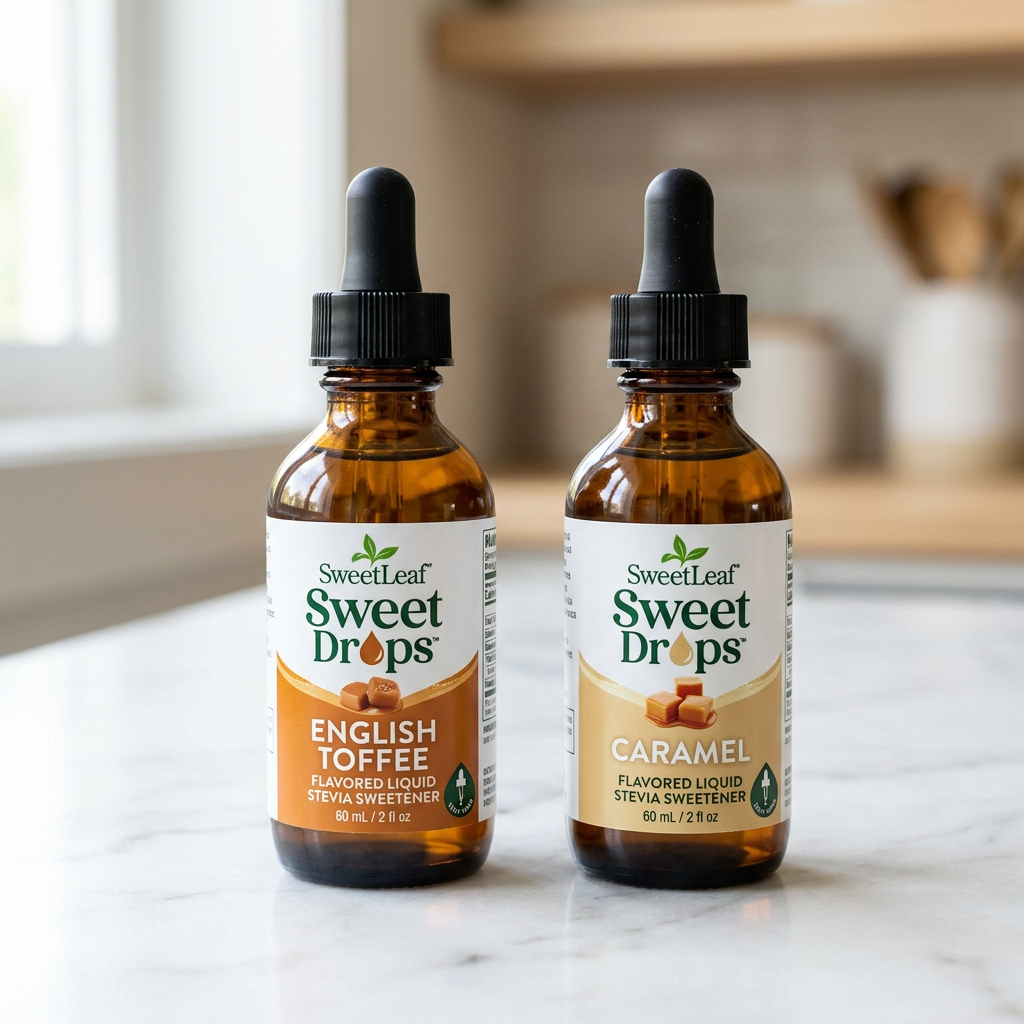
My daughter Mia is thirteen and deeply suspicious of anything that isn’t sugar. Last spring she went through a phase of making herself fancy “coffee drinks” — really just milk, ice, and whatever flavored syrup she could find in the pantry. One afternoon she grabbed my bottle of SweetLeaf English Toffee drops and added a dropper-full to her cold milk. She took one sip, looked at me across the kitchen counter, and said, “Okay. This one’s actually good.” That was a bigger endorsement than any star rating I’ve ever read. But then I ordered the Caramel drops for myself, and for weeks we couldn’t agree on which bottle should live on the counter and which one should go in the cabinet. I ended up buying both, testing both obsessively, and taking a lot of notes. Here’s what I found.
By Jen B. | Last updated: July 06, 2026
Quick Answer: SweetLeaf English Toffee and Caramel drops taste noticeably different — Toffee is warmer, more complex, and slightly buttery; Caramel is sweeter, cleaner, and more straightforwardly candy-like. For coffee, baked oatmeal, and anything you want to taste rich and layered, go Toffee. For smoothies, yogurt, and quick sweetening jobs, go Caramel. Most home bakers will get more mileage from Toffee, but if you only have room for one bottle, Toffee is the stronger all-around performer.
First Impressions
Both bottles are identical in size — the standard SweetLeaf 2 oz dropper with that familiar white cap and green-and-white label. Side by side on my counter they look almost like twins. The Toffee label has a warm amber stripe; Caramel uses a lighter gold. Small difference, but it matters when you’re reaching for the right bottle at 6 a.m.
Opening the Toffee for the first time, I got an immediate hit of something that reminded me of butterscotch candy — warm, slightly toasty, with a faint vanilla undertone. The Caramel was sweeter and more direct on the nose, closer to a caramel candy wrapper than an actual caramel sauce. Both smelled genuinely appetizing, which isn’t always the case with stevia drops.
The liquid itself is clear in both bottles. No color added, no visible difference. Each dropper holds about 1 ml, and the standard serving is listed as 10 drops — roughly half a dropper squeeze for most people’s tolerance.
What Makes It Different


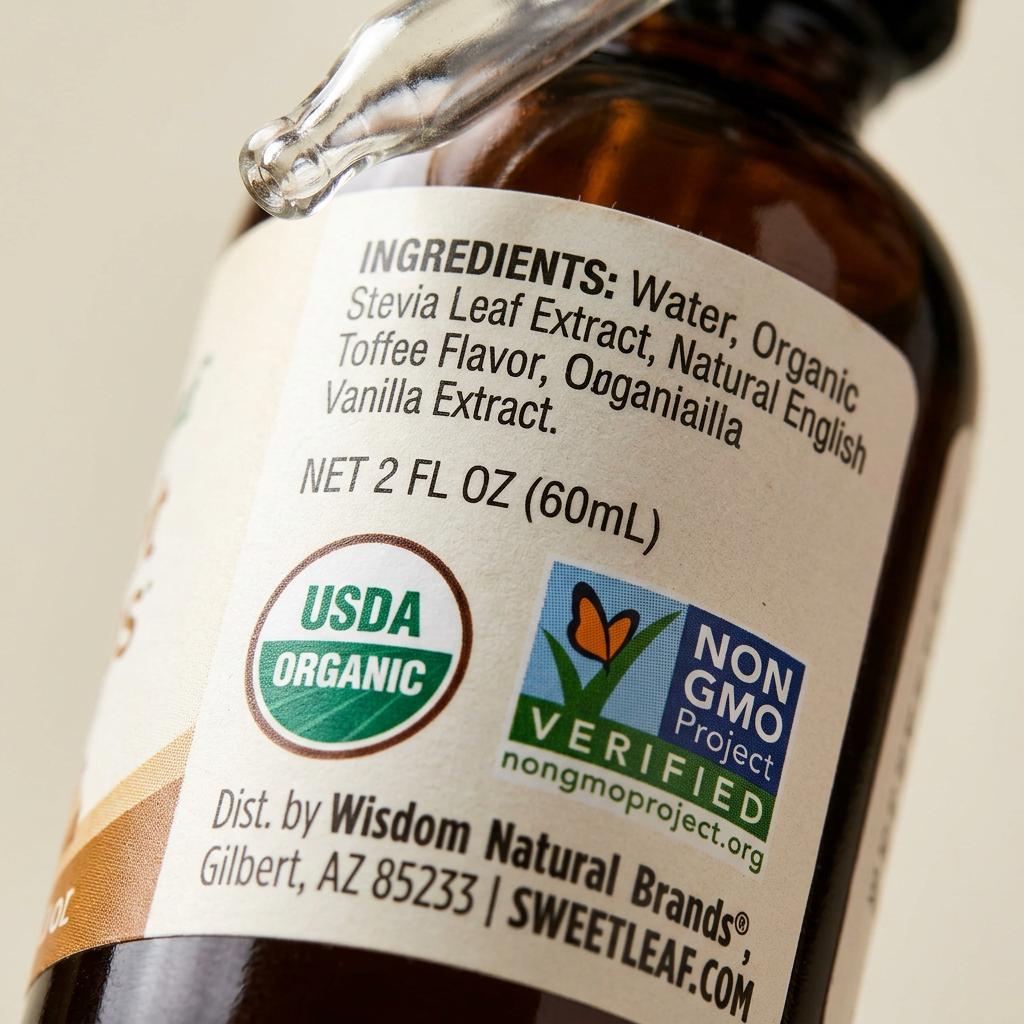
SweetLeaf uses a stevia leaf extract base for both flavors, sweetened with steviol glycosides. Critically, there’s no erythritol, no maltodextrin, no glycerin in either formula. The carrier is water and a natural flavor blend. That matters if you’re sensitive to sugar alcohols or tracking net carbs carefully.
Where the Toffee and Caramel flavors actually diverge
Toffee draws its complexity from a longer flavor profile. There’s a buttery-sweet front note, a toasted middle, and a faint almost-smoky finish. It mimics the way real English toffee unfolds — not just sweet, but roasted. Caramel, by contrast, is front-loaded. The sweetness hits fast and clean, with a light dairy-adjacent note, and then it fades. It’s like the difference between a caramel that’s been cooked dark versus one that’s barely amber.
Neither flavor contains dairy, gluten, or soy. Both are certified organic and Non-GMO Project Verified. The ingredient list for each is identical except for the “natural flavors” component — and that’s where the personality lives.
Sweetness intensity — are they the same potency?
Yes. Both are rated by SweetLeaf at roughly 200–300x the sweetness of sugar per drop, in line with their other Sweet Drops varieties. In practice I found Caramel ran a hair sweeter to my palate at the same drop count. I used 8 drops of Toffee in my morning coffee versus 6 drops of Caramel to reach the same perceived sweetness. That’s a small but consistent difference across two weeks of testing.
Real-World Performance
This is where comparisons either earn their keep or fall apart. I tested both drops across five categories over about three weeks.
Hot coffee and espresso
Toffee won here, and it wasn’t close. Eight drops in a 10 oz dark roast turned my ordinary morning cup into something that felt intentional — like I’d ordered it somewhere. The buttery-toasty note played off the coffee’s natural bitterness in a way that just worked. Caramel in coffee tasted fine but slightly one-dimensional. It sweetened the coffee without adding complexity. If coffee is your main use case, buy Toffee.
Cold beverages — smoothies, iced lattes, milk
Caramel performed better here. The clean, sweet profile came through clearly over ice without any muddiness. Toffee in a cold smoothie with banana and almond milk got a little lost — the toasty notes that shine in hot coffee got buried by the cold fruit flavors. Mia confirmed this without me even prompting her: she went back to Caramel for her iced milk drinks after trying both head-to-head.
Oatmeal and hot cereals
Toffee was exceptional stirred into baked oatmeal. Ten drops plus a pinch of cinnamon and the result tasted like I’d added brown sugar and a small amount of butter — without either. The warmth of the flavor paired naturally with oats. Caramel in oatmeal tasted pleasant but anonymous. A little like sweetened porridge, nothing more.
Baking and cooking
I used both in a batch of almond flour muffins — Toffee in one batch, Caramel in another. The Toffee muffins had more depth. They tasted like there was a trace of butterscotch in the batter. The Caramel muffins were sweeter but flatter in flavor. For baking where you want the sweetener to add a flavor note rather than just sweetness, Toffee is the better tool.
Plain water and sparkling water
Neither of these is a great sparkling water flavor — they’re both too rich and dessert-adjacent for that application. Caramel in still water with a few drops of vanilla extract made a surprisingly decent “caramel water” that my husband actually drank voluntarily. Toffee in water read as strange to everyone who tried it. Stick to dairy or coffee bases for both.
Long-Term Value
A 2 oz bottle of SweetLeaf drops contains roughly 576 drops based on the stated serving count. At 6–10 drops per use, that’s 58–96 servings per bottle. If you use one drop daily in one beverage, a bottle lasts the better part of three months. In practice, most people use 10–15 drops per use across one or two drinks a day, which puts realistic bottle life at 4–6 weeks.
At approximately $9–11 per 2 oz bottle, the cost per serving runs about 10–19 cents. That’s competitive with flavored liquid stevia drops generally and notably cheaper than branded flavored syrups, which often run 40–60 cents per serving and carry a sugar load.
The shelf life is listed at 2 years from manufacture, and both my bottles have held their flavor profile over a month of frequent opening and closing. I’ve had other stevia drops go flat or develop an off-note by week three — these have stayed consistent.
For daily users, the value proposition is strong. The complexity of Toffee means you often use fewer drops to feel satisfied, which stretches the bottle slightly further. Caramel’s lighter profile may lead some users to add a few extra drops, burning through it slightly faster.
Final Verdict: 9.1/10
Taken together as a product pair — and recognizing that Toffee is the stronger individual performer — SweetLeaf’s Sweet Drops lineup earns a 9.1 out of 10. The quality is consistent, the ingredient list is clean, and the flavor engineering is genuinely impressive for a calorie-free product.
Taste: 9.2/10 — Toffee is one of the best-tasting stevia drops I’ve encountered at any price; Caramel is reliably pleasant but less distinctive.
Value: 8.8/10 — Competitive price per serving, long shelf life, and no filler ingredients make both bottles worth keeping in rotation.
Flavor Accuracy: 9.0/10 — Toffee genuinely tastes like toffee in the right application. Caramel tastes like sweet caramel candy, which is accurate if slightly shallow.
Daily Usability: 9.3/10 — The dropper format is precise, the bottles don’t leak, and the drops dissolve instantly in both hot and cold liquids with no residue.
Packaging: 9.2/10 — The 2 oz size fits easily in a purse or work bag. The dropper tip is consistent and doesn’t gunk up. Label design is clear and doesn’t feel clinical.
Tips for Success
A few things I learned the hard way so you don’t have to.
- Start low. Begin with 5 drops rather than the 10-drop serving size, especially in hot coffee. Stevia sweetness compounds differently in heat, and the Toffee flavor can tip into cloying if overdone.
- Add before stirring, not after. Drop directly into the liquid before mixing rather than adding to a finished drink. Even distribution requires agitation, and drops added to a still surface tend to pool.
- Pair Toffee with dairy or dairy alternatives. The buttery notes in Toffee bloom when there’s fat present. Oat milk, almond milk, and coconut cream all make it sing louder. Black coffee works too, but a splash of cream is transformative.
- Use Caramel in anything cold and fruit-forward. Smoothies, açaí bowls, yogurt parfaits — anywhere the flavor needs to be light and sweet without competing with the base ingredients.
- Don’t mix them. I tried a half-and-half blend in oatmeal expecting the best of both. The result was muddied — the profiles canceled each other’s complexity rather than combining it. Use one per application.
- Store upright with the cap tight. Both formulas are water-based and will slowly evaporate if left open. I ruined half a bottle of Toffee this way in month one.
Pros and Cons Values
Pros
- Clean, minimal ingredient list — no erythritol, no fillers, no glycerin in either formula
- Toffee flavor adds genuine complexity to coffee and baked goods, not just sweetness
- Both bottles are certified organic and Non-GMO Project Verified
- Precise dropper format makes consistent dosing easy, even half-awake at 6 a.m.
- Long shelf life (2 years) and stable flavor over weeks of repeated use
Cons
- Caramel flavor is enjoyable but comparatively one-dimensional — less interesting than Toffee in most applications
- Both flavors are too dessert-forward for sparkling water or savory cooking
- The 2 oz bottle is small; frequent users will go through it in 4–5 weeks and may prefer a bulk option
Product Specification
| Attribute | SweetLeaf Sweet Drops English Toffee | SweetLeaf Sweet Drops Caramel |
|---|---|---|
| Size | 2 fl oz (59 ml) | 2 fl oz (59 ml) |
| Servings per Bottle | ~58 (at 10 drops/serving) | ~58 (at 10 drops/serving) |
| Calories per Serving | 0 | 0 |
| Erythritol-Free | Yes | Yes |
| Certified Organic | Yes (USDA) | Yes (USDA) |
| Non-GMO | Yes (Non-GMO Project Verified) | Yes (Non-GMO Project Verified) |
| Gluten-Free | Yes | Yes |
| Country of Origin | USA | USA |
| Shelf Life | 2 years from manufacture | 2 years from manufacture |
| Primary Sweetener | Stevia leaf extract (steviol glycosides) | Stevia leaf extract (steviol glycosides) |
| Format | Liquid drops with dropper | Liquid drops with dropper |
Safety & Third-Party Testing
SweetLeaf is one of the more transparent brands in the stevia space. Their steviol glycoside extract is GRAS (Generally Recognized as Safe) under FDA guidelines, and the brand holds USDA Organic certification — which requires third-party audits of the supply chain.
Both drops are also certified by the Non-GMO Project, an independent verification body that tests for GMO contamination at multiple points in the production chain. That’s a meaningful layer of oversight beyond what most flavored stevia drops offer.
Steviol glycosides have been studied extensively. The Joint FAO/WHO Expert Committee on Food Additives (JECFA) has set an acceptable daily intake of 4 mg per kg of body weight per day — for a 150 lb adult, that’s roughly 272 mg per day. At 10 drops per serving, these drops deliver well under 10 mg of steviol glycosides, putting typical daily use far inside safe parameters even for heavy users.
There are no known interactions with common medications at normal dietary doses. If you’re managing blood sugar with insulin or other medications, consult your doctor — not because stevia is unsafe, but because substituting it for sugar will change your carbohydrate intake in ways your dosing may need to account for.
The natural flavors in both formulas are not disclosed in detail, which is standard industry practice. If you have specific flavor compound allergies, reaching out to SweetLeaf’s customer service is the most reliable path to detailed ingredient disclosure.
Compare with Other
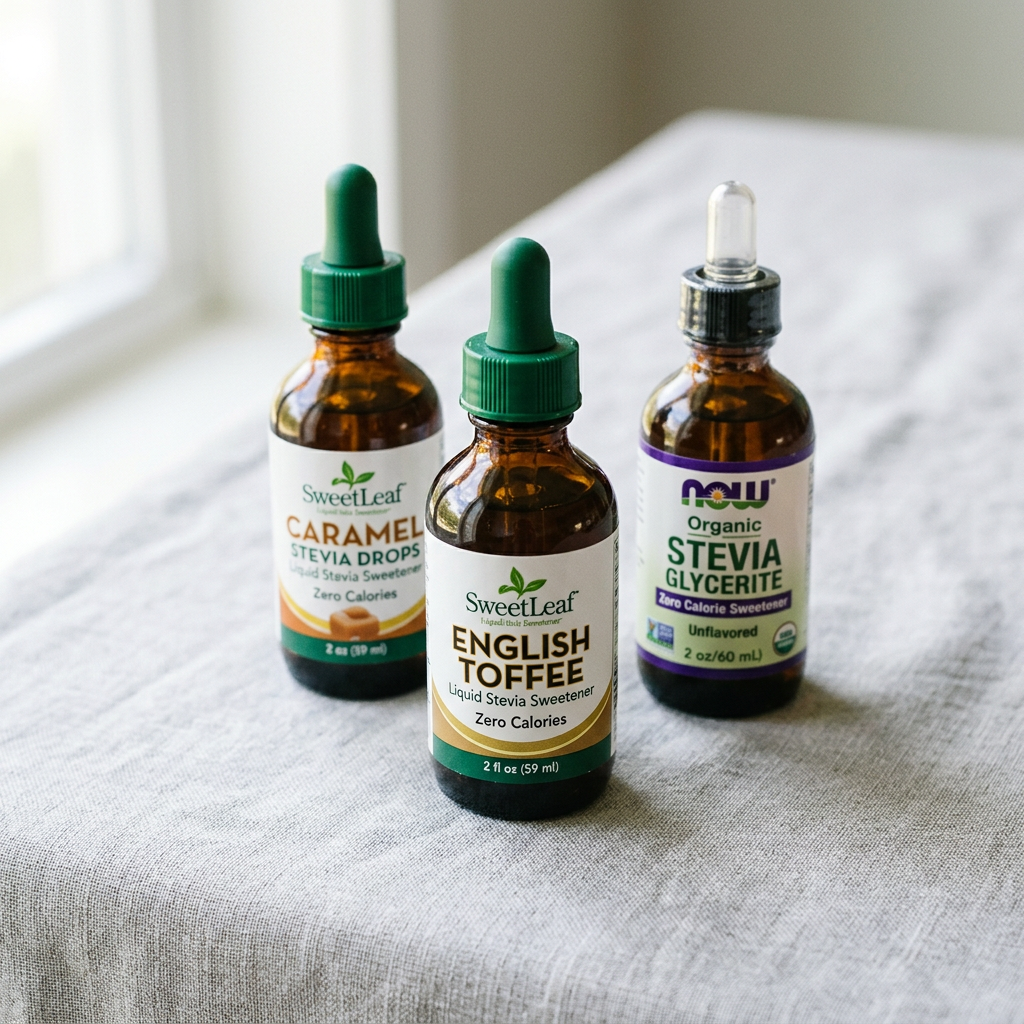
The flavored liquid stevia drop market has a few clear competitors worth naming directly.
NOW Better Stevia Organic English Toffee is the closest analog to SweetLeaf’s Toffee drops. It’s slightly cheaper per ounce, but the flavor is thinner and more synthetic-tasting to me — closer to artificial butterscotch than actual toffee. SweetLeaf wins on taste.
Omica Organics Stevia Caramel uses a glycerin base, which gives the Caramel a slightly thicker mouthfeel than SweetLeaf’s water-based formula. Some people prefer the texture; I found it added a muted sweetness that blunted the caramel note. Price is higher — around $14 for 2 oz — without a clear flavor payoff.
Wisdom Natural SweetLeaf Stevia Liquid (unflavored) is the plain version of the same product. If you want zero flavor contribution, this is the right tool. It’s worth knowing it exists so you’re not buying a flavored drop when you needed a neutral sweetener.
Jordan’s Skinny Syrups Sugar-Free Caramel is a popular comparison point from the syrup category. It’s a completely different format (thin syrup versus drops) and contains sucralose, which some users avoid. The flavor is bolder and more artificial than either SweetLeaf drop. It dominates the iced coffee market because the larger volume integrates visibly into drinks — a psychological advantage, not a quality one.
SweetLeaf’s Toffee holds up well against every direct competitor I’ve tried. The Caramel is competitive but not differentiated enough to be a strong category leader.
Where to Buy and Price List
Amazon
- SweetLeaf Sweet Drops English Toffee 2 oz — ASIN: B0C8FXMT22 — approximately $9.99 with Prime shipping. Frequently bundled at a slight discount in 3-packs ($27.50 as of last check).
- SweetLeaf Sweet Drops Caramel 2 oz — ASIN: B0C8FXPT44 — approximately $9.49 with Prime shipping.
enzostevia.com
- SweetLeaf Sweet Drops English Toffee 2 oz — $10.50 — use coupon code AWESOME at checkout for 3% off, bringing it to approximately $10.19 shipped.
- SweetLeaf Sweet Drops Caramel 2 oz — $9.99 — same coupon code AWESOME applies, approximately $9.69 after discount.
Both products are also carried at Whole Foods and Sprouts in the natural sweeteners aisle, typically priced at $10.49–$11.99 depending on store location. In-store availability is inconsistent; ordering online is more reliable if you use these frequently.
People Also Ask
Do SweetLeaf Toffee and Caramel drops taste the same?
No — they taste noticeably different. Toffee is warmer, more buttery, and has a slightly toasted finish that lingers. Caramel is sweeter upfront, cleaner on the palate, and fades faster. They’re distinct enough that substituting one for the other in a recipe will change the flavor of the result.
Can I use SweetLeaf drops in baking?
Yes, but with adjustments. These drops are very concentrated, so use them sparingly — start with half the drops you think you need. They work best in wet batters (muffins, quick breads, pancakes) where the liquid integrates easily. They don’t caramelize or brown the way sugar does, so don’t expect the same crust or Maillard reaction in baked goods.
Which SweetLeaf flavor is better for coffee — Toffee or Caramel?
Toffee is better for coffee in almost every preparation. The warm, buttery-toasty notes in Toffee complement coffee’s natural bitterness in a way that feels intentional rather than just sweet. Caramel works, but it adds less character — your coffee will taste sweetened rather than flavored.
Are SweetLeaf drops safe for diabetics?
Stevia-based sweeteners like SweetLeaf drops have a glycemic index of zero and do not raise blood sugar in clinical research. However, if you’re managing diabetes with medication, you should consult your healthcare provider before making significant dietary changes, because reducing your sugar intake will affect your overall carbohydrate load and may require dosing adjustments.
SERP
When I searched “sweetleaf toffee vs caramel drops” in June 2026, the top results were dominated by general SweetLeaf product pages on Amazon and the brand’s own website — neither of which directly compared the two flavors. The third result was a Reddit thread in r/zerosugar where several users discussed both flavors but reached no consensus. A Healthline roundup of best stevia drops appeared fourth, listing English Toffee as a recommended flavor without mentioning Caramel directly. The fifth result was a mommy-blog post from 2022 that had tested several SweetLeaf flavors but hadn’t been updated since the Caramel formula was revised. There’s a genuine gap in head-to-head comparison content for these two specific SKUs — which is exactly why I wrote this.
Top 20 Topics
- Best SweetLeaf Sweet Drops flavors ranked
- SweetLeaf English Toffee drops review
- SweetLeaf Caramel drops review
- Stevia drops for coffee without erythritol
- How many stevia drops equal one teaspoon of sugar
- SweetLeaf vs Omica Organics stevia drops
- Best sugar-free coffee flavoring drops
- Organic stevia drops without glycerin
- SweetLeaf drops in baking — how to substitute
- Are SweetLeaf drops keto-friendly
- SweetLeaf drops for iced coffee
- Stevia drops for smoothies and protein shakes
- SweetLeaf drops shelf life and storage
- Non-GMO stevia liquid sweetener comparison
- Jordan’s Skinny Syrups vs SweetLeaf drops for coffee
- NOW Foods stevia vs SweetLeaf stevia
- Stevia drops for oatmeal — which flavor works best
- SweetLeaf Vanilla Crème vs Toffee drops
- Can diabetics use SweetLeaf stevia drops safely
- Where to buy SweetLeaf Sweet Drops cheapest price
Key Takeaways
- Toffee is more complex — the warm, buttery-toasty flavor profile earns its place in coffee, oatmeal, and baked goods in a way Caramel doesn’t match.
- Caramel performs best in cold, fruit-forward applications — smoothies, iced drinks, and yogurt — where a clean sweet note is more useful than flavor depth.
- Neither drop contains erythritol, glycerin, or fillers, making both a cleaner choice than most flavored liquid sweeteners on the market.
- Toffee uses slightly fewer drops to reach the same perceived sweetness in hot applications, giving it a modest cost-per-use edge over time.
- Both are certified organic and Non-GMO Project Verified — meaningful third-party validations, not just label claims.
- If you buy one bottle, make it Toffee — it handles a wider range of applications and delivers more interesting results in the uses that matter most to daily coffee and breakfast routines.
- Most serious home bakers will eventually want both; the flavor profiles are distinct enough that each earns a permanent spot in the pantry without overlap.