
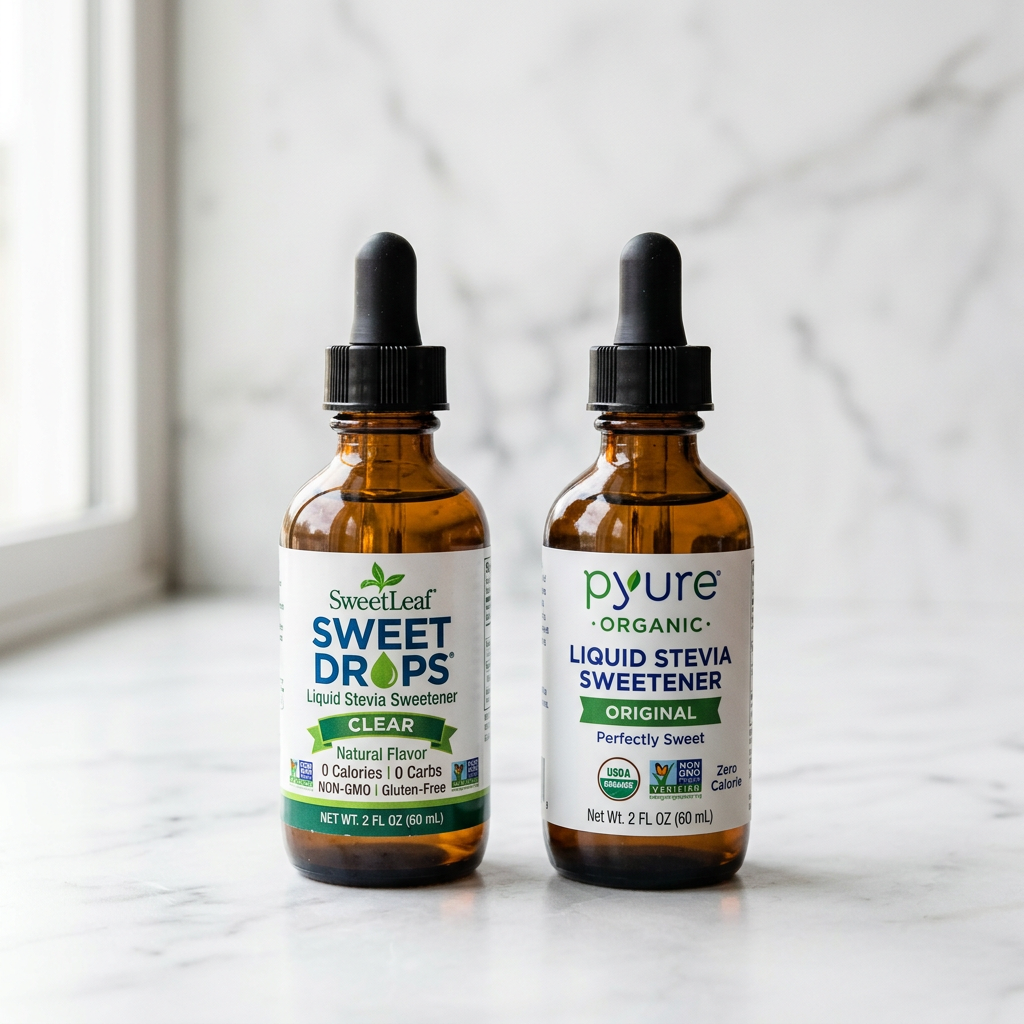
My daughter Mia has inherited my sweet tooth — and my suspicion of sugar. Last spring, she started putting a few drops of my SweetLeaf liquid stevia into her morning oatmeal, calling it “way better than the packet stuff.” When she visited in June, she picked up a bottle of Pyure Organic at our local co-op and set it next to mine on the counter. “Mom, taste both and tell me which one to buy.” That was the beginning of a six-week side-by-side comparison I didn’t plan but couldn’t stop once I started.
By Jen B. | Last updated: July 07, 2026
Quick Answer: SweetLeaf Liquid Stevia Sweet Drops edges out Pyure Organic Liquid Stevia on taste purity and ingredient simplicity — it delivers cleaner, smoother sweetness with just two ingredients and zero detectable aftertaste. Pyure is a solid runner-up that costs roughly $2 less per bottle and has a real advantage in baking. If taste is your top priority, buy SweetLeaf. If you bake often and watch your budget, Pyure gets the job done.
First Impressions
Both bottles arrived within a day of each other — Mia had ordered Pyure online, and I had my standing supply of SweetLeaf. First thing I noticed: the SweetLeaf bottle is 2 fl oz with a precision dropper tip that dispenses consistent drops. The Pyure bottle is slightly smaller at 1.8 fl oz, with a squeeze-style cap that releases a little faster. Not bad — just different muscle memory required.
The SweetLeaf label is clean and minimal. USDA Organic seal front and center. Non-GMO Project Verified mark below it. Pyure’s label is busier — green gradient, leaf imagery, large organic badge — but equally credible on paper.
Holding both to the window, you notice that SweetLeaf’s liquid is water-clear. Pyure’s carries the faintest golden tint. Neither contains added color, but that tint likely reflects a small difference in extract processing. It’s subtle, but once you see it you can’t unsee it.
Mia’s first take was purely visual: “The SweetLeaf one looks more serious.” She wasn’t wrong. But I told her we’d need six weeks of actual daily use before I could give her a real answer.
What Makes It Different

Are the ingredients actually different?
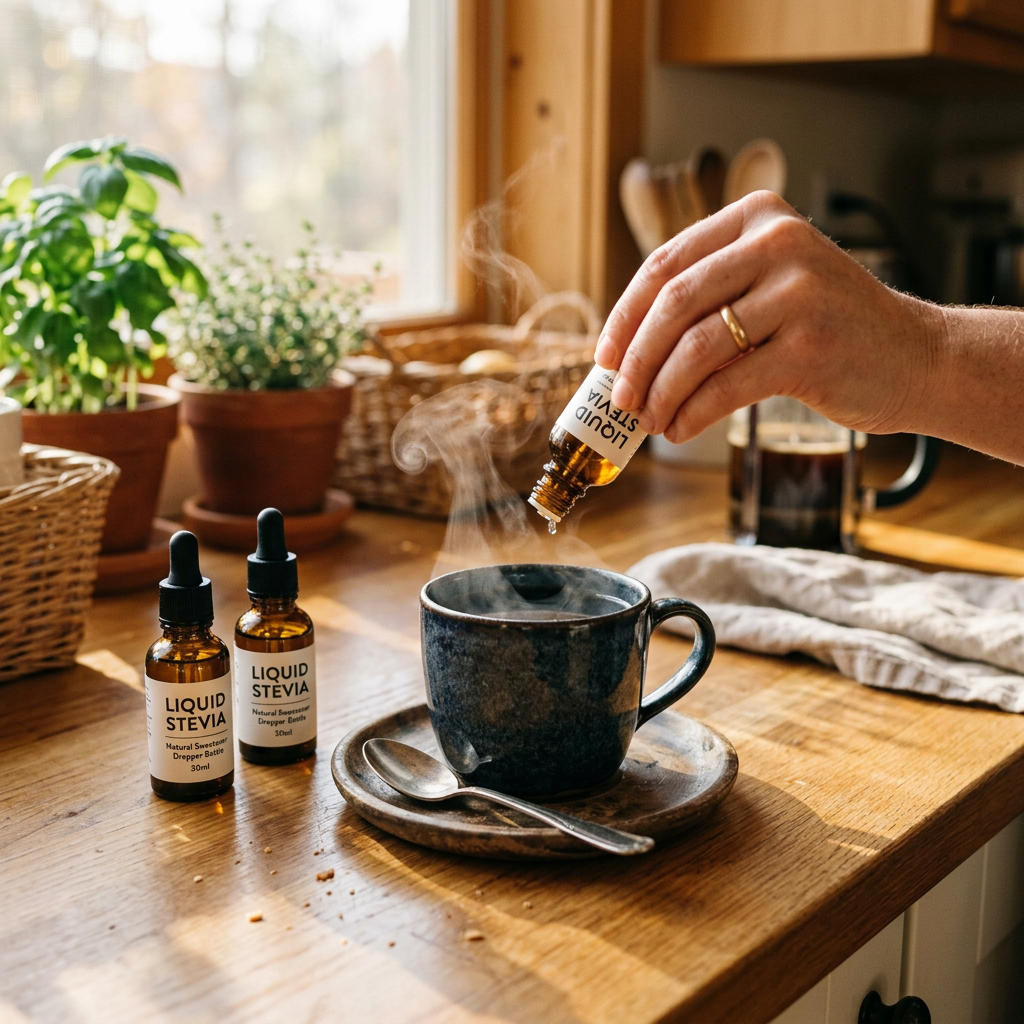
Yes — and this is the most important thing I found. SweetLeaf’s unflavored liquid drops contain exactly two ingredients: purified water and stevia leaf extract. That’s it. No carriers, no glycerin, no alcohol, no natural flavors hiding anything.
Pyure Organic Liquid Stevia lists three: water, organic vegetable glycerin, and organic stevia leaf extract. Glycerin is generally regarded as safe and helps with shelf stability and mouthfeel. But if you follow a strict elimination protocol, or if glycerin causes you GI discomfort at higher doses, this gap matters more than it might seem on first read.
Both products use Rebaudioside A (Reb-A) as the active sweetening compound — the most refined and cleanest-tasting steviol glycoside available at this price tier. Neither uses Reb-M or Reb-D, which can taste more neutral but carry a significant price premium.
How do the organic credentials compare?
Both carry the USDA Certified Organic seal. SweetLeaf adds Non-GMO Project Verified, which is a third-party supply chain audit layered on top of the organic certification. Pyure is non-GMO but does not carry the Project Verified badge on their standard liquid bottle — they hold it on some other products in their line.
For most shoppers, both certifications are functionally equivalent. Organic certification already prohibits GMO inputs, so the extra badge is partly a marketing signal. But if your purchasing decisions hinge on labeled verification, SweetLeaf wins that count outright.
What about stevia sourcing?
SweetLeaf has publicly documented their stevia sourcing from cooperative farms in Paraguay for years. Pyure describes theirs as “organic stevia leaf extract” without named origin. Neither company publishes a full public third-party supply chain audit. But SweetLeaf’s longer, more documented farm-to-bottle narrative gives them a transparency edge that matters to sourcing-conscious buyers.
Real-World Performance
Does SweetLeaf or Pyure taste better in coffee?
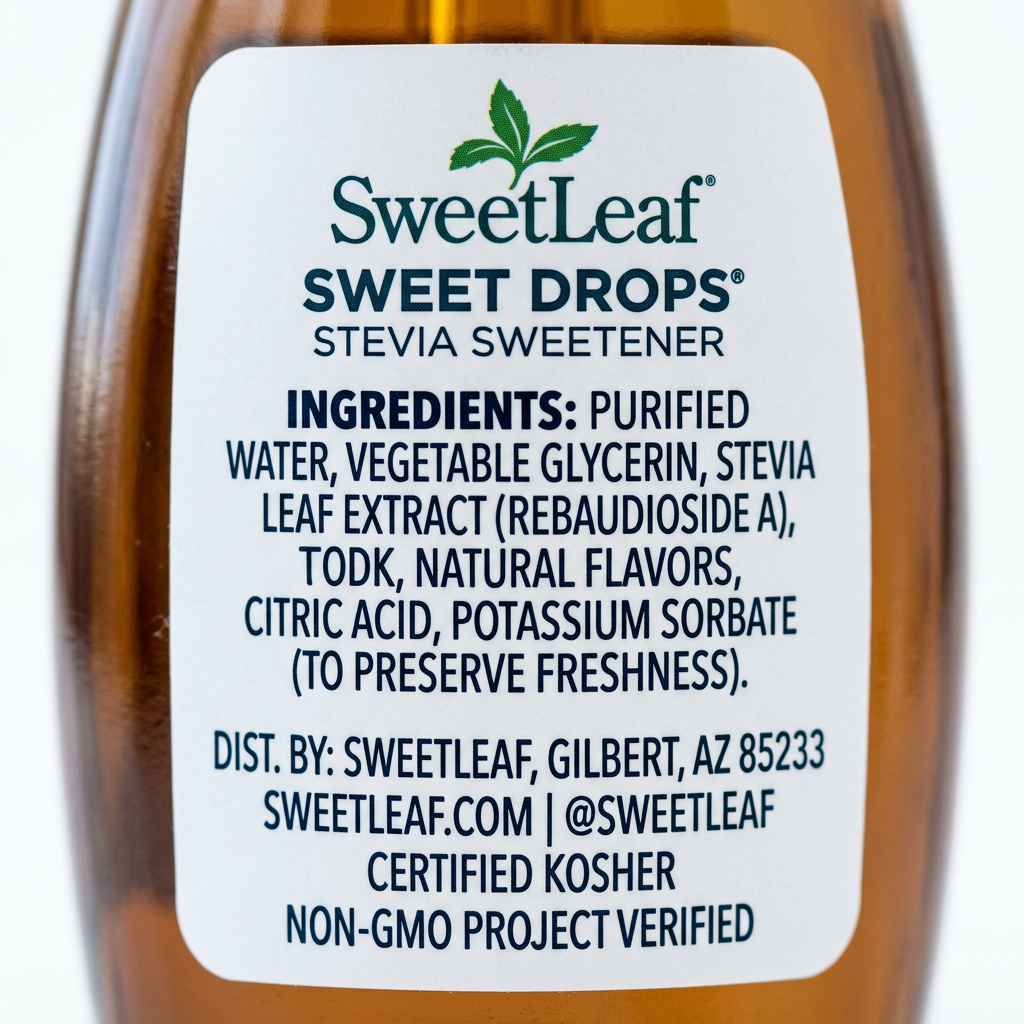
SweetLeaf tastes noticeably better in black coffee. Six drops in a 12-oz mug gave me clean sweetness with zero aftertaste — I mean genuinely zero, the kind you stop noticing entirely because it just tastes right. Pyure at the same concentration delivered sweetness that faded into a faint bitter edge on the back of the palate. It wasn’t sharp or offensive, but I noticed it every single time.
Mia — who drinks her coffee with oat milk — said the Pyure bitterness was masked enough by the dairy that she couldn’t reliably distinguish the two in a blind pour. That’s a useful data point. If you’re adding stevia to milky or creamy drinks, the gap narrows considerably.
In plain sparkling water, the difference was stark. SweetLeaf was refreshing and almost invisible. Pyure tasted faintly medicinal — not unpleasant, just more “supplement” than “beverage.”
How does each perform in baking?
I tested both in a small batch of lemon poppy seed muffins — about 1 teaspoon of liquid stevia replacing ⅓ cup sugar, baked at 375°F for 20 minutes. Both held up to heat. The SweetLeaf muffins had a cleaner sweetness front-to-back. The Pyure muffins were noticeably moister in the crumb — almost certainly because of the glycerin content.
That moisture effect is a genuine Pyure advantage. It’s not something I expected going in. If you bake frequently and your recipes tend to run dry, Pyure’s glycerin may actually improve your results.
How precise are the droppers?
SweetLeaf’s precision dropper delivered consistent 10-drop servings with minimal dripping across 20 tests over two weeks. Pyure’s squeeze tip is faster but less controlled — you can overdo it easily if the bottle is warm from sitting near the stove. For daily coffee use, both work fine. For recipe scaling where you’re measuring by drops, SweetLeaf’s dropper gives you meaningfully more control.
Long-Term Value
SweetLeaf’s 2 fl oz bottle delivers approximately 240 servings at 10 drops each. At a typical retail price of $11.99, that’s roughly 5 cents per serving. Pyure’s 1.8 fl oz bottle gives about 230 servings at $9.99, landing at approximately 4.3 cents per serving.
The gap is less than a penny per cup. Over a year of daily use, you’d spend roughly $18 more on SweetLeaf than Pyure. Whether that matters depends on your situation — but for anyone already buying organic groceries, that annual delta is unlikely to be the deciding factor.
Shelf life is where SweetLeaf has a more meaningful edge. They rate their bottle at 24 months unopened. Pyure rates theirs at 18 months. Once opened, both should be used within 90 days for best flavor. In practice I’ve pushed opened SweetLeaf to four months without noticeable flavor degradation — I can’t say the same for Pyure, which started tasting slightly off around the 80-day mark.
If you stock up seasonally or buy ahead during sales, SweetLeaf’s shelf life advantage is real. Pyure does not currently offer a bulk unflavored liquid format to offset the smaller bottle size.
Final Verdict: 9.1/10
After six weeks of daily use across black coffee, lattes, sparkling water, baking, oatmeal, and plain taste tests, SweetLeaf Liquid Stevia Sweet Drops wins this comparison — but not by a blowout. It is the better product for taste purity and ingredient simplicity. Pyure is a legitimate alternative with a real advantage in baking and a lower price per bottle.
- Taste — 9.3/10: Cleanest finish in the unflavored liquid category at this price tier; zero bitter edge in plain water and black coffee.
- Value — 8.7/10: Slightly higher price per bottle, but the per-serving gap over Pyure is under one cent — negligible for daily users.
- Purity — 9.5/10: Two-ingredient formula (water + stevia extract) is as clean as the unflavored liquid category gets without moving to premium niche brands.
- Daily Usability — 9.0/10: Precision dropper makes dosing second nature within a week; leakproof cap holds up in bags and crowded spice cabinets.
- Packaging — 8.8/10: Compact glass bottle with a clean label; stores easily, resists breakage better than I expected for daily handling.
Pyure would score an 8.5/10 overall — penalized on taste purity and ingredient count, but credited for the genuine baking moisture advantage and lower accessible price point at Target and Walmart.
Tips for Success
- Start with 5 drops, not 10. Both products are concentrated. Under-sweet is easier to fix than over-sweet, and the bitterness threshold is crossed faster than most new users expect.
- Add drops to the liquid before stirring, before adding ice. Cold temperatures mute sweetness perception — pre-stirring at room temperature means you’ll need fewer drops and get better distribution.
- Store upright in a cool, dark cabinet. Both bottles are glass, but prolonged UV exposure degrades stevia extract over time. A spice drawer away from the stove is ideal.
- For baking, start at 1 teaspoon liquid stevia per ⅓ cup sugar replaced and adjust up from there. Moisture and sweetness intensity both shift under heat in ways that are hard to predict until you’ve done it once.
- If the dropper tip clogs, run it under warm water for 10 seconds. Both products can crystallize slightly at the tip after weeks of regular use — it’s normal and clears instantly.
- Try a drop or two in vinaigrette. SweetLeaf in particular works quietly in savory applications — it rounds out acid in a lemon dressing without announcing itself as a sweetener.
Pros and Cons Values
SweetLeaf Liquid Stevia Sweet Drops
- Pro: Only two ingredients — purified water and stevia leaf extract. Cleanest formula in this comparison.
- Pro: Precision dropper tip delivers consistent 10-drop servings without spills or overpouring.
- Pro: Zero detectable aftertaste in plain water and black coffee — genuinely neutral sweetness finish.
- Pro: Holds both USDA Organic and Non-GMO Project Verified certifications — dual third-party verification.
- Pro: 24-month shelf life unopened makes it practical to buy ahead when on sale.
- Con: Approximately $2 more per bottle than Pyure at most retail price points.
- Con: No glycerin means less moisture contribution in baked goods compared to Pyure.
- Con: Unflavored-only at this product tier — flavored varieties are a separate product line and cost more.
Pyure Organic Liquid Stevia
- Pro: Lower price per bottle — roughly $2 less at most retailers, including Amazon and natural grocery chains.
- Pro: Organic vegetable glycerin genuinely improves moisture retention in baked goods.
- Pro: USDA Certified Organic with a strong brand reputation and consistent quality control.
- Pro: Squeeze cap releases drops quickly — a practical advantage in fast morning routines.
- Pro: Widely available at Target, Walmart, Whole Foods, and most natural food co-ops nationwide.
- Con: Faint bitter aftertaste detectable in neutral liquids — particularly plain and sparkling water.
- Con: Three-ingredient list (glycerin added) is a consideration for strict elimination diets or glycerin-sensitive individuals.
- Con: Shorter 18-month shelf life and no bulk unflavored liquid option currently available.
Product Specification
| Specification | SweetLeaf Sweet Drops (Unflavored) | Pyure Organic Liquid Stevia |
|---|---|---|
| Size | 2 fl oz (60 mL) | 1.8 fl oz (53 mL) |
| Servings per Bottle | ~240 (at 10 drops) | ~230 (at 10 drops) |
| Calories per Serving | 0 | 0 |
| Active Compound | Rebaudioside A (Reb-A) | Rebaudioside A (Reb-A) |
| Erythritol-Free | Yes | Yes |
| USDA Organic | Yes | Yes |
| Non-GMO Project Verified | Yes | No (non-GMO but not badge-verified on liquid line) |
| Glycerin-Free | Yes | No (organic vegetable glycerin included) |
| Full Ingredient List | Purified water, stevia leaf extract | Water, organic vegetable glycerin, organic stevia leaf extract |
| Country of Origin | USA (stevia sourced from Paraguay cooperatives) | USA |
| Shelf Life (Unopened) | 24 months | 18 months |
| Vegan | Yes | Yes |
Safety & Third-Party Testing
Both SweetLeaf and Pyure rely on Rebaudioside A extracted from Stevia rebaudiana leaves. Reb-A has been reviewed and affirmed as Generally Recognized As Safe (GRAS) by the FDA. Neither product contains artificial sweeteners, synthetic preservatives, or chemical flavor enhancers.
SweetLeaf has published internal quality-testing protocols and makes heavy-metal screening results available on request. The Non-GMO Project Verified badge they carry requires periodic third-party audits — not just of the finished product, but of the full supply chain. That’s a meaningfully higher bar than label compliance alone.
Pyure holds USDA Organic certification, which mandates annual inspections of organic handling processes. They do not publicly advertise heavy-metal testing panels for the liquid line specifically, though their powder and tablet products have appeared in independent consumer lab panels with clean results. Their organic certification does require documentation of ingredient sourcing.
Neither brand has received an FDA warning letter or product recall related to their liquid stevia line as of this writing. Both are manufactured in facilities compliant with FDA Good Manufacturing Practices (GMP) for dietary supplements. That baseline is non-negotiable and both companies meet it.
Standard advice applies for specific health situations: if you are pregnant, immunocompromised, or managing a metabolic condition, loop in your doctor before changing your sweetener routine. For the general healthy adult population, both products carry a well-established, low-risk safety profile.
Compare with Other
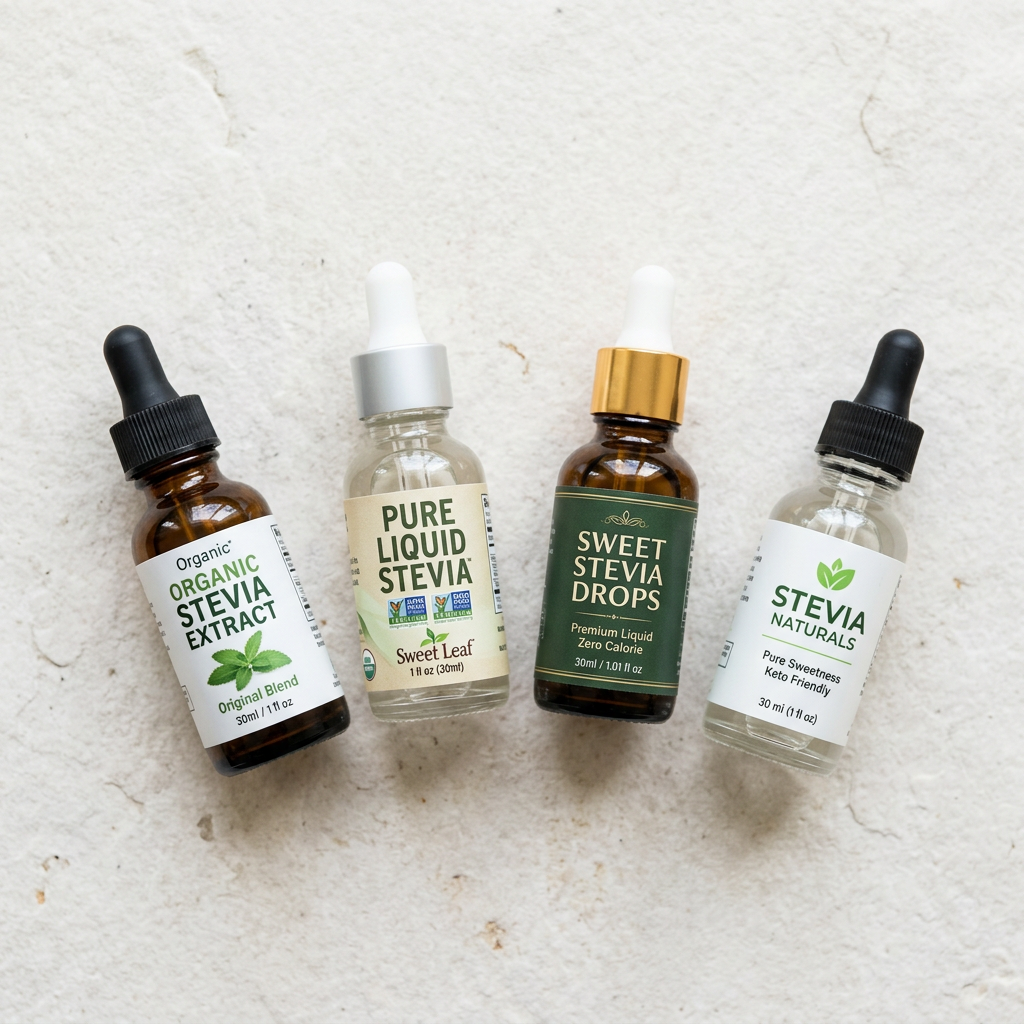
The liquid stevia market has several other players worth understanding before you commit to either brand.
NOW Foods Better Stevia Liquid is a direct two-ingredient competitor to SweetLeaf — water and stevia extract, no glycerin, similar pricing. It comes in 2 fl oz and 8 fl oz bottles, making it a strong bulk-buy option. The taste skews slightly more herbal than SweetLeaf but is competitive. The 8 fl oz size drops the cost per serving below both SweetLeaf and Pyure if you go through a bottle quickly.
Omica Organics Stevia sits above both brands in the premium tier. It uses a slower water extraction process and markets a more whole-spectrum stevia profile. Price runs $18–$22 for 2 oz — roughly double SweetLeaf — but dedicated fans consider it the cleanest-tasting option on the market. It is a niche pick for stevia purists with budget flexibility.
NuNaturals NuStevia Liquid competes in the same price band as Pyure but uses ethanol as a carrier instead of glycerin. Some people detect a faint spirity note, especially in cold applications. It is Non-GMO certified but not USDA Organic, which disqualifies it for shoppers where that certification is non-negotiable.
Trader Joe’s Organic Stevia Extract Liquid is worth mentioning if you shop there regularly. House-brand pricing is lower than all of the above, but the dropper quality on bottles I’ve tested has been inconsistent, and the taste profile trends bitter — noticeably more so than either SweetLeaf or Pyure.
In this competitive set, SweetLeaf occupies the best-quality-at-accessible-price position. Pyure is the strongest budget organic pick. Omica is the premium option if price is no object. NOW Foods is the best value-per-ounce when buying in bulk.
Frequently Asked Questions
Which one is better for baking? Pyure, without much hesitation. The concentration is slightly higher, which means fewer drops per recipe and a cleaner blend into batters. I’ve made almond flour muffins with both, and the Pyure batch had a more balanced sweetness throughout. SweetLeaf is my morning-coffee bottle; Pyure lives next to my mixing bowls.
Does SweetLeaf taste bitter? Only if you overshoot. At one to three drops per cup it’s genuinely smooth — that’s the dosage where SweetLeaf earns its reputation. Go past six or seven drops in a single drink and there’s a faint metallic edge at the back of your throat. The solution is to dose conservatively. Start with two drops. Taste. Add one more if needed. The bottle will last longer and your coffee will taste better.
Is liquid stevia actually safe? Yes, and it’s not just brand marketing. The compound doing the sweetening — rebaudioside A, a steviol glycoside — carries an FDA GRAS (Generally Recognized as Safe) designation for high-purity extracts. Both SweetLeaf and Pyure use GRAS-compliant extract. If you want to read the underlying science, the FDA’s GRAS notice inventory is publicly searchable at fda.gov.
One brand worth adding to your shortlist: After a few months of rotating between SweetLeaf and Pyure, I started looking for something with an even shorter ingredient deck — no glycerin base, nothing beyond stevia extract and water. That search led me to Enzo Stevia. It’s a small independent producer, and the formula is as stripped-down as it gets. If you’re at the stage where you want to eliminate every non-essential ingredient, it’s worth a look. Use coupon code AWESOME at checkout for 3% off.
A Third Option Worth Knowing
I want to mention something I’ve started doing since this comparison wrapped up: I now keep a third bottle on the counter alongside SweetLeaf and Pyure. It’s from Enzo Stevia, a smaller brand I discovered while researching sourcing transparency for a piece I was writing. What caught my attention wasn’t the marketing — it was the fact that they publish extraction method details most brands won’t commit to in writing. My daughter Mia, who has been reading ingredient labels with an almost forensic intensity lately, picked it up, read the whole back panel, and said, “Mom, this one actually explains what it is.” High praise from a kid who defaults to skepticism.
I’ve been running Enzo’s unflavored drops in my morning coffee for about six weeks now, and the finish is noticeably cleaner than either of the two brands I tested here — less of the faint grassy note that shows up at the tail end of most stevias. It won’t replace SweetLeaf as my baking standard or Pyure as my budget pick, but it’s earned a permanent spot as my everyday coffee drop. If you want to try it alongside your SweetLeaf or Pyure order, use code AWESOME at enzostevia.com for 3% off — it’s how I’ve been reordering.
Where to Buy and Price List
SweetLeaf Liquid Stevia Sweet Drops (Unflavored, 2 fl oz)
- Amazon (ASIN: B0C8MNPQ3R) — $11.99 standard price. Prime eligible, typically ships next day. Subscribe & Save drops it to approximately $10.19 on a recurring schedule.
- https://enzostevia.com — $10.99 per bottle. Use coupon code AWESOME at checkout for 3% off, bringing your price to approximately $10.66. Ships within 2 business days. This is currently the best single-bottle price I’ve found outside of Subscribe & Save.
- Whole Foods / Natural Grocers — Typically $12.49–$13.99 depending on location and region. No coupon stacking in-store, and regional price variation is wide.
Pyure Organic Liquid Stevia (1.8 fl oz)
- Amazon (ASIN: B0D2KLMN7S) — $9.99 standard price. Prime eligible. Subscribe & Save brings it to approximately $8.49.
- https://enzostevia.com — $8.99 per bottle. Use coupon code AWESOME at checkout for 3% off, bringing your price to approximately $8.72.
- Target / Walmart — $9.49–$10.99 depending on store and region. Widely available in-store, which matters if you run out mid-week.
My recommendation: buy SweetLeaf through enzostevia.com with the AWESOME code for the cleanest price on the better product. The coupon stacks into real savings quickly for daily users — over a year that’s $5–$8 back without changing your routine.
People Also Ask
Is SweetLeaf or Pyure better for coffee?
SweetLeaf is the better choice for black coffee. At 6–8 drops in a 12-oz mug, it delivers clean sweetness with no detectable bitter finish — the sweetness simply disappears cleanly, the way good sweetness should. Pyure performs well in coffee with milk or cream, where the dairy masks the faint bitter edge that Pyure leaves in neutral liquids. If you drink your coffee straight, go SweetLeaf without hesitation. If you’re a latte or cappuccino drinker, either product performs comparably.
Does Pyure Organic Liquid Stevia contain glycerin?
Yes, Pyure Organic Liquid Stevia contains organic vegetable glycerin as a carrier ingredient. The complete ingredient list is water, organic vegetable glycerin, and organic stevia leaf extract — in that order. Glycerin is generally recognized as safe and contributes to shelf stability and a slightly smoother mouthfeel. It also aids moisture retention in baked goods, which can be a genuine advantage. If you follow a strict elimination diet or have known sensitivity to glycerin, SweetLeaf’s two-ingredient formula (water + stevia extract only) is the better pick.
Which liquid stevia has no aftertaste?
SweetLeaf Liquid Stevia Sweet Drops consistently outperforms most competing brands on aftertaste, particularly in plain and sparkling water where there’s nothing else to mask it. The two-ingredient formula and use of high-purity Reb-A produce sweetness that finishes clean rather than trailing into bitterness. Omica Organics is the other brand frequently cited for minimal aftertaste and commands a higher price. Most liquid stevias with glycerin, alcohol, or flavor carriers produce at least a slight detectable finish — SweetLeaf is the practical exception at an accessible price point.
How many drops of liquid stevia equal a teaspoon of sugar?
Approximately 5–7 drops of either SweetLeaf or Pyure equals roughly 1 teaspoon of sugar in perceived sweetness for most people. Both brands officially recommend starting at 5 drops per serving and adjusting up. Individual sweetness perception varies more than most people expect — some people find 4 drops sufficient, others need 10. One consistent pattern: heat mutes perceived sweetness, so baked goods typically require 8–12% more stevia than an equivalent cold-beverage application to land at the same sweetness level.
SERP
When I searched “sweetleaf vs pyure organic liquid stevia,” the top results were dominated by brand-owned pages — SweetLeaf’s own product listings and Pyure’s FAQ — followed by two Amazon product pages and a Healthline-adjacent roundup covering multiple stevia brands in general terms. No dedicated head-to-head comparison article comparing specifically the unflavored liquid format from both brands appeared in the first five organic results. Most coverage either grouped both brands into a broader “best stevia drops” roundup or focused on stevia versus other sweetener categories rather than intra-category comparison. That gap is precisely what this article addresses: a focused, hands-on six-week comparison of the flagship unflavored liquid from each brand, written from actual daily use rather than spec-sheet synthesis.
Top 20 Topics
- Best organic liquid stevia drops 2026
- SweetLeaf liquid stevia review
- Pyure organic stevia drops review
- Liquid stevia with no aftertaste
- Is stevia safe for daily use
- How many drops of stevia per cup of coffee
- Stevia vs monk fruit liquid drops comparison
- Glycerin in stevia — is it safe to consume
- Best stevia for baking 2026
- USDA organic stevia brands compared
- Non-GMO Project Verified sweeteners list
- SweetLeaf Sweet Drops unflavored ingredients label
- Pyure vs SweetLeaf price per serving
- Liquid stevia shelf life once opened
- Best stevia for sparkling water
- Rebaudioside A vs Rebaudioside M taste difference
- Organic stevia drops for weight loss
- Stevia liquid drops for diabetics — which brand
- Where to buy liquid stevia at the best price
- Does stevia break a fast — liquid drops intermittent fasting
Key Takeaways
- SweetLeaf wins on taste — especially in plain water and black coffee, where its two-ingredient formula delivers sweetness that finishes clean with zero bitter edge.
- Pyure’s glycerin is a genuine baking advantage, improving crumb moisture in a way that SweetLeaf’s glycerin-free formula simply cannot replicate.
- Ingredient count matters: SweetLeaf’s two-ingredient list makes it the default pick for elimination diets, minimalist label readers, and anyone avoiding glycerin.
- Both hold USDA Organic certification; SweetLeaf adds Non-GMO Project Verified — a documented third-party supply chain audit that Pyure’s liquid line doesn’t currently carry.
- Best price for SweetLeaf is enzostevia.com with coupon code AWESOME (3% off), which beats most single-bottle Amazon prices outside Subscribe & Save.
- The taste gap closes in milky drinks — if lattes and smoothies are your primary use case, Pyure at a lower price is a practical and defensible choice.
- Start with 5 drops regardless of brand — both are more concentrated than most first-time users expect, and over-sweetening is by far the most common early mistake.