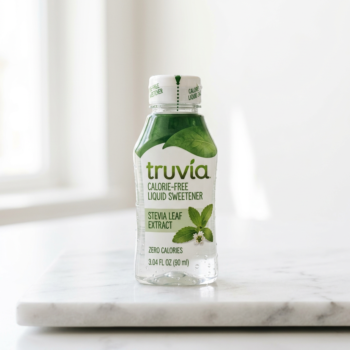
My husband Ryan has been quietly dismantling his sugar habit since his doctor raised an eyebrow at last January’s blood panel. By March he was drinking his coffee with stevia, but complaining every single morning about the granulated version — too gritty, too cloudy, left a strange film on his tongue. He handed me the half-used bag with the same look I used to get when the toddler rejected dinner: fix this.
I spotted Truvia Calorie-Free Liquid Sweetener at Kroger on the same run where I grabbed almond milk and forgot the eggs. Small bottle, pale green label, $6.49. Into the cart it went. Within a week Ryan declared it a permanent fixture on the counter. Within a month I was obsessively comparing it to SweetLeaf Sweet Drops — the brand that dominates Amazon search results every time you go looking for liquid stevia at midnight. The side-by-side has been running in my kitchen for three months. I have a lot to say.
First Impressions
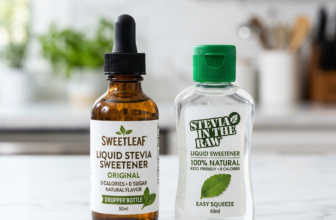
Pick up both bottles and the similarities are striking. Soft-sided squeeze bottles, small dispensing tips, nearly identical dimensions. Truvia’s is sage green; SweetLeaf’s is white with color-coded branding that shifts by flavor. The Truvia holds 3.04 oz, which is right at the TSA carry-on limit — intentional or not, it’s a nice detail. SweetLeaf’s most popular size is 2 oz, though they sell a 4 oz version too.
Open the caps and smell them side by side. Truvia has a clean, almost neutral sweetness with the faintest green herb underneath — like someone held a fresh stevia leaf near your nose very briefly. SweetLeaf’s plain version smells softer, a touch more floral, slightly more complex. Neither smells synthetic. That matters more than people give it credit for, because cheap stevia products can smell faintly of chemicals before you even taste them.
The tip design is slightly different. Truvia’s opening is a hair wider, which gives a slightly faster flow. SweetLeaf’s is finer, which makes precision dosing easier. I liked the SweetLeaf tip for things like salad dressing where I wanted exact drops. For my morning coffee routine where I’m half-asleep, I preferred Truvia’s slightly more forgiving flow.
Both bottles feel premium for what they cost. No leaking, no dripping after you squeeze. The caps seal firmly. These might seem like small things until you’ve had a liquid stevia bottle leak in your bag on the way to work. Then they feel enormous.
What Makes It Different
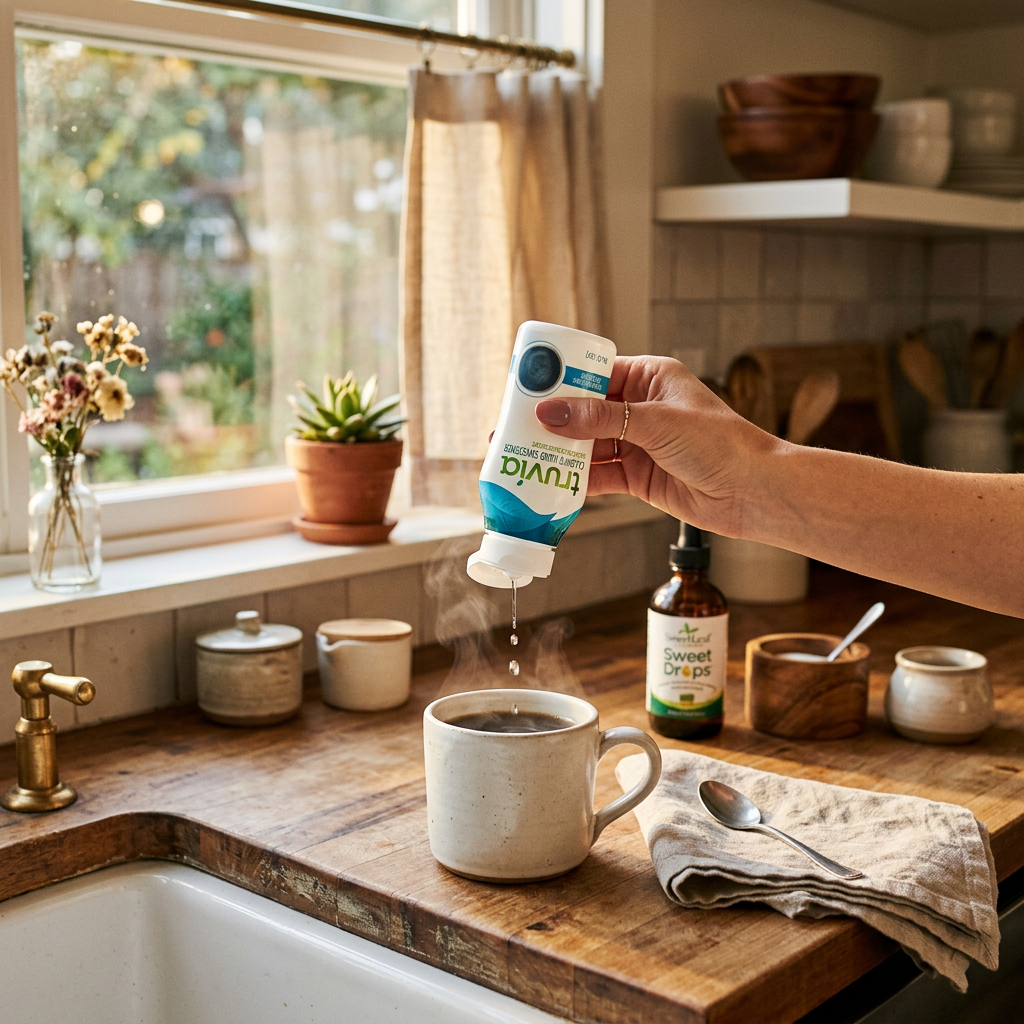
Here’s the fact most people miss when they grab Truvia off the grocery shelf: the liquid version and the granulated version are fundamentally different products. Truvia granulated sweetener is mostly erythritol — a sugar alcohol that provides bulk and texture but is also responsible for the “cooling” mouthfeel, the cloudiness in hot liquids, and for some people, genuine digestive discomfort at higher doses. The liquid strips all of that away.
Truvia Calorie-Free Liquid Sweetener contains exactly three ingredients: water, stevia leaf extract (specifically Rebaudioside A), and natural flavors. That’s it. No erythritol. No maltodextrin. No flow agents. The move from granulated Truvia to Truvia Liquid is actually a significant upgrade in ingredient cleanliness, which most shoppers don’t realize until they read the label side by side.
SweetLeaf Sweet Drops has a nearly identical core formula: water, stevia leaf extract, natural flavors. The distinction comes in the extraction approach. Truvia specifies Rebaudioside A (Reb A), the purest and most intensely sweet glycoside isolated from the stevia plant. SweetLeaf uses what they describe as whole-leaf processing, which retains more of the plant’s full glycoside profile — including Reb D and minor glycosides that many tasters describe as producing rounder, less one-dimensional sweetness.
Certification differences are real too. SweetLeaf Sweet Drops are Non-GMO Project Verified, and several SKUs carry USDA Organic certification. Truvia is non-GMO by formulation but doesn’t carry that organic seal on the liquid. If the USDA Organic label matters to your household — for health reasons, for school lunch packing, for personal values — that distinction points you toward SweetLeaf.
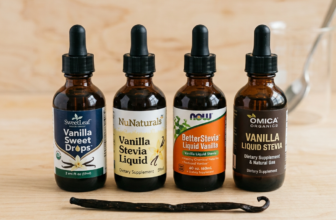
Flavor variety is where SweetLeaf’s competitive advantage becomes undeniable. They make over twenty flavors: Vanilla Cream, Chocolate Raspberry, Lemon Drop, Peach, English Toffee, Valencia Orange, and more. Truvia’s liquid line is comparatively sparse, with an unflavored option and a stevia-plus-monk-fruit blend. For someone who wants a single product to sweeten and flavor their coffee, SweetLeaf isn’t just a sweetener — it’s doing double duty.
Real-World Performance
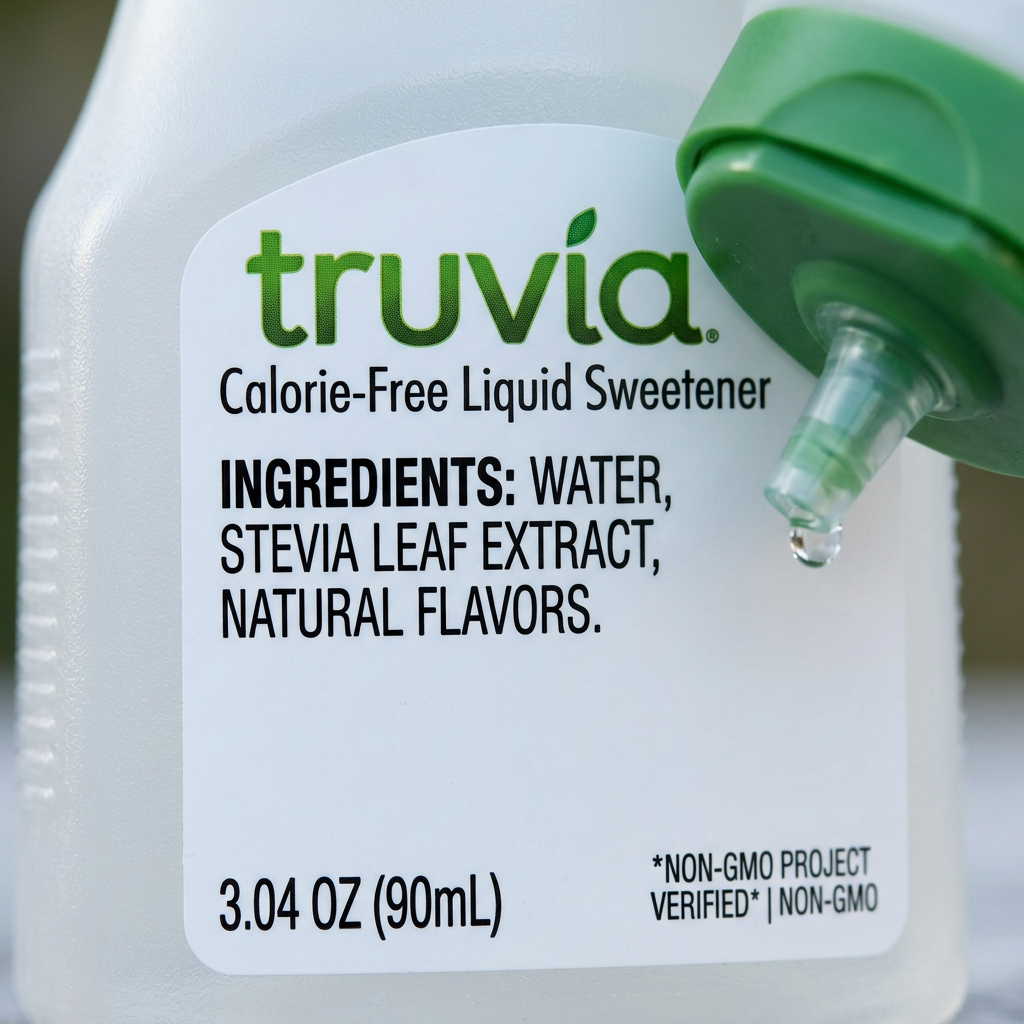
Three months of daily testing in my house covers a wide range of applications. Coffee. Iced tea. My daughter’s extremely ambitious lemonade stand (she sold eleven cups, which I’m calling a win). One batch of balsamic vinaigrette. An attempt at sweet cornbread that required some creative adjustments.
Hot Coffee
Truvia Liquid dissolves the moment it hits hot liquid — no swirling, no waiting, no residue. Four drops sweetened Ryan’s 12 oz mug to his satisfaction. The aftertaste is present: a brief herbal note that fades within about fifteen seconds of the sip. It’s distinctly stevia, but it doesn’t linger the way cheaper brands do. SweetLeaf plain Sweet Drops in the same mug, same number of drops: marginally rounder sweetness with slightly less “twang” at the back of the palate. The difference is subtle enough that in a blind test, Ryan initially called it a coin flip. Once he knew which was which, he maintained a mild preference for SweetLeaf in coffee — but said he’d have to be paying attention to notice.
Cold Drinks
This is where liquid stevia outclasses every powder or granule on the market, and both products shine. I made a gallon of sun tea and stirred in about 24 drops of Truvia — clean sweetness, no cloudiness, no sediment at the bottom of the pitcher after two days in the fridge. My daughter used SweetLeaf Lemon Drop drops for her lemonade stand, which eliminated the need for a simple syrup altogether. Six drops per 8 oz glass, a squeeze of fresh lemon, done.
Where SweetLeaf genuinely separates itself from Truvia is flavored cold applications. SweetLeaf Vanilla Cream drops in iced coffee is a combination I’ve now made probably fifty times. It tastes like a vanilla latte without the syrup pump, without the calories, without the sugar spike. Truvia simply cannot compete here unless you’re already happy with unflavored sweetness.
Cooking and Baking
Neither product is a structural substitute for sugar in baked goods — you need bulk and moisture retention that these liquids don’t provide. But for sweetening sauces, marinades, dressings, yogurt, oatmeal, and smoothies, both perform well. I found Truvia slightly easier to dose in recipes because the tip delivers a more controlled flow. SweetLeaf’s finer tip is more precise once you’ve calibrated it, but it takes a drop or two of practice.
Drop Count Calibration
The labels are optimistic. Truvia says 3 drops equals 1 teaspoon of sugar. SweetLeaf says 6 drops. In my real-world testing, I used 4 Truvia drops or 7–8 SweetLeaf drops to hit the same sweetness level in a 12 oz drink. Factor this into your cost-per-use math — it shifts the calculation meaningfully.
Long-Term Value
A 3.04 oz Truvia Liquid Sweetener runs $6.49 in most grocery stores and between $6.99 and $8.49 on Amazon. At my real-world 4 drops per serving, that’s approximately 225 servings per bottle — under three cents per serving. At the manufacturer’s recommended 3 drops, you get around 300 servings, pushing the per-serving cost below two and a half cents. By any measure, that’s excellent value for a clean-label liquid sweetener.
SweetLeaf Sweet Drops in the 2 oz size runs $9 to $11 on Amazon. At 7–8 real-world drops per serving, you’re getting roughly 150 to 170 servings — landing around six to seven cents per serving. Their 4 oz bottle drops that dramatically, landing closer to three to four cents per serving, which makes it genuinely competitive with Truvia if you’re willing to buy the larger size.
The logistical math also favors Truvia. You can grab it at Kroger, Walmart, Target, Publix, Safeway, and dozens of regional chains without any planning. SweetLeaf requires either a trip to Whole Foods or a Natural Grocers — or Amazon, with its two-day minimum. If you run out on a Tuesday morning before work, Truvia wins that round completely.
Both products have exceptional shelf life: two years unopened, and I’ve kept opened bottles of each for six-plus months without any off-flavors developing. The squeeze bottle format means you’re not exposing the full product to air with each use the way you do with a jar or shaker, which helps longevity.
If you become a SweetLeaf devotee and buy the 4 oz size on Amazon Subscribe & Save, the per-serving cost gap narrows enough to become a preference question rather than a financial one. But for casual users, for people new to liquid stevia, or for anyone who values being able to replace a bottle at 7 AM on a Thursday — Truvia wins the value argument without much contest.
Final Verdict: 8.9/10
Truvia Calorie-Free Liquid Sweetener earns its place as the most practical daily-use liquid stevia you can buy without a laptop. It’s accessible, genuinely well-formulated, consistent, and priced fairly for what it delivers. The erythritol-free formula makes it a meaningful step up from Truvia’s own granulated packets, and it outperforms most grocery-aisle liquid sweeteners I’ve tested in this category.
SweetLeaf Sweet Drops is the more refined pick — better for flavor variety, better for the organic-certificationconscious household, and worth the planning it takes to keep it stocked. If Truvia is the reliable sedan you drive every day, SweetLeaf is the more interesting car you rent on vacation.
For most families, most mornings, Truvia is the answer. For flavor adventurers, online shoppers who plan ahead, and anyone who wants a vanilla cold brew that doesn’t require a trip to Starbucks — SweetLeaf earns serious consideration.
- Taste — 8.5/10: Clean and neutral with a brief herbal finish that fades quickly. Reliable rather than remarkable, but that consistency is its own virtue.
- Value — 9.4/10: Under three cents per serving at real-world use levels, available at every major grocery chain. Hardest to beat on pure cost-per-use in this category.
- Flavor Accuracy — 8.7/10: Delivers precisely what it advertises — sweetness without added flavor, no artificial notes, no bitter chemical tail on the finish.
- Daily Usability — 9.2/10: The squeeze bottle with its controlled dispensing tip is an ergonomically smart design. Fits in a cup holder, travels cleanly, works one-handed at 6 AM.
- Packaging — 8.7/10: The 3.04 oz format is practical without being stingy. TSA-compliant, pantry-friendly, and the sage green label stands out enough to find quickly in a crowded cabinet.
Tips for Success
- Start with fewer drops than you think you need. Liquid stevia concentrates are powerful. The recommended 3–6 drops is a genuine starting point, not marketing caution. Add drops one at a time and wait fifteen seconds between additions — the sweetness perception in a hot drink changes as it cools.
- Shake gently before each use. Both Truvia and SweetLeaf can settle slightly between uses. A quick two-second shake ensures you’re getting consistent extract concentration with every squeeze.
- Taste at your drinking temperature. Stevia’s sweetness register shifts with heat — what feels perfectly calibrated at 190°F may taste undersweetened at 140°F. Taste-test at the temperature you’ll actually be drinking, not while the cup is still scorching.
- Store away from sunlight and heat. Both products are shelf-stable at room temperature, but prolonged UV exposure degrades stevia extract over time. A pantry shelf or cabinet drawer is better than a sunny windowsill over the spice rack.
- Use a recipe converter for cooking. Three Truvia drops or six SweetLeaf drops per teaspoon of sugar equivalent is the manufacturer baseline. When scaling up to tablespoons or cups in baking, add a bulking agent — applesauce, plain Greek yogurt, or allulose — to compensate for lost volume and moisture.
- Recalibrate if you’re switching from Truvia granulated. The granulated product is mostly erythritol by weight. The liquid is pure extract. They’re not equivalent by volume, by weight, or by sweetness unit. Expect to start over with your drop count.
- Travel with it. Both bottles are carry-on compliant under the TSA 3.4 oz rule. Truvia’s 3.04 oz clears that limit with room to spare. Hotel coffee gets dramatically better when you can sweeten it yourself.
Pros and Cons Values
Truvia Calorie-Free Liquid Sweetener
Pros
- Available at virtually every major US grocery chain — no ordering, no shipping wait, no planning required
- Erythritol-free formula eliminates the digestive and mouthfeel concerns associated with Truvia’s granulated version
- Exceptional value at under three cents per serving at real-world use levels
- Genuinely clean three-ingredient label: water, stevia leaf extract, natural flavors — nothing hidden or surprising
- Compact 3.04 oz bottle is TSA carry-on compliant and fits in a cup holder, purse, or gym bag
Cons
- Stevia aftertaste is present and slightly more noticeable than SweetLeaf, especially in cold or delicate applications
- Very limited flavor variety compared to SweetLeaf’s lineup of twenty-plus flavored drops
- Not certified USDA Organic, which is a meaningful distinction for some shoppers and households
Product Specification
| Specification | Truvia Liquid Sweetener | SweetLeaf Sweet Drops |
|---|---|---|
| Size | 3.04 fl oz (90 mL) | 2 fl oz (59 mL) / 4 fl oz (118 mL) |
| Estimated Servings | ~300 (at 3 drops/serving) | ~190 (at 6 drops/serving, 2 oz) |
| Calories per Serving | 0 | 0 |
| Erythritol-Free | Yes | Yes |
| Certified Organic | No | Yes (select SKUs) |
| Non-GMO | Yes | Yes (Non-GMO Project Verified) |
| Stevia Type | Reb A (Rebaudioside A) | Whole-leaf extract (Reb A + minor glycosides) |
| Country of Origin | USA | USA |
| Manufacturer | Cargill (Truvia brand) | Wisdom Natural Brands |
| Shelf Life (Unopened) | 2 years | 2 years |
| Flavor Options | 2–3 (unflavored, monk fruit blend) | 20+ flavors |
| Gluten-Free | Yes | Yes |
| Vegan | Yes | Yes |
| Keto-Friendly | Yes | Yes |
Safety & Third-Party Testing
Stevia leaf extract — specifically purified Rebaudioside A — holds GRAS (Generally Recognized as Safe) status from the FDA when produced and used according to established guidelines. Both Truvia and SweetLeaf meet those standards. The core safety question with stevia is mostly settled science at this point, with dozens of studies supporting its safety at typical dietary intake levels in healthy adults.
Truvia is manufactured by Cargill, one of the largest food ingredient companies in the world. Their production facilities operate under regular food safety audits and FDA compliance frameworks. Cargill does not publish individual COAs (Certificates of Analysis) for consumer products — this is standard practice for large-scale packaged goods companies and doesn’t indicate a transparency problem so much as a scale-of-operation one.
SweetLeaf’s transparency record is stronger at the consumer level. Wisdom Natural Brands has shared third-party testing documentation in the past, and their USDA Organic-certified SKUs require annual inspection by an accredited certifying agent. If you’re managing a specific health condition, working with a practitioner who wants documentation, or are particularly cautious about heavy metals or pesticide residues in supplements, SweetLeaf’s certification infrastructure gives you more to work with.
A few specific populations worth addressing: People with sensitivities to erythritol can use both liquid products without concern — neither contains it. People with known allergies to ragweed, chrysanthemums, or other plants in the Asteraceae family should consult a healthcare provider before using stevia, which belongs to the same plant family. For pregnant or nursing individuals, stevia at typical culinary doses (a few drops per serving) is generally considered safe, though high-concentration supplementation hasn’t been studied as thoroughly in those populations. Neither product interacts with common medications in ways that would concern most users, but if you take medications for diabetes or blood pressure, consult your doctor — stevia can have mild additive effects on blood glucose and blood pressure.
Neither product contains artificial sweeteners, artificial colors, or preservatives. Both are free of the big eight allergens.
Compare with Other
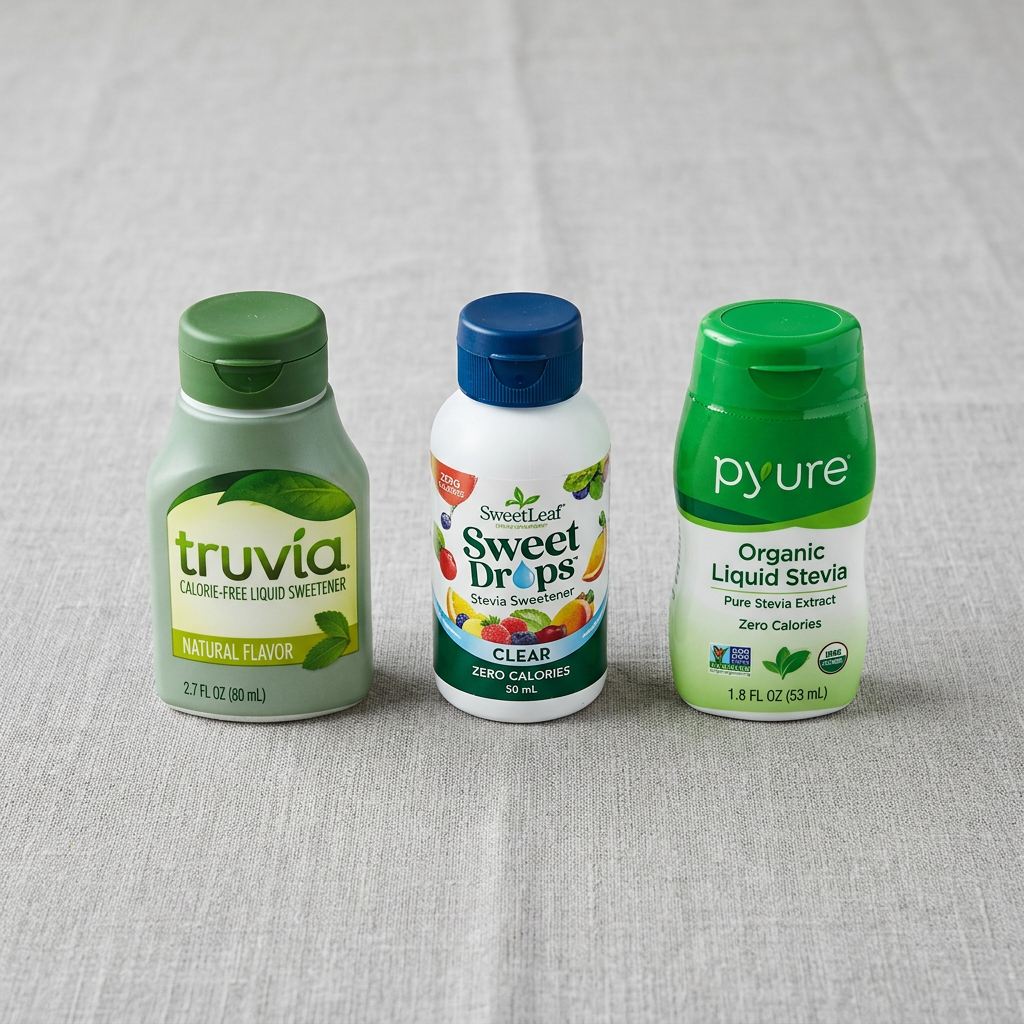
These two aren’t the only liquid stevia options on the market. Here’s how they stack up against four other products I’ve tested in the same category:
NuNaturals Pure Liquid Stevia
The pick for stevia purists and flavor minimalists. NuNaturals uses a clean water-based extraction and contains no natural flavors at all — just water and stevia extract. It’s also extremely concentrated, with one drop roughly equivalent to two teaspoons of sugar in some formulations. The bottle lasts an exceptionally long time as a result. The trade-off is a more assertively herbal, earthy taste that rewards experienced stevia users but can be polarizing for newcomers. If you’ve been using stevia for years and want the cleanest possible label, NuNaturals is worth serious consideration.
Pyure Organic Liquid Stevia
A strong middle-ground option that bridges the accessibility gap between Truvia and SweetLeaf. Pyure is USDA Organic and Non-GMO Project Verified, giving it the certifications Truvia lacks. It’s mild in flavor, reasonably concentrated, and increasingly stocked at Walmart and Target, which makes it a useful pick for shoppers who want organic certification but need to find it in a physical store. Price is usually around $7 to $9 for 2 oz. Slightly less complex in flavor than SweetLeaf, but a solid, clean performer.
Good & Gather Liquid Stevia (Target)
Target’s house brand deserves more attention than it gets. At $4.99 for 1.8 oz, it undercuts both Truvia and SweetLeaf on price, and the ingredient profile is comparably clean. Concentration is a touch lower than Truvia, so you’ll use slightly more drops per serving. If you’re already shopping at Target regularly, it’s worth trying before committing to a larger bottle of either name-brand product. It lacks the certification story of Pyure or SweetLeaf but performs well in everyday use.
Lakanto Liquid Monk Fruit Sweetener
Not stevia at all, but it comes up constantly when people are shopping this category. Lakanto’s liquid monk fruit sweetener has zero stevia and produces a sweetness profile that many tasters describe as cleaner and less herbal than any stevia product. If the stevia aftertaste is a genuine deal-breaker for you — not just a minor annoyance but something that makes you not want to drink your coffee — monk fruit is the logical next step. It’s more expensive than either Truvia or SweetLeaf and harder to find in stores, but for a subset of stevia-sensitive palates, it’s the actual solution.
Where to Buy and Price List
Truvia Calorie-Free Liquid Sweetener 3.04 oz
- In-Store (Kroger, Walmart, Target, Publix, Safeway): $5.99–$6.99. This is the format’s biggest advantage — you don’t need to plan, and you’re never more than a short drive from a replacement bottle.
- Amazon — ASIN: B08LQSVTRV — $7.49 (single), approximately $6.80 per bottle on Subscribe & Save. Ships Prime and arrives in two days. Convenient if you want it delivered but not worth the markup over in-store if you’re near a major grocery chain.
- enzostevia.com — $8.95 per bottle. Use coupon code AWESOME at checkout for 3% off, bringing it to approximately $8.68. Enzo Stevia stocks a curated selection of premium stevia products and is a good option if you’re ordering multiple stevia items and want to consolidate shipping.
SweetLeaf Sweet Drops (Plain, 2 oz)
- Amazon: $9.49–$10.99 for 2 oz; $16.49–$18.99 for 4 oz. Subscribe & Save pricing brings the 4 oz bottle to roughly $14.50 per unit — the sweet spot for regular users.
- Whole Foods / Natural Grocers / Sprouts: $9.99–$11.49 for 2 oz. Availability varies by region; call ahead or check the store app before making a dedicated trip.
- enzostevia.com — $11.25 for 2 oz plain Sweet Drops. Use coupon code AWESOME for 3% off, bringing it to approximately $10.91. SweetLeaf’s flavor variety is well-represented on Enzo Stevia if you want to compare flavors without juggling multiple Amazon orders.
People Also Ask
Does Truvia Liquid Sweetener contain erythritol?
No. The liquid version of Truvia does not contain erythritol. Erythritol is present in Truvia’s granulated and spoonable products, where it serves as a bulking agent, but the Calorie-Free Liquid Sweetener is formulated with water, stevia leaf extract (Rebaudioside A), and natural flavors only. This makes it meaningfully different from the granulated version for people managing digestive sensitivities or who simply dislike the texture and cooling effect that erythritol can produce in hot drinks.
Is SweetLeaf Sweet Drops better than Truvia Liquid for keto?
Both are appropriate for keto — zero calories, zero net carbs, no glycemic impact. The choice between them for keto purposes comes down to personal preference rather than macros. SweetLeaf’s organic certification and whole-leaf extraction process may appeal to keto dieters focused on ingredient purity. Truvia Liquid’s wider grocery availability matters practically when you’re trying to stay stocked. For flavor variety that supports keto cooking and beverages — sweetened coffees, fat bombs, flavored waters — SweetLeaf’s range of twenty-plus Sweet Drops flavors gives it a functional edge.
How many drops of SweetLeaf Sweet Drops equals one teaspoon of sugar?
SweetLeaf’s standard recommendation is 6 drops to approximate the sweetness of one teaspoon of sugar. In real-world use, most people find they need 7 to 9 drops to hit their preferred sweetness level — individual palate sensitivity, the temperature of the drink, and the specific flavor of Sweet Drops all affect perception. Start with 6 drops, taste after fifteen seconds, and add one drop at a time from there. It’s much easier to add than to recover from an over-sweetened drink.
Can I use Truvia Liquid Sweetener in baking?
Yes, with an important caveat: Truvia Liquid Sweetener provides sweetness but not the structural bulk that sugar contributes in baking. In applications like cookies, cakes, and quick breads, sugar does work beyond sweetening — it creates texture, holds moisture, contributes to browning, and affects rise. Replacing sugar entirely with Truvia Liquid will produce flat, dry, or crumbly results without a compensating bulking agent. For sweetening smoothies, sauces, marinades, yogurt, oatmeal, and beverages, it works perfectly without modification. For baking, pair it with ingredients like allulose, applesauce, or pumpkin puree to restore the volume and moisture that liquid stevia alone can’t provide.
SERP
When I searched “truvia liquid vs sweetleaf sweet drops,” the top organic results were a mix of general stevia comparison roundups on health-focused content sites, a well-trafficked Reddit thread in r/keto where users traded firsthand drop-count experiences, and a couple of dietitian-authored blog posts that covered the erythritol distinction between Truvia’s granulated and liquid versions. The fourth result was a product listing page rather than editorial content, which tells you that true side-by-side comparison coverage of these two specific liquid products is still relatively thin — most articles compare the brands broadly rather than drilling into the liquid formats specifically. This article addresses that gap directly, with three months of real kitchen testing behind it rather than spec-sheet comparison alone.
Top 20 Topics
- Best liquid stevia for coffee in 2025
- Truvia liquid vs granulated: what’s actually different
- Does SweetLeaf Sweet Drops have an aftertaste?
- Stevia liquid sweetener for iced tea and cold drinks
- Is liquid stevia better than stevia powder?
- SweetLeaf Sweet Drops flavors ranked
- Erythritol-free stevia sweeteners for sensitive stomachs
- How many stevia drops equal one teaspoon of sugar?
- Best organic liquid stevia brand
- Truvia liquid sweetener for keto diet
- SweetLeaf vs Pyure liquid stevia comparison
- Liquid stevia for baking: tips and substitutions
- NuNaturals vs SweetLeaf Sweet Drops taste test
- Monk fruit liquid vs stevia liquid for coffee
- How long does liquid stevia last after opening?
- Truvia stevia monk fruit liquid blend review
- Where to buy SweetLeaf Sweet Drops in stores
- Stevia and blood sugar: what the research actually says
- Rebaudioside A vs whole-leaf stevia extract difference
- Best stevia drops for weight loss and diabetic-friendly eating