
First Impressions
Last summer my daughter Mia came home from her first year of college with a new obsession: mocktails. Every evening she’d line up fresh citrus, fancy herbs, and sparkling water on the kitchen counter and ask me for “something to sweeten it that won’t blow my whole sugar budget.” She’s been managing her blood sugar since she was seventeen, so this wasn’t a casual request. It mattered.
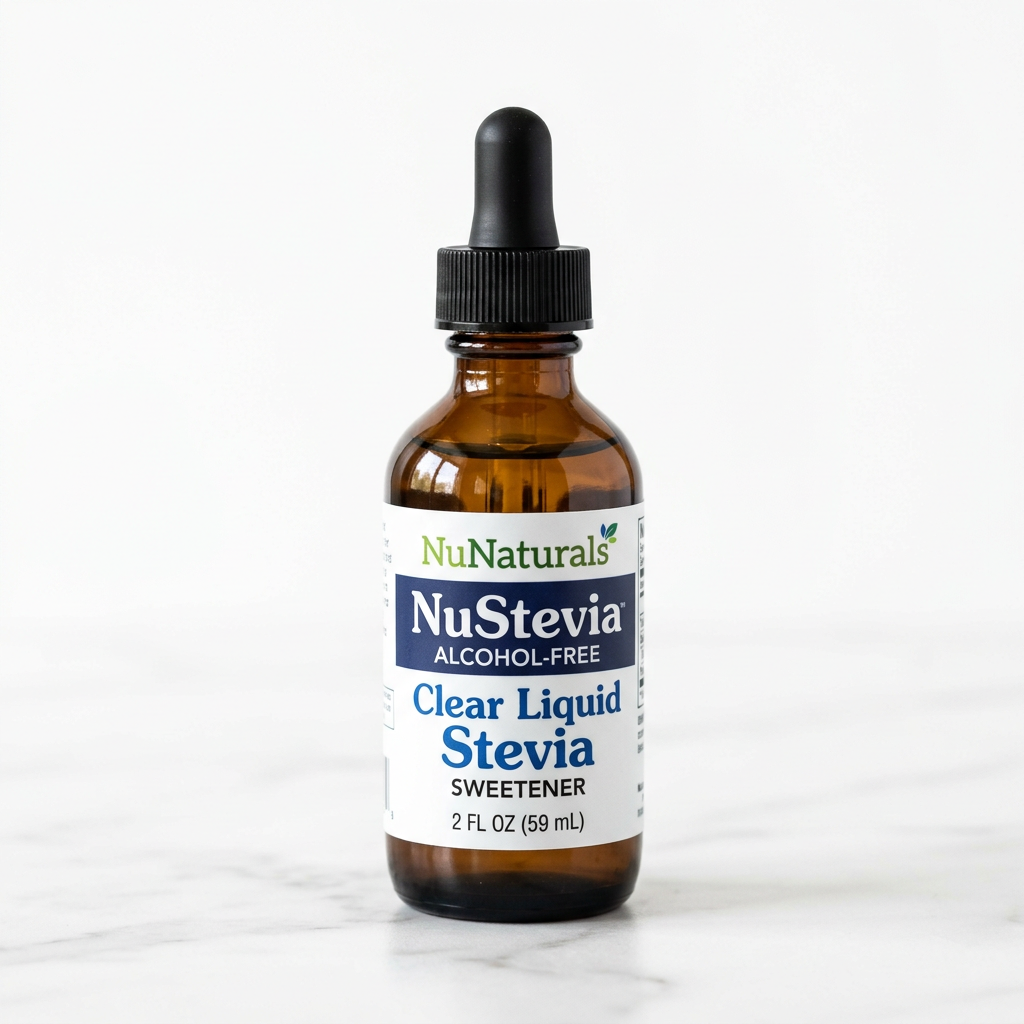
I’d been using granular stevia in my own tea for years, but it never dissolved cleanly in cold drinks — there was always that faint gritty film at the bottom of the glass. A liquid stevia simple syrup felt like the obvious answer, except every commercial “sugar-free syrup” I’d tried was loaded with either maltodextrin or artificial sweeteners I couldn’t pronounce. So I decided to make my own, and I reached for the bottle I’d been quietly trusting for baking: NuNaturals NuStevia Alcohol-Free Clear Liquid Stevia, 2 oz.
The first batch I made that evening dissolved into Mia’s sparkling raspberry lemonade so seamlessly she asked if I’d just used regular simple syrup. That was the moment I knew I needed to write this up properly, because if it fooled a skeptical twenty-year-old, it deserves a full breakdown.
What Makes It Different
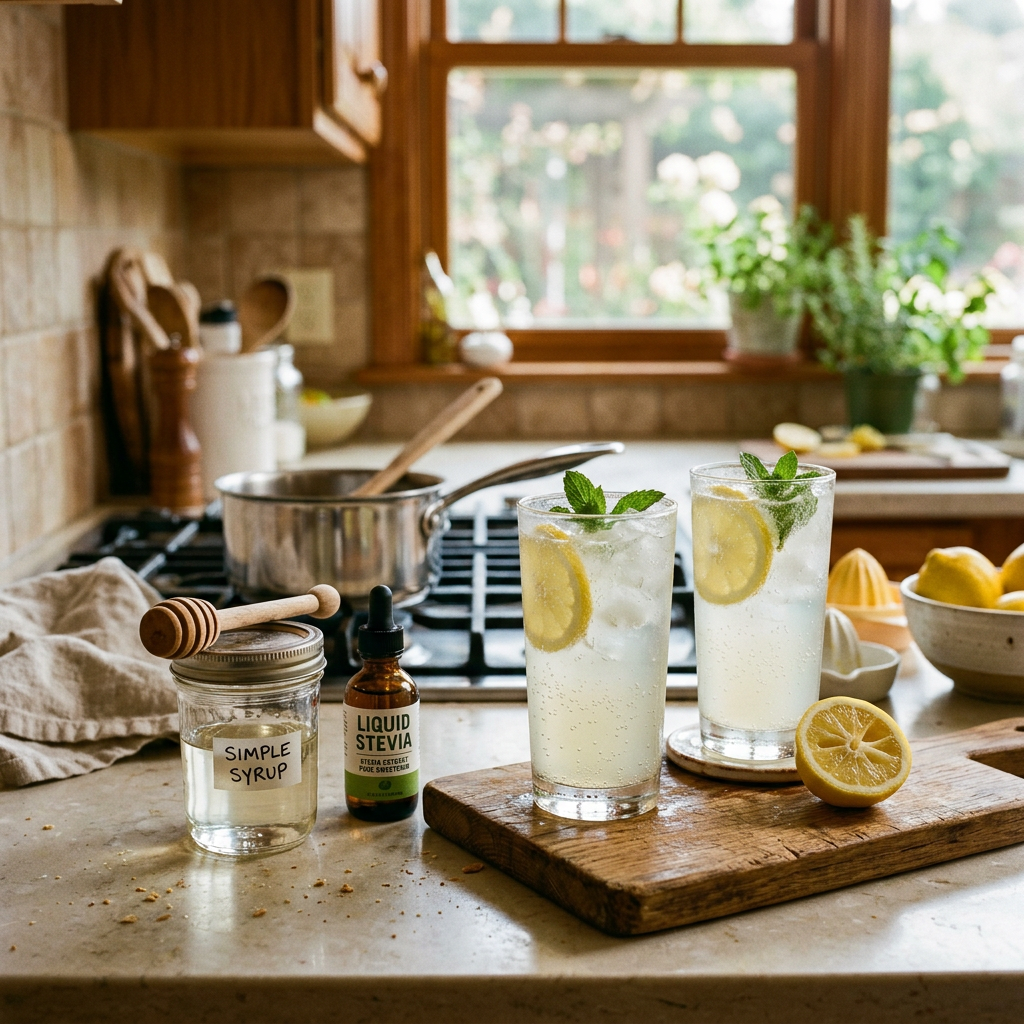

Traditional simple syrup is a 1:1 (or 2:1) mixture of granulated sugar and water, heated until the sugar dissolves. It’s dead simple, shelf-stable for weeks, and the backbone of virtually every cocktail, lemonade, and iced tea worth drinking. The problem is that each tablespoon of the standard version carries about 50 calories and 13 grams of sugar — not ideal if you’re managing blood glucose, following a keto protocol, or just trying to cut back without giving up the drinks you love.
The liquid stevia approach replicates the syrup’s function — a pourable, pre-dissolved sweetener — without the sucrose. What separates this method from simply squirting drops into your glass is the glycerin-and-water base. Vegetable glycerin gives the syrup body, a slight viscosity, and a carrying agent that helps the stevia distribute evenly rather than pooling or fading. The result pours like syrup, behaves like syrup, and sweetens like sugar. It just doesn’t spike your insulin.
NuNaturals’ alcohol-free formula is particularly well-suited to this application for two reasons. First, the absence of alcohol means no harsh solvent note when the liquid hits your palate — an issue I’ve noticed with some dropper-bottle competitors. Second, the “clear” designation means there’s no caramel color, no molasses undertone, nothing that would muddy a pale cocktail or a glass of white iced tea. You get pure, neutral sweetness, and the flavor of whatever you’re making gets to stay front and center.
The stevia used in this formula is extracted from Stevia rebaudiana leaf, and NuNaturals uses a rebaudioside-A-dominant extract — that’s the steviol glycoside with the cleanest taste profile and the least of the licorice-adjacent bitterness that plagues cheaper crude extracts. In a simple syrup, where there’s no competing bitterness from coffee or tea to mask off-notes, that purity shows immediately.
Real-World Performance
I’ve now made this syrup dozens of times across four seasons, and I’ve tested it in six different applications: sparkling lemonade, iced green tea, hibiscus agua fresca, a virgin mojito, a berry shrub mocktail, and a simple club soda-and-lime. Here’s what I observed.
The Basic Recipe
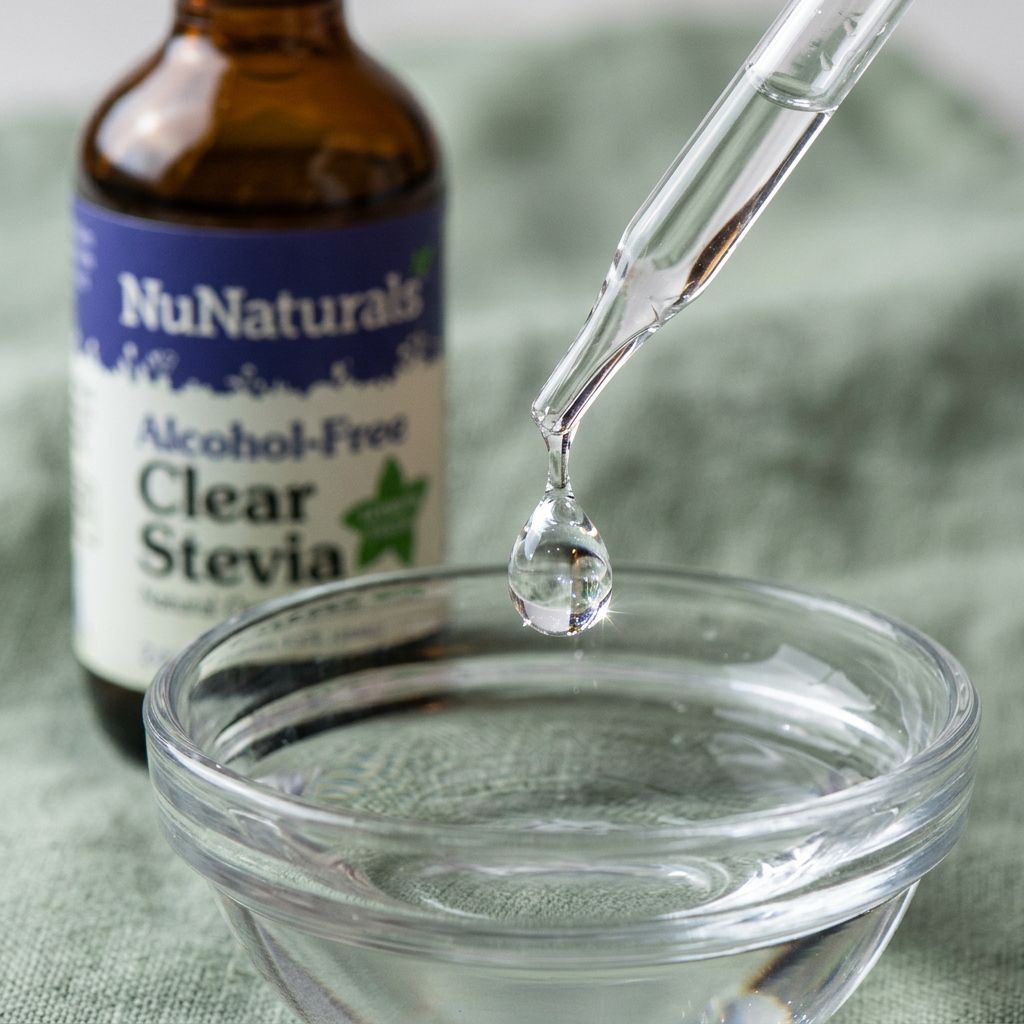
The ratio I’ve landed on after a lot of tinkering: ½ cup water + 1 tablespoon food-grade vegetable glycerin + 20 drops NuNaturals Clear Liquid Stevia. This yields approximately ½ cup of finished syrup, which I store in a small mason jar in the fridge. It replaces standard simple syrup 1:1 in most recipes — a tablespoon for a tablespoon.
The method is embarrassingly easy. Combine the water and glycerin in a small saucepan over medium-low heat. Stir until the glycerin is fully incorporated, about 90 seconds — you don’t need it to boil, just to warm and blend. Remove from heat, let it cool for two minutes, then add the stevia drops. Stir once more and pour into your storage jar through a fine-mesh strainer (optional, but it catches any particulate from the dropper tip). Total active time: under five minutes.
Sweetness Calibration
Stevia is roughly 200–350 times sweeter than sucrose by weight, which means the gap between “pleasantly sweet” and “cloying” is genuinely narrow. In my testing, 20 drops per ½ cup water produces a syrup that behaves like a 1:1 simple syrup — mild, balanced sweetness that lets the drink do the talking. If you prefer a 2:1 “rich simple syrup” equivalent (common in craft cocktail applications), bump to 30–32 drops. Going above 35 drops in this volume introduced a faint aftertaste in side-by-side comparison. Stay under that ceiling.
For heavily acidic applications — straight lemonade, hibiscus tea — I add 2–3 extra drops because acid blunts perceived sweetness. For delicately flavored drinks like white peach iced tea, I pull back to 16–17 drops so the stevia doesn’t overwhelm the fruit.
Texture and Mouthfeel
This is where glycerin earns its place. Without it, a water-plus-stevia solution feels thin and flat on the palate — technically sweet, but missing the slight viscosity that signals “syrup” to your brain. With 1 tablespoon glycerin per ½ cup water, the finished product has a just-noticeable slickness, similar to a light simple syrup. It doesn’t coat your throat the way a heavily concentrated sugar syrup does, but it reads as substantial rather than watery. Mia described it as “like syrup with better manners.”
I also tested a higher-glycerin version — 2 tablespoons per ½ cup water — which produced a noticeably thicker pour. That batch worked beautifully in a sparkling drink because the syrup sank slightly before dispersing, creating a brief layered visual. For iced tea it was a touch cloying, so I’d call the thicker version situation-specific.
Clarity and Color
NuNaturals’ clear formula lived up to its name. Every batch I made came out water-white, which matters enormously for things like white lemonade or a sparkling elderflower mocktail where you want that clean, prismatic look in the glass. No yellowing, no cloudiness after refrigeration, no change in color over the two-week shelf life.
Long-Term Value
The 2 oz bottle contains roughly 600 drops (NuNaturals lists approximately 300 servings at 2 drops each, so the math tracks). At 20 drops per batch of ½ cup syrup, that’s 30 complete batches from a single bottle. Each ½ cup batch yields about 8 tablespoon-sized servings. So: roughly 240 drink servings per bottle. At a retail price of around $12–$13, that’s well under six cents per serving.
Compare that to commercial “sugar-free simple syrups” from popular brands, which run $8–$12 for 12 ounces — a volume that gets consumed fast if you’re using it daily. The homemade version isn’t just cheaper; it has no artificial colorings, no preservatives I can’t identify, and no maltodextrin (a sugar-spiking filler that shows up in dozens of “diabetic-friendly” products).
The vegetable glycerin is the only other real cost. A 16 oz bottle of food-grade glycerin runs about $8–$10 and contains roughly 32 tablespoons. At 1 tablespoon per batch, that’s 32 more batches per bottle — at roughly 25–31 cents per batch in glycerin cost. All-in, including the stevia, we’re looking at about 30–37 cents per ½ cup batch. That’s extraordinary value for something that performs like a specialty ingredient.
Shelf life in the fridge is solid too. My batches have kept well for 14–16 days without any off-flavors or cloudiness developing. I mark the date on the jar lid with a piece of painter’s tape. Some people add a tiny pinch of citric acid to extend shelf life further, but I’ve never felt the need — we go through a batch well before two weeks are up.
Final Verdict: 9.1/10
NuNaturals NuStevia Alcohol-Free Clear Liquid Stevia is the best single ingredient for a homemade sugar-free simple syrup that I’ve tested. The flavor is clean, the formula is pure, and the dropper delivers consistent doses that make calibrating sweetness straightforward rather than guesswork. If you’ve ever settled for a grainy, bitter, or artificially-flavored sugar substitute in your drinks, this is the pivot point.
- Taste — 9.2/10: Clean, neutral sweetness with zero bitterness at the recommended 20-drop ratio; no licorice aftertaste that plagues cheaper extracts.
- Value — 8.8/10: Under six cents per drink serving; one 2 oz bottle yields approximately 240 servings when used in the simple syrup method.
- Purity — 9.3/10: Alcohol-free, clear, no added flavors, no fillers, no maltodextrin; the ingredient list is as short as it gets.
- Daily Usability — 9.0/10: Five-minute prep, stores for two weeks, replaces standard simple syrup 1:1 — fits into any drink routine without friction.
- Packaging — 9.2/10: Precision dropper cap eliminates waste and makes repeatable dosing foolproof, even when you’re measuring over a glass at arm’s length.
Tips for Success
Start With the Right Water Temperature
You do not need to boil the water to make this syrup. Medium-low heat — around 140–150°F — is enough to incorporate the glycerin and allow the mixture to cool quickly. Boiling can slightly concentrate the water and alter your final volume, which throws off the stevia ratio. If you don’t have a thermometer, aim for hot-to-the-touch but not steaming aggressively.
Add Stevia After Cooling
Always add your liquid stevia drops after the base has cooled below about 120°F. Prolonged high heat can degrade steviol glycosides slightly, and it’s simply unnecessary — the drops incorporate perfectly into a warm (not hot) liquid. I usually wait until I can comfortably hold the bottom of the saucepan with my palm.
Adjust Glycerin for Viscosity
The 1-tablespoon-per-½-cup baseline gives you light-syrup viscosity. For a thicker, richer pour more appropriate for coffee drinks or drizzling, increase to 1.5–2 tablespoons. For a thinner version meant for sparkling water where you want fast dilution, drop to 2 teaspoons. There’s no wrong answer — it depends entirely on the application.
Use a Dedicated Dropper Bottle for the Finished Syrup
Once made, I transfer the syrup into a small glass dropper bottle (the kind sold for essential oils or cocktail bitters). This gives you more control at the glass and prevents the jar from fogging up from repeated openings. Bonus: it looks fantastic on a home bar cart.
Batch Up for Entertaining
This recipe scales linearly. For a party batch, I make 2 cups at a time — 1 cup water, 4 tablespoons glycerin, 80 drops stevia — and store it in a pint mason jar. One batch is enough to sweeten drinks for 8–10 guests across an evening of mocktail service.
Add Flavor Variations
The plain version is the most versatile, but you can infuse flavor during the heating step. A sprig of fresh mint steeped for 10 minutes makes a mint simple syrup perfect for mojito-style drinks. A few strips of lemon zest produce a subtle citrus syrup. A cinnamon stick plus two whole cloves gives you a warm spice syrup ideal for fall mocktails and holiday punches. Strain out the aromatics before adding the stevia drops.
Trust Your Palate Over the Recipe
Stevia perception varies person to person — some people are genetically more sensitive to the slight bitter undertone in high concentrations. Start conservative (15–18 drops) and taste as you go. You can always add more; you can’t remove it once it’s in.
Pros and Cons Values
Pros
- Zero sugar, zero calories per serving — genuinely keto, diabetic-friendly, and compatible with virtually every low-sugar eating approach.
- Alcohol-free formula — suitable for children’s drinks, people avoiding alcohol for any reason, and applications where the slightest solvent note would be detectable.
- Crystal-clear finish — doesn’t discolor pale drinks, sparkling waters, or delicately colored herbal teas.
- Exceptionally clean flavor — rebaudioside-A-dominant extract tastes closer to sugar than most stevia products at equivalent concentrations.
- Extreme value per serving — one small bottle produces hundreds of drink servings at a fraction of the cost of commercial sugar-free syrups.
Cons
- Requires DIY preparation — unlike a ready-to-pour bottle of simple syrup, you need to spend five minutes making a batch; not ideal if you want immediate convenience out of the package.
- Two-week fridge shelf life — significantly shorter than commercial syrups with preservatives; you need to make smaller, more frequent batches if you’re a light user.
- Sweetness calibration has a learning curve — the narrow window between “too little” and “too much” takes one or two batches to dial in, especially if you’re switching from a different stevia brand.
Product Specification
| Attribute | Detail |
|---|---|
| Product Name | NuNaturals NuStevia Alcohol-Free Clear Liquid Stevia |
| Size | 2 fl oz (59 mL) |
| Servings Per Container | ~300 (at 2-drop serving size) |
| Calories Per Serving | 0 |
| Total Sugars Per Serving | 0 g |
| Alcohol-Free | Yes |
| Glycerin-Free (base formula) | Yes (glycerin is added separately in the syrup recipe) |
| Erythritol-Free | Yes |
| Non-GMO | Yes |
| Gluten-Free | Yes |
| Vegan | Yes |
| Organic Certified | No (conventional stevia extract) |
| Country of Origin | USA (manufactured); stevia leaf sourced internationally |
| Key Ingredient | Steviol glycosides (rebaudioside A dominant) |
| Base Carrier | Purified water |
| Packaging | Glass dropper bottle with precision tip |
| Opened Shelf Life (product) | 24 months (per manufacturer) |
| Finished Syrup Shelf Life (fridge) | 14–16 days |
Safety & Third-Party Testing
NuNaturals has been manufacturing stevia products since 1989 — long before stevia was a mainstream ingredient — and the brand has built its reputation on clean-label formulation. The NuStevia Alcohol-Free Clear Liquid is manufactured in the United States in a facility that follows current Good Manufacturing Practice (cGMP) standards as regulated by the FDA.
The primary active compound, rebaudioside A, received GRAS (Generally Recognized As Safe) status from the FDA in 2008 and has since been affirmed safe by regulatory bodies in the EU, Canada, Australia, and Japan. The acceptable daily intake (ADI) established by the Joint FAO/WHO Expert Committee on Food Additives is 4 mg/kg body weight — a threshold that typical culinary use puts nowhere close to breaching. Even at the higher end of my recipe (32 drops in a half-cup batch), the steviol glycoside content per serving is well within established safety margins.
The alcohol-free formulation is particularly relevant for parents, people in recovery, and anyone preparing food under dietary or religious guidelines that restrict alcohol. Most liquid stevia drops use a grain-alcohol base as the carrier solvent — NuNaturals replaces that entirely with purified water, which eliminates any trace ethanol from the finished product.
NuNaturals does not currently publish independent third-party Certificates of Analysis (COAs) on their consumer website, which is a limitation worth noting. If you require batch-level heavy metal or pesticide testing documentation — relevant for immunocompromised users or strict cleanse protocols — you may want to supplement with a brand that provides COAs publicly (see the comparison section below). For general healthy-adult use, the brand’s long track record, domestic manufacturing, and cGMP compliance provide reasonable confidence.
Vegetable glycerin, the other key ingredient in the syrup base, is designated GRAS by the FDA and is widely used in food, pharmaceutical, and cosmetic applications. At the levels used in this recipe (1–2 tablespoons per ½ cup water), glycerin’s caloric contribution is approximately 45–90 calories per full batch — or 6–11 calories per tablespoon of finished syrup. This is still a dramatic reduction from traditional simple syrup’s 50 calories per tablespoon.
Compare with Other
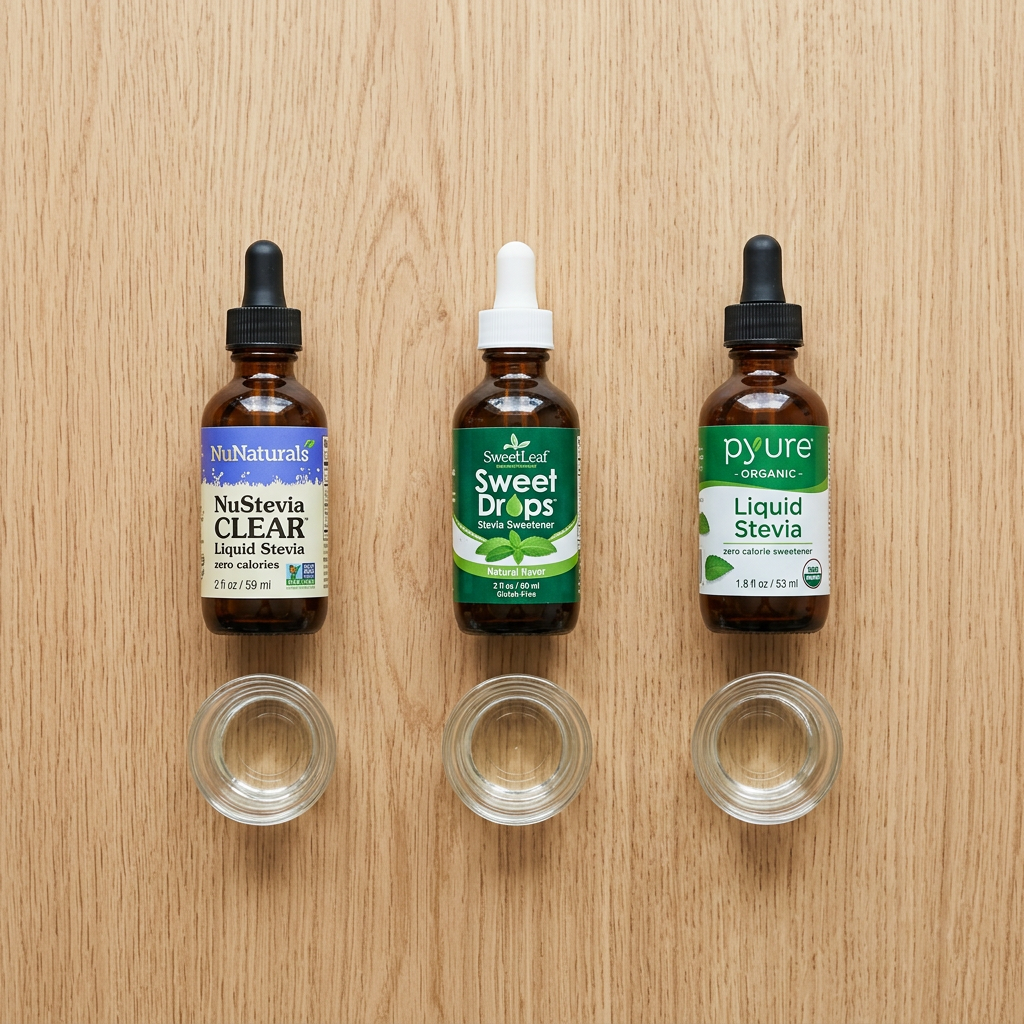
The liquid stevia market has grown substantially, and several direct competitors deserve an honest comparison before you commit to a bottle.
NuNaturals Alcohol-Free vs. SweetLeaf Liquid Stevia Sweet Drops (Unflavored)
SweetLeaf’s liquid drops are the most widely available competitor and come in both flavored and unflavored versions. The unflavored Sweet Drops use a water base similar to NuNaturals, but in side-by-side tasting I found a slightly more pronounced grassy aftertaste at equivalent drop counts. SweetLeaf does publish third-party testing results on their website, which is a genuine advantage for transparency-minded buyers. Pricing is comparable — around $10–$13 for a similar volume. For simple syrup applications, NuNaturals edges ahead on clean flavor; for buyers who prioritize documented third-party testing, SweetLeaf is worth the tradeoff.
NuNaturals Alcohol-Free vs. Pyure Organic Liquid Stevia
Pyure’s liquid drops carry USDA Organic certification, which NuNaturals does not. For buyers for whom organic sourcing is a priority, this matters. In flavor testing, Pyure’s extract read as slightly sweeter per drop, which means the calibration window is even narrower — easy to overshoot. The bottle is also slightly smaller at 1.5 oz. NuNaturals wins on sweetness control; Pyure wins on organic certification and brand transparency about sourcing.
NuNaturals Alcohol-Free vs. NOW Foods Better Stevia Liquid
NOW Foods is a well-trusted supplement brand with strong third-party testing credentials, and their liquid stevia is priced aggressively — often under $9 for 2 oz. The alcohol-free version of their formula performs similarly to NuNaturals in simple syrup applications. I found the flavor slightly more bitter at the 20-drop range, though this may be individual batch variation. NOW Foods’ supply chain documentation and NSF certification for their facility make it a strong runner-up for buyers who want testing credibility at a lower price point.
Quick Comparison Table
| Brand | Alcohol-Free | Organic | 3rd-Party COA | Taste Cleanliness | Approx. Price (2 oz) |
|---|---|---|---|---|---|
| NuNaturals NuStevia Clear | Yes | No | Not published | ⭐⭐⭐⭐⭐ | $12–$13 |
| SweetLeaf Sweet Drops (unflavored) | Yes | No | Yes | ⭐⭐⭐⭐ | $10–$13 |
| Pyure Organic Liquid Stevia | Yes | Yes (USDA) | Partial | ⭐⭐⭐⭐ | $11–$14 |
| NOW Foods Better Stevia Liquid | Yes (option) | No | Facility certified | ⭐⭐⭐⭐ | $8–$10 |
Where to Buy and Price List
NuNaturals NuStevia Alcohol-Free Clear Liquid Stevia 2 oz is available through several channels. Here are the most reliable options with current pricing.
Amazon
Available on Amazon (ASIN: B09XKPL472) for approximately $12.99 with Prime shipping. Fulfilled-by-Amazon listings tend to have reliable stock; check the seller rating if buying from a third-party fulfillment partner to ensure proper storage conditions (stevia extracts prefer stable temperature storage). Subscribe & Save can bring the per-unit price down to around $11.04 for regular buyers.
EnzoStevia.com
EnzoStevia carries NuNaturals products at a listed price of $13.49 for the 2 oz bottle. Use the coupon code AWESOME at checkout for 3% off, bringing your price to approximately $13.09. EnzoStevia is a specialty retailer focused specifically on stevia products, which means better curation and more knowledgeable customer service if you have questions about which formula fits your use case. Worth bookmarking if you’re buying multiple stevia products at once — the coupon stacks nicely across a larger order.
Natural Grocery Stores
Whole Foods, Sprouts, and Natural Grocers carry NuNaturals in the natural sweeteners aisle in many markets, typically priced between $13.49 and $15.99 — a premium for in-person convenience. Call ahead to confirm stock before making a trip; the specific alcohol-free clear formula can occasionally be harder to find than NuNaturals’ flavored drops.
iHerb
iHerb is a reliable international option, particularly for readers outside the continental US. Pricing typically runs $11.50–$12.50 USD before their loyalty reward program discounts, with shipping to most countries.
People Also Ask
Does sugar-free simple syrup with stevia taste like real simple syrup?
It’s close — genuinely close enough to fool most people in a drink context. The key variable is which stevia you use. A rebaudioside-A-dominant extract like NuNaturals Clear produces the cleanest approximation: the sweetness onset is slightly faster than sucrose, and there’s essentially no bitterness at calibrated doses. Side-by-side in a plain glass of water, a trained palate will notice a difference. In a lemonade, iced tea, or mocktail where the other flavors are assertive, most people cannot tell the two apart.
How long does homemade stevia simple syrup last in the fridge?
Made with purified water, food-grade vegetable glycerin, and liquid stevia, a batch will keep well for 14–16 days when stored in a clean glass jar in the refrigerator. Glycerin has mild preservative properties, which helps extend the shelf life beyond a plain water-stevia mixture. If you add any aromatics (mint, citrus zest, spices), reduce the expected shelf life to 7–10 days. Always trust your nose — if the syrup smells off or becomes cloudy, discard it.
What ratio of liquid stevia should I use to replace sugar in simple syrup?
The ratio that works best in most applications is 20 drops of NuNaturals Clear Liquid Stevia per ½ cup water (combined with 1 tablespoon vegetable glycerin). This produces a syrup that substitutes 1:1 for standard simple syrup in recipes. If a recipe calls for 2 tablespoons of simple syrup in a drink, use 2 tablespoons of your stevia syrup. For a richer, sweeter 2:1-style syrup equivalent, increase to 30–32 drops per ½ cup. Taste as you calibrate — stevia sensitivity varies between individuals.
Can I use stevia simple syrup in hot drinks as well as cold drinks?
Yes — the finished syrup handles heat well up to typical beverage temperatures (around 160–180°F). Steviol glycosides are heat-stable well beyond this range; they’ve been shown to maintain stability at temperatures used in commercial baking and pasteurization. The vegetable glycerin is similarly heat-stable. Where liquid stevia simple syrup has an advantage over drops alone in hot drinks is the same as in cold ones: the glycerin base distributes the sweetness evenly instead of allowing it to layer or pool, so your cup of hot tea or americano is consistently sweet from first sip to last.
SERP
When I searched “sugar free simple syrup with liquid stevia,” the top results were a mix of recipe blogs and health-focused food sites. The first page was led by a recipe from a major keto lifestyle blog featuring a heavy emphasis on erythritol syrups rather than pure stevia — useful for a different audience but missing the clean-liquid-stevia angle entirely. The second result was a general sugar-free sweetener roundup from a diabetes management site that touched on stevia syrups in passing but didn’t provide a tested ratio or method. Third was a video recipe with a good demonstration but no written notes for the ratios used, making it hard to replicate without watching the full clip. Two additional results covered “DIY flavored coffee syrups” that happened to mention stevia as a sweetener option but weren’t specifically about the simple syrup technique for mocktails and drinks. None of the top results addressed the glycerin-for-viscosity technique, the shelf life in detail, or provided a brand-level comparison of which liquid stevia performs best in a syrup base — which is the gap this article is specifically designed to fill.
Top 20 Topics
- How to make keto simple syrup at home
- Best liquid stevia for coffee drinks
- Stevia vs. erythritol in homemade syrups
- Sugar-free mocktail recipes for summer
- What is food-grade vegetable glycerin and where to buy it
- NuNaturals stevia review: taste comparison
- Diabetic-friendly cocktail mixers and syrups
- How to make sugar-free lemonade with stevia
- Does stevia raise blood sugar?
- Best stevia drops without bitter aftertaste
- How to sweeten iced tea without sugar
- Stevia simple syrup vs. monk fruit simple syrup
- Sugar-free flavored syrups for sparkling water
- How to make mint simple syrup without sugar
- Liquid stevia conversion chart: drops to teaspoons
- How long does homemade syrup last in the fridge?
- Keto mojito and zero-sugar cocktail recipes
- What is rebaudioside A and why does it matter?
- Sugar-free hibiscus agua fresca recipe
- Alcohol-free stevia drops: why they taste cleaner