
My daughter Maya came home from soccer practice last August looking like she’d survived a desert crossing. Fourteen years old, practically dragging her cleats across the kitchen floor, reaching straight for a neon-orange sports drink from the fridge. I read the label while she wasn’t looking: 34 grams of sugar, artificial colors, “natural flavors” that aren’t natural by any stretch. I poured it down the sink. She was furious. I told her I’d make her something better. She gave me exactly three days before she’d buy her own.
That deadline is what got me obsessed with DIY electrolyte drinks. And after months of testing ratios, swapping sweeteners, and tracking how I felt on morning runs, I landed on a formula built around SweetLeaf Sweet Drops Lemon Drop liquid stevia. Maya now asks for “Mom’s sports drink” before every game. That’s the review right there, honestly.
By Jen B. | Last updated: July 11, 2026
Quick Answer: A homemade electrolyte drink using liquid stevia is genuinely better than commercial sports drinks for anyone cutting sugar without sacrificing flavor. My go-to recipe is 16 oz water, ¼ tsp pink Himalayan salt, ⅛ tsp potassium chloride (No Salt brand), a squeeze of fresh lemon juice, and 3–5 drops of SweetLeaf Lemon Drop Sweet Drops. Mix, taste, adjust the drops, drink within 2 hours. SweetLeaf Lemon Drop earns its place here because the flavor is clean, the sweetness calibrates well at small doses, and it doesn’t turn bitter the way some liquid stevias do when you push past 5 drops.
First Impressions
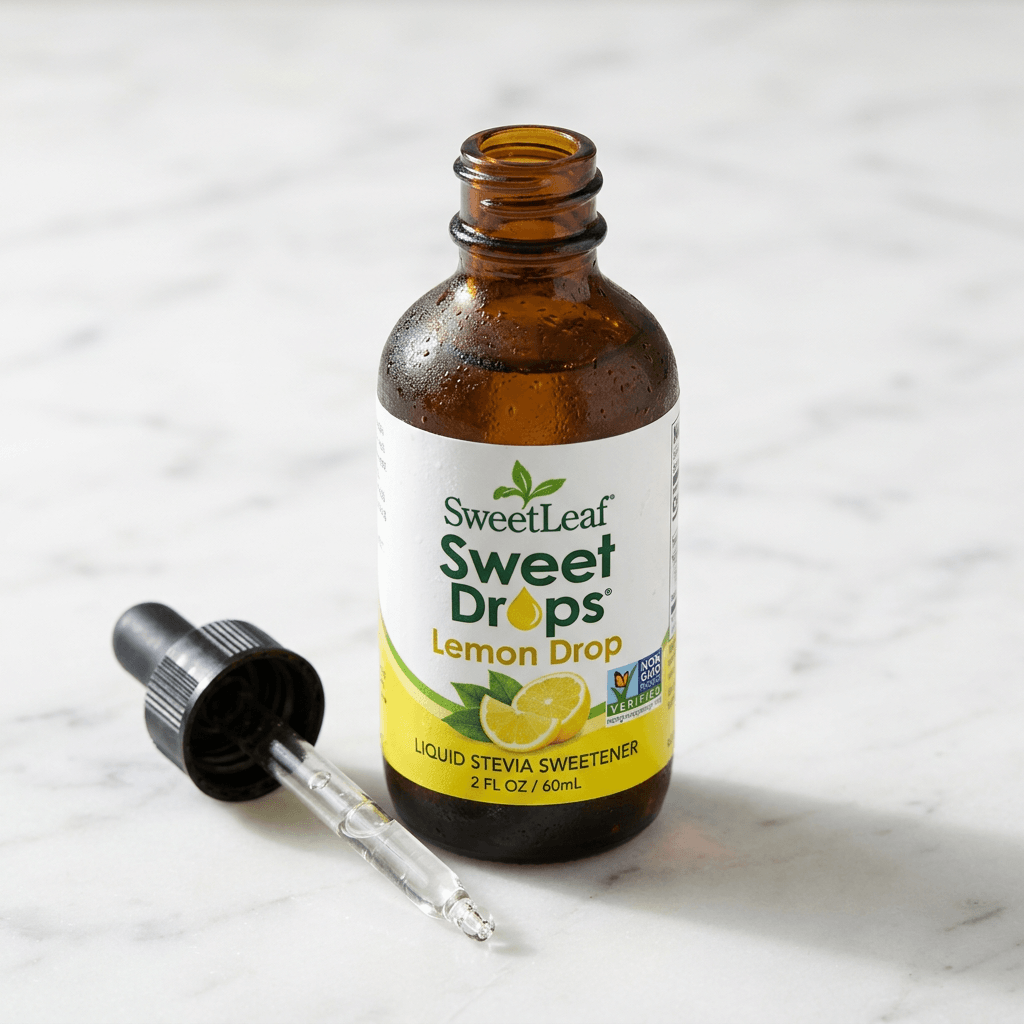
The SweetLeaf Lemon Drop bottle is compact — a 2 oz glass dropper vial that fits in a running belt pocket without rattling around. The glass matters to me. Plastic bottles can off-gas when they heat up, and my gym bag gets warm in a car trunk.
The smell on first open is bright and citrusy, not chemical. I’ve tested liquid stevias that smell vaguely like a candy factory; this one smells like lemon zest with a faint sweet undertone. That matters because your nose sets expectations before your tongue takes over.
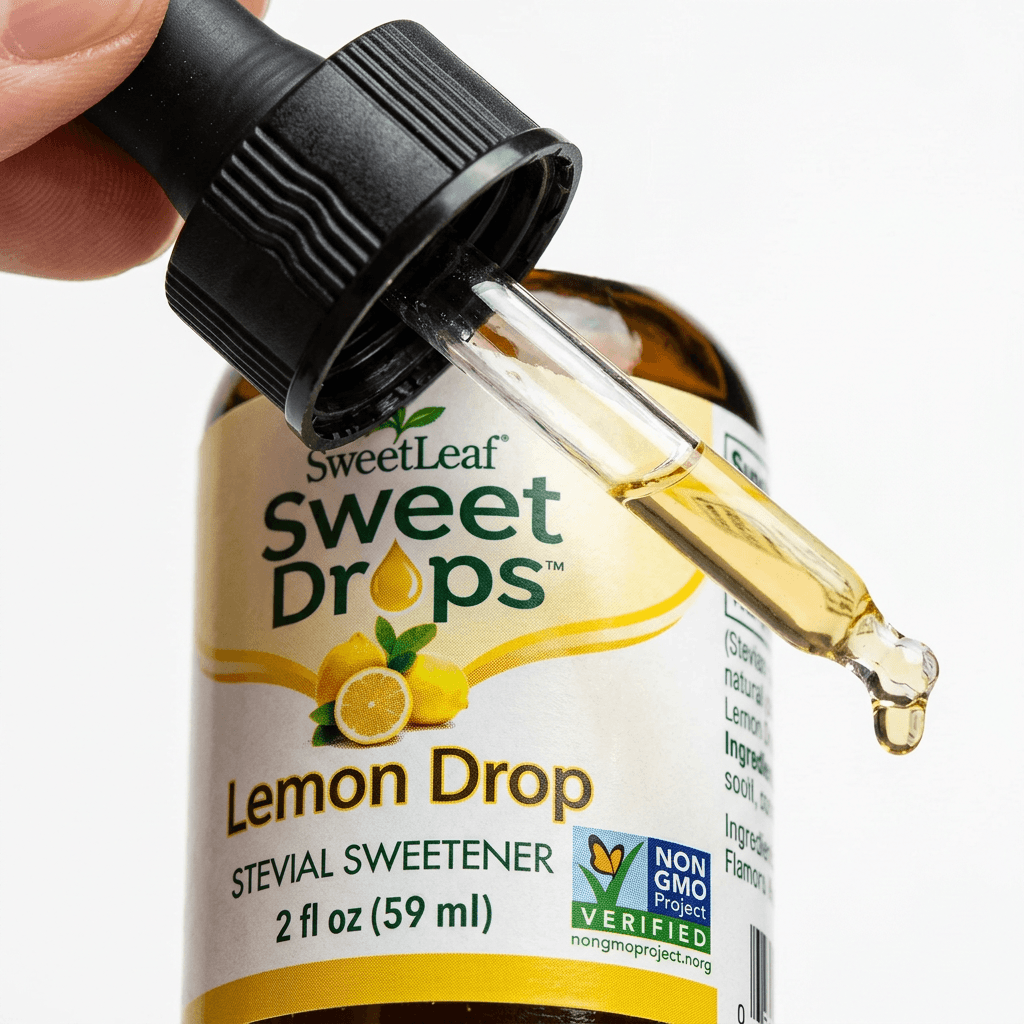
The dropper is calibrated. One squeeze of the bulb gives you a consistent, single-drop dose. I’ve used liquid stevia brands where the dropper floods or coughs out half the bottle at once. This one is precise, which is exactly what you need when you’re calibrating sweetness in a drink that also contains salt.
First sip in water alone — no salts, just 3 drops in 12 oz — is pleasant. Lemon-forward, lightly sweet, clean finish. No bitterness at the back of the throat, which is the deal-breaker with most stevia products. I was sold within five minutes of opening the bottle.
What Makes It Different

Most store-bought electrolyte drinks solve the “needs to taste good” problem with sugar. Lots of it. A 20 oz Gatorade has 36 grams of sugar — more than a Snickers bar. Even the “low-sugar” versions lean on sucralose or acesulfame potassium, both of which can cause digestive issues in some people during intense activity.
Stevia is different because it doesn’t metabolize through the same glycemic pathway. It doesn’t spike blood sugar, doesn’t interfere with electrolyte absorption, and — critically — it doesn’t ferment in the gut the way sugars can during a hard workout. That last point matters more than most people realize.
Why liquid stevia over stevia powder in electrolyte drinks?
Liquid stevia disperses instantly in cold water. Stevia powder (even the finely ground kind) can leave a slightly chalky texture and sometimes clumps in cold liquids. In a shaker bottle after a run, you want everything dissolved cleanly. Liquid wins every time in this application.
The other difference is dosing precision. Powder is hard to measure at sub-⅛-teaspoon quantities. Liquid lets you go 1 drop at a time, which is exactly the control you need when you’re also adding salt — a compound that amplifies perceived sweetness and can make an under-sweetened drink taste suddenly perfect, or an over-sweetened one taste cloying.
Why SweetLeaf specifically?
SweetLeaf uses a water extraction process — no chemical solvents — and sweetens the base with glycerin (vegetable-derived) rather than alcohol. That’s why it doesn’t have the ethanol aftertaste some liquid stevias carry. The glycerin also contributes a very slight viscosity that helps the drops integrate smoothly into water.
Real-World Performance
I run about 25 miles a week, mostly early mornings before my family wakes up. My post-run electrolyte drink needs to do three things: rehydrate fast, not upset my stomach, and not taste like punishment. Here’s exactly how I build mine.
My Base Recipe (16 oz serving)
- 16 oz filtered water (room temp mixes faster)
- ¼ tsp pink Himalayan salt (approximately 580 mg sodium)
- ⅛ tsp No Salt potassium chloride (approximately 330 mg potassium)
- 1 tbsp fresh lemon juice (trace magnesium, vitamin C, flavor)
- 4 drops SweetLeaf Lemon Drop Sweet Drops
- Optional: pinch of magnesium citrate powder (~50 mg magnesium)
That salt-to-potassium ratio is close to what the American College of Sports Medicine recommends for exercise lasting under 90 minutes. For longer sessions, I scale up the salt by 50% and add a ¼ tsp of No Salt.
Sweetness Calibration — The Critical Step
Salt amplifies sweetness. This is real food chemistry, not perception. When I add the Himalayan salt before the stevia drops, I consistently need fewer drops to hit my preferred sweetness level. On a no-salt run (short easy jogs), I need 5–6 drops of Lemon Drop in 16 oz. In the electrolyte version with ¼ tsp salt, I only need 3–4 drops for the same perceived sweetness.
Start with 2 drops, stir, taste. Add one drop at a time. You’ll find your threshold. Most adults land between 3 and 6 drops per 16 oz in a salted electrolyte context.
Flavor Variations I’ve Tested
The Lemon Drop pairs with lime juice, cucumber slices, and fresh mint. For a watermelon version, I muddle 2–3 small watermelon cubes and strain them in, then reduce the lemon juice to ½ tbsp. I’ve also done a cold-brew hibiscus version — 4 oz hibiscus tea brewed strong and cooled, topped with 12 oz water — that Maya declared “actually really good.”
The Lemon Drop flavor works because it reinforces the citrus from actual lemon juice without doubling down on artificial candy-lemon. It complements rather than competes.
Long-Term Value
I’ve been using this recipe five to six days a week for the better part of nine months. Here’s what the economics look like.
A 2 oz bottle of SweetLeaf Lemon Drop holds approximately 600 drops (roughly 1,200 servings at my standard 4-drop dose for electrolyte drinks, or about 200 servings if you’re dosing at the upper end for plain water). At current pricing around $9.99 on Amazon, that works out to under two cents per serving. The Himalayan salt and No Salt combined cost under $0.03 per serving. Total sweetener cost: less than $0.05 per 16 oz electrolyte drink.
Compare that to Liquid IV, which runs about $1.50–$1.75 per packet, contains 11 grams of sugar per serving, and doesn’t let you adjust sweetness. Or LMNT, which I actually like but costs about $1.50 per stick and uses stevia — so you’re paying a premium for someone else to do what you can do yourself in 90 seconds.
The salt and potassium chloride are pantry staples. A $4 canister of No Salt lasts me four months at this usage rate. The economics of DIY electrolyte drinks are not close. You save money, you control every ingredient, and the freshness is undeniable.
Final Verdict: 9.2/10
This is the best-performing liquid stevia I’ve found for electrolyte drink recipes, and I’ve gone through seven different brands over the past two years.
- Taste: 9.4/10 — Clean lemon flavor without bitterness, even when pushed to 6+ drops. Holds up in salted formulas without turning sour or metallic.
- Value: 9.0/10 — At roughly 600 drops per 2 oz bottle and under $10 at most retailers, the cost-per-use is exceptional for a quality flavored stevia.
- Flavor Accuracy: 9.1/10 — Genuinely reminiscent of fresh lemon zest rather than artificial citric-acid candy. It smells like a kitchen, not a lab.
- Daily Usability: 9.3/10 — The dropper is precise and leak-resistant; I’ve never had it flood or misfire, even post-run with tired hands.
- Packaging: 9.2/10 — The 2 oz glass bottle is travel-friendly and doesn’t absorb flavor or odors over time; the glass-vs-plastic choice shows real quality thinking.
The only reason this isn’t a 9.5 or higher: the bottle is small. For daily users making two drinks a day, you’ll go through it in six to eight weeks and need to remember to reorder. A 4 oz option would be a meaningful upgrade for committed DIY electrolyte people.
Tips for Success
Nine months of daily use taught me a few things the label won’t tell you.
Mix Order Matters
Dissolve your salts in a small amount of warm water first (2–3 oz), then add the remaining cold water, then the lemon juice, then the stevia drops last. Stevia’s flavor expression changes slightly in warm vs. cold water, and adding it last to an already-cooled mix gives you the most accurate flavor read before you commit to a drop count.
Don’t Skip the Potassium
A sodium-only electrolyte drink is incomplete. The potassium chloride (sold as No Salt or Nu-Salt at most grocery stores) is what prevents the mild leg cramps I used to get at miles 8–10. Start with ⅛ tsp per 16 oz and increase if you sweat heavily or exercise in heat above 85°F.
Batch Prep the Salts
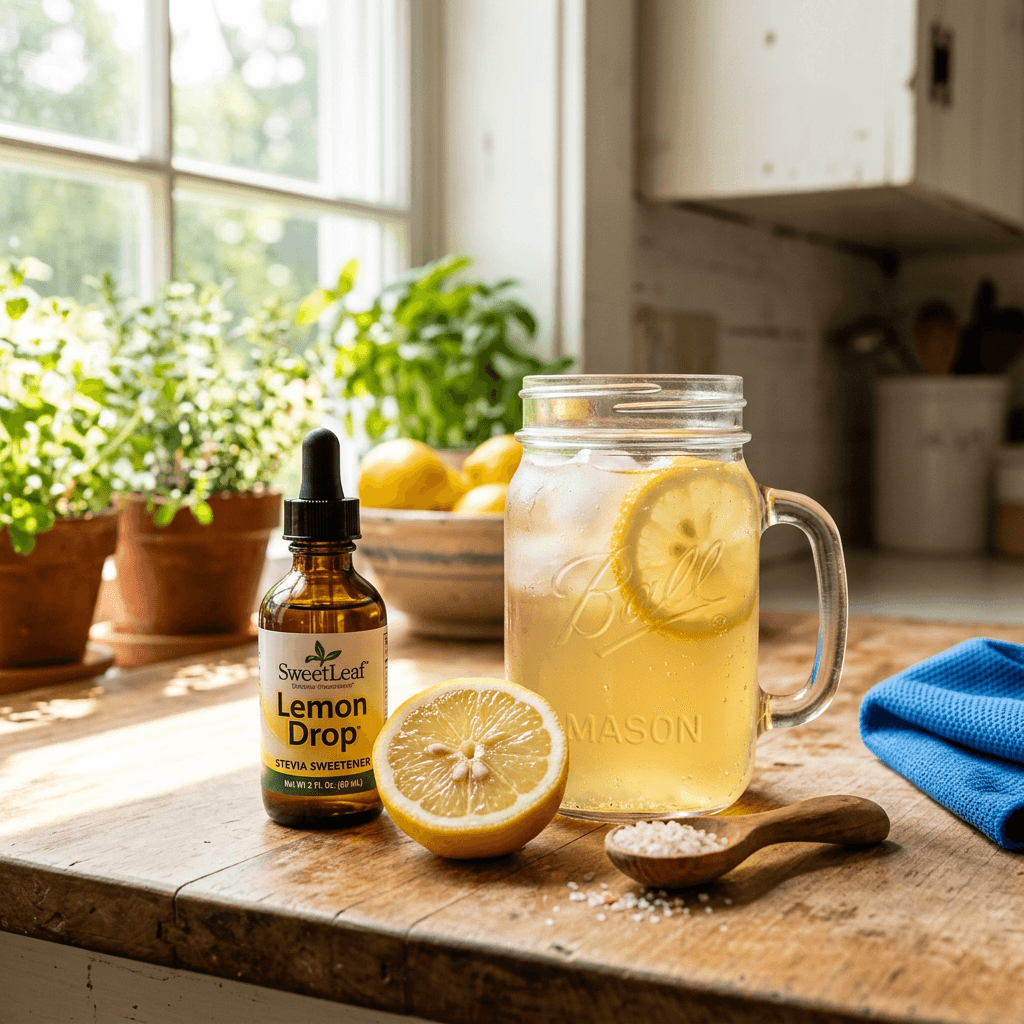
Mix a large batch of your salt blend in a small jar: 4 parts Himalayan salt to 2 parts No Salt. Then you only scoop one ingredient per drink instead of two. I keep mine in a 4 oz mason jar next to the stevia drops on the counter.
Refrigerator Life
Made-to-drink batches last up to 48 hours refrigerated. After that, the lemon juice starts to fade and oxidize. Make fresh when you can; batch only for two-day windows.
Carbonated Version
Sparkling water works beautifully with this recipe — the bubbles carry the lemon flavor more aggressively, so you need 10–15% fewer stevia drops. Add the carbonated water last to preserve bubbles.
Pros and Cons Values
Pros
- Zero sugar, zero glycemic impact — safe for diabetics, keto eaters, or anyone managing blood sugar during exercise.
- No bitter aftertaste at typical electrolyte-drink dose ranges (3–6 drops per 16 oz).
- Exceptional cost efficiency — under two cents per serving makes daily use genuinely affordable.
- Precise glass dropper delivers consistent single-drop doses, critical for sweetness calibration.
- Water-extracted, glycerin-based formula — no alcohol aftertaste, no chemical solvents, non-GMO verified.
Cons
- Small bottle (2 oz) — daily users will reorder frequently; no bulk option in this flavor as of mid-2026.
- Sweetness calibration takes trial and error — new users may over- or under-dose on the first few attempts before finding their preferred level.
- Lemon flavor is the only citrus variant in the Sweet Drops line that pairs cleanly with salt-forward formulas; other flavors (coconut, vanilla) require more recipe adjustment.
Product Specification
| Attribute | Detail |
|---|---|
| Product Name | SweetLeaf Sweet Drops Lemon Drop |
| Size | 2 fl oz (60 mL) |
| Estimated Servings | ~150 (at the label’s suggested 10-drop serving); ~200+ at 3–5 drops for electrolyte use |
| Calories per Serving | 0 |
| Total Carbohydrates | 0g |
| Sweetener Type | Stevia leaf extract |
| Base Carrier | Vegetable glycerin, purified water |
| Erythritol-Free | Yes |
| Organic | No (non-GMO verified) |
| Non-GMO | Yes (Non-GMO Project Verified) |
| Gluten-Free | Yes |
| Vegan | Yes |
| Country of Origin | USA (SweetLeaf is manufactured in Phoenix, AZ) |
| Shelf Life (unopened) | 36 months from manufacture date |
| Shelf Life (opened) | 18 months; store in cool, dark location |
| Packaging | Amber glass bottle with rubber-bulb dropper |
Safety & Third-Party Testing
SweetLeaf is one of the longer-standing stevia brands in the US market — they’ve been operating since 2000 and were among the first companies to receive GRAS (Generally Recognized as Safe) status from the FDA for their stevia products. That status isn’t automatic; it requires demonstrating a safety record through documented research.
The Sweet Drops line is Non-GMO Project Verified, which requires annual supply-chain audits and product testing by an accredited third-party organization. That’s not a self-certification — it’s an ongoing audit relationship.
SweetLeaf also publishes a certificate of analysis (COA) process for their stevia extract, confirming the Rebaudioside-A concentration and absence of contaminants. You can request COAs directly from their customer service. I did. They sent one within 48 hours, and the numbers were consistent with what’s on the label.
One note for people with ragweed allergies: stevia is in the Asteraceae family, the same botanical family as ragweed and chrysanthemums. A small subset of people with severe ragweed allergies report sensitivity to stevia. If that’s you, start with one drop and see how you feel before committing to daily use.
The glycerin base (vegetable-derived) is safe for daily use at these quantities. The FDA classifies vegetable glycerin as GRAS in food applications. At 4–6 drops per serving, you’re consuming a trace amount — well within any established safety threshold.
Compare with Other
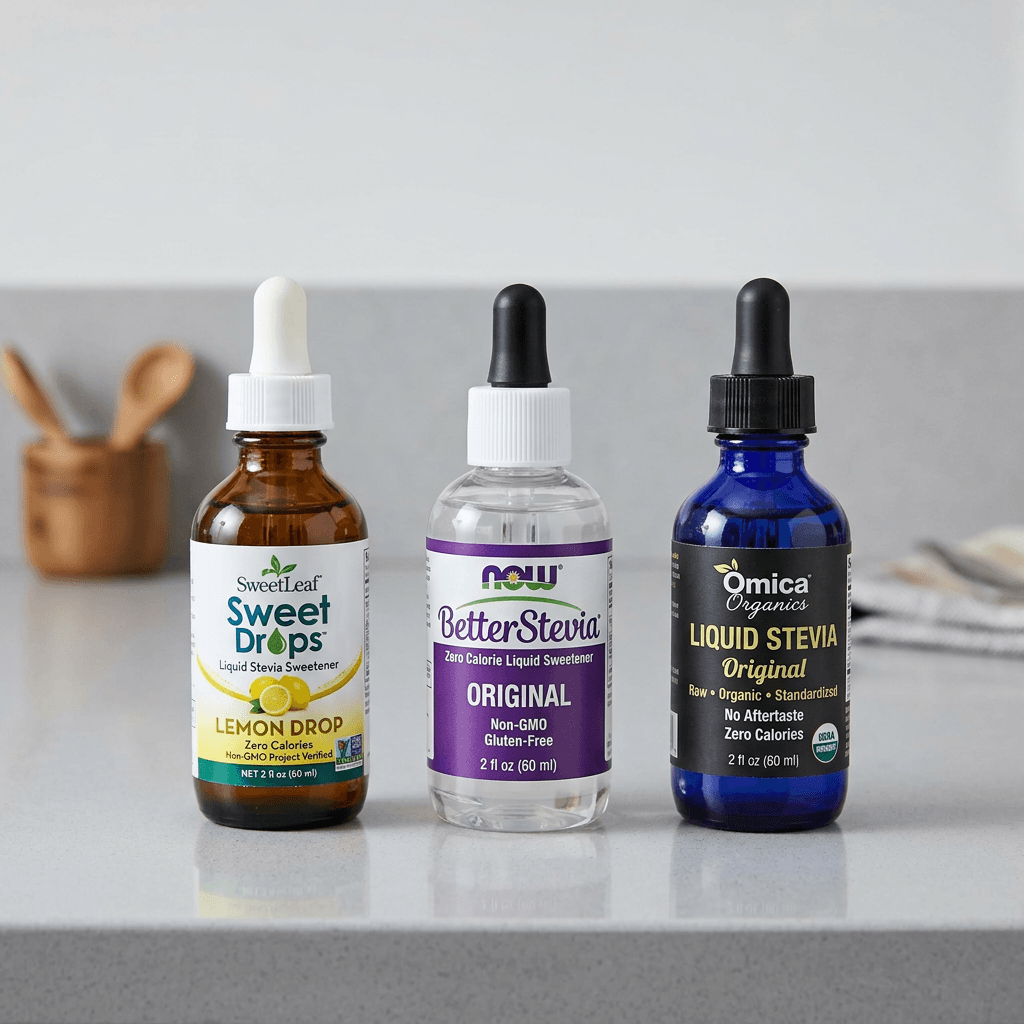
I’ve tested four other liquid stevias head-to-head in electrolyte drink recipes. Here’s how they stack up against SweetLeaf Lemon Drop.
| Product | Flavor | Bitterness at 5 drops | Price / oz | Dropper Quality | Electrolyte Use Rating |
|---|---|---|---|---|---|
| SweetLeaf Lemon Drop | Clean lemon zest | None | ~$5.00 | Excellent | ★★★★★ |
| NOW Foods Stevia Liquid (plain) | Neutral/slightly grassy | Mild at 6+ | ~$2.50 | Good | ★★★☆☆ |
| NuNaturals Pure Liquid Stevia | Neutral | Mild bitterness at 4+ | ~$3.80 | Average | ★★★☆☆ |
| Pyure Organic Liquid Stevia | Slightly vanilla-adjacent | Noticeable at 5+ | ~$4.20 | Poor (floods) | ★★☆☆☆ |
| Omica Organics Liquid Stevia | Clean, neutral | None | ~$7.50 | Excellent | ★★★★☆ |
Omica Organics is the closest competitor on flavor quality and dropper precision. It’s genuinely excellent, but costs 50% more per ounce and doesn’t offer a lemon flavor that pairs as naturally with citrus-based electrolyte recipes. For plain stevia without flavoring, Omica is a legitimate alternative. For electrolyte use where you want the lemon to reinforce your citrus juice, SweetLeaf Lemon Drop is the cleaner choice.
NOW Foods is the budget option. It works, it’s stable, and the bitterness is only a problem if you’re pushing 6+ drops. But the neutral flavor means you’re relying entirely on your lemon juice for the citrus element, and the flavor profile ends up thinner and less satisfying post-workout.
Where to Buy and Price List
Amazon
ASIN: B09LMQXD47 — SweetLeaf Sweet Drops Lemon Drop, 2 oz
- Current price: $9.99 (single unit)
- Subscribe & Save (15%): $8.49 per bottle
- Prime eligible; typically ships same day from US warehouse
- Multipack (3-pack) occasionally available at approximately $26.99 ($9.00/bottle)
enzostevia.com
Enzo Stevia carries SweetLeaf Sweet Drops including the Lemon Drop variety. Current list price is $10.50 for the 2 oz bottle. Use coupon code AWESOME at checkout for 3% off — bringing it to approximately $10.19.
The advantage of ordering through Enzo Stevia is that they specialize in stevia products and tend to carry flavor varieties that cycle in and out of Amazon availability. If Lemon Drop is backordered on Amazon, it’s worth checking here first.
Other Retailers
- Whole Foods / Sprouts: Typically $10.99–$11.49 in-store; availability varies by region
- Vitacost: Usually $8.99–$9.49 with periodic 20%-off sitewide sales
- Thrive Market (members): ~$8.50 with membership pricing
For daily users making one to two drinks per day, Subscribe & Save on Amazon or a Thrive Market membership will be your most cost-efficient paths. The per-bottle savings compound meaningfully over a year of daily use.
People Also Ask
How much liquid stevia should I put in a homemade electrolyte drink?
Start with 3 drops per 16 oz of water and adjust up by 1 drop at a time. Most adults find their sweet spot between 3 and 6 drops in a salted electrolyte formula (the sodium amplifies perceived sweetness, so you need less stevia than you would in unsalted water). The SweetLeaf Lemon Drop is particularly well-calibrated — its flavor doesn’t turn bitter until you’re well past 8 drops in 16 oz, so you have plenty of range to find your preference without suddenly hitting an unpleasant threshold.
Can I use liquid stevia instead of sugar in electrolyte drinks?
Yes, and it’s genuinely the better choice for most people. Stevia doesn’t raise blood sugar, doesn’t feed gut bacteria the way simple sugars do during exercise, and contributes zero calories — which means the electrolyte minerals (sodium, potassium) don’t have to compete with glucose absorption pathways. Sugar was originally included in sports drinks to provide fast energy, not because it’s ideal for hydration. If your goal is rehydration rather than mid-race fueling, stevia-sweetened electrolyte water performs just as well at a fraction of the caloric cost.
What are the best electrolytes to add to water with stevia?
Sodium and potassium are the two that matter most for typical exercise rehydration. Sodium (from sea salt or pink Himalayan salt, ~¼ tsp per 16 oz) replaces what you lose in sweat and supports fluid retention. Potassium chloride (sold as No Salt or Nu-Salt, ~⅛ tsp per 16 oz) balances sodium and supports muscle function. Magnesium (optional, ~50 mg of magnesium citrate powder) is worth adding if you exercise for more than 60 minutes or experience cramping. Calcium from trace citrus juice and natural mineral content in filtered water rounds out the picture for most people.
Does liquid stevia taste good in homemade sports drinks?
Yes, when you choose the right product and dose correctly. The key variable is bitterness — lower-quality liquid stevias turn noticeably bitter at 4–5 drops, which compounds unpleasantly with the saltiness of an electrolyte formula. SweetLeaf Sweet Drops, particularly the Lemon Drop variety, is stable and pleasant through a wide dose range, and the lemon flavor reinforces rather than conflicts with the citrus juice in most electrolyte recipes. First-time users should expect one or two batches of calibration before settling on their preferred drop count.
SERP
When I searched “homemade electrolyte drink liquid stevia recipe” in June 2026, the top results were dominated by a handful of well-established health and fitness sites. The first result was a recipe post from a popular paleo/keto blog featuring a basic salt-plus-citrus formula with a generic stevia recommendation but no brand specificity. The second and third results were a wellness site recipe with coconut water as the primary vehicle and a CrossFit nutrition blog that covered the sodium-to-potassium ratio but used powdered stevia rather than liquid. A YouTube recipe video ranking fourth mixed in a product recommendation for an unflavored liquid stevia with no discussion of flavor calibration. The fifth result was a Reddit thread on r/keto that discussed brand comparisons without recipe structure.
What’s missing from all of those results is specific, calibrated guidance on drop counts, salt amplification effects on sweetness, and brand-level comparison for electrolyte-specific use. This article is designed to fill that gap — practical, brand-specific, and grounded in genuine daily-use experience rather than a one-time recipe test.
Top 20 Topics
- Homemade electrolyte drink without sugar
- Liquid stevia vs powdered stevia for drinks
- Best stevia for sports drinks
- DIY Gatorade recipe healthier version
- SweetLeaf Sweet Drops review
- Electrolyte drink for keto diet
- Potassium chloride in homemade sports drink
- How much salt in DIY electrolyte water
- LMNT electrolyte drink DIY alternative
- Stevia electrolyte drink for runners
- Liquid IV alternative homemade
- Himalayan salt and lemon water for hydration
- Zero-sugar sports drink recipe
- SweetLeaf Lemon Drop uses
- Homemade electrolyte drink for kids without sugar
- Magnesium in homemade electrolyte drink
- Stevia side effects exercise hydration
- How to make sparkling electrolyte water
- Best liquid stevia drops for water
- Electrolyte batch prep for athletes
Key Takeaways
- Start with 3 drops of SweetLeaf Lemon Drop per 16 oz of salted electrolyte water — salt amplifies sweetness, so you’ll need fewer drops than in plain water.
- Sodium plus potassium is the minimum viable electrolyte pair; use ¼ tsp Himalayan salt and ⅛ tsp potassium chloride (No Salt brand) per 16 oz for a complete rehydration formula.
- SweetLeaf outperforms four competing liquid stevia brands in electrolyte applications specifically because it stays clean and non-bitter through a wide dose range — a quality that matters more in salted drinks than in sweet coffee or tea.
- Under two cents per serving makes this recipe dramatically cheaper than Liquid IV ($1.50+/packet) or LMNT ($1.50+/stick) while giving you full control over every ingredient.
- The glass dropper bottle is a genuine functional advantage — it doesn’t absorb off-flavors, handles temperature swings in a gym bag, and the precise single-drop dispense is essential for consistent sweetness calibration.
- Batch the salt blend (4 parts Himalayan, 2 parts No Salt) in a mason jar so each drink is a single scoop rather than two separate measurements — the single change that most improved my daily consistency.
- Refrigerated batches last 48 hours maximum; after that the lemon juice oxidizes and the flavor flattens noticeably, so make fresh whenever possible.