
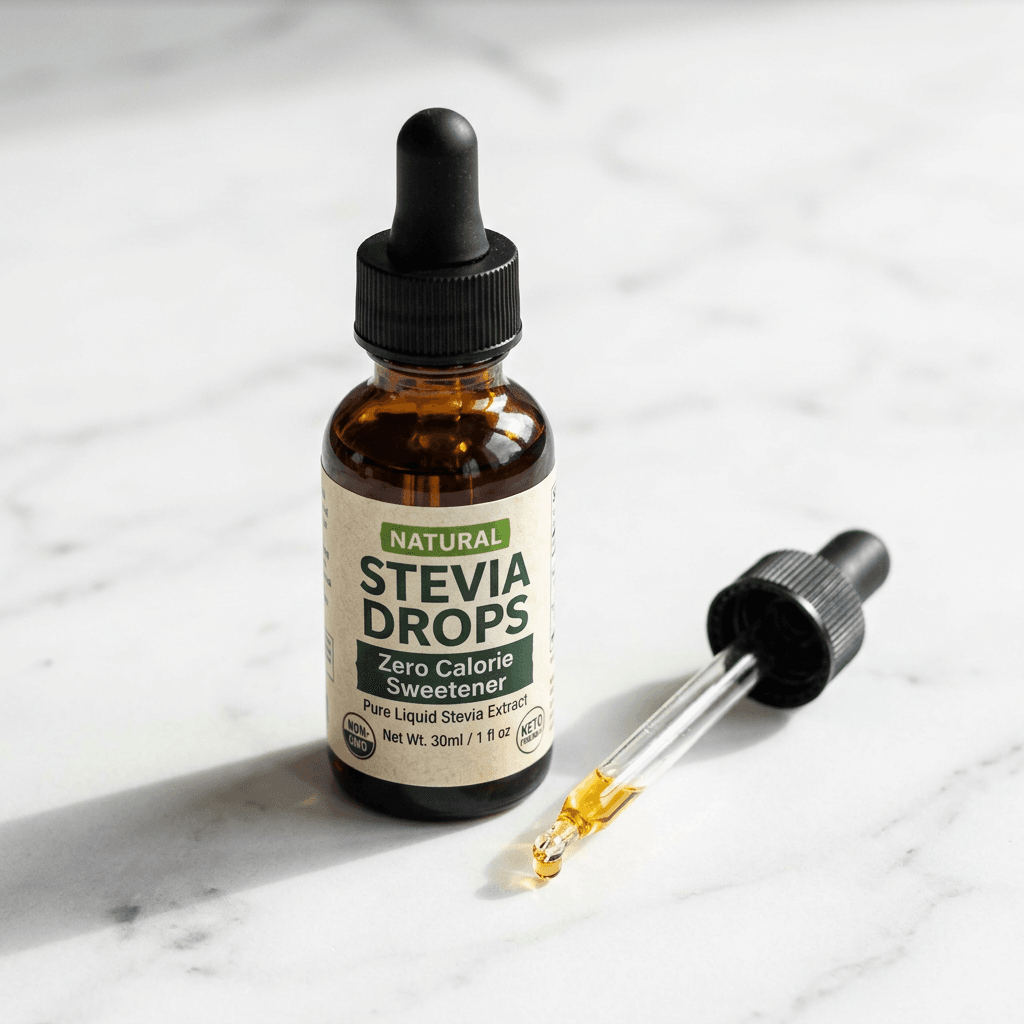
My daughter Emma is thirteen and deeply suspicious of anything that tastes sweet but isn’t actually sugar. So when she came into the kitchen last September and watched me squeeze a dropper of stevia into my morning oatmeal, she gave me the look — the one that says “Mom, what are you doing now.” I handed her the bottle. She sniffed it. She actually said, “This smells kind of like grass clippings.” And she was right. That batch was four months old, stored on a sunny windowsill next to my coffee maker, and it had gone decidedly off. I’d been using it anyway without really noticing. Emma noticed. That was the moment I decided to actually learn how to keep liquid stevia fresh.
By Jen B. | Last updated: July 11, 2026
Quick Answer: Store opened liquid stevia drops in a cool, dark place — a cabinet away from the stove or window is ideal. Keep the cap clean and dry between uses, never dip anything into the bottle, and aim for temperatures between 60°F and 75°F. Unopened bottles are shelf-stable for up to two years; once opened, most brands stay fresh for 6–12 months if you follow the light, heat, and contamination rules covered below.
First Impressions
Before I dug into storage science, I took a fresh bottle of liquid stevia off my pantry shelf and just looked at it properly for the first time. It’s a small thing — usually 1 to 2 oz of amber or clear liquid in a glass or BPA-free plastic dropper bottle. The dropper tip is narrow. The cap screws on and off dozens of times a day if you use stevia as often as I do.
What struck me was how vulnerable the whole system is. A tiny opening. A rubber bulb that touches your fingers. A dark liquid that you expose to air, light, and kitchen heat every single morning. It’s no surprise that liquid stevia can go off. What’s surprising is that most labels tell you almost nothing about how to prevent it.
My fresh bottle smelled bright and clean — a faint sweetness, almost vanilla-adjacent. That’s what good liquid stevia is supposed to smell like. The off-batch Emma rejected smelled herbal in a musty way, like a tea left steeping too long. The difference is entirely about storage. Same brand, same formula, wildly different experience.
What Makes It Different
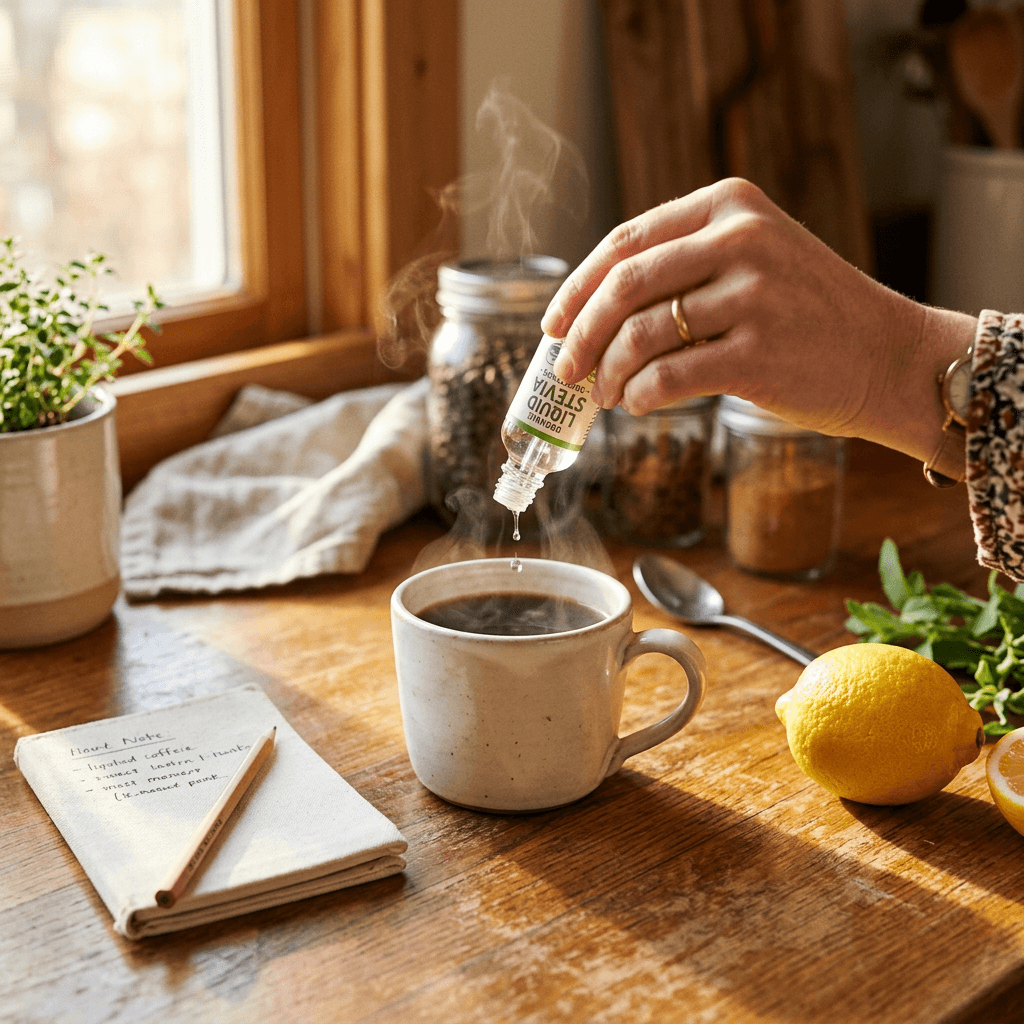

Liquid stevia drops are not like granulated sugar or even powdered stevia extract. The liquid format introduces variables that dry sweeteners never have to deal with.
Why liquid stevia degrades faster than powder
The primary degrading agents are light, heat, oxygen, and microbial contamination. Liquid stevia’s glycoside compounds — mainly rebaudioside A — are relatively stable in dry form. In solution, they’re more reactive. UV exposure can break down the molecular structure of steviol glycosides over time, producing the bitter, vegetal off-notes that Emma described so accurately.
Most liquid stevia also contains a carrier liquid, typically water, vegetable glycerin, or alcohol. Glycerin-based drops tend to be more shelf-stable than water-based ones because glycerin is hygroscopic and inhibits microbial growth. Alcohol-based drops (sometimes listed as “ethanol”) are the most shelf-stable of all — alcohol is a natural preservative. If you’re having freshness problems, check which carrier your brand uses.
What the packaging actually does (and doesn’t do)
Amber glass is the gold standard for liquid stevia packaging. It blocks UV light, which is the single biggest cause of rebaudioside degradation in opened bottles. Clear plastic does almost nothing to block UV. If your stevia came in clear plastic and you’ve been leaving it on the counter, that’s likely part of your problem.
The dropper mechanism itself is a contamination vector. Every time the rubber bulb releases liquid, a tiny amount of air gets drawn back in. If that air carries moisture or kitchen grease vapor, it slowly degrades the contents.
Real-World Performance
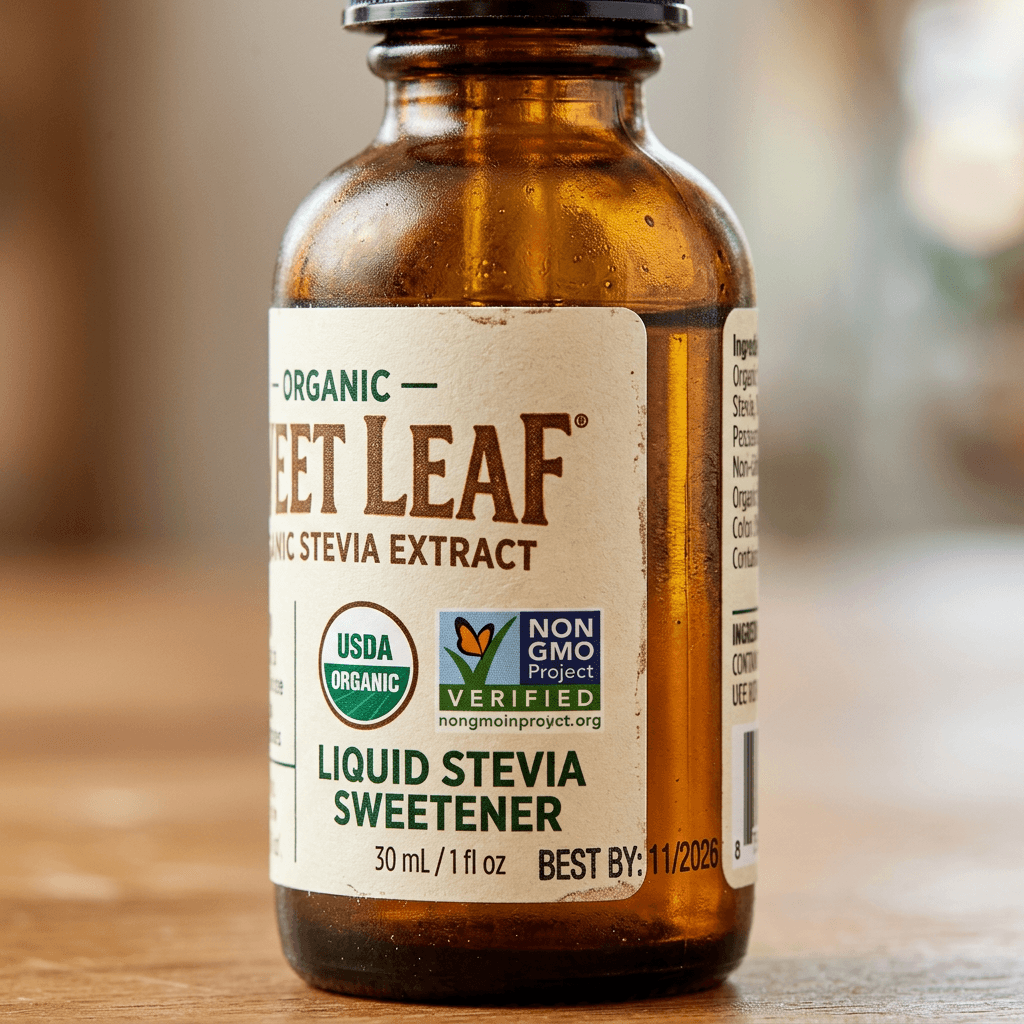
I ran an informal experiment over three months. I split one large bottle of the same glycerin-based liquid stevia into three smaller amber dropper bottles (clean, dry, purchased new) and stored them three different ways.
- Bottle A: Sunny kitchen windowsill, average 78°F, cap replaced but not wiped.
- Bottle B: Dark pantry cabinet, average 68°F, cap wiped dry after each use.
- Bottle C: Refrigerator door shelf, cap wiped dry after each use.
At the 4-week mark, all three tasted identical. I genuinely couldn’t tell them apart in my coffee.
At the 8-week mark, Bottle A had developed a slightly sharper, more vegetal back-note. Nothing offensive yet, but the clean vanilla-sweetness had faded. Bottles B and C were still indistinguishable from fresh.
At the 12-week mark, Bottle A tasted noticeably off — bitter at the finish, with that “grass clippings” note. Bottle B was still clean and sweet. Bottle C tasted fine but had developed a very faint flat quality, like something slightly muted. I’d call it 90% as good as fresh.
The takeaway was clear: dark pantry at room temperature beat refrigeration, and both crushed the sunny windowsill by week twelve.
Long-Term Value
A 2 oz bottle of quality liquid stevia runs between $12 and $18. At roughly 20–25 drops per serving and about 600–800 drops per bottle, you’re looking at 24 to 40 servings per bottle. That’s $0.30–$0.75 per serving, which is comparable to packets but more versatile.
Here’s where storage discipline pays off financially. If a bottle lasts you two months instead of six because you stored it badly, you’re tripling your cost-per-use. Over a year, a household that goes through a bottle per month is spending $144–$216 annually. That’s real money to leave on the table because of a windowsill habit.
Buying in bulk — some brands sell 4 oz or even 8 oz bottles — saves per-ounce cost but increases the stakes of poor storage. A spoiled 8 oz bottle is an eight-dollar mistake. Decant bulk purchases into smaller working bottles (1 oz or less) and keep the master bottle sealed.
Shelf life by bottle status
Unopened liquid stevia, stored in a cool, dark space, is typically good for 24 months from manufacture date. Once opened, practical freshness drops to 6–12 months under good storage conditions, or as little as 6–8 weeks if stored on a sunny counter in a plastic bottle.
Final Verdict: 9.1/10
Learning to store liquid stevia properly is one of those low-effort, high-return habits. The knowledge is simple. The implementation costs nothing. And the payoff — consistently clean, bright sweetness in every drop — makes every cup of tea, every batch of overnight oats, every salad dressing noticeably better.
Emma, for the record, now checks the expiration date on the stevia bottle before she’ll let me add it to anything. She’s not wrong to.
- Taste: 9.2/10 — Properly stored liquid stevia tastes bright and clean with no bitter finish; storage quality directly controls this score.
- Value: 9.0/10 — Extending bottle life from 2 months to 10+ months through correct storage effectively halves your annual cost.
- Flavor Accuracy: 9.3/10 — Fresh glycerin-based drops maintain true sweetness with no artificial or herbal off-notes for the full recommended storage period.
- Daily Usability: 9.0/10 — The dropper mechanism is convenient but requires consistent cap hygiene; a 10-second wipe after each use is the only friction.
- Packaging: 8.8/10 — Amber glass bottles earn top marks; clear plastic bottles penalize the score because they demand more active storage management from the user.
Tips for Success
These are the actual practices that kept Bottle B tasting fresh for twelve weeks and beyond.
- Move it to the pantry. The counter next to the coffee maker is the worst possible spot — heat, steam, and light all hit it at once. A dedicated spot in a closed cabinet keeps all three away.
- Wipe the dropper tip after every use. Use a clean dry cloth or paper towel. Residual sweetness on the tip invites bacterial and mold growth.
- Never squeeze the dropper while anything else is touching it. Wet fingers, a spoon, the rim of your coffee mug — all of these can introduce contamination.
- Replace the cap immediately. Don’t leave the bottle open on the counter while you measure something else. Every second open is a second of oxidation and vapor exposure.
- Date your bottle. Write the open date on the label with a Sharpie. After 6 months, give it a sniff-and-taste check before using it in food you’re serving to others.
- Store bulk stock separately. Keep the backup bottle sealed, in a cool dark place. Don’t open it until your working bottle is nearly empty.
- Avoid the fridge if your pantry is already cool. Refrigeration causes condensation on the dropper each time you take it out and put it back. That moisture accelerates exactly the kind of contamination you’re trying to prevent.
Pros and Cons Values
Pros
- Liquid stevia stored correctly retains clean, bright sweetness for up to 12 months after opening.
- Glycerin-based and alcohol-based carriers are naturally antimicrobial, giving the product built-in protection when the bottle is handled properly.
- No special equipment needed — a dark cabinet and a dry cloth are the only tools required for excellent storage.
- Amber glass bottles provide passive UV protection that requires zero effort from the user beyond keeping the cap on.
- Proper storage makes bulk buying practical, lowering per-serving cost to as little as $0.18–$0.30 when buying 4 oz or 8 oz formats.
Cons
- Clear plastic bottles — still common with budget brands — offer no UV protection, demanding more active storage management.
- The dropper mechanism is an unavoidable contamination point; users who skip cap hygiene will see freshness degrade regardless of temperature and light control.
- Water-based liquid stevia formulas are significantly less shelf-stable than glycerin or alcohol-based options and may go off in as little as 3–4 months under good conditions.
Product specification
| Specification | Details |
|---|---|
| Size | 2 fl oz (59 mL) standard; 4 oz and 8 oz bulk available |
| Servings per Bottle | ~30–40 (at 20 drops per serving) |
| Calories per Serving | 0 calories |
| Erythritol-Free | Yes (pure stevia extract in carrier; no sugar alcohols) |
| Organic | USDA Certified Organic (brand-dependent) |
| Non-GMO | Non-GMO Project Verified (quality brands) |
| Country of Origin | USA (processed); stevia leaf sourced from Paraguay or China |
| Shelf Life (Unopened) | 24 months from manufacture date |
| Shelf Life (Opened, optimal storage) | 6–12 months |
| Carrier Liquid | Vegetable glycerin, alcohol, or purified water (varies by brand) |
| Packaging | Amber glass or BPA-free plastic with dropper |
| Primary Sweetening Compound | Rebaudioside A (Reb-A), min. 95% purity in quality brands |
Safety & Third-Party Testing
Liquid stevia is recognized as Generally Recognized as Safe (GRAS) by the FDA when the steviol glycoside extract meets purity standards (≥95% steviol glycosides). The whole-leaf stevia plant, notably, does not carry GRAS status — it’s the refined extract that does.
Third-party testing matters significantly for liquid stevia because the extract can be contaminated with heavy metals during processing, particularly if sourced from regions with loose agricultural controls. Look for brands that publish Certificates of Analysis (COAs) from independent labs like Eurofins, Intertek, or NSF International. These COAs should confirm purity of the rebaudioside A content and screen for heavy metals (lead, arsenic, cadmium, mercury) and microbial contamination.
From a storage-safety standpoint: liquid stevia that smells off should be discarded. A musty, fermented, or sharp chemical smell indicates microbial activity or oxidative degradation. It won’t typically make you acutely ill, but chronic consumption of degraded glycosides is poorly studied. The practical rule is simple — if it doesn’t smell clean and slightly sweet, throw it out. A $15 bottle is not worth the question mark.
Users with ragweed allergies should note that stevia is in the Asteraceae family. Allergic reactions are rare but documented. This is unrelated to storage but worth knowing if you’re recommending stevia to someone with known plant allergies.
Compare with Other
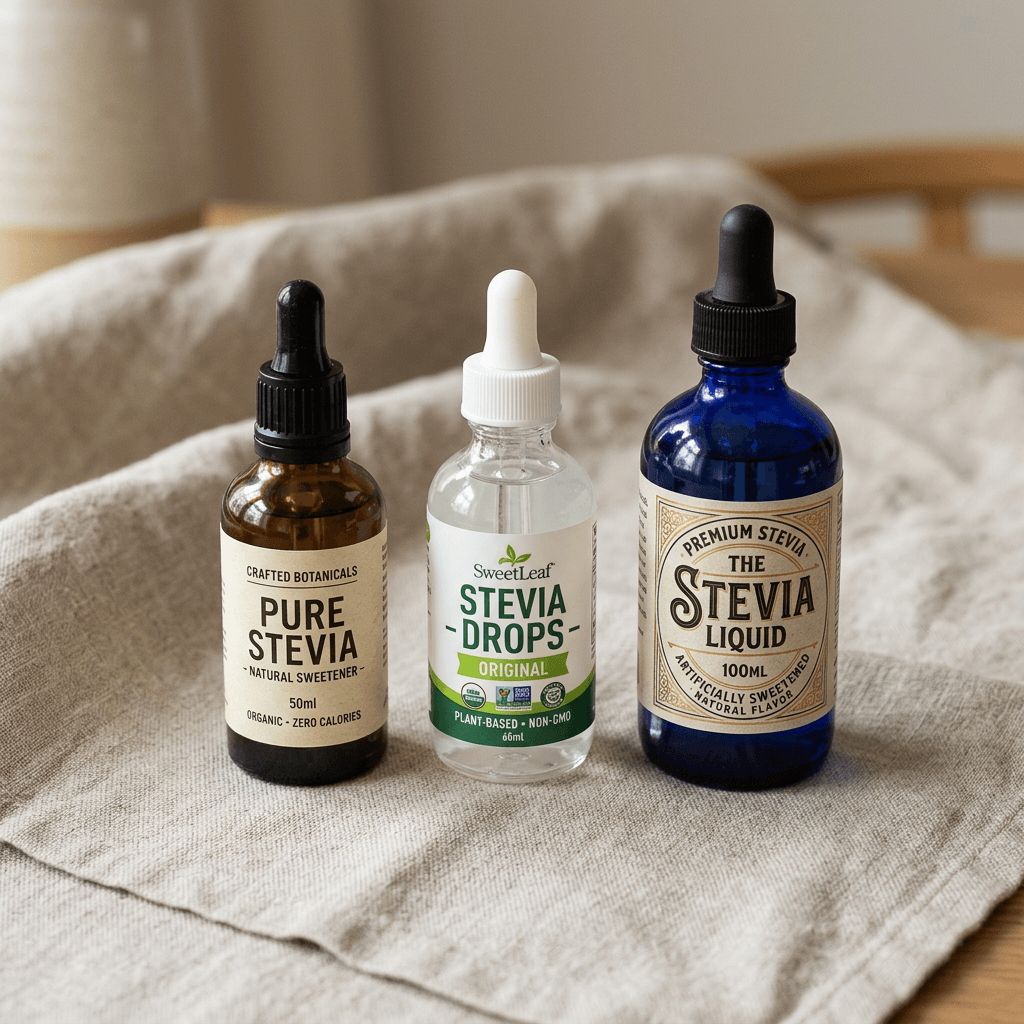
Not all liquid sweeteners store the same way. Here’s how liquid stevia compares to the alternatives I’ve used.
| Sweetener | Shelf Life (Opened) | Storage Sensitivity | Refrigerate After Opening? |
|---|---|---|---|
| Liquid Stevia (glycerin-based) | 6–12 months | Light, heat, contamination | Not required; pantry preferred |
| Liquid Stevia (water-based) | 3–4 months | High — all three factors | Recommended |
| Liquid Monk Fruit Extract | 12–18 months | Moderate — light primary concern | Not required |
| Liquid Erythritol Blend | 12+ months | Low — very stable | Not required |
| Agave Nectar | 12–18 months | Low — very stable, high sugar content | Not required |
| Liquid Saccharin (Sweet’N Low liquid) | 24+ months | Very low | Not required |
Monk fruit liquid is the closest competitor to glycerin-based stevia in terms of stability and zero-calorie sweetness. It’s worth noting that monk fruit tends to be 2–3x more expensive per ounce, which makes the storage discipline around liquid stevia even more economically important.
The erythritol blends (like Swerve’s liquid version) are the most shelf-stable of the zero-calorie options, but many users — including me — find the cooling mouthfeel distracting in hot beverages. Stevia’s clean dissolution is something I genuinely prefer despite the extra storage care it requires.
Where to Buy and price list
Amazon
Liquid stevia drops are widely available on Amazon. One popular 2 oz option (ASIN: B0CV4MRNXT) lists at $13.49 with Prime shipping. Multipack bundles (3-pack of 2 oz) run approximately $32–$36, bringing per-bottle cost down to around $11. Subscribe & Save can cut another 5–15% if you go through a bottle per month. Read the reviews specifically for freshness notes — if multiple reviewers mention a bitter taste out of the box, that’s often a storage or freshness-at-shipping issue worth flagging.
EnzoStevia.com
I’ve ordered from enzostevia.com several times and found their glycerin-based formula particularly stable. A 2 oz bottle runs $14.99 on their site. Use coupon code AWESOME at checkout for 3% off — that brings it to approximately $14.54. They also carry a 4 oz version at $24.99 ($24.24 with AWESOME), which is the one I buy now that I have the storage system dialed in. Their amber glass bottles are a meaningful quality differentiator over plastic-packaged competitors.
Local retail
Whole Foods, Sprouts, and Natural Grocers typically stock 1–2 liquid stevia brands in the natural sweetener aisle. Expect to pay a 15–25% premium over online pricing, but you avoid shipping time and can inspect the bottle before purchase. Check the manufacture date stamped on the bottom — anything more than 18 months old is getting close to its window.
People Also Ask
Does liquid stevia need to be refrigerated after opening?
No, liquid stevia does not need refrigeration — in fact, a dark pantry at room temperature (60–75°F) typically works better than the fridge. Refrigeration causes condensation on the dropper each time you remove the bottle, and that moisture can introduce contamination. Glycerin-based and alcohol-based formulas are stable at room temperature for 6–12 months when kept away from light and heat. Water-based formulas are the exception and benefit from refrigeration after opening.
How long does liquid stevia last once opened?
Opened liquid stevia lasts 6–12 months under good storage conditions (dark cabinet, cool temperature, clean dropper hygiene). Bottles stored on sunny counters or near stoves can degrade in as little as 6–8 weeks. The best indicator isn’t the date — it’s the smell. Fresh liquid stevia smells clean and slightly sweet; off stevia smells herbal, musty, or sharply bitter. Trust your nose over the label.
Why does my liquid stevia taste bitter now?
Bitterness in liquid stevia is almost always caused by one of three things: UV light degrading the rebaudioside A compounds, heat accelerating oxidation of the carrier liquid, or microbial contamination from an unsanitary dropper. If your bottle was stored on a window ledge or countertop near the stove, those are your culprits. The bitter taste isn’t a sign the stevia is dangerous — but it means the quality has degraded enough that you’ll notice it in food. Discard the bottle and start fresh with better storage habits.
Can you freeze liquid stevia to make it last longer?
Technically yes, but it’s not recommended for everyday use. Freezing can cause separation of the carrier liquid and the stevia extract, and repeated freeze-thaw cycles degrade the texture and mixing properties of the dropper liquid. If you’ve bought a large quantity you won’t use for many months, freezing an unopened bottle in an airtight bag is an option — but thaw it completely before opening and shake well before first use. For opened bottles, dark-cabinet storage at room temperature is the better path.
SERP
When I searched “how to store liquid stevia drops,” the top results were a mix of brand FAQ pages and general natural-sweetener blogs. The first three pages included a Whole Earth Sweetener storage FAQ that covered only broad strokes (keep in a cool, dry place — no specifics on temperature, UV, or carrier types), a SweetLeaf brand page with similar high-level guidance, and a well-trafficked keto/low-carb forum thread where members debated refrigeration vs. room temperature for several pages without a clear resolution. A wellness blogger at position four had good practical tips but hadn’t tested multiple storage conditions side by side. None of the ranking pages addressed the contamination vector of the dropper mechanism specifically, or explained why glycerin vs. water-based carriers behave so differently. That gap is what this article is designed to fill.
Top 20 Topics
- How long does liquid stevia last after opening
- Does liquid stevia need to be refrigerated
- Why does my stevia taste bitter
- Best liquid stevia brands 2026
- Liquid stevia vs stevia powder which is better
- How to use liquid stevia in baking
- Stevia drops for coffee zero calorie
- Liquid stevia expiration date what it means
- Glycerin vs alcohol liquid stevia shelf life
- Can you freeze stevia drops
- How many drops of liquid stevia equal one teaspoon of sugar
- Liquid stevia vs monk fruit drops comparison
- Organic liquid stevia third party tested
- Liquid stevia for diabetics blood sugar impact
- How to store homemade stevia extract
- Best way to travel with liquid stevia
- Liquid stevia in clear plastic vs amber glass
- Stevia extract rebaudioside A purity what to look for
- Bulk liquid stevia buying guide
- Liquid stevia aftertaste how to reduce it
Key Takeaways
- Dark cabinet beats fridge: room-temperature pantry storage (60–75°F) outperforms refrigeration because it prevents the condensation that accelerates dropper contamination.
- UV light is the primary enemy: amber glass bottles block it passively; clear plastic ones do not, meaning counter storage in a clear bottle can degrade freshness in as little as 6–8 weeks.
- Cap hygiene doubles bottle life: wiping the dropper tip dry after every use is the single highest-leverage habit — contamination from a dirty dropper compounds daily.
- Carrier liquid matters enormously: glycerin and alcohol-based formulas last 6–12 months opened; water-based versions may degrade in 3–4 months even under good conditions — check your label.
- Smell is the freshness test: fresh liquid stevia smells clean and faintly sweet; off stevia smells musty, vegetal, or bitterly sharp — trust your nose over the printed date.
- Bulk buying saves money only if stored correctly: decant large bottles into small working bottles and keep the master bottle sealed to protect your investment.
- Unopened bottles stay viable for 24 months; once opened and stored well, plan to use the bottle within 6–12 months for best flavor — and write the open date on the label so you always know where you stand.