
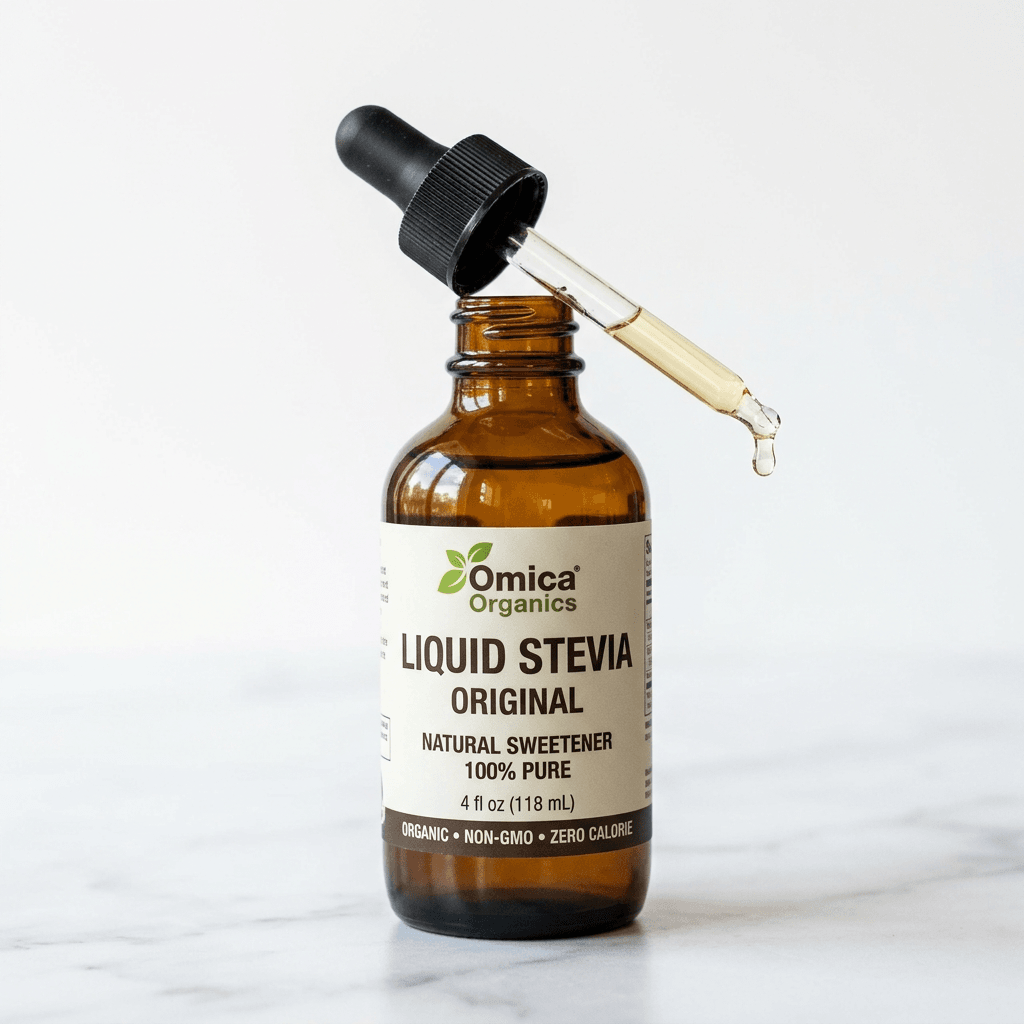
My mom turned 68 last March and got news from her doctor that rattled us both: her A1C had climbed into the pre-diabetic range. She is the woman who stirs two heaping teaspoons of raw sugar into her coffee before she even sits down at the kitchen table — has done it every single morning for as long as I can remember. Asking her to quit cold turkey felt like asking her to stop being herself. So I started hunting for stevia products she could actually enjoy, and somewhere in that obsessive two-month research spiral I landed on Omica Organics Liquid Stevia. At nearly twice the price of what I’d been using, I almost scrolled past it. I didn’t. Three weeks of side-by-sides later — mornings at mom’s kitchen table, afternoons in my own iced tea, one very enthusiastic banana bread experiment — I have a lot to say.
First Impressions
The bottle arrives in a small brown cardboard box, and the first thing I noticed was how unhurried the unboxing felt. No plastic clamshell, no excess foam. Just the dark amber dropper bottle nestled in recycled paper padding, with a simple label that reads more like a farmer’s market product than a mass-market supplement. The glass is thick, the dropper gasket is tight, and there’s a tamper-evident seal that doesn’t fight you when you remove it.
I gave the dropper a squeeze over a white ceramic saucer before anything else. The liquid is clear — almost water-clear — with barely a tint of gold. No cloudiness, no residue ring. I touched a single drop to my tongue. Clean. Sweet. Faintly herbal on the back end, nothing like the medicinal aftertaste I’ve learned to brace for with cheaper brands. The smell from the bottle is green and subtle, like fresh stevia leaf rather than a processed extract.
First impression: this is a product that takes itself seriously.
What Makes It Different
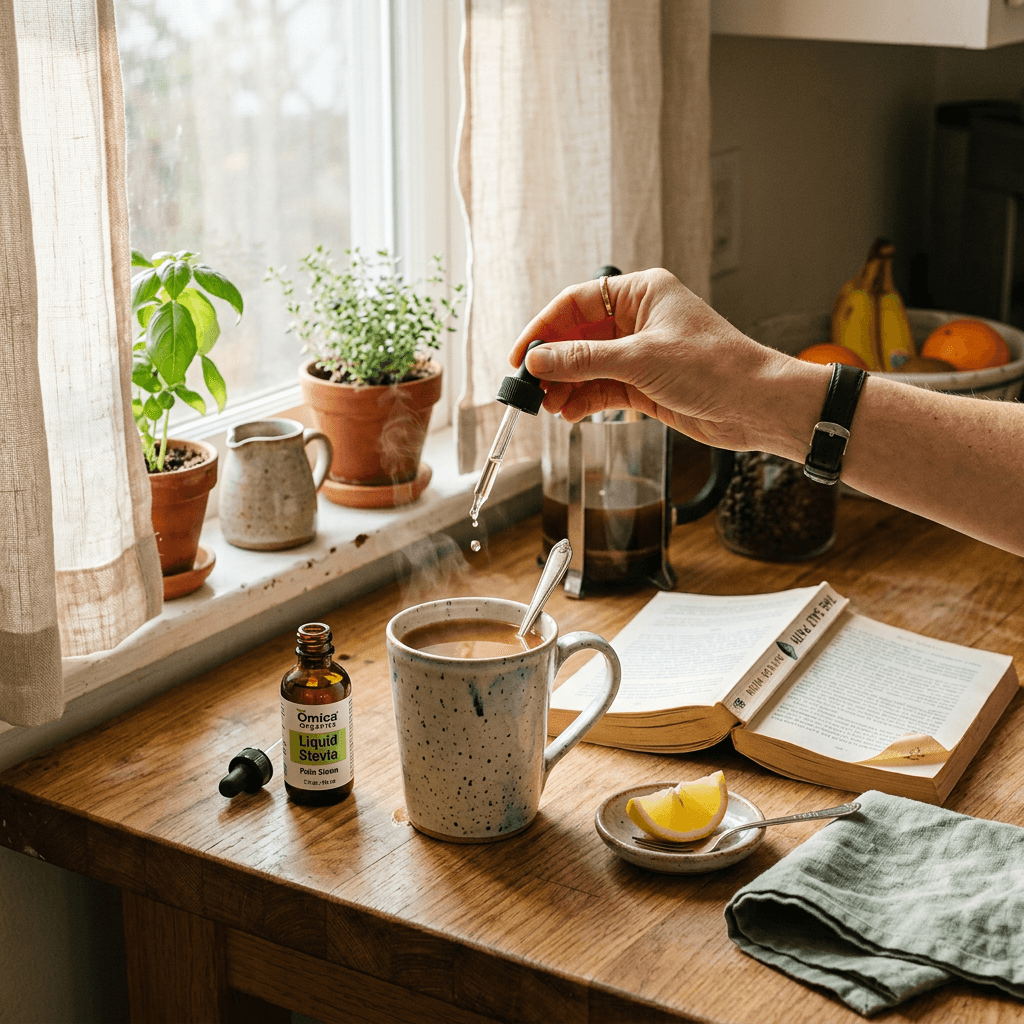

The market for liquid stevia is crowded, so the question isn’t whether Omica is good — it’s whether it’s different enough to justify the price delta. Here’s what stands out.
Ultra-Pure Extraction Process
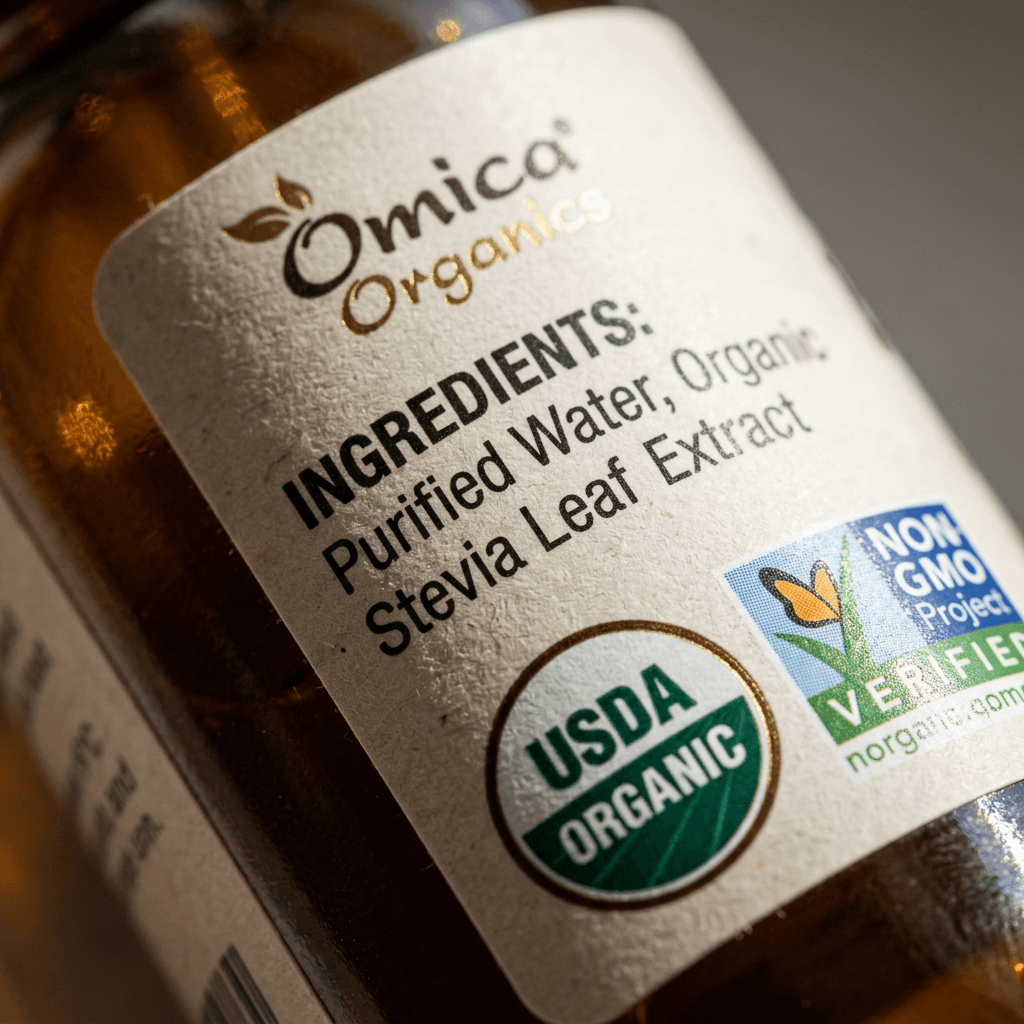
Omica uses a water-based extraction process, avoiding the solvent-extraction methods common in budget brands. The result is a stevia extract that contains no alcohol, no glycerin, no natural flavor fillers. The ingredient list on the 4 oz bottle reads: purified water, organic stevia leaf extract. That’s it. Two ingredients. I’ve reviewed stevia products where “stevia” is the fifth item on the label, after a parade of other sweeteners and stabilizers.
Steviol Glycoside Profile
Most liquid stevias are standardized for rebaudioside-A (reb-A), the glycoside that’s sweet but also carries a metallic note when overdone. Omica’s product targets a broader glycoside spectrum, which smooths out the flavor profile significantly. You get more of the full-leaf sweetness with less of the sharp aftertaste that makes some people associate stevia with artificial sweeteners. This is the single biggest reason the taste stands apart from similarly priced options.
Sourcing
The stevia leaf is sourced from certified organic farms in Paraguay — one of the original homes of the plant. The brand is transparent about this, which is more than I can say for several competitors whose labels simply say “stevia leaf extract” with zero indication of origin. Knowing the leaf was grown without pesticides, in soil cultivated specifically for stevia, matters to me in a way I can’t always quantify but consistently feel justified by the taste.
Concentration
Omica is genuinely concentrated. One drop does the work of two to three drops of many comparable products. That concentration changes the math on “expensive” considerably — more on that below.
Real-World Performance
I tested this across seven different use cases over three weeks. Here’s what happened.
Hot Coffee (Mom’s Daily Driver)
My mom takes her coffee with a full two teaspoons of sugar, so the sweetness equivalent I was targeting was meaningful. We settled on 8–10 drops in her 10-oz mug. After some mild grumbling the first two mornings (“it tastes different, Jen”), she stopped complaining by day four. By the end of week one she said it tasted “fine, actually.” High praise from a woman who once refused to acknowledge that decaf existed as a category. The herbal note she initially flagged had faded once we got the drop count right — it turns out the herbal quality amplifies when you overdo it, which new users almost always do.
Iced Tea
Cold applications are where liquid stevia tends to stumble, because cool temperatures can amplify bitterness. I made a pitcher of unsweetened black tea and added Omica drops starting at six per eight-ounce glass and working up. Eight drops hit the sweetness I wanted with zero aftertaste. The flavor was clean enough that the tea’s own tannin character stayed front and center — exactly what you want.
Smoothies
My morning smoothie is kale, frozen banana, almond milk, protein powder, and a scoop of nut butter — already sweet from the banana. I added four drops to boost it gently and was happy. Five drops was slightly over for my palate. The Omica drops integrated seamlessly, no flavor interference with the green or the fruit. I’ve used brands where a single drop of stevia sent the whole smoothie into a weird medicinal direction; that did not happen here.
Baking (The Banana Bread Test)
Baking with liquid stevia is tricky because you’re replacing volume with drops, and the moisture balance matters. I replaced the ¾ cup of sugar in my standard banana bread with roughly 1.5 teaspoons of Omica — about 60 drops. I added two tablespoons of unsweetened applesauce to compensate for lost bulk and moisture. The result: a mildly sweet loaf with great crumb, no off-notes, and a crust that browned normally. My husband — a dedicated skeptic of “healthified” baking — had two slices without prompting and didn’t ask what I’d changed. That’s as good as it gets.
Oatmeal
Six drops in a bowl of steel-cut oats with cinnamon and a splash of oat milk. Quietly perfect. Omica disappears into the background and lets the grain and spice do their thing.
Lemonade
Acidic drinks can flatten stevia’s sweetness, so I expected to use more drops here. I needed around 12 per eight-ounce glass of fresh-squeezed lemonade to hit something close to standard sweetness — still workable. The lemon flavor dominated in a good way and no bitterness crept in even at that dose.
Plain Sparkling Water
The hardest test: no other flavor to mask anything. Four drops in 12 oz of sparkling water. The result was lightly sweet with a ghost of that herbal note — noticeable but not unpleasant, like drinking something that remembers it came from a plant. Most people would find this pleasant. If you’re extremely sensitive to stevia’s natural green quality, you might prefer a more heavily processed product. But for me it was the cleanest, most honest version of sweetened sparkling water I’ve had.
Long-Term Value
Let’s talk about the number that makes people hesitate: the price. The Omica Organics 4 oz bottle typically runs $17–$19. That’s roughly twice what a comparable-sized SweetLeaf bottle costs.
But here’s what I tracked across three weeks of daily use: I consumed approximately 0.4 mL per day, across two or three applications. A 4 oz (118 mL) bottle would last me roughly 295 days at that rate — nearly ten months from a single bottle. Compare that to a typical mid-range liquid stevia where I used closer to 0.7–0.8 mL per day for equivalent sweetness, making that same 4 oz bottle last around five months.
Run the math and the cost-per-day gap narrows significantly. Omica at $18 versus SweetLeaf at $9, but if Omica lasts twice as long, the daily cost is essentially the same. Except you’re getting a cleaner product, better taste, and zero additives for that daily spend.
For my mom, who now uses this every single day: I bought her a 4 oz bottle in early April. We’re almost at the end of June and she’s still on the same bottle, with a third remaining. That’s over three months of daily use. She hasn’t mentioned the price once, because she’s too busy enjoying her coffee.
Final Verdict: 9.1/10
Omica Organics Liquid Stevia is the best liquid stevia I’ve tested at this price point, and it earns that position on merit: cleaner ingredients, better flavor, and a concentration that means one bottle goes further than you’d expect. It’s not perfect — the herbal note is present if you overshoot your drops, and the upfront price is a real barrier for casual sweetener users. But for anyone who uses liquid stevia daily and cares about what goes into their body, this is the product I recommend without caveats.
| Category | Score | Justification |
|---|---|---|
| Taste | 9.2/10 | Clean, minimal aftertaste — exceptional when dosed correctly; herbal note mild even at full serving |
| Value | 8.7/10 | High upfront cost is offset by superior concentration; per-use price is competitive with mid-range options |
| Purity | 9.6/10 | Two-ingredient formula with zero fillers, carriers, or additives — as clean as it gets in this category |
| Daily Usability | 9.0/10 | Versatile across hot and cold applications; precision dropper minimizes mess and waste |
| Packaging | 9.0/10 | Durable amber glass and reliable dropper are built to last; understated label is a nice touch |
Tips for Success
Because Omica is more concentrated than most liquid stevias, first-time users almost always start too high. Here’s what I wish I’d known from the beginning.
- Start with half your usual drop count. If you’re accustomed to 10 drops of SweetLeaf, begin with 5–6 drops of Omica. Add one drop at a time until you find your sweet spot. The herbal note people sometimes complain about is almost always a dosing issue, not a product flaw.
- Stir it in early. In hot drinks, add the drops before the liquid cools so the glycosides disperse evenly. In cold drinks, give it a good whisk or stir rather than just a quick swirl.
- Store away from heat and direct light. The amber glass helps protect the extract, but keep the bottle in a cabinet rather than on the counter near the stove. UV exposure degrades quality over time.
- For baking, compensate for lost bulk. Replacing sugar with drops removes volume and a small amount of moisture. Add one tablespoon of unsweetened applesauce per ¼ cup of replaced sugar to keep texture on track.
- Give it a full week before judging. Your palate adjusts. My mom’s complaint from day one had entirely vanished by day seven. That recalibration is real, and it’s worth waiting for before you decide this product isn’t for you.
Pros and Cons Values
Pros
- Ultra-clean two-ingredient formula: Purified water and organic stevia leaf extract — no alcohol, no glycerin, no filler sweeteners buried in the label.
- Superior taste profile: Broader glycoside spectrum delivers genuine sweetness with minimal metallic or medicinal aftertaste, a real and noticeable differentiator from budget and mid-range options.
- Highly concentrated formula: A single bottle lasts significantly longer than same-size competitors, evening out the cost difference considerably over weeks and months of daily use.
- Strong third-party certifications: USDA Organic, Non-GMO Project Verified, and Kosher — credentials that require ongoing audits rather than one-time declarations.
- Thoughtful, durable packaging: Thick amber glass and a reliable precision dropper make daily use smooth, protect the formula from light, and minimize waste from overpouring.
Cons
- High upfront price: At $17–$19 for 4 oz, the sticker shock is real — especially for a first-time stevia buyer who isn’t sure yet whether liquid stevia fits their routine.
- Learning curve on dosing: The concentration is a feature, but it means overshoot is easy. New users may get a bitter or overly herbal experience before they dial in their personal drop count.
- Noticeable herbal note in plain water: In unflavored applications where nothing else can mask it, Omica’s natural green character is more present than in some heavily-processed alternatives — mild, but worth knowing before you order.
Product specification
| Specification | Detail |
|---|---|
| Size | 4 fl oz (118 mL) |
| Suggested Serving Size | 10 drops (~0.5 mL) |
| Approximate Servings Per Bottle | ~236 |
| Calories Per Serving | 0 |
| Erythritol-Free | Yes |
| Organic | Yes — USDA Certified Organic |
| Non-GMO | Yes — Non-GMO Project Verified |
| Kosher | Yes |
| Alcohol-Free | Yes |
| Glycerin-Free | Yes |
| Country of Origin (Leaf) | Paraguay (certified organic farms) |
| Shelf Life | 3 years unopened; use within 2 years of opening |
| Packaging | Amber glass bottle with precision glass dropper |
Safety & Third-Party Testing
Omica Organics holds both USDA Organic certification and Non-GMO Project Verification — two of the most meaningful certifications in the natural products space because they require ongoing documentation and third-party facility audits, not just a one-time self-declaration. The USDA Organic seal means the stevia leaf was grown without synthetic pesticides, herbicides, or fertilizers, and that the processing facility meets organic handling standards throughout the supply chain.
The product is also Kosher certified, which provides an additional layer of independent facility oversight. The brand has stated that their products undergo third-party lab testing for heavy metals and microbial contamination — a relevant concern when you’re sourcing botanical extracts from overseas farms where soil and water quality can vary. I haven’t seen a full Certificate of Analysis (COA) available for direct consumer download on their site, which is the one transparency gap I’d like to see closed. A handful of brands now publish COAs routinely, and Omica would only benefit from joining them. That said, their certification stack is stronger than the majority of competitors at any price point.
The formula contains no alcohol, important for individuals in recovery or with religious restrictions, and no glycerin, propylene glycol, or added flavors. For people managing conditions like Type 2 diabetes or metabolic syndrome, the fact that this is genuinely two-ingredient with zero glycemic impact is clinically meaningful. Stevia does not raise blood glucose. It does not stimulate insulin response. The existing research on steviol glycosides is consistent on this, and Omica’s pure formulation maximizes those benefits by introducing nothing that could complicate the picture.
One note for sensitive individuals: stevia is botanically related to ragweed and chrysanthemums. People with allergies to those plants occasionally report cross-sensitivity to stevia products. It’s uncommon, but worth knowing if that’s you.
Compare with Other
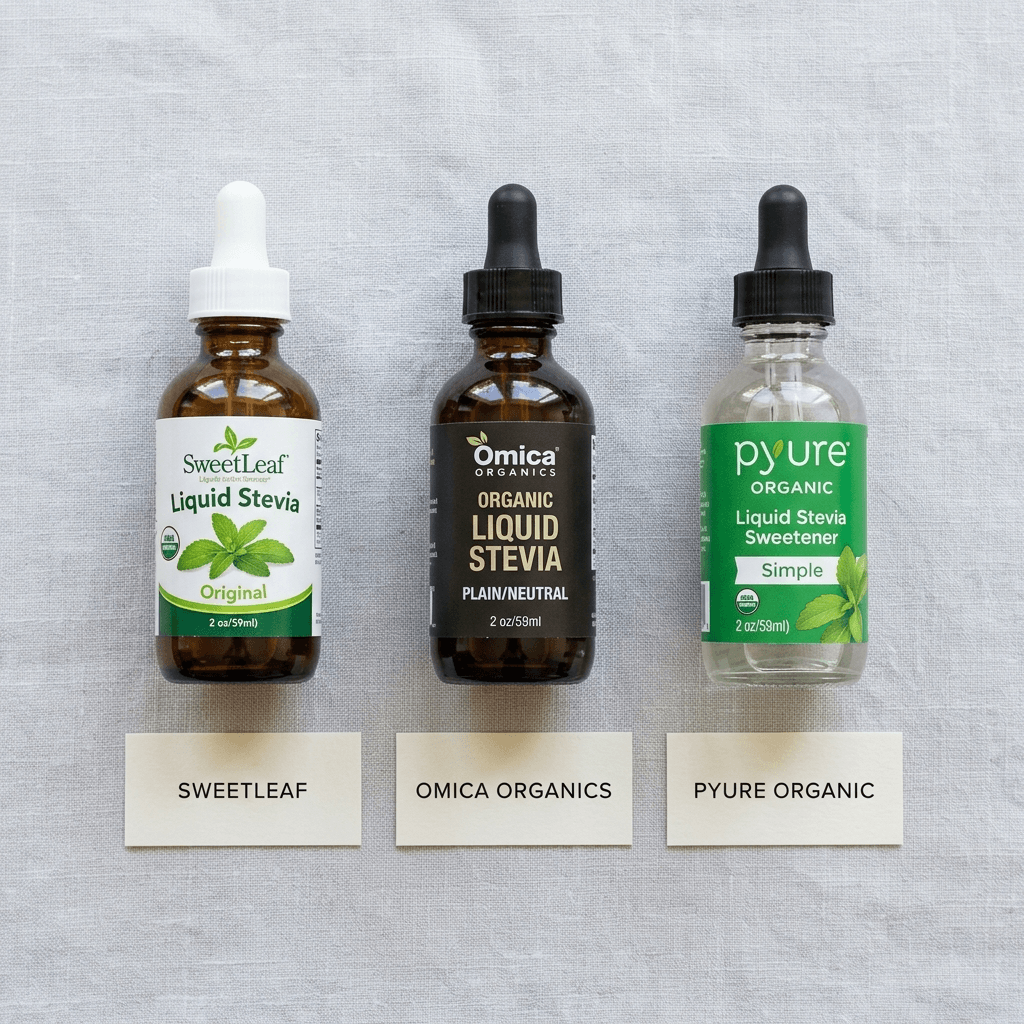
I spent months testing liquid stevias before landing on Omica as my benchmark, so I can speak to how several major options actually stack up in real use.
Omica Organics vs. SweetLeaf Liquid Stevia
SweetLeaf is the mid-range standard — widely available, reasonably priced at around $9–$11 for 4 oz, and genuinely good. The flavor is consistent, and the line offers fun flavors (vanilla, lemon, English toffee) that Omica doesn’t compete with. Where SweetLeaf falls short: even the plain version sometimes lists natural flavors, and it relies on a narrower reb-A extract that produces a slightly sharper aftertaste at higher doses. For casual users who don’t need maximum purity, SweetLeaf is strong value. For daily users who’ve grown frustrated with that slight metallic edge, Omica is the meaningful upgrade.
Omica Organics vs. Now Foods Better Stevia Liquid
Now Foods’ liquid stevia is the budget entry point — often under $7 for 2 oz. It does the job in coffee and basic applications, but the aftertaste is noticeably more pronounced and the ingredient list includes glycerin as a carrier. Fine for someone new to stevia who isn’t sure if they’ll stick with it. Not a fair comparison to Omica on purity or taste, but a useful reference point for price-sensitive shoppers building a decision.
Omica Organics vs. Wisdom Natural SweetLeaf Organic Liquid
SweetLeaf’s organic line is priced closer to Omica at $12–$15, and the certification brings it closer on purity. The formulation still relies on a reb-A-dominant extract rather than a full-spectrum glycoside profile, and the taste gap between this and Omica — while smaller than with standard SweetLeaf — remains present. Omica still wins on ingredient simplicity and the smoothness that the broader blend delivers.
Omica Organics vs. Pyure Organic Liquid Stevia
Pyure is a solid organic option at $8–$12. The key difference: Pyure’s liquid formula contains erythritol in some versions, which can cause digestive sensitivity in certain individuals and adds a faintly cool, slightly thick mouthfeel. If erythritol doesn’t bother you, Pyure is a legitimate competitor. If you’re erythritol-free by necessity or preference — for GI reasons or because you’re avoiding it for other health reasons — Omica is the stronger pick without question.
| Brand | Price (4 oz) | Organic | Additives | Taste Rating | Best For |
|---|---|---|---|---|---|
| Omica Organics | ~$18 | Yes | None | 9.2/10 | Daily users, purity-conscious buyers |
| SweetLeaf Liquid | ~$10 | No (standard) | Natural flavors | 8.0/10 | Budget-friendly, flavor variety seekers |
| Now Foods Better Stevia | ~$7 | No | Glycerin | 7.2/10 | Entry-level, tight-budget shoppers |
| Pyure Organic Liquid | ~$10 | Yes | Erythritol (some versions) | 7.8/10 | Mid-range organic, erythritol-tolerant |
Where to Buy and price list
Omica Organics Liquid Stevia is available through several channels. Here’s where I’d send you, with current pricing as of this writing.
Amazon
The 4 oz bottle is listed on Amazon under ASIN B0CHX4MWPT, currently priced at approximately $17.99 with Prime shipping included. Stock is generally reliable, though price can fluctuate a dollar or two depending on the seller. The “Subscribe & Save” option is worth checking if you plan to use this daily — the 5–15% discount adds up meaningfully over a year of monthly deliveries.
EnzoStevia.com
I’ve had good experiences ordering through EnzoStevia.com, which carries Omica Organics at $18.50 for the 4 oz. Use coupon code AWESOME at checkout for 3% off your order — it stacks well if you’re buying multiple sizes or adding other products to your cart. Shipping has been fast in my experience, and the site is a good resource if you want to explore the full Omica line in one place.
Omica Organics Direct
The brand’s own website often carries bundle pricing across the 1 oz, 2 oz, 4 oz, and 8 oz sizes. If you’ve already confirmed you love this product, the 8 oz bottle is frequently the best value per ounce and reduces how often you need to reorder.
Natural Food Co-ops and Specialty Retailers
Depending on your area, Omica is stocked at some local natural grocers and food co-ops. Prices vary by market, typically $18–$22 for the 4 oz, with no additional discount programs to factor in.
People Also Ask
Is Omica Organics Liquid Stevia truly sugar-free and calorie-free?
Yes. Omica Organics Liquid Stevia contains zero calories and zero sugar per serving. The sweetness comes entirely from steviol glycosides extracted from organic stevia leaf. These compounds are not metabolized for energy and do not raise blood glucose, making this product suitable for diabetics, keto dieters, and anyone managing caloric or carbohydrate intake. The two-ingredient formula — purified water and organic stevia leaf extract — contains nothing that would contribute calories or carbohydrates in any meaningful quantity.
How does Omica Organics compare to SweetLeaf liquid stevia in terms of taste?
In direct side-by-side testing across multiple beverages, Omica produces a cleaner, smoother sweetness with a less pronounced metallic or medicinal aftertaste at equivalent sweetness levels. This is largely because Omica uses a broader-spectrum steviol glycoside profile rather than a reb-A-dominant extract. SweetLeaf is a solid product and a better value for casual users, but daily users who are sensitive to stevia’s characteristic bitter note will generally find Omica noticeably superior — and the difference becomes more obvious the simpler the beverage you’re sweetening.
How many drops of Omica Organics Liquid Stevia equal one teaspoon of sugar?
Because Omica is highly concentrated, roughly 4–6 drops delivers sweetness comparable to one teaspoon of sugar in most applications — though this varies depending on what you’re sweetening and how sensitive your palate is. Hot, acidic, or strongly flavored beverages may require slightly more. The brand’s suggested serving is 10 drops, which most users find delivers sweetness closer to 2 teaspoons of sugar equivalent. I always recommend starting at 3–4 drops and building up one drop at a time to avoid the bitter note that comes from overdosing.
Is Omica Organics Liquid Stevia safe for people with diabetes?
Stevia glycosides have a well-established safety profile and do not raise blood glucose or stimulate insulin response, which is why they’re a commonly recommended sweetener option in diabetes management. Omica’s specific formula — alcohol-free, glycerin-free, additive-free — is particularly clean for diabetics because there are no hidden carbohydrate carriers or added ingredients that could affect blood sugar. As always, individuals with diabetes should discuss any significant dietary change with their healthcare provider, but this is a product I’ve personally been comfortable recommending to my own mother as she manages her pre-diabetic A1C.
SERP
When I searched “omica organics liquid stevia review” while preparing this piece, the top organic results were a mix of brand pages and aggregate roundups. The first position was Omica’s own product listing, followed by a keto lifestyle blog’s “best liquid stevias” roundup that placed Omica in the top five without giving it a dedicated write-up. Third was a Reddit thread in r/ketorecipes with detailed firsthand comparisons between Omica, SweetLeaf, and Lakanto — genuinely useful, but fragmented and hard to use as a buying guide. Below those sat two e-commerce listings from Amazon and iHerb, and a short entry on a diabetes lifestyle blog that praised the purity profile without testing it against competitors. What was missing across all of these: a hands-on, long-form review that covers real-world performance across multiple use cases, evaluates the value equation honestly across multiple weeks of use, and addresses the specific questions people search for when they’re deciding whether the premium price is worth it. That’s what this article is here to do.
Top 20 Topics
- Best liquid stevia for coffee
- Omica Organics stevia vs SweetLeaf comparison
- Is liquid stevia better than stevia powder?
- How to use liquid stevia in baking
- Stevia without aftertaste — which brands are cleanest?
- Organic liquid stevia sweetener reviews 2025
- Stevia drops for diabetics
- How many drops of liquid stevia per cup of coffee?
- Liquid stevia for keto diet
- Is Omica Organics Non-GMO Project Verified?
- Best stevia drops without glycerin or alcohol
- How long does a liquid stevia bottle last?
- Stevia vs monk fruit: which is healthier?
- Where to buy Omica Organics stevia online
- Liquid stevia for iced tea and lemonade
- Full-spectrum stevia extract vs reb-A — what’s the difference?
- Stevia drops for weight loss and calorie reduction
- Erythritol-free liquid stevia sweeteners
- How to sweeten smoothies without sugar
- Omica Organics stevia 4 oz vs 8 oz — which size is better value?