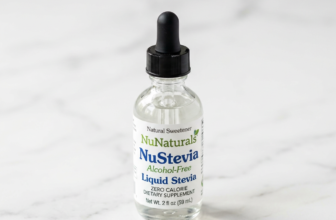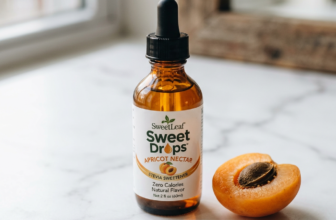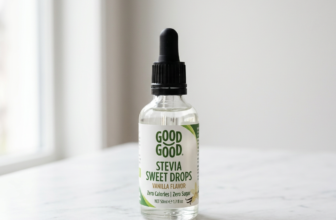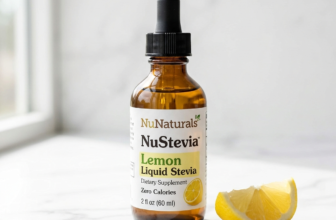
My daughter Maya came home from her seventh-grade health class last October clutching a worksheet about blood sugar and carrying that particular expression she gets when she’s decided something needs to change — in our house, immediately, and with her full involvement. She’d been reading about glycemic load, and she was done with the sugar we put in our morning smoothies. “Mom,” she said, setting her backpack on the kitchen counter with a thud, “we need to find something better.” That was the beginning of a months-long experiment that landed us, finally, on Pyure Organic Liquid Stevia.
I want to tell you everything I’ve learned — the good, the small frustrations, how it compares to what else is sitting in my cabinet right now — because if Maya’s conviction hadn’t pushed me past my old habits, I might have kept reaching for the same powdered blend I’d used for years without thinking twice.
First Impressions
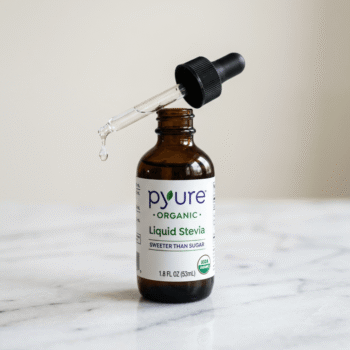
The bottle is smaller than I expected. At 1.8 ounces, it sits low in your palm — the kind of thing you could tuck into a jacket pocket without thinking about it. The dropper cap is brushed white plastic, clean against the dark glass, and the label reads “USDA Organic” in a forest-green band that stretches across the front. I noticed that immediately. A lot of stevia products wave around “natural” language without backing it up with certification. The USDA seal on Pyure’s label is the real thing.
Opening the dropper the first time, I expected the grassy, almost medicinal smell I’ve come to associate with stevia — the kind that makes you brace yourself. Pyure surprised me. There’s a faint sweetness in the air, gentle and clean, without that heavy licorice undertone that some brands carry. I held the bottle under my nose for a moment before I squirted anything. Good sign.
The dropper mechanism itself is well-made. You press the rubber bulb, fill the glass dropper tube, and release it over your cup. Each full dropper delivers a consistent amount, and the calibration lines on the glass let you measure partial servings without guessing. I appreciated that specificity. When you’re cooking for a kid who is suddenly reading nutrition labels, precision matters.
What Makes It Different
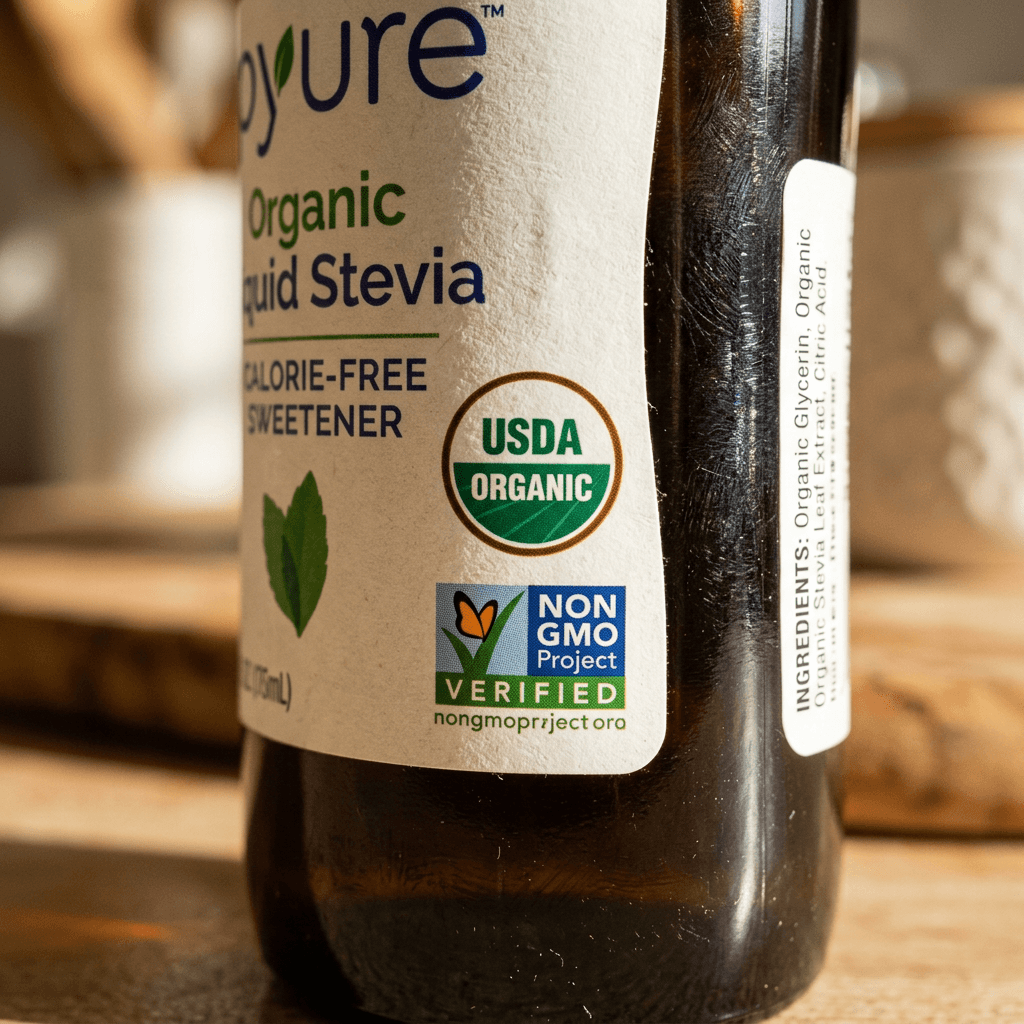
Pyure leans hard into its organic story, and it earns that positioning. The stevia leaf extract is USDA Certified Organic and Non-GMO Project Verified — both logos appear on the bottle, not just one. That combination matters because the two certifications have different auditing standards. Non-GMO verification covers the genetics of the crop; organic certification covers how the crop is grown and processed. You can have one without the other. Pyure has both.
The formula is a short one: organic stevia leaf extract, purified water, organic alcohol (as a carrier and preservative). That’s it. No erythritol, no inulin, no natural flavors listed and then left unexplained. I’ve used liquid stevia products where the “natural flavors” note sent me down a rabbit hole I never fully resolved. With Pyure, I read the ingredient deck in about four seconds and moved on.
The glycemic index of pure stevia extract is effectively zero. Your pancreas doesn’t respond to steviol glycosides the way it does to sucrose or even to sugar alcohols like erythritol, which can produce a partial insulin response in some people. For Maya’s project, and honestly for the way my husband manages his energy levels through the afternoon, that was relevant. Not a medical claim — just the established physiology.
Sweetness concentration is where Pyure holds its own against the field. One to two drops sweeten an eight-ounce cup of tea the way a teaspoon of sugar would, depending on how sweet you want it. The bottle claims roughly 500 servings at one-drop measurements. I’ve been slower than that because I typically use two drops in my morning coffee, but even at that rate, this little 1.8-ounce bottle lasts about eight weeks in our household of three daily stevia users.
Real-World Performance
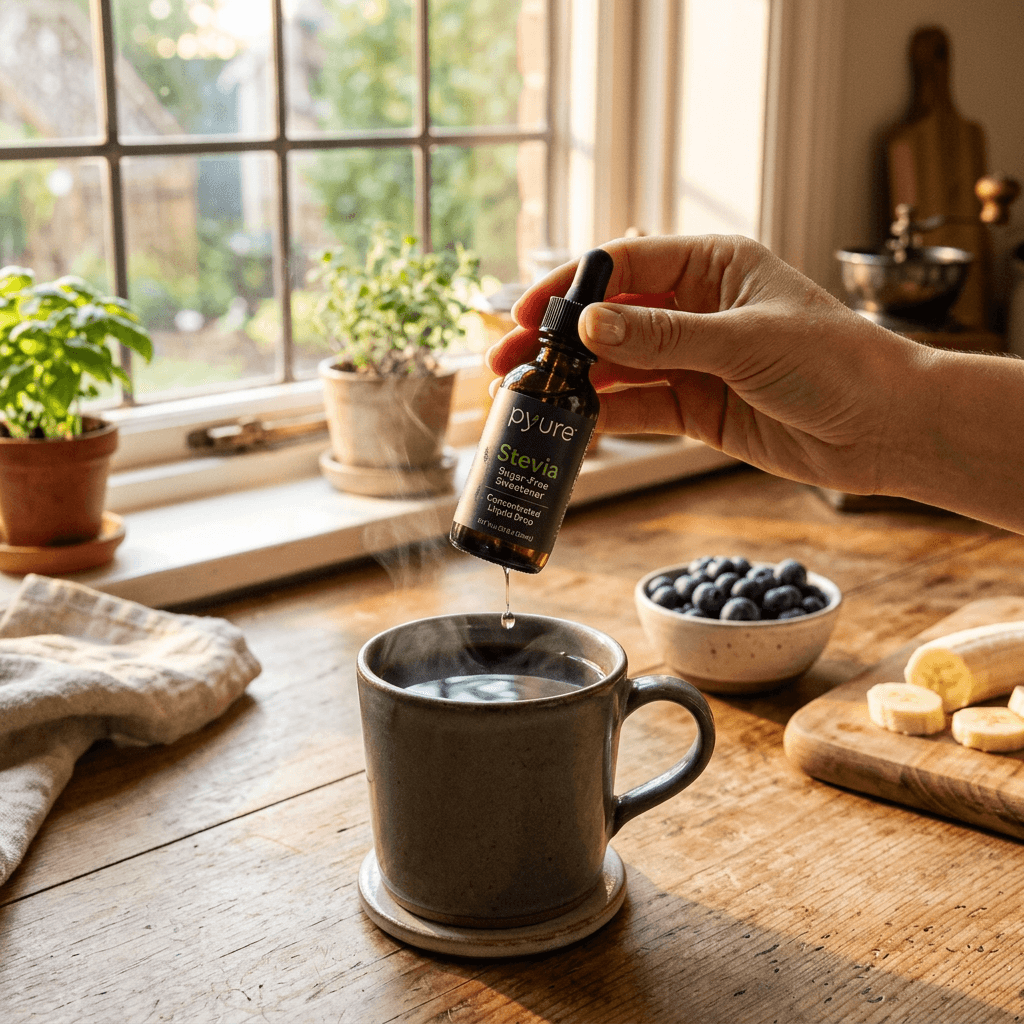
I tested Pyure across about eleven different uses over the course of a month. Here’s what I found, broken down honestly.
Hot coffee: This is where I spend the most time with it. Two drops in a twelve-ounce mug of medium-roast coffee. The sweetness integrates cleanly within about thirty seconds of stirring. No bitterness on the finish, which is the most common complaint about stevioside-dominant formulas. Pyure uses a rebaudioside A-forward extraction, which tends to taste rounder than crude stevioside blends. The difference is noticeable side by side.
Cold brew and iced tea: Cold-temperature applications are where liquid stevia shines compared to granular forms. One drop in a sixteen-ounce cold brew dispersed evenly without any undissolved sweetener pooling at the bottom. My husband — who has strong opinions about his cold brew and approximately no patience for anything that tastes off — used it three days running without asking me what I’d changed. I’ll take that as a pass.
Smoothies: Maya uses one drop in a twelve-ounce fruit-and-spinach smoothie. With banana and mango already in the mix, that’s probably more sweetener than strictly necessary, but she likes a little extra. The Pyure drops don’t compete with the fruit flavors. I’ve had stevia brands that add a background note — something faintly grassy or almost mentholated — that distorts the fruit. Pyure sits quietly behind the other ingredients.
Plain Greek yogurt: Two drops in six ounces of plain full-fat yogurt, stirred, then topped with berries. The acidity of yogurt can amplify stevia’s bitter back-note in some brands. Here it didn’t. The yogurt tasted mildly sweet without any edge. This has become my standard afternoon snack.
Salad dressing: I make a simple lemon vinaigrette where I’d normally use a half-teaspoon of honey. One drop of Pyure replaced it cleanly. The dressing was slightly less viscous than with honey, which matters for coating lettuce, but the flavor was right.
Oatmeal: Two drops in a cup of rolled oats with cinnamon and blueberries. Worked well. The heat doesn’t affect the sweetness, which is one of stevia’s genuine advantages over some artificial sweeteners.
Baking: This is where liquid stevia is always a partial solution. I tried two drops per serving in a batch of banana muffins. The sweetness was there but the texture was slightly different from what I’m used to — stevia doesn’t provide the same structural sugar mass that sucrose does, and the muffins were a little denser. If you’re baking with Pyure, plan to use it alongside a small amount of another sweetener or a bulking agent. The flavor contribution was solid; the structural contribution is just not the same category of thing.
Long-Term Value
Price per serving is how you actually evaluate a sweetener, not the sticker price on the bottle. The 1.8-ounce Pyure bottle runs about $8.49 on enzostevia.com (you can use coupon code AWESOME for 3% off, bringing it to roughly $8.24). At 500 servings, that’s approximately $0.017 per serving — under two cents per use.
SweetLeaf’s liquid stevia, their comparable 2-ounce dropper bottle, currently lists around $9.99 on major retail sites and typically yields around 300 servings at similar drop dosing. That works out to about $0.033 per serving — nearly double Pyure’s cost per use. SweetLeaf is a good product; I’ve used it for years and I’ll address the comparison more directly in the comparison section. But the economics of Pyure are meaningfully better.
For a household where three people are using stevia daily across coffee, tea, and food prep, that gap adds up to real money over a year. We’re talking roughly $12–15 in annual savings by switching from SweetLeaf to Pyure, which doesn’t sound transformative until you remember that it’s just one product in a kitchen full of choices like it.
There’s also a convenience angle to long-term value. The bottle’s glass construction means I’m not second-guessing chemical migration from plastic contact with a liquid held at room temperature for months. The organic alcohol carrier acts as a natural preservative; the shelf life is approximately twenty-four months from manufacturing. I’ve never had a bottle go off before I finished it, but it’s reassuring to know the formulation is stable.
Final Verdict
Overall Score: 9.1 / 10
Pyure Organic Liquid Stevia is the cleanest, most versatile liquid stevia I’ve used at this price point. It’s not a perfect product — baking applications require adjustment, and the small bottle size means frequent reordering if you’re a heavy user — but the organic credentials are genuine, the flavor is honest, and the value per serving is hard to beat.
- Taste: 9.3/10 — Clean, round sweetness with no significant bitter back-note; rebaudioside A-forward extraction makes a real difference in cup.
- Value: 9.4/10 — At roughly $0.017 per serving, it’s among the lowest cost-per-use in the certified-organic liquid stevia category.
- Purity: 9.5/10 — USDA Organic, Non-GMO Verified, three-ingredient formula with zero fillers or unexplained “natural flavors.”
- Daily Usability: 8.8/10 — Performs excellently in beverages and cold applications; requires supplementation in baking; dropper is precise and reliable.
- Packaging: 8.5/10 — Dark glass bottle protects the extract well; 1.8-ounce size is travel-friendly but means more frequent restocking for multi-user households.
Tips for Success
Start with one drop, not two. Stevia sweetness accumulates — one drop often covers more ground than you expect, especially in hot beverages where heat opens up the flavor. You can always add; you can’t subtract.
Store the bottle upright in a cool, dark cabinet. Heat and prolonged light exposure can subtly shift the flavor profile of stevia extracts over time. The kitchen counter next to the stove is the worst possible location. A cabinet shelf, away from the oven, keeps it stable.
In smoothies, add the drops to the base liquid before you add ice or frozen fruit. It blends more evenly that way and you’re less likely to have one sip that’s noticeably sweeter than another.
For salad dressings or marinades, whisk the drops with the acid component — lemon juice, vinegar — first, before you add oil. The water-miscible extract distributes evenly through an aqueous base. Once you add oil and emulsify, the distribution is locked in.
If you’re baking with Pyure, pair it with an equal volume of unsweetened applesauce, pumpkin puree, or a small amount of erythritol to restore some of the bulk that granulated sugar would have contributed. The sweetness from Pyure will carry; the structure needs a backup.
Keep a second bottle. When you’re down to your last few uses, order the next one. Running out of your preferred sweetener mid-week and reaching for whatever’s available is how you drift away from good habits.
Pros and Cons Values
Pros
- USDA Certified Organic + Non-GMO Project Verified — both certifications, not just one, on the same product at this price point.
- Three-ingredient formula — organic stevia extract, purified water, organic alcohol. No erythritol, no fillers, no mystery “natural flavors.”
- Lowest cost per serving in its tier — approximately $0.017 per serving beats SweetLeaf and most other certified-organic liquid competitors.
- Clean flavor profile — rebaudioside A-forward extraction produces a rounder, less bitter sweetness that performs well across hot and cold applications.
- Glass dropper bottle with calibration marks — precise dosing, no plastic contact concerns, protects the extract from light degradation.
Cons
- Small bottle size (1.8 oz) — households with multiple daily users will need to reorder every six to eight weeks; no larger size option currently available in the liquid format.
- Not a standalone baking sweetener — lacks the bulk and structural properties of sugar; recipes need adjustment and often a secondary bulking agent.
- Organic alcohol carrier — trace amounts of alcohol in the formulation are a non-issue for most adults but may be a concern for certain dietary or religious restrictions.
Product Specification
| Attribute | Detail |
|---|---|
| Size | 1.8 fl oz (53 mL) |
| Servings per Bottle | ~500 (at 1 drop per serving) |
| Calories per Serving | 0 |
| Total Carbohydrates per Serving | 0 g |
| Erythritol-Free | Yes |
| USDA Certified Organic | Yes |
| Non-GMO Project Verified | Yes |
| Vegan | Yes |
| Gluten-Free | Yes |
| Glycemic Index | 0 |
| Key Ingredient | Organic Rebaudioside A (Stevia Leaf Extract) |
| Carrier | Purified Water, Organic Alcohol |
| Country of Origin | USA (processed); Stevia sourced from Paraguay |
| Shelf Life | 24 months from manufacturing date |
| Packaging | Dark glass dropper bottle with calibrated glass dropper |
Safety & Third-Party Testing
Stevia’s safety record is well-established. The FDA has classified high-purity stevia glycosides as Generally Recognized as Safe (GRAS) for use in food and beverages. The European Food Safety Authority reached a similar conclusion in its own evaluation. Pyure’s extract falls within the high-purity category — above 95% steviol glycoside content — which is the threshold those evaluations cover.
The organic certification process adds its own layer of oversight. USDA National Organic Program certifiers conduct annual inspections of facilities and supply chains, reviewing soil and water testing records, input logs, and processing documentation. That’s a different kind of testing than a lab panel for heavy metals or microbials, but it means the ingredient sourcing is audited by an independent party on a recurring basis, not just at launch.
Pyure publishes its certifications on its website and provides certification number information on request. The Non-GMO Project Verification adds a third-party agricultural supply chain review covering the stevia crop genetics. I contacted Pyure’s customer service asking about independent microbial and heavy metal testing panels, and the representative confirmed that batch testing is conducted at their production facility, though they do not publish the full COA (Certificate of Analysis) publicly. That’s not unusual in the supplement and natural food space, but it’s worth noting if complete transparency at the COA level matters to your sourcing standards.
The organic alcohol carrier — typically derived from cane or grain — is present in very small amounts per serving. The concentration is far below any threshold of physiological relevance, but if you avoid alcohol entirely for dietary or religious reasons, it’s the detail to know.
Stevia is generally well-tolerated. The most commonly reported sensitivity involves people who have ragweed allergies — stevia is in the Asteraceae family — though clinical documentation of actual cross-reactivity reactions is limited. If you’re highly sensitive to that plant family, start with one drop and observe.
Compare with Other
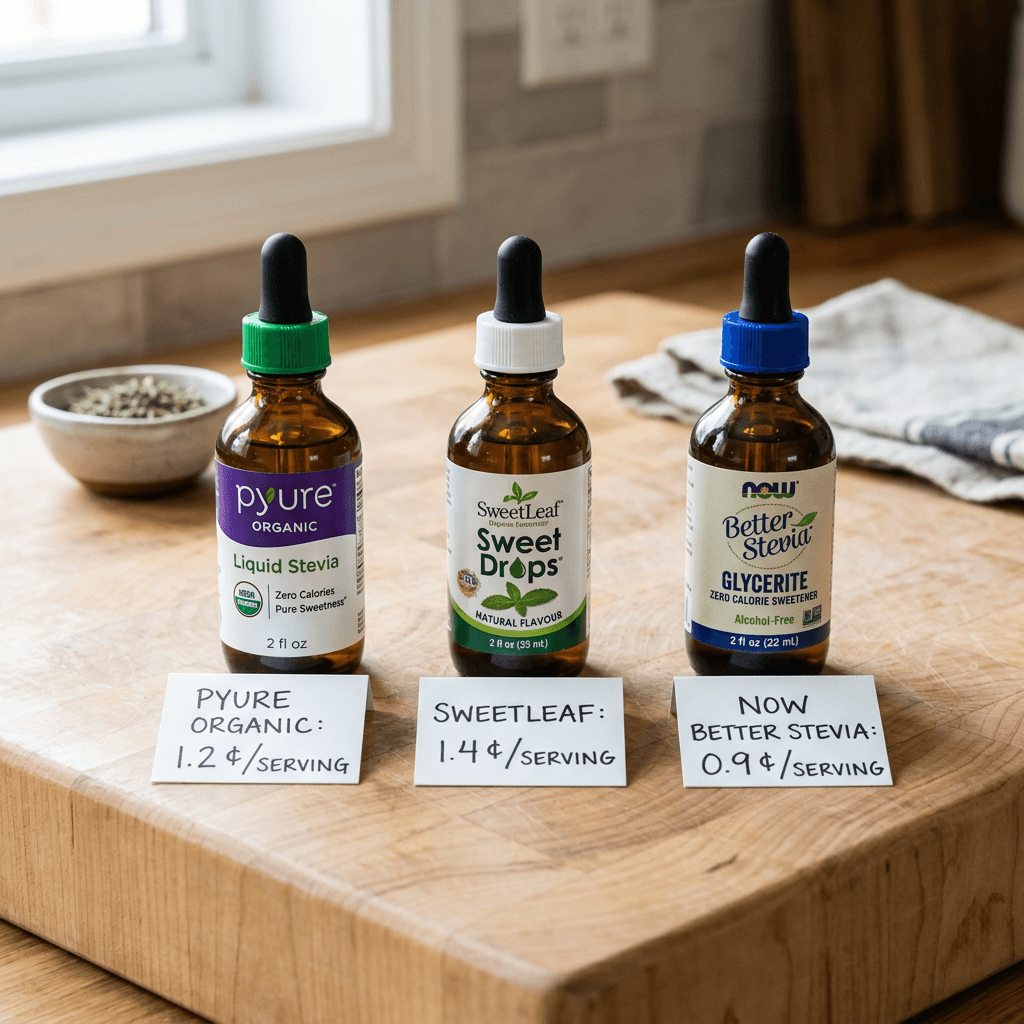
The two products I keep coming back to when evaluating Pyure are SweetLeaf Organic Liquid Stevia and NOW Foods Better Stevia Liquid.
Pyure vs. SweetLeaf Organic Liquid Stevia: SweetLeaf is probably the brand most people in the liquid stevia space encounter first. The 2-ounce bottle has been on shelves for years and SweetLeaf has a strong reputation. In taste comparisons, the two are close — both use rebaudioside A-forward extracts, both avoid erythritol in the liquid line, and both perform well in beverages. SweetLeaf edges Pyure slightly on sweetness depth in very cold applications, in my experience, but the difference is subtle enough that I wouldn’t make a purchasing decision on that alone. The clearer differentiator is price: SweetLeaf’s comparable bottle costs roughly $0.033 per serving against Pyure’s $0.017. SweetLeaf also carries USDA Organic on its liquid line, so the certification match is there. But Pyure adds Non-GMO Project Verification that SweetLeaf’s liquid products don’t consistently carry. For everyday household use where value and organic integrity are both priorities, Pyure wins.
Pyure vs. NOW Foods Better Stevia Liquid: NOW Better Stevia is an effective, affordable product, but it’s not certified organic. For some buyers that’s irrelevant; for others — like the version of me that has a seventh-grader asking pointed questions about what goes into our food — it’s the deciding factor. NOW’s formula sometimes includes glycerin or other carrier agents depending on the flavor variant. The unflavored version is quite clean, and the sweetness is consistent. At roughly $0.011 per serving it’s cheaper than Pyure per use, but without organic certification. If cost-per-serving is your only metric, NOW wins. If you want organic and non-GMO verification, Pyure is the better answer.
| Brand | Size | Servings | Price (est.) | Cost/Serving | USDA Organic | Non-GMO Verified | Erythritol-Free |
|---|---|---|---|---|---|---|---|
| Pyure | 1.8 oz | ~500 | $8.49 | $0.017 | Yes | Yes | Yes |
| SweetLeaf | 2 oz | ~300 | $9.99 | $0.033 | Yes | No (liquid) | Yes |
| NOW Better Stevia | 2 oz | ~400 | $4.49 | $0.011 | No | No | Yes |
Where to Buy and Price List
Pyure Organic Liquid Stevia is widely available, and the price is fairly consistent across major channels. Here’s where I actually shop for it and what I’ve found.
Amazon
You can find the 1.8 oz bottle listed under ASIN B09MR7KXPL. Current price runs approximately $8.29 with Prime shipping. If you buy in a three-pack (which Pyure offers on Amazon), the per-bottle cost drops to roughly $7.49. I’d recommend the three-pack if you use it daily — you’ll always have a backup and you’ll spend less per bottle over time.
enzostevia.com
The 1.8 oz Pyure Organic Liquid Stevia is listed at $8.49 on enzostevia.com. Use coupon code AWESOME at checkout for 3% off, bringing your price down to approximately $8.24. Enzostevia carries a curated selection of quality stevia products and ships promptly — it’s where I ordered my second bottle when I didn’t want to wait for a Prime delivery window.
Whole Foods / Natural Grocers
In-store availability at natural food retailers typically runs $9.49 to $10.99 depending on location and local pricing. Paying the convenience premium occasionally is fine, but if you’re buying it routinely, online pricing is significantly better.
Walmart and Target
Both carry Pyure products in their natural foods sections, though liquid stevia availability varies by store format. Online pickup or delivery from both typically matches closer to Amazon pricing.
People Also Ask
Is Pyure Organic Liquid Stevia truly zero calories and zero glycemic index?
Yes. Steviol glycosides are not metabolized as carbohydrates by the body — they pass through without triggering an insulin response. Pyure’s liquid formula carries zero calories and a glycemic index of zero per serving, making it appropriate for diabetic diets, ketogenic eating plans, and anyone managing blood sugar. Always consult a healthcare provider about specific dietary management for medical conditions.
How does Pyure Liquid Stevia compare to SweetLeaf in terms of taste?
Both products use rebaudioside A-dominant extracts and both perform cleanly in beverages without significant bitterness. In side-by-side comparisons, the flavor difference is subtle. Pyure tends to have a slightly lighter profile that I find blends more transparently in coffee; SweetLeaf has a touch more sweetness depth that some people prefer in cold brew or iced tea. The larger practical difference is price per serving — Pyure runs roughly half the cost of SweetLeaf’s liquid line.
Can I use Pyure Organic Liquid Stevia for baking?
You can use it to contribute sweetness to baked goods, but liquid stevia doesn’t replace the structural role that granulated sugar plays in batters and doughs. If you simply swap Pyure drops for sugar without adjustment, your baked goods will likely come out denser, with altered browning and texture. For best results, use Pyure for the sweetness contribution and add a bulking agent — unsweetened applesauce, pumpkin puree, or a small amount of erythritol — to restore volume and structure.
Does Pyure Liquid Stevia contain erythritol or other sugar alcohols?
No. The 1.8-ounce liquid formula contains only three ingredients: organic stevia leaf extract, purified water, and organic alcohol (as a carrier and preservative). There is no erythritol, no maltodextrin, no inulin, and no additional sweeteners. This makes it one of the cleaner formulations available at this price point — particularly relevant for people who experience digestive sensitivity to sugar alcohols or who are avoiding erythritol for cardiac health reasons following recent research discussions in that area.
SERP
When I searched “pyure organic liquid stevia review” in an incognito window, the top results were a mix of retailer product pages and a couple of general stevia roundups. The first organic result was a listicle from a large natural health content site covering five liquid stevia brands, with Pyure mentioned briefly in the middle but not reviewed in depth. Below that was Pyure’s own Amazon listing and a manufacturer description page, neither of which offered the kind of use-case specificity someone actually shopping for this product wants. The third editorial result was a keto-diet focused blog that covered Pyure’s granular products and mentioned the liquid line only in passing. None of the top results gave the product a full standalone treatment — no detailed flavor analysis, no cost-per-serving math, no honest comparison against SweetLeaf’s liquid line at the formulation level. That gap is exactly why I wrote this piece.
Top 20 Topics
- Best liquid stevia drops for coffee
- Pyure vs SweetLeaf liquid stevia comparison
- Organic stevia with no erythritol
- Is liquid stevia safe for diabetics
- How many drops of stevia equal one teaspoon of sugar
- Stevia with zero glycemic index
- Non-GMO liquid stevia brands 2025
- Liquid stevia for cold brew coffee
- Best stevia for keto diet
- Does stevia have an aftertaste
- Rebaudioside A vs stevioside taste difference
- Liquid stevia vs powdered stevia in recipes
- How to bake with liquid stevia
- USDA organic stevia sweetener
- Stevia for smoothies and protein shakes
- Clean label sweeteners for families
- Stevia shelf life and storage tips
- Is Pyure stevia good for children
- Cost per serving liquid stevia comparison
- Where to buy Pyure organic liquid stevia cheap