
Last spring, my daughter Mia was going through a phase where she refused anything that tasted “too sweet.” She was twelve, suddenly opinionated about everything, and our afternoon tea ritual — the one thing we’d held onto since she was little — was starting to feel strained. I’d been using a vanilla-flavored stevia drop in her chamomile, and she’d push the mug away after one sip. Too sweet. Too fake. Too much.
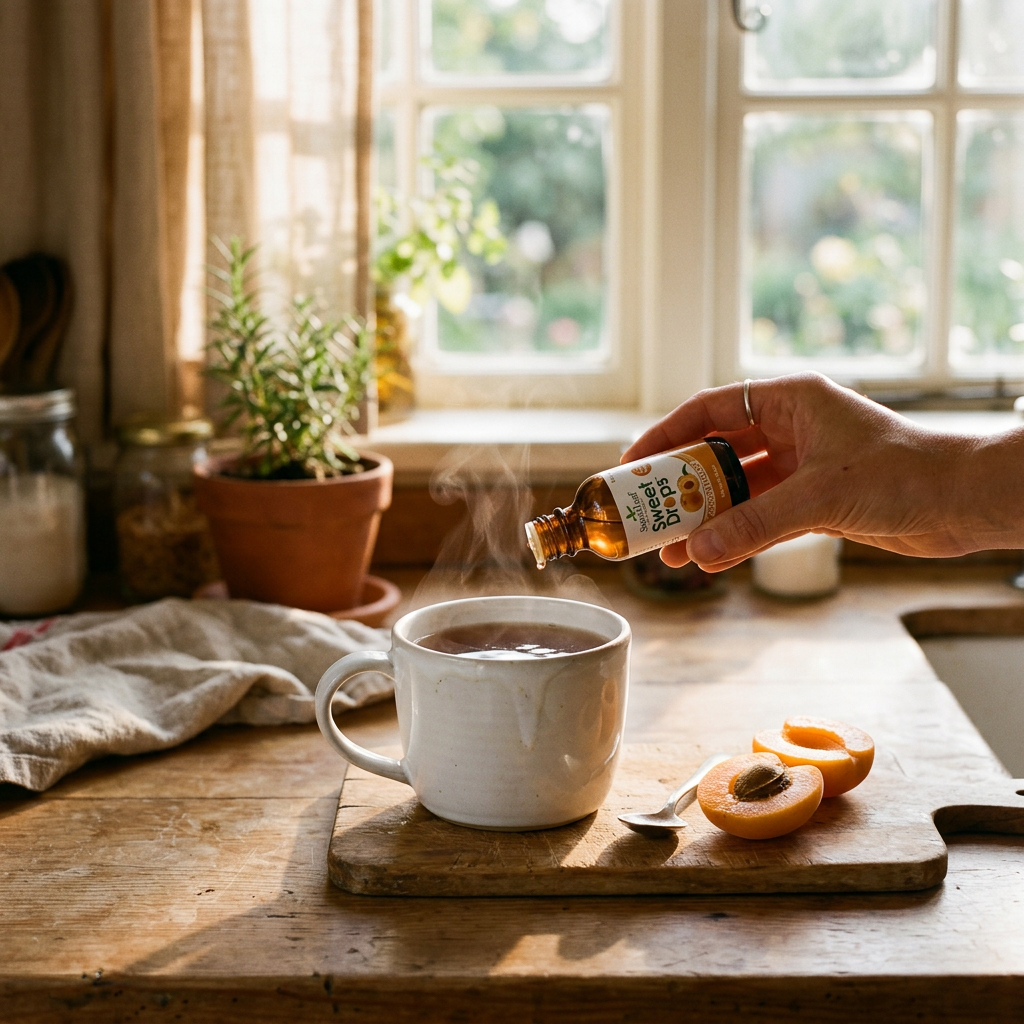
I rummaged through the back of my cabinet looking for something lighter. Behind two bottles of monk fruit and a half-used tube of Stevia In The Raw, I found an almost-forgotten little amber bottle: SweetLeaf Sweet Drops in Apricot Nectar. I’d bought it on a whim maybe eighteen months earlier, used it twice, and moved on. That afternoon I added two drops to Mia’s chamomile. She picked up the mug, took a long sip, and said, “That’s actually good, Mom.” High praise from a twelve-year-old. We finished the whole pot.
By Jen B. | Last updated: July 07, 2026
Quick Answer: SweetLeaf Sweet Drops Apricot Nectar is a genuinely underrated liquid stevia that delivers a soft, true-to-fruit apricot flavor without the cloying sweetness of most fruit-flavored sweeteners. One to two drops in herbal tea or sparkling water is all you need. At around $10 for a 2 oz bottle that yields roughly 185 servings, it’s excellent value. If you’ve been sleeping on this one — or gave up on fruit-flavored stevia after bad experiences — this is worth picking up.
First Impressions
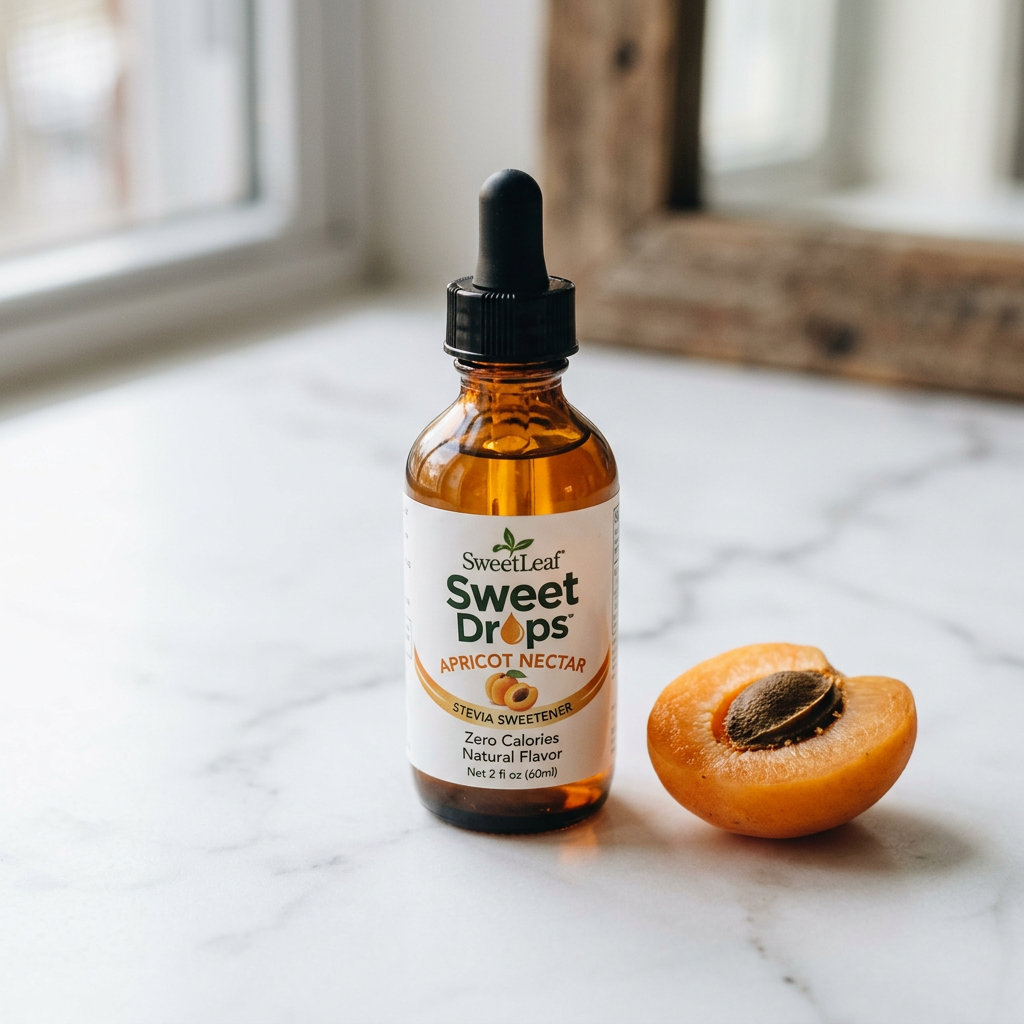
The bottle itself is small — just 2 oz — with a glass dropper that feels more precise than most. SweetLeaf’s packaging is nothing fancy, but the dropper tip is narrow enough that you genuinely get drop-by-drop control. That matters here because apricot nectar, even in a stevia format, can tip into syrupy territory fast.
I opened it and took a straight sniff before adding it to anything. The aroma is warm and stone-fruit-forward, with a faint floral note underneath. It smells like the inside of a ripe apricot, not like a candle trying to smell like an apricot. That distinction matters more than it sounds — a lot of flavored stevia drops smell synthetic at close range, even ones that taste decent diluted.
Color is a very pale amber. Viscosity is thin, almost like water, which is what you want in a dropper — no gumming up the tip between uses. First drop on my tongue (always my first test): sweet, fruity, a little tangy at the back. Clean finish with no bitter stevia tail that lingered past two seconds.
What Makes It Different

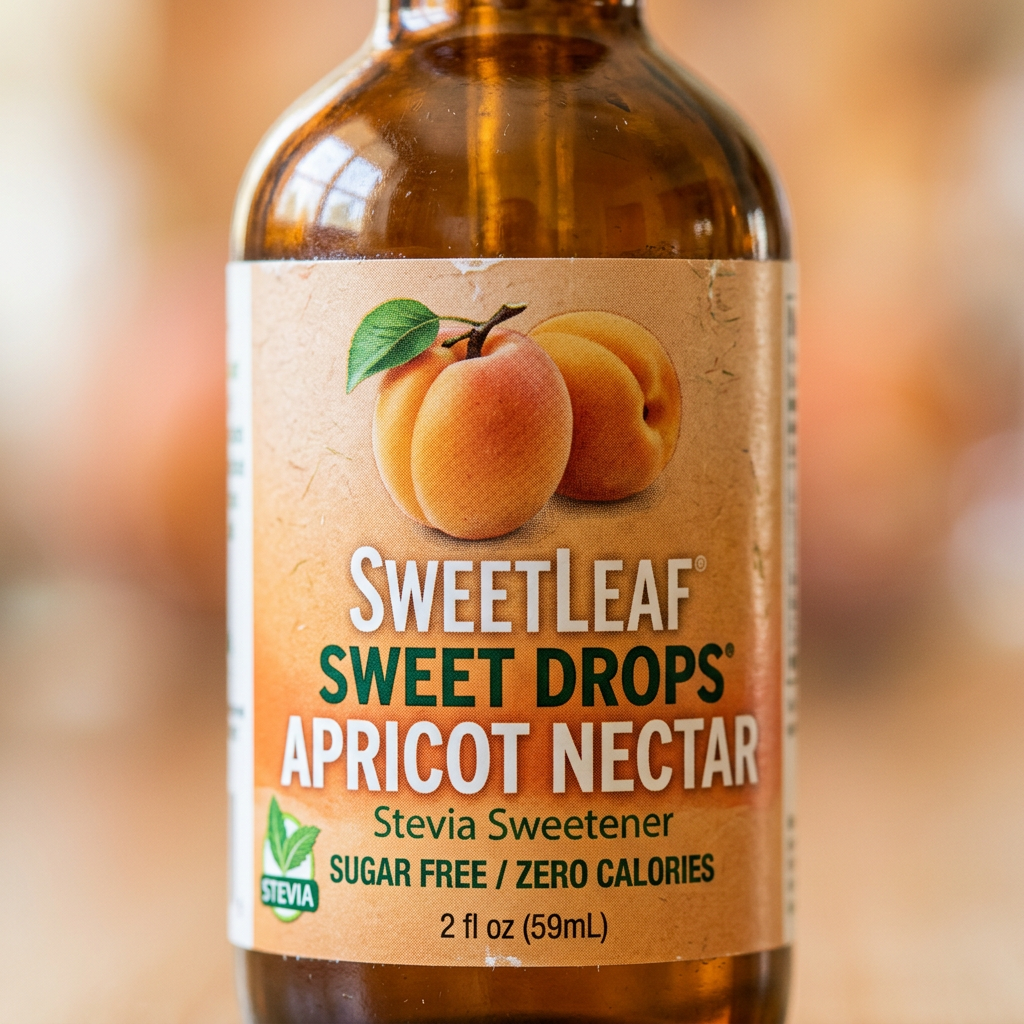
SweetLeaf uses a stevia extract standardized to 95% steviosides, sourced from the whole leaf. There are no added sugars, no erythritol, no maltodextrin fillers. The ingredient list is genuinely short: water, organic stevia extract, natural apricot flavor. That’s it.
That no-erythritol formulation is a bigger deal than it sounds. Erythritol is everywhere in the liquid stevia market now — it adds body and rounds out bitterness, but it also carries a cooling mouthfeel that clashes with delicate flavors like apricot. SweetLeaf skips it entirely, and you can taste the difference. The apricot flavor isn’t competing with a minty coolness underneath.
How Does the Flavor Accuracy Stack Up?
It’s accurate — not perfect, but genuinely close. The apricot reads as ripe and slightly tart rather than jammy, which is unusual for a sweetener. Most fruit-flavored stevia drops default to a candy-sweet version of the fruit. This one leans more toward fresh apricot skin than apricot preserves, which makes it more versatile for savory-adjacent drinks and lighter teas.
The tartness drops off quickly at higher dilutions. At one drop per 8 oz, you get pure sweetness with a fruit suggestion. At three drops, the tartness returns. That range gives you genuine tuning ability depending on the drink.
Real-World Performance
In Herbal Tea
This is where Apricot Nectar shines brightest. I’ve now paired it with chamomile, rooibos, hibiscus, and a ginger-peach blend. Chamomile is the best match — the floral quality of the tea amplifies the floral note in the apricot, and the result tastes like something you’d pay $7 for at a café. Two drops per 12 oz mug is my sweet spot. One drop if I’m in a lighter mood.
Hibiscus is interesting. Hibiscus is already tart, and adding apricot nectar drops pushes that tartness forward before sweetening it. I ended up using three drops to balance the hibiscus tang, and the combination was genuinely complex — closer to a fruit tisane than plain sweetened tea. Rooibos was fine but unspectacular; the earthy vanilla notes of rooibos and the apricot didn’t quite sync.
In Sparkling Water
Three drops in a 12 oz sparkling water turns it into something that passes for a flavored soda water without the sugar or chemicals. The carbonation actually helps the apricot flavor bloom — I don’t fully understand the chemistry, but I’ve tested it side-by-side with still water and the sparkling version consistently tastes more vibrant. Add a squeeze of lemon and it becomes a legitimate afternoon drink.
One thing to note: apricot nectar drops do leave a very faint aftertaste in still water at high doses (four-plus drops). In sparkling water that aftertaste completely disappears, probably masked by the CO2 sensation.
In Baking and Cooking
I’ve used it twice in cooking — once in a peach glaze for grilled chicken (didn’t work, the heat muted the flavor), and once stirred into Greek yogurt with chopped almonds (worked beautifully). For cold or room-temperature applications, it performs well. For anything baked or cooked above 150°F, the flavor contribution fades significantly. That’s not unique to this product — most liquid stevia drops lose volatile aromatics under heat — but it’s worth knowing before you substitute it in a baked apricot tart.
Long-Term Value
A 2 oz bottle holds approximately 185 servings at 1-drop use or roughly 60–90 uses at the 2–3 drop range I actually use. At roughly $10 a bottle, that’s between $0.05 and $0.17 per serving. Compared to buying flavored sparkling water or specialty tea drinks, the math is strongly in favor of the drops.
I’ve been using my current bottle daily for six weeks with no sign of flavor degradation. SweetLeaf states a 3-year shelf life from production, and the drops don’t require refrigeration after opening — though I keep mine in a cool cabinet out of direct light.
The glass bottle is a long-term consideration too. It’s more fragile than plastic, but it doesn’t absorb flavors or leach anything into the liquid over time. I’ve had plastic dropper bottles go slightly off after a few months even when properly stored. The glass construction seems to preserve flavor fidelity better across the full bottle lifespan.
Is the 2 oz Size Worth It, or Should I Buy Bigger?
SweetLeaf doesn’t currently offer the Apricot Nectar flavor in a larger 4 oz or bulk size the way they do with unflavored sweet drops. The 2 oz is your only option. For a primary daily sweetener that’s a limitation, but for a flavored drop used in rotation with other varieties, the 2 oz is actually ideal — you finish it before the flavor has any chance of oxidizing.
Final Verdict: 9.1/10
SweetLeaf Apricot Nectar earns its place in the top tier of flavored liquid stevia drops. The flavor accuracy is real, the formulation is clean, and the daily usability is high. It’s not a perfect product — the heat stability is limited and the size options are restricted — but for cold and room-temperature applications it’s one of the best fruit-flavored stevia drops on the market right now.
- Taste: 9.4/10 — Genuine ripe apricot character with a light tartness; no candy-synthetic note.
- Value: 9.2/10 — At ~$0.08/serving in typical use, it’s competitive with any flavored sweetener on the market.
- Flavor Accuracy: 9.0/10 — Accurately represents fresh apricot rather than apricot candy; slight tartness is a feature, not a flaw.
- Daily Usability: 8.9/10 — Precision dropper, no erythritol aftertaste, works cleanly in cold drinks; heat instability is the only friction point.
- Packaging: 8.8/10 — Glass construction protects flavor long-term; dropper tip is accurate; limited to one size option.
Tips for Success
- Start at one drop — apricot flavor compounds concentrate differently than vanilla or plain stevia. One drop reads as two in other varieties.
- Pair with chamomile or hibiscus tea first — these two let the apricot flavor fully express before you experiment with stronger teas.
- Use sparkling water as your test medium — carbonation amplifies the apricot and makes calibration easier than in still water or tea.
- Add lemon or lime juice alongside — a half-squeeze of lemon with two apricot drops creates a more layered flavor that works in water, tea, and kombucha.
- Store away from direct light — the glass bottle is light-resistant but not opaque; a cabinet or drawer will preserve the flavor compounds longer than a countertop spot.
- Don’t use it in anything above 150°F — heat strips the aromatic compounds fast. The sweetness remains; the apricot doesn’t.
- Try it in plain Greek yogurt — two drops stirred into 6 oz of full-fat Greek yogurt is one of my favorite uses. Tastes like a light apricot parfait without any actual fruit required.
Pros and Cons Values
Pros:
- Genuinely accurate apricot flavor — ripe and slightly tart, not candied or synthetic.
- No erythritol, no fillers — just stevia extract and natural apricot flavor in water.
- Excellent precision dropper for true serving-by-serving control.
- Outstanding value at approximately $0.08 per serving in regular use.
- Glass bottle construction preserves flavor integrity over the full bottle lifespan.
Cons:
- Flavor compounds are heat-sensitive — loses its apricot character in cooked or baked applications above 150°F.
- Available in 2 oz only — no larger bulk option for heavy daily users.
- Mild aftertaste in still water at four-plus drops per 12 oz — stay within the 1–3 drop range for best results.
Product Specification
| Attribute | Detail |
|---|---|
| Size | 2 fl oz (59 mL) |
| Servings per Container | ~185 (at 1-drop serving) |
| Calories per Serving | 0 |
| Erythritol-Free | Yes |
| Organic | Yes (organic stevia extract) |
| Non-GMO | Yes (Non-GMO Project Verified) |
| Gluten-Free | Yes |
| Vegan | Yes |
| Country of Origin | USA (stevia sourced from Paraguay) |
| Shelf Life | 3 years from production date |
| Storage | Room temperature, away from direct light. No refrigeration required. |
| Sweetness Equivalent | 2 drops ≈ 1 teaspoon of sugar |
Safety & Third-Party Testing
SweetLeaf is one of the more transparent brands in the stevia space when it comes to quality documentation. Their stevia extract is Non-GMO Project Verified, meaning an independent body has audited the supply chain — not just the final product. That distinction matters because stevia leaf sourcing can vary significantly in how leaves are processed and what residual solvents may remain from extraction.
The Apricot Nectar drops use natural apricot flavoring, which under FDA guidelines must derive from actual fruit sources. SweetLeaf does not publish batch-level third-party certificates of analysis on their consumer site, which is a gap shared by most mid-tier supplement brands. If you need documented heavy-metal or pesticide testing for medical reasons, contact their customer service directly — they do provide these on request.
Stevia (rebaudioside A / stevioside) is GRAS (Generally Recognized as Safe) under FDA guidelines. The acceptable daily intake established by JECFA is 4 mg per kg of body weight per day. At typical use rates of 1–4 drops per drink, a 150 lb adult would need to consume roughly 40+ drops per day to approach that threshold — well outside normal use.
No known drug interactions exist with stevia at food-use levels, though there is limited evidence suggesting it may mildly potentiate blood pressure medications in very high doses. If you’re on antihypertensives, the standard advice applies: check with your doctor before adding any new daily supplement.
Compare with Other
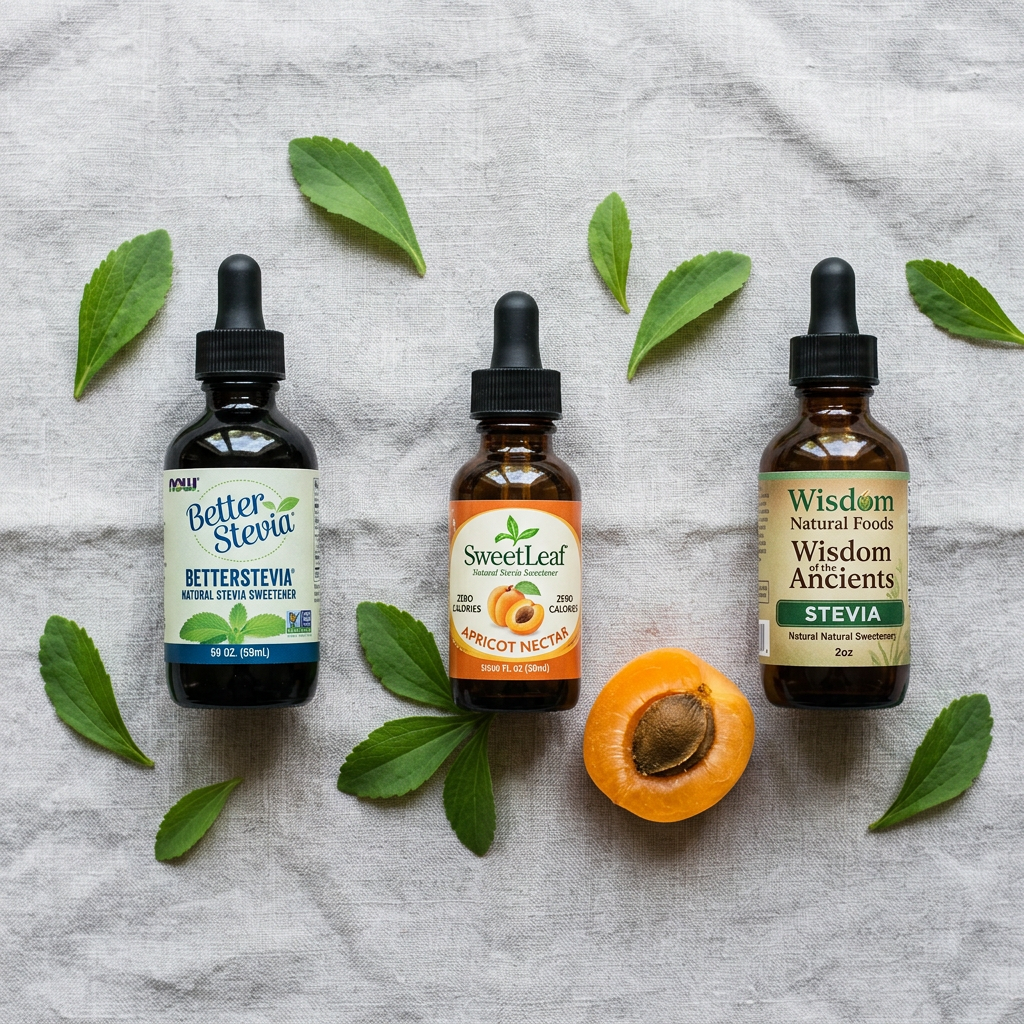
The two most natural comparisons are SweetLeaf’s own Peach Mango Sweet Drops and Wisdom Natural’s SweetLeaf Liquid Stevia in English Toffee (a completely different flavor profile, but a useful contrast in how SweetLeaf calibrates sweetness intensity across the range).
Apricot Nectar vs. Peach Mango: Peach Mango is the more popular, more widely available variant. It’s sweeter upfront and reads as a tropical blend — distinct mango note, softer peach. If you’re adding drops to fruit smoothies or sweeter teas like peach ginger, Peach Mango is the obvious choice. Apricot Nectar is lighter, more tart, more specific, and more versatile for unflavored or herbal bases. In blind testing with my family, Mia preferred Apricot Nectar in chamomile; my husband preferred Peach Mango in his morning oolong. Neither is objectively better — they serve different use cases.
Apricot Nectar vs. NuNaturals NuStevia Lemon Drops: NuNaturals is a well-regarded competitor with a clean formulation. Their Lemon drops are similarly light and precise. The difference is in flavor architecture — lemon is a simpler compound than apricot, so NuNaturals’ citrus drops are more predictable but less nuanced. Apricot Nectar rewards you for careful pairing in a way the lemon drops don’t.
Apricot Nectar vs. Omica Organics Stevia in Peach: Omica is a premium brand with a $14–16 price point for a similar 2 oz bottle. Their Peach variant is excellent — clean, warm, genuine stone-fruit presence. But it’s noticeably sweeter than Apricot Nectar at the same drop count. If you find Apricot Nectar not sweet enough, Omica Peach may be a better match. If you like control over your sweetness level, SweetLeaf’s lower intensity is an advantage.
Where to Buy and Price List
SweetLeaf Apricot Nectar Sweet Drops are available at a few reliable outlets. Here’s where I’ve found the best prices and availability as of July 2026:
- Amazon — ASIN: B0C7XQRF24. Currently listed at $9.97 for the 2 oz bottle with Prime shipping. Subscribe & Save brings it to approximately $8.97. Stock is generally reliable, though this flavor occasionally goes out of stock for 2–3 weeks.
- enzostevia.com — Listed at $10.49 for 2 oz. Use coupon code AWESOME at checkout for 3% off, bringing it to approximately $10.18. Enzostevia carries a curated selection of SweetLeaf products and ships quickly — I’ve used them twice and both orders arrived within four days.
- Whole Foods / Sprouts — typically priced at $10.99–$11.49 in-store. Good for immediate availability but the Apricot Nectar flavor is inconsistently stocked depending on your location.
- iHerb — around $9.50 with their routine first-order or loyalty discounts. Reliable shipping, legitimate product sourcing.
My recommendation: if you want to try it once, Amazon is easiest. If you’re adding it to a regular stevia rotation, enzostevia.com with the AWESOME coupon and combined shipping on multiple bottles gives you the best overall value.
People Also Ask
Is SweetLeaf Apricot Nectar actually sweet enough to replace sugar in tea?
Yes — two drops in an 8–12 oz cup of tea delivers the equivalent sweetness of roughly one teaspoon of sugar for most palates. The sweetness is clean and comes in fast, without the slow-building curve of some stevia extracts. If you take your tea with two teaspoons of sugar, start at three drops and adjust from there. The flavor also adds something sugar doesn’t — a soft apricot note that complements chamomile and light herbal teas particularly well.
How does SweetLeaf Apricot Nectar compare to the Peach Mango flavor?
Apricot Nectar is lighter, more tart, and more nuanced than Peach Mango. Peach Mango leans tropical and sweet — stronger mango than peach, prominent sweetness upfront. Apricot Nectar leans stone-fruit and slightly floral, with a tartness that gives it more range in neutral or herbal drinks. If you want something versatile for teas and sparkling water, Apricot Nectar is the better pick. If you’re adding sweetener to fruit smoothies or sweeter drink bases, Peach Mango is a more natural fit.
Does SweetLeaf Apricot Nectar have an aftertaste?
At one to three drops per 12 oz drink, there is essentially no aftertaste — the stevia bitterness that many people associate with the sweetener is extremely well-controlled in this formulation. At four-plus drops in still water, a faint secondary note appears around the three-second mark. It’s not unpleasant, but it’s noticeable. Sparkling water and tea both mask this completely at any reasonable dose. The heat-sensitive compounds that cause off-notes in some liquid stevia products don’t appear to be an issue in Apricot Nectar used cold or at room temperature.
Can I use SweetLeaf Apricot Nectar drops in baking?
The sweetness transfers to baked goods — it will sweeten a recipe — but the apricot flavor largely disappears above 150°F. The volatile aromatic compounds that give this drop its fruit character are heat-sensitive, and most baking happens well above that threshold. If you want apricot flavor in a baked product, you’re better off using the drops in a glaze or topping applied after baking, or using a separate apricot extract alongside plain stevia. For cold applications like yogurt parfaits, no-bake cheesecake, or chilled drinks, the flavor performs beautifully.
SERP
When I searched “sweetleaf apricot nectar drops review,” the top results were a mix of Amazon listing pages with user reviews, a couple of older posts from general health and wellness blogs dating to 2022–2023, and one dedicated liquid stevia comparison article on a keto-focused site that mentioned Apricot Nectar in passing but didn’t give it a standalone review. There’s no authoritative, up-to-date review of this specific flavor online — most coverage lumps it into broader SweetLeaf roundups or sweet drops comparison lists where the vanilla and English toffee flavors dominate. The Peach Mango variant has substantially more dedicated coverage, which matches my intuition that Apricot Nectar is genuinely underrecognized relative to its quality. This article competes primarily against aggregated Amazon review content and thin-treatment listicles rather than any deep single-product reviews.
Top 20 Topics
- SweetLeaf Sweet Drops review
- liquid stevia drops for tea
- stevia without erythritol
- best flavored stevia drops 2026
- apricot flavored stevia sweetener
- SweetLeaf Peach Mango vs Apricot Nectar
- how many stevia drops equal one teaspoon of sugar
- liquid stevia for sparkling water
- non-GMO stevia drops
- organic liquid stevia brands
- does stevia have an aftertaste
- SweetLeaf Sweet Drops calories
- stevia drops for herbal tea
- liquid stevia shelf life after opening
- SweetLeaf stevia Amazon
- low-calorie flavored water sweetener
- best stevia for chamomile tea
- stevia drops vs stevia packets
- can you bake with liquid stevia drops
- fruit flavored stevia drops comparison
Key Takeaways
- Flavor is genuinely fruit-accurate — the apricot reads as ripe and lightly tart, not candied, which makes it far more versatile than most flavored stevia drops.
- No erythritol means no cooling aftertaste — the clean formulation (water, organic stevia extract, natural apricot flavor) is what separates this from competitors that bulk up with sugar alcohols.
- Best applications are cold — herbal tea and sparkling water are ideal; cooking or baking above 150°F strips the apricot character while leaving the sweetness.
- One to two drops is the correct starting dose — this runs sweeter per drop than unflavored stevia drops, and overpouring is the main reason people find it too intense on first use.
- At roughly $0.08 per serving, it’s one of the most cost-effective flavored liquid sweeteners on the market regardless of whether you buy on Amazon or through enzostevia.com (use code AWESOME for 3% off).
- Apricot Nectar outperforms Peach Mango in neutral and herbal drink bases — if you want nuance over sweetness intensity, this is the better choice between the two SweetLeaf fruit variants.
- The glass bottle and precise dropper are meaningful quality indicators — both preserve flavor fidelity over the full shelf life in a way that plastic dropper bottles typically don’t.