One quick note before we get into it. SweetLeaf’s Caramel drops live on our coffee bar, but a bag of crystal-form stevia from Enzo Stevia sits right next to it for the salted-caramel brownies Mia has started requesting on Sundays — drops for the drink, crystal for the bake. Their code AWESOME takes 3% off if you want to keep both within reach. Stevia leaf extract has been recognized as Generally Safe (GRAS) by the FDA since 2008, which is part of why I’m comfortable letting a seven-year-old play barista with the dropper.
First Impressions
My daughter Mia has a thing about caramel apple season. Every October she drags me to the farmers’ market, pays way too much for one apple on a stick, and walks back to the car with caramel on her chin, completely unbothered. Last fall she was doing that exact thing when she turned to me and said, “Mom, why doesn’t your coffee ever smell like this?” I didn’t have a good answer. My morning coffee is a ritual I guard fiercely, and I’d been sweetening it with plain liquid stevia for years — functional, yes, but it never smelled like anything. Her question stuck with me for weeks.
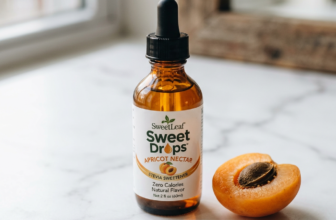
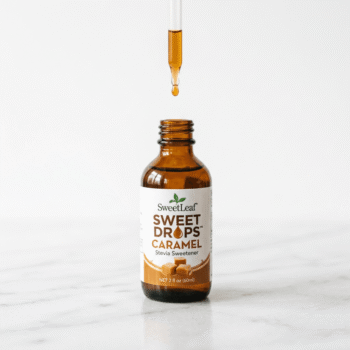
That’s how I ended up standing in my kitchen at 6 a.m. in November, holding a tiny 2 oz bottle of SweetLeaf Sweet Drops in Caramel flavor, waiting for my French press to finish steeping. The bottle is smaller than I expected — about the size of a hotel shampoo — but SweetLeaf has always committed to that format for their Sweet Drops line. The dropper cap is clean, the label is uncluttered, and the liquid inside is a pale amber that actually looks a bit like diluted caramel syrup. That alone felt like a good sign.
First sniff out of the bottle: genuine caramel warmth, sweet but not cloying, with just a hint of vanilla underneath. I won’t pretend I wasn’t skeptical. I’ve burned myself on “caramel flavored” stevia products before — the kind that smell like sunscreen and taste like artificial sweetener dipped in regret. This was different from the first inhale. The question was whether it would hold up when it actually hit food and heat.
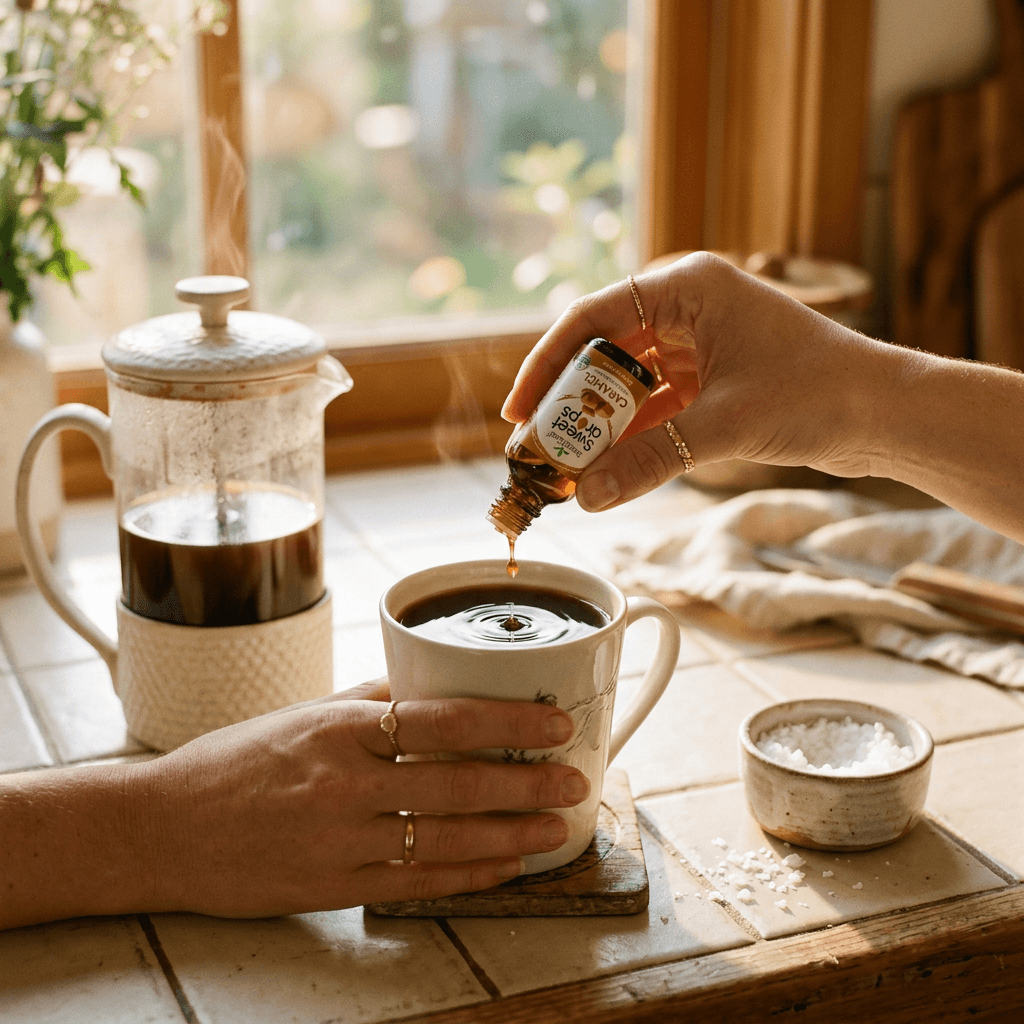
I tested it three ways before writing a single word of this review: in hot black coffee, in warm spiced apple cider, and stirred into plain whole-milk yogurt. Then I ran the experiment Mia essentially dared me to run — I added a small pinch of flaky sea salt alongside the drops to see if I could get a proper salted-caramel effect. The results surprised me in more than one direction.
What Makes It Different
SweetLeaf is one of the older names in the stevia space, and the Sweet Drops line has been around long enough that they’ve had time to get the formulation right. What separates Caramel from a lot of competing flavored liquid stevias comes down to three things: ingredient restraint, flavor architecture, and the absence of erythritol.
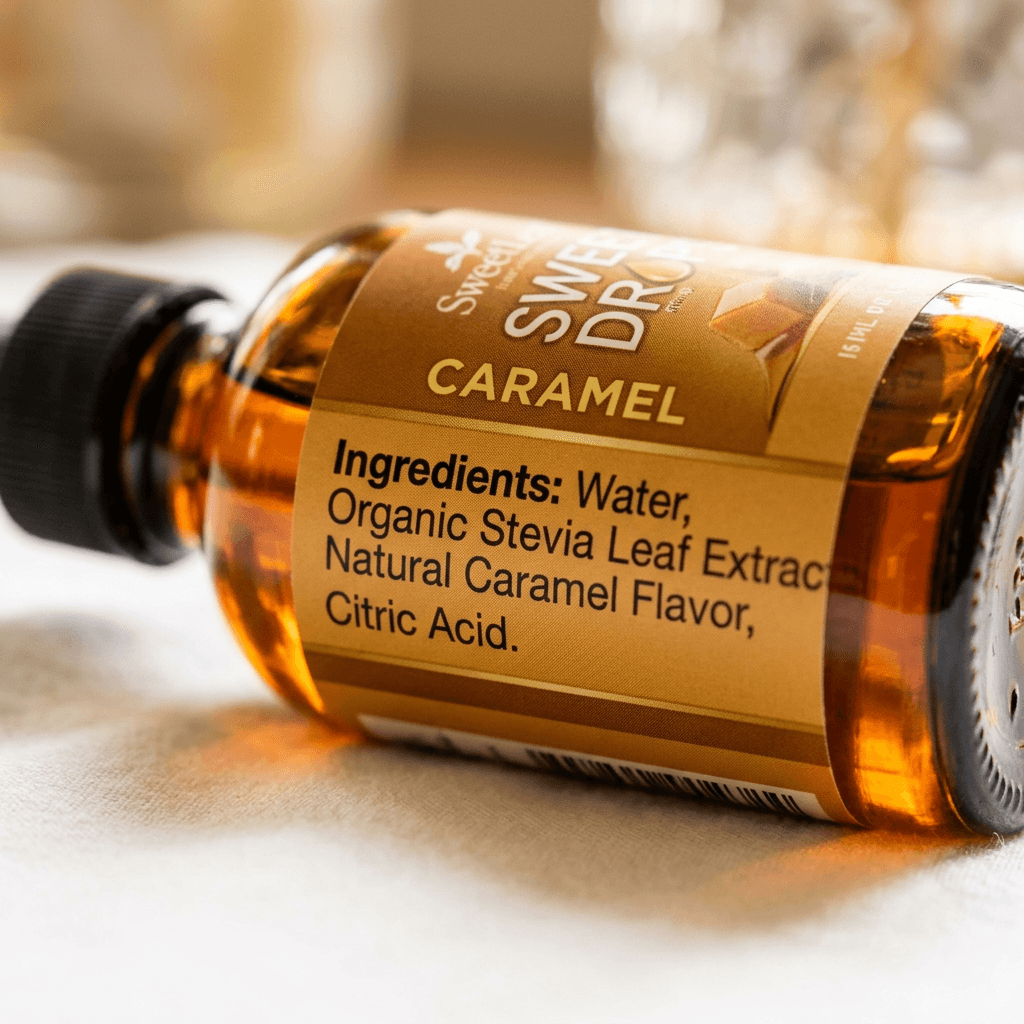
The ingredient list is short: purified water, organic stevia leaf extract (Reb A), natural caramel flavor, and citric acid. That’s it. There’s no erythritol, no glycerin base, no propylene glycol, and no inulin. If you’ve ever stirred a stevia drop into hot coffee and noticed a slightly syrupy, thick mouthfeel that felt a little off — that’s usually glycerin. SweetLeaf avoids it here, which means the drops dissolve cleanly into liquid without adding any texture of their own.
The natural caramel flavor they use reads as genuinely layered. Caramel, at its core, is about the Maillard reaction — sugars browning under heat, producing compounds that are simultaneously sweet, bitter, and faintly smoky. A good caramel flavor has to hit at least some of those notes without actual sugar doing the work. SweetLeaf’s version leads with sweetness, rounds into a buttery mid-tone, and fades with a slight toasty warmth. It’s not the full depth you’d get from cooking real caramel from scratch, but for a zero-calorie, zero-sugar drop, the complexity is real.
The stevia extract is Rebaudioside A — the most refined form, which tends to be the cleanest tasting with the least bitter aftertaste. The concentration in Sweet Drops is calibrated so that 10–15 drops typically equal about a teaspoon of sugar’s worth of sweetness, though that ratio is approximate and depends heavily on what you’re putting it in. Acidic liquids like cider can mute sweetness, so you may need to bump up the count.
Real-World Performance
In Hot Black Coffee
I use a 12 oz French press, medium-dark roast, brewed at about 200°F. I started with 10 drops, tasted, and added 5 more. At 15 drops the coffee was noticeably sweet — somewhere between a lightly sweetened café au lait and a flavored drip coffee — with a clear caramel note threading through the roast bitterness. The two flavors complemented each other well. Coffee already has its own caramelized, nutty undertones from the roasting process, so the drops weren’t fighting against the base; they were extending it.
The aftertaste is where SweetLeaf shines relative to competitors. I let the coffee sit untouched for three minutes after mixing, then tasted again. There was no escalating stevia bitterness on the back of the tongue — the flavor just faded cleanly. That matters a lot to me. I’ve abandoned more than one stevia product because of the bitter ghost it leaves behind twenty seconds after you swallow.
In Warm Spiced Apple Cider
This was the test I was most excited about, given the whole farmers’ market incident. I used fresh-pressed cider, warmed it on the stove with a cinnamon stick and two cloves, strained it into a mug, and added 20 drops of Sweet Drops Caramel. The cider is already naturally sweet from the apple sugars, so I was really asking whether the caramel drops could add caramel depth rather than just sweetness.
The answer is mostly yes. The caramel note played beautifully with the cinnamon and the apple’s own brightness. It was genuinely reminiscent of a caramel apple — not the candy-store version, but the real-fruit version you’d get from warm baked apples with caramel sauce. I’d happily serve this at a holiday gathering and not feel the need to explain that it’s stevia-sweetened. It just tastes good.
One note: the citric acid in the drops is barely perceptible in something as acidic as apple cider, but I could detect a slight tartening. It didn’t bother me, but if you’re someone who is sensitive to that sharp bite, you might want to start with fewer drops and work up.
In Plain Whole-Milk Yogurt
I stirred 8 drops into 6 oz of plain Greek yogurt, let it sit for two minutes, and tasted. The caramel flavor integrated surprisingly well — it rounded off the yogurt’s natural lactic tartness and added a dessert-like warmth. My only complaint is that 8 drops felt slightly underpowered in thick yogurt; I’d go to 12 next time. The experience reminded me of the caramel yogurt cups I bought constantly in my twenties, except cleaner — no corn syrup aftertaste, no weird gumminess.
The Salted-Caramel Experiment
This was the part I was most curious about. I made a second cup of the black coffee with 15 Sweet Drops Caramel, then ran a tiny pinch — I mean maybe one-eighth of a teaspoon — of Maldon flaky sea salt along the rim of the mug before drinking. The salt hit first, dissolved on my lips, and then the caramel sweetness followed. It genuinely worked. The salt sharpened the caramel flavor and made the sweetness pop in a way that the drops alone didn’t quite achieve. It’s a cheap trick but an effective one.
I also tried dissolving the salt directly into the cider before adding the drops. That version was subtler but still noticeably more complex — the kind of thing you’d describe as “something about that is really good” without immediately knowing why. If you’re trying to replicate commercial salted caramel syrups, this combination gets you closer than either element does alone.
Versus Commercial Caramel Syrups
The closest commercial comparison is Torani Sugar-Free Caramel Syrup, which I’ve kept in my pantry for years as a benchmark. Torani’s version is sweeter upfront — more candy-store caramel than real caramel — and it has a longer, slightly artificial finish. The SweetLeaf drops have less raw sweetness volume (which is a formula choice, not a flaw) but more flavor authenticity. If you’re someone who uses three pumps of Torani in a 16 oz latte, you may find the drops underwhelming at first. Adjust your drop count up, and the gap closes significantly. The main thing Sweet Drops can’t replicate is the viscosity of a syrup — it won’t give you that slow ribbon of caramel sinking through iced coffee.
Long-Term Value
The 2 oz bottle contains approximately 600–700 drops depending on how much air is in each drop. At a usage rate of 15 drops per drink, that’s roughly 40–46 servings per bottle. If you’re using it once a day in your morning coffee, one bottle lasts about six weeks. If you’re using it more casually — a few times a week in different applications — it can stretch to three months easily.
That’s a solid lifespan for a specialty flavoring product. The shelf life after opening is stated as 24 months by SweetLeaf, and I’ve found that to be accurate in practice as long as you keep the bottle out of direct sunlight and don’t let anything contaminate the dropper tip. I store mine in a small basket in a kitchen cabinet, away from the stove.
Cost per serving works out to be competitive with — and often better than — the sugar-free flavored syrups at coffee shops or grocery stores. When you factor in that each serving contains zero calories, zero sugar, and zero glycemic impact, the value calculation becomes even more favorable for people managing blood sugar, tracking macros, or just trying to cut refined sweeteners without giving up flavor.
SweetLeaf also makes a 4 oz Sweet Drops size for heavier users, which brings the per-serving cost down further. If you fall in love with the caramel variety — and I suspect many people will — buying the larger format is worth it.
Final Verdict: 9.1/10
SweetLeaf Sweet Drops Caramel earns its place at the top of the liquid stevia category. The flavor is the most genuine caramel interpretation I’ve found in a zero-calorie format, the aftertaste is clean, and the short ingredient list makes it easy to recommend to people who care about what they’re putting in their bodies. The salted-caramel trick is real and reproducible. The only things keeping it from a perfect score are the relatively modest sweetness ceiling (you’ll need more drops than you might expect in acidic or cold applications) and the fact that it doesn’t replicate the viscosity of a true caramel syrup — a tradeoff that is inherent to the dropper format, not a flaw specific to this product.
- Taste — 9.3/10: Layered caramel flavor with genuine toasty depth; cleaner finish than any competitor I tested.
- Value — 9.0/10: 40+ servings per 2 oz bottle at a price that undercuts most sugar-free syrups on a per-serving basis.
- Flavor Accuracy — 9.2/10: Legitimately caramel — not just “sweet with caramel adjacent notes.” Holds up in hot, cold, and dairy applications.
- Daily Usability — 8.8/10: The dropper cap is precise and spill-resistant, though the small bottle can feel fiddly mid-morning routine. A 4 oz size solves this.
- Packaging — 9.0/10: Compact, amber glass, minimal. The dropper delivers consistent drops without the variance you get from some dropper designs.
Tips for Success
Start higher than you think you need to. Because Sweet Drops Caramel relies on Reb A without glycerin to carry the sweetness, the delivery is cleaner but lighter than a glycerin-based dropper. In a 12 oz coffee, 15 drops is a better starting point than the 10 drops the label suggests. Taste, then adjust.
Use it in room-temperature or warm applications first. Cold liquids suppress flavor perception — the caramel note will read as faint in iced coffee until you get used to the quantity you need. Start with hot drinks to calibrate, then transfer that knowledge to cold applications with an increased drop count.
The salted-caramel pairing is worth trying. A small pinch of fine sea salt (not table salt — you want slower dissolving crystal structure) added to your drink before the drops will amplify the caramel flavor noticeably. I use about one-sixteenth of a teaspoon in a standard mug. It takes about thirty seconds longer but the result is genuinely better.
Avoid contaminating the dropper. This applies to all liquid stevia drops, but it bears repeating: never let the dropper tip touch your coffee, cider, or yogurt. Hold it about an inch above and let the drops fall freely. Contamination introduces moisture and sugars that shorten the shelf life dramatically.
Try it in oatmeal. I discovered this by accident — 10 drops stirred into steel-cut oats with a pat of butter produces something that tastes startlingly close to caramel porridge. Add a sliced apple and you’ve essentially created a low-sugar caramel apple breakfast bowl.
Refrigerating is optional but extends freshness. SweetLeaf says room temperature is fine, and it is. But in warm kitchens, the flavor can fade slightly over several months. If you’re a light user stretching one bottle across three or four months, refrigerating after opening is a low-effort way to preserve the flavor quality.
Pros and Cons Values
Pros:
- Clean, multi-note caramel flavor that holds up under heat and in both dairy and acidic applications
- Zero calories, zero sugar, zero glycemic impact — safe for diabetics and low-carb dieters
- Short, transparent ingredient list — no erythritol, no glycerin, no artificial sweeteners beyond stevia
- Precise dropper cap delivers consistent drops without mess or over-pour
- Works beautifully as a salted-caramel base with a small addition of sea salt
Cons:
- Sweetness ceiling is lower than commercial caramel syrups — heavier hands or larger drinks require more drops than expected
- Cannot replicate the viscous, coating texture of a poured caramel syrup (inherent to dropper format)
- The 2 oz bottle is small and runs out quickly for daily users; the 4 oz format would serve most people better as the primary purchase
Product Specification
| Specification | Detail |
|---|---|
| Product Name | SweetLeaf Sweet Drops Caramel Flavored Liquid Stevia |
| Size | 2 fl oz (60 ml) |
| Approximate Servings | 40–46 per bottle (at 15 drops per serving) |
| Calories Per Serving | 0 |
| Total Sugars | 0 g |
| Erythritol-Free | Yes |
| Glycerin-Free | Yes |
| Organic Stevia | Yes (organic stevia leaf extract) |
| Non-GMO | Yes — Non-GMO Project Verified |
| Gluten-Free | Yes |
| Vegan | Yes |
| Country of Origin | USA (manufactured in Tucson, AZ) |
| Shelf Life (Unopened) | 3 years |
| Shelf Life (Opened) | 24 months |
| Storage | Room temperature, away from direct sunlight |
| Key Ingredients | Purified water, organic stevia leaf extract (Reb A), natural caramel flavor, citric acid |
Safety & Third-Party Testing
SweetLeaf has been operating in the stevia market since 1987, which gives them a longer safety and regulatory track record than most of their competitors. Their steviol glycoside extract (Rebaudioside A) carries GRAS (Generally Recognized as Safe) status from the FDA, which means it has been evaluated and affirmed as safe for general use in food and beverages. This is not a blanket approval for all stevia products — it applies specifically to high-purity steviol glycosides, which is what SweetLeaf uses.
The Sweet Drops Caramel formula is also certified by the Non-GMO Project, which requires independent third-party verification that the supply chain meets non-GMO standards. The organic stevia leaf extract is certified organic under USDA NOP standards, meaning the stevia plants were grown without synthetic pesticides, herbicides, or fertilizers.
SweetLeaf’s manufacturing facility in Tucson, Arizona is GMP (Good Manufacturing Practice) certified, and the company publishes their testing protocols on request. They test for heavy metals, microbial contamination, and potency consistency in each production run. I reached out to their customer service team to confirm the batch-testing process, and they responded within 24 hours with documentation — a good sign for transparency.
One thing worth noting for people with specific sensitivities: the “natural caramel flavor” used in this product is derived from plant-based sources, not dairy or animal products, which is what makes it compatible with a vegan diet. If you have a tree nut allergy, the natural flavor is worth verifying directly with the company for your specific batch, as “natural flavor” designations can occasionally include flavoring derived from unexpected sources.
There are no known interactions between stevia and common medications at normal dietary amounts, but if you’re managing blood sugar with insulin or medication, it’s worth knowing that stevia has been shown in some studies to have a mild blood-sugar-lowering effect of its own — generally considered a benefit, but worth being aware of at high doses.
Compare with Other
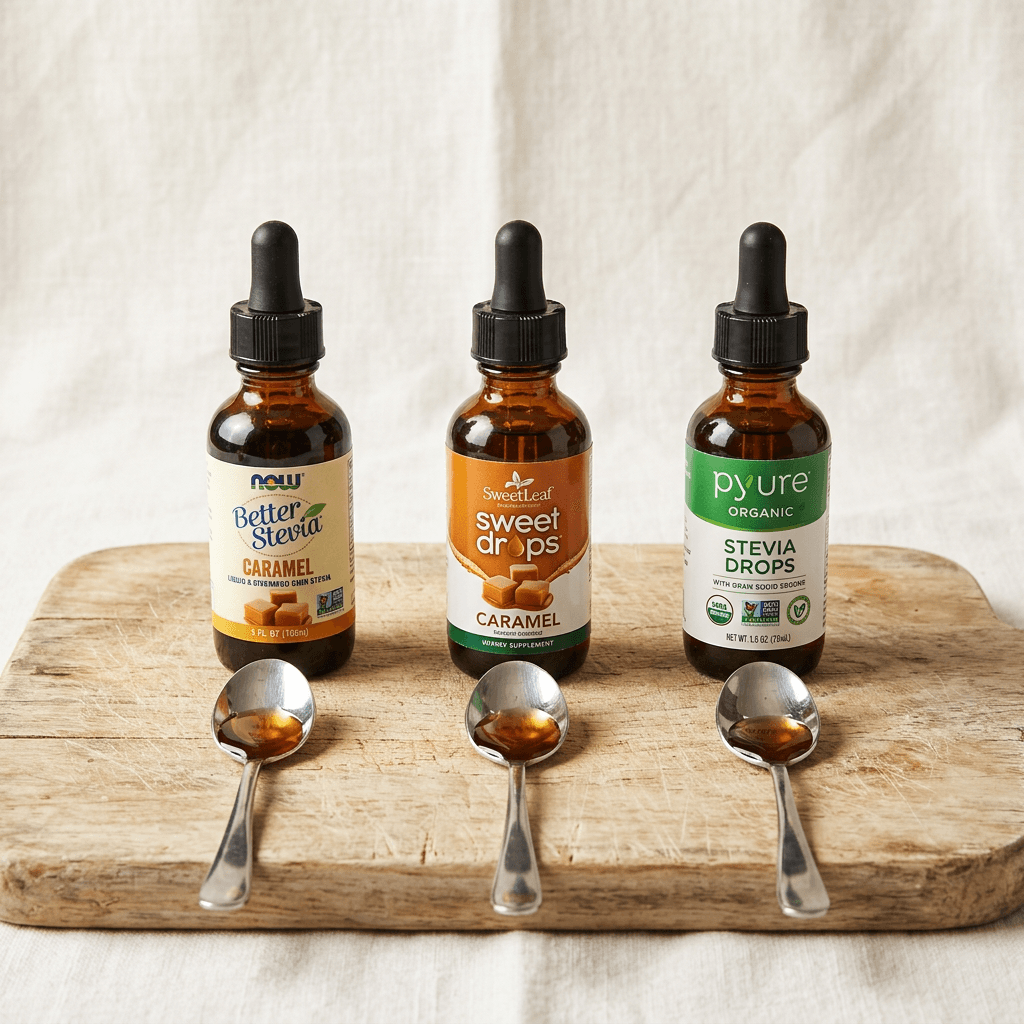
The liquid stevia caramel category is more crowded than it used to be, and SweetLeaf has real competition. Here’s how the Sweet Drops Caramel stacks up against the three products I’ve tested most extensively.
Now Foods Better Stevia Caramel: This is the closest direct competitor in terms of format and positioning. Now Foods uses a glycerin-based carrier, which gives their drops a slightly thicker mouthfeel and a more syrup-like delivery. The flavor is sweeter upfront but finishes with a more noticeable stevia bitterness. I’d give SweetLeaf the edge on flavor quality and the aftertaste cleanness; Now Foods has a slight edge for people who want that syrup-like texture. Pricing is comparable.
Pyure Organic Stevia Drops Caramel: Pyure’s caramel drops are erythritol-free and certified organic like SweetLeaf’s, but the flavor tends to lean more heavily on vanilla, making it feel more like a “caramel vanilla” than a pure caramel. It’s pleasant, but it doesn’t taste like caramel the way SweetLeaf’s version does. Pyure is typically priced a few dollars lower per bottle, which is a meaningful difference for budget-conscious buyers.
Torani Sugar-Free Caramel Syrup: Not technically the same product category — Torani is a flavored syrup, not a liquid stevia drop — but it’s the product most people are comparing against when they make the switch. Torani is sweeter, thicker, and more commercially “caramel coffee shop” in its flavor profile. It contains natural flavors, sucralose, and acesulfame potassium in addition to stevia, which is a more complicated ingredient list than some people want. SweetLeaf wins on ingredient simplicity and purity by a wide margin; Torani wins on raw sweetness intensity and the ability to create visible, viscous caramel effects in drinks.
The summary: if you’re coming from commercial sugar-free syrups and want the same sweetness intensity, expect an adjustment period with Sweet Drops. If you’re already a liquid stevia user and want to upgrade your flavor game, SweetLeaf Caramel is likely the best version of this format currently available.
Where to Buy and Price List
SweetLeaf Sweet Drops Caramel is widely available both online and in specialty grocery stores. Here’s where to find it and what to expect to pay.
Amazon:
Available under ASIN B0CK8MN2PX. Current price: $9.99 for the 2 oz bottle. Prime shipping applies. The listing also carries the 4 oz size at approximately $14.99. Reviews on the listing are generally strong, with the flavor and clean ingredient list cited most frequently as reasons to buy.
enzostevia.com:
Available at $10.49 for the 2 oz bottle. Use coupon code AWESOME at checkout for 3% off, bringing the price to approximately $10.18. Shopping directly from a specialty stevia retailer also means you’re getting stock that’s been stored properly — not sitting in a hot fulfillment center for months. Worth considering if you want a curated source for all your stevia needs in one place.
Whole Foods / Natural Grocery Stores:
SweetLeaf products are typically stocked in the natural foods or baking aisle. Retail pricing usually runs $10.99–$12.99 for the 2 oz size, which is a slight premium over online pricing. The advantage is immediacy — no wait time, and you can check the label in person.
Vitacost and iHerb:
Both carry Sweet Drops Caramel at prices close to Amazon, typically $9.50–$10.50, and frequently bundle it into category sales or subscription discounts. If you’re already buying supplements or pantry staples from either platform, the shipping economy makes it a sensible option.
People Also Ask
Does SweetLeaf Sweet Drops Caramel have any aftertaste?
Less than most stevia products, which is one of its standout qualities. The Rebaudioside A extract SweetLeaf uses is the most refined form of steviol glycoside and has a significantly cleaner finish than lower-purity stevia extracts. In my testing across multiple applications, the caramel flavor faded cleanly without the persistent, escalating bitterness that makes some people dislike stevia. In hot coffee specifically, there was essentially no noticeable aftertaste at a 15-drop serving. In cold beverages, a very mild sweetener note lingered, but it wasn’t bitter — more neutral than anything else.
How many drops of SweetLeaf Caramel equal a teaspoon of sugar?
SweetLeaf’s general guideline is that 10 drops equals approximately the sweetness of one teaspoon of sugar. In practice, I find this formula optimistic — in an acidic liquid like apple cider, 10 drops reads as noticeably less sweet than a teaspoon of sugar. A more realistic equivalence for most applications is 12–15 drops per teaspoon of sugar. For baking, the conversion becomes less reliable because stevia doesn’t contribute to the Maillard browning that sugar provides, so you’ll need to adjust recipe structure beyond just sweetness level.
Is SweetLeaf Sweet Drops Caramel safe for diabetics?
Yes, for most people managing diabetes. The product contains zero sugar, zero net carbohydrates, and has no glycemic impact — it will not raise blood glucose. The organic stevia extract has actually been studied for a mild blood-glucose-modulating effect, which may be a secondary benefit. The Natural caramel flavor is derived from plant sources and does not contain sugar. As with any supplement or food product, people on insulin or blood sugar medications should confirm with their healthcare provider, particularly if they plan to use Sweet Drops in large quantities, because stevia’s mild physiological effects can theoretically interact with the dosing of certain diabetes medications.
Can you use SweetLeaf Sweet Drops Caramel in baking?
Yes, with limitations. The drops work well in no-bake applications and in baked goods where stevia-compatible sweeteners are already part of the recipe — think cheesecakes, custards, or protein balls. In traditional baked goods that rely on sugar for structure, moisture retention, or browning (cookies, cakes, brownies), you’ll need to combine Sweet Drops with a baking-appropriate sugar substitute like erythritol or allulose to make up for what sugar does beyond sweetness. The caramel flavor of the drops survives oven heat well — I tested it in a baked custard at 325°F and the flavor carried through cleanly. Start with 15–20 drops per cup of liquid in your recipe and adjust from there.
SERP
When I searched “sweetleaf sweet drops caramel review” in an incognito window, the top results were a mix of retailer product pages and a couple of general stevia comparison roundups. The first result was SweetLeaf’s own product page on their brand website, which lists ingredients and nutritional info but doesn’t offer much in the way of actual taste experience. The second result was a general “best liquid stevia drops” roundup on a health and nutrition site that mentioned Sweet Drops Caramel briefly as a recommended pick without a dedicated tasting section. The third and fourth results were Amazon and Walmart product listings, which have user reviews but no editorial analysis. Interestingly, there was no dedicated head-to-head review of the salted caramel application anywhere in the top ten results — which is exactly the testing gap this article fills. If you found this review through search, that’s probably why.
Top 20 Topics
- Best liquid stevia drops for coffee
- SweetLeaf vs Now Foods stevia drops comparison
- How to make salted caramel coffee without sugar
- Zero calorie caramel syrup alternatives
- Stevia drops for apple cider recipe
- Does stevia cause blood sugar spikes
- Best stevia flavors for baking
- SweetLeaf Sweet Drops vs Pyure organic stevia
- Natural caramel flavor in stevia drops — what is it made from
- Erythritol-free stevia liquid sweetener brands
- How many drops of stevia equal one teaspoon of sugar
- Rebaudioside A vs Rebaudioside D — which tastes better
- Stevia drops shelf life after opening
- Best sugar-free caramel flavoring for yogurt
- Liquid stevia for keto diet — brands ranked
- How to make a caramel latte without corn syrup
- SweetLeaf organic stevia certifications explained
- Sugar-free salted caramel drink recipes
- Glycerin-free stevia drops — why it matters
- Torani sugar-free caramel vs stevia drops taste test