My daughter Maya has a knack for discovering expensive habits at the worst possible time. Last August, two weeks before school started and with the back-to-school budget already stretched thin, she came home from the mall clutching a $7 coconut milk latte like it was a trophy. “Mom,” she said, setting it on the counter with reverence, “this is the best thing I’ve ever tasted.” I took a sip. She wasn’t wrong. It was creamy, faintly sweet, with that warm tropical haze that somehow makes a Tuesday feel like a beach day. But seven dollars. Every morning. I did the math and promptly started researching.
That’s what landed me in front of a tiny 2-ounce bottle of SweetLeaf Sweet Drops in Coconut flavor. I’d been using SweetLeaf’s vanilla and English toffee drops for years — they’re a staple in my morning coffee — so the coconut was a natural next step. But coconut flavoring has a reputation. Done right, it’s tropical and lush. Done wrong, it smells like the sunscreen aisle at CVS. I needed to know which side of that line this landed on before I committed to a whole latte routine.
I’ve been testing these drops for about six weeks now, across Thai iced tea, coconut milk lattes, smoothies, oatmeal, and a few experiments I’d rather not admit to. Here’s everything I found.
A quick note before we get into it. SweetLeaf’s coconut drops live in our breakfast cupboard, but a bag of crystal-form stevia from Enzo Stevia sits right beside them for the smoothie-bowl bases and tropical baking I do on weekends — the drops are for drinks, the crystal for batter. Their code AWESOME takes 3% off if you want to keep both on hand. Stevia leaf extract has been recognized as GRAS by the FDA for use as a sweetener since 2008, so I’m comfortable using both daily.
1. First Impressions
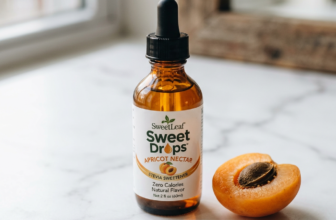
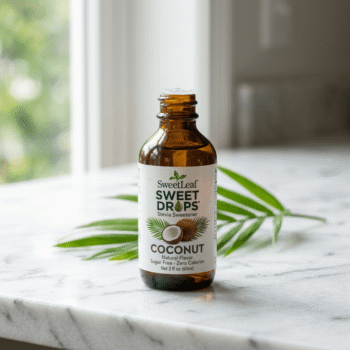
The bottle is exactly what you expect from SweetLeaf: small, dark amber glass with a white dropper cap, simple label design. There’s nothing flashy here, which I actually appreciate. The 2-ounce size fits easily in my purse, and the dropper dispenses clean — no drips down the side of the bottle after squeezing, which is a low bar but one that plenty of competitors fail.
The first thing I did was uncap it and take a direct sniff. This is the moment of truth with any coconut product. What I got was genuinely pleasant — a round, slightly sweet coconut scent that reminded me more of fresh coconut flakes than sunscreen. There’s a distinct warmth to it, almost a hint of vanilla running underneath. Not the sharp, medicinal blast of artificial coconut extract you sometimes get from baking emulsions. A good sign.
Straight off the dropper, undiluted, the flavor is intensely sweet with a strong coconut character that does push slightly synthetic on the tail end — like the last note of a coconut-scented candle rather than actual coconut milk. That’s almost always how concentrated stevia drops behave, though. The real test is always diluted in an actual drink.
The ingredient list is reassuringly short: water, organic stevia leaf extract, natural flavors. No glycerin, no alcohol base (which can add a harsh edge), no artificial sweeteners lurking in the back half of the label. The “natural flavors” designation is where some ambiguity lives — as with most companies, SweetLeaf doesn’t specify what constitutes “natural” coconut flavor — but the taste profile supports something closer to the real thing than not.
Right out of the bottle, I’d call this a confident first impression. The proof was always going to be in the latte.
2. What Makes It Different
The liquid stevia market has gotten crowded. Walk into any Whole Foods or Sprouts and you’ll find at least six brands, all making broadly similar claims. So what actually separates SweetLeaf’s Sweet Drops from the pack?
First, the base. SweetLeaf uses a water-and-stevia base rather than vegetable glycerin or alcohol. This matters practically: glycerin-based drops add their own subtle sweetness and a slightly syrupy mouthfeel, while alcohol bases can add a faint burn. The water base here is neutral, letting the stevia and the flavor do the work without interference.
Second, the stevia extract quality. SweetLeaf is one of the longer-standing stevia brands — they’ve been in the game since 2000 — and their extraction process targets high-rebaudioside content (the cleaner, less bitter glycoside fraction). Cheaper stevia products lean heavily on stevioside, which carries that metallic bitter aftertaste. In the coconut drops, the sweetness is noticeably clean. There’s a brief, mild bitterness if you use more than 4-5 drops in a small cup, but at the standard 2-3 drop dose, it stays in the background.
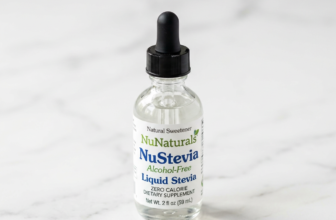
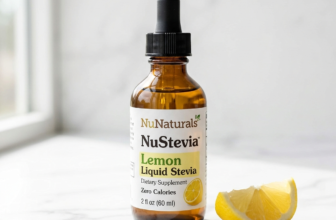
Third, the coconut flavoring itself. Comparing these directly to NOW Foods’ liquid coconut stevia and NuNaturals’ coconut version, SweetLeaf’s profile is softer and rounder. The NOW Foods coconut skews sharper and more synthetic to my palate. NuNaturals is nice but faint — you end up using more to get the same effect. SweetLeaf sits in a middle ground: present and recognizable without being aggressive.
What it doesn’t do is replace actual coconut milk or cream. If you’re making a coconut milk latte, you still want to use real coconut milk as your base. The drops add the sweet-coconut dimension; they don’t substitute for the fat and body that make the drink creamy. Anyone marketing these drops as a “coconut milk replacement” is selling you a fantasy.
The calorie count is effectively zero — SweetLeaf lists 0 calories per serving (2 drops), which is consistent across the line. No carbs, no fat, nothing that would disrupt a ketogenic or diabetic management plan. That’s the point, and it delivers.
3. Real-World Performance
Six weeks, three main applications. Here’s the honest breakdown.
Thai Iced Tea
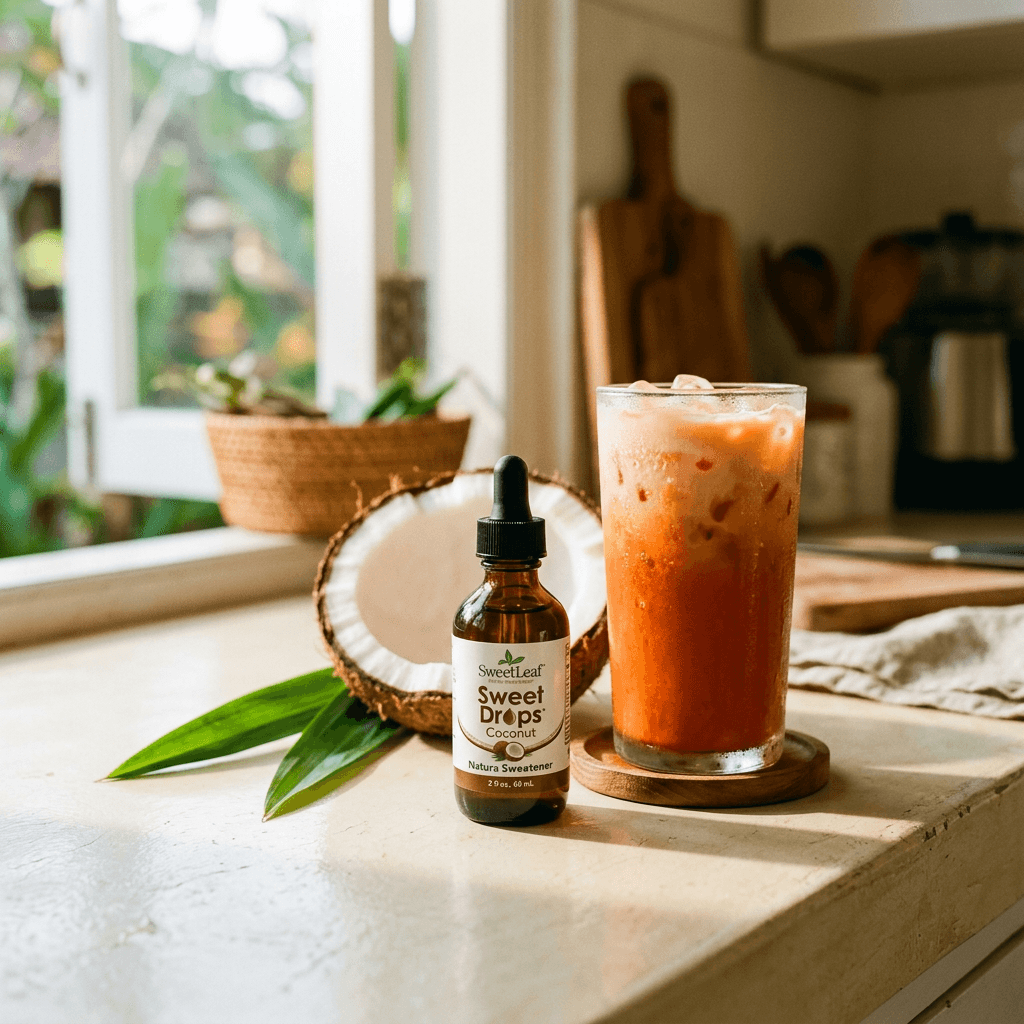
This is where the coconut drops genuinely surprised me. Traditional Thai iced tea is sweetened with condensed milk, which adds both sweetness and that creamy coconut-adjacent richness. My version — strong brewed Thai tea over ice, a splash of coconut milk, 3 drops of these Sweet Drops — landed closer to the café version than I expected. The drops amplified the coconut milk’s flavor in a way that felt additive rather than artificial. I’ve made this eight times now and the recipe is locked in: brew 8 oz of Thai tea, cool, pour over ice, add 2 tablespoons full-fat canned coconut milk, 3 drops Sweet Drops coconut, stir. Maya’s approval rating: enthusiastic.
Coconut Milk Latte
This is the flagship use case, and it’s mostly excellent with one caveat. Steamed oat milk with 2 shots of espresso, 4 tablespoons coconut milk, 2-3 drops — the coconut comes through clearly, rounds out the espresso’s bitterness, and gives the whole thing that tropical warmth I was chasing from the mall latte. The caveat: I tried it once with 5 drops instead of 3, thinking more would be better. It wasn’t. At 5 drops in 10 oz of liquid, you start to tip into artificial territory — that sunscreen-adjacent quality from the title question makes an appearance. At 2-3 drops, it stays on the right side of that line. Dose discipline is non-negotiable with these.
Smoothies
Frozen mango, banana, coconut water, a handful of spinach, 2 drops coconut Sweet Drops. The drops add a gentle sweetness and a coconut undertone that ties the whole drink together without tasting like you added extract. They played particularly well with the mango — the two flavors lifted each other in a way that felt almost chef-y. In a berry smoothie, the coconut was less dominant but still pleasant. I found them less necessary when I was already using coconut water as the liquid base, since there’s enough natural coconut flavor there. Where they really earn their place is in smoothies built around non-coconut liquids — almond milk, oat milk, regular water.
One Honest Miss: Oatmeal
I tried 2 drops stirred into hot oatmeal with toasted coconut flakes. The flavor dissipated almost entirely in the heat, leaving behind just a faint sweetness. For hot applications, the vanilla drops or the English toffee perform much better — something about the coconut flavor volatile compounds seems more heat-sensitive. Stick to cold or room-temperature drinks.
4. Long-Term Value
At around $9.99 for a 2-ounce bottle and roughly 170 servings per bottle (at 2 drops per serving), you’re paying about $0.06 per serving. Even if you’re heavy-handed like I was during that disastrous 5-drop experiment and you consistently use 4 drops, you’re at $0.12 per drink. Compared to the $7 mall latte that started this whole journey, the math is almost embarrassingly favorable.
The bottle lasts me about five to six weeks with daily use at 3 drops per morning drink, plus occasional smoothie use. That’s roughly 9-10 bottles a year if you’re a daily user, putting annual spend at approximately $90-100. The same habit at a café costs around $2,500 a year. I’ve made my peace with this product economically.
Shelf life is listed at approximately two years from production. The amber glass bottle helps protect against light degradation of the stevia extract. I’ve had previous bottles of SweetLeaf drops that stayed consistent in flavor well past the year mark, so I’m inclined to trust that claim.
The 2-ounce size is highly portable — it travels well, fits in a gym bag, and has never leaked in my experience. For people who want to buy in bulk and reduce per-unit cost, SweetLeaf does offer larger sizes in some flavors, though the coconut variety is most readily available in the 2-ounce format. Buying two or three bottles at once usually qualifies for multi-pack discounts on Amazon, bringing the per-bottle cost down to around $8.50.
5. Final Verdict: 8.7/10
SweetLeaf Sweet Drops Coconut is genuinely one of the better coconut-flavored stevia drops on the market. It’s not perfect — the dose sensitivity requires attention, and the flavor does tip synthetic at higher concentrations — but at the right dosage in the right applications, it delivers a warm, tropical sweetness that holds up in real drinks.
- Taste: 8.5/10 — Clean, round coconut flavor at 2-3 drops; starts reading artificial above 4-5 drops in a small drink. Excellent in cold applications.
- Flavor Accuracy: 8.2/10 — Closer to toasted coconut or coconut cream than fresh raw coconut; pleasant but not photorealistic. Better than most competitors at this price point.
- Value: 9.4/10 — $0.06 per serving makes this one of the most cost-effective ways to add coconut sweetness to drinks. Hard to beat.
- Daily Usability: 9.0/10 — Portable, leak-free dropper, mixes easily into cold liquids, near-zero prep. Fits seamlessly into a morning routine.
- Purity: 8.4/10 — Short ingredient list, water-based, no glycerin or alcohol filler, USDA Organic. “Natural flavors” is the only ambiguity, and it’s a common one.
If you drink coconut milk lattes, Thai iced tea, or tropical smoothies regularly and you’re managing sugar intake, this belongs in your kitchen. Go in knowing the dose ceiling exists and you’ll love it.
6. Tips for Success
Six weeks of testing taught me a few things the label doesn’t tell you.
- Start at 2 drops, not 3. The serving suggestion says 2 drops, and they mean it. Get your baseline there before nudging up. The coconut character is present and pleasantly subtle at 2; 3 is bolder. Past 4, you’re in synthetic territory for most 10-12 oz drinks.
- Fat carries the flavor. These drops perform best when there’s some fat in the drink — full-fat coconut milk, oat milk, even a splash of heavy cream. In plain water, the coconut flavor reads thin and a little artificial. In a fatty base, it blooms.
- Add drops after brewing, not during. For hot tea or coffee, wait until you’ve cooled the drink to at least room temperature or added ice before adding the drops. The coconut volatile compounds are heat-sensitive and will fade significantly in very hot liquids.
- Pair with vanilla. My favorite discovery: 2 drops coconut + 1 drop SweetLeaf vanilla in a coconut milk latte. The vanilla rounds the coconut into something that tastes almost like a real coconut cream cocktail, minus the alcohol and the next-morning regret.
- Store upright, cap tight. The dropper mechanism stays consistent when the bottle is stored upright. Horizontal storage can cause the dropper to draw air instead of liquid after a while.
- Use within 6 months of opening. The two-year shelf life is for sealed bottles. Once opened, the coconut flavor is at its best in the first 6 months; I’ve noticed slight muting of the top notes after that, though it’s still functional well beyond.
7. Pros and Cons Values
Pros
- Authentic-leaning coconut flavor — At the right dose, this is one of the more realistic coconut profiles in the liquid stevia category, closer to toasted coconut cream than artificial flavoring.
- Exceptional cost per serving — At roughly $0.06 per 2-drop serving, daily use for a year costs less than two café coconut lattes.
- Clean ingredient list — Water, organic stevia leaf extract, natural flavors — nothing extraneous, no glycerin filler, no artificial sweeteners hiding in the background.
- Portable and practical design — The 2-ounce amber glass bottle with dropper cap is compact enough for a purse or gym bag and dispenses precisely without dripping.
- Works beautifully in cold drink applications — Thai iced tea, smoothies, iced lattes — the coconut character holds up well in cold and room-temperature drinks where the flavor compounds aren’t volatilized by heat.
Cons
- Dose-sensitive flavor ceiling — The line between “pleasantly tropical” and “synthetic sunscreen” is at around 4 drops in 10-12 oz. Users who prefer stronger sweetness may find themselves in fake-coconut territory before they hit their sweetness target.
- Underperforms in hot applications — The coconut flavor fades significantly in hot tea, hot oatmeal, and hot coffee, making these drops a poor choice for warming drinks where other Sweet Drops flavors excel.
- “Natural flavors” ambiguity — Like most flavored stevia products, SweetLeaf doesn’t disclose what constitutes the natural coconut flavor, which is a limitation for consumers with specific sensitivities or those who want full ingredient transparency.
8. Product Specification
| Attribute | Detail |
|---|---|
| Product Name | SweetLeaf Sweet Drops — Coconut |
| Size | 2 fl oz (60 mL) |
| Servings Per Bottle | Approximately 166 (at 2 drops per serving) |
| Calories Per Serving | 0 |
| Total Carbohydrates | 0 g |
| Total Sugars | 0 g |
| Sweetener Type | Stevia leaf extract (Rebaudioside A) |
| Base Liquid | Water (not glycerin or alcohol) |
| Erythritol-Free | Yes |
| USDA Organic | Yes |
| Non-GMO Project Verified | Yes |
| Gluten-Free | Yes |
| Vegan | Yes |
| Country of Origin | USA |
| Shelf Life (Sealed) | Approximately 2 years from production date |
| Packaging | Amber glass bottle with precision dropper cap |
| Flavor Profile | Coconut (toasted/cream style) |
9. Safety & Third-Party Testing
Stevia as a sweetener has an extensive safety record. The FDA granted stevia high-purity extracts GRAS (Generally Recognized As Safe) status in 2008, and rebaudioside A — the specific glycoside SweetLeaf targets in their extraction — has been reviewed by regulatory bodies in the EU, Australia, and Japan with similar outcomes. For the vast majority of adults, stevia at typical dietary doses presents no meaningful health concern.
SweetLeaf carries USDA Organic certification, which requires third-party auditing of their supply chain and production practices. The Non-GMO Project Verified seal adds another independent verification layer focused specifically on genetic modification status. Both certifications require ongoing audits rather than one-time approval, which adds credibility to the label claims.
For people managing blood sugar — which is often the primary motivation for seeking stevia sweeteners — multiple peer-reviewed studies suggest that steviol glycosides have a negligible effect on blood glucose and insulin levels. This product is a reasonable choice for diabetic management plans, though as with anything, checking with your healthcare provider about your specific situation is always the right call.
The “natural flavors” component is the one area where complete transparency is lacking. Natural coconut flavor can be derived from a range of botanical sources and processed in various ways. SweetLeaf has not published detailed information about the specific origin or processing of their flavor compounds, which is standard industry practice but still a gap for consumers with very specific sensitivities. If you have a known allergy to coconut or tree nuts, consult with your allergist before using this product — “natural flavors” can sometimes involve trace contact with the source ingredient.
The amber glass bottle is a meaningful safety and quality choice. Glass doesn’t leach plasticizers into the product over time the way some plastic containers can, and the amber tint protects the stevia extract from UV degradation. This is a small but real quality signal compared to brands that package liquid drops in clear or white plastic.
10. Compare with Other
The coconut-flavored liquid stevia niche isn’t enormous, but there are a handful of meaningful competitors worth knowing about before you commit.
SweetLeaf Sweet Drops Coconut vs. NOW Foods Better Stevia Coconut
NOW Foods’ version uses a vegetable glycerin base, which adds a slightly syrupy body and a faint sweetness of its own. In a side-by-side test in the same iced latte, NOW’s coconut reads sharper and more synthetic to me — closer to coconut candy flavoring than coconut milk. It’s also slightly less sweet per drop, so you end up using more. SweetLeaf wins on flavor authenticity; NOW wins on price-per-ounce if you buy in bulk.
SweetLeaf Sweet Drops Coconut vs. NuNaturals NuStevia Coconut
NuNaturals uses a blend of stevia and monk fruit in some of their drop lines, which creates a very clean sweetness profile. Their coconut flavor is pleasant but notably subtle — where SweetLeaf gives you 2-3 drops for a full coconut presence, I find NuNaturals requires 4-5 for the same impact. If you have a low tolerance for any stevia bitterness, NuNaturals is worth trying. If you want efficient, present coconut flavor, SweetLeaf is more economical per effective dose.
SweetLeaf Sweet Drops Coconut vs. Omica Organics Coconut Stevia
Omica is a smaller brand with a genuinely impressive flavor profile — their coconut is arguably more nuanced than SweetLeaf’s, with a slight raw-coconut freshness rather than the toasted-cream profile SweetLeaf leans into. The downside is cost: Omica runs significantly higher per ounce and has less consistent retail availability. For a daily driver, SweetLeaf’s combination of quality, availability, and price is hard to beat. For a special occasion or if you’re particularly sensitive to synthetic coconut notes, Omica is worth the premium.
SweetLeaf Sweet Drops Coconut vs. Lakanto Coconut Drops
Lakanto’s drops use monk fruit rather than stevia as the primary sweetener, which eliminates any stevia bitterness concern entirely. Their coconut flavor is mild and slightly sweet with a very clean finish. For users who find stevia’s aftertaste a dealbreaker, Lakanto is the better choice. For everyone else, SweetLeaf’s flavor depth is more interesting and the price point is lower.
11. Where to Buy and Price List
SweetLeaf Sweet Drops Coconut is widely available both online and in specialty grocery stores. Here’s where I’d look, ranked by my personal preference.
Online
| Retailer | Size | Price | Notes |
|---|---|---|---|
| Amazon (ASIN: B08KXMN742) | 2 oz | $9.99 | Subscribe & Save brings it to ~$8.49. Multi-pack of 3 available at ~$26.50. |
| enzostevia.com | 2 oz | $10.49 (use coupon AWESOME for 3% off → $10.18) | Specialty stevia retailer; excellent curation. Coupon AWESOME saves $0.31 per bottle — worth using if you’re ordering multiple products at once. |
| Thrive Market | 2 oz | ~$8.99 (member pricing) | Requires membership. Good value if you’re already a member ordering other items. |
| iHerb | 2 oz | ~$9.49 | Reliable shipping, frequent promotional codes available. |
Retail
Whole Foods Market and Sprouts Farmers Market carry SweetLeaf Sweet Drops in most locations, typically priced at $10.99-$12.99. Natural Grocers and Earth Fare are also reliable retail sources. Standard grocery chains like Kroger and Safeway carry the SweetLeaf line but may not stock the coconut variety specifically — call ahead or check their app before making a trip.
My recommendation for most readers: Amazon Subscribe & Save for the lowest hassle and best regular price, or enzostevia.com with the AWESOME coupon if you’re building out a full stevia pantry and want to support a specialist retailer.
12. People Also Ask
Does SweetLeaf Sweet Drops Coconut taste artificial?
At the recommended dose of 2-3 drops per 10-12 oz of liquid, the coconut flavor is warm and reasonably authentic — closer to coconut cream or toasted coconut flakes than artificial candy flavoring. At higher doses (5+ drops in a small drink), it does tip toward a more synthetic profile, similar to conventional coconut extract. The key is staying within the 2-4 drop range for cold drinks. In hot beverages, the coconut character fades significantly regardless of dose.
Is SweetLeaf Sweet Drops safe for diabetics?
Yes, based on current research. Steviol glycosides — the sweetening compounds in SweetLeaf products — have been shown in multiple studies to have negligible effects on blood glucose and insulin levels at typical dietary doses. The FDA has granted stevia extract GRAS status, and this product contains zero calories and zero carbohydrates per serving. That said, anyone managing diabetes should discuss new sweeteners with their healthcare provider, as individual metabolic responses can vary and some people experience mild digestive effects from high stevia doses.
How many drops of SweetLeaf coconut should I use in coffee?
Start with 2 drops in 8-10 oz of coffee or latte and adjust from there. For most people, 2-3 drops hits the sweet spot of present-but-not-overwhelming coconut sweetness. If you’re building a coconut milk latte, the combination of real coconut milk as the base plus 2-3 drops of the Sweet Drops is more effective than simply loading up on drops in regular milk. Note that the coconut flavor fades in very hot coffee; adding the drops after your espresso has cooled slightly, or to the cold milk before steaming, tends to preserve more of the flavor.
What’s the difference between SweetLeaf Sweet Drops and regular liquid stevia?
Plain liquid stevia — sold by SweetLeaf and other brands under names like “clear stevia drops” or “plain stevia” — contains only water and stevia extract, with no added flavoring. Sweet Drops are the flavored version of the same base product: they include natural flavorings that add specific taste profiles (coconut, vanilla, lemon, etc.) alongside the stevia sweetness. If you only need zero-calorie sweetness without added flavor, plain liquid stevia is slightly more economical and more versatile across applications. If you want flavor and sweetness together in a single addition — especially for drinks that benefit from a coconut profile — Sweet Drops are the more practical choice.
13. SERP
When I searched “sweetleaf sweet drops coconut review,” the top results were a mix of Amazon product listings (with aggregated star ratings in the 4.3-4.6 range), the SweetLeaf brand website’s own product page, and one or two general “best stevia drops” roundup posts that mentioned the coconut flavor briefly without dedicating real space to it. The notable gap I found: there’s almost no content that actually addresses the flavor-authenticity question head-on — the “is this real coconut or sunscreen vibes” question that anyone who’s ever bought a bad coconut extract will immediately want answered. Most existing reviews either repeat the label claims or give vague thumbs-ups. Related searches that surface alongside this query include “sweetleaf sweet drops flavors ranked,” “coconut stevia drops vs coconut sugar,” “best stevia for coconut coffee,” and “does stevia taste like coconut” — all of which point to an audience that’s genuinely curious about the flavor experience rather than just confirming the ingredient list.
14. Top 20 Topics
- Best coconut-flavored stevia drops comparison
- How to make a coconut milk latte with stevia
- SweetLeaf Sweet Drops flavor ranking
- Does stevia taste good in iced coffee?
- Coconut stevia vs. coconut sugar: which is better?
- Zero-calorie coconut sweeteners for keto diet
- Liquid stevia drops for smoothies
- How to sweeten Thai iced tea without sugar
- Natural coconut flavoring without artificial ingredients
- Stevia drops vs. stevia powder: which dissolves better?
- Best sweetener for coconut milk coffee
- SweetLeaf organic stevia review
- Is liquid stevia safe for diabetics?
- How to avoid the bitter aftertaste of stevia
- Monk fruit vs. stevia: which sweetener wins?
- Low-calorie tropical drink recipes
- Best stevia drops for baking (and which ones to skip)
- USDA Organic stevia brands compared
- How many drops of liquid stevia equals one teaspoon of sugar?
- Stevia shelf life: how long do liquid drops last after opening?