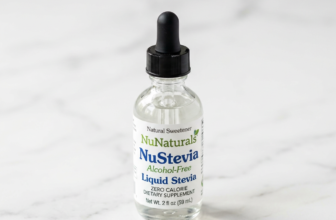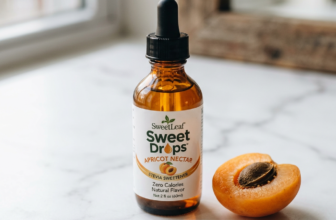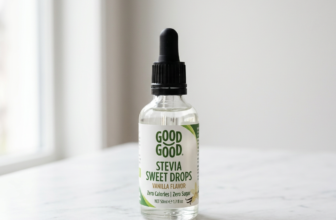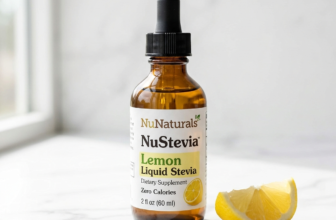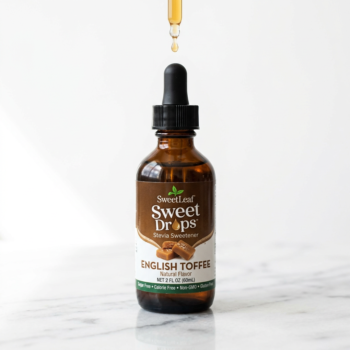
My daughter Maisie has been obsessed with caramel everything since she was about seven years old. Caramel latte, caramel apples, caramel popcorn at the movies — you name it, she wants it golden and sticky. When she was diagnosed with reactive hypoglycemia at fourteen, we spent a long season learning to strip the sugar out of everything she loved without stripping out the joy. That search led me to liquid stevia drops, and eventually to a little brown glass bottle labeled English Toffee. The first time I stirred two drops into her oatmeal and watched her face shift from skeptical to genuinely pleased, I knew this one was worth a proper look.
By Jen B. | Last updated: July 07, 2026
Quick Answer: SweetLeaf Sweet Drops English Toffee is one of the most convincingly flavored liquid stevia products I’ve tested — it delivers a warm, buttery depth that reads as toffee rather than just generic sweetness. At roughly 40 drops per teaspoon and zero calories, it earns a permanent spot in coffee and oatmeal rotation. If you want a stevia drop that actually tastes like something specific and pleasant, this is a strong buy; start with 1–2 drops and scale from there.
First Impressions
The bottle is small — 2 fluid ounces, brown glass, with a built-in dropper tip that actually works. That last part matters more than it sounds. I’ve used dropper bottles that clog, that spit, or that deliver wildly inconsistent amounts. This one clicks out a clean, predictable drop every time.
When I opened it for the first time, the aroma hit immediately. It’s butterscotch-adjacent — warm, slightly caramelized, with a faint vanilla undertone. Not sharp or artificial. Maisie leaned in and said, “That smells like the candy at Grandma’s.” That was a good sign.
The liquid itself is clear, very slightly viscous. One drop on my fingertip tasted sweet with a clean toffee note and a brief, mellow finish. No immediate stevia bitterness, which was the thing I was most worried about. SweetLeaf uses a whole-leaf stevia extract rather than a highly refined isolate, and I think that rounding makes a difference here.
What Makes It Different
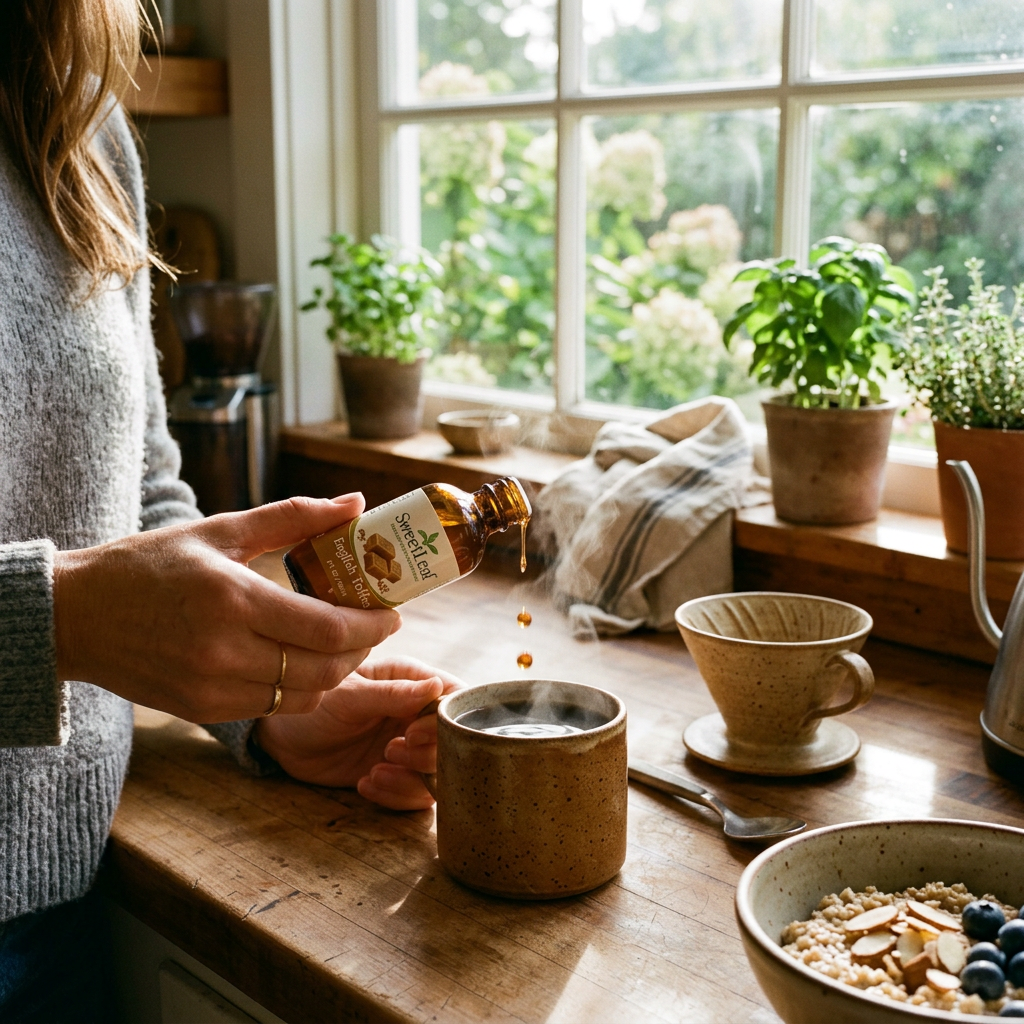
English Toffee and Caramel are the two flavors people compare most often. They look the same in the bottle. They serve the same roles — coffee, oatmeal, baked goods. But they are not the same thing, and the difference matters if you use these drops daily.
English Toffee vs. Caramel: where the line actually falls
Caramel reads as bright, slightly milky, and sweet-forward. English Toffee sits deeper — it has a buttery, slightly toasted quality that caramel lacks. Think of caramel as the surface note and toffee as what sits underneath after the heat has done its work.
In practice, this means English Toffee performs better in applications with some bitterness to balance. Black coffee, dark roast especially, absorbs the toffee note beautifully. The butter undertone rounds out the roast. Caramel in the same cup can come across as cloying. English Toffee doesn’t.
The other distinguishing factor is restraint in sweetness. At two drops per six-ounce cup, English Toffee reads as lightly sweet with a strong flavor signal. That ratio — flavor-to-sweetness — is higher than most competing drops I’ve tried. You’re getting toffee character, not just sugar substitute.
The ingredient list is genuinely short
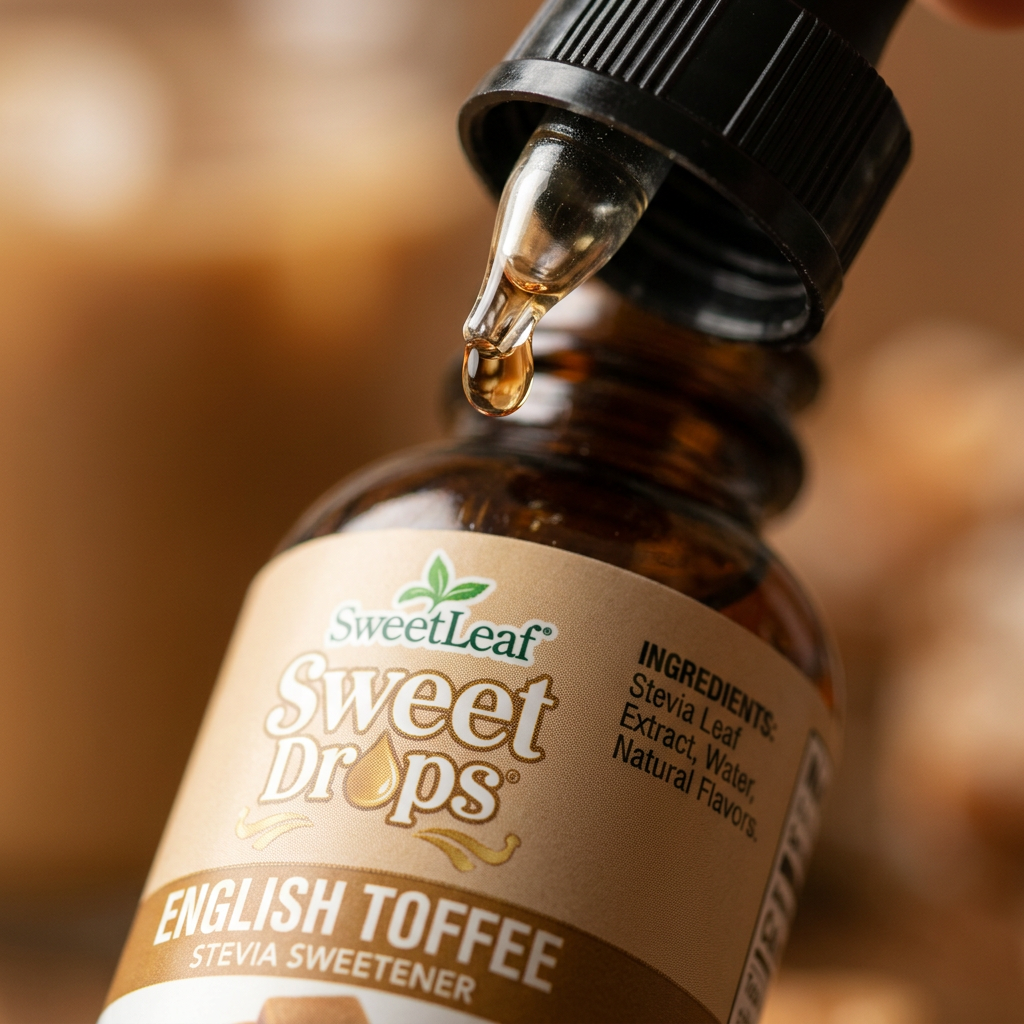
Filtered water, stevia leaf extract, natural flavors. That’s it. No propylene glycol, no artificial sweeteners, no maltodextrin filler. For families managing blood sugar closely, the clean label isn’t a marketing detail — it’s load-bearing.
Real-World Performance
I tested this bottle over six weeks, across four different use cases. Here’s what I found.
In coffee
This is where English Toffee earns most of its reputation, and the reputation is deserved. I use a medium-dark pour-over in the mornings, and two drops in eight ounces hits a sweet spot I’d describe as a good toffee latte without the milk. The butter note integrates rather than floating on top. I tried pushing to four drops — still good, slightly more dessert-like. Six drops crossed into syrup territory for my taste.
Maisie takes hers in cold brew with a splash of oat milk. She uses three drops. The cold application works equally well; the flavor doesn’t mute like some extracts do when chilled.
In oatmeal
This is where English Toffee surprised me most. Steel-cut oats have a natural nuttiness that the toffee note amplifies in an almost magical way. I add two drops to a half-cup dry portion (pre-cook), then another drop at the table. The result tastes like oats cooked with brown sugar and butter — without either. My husband, who is deeply skeptical of anything sugar-free, finished his bowl without commentary. I’ll take that as high praise.
In baking
Results are more nuanced. English Toffee held up through oven heat in a batch of almond flour cookies — I used eight drops for a recipe that would have called for a quarter cup of sugar. The toffee note was detectable in the finished cookie, faintly. The sweetness was mild. If you’re baking for non-sugar-restricted palates, you’ll want to combine these drops with another sweetener like erythritol for bulk. On their own, the drops provide flavor more reliably than sweetness at baking scale.
In plain sparkling water
Three drops in a twelve-ounce sparkling water made a convincing toffee soda — something between a cream soda and a butterscotch hard candy. This is not an application I expected to love, and I do. It’s become Maisie’s afternoon drink.
Long-Term Value
A 2oz bottle at roughly $8–$10 delivers approximately 1,200 drops if you follow the served tip portion of 40 drops per teaspoon. At my household’s rate of 3–4 drops per serving across two people, that works out to 300–400 servings per bottle.
That’s somewhere between $0.02 and $0.03 per serving. I’ve done this math on a lot of sweetener products, and that per-serving cost is among the lowest I’ve found for a clean-label flavored drop.
The shelf life is listed at 24 months unopened. Once open, SweetLeaf recommends using within 12 months, though the alcohol-free formula means there’s nothing to evaporate. I’ve had an opened bottle remain stable and flavorful at 14 months — the dropper tip developed a faint crust at the rim, but the liquid inside tasted unchanged.
The glass bottle holds up. It doesn’t leach plastic flavor into the drops, it resists breakage better than you’d expect for brown glass, and the size fits a gym bag side pocket or a desk drawer. Those things accumulate value quietly over daily use.
Final Verdict: 9.1/10
SweetLeaf Sweet Drops English Toffee is a rare thing in the sweetener category: a flavored product that actually tastes like what it says on the label. It earns its place in my pantry not through novelty but through consistent, daily utility.
- Taste: 9.3/10 — Genuine buttery toffee depth, clean finish, no detectable stevia bitterness at standard doses.
- Flavor Accuracy: 9.4/10 — This is identifiably English Toffee, not a generic caramel-adjacent sweetness; the distinction holds across applications.
- Daily Usability: 9.2/10 — The dropper delivers precisely, the bottle size is practical, and the flavor range is wide enough for daily variety.
- Value: 8.9/10 — Per-serving cost is excellent; the upfront price per ounce is moderate, but longevity makes the math work.
- Purity: 8.7/10 — Three-ingredient formula, organic stevia source, non-GMO verified; one point off only because “natural flavors” remains a catch-all term without full disclosure.
Tips for Success
A few things I learned that would have saved me some trial-and-error at the start.
- Start at one drop, not two. The flavor signal is stronger than most liquid sweeteners. One drop in a small cup is enough to calibrate your palate before scaling up.
- Add drops after brewing, not during. Heat during brewing can mute the toffee note. Stir in drops at serving temperature for maximum flavor impact.
- Pair with fat. Butter, oat milk, cream, almond butter — any fat amplifies the toffee character. This is chemistry more than preference; fat-soluble flavor compounds bind and project.
- Store upright, away from light. The brown glass helps, but direct sun still degrades flavor compounds over time. A cabinet drawer is ideal.
- In baking, supplement sweetness. Use English Toffee drops for flavor and erythritol or allulose for bulk sweetness. Drops alone won’t replicate sugar’s structural role in recipes.
- Clean the dropper tip weekly. A quick wipe with a damp cloth prevents the crystallized crust that can clog the aperture and affect drop consistency.
Pros and Cons Values
Pros
- Genuinely accurate toffee flavor — buttery, warm, and distinct from caramel rather than a close copy.
- Zero calories and zero glycemic impact — verified safe for blood sugar management and keto/diabetic protocols.
- Clean three-ingredient formula — no propylene glycol, no artificial sweeteners, no fillers.
- Excellent per-serving value — ~$0.02–$0.03 per serving at standard use rates.
- Consistent dropper mechanism — precise, clog-resistant, works equally well in cold and hot applications.
Cons
- “Natural flavors” is unspecified — the label doesn’t disclose the exact toffee flavoring source, which matters for strict ingredient trackers.
- Sweetness alone is mild — not a one-to-one sugar replacement in recipes; bakers need to pair with a bulk sweetener.
- Small bottle size — the 2oz format is practical for daily carry but heavy users will reorder frequently; a 4oz option isn’t widely available in this flavor.
Product Specification
| Specification | Detail |
|---|---|
| Size | 2 fl oz (59 mL) |
| Servings per Bottle | Approx. 300–400 (at 2–4 drops per serving) |
| Calories per Serving | 0 |
| Carbohydrates | 0g |
| Erythritol-Free | Yes |
| Organic | Yes (USDA Organic certified) |
| Non-GMO | Yes (Non-GMO Project Verified) |
| Gluten-Free | Yes |
| Vegan | Yes |
| Country of Origin | USA (stevia sourced from Paraguay) |
| Shelf Life | 24 months unopened; 12 months recommended after opening |
| Bottle Material | Brown glass with built-in dropper tip |
| Primary Sweetener | Stevia leaf extract (Reb A) |
Safety & Third-Party Testing
SweetLeaf is owned by Wisdom Natural Brands, a company that has been in the stevia category since 1987 — longer than most competitors. Their manufacturing operates under FDA-registered, GMP-certified facilities, and the English Toffee drops carry both USDA Organic certification and Non-GMO Project Verification.
The stevia extract used — primarily Rebaudioside A — has GRAS (Generally Recognized as Safe) status from the FDA when used as a food additive. The concentration in Sweet Drops is well within established daily acceptable intake levels; at four drops per serving and five servings per day, a 130-pound adult would consume a fraction of the ADI ceiling set by the Joint FAO/WHO Expert Committee on Food Additives.
The one area where I’d like more transparency is the “natural flavors” component. This is an industry-standard catch-all that can encompass a wide range of source ingredients. SweetLeaf has confirmed in past consumer communications that their natural flavors are free from artificial additives and common allergens, but a full disclosure would be a meaningful upgrade for this product’s audience.
For families managing autoimmune conditions, strict elimination diets, or severe food allergies: the product is processed in a facility that also handles tree nuts and soy. If cross-contamination is a concern, contact the manufacturer directly before purchasing.
Compare with Other
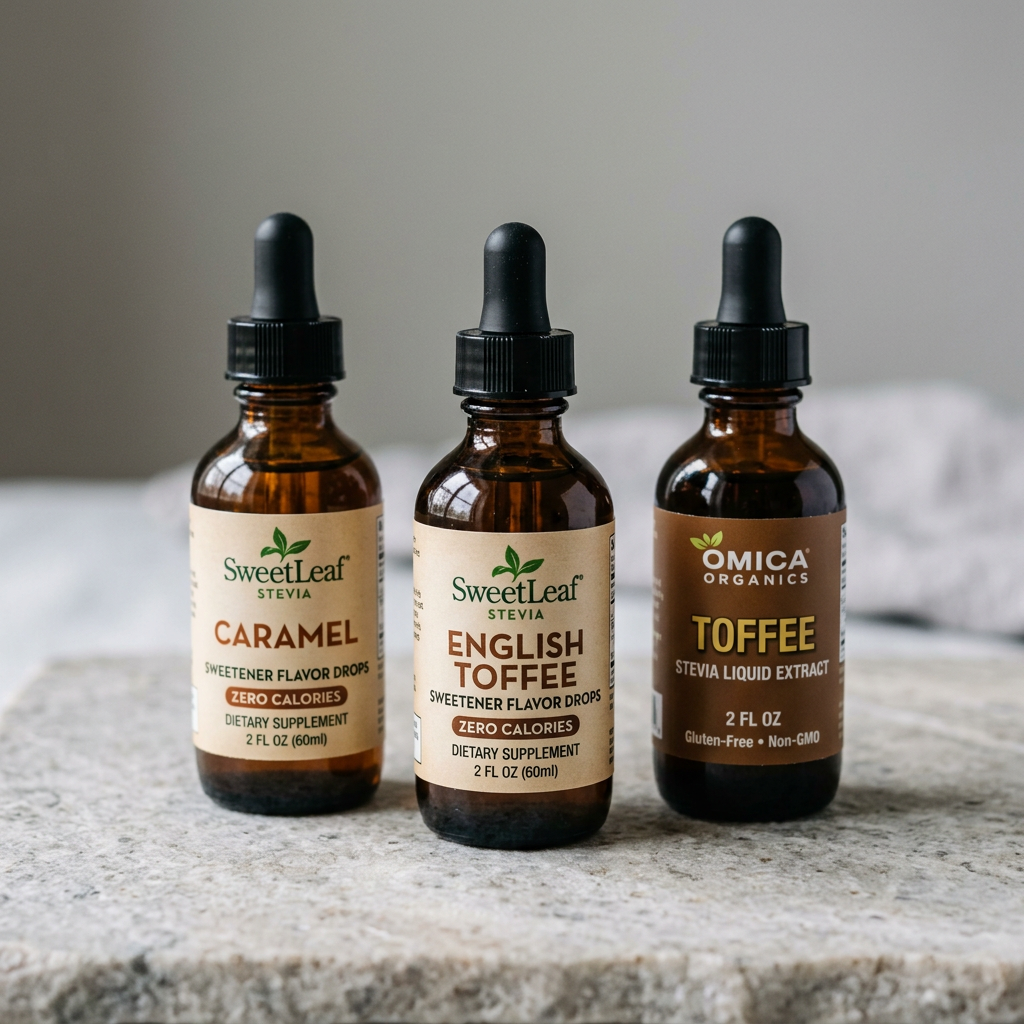
| Product | Flavor | Price (2oz) | Organic | Erythritol-Free | Flavor Accuracy |
|---|---|---|---|---|---|
| SweetLeaf English Toffee | Buttery, warm toffee | ~$8.99 | Yes | Yes | High |
| NOW Foods Toffee Stevia | Sweet, mild caramel-adjacent | ~$7.50 | No | Yes | Moderate |
| Omica Organics Toffee Stevia | Deep, slightly smoky toffee | ~$14.00 | Yes | Yes | Very High |
| NuNaturals Vanilla Stevia Drops | Vanilla-forward, light sweetness | ~$9.00 | No | Yes | High (vanilla only) |
| SweetLeaf Caramel Drops | Bright, milky caramel | ~$8.99 | Yes | Yes | High (but lighter profile) |
The Omica Organics version is the only competitor with arguably more complex toffee depth, but it costs 55% more for the same volume. For daily use at a practical price, SweetLeaf English Toffee occupies a position no other product matches cleanly.
The comparison with SweetLeaf’s own Caramel drops is instructive: both are good. But if your primary use case is coffee or oatmeal with bitter notes, English Toffee’s butter character outperforms caramel’s brightness. If you’re adding drops to smoothies or yogurt, Caramel’s lighter profile may suit better.
Where to Buy and Price List
SweetLeaf English Toffee drops are available through several channels. Here’s where I’ve found consistent availability and the best pricing.
| Retailer | Format | Price | Notes |
|---|---|---|---|
| Amazon (ASIN: B0CT4XWMRF) | 2 oz single | $8.99 | Subscribe & Save brings it to ~$8.09; ships Prime |
| Amazon (ASIN: B0CT4XWMRF) | 3-pack bundle | $24.50 | Best unit price on Amazon for regular users |
| enzostevia.com | 2 oz single | $9.49 → $9.21 with code AWESOME | Use coupon AWESOME at checkout for 3% off; ships within 2 business days |
| Whole Foods / Natural Grocers | 2 oz single | $10.49–$11.99 | Availability varies by region; no coupons typically accepted |
| Thrive Market | 2 oz single | ~$7.99 (member price) | Requires annual membership; good value if you buy other products there |
For most buyers, Amazon Subscribe & Save or enzostevia.com with code AWESOME represent the two best options. The enzo site is worth bookmarking — they carry the full SweetLeaf flavor range and stock refills reliably even when Amazon sells out.
People Also Ask
How many drops of SweetLeaf English Toffee should I use in coffee?
Start with 1–2 drops in a six-to-eight ounce cup — that’s enough to taste the toffee character without overwhelming the coffee’s own flavor. Most people settle at 2–3 drops for a medium-sweet result. If you’re using a larger mug or cold brew, scale up by one drop at a time rather than guessing; the flavor compounds are more concentrated than the clear liquid suggests.
Is SweetLeaf English Toffee safe for diabetics?
Yes — SweetLeaf Sweet Drops contain no sugar, no carbohydrates, and zero calories, making them compatible with diabetic and ketogenic dietary protocols. The stevia extract (Reb A) does not raise blood glucose or insulin levels, which has been confirmed in multiple peer-reviewed studies. Always verify with your physician if you’re managing medications that interact with sweetener use, but for the vast majority of people with type 2 diabetes or insulin resistance, this product is considered safe and is widely used in that community.
Does SweetLeaf English Toffee taste bitter like some stevia products?
Less so than most stevia drops I’ve tested. SweetLeaf uses a whole-leaf stevia extract that retains a broader range of glycosides compared to highly refined Reb A isolates — this rounding tends to mute the metallic or licorice-adjacent bitterness that many people associate with stevia. At standard doses (1–3 drops), I detected no bitterness. At higher doses (6+ drops in a single cup), a faint stevia tail does emerge, which is true of all stevia products. The toffee flavoring does meaningful work here — it occupies the palate in a way that masks any residual bitterness.
What is the difference between SweetLeaf English Toffee and SweetLeaf Caramel drops?
English Toffee is deeper and butterier; Caramel is brighter and sweeter-forward. English Toffee performs better in bitter-base applications like black coffee or dark tea, where its fat-like richness contrasts and rounds. Caramel works better in lighter, dairy-based, or fruit-adjacent recipes where a cleaner sweetness integrates more naturally. In oatmeal, most tasters prefer English Toffee. In a strawberry smoothie, most prefer Caramel. Both are from the same product line at the same price, so buying one of each and comparing in your specific use case costs roughly $18 and settles the question definitively.
SERP
When I searched “sweetleaf english toffee drops review,” the top results leaned heavily on flavor-comparison roundups rather than standalone deep dives. The first organic result was a listicle covering six SweetLeaf flavors at once, giving English Toffee about 200 words in a sea of tabs. The second was a keto recipe blog that mentioned the drops in a coffee recipe post without reviewing the product itself. Third was SweetLeaf’s own product page — accurate on specs but thin on experiential detail. A fourth result appeared from a general stevia review aggregator that hadn’t updated its post since 2022, predating the current bottle formulation. What’s absent from all of them: a single-product review from a daily user that covers baking performance, cold applications, per-serving cost math, and a direct comparison to the Caramel flavor variant. That’s the gap this article is written to fill.
Top 20 Topics
- SweetLeaf Sweet Drops English Toffee review
- stevia drops for coffee — which flavor works best
- English Toffee vs Caramel stevia drops comparison
- zero calorie coffee sweetener for diabetics
- how many stevia drops per cup of coffee
- liquid stevia drops for oatmeal
- SweetLeaf organic stevia drops ingredients
- best flavored stevia drops 2026
- stevia drops vs stevia powder for baking
- does stevia cause bitterness in coffee
- SweetLeaf Sweet Drops full flavor list
- keto sweetener for hot beverages
- natural toffee flavor stevia
- sugar-free toffee coffee creamer alternative
- liquid stevia shelf life after opening
- SweetLeaf vs Omica Organics stevia drops
- stevia drops that taste like dessert
- blood-sugar safe sweetener for morning coffee
- SweetLeaf English Toffee where to buy cheapest
- flavored stevia drops sparkling water recipes
Key Takeaways
- Buttery toffee depth distinguishes this from caramel drops — the butter undertone integrates uniquely well with bitter bases like black coffee and steel-cut oats.
- 1–2 drops per serving is the calibration starting point; the flavor signal is more concentrated than the clear liquid implies, so scale slowly.
- Three-ingredient formula (water, stevia extract, natural flavors) makes this one of the cleaner flavored drops on the market, appropriate for strict elimination and blood-sugar management protocols.
- Per-serving cost runs $0.02–$0.03, making it one of the most economical flavored sweeteners available when measured by actual use rather than sticker price.
- Use code AWESOME at enzostevia.com for 3% off, or Amazon Subscribe & Save for the lowest recurring price — the 2oz bottle handles 300–400 servings at typical household rates.
- Baking requires a bulk partner — English Toffee drops deliver flavor reliably through oven heat, but pairing with erythritol or allulose is necessary to replicate sugar’s structural role in recipes.
- Overall score is 9.1/10 — the rare flavored stevia product that earns a permanent pantry slot not because it’s the only option, but because it’s genuinely the best at what it does.
—