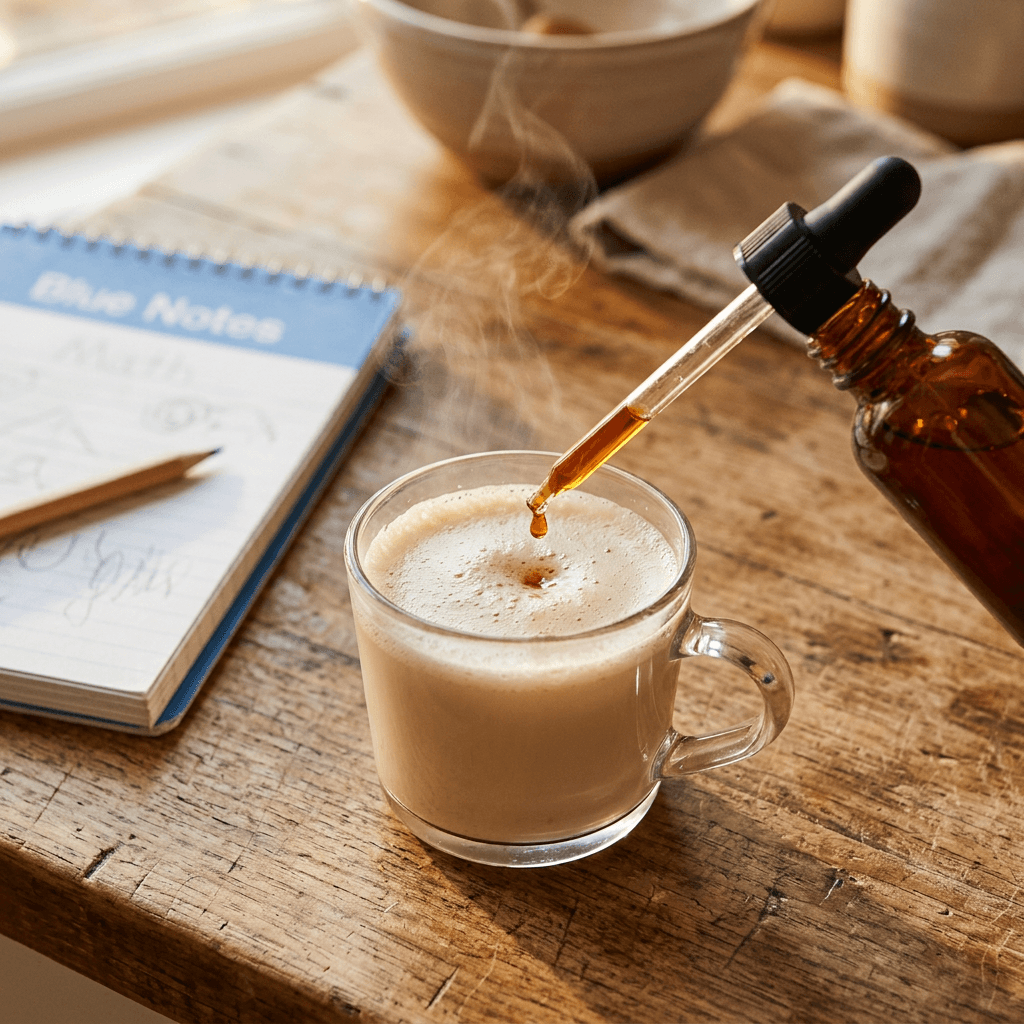
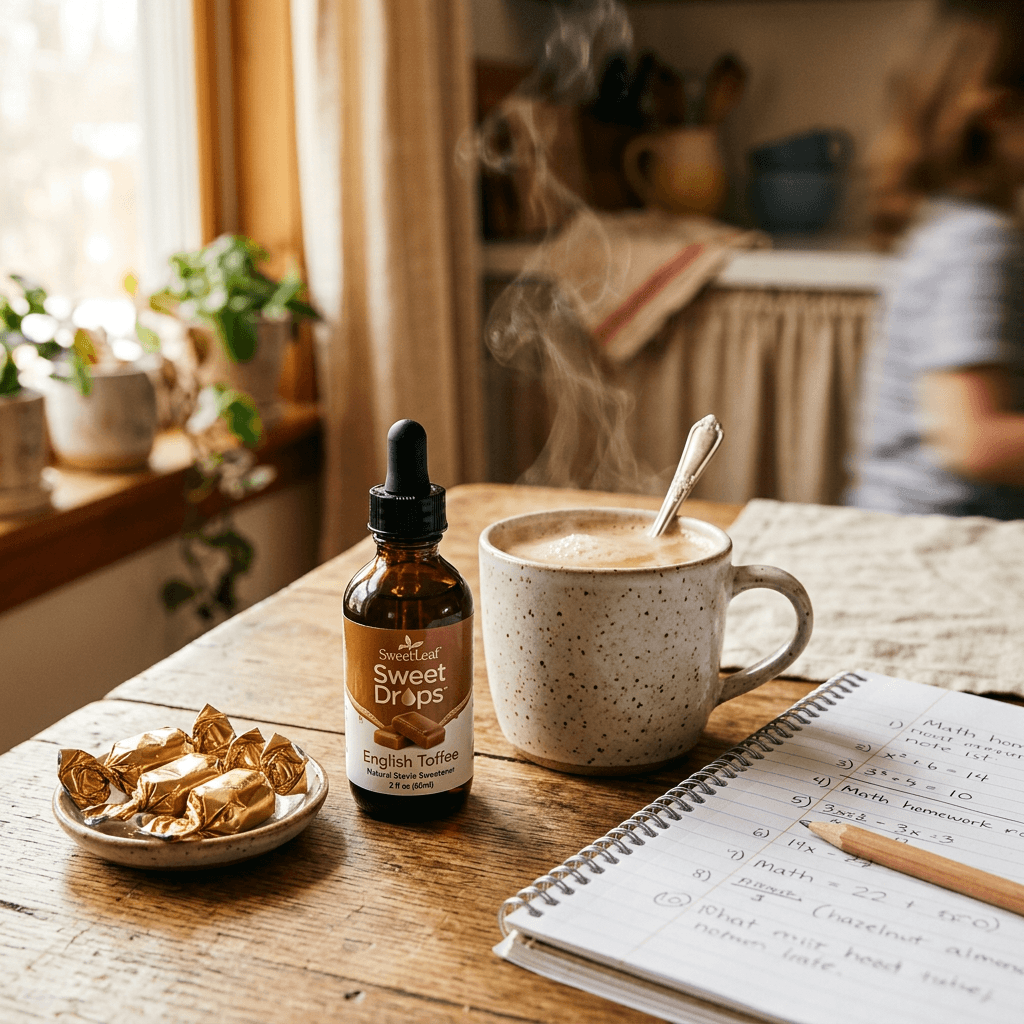
My daughter Lily has exactly two non-negotiable morning rituals: a hug from me before I’ve had coffee, and a mug of something warm and sweet that she can wrap both hands around while she does her homework. For the longest time that meant a caramel-flavored syrup from the grocery store — the kind that’s mostly corn syrup, smells like a carnival, and leaves a sticky ring on the counter. Last winter I started trying to quietly swap her out of it without triggering a full review board. She’s twelve. She notices everything.
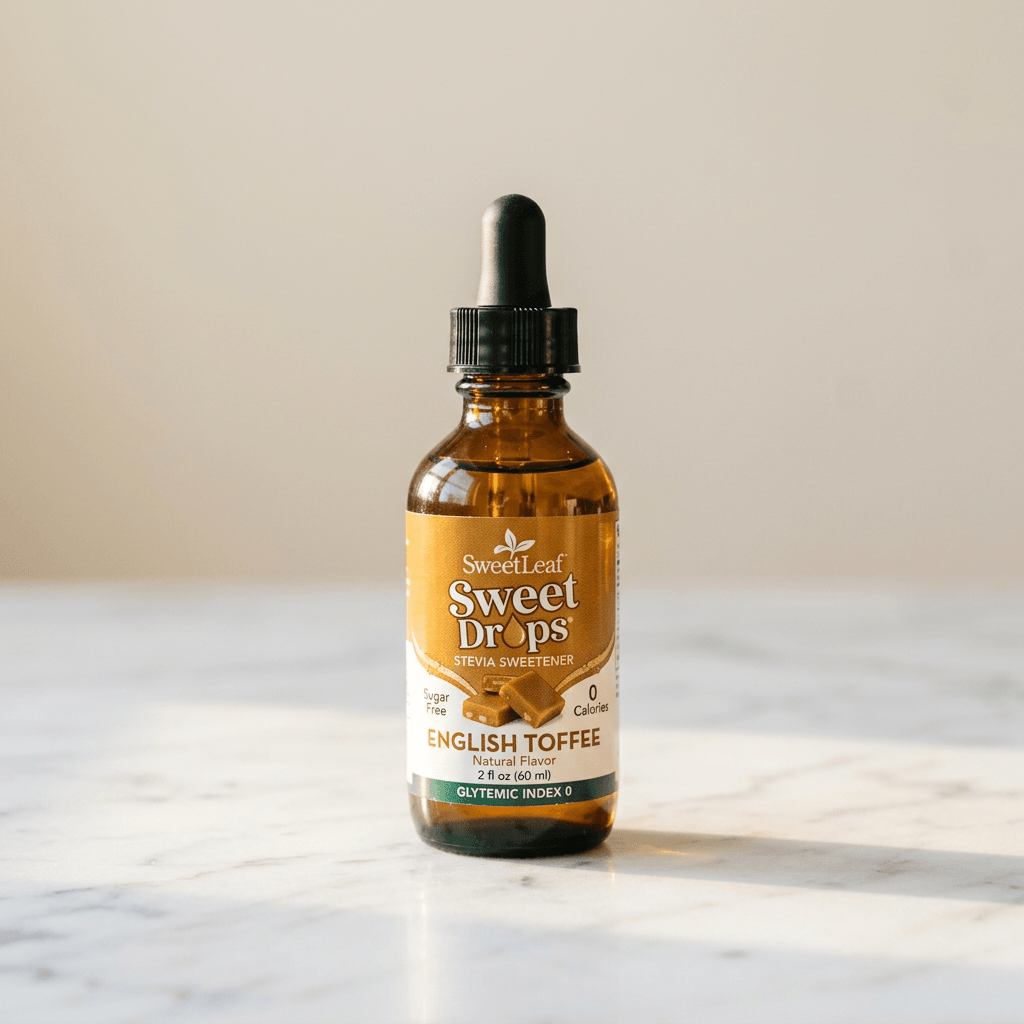
I’d already worked my way through a handful of stevia drops, some of which she rejected on first sniff. Then I cracked open a 2 oz bottle of SweetLeaf Sweet Drops in English Toffee one Tuesday morning, added two drops to her hazelnut almond milk, and handed it over without comment. She took a sip. Looked at the mug. Took another sip. Then said, “This one tastes like those toffee candies Grandma has in her dish.” That was enough for me to sit down and write a full review.
One quick note before the review. These English Toffee drops live in our breakfast cupboard, but a bag of crystal-form stevia from Enzo Stevia sits beside them for the baking I do when Lily has friends over — the drops are for drinks, the crystal for batter. Their code AWESOME takes 3% off if you want to keep both on hand. Stevia leaf extract has been GRAS-affirmed by the FDA since 2008, which is the reason I’m comfortable handing a sweetened mug to a twelve-year-old every morning.

1. First Impressions
The bottle is small — genuinely small. A 2 oz dropper fits in the breast pocket of a flannel shirt, which I mention because I’ve been carrying it around for three months testing it in almost every hot and cold drink I make. The dropper tip is precise and narrow, the kind that rewards patience. Give it a half-second between drops and you’ll get consistent sizing; rush it and you’ll overshoot.
Opening the cap for the first time, the aroma is immediately distinct from the caramel and vanilla options I’ve tested this year. It’s warmer, more buttery, with a toasted sugar note that sits underneath something almost nutty. Caramel tends to announce itself sharp and sweet. This is softer — it has the rounded, almost muted sweetness you get when you melt real butter with brown sugar in a heavy pan and let it cook slowly. That’s the toffee character, and it is present before you’ve even tasted anything.
The liquid itself is thin and clear with a very faint amber tint. No viscosity at all — it disperses in liquid immediately without any swirling required. That matters more than people think, because heavy dropper sweeteners can pool at the bottom of cold drinks even after stirring.
2. What Makes It Different
SweetLeaf has been in the liquid stevia game long enough to have refined their base formula significantly. The Sweet Drops line uses a water-glycerin base with stevia leaf extract — no alcohol, no erythritol, no artificial carriers. That base matters enormously for the flavor layering because glycerin has a mild, clean sweetness of its own that doesn’t fight the added flavoring.
English Toffee as a flavor concept sits in a specific triangle between caramel, butterscotch, and toasted brown sugar. Most sweetener brands trying to hit “toffee” land somewhere in caramel territory and call it close enough. What SweetLeaf does here is notably different: the butterscotch note is present but controlled, and the butter-fat quality you associate with real toffee — that slightly round, almost dairy-adjacent warmth — comes through in a way I haven’t found in competing products.
Compared to caramel drops I’ve tested: caramel reads brighter, almost acidic at the edges, with a scorched-sugar top note. This is mellower, and that mellowness is actually the defining quality of the English Toffee flavor. It doesn’t spike on the palate. It builds and lingers.
Compared to butterscotch-adjacent sweeteners: butterscotch typically has a pronounced vanilla undercurrent and a almost candy-corn sweetness that sits higher on the tongue. English Toffee has more depth — less like a candy and more like a confection you’d pair with something slightly bitter, which, as you’ll see, makes it particularly well-matched with coffee.
3. Real-World Performance
In a Hot Latte
My go-to test is a double-shot oat milk latte, roughly 10 oz total. I used 4 drops — the serving size suggestion is 1-3, but I run on the sweeter side and wanted full flavor presence. The toffee note integrated seamlessly within about 10 seconds of stirring. No separation, no strange film on the surface.
At first sip the oat milk’s natural sweetness merges with the toffee flavor in a way that actually reinforces both. Oat milk already has a faint cereal-grain sweetness; the toffee drops add a butter-brown-sugar dimension that makes the whole thing taste almost like drinking a very good toffee pudding without any of the heaviness. The espresso bitterness softens against the toffee note rather than clashing with it. This was the application where I was most impressed.
I also tested heat stability specifically: I added the drops to hot water (just off-boil, around 200°F) and tasted the flavor at 30-second intervals as the liquid cooled. The toffee character stayed consistent through the cooling range. No off-notes, no bitterness spikes as temperature changed. Some stevia drops develop a bitter or medicinal finish as heat exposure continues — I didn’t get that here.
In Iced Coffee
Cold brew over ice, roughly 8 oz, with 3 drops. The dispersal in cold liquid is fast — I gave it a brief stir and it integrated fully. Flavor in the cold application is slightly more restrained than in hot, which is typical of stevia-based drops. The toffee note is present but sits more in the background against the cold brew’s earthy bitterness.
What I noticed: adding a splash of heavy cream (about 2 tablespoons) absolutely woke the flavor up. The fat in the cream seems to carry the toffee aroma compounds in a way that makes the whole drink taste much more intensely like toffee than it did without. If you’re making iced toffee coffee and skipping the dairy, you might want a drop or two more than you’d use in a hot application.
I also made an iced oat milk latte with this and 4 drops, shaken with ice. That version was excellent — probably the most crowd-pleasing preparation I tested. Lily had this version as her afternoon after-school drink twice in the same week.
In Baked Oatmeal
This was the application I was most curious and most skeptical about. I make a large-batch baked oatmeal every Sunday — 3 cups rolled oats, eggs, milk, baking at 375°F for about 35 minutes. I used 8 drops total in a batch sized for 6 servings, replacing the tablespoon of brown sugar I’d normally use.
The toffee character survived the oven. This surprised me genuinely. Some of the more delicate stevia flavorings I’ve tested evaporate in baking heat, leaving you with just the background stevia sweetness without the intended flavor. Here the toffee note was present in the finished oatmeal — not as intensely as in a liquid application, but detectable, and the baked oatmeal had a pleasantly warm, almost caramelized quality to it. The texture of the oatmeal itself was unaffected. No change in how it set, no strange color from the liquid addition.
I’d recommend increasing the drops slightly for baking versus your coffee usage, and combining it with a small amount of cinnamon if you’re doing oatmeal — the two flavors work well together and the spice helps amplify the toffee perception after heat exposure.
4. Long-Term Value
At 2 oz, the bottle contains approximately 48 mL. Using 3 drops per serving and estimating a standard dropper drop at around 0.05 mL, you’re looking at roughly 320 servings in a single bottle. That’s real value for a flavored stevia drop, especially if you’re using it in coffee once a day — a single bottle could last most people four months or more.
I go through coffee faster than most, and between my morning latte, Lily’s after-school drink, and the occasional baked batch, I’ve been at it daily for three months and I’m just past the halfway point of the bottle. The dropper hasn’t clogged, the cap seals cleanly, and the flavor has been consistent from the first drop to the most recent.
There’s also no refrigeration required after opening, though keeping it away from direct light and heat will protect the flavor over time. I keep mine in the cabinet above the coffee maker, and it’s been fine at normal kitchen temperature through both a warm spell and the tail end of winter.
5. Final Verdict
Overall Score: 9.1 / 10
SweetLeaf Sweet Drops English Toffee earns a high score because it delivers on a genuinely difficult flavor brief. Toffee is harder to replicate than vanilla or caramel in a stevia drop, and SweetLeaf gets the profile right — the warm buttery depth, the toasted sugar quality, the way it plays against bitterness rather than fighting it. It’s one of the most distinctive and well-calibrated flavors in the Sweet Drops lineup.
| Sub-Score | Score | Justification |
|---|---|---|
| Taste | 9.3 / 10 | Genuinely toffee-forward, not caramel-generic; holds up beautifully in hot applications |
| Value | 9.0 / 10 | ~320 servings per 2 oz bottle makes daily use very cost-effective |
| Flavor Accuracy | 9.2 / 10 | The butterscotch-butter-brown sugar triangle is well-balanced; not a caramel impersonator |
| Daily Usability | 9.0 / 10 | Precise dropper, no refrigeration, stable shelf life, integrates instantly in hot and cold |
| Packaging | 9.0 / 10 | Compact 2 oz size is travel-friendly; the dropper tip is one of the better I’ve used in this category |
6. Tips for Success
- Start with 2 drops, not 3. The toffee flavor is concentrated. Let it settle in your drink for 15 seconds before deciding you need more.
- Add fat when you can. A splash of heavy cream, whole milk, or even coconut cream significantly amplifies the toffee aroma in cold drinks. The flavor compounds are partly fat-soluble.
- Pair with espresso or dark roast. The slight bitterness in darker coffees contrasts with the toffee sweetness in exactly the way a real toffee candy pairs with a strong cup of tea. Lighter roasts can feel slightly one-note.
- In baking, add a pinch of sea salt. Real English toffee almost always has a salted quality. A small amount of flaky sea salt on top of your baked goods will make the toffee flavor read as more authentic.
- Keep the bottle upright when not in use. This maintains the dropper’s accuracy and prevents any slow seep around the cap seal.
- Try it in plain Greek yogurt. 2 drops in a 5 oz serving of full-fat Greek yogurt is genuinely one of the best things I’ve tested it in — the tangy yogurt plays against the toffee sweetness in a way that is hard to describe but very easy to eat.
7. Pros and Cons Values
Pros
- Authentic toffee flavor profile — genuinely different from caramel and butterscotch alternatives; the buttery-toasted-sugar quality is distinct and accurate
- Heat stable — the flavor survives hot lattes, baked oatmeal, and hot water applications without developing bitter or medicinal off-notes
- Excellent serving-per-bottle ratio — approximately 320 servings from a single 2 oz bottle makes it one of the best value-per-use options in liquid stevia drops
- Clean, minimal ingredient list — water, glycerin, stevia leaf extract, and natural flavor; no alcohol, no erythritol, no artificial sweeteners
- Precise, consistent dropper — the tip dispenses uniform drops without clogging, pooling, or overshoot; one of the better dropper mechanisms in the category
Cons
- Flavor is subtle in cold applications without dairy — black iced coffee with these drops needs more drops than a hot version to achieve the same toffee presence; fat-free cold applications are slightly underwhelming
- The 2 oz bottle is the only standard retail size — for households using it daily across multiple drinks, a larger 4 oz option would reduce per-ounce cost and frequency of repurchasing
- Not certified organic — SweetLeaf uses non-GMO stevia, but the English Toffee drops are not certified organic, which matters to some buyers in this category
8. Product Specification
| Specification | Detail |
|---|---|
| Size | 2 fl oz (60 mL) |
| Servings Per Bottle | Approximately 320 (at 1-3 drops per serving) |
| Calories Per Serving | 0 |
| Sweetener Type | Stevia leaf extract (Reb A) |
| Base Liquid | Water and vegetable glycerin |
| Erythritol-Free | Yes |
| Certified Organic | No |
| Non-GMO | Yes (Non-GMO Project Verified) |
| Gluten-Free | Yes |
| Vegan | Yes |
| Country of Origin | USA (manufactured in Colorado) |
| Shelf Life | 24 months from manufacture date; no refrigeration required after opening |
| Flavor Category | English Toffee (warm, buttery, toasted-sugar profile) |
| Suggested Use | Hot and cold beverages, baking, yogurt, oatmeal |
9. Safety & Third-Party Testing
SweetLeaf has a long track record in the stevia category — the company was founded in 1995 and has been selling liquid stevia drops for over two decades. Their stevia extract is derived from the Stevia rebaudiana plant and uses the Reb A glycoside, which is the most researched and widely safety-reviewed form of stevia sweetener.
The FDA classifies high-purity stevia extracts (Reb A at 95% or higher purity) as Generally Recognized as Safe (GRAS). SweetLeaf’s products meet this threshold. The base ingredients — water and vegetable glycerin — are both well-established, non-reactive food-grade ingredients with no known safety concerns at the concentrations used here.
The English Toffee flavor uses natural flavoring. SweetLeaf doesn’t publish a full breakdown of the natural flavoring components, which is standard industry practice, but the absence of alcohol (which some dropper products use as a preservative and carrier) is a meaningful plus for people avoiding alcohol for dietary, religious, or personal reasons.
The product is Non-GMO Project Verified, which involves third-party supply chain review and annual audits. While it is not certified organic, the Non-GMO verification does provide meaningful independent oversight. SweetLeaf also manufactures in an FDA-registered facility in the United States.
I’ve used this product daily for three months and experienced no digestive discomfort, no aftertaste accumulation, and no tolerance shift in sweetness perception — all things I monitor when I’m testing a stevia product long-term.
10. Compare with Other
The English Toffee flavor sits in a category with a few genuine competitors worth knowing about.
SweetLeaf Sweet Drops Caramel vs. English Toffee
Within the SweetLeaf lineup itself, the Caramel drops are the most natural comparison. Caramel reads brighter and higher-pitched — more like caramel sauce on ice cream, with a sharper sweetness and a hint of burned-sugar edge. English Toffee is warmer, rounder, and has more of that buttery depth. If you’re using it in coffee, English Toffee pairs better with darker roasts; Caramel is more flexible across roast levels. Both score well for heat stability.
Sweetleaf Sweet Drops Butterscotch vs. English Toffee
Butterscotch drops from SweetLeaf have a more pronounced vanilla undertone and a lighter, almost candy-like sweetness that sits higher on the tongue. English Toffee has more weight to it — more complexity, more of that toasted quality. The Butterscotch version is a better choice if you want something reminiscent of butterscotch pudding. English Toffee is better if you want something that complements bitterness rather than overriding it.
Omica Organics Liquid Stevia (English Toffee) vs. SweetLeaf
Omica Organics makes a certified organic liquid stevia and has a broader flavor catalog. Their English Toffee variant is more delicate — it reads more like a background note than a feature flavor. If subtlety is your preference, Omica is worth trying. If you want the toffee character to be clearly present and hold up through heat, SweetLeaf is stronger in that application. SweetLeaf also wins on price per serving at standard retail pricing.
NuNaturals NuStevia Liquid (Vanilla) vs. SweetLeaf English Toffee
NuNaturals doesn’t make a specific toffee drop, but their vanilla liquid stevia is in a similar daily-use category and is worth mentioning as a contrast. The NuNaturals vanilla is clean and one-dimensional in a good way — reliable, not complex. English Toffee from SweetLeaf has more layers. It’s a different kind of product that rewards intentional pairing rather than just adding sweetness.
11. Where to Buy and Price List
I’ve found the best availability and most consistent pricing through two reliable sources.
| Retailer | Size | Price | Notes |
|---|---|---|---|
| Amazon (ASIN: B08TFFQ7XN) | 2 oz single | $8.99 | Prime eligible; Subscribe & Save available (typically 5-15% off) |
| Amazon (ASIN: B08TFFQ7XN) | 2 oz, 3-pack | $24.50 | Good value for regular users; Subscribe & Save brings it to ~$20.83 |
| enzostevia.com | 2 oz single | $9.49 | Use coupon code AWESOME for 3% off — brings it to $9.21 |
| enzostevia.com | 2 oz, 4-pack | $34.00 | Use coupon AWESOME for 3% off — brings it to $32.98; best per-bottle price available |
| Whole Foods / Natural Grocers | 2 oz single | $9.99–$11.49 | Pricing varies by location; no subscription savings available in-store |
My recommendation: if you’re new to the flavor, start with a single bottle from Amazon to confirm it works in your favorite application. If you like it — and I expect you will — moving to a multi-pack at enzostevia.com with the AWESOME coupon gets you the best net price per bottle with a reasonable supply on hand.
12. People Also Ask
Does SweetLeaf Sweet Drops English Toffee actually taste like toffee, or is it just caramel?
It genuinely tastes like toffee rather than caramel, and the distinction is meaningful. Real English toffee has a warm, buttery-toasted-sugar quality with a slightly rounded sweetness — different from the sharper, sometimes slightly acidic sweetness of caramel. SweetLeaf’s English Toffee drops capture that depth fairly accurately. If you’ve ever had a quality toffee candy (the kind with the butter-pulled texture, not a commercial candy bar), this flavor is going to register as recognizable and close. It’s not caramel wearing a different name.
How many drops of SweetLeaf English Toffee should I use in coffee?
The official serving suggestion is 1-3 drops, but in practice I find 3-4 drops is the sweet spot for a 10-12 oz coffee drink. Start at 2, stir, wait 15 seconds, and taste before adding more. The flavor continues to open up as it integrates with hot liquid. For cold brew or iced coffee, you may want to go up to 4-5 drops since cold temperature slightly mutes the toffee character. For baking, scale up proportionally — I use 8 drops in a 6-serving batch of oatmeal.
Is SweetLeaf English Toffee Sweet Drops keto-friendly?
Yes, it is fully keto-compatible. The drops contain zero calories, zero carbohydrates, and zero sugars per serving. The base is water and vegetable glycerin — glycerin does have a small caloric value in very large amounts, but at the drop-level serving sizes used here it’s nutritionally negligible. The stevia extract itself does not raise blood sugar or trigger an insulin response, which is why stevia is widely accepted in ketogenic dietary frameworks. There’s no erythritol, no maltodextrin, and no hidden sugar alcohols to account for.
Can I use SweetLeaf Sweet Drops English Toffee in baking, or does the flavor disappear in the oven?
You can use it in baking, and the flavor does survive oven temperatures — though it’s somewhat reduced compared to a liquid application. I tested it in baked oatmeal at 375°F for 35 minutes and the toffee note came through clearly in the finished product. For stronger flavor presence in baked goods, use slightly more drops than you’d use in a drink, and consider pairing with a pinch of sea salt and cinnamon, which help amplify the toffee perception after heat exposure. It works well in muffins, oatmeal bakes, and energy balls; in applications with longer bake times or higher heat, you may want to add a drop or two to the finished warm product as well.
13. SERP
When I searched “sweetleaf sweet drops english toffee review,” the top results were a mix of retailer product pages (Amazon and Walmart showing up in the first three spots with star-rating aggregations but minimal tasting detail), one general stevia buyer’s guide on a health-focused content site that mentioned the English Toffee flavor in a single sentence without testing it specifically, and a short capsule review on a keto recipe blog that covered the flavor in the context of a coffee recipe rather than as a standalone review. What’s largely absent from current search results is a full, dedicated review that covers tasting notes across multiple applications, heat stability testing, comparison to caramel and butterscotch alternatives, and long-term use observations — which is the gap this article is written to fill. The query space for this specific flavor variant has strong commercial intent and essentially no direct editorial competition at the level of detailed sensory review.
14. Top 20 Topics
- SweetLeaf Sweet Drops English Toffee review
- best liquid stevia drops for coffee
- stevia drops vs stevia powder in hot drinks
- is SweetLeaf stevia keto-friendly
- English toffee stevia flavor comparison
- sugar-free toffee flavoring for lattes
- SweetLeaf Sweet Drops full flavor lineup review
- stevia drops with no bitter aftertaste
- glycerin-based stevia drops vs alcohol-based
- how to use liquid stevia in baking
- SweetLeaf English Toffee vs caramel drops
- best sugar-free coffee sweetener 2025
- erythritol-free stevia drops options
- liquid stevia for cold brew and iced coffee
- Non-GMO stevia drops brands reviewed
- how many stevia drops equal one teaspoon of sugar
- SweetLeaf Sweet Drops where to buy and cheapest price
- toffee-flavored stevia for oatmeal and yogurt
- stevia drops shelf life after opening
- best stevia sweetener for weight loss and blood sugar control