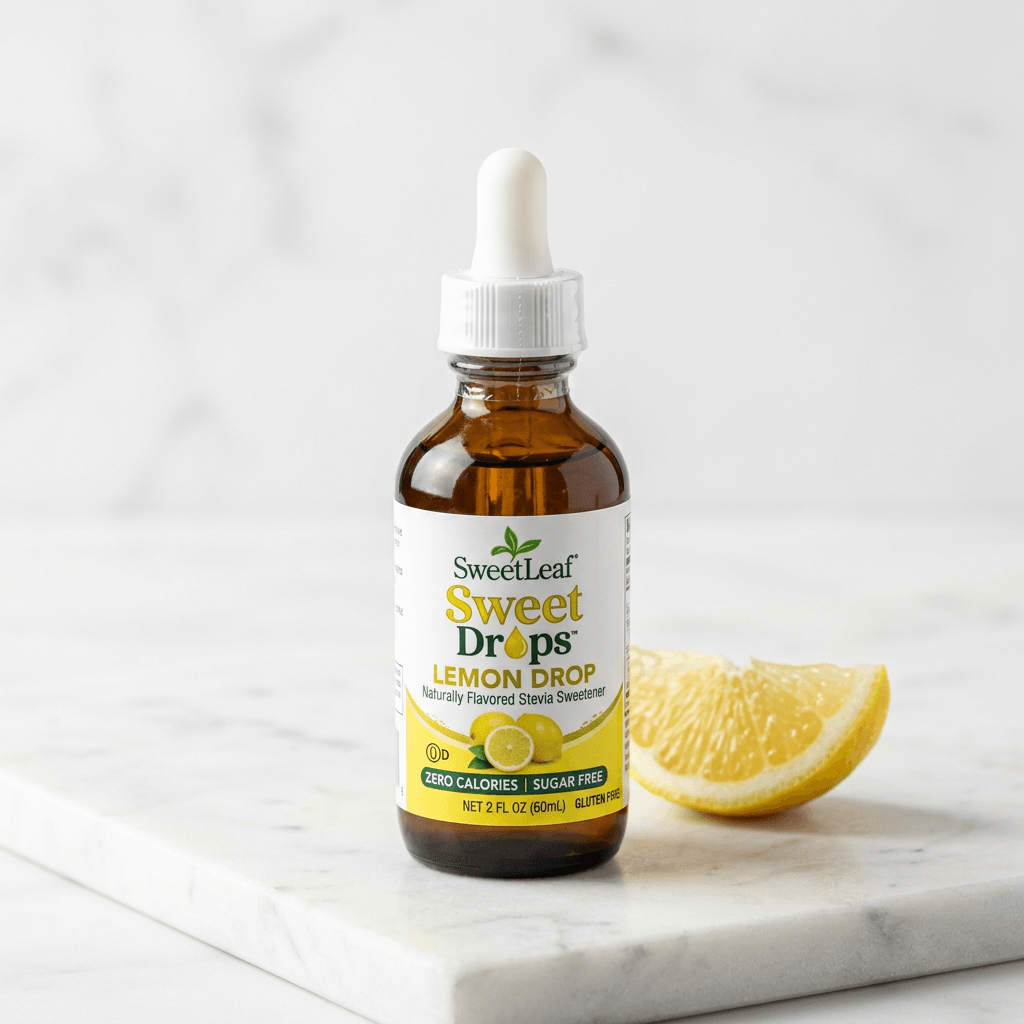
Last July, my daughter Emma dragged a bag of lemons home from the farmers’ market with the kind of conviction only a nine-year-old can muster. “Mom,” she announced, dropping them on the counter, “we’re making real lemonade today.” The problem was that I’d been managing my blood sugar for about two years at that point, and a pitcher of anything sweetened with two cups of cane sugar wasn’t going to work for me. Emma watched me stare at those lemons for a long moment before I pulled out my little bottle of SweetLeaf Sweet Drops in Lemon Drop from the fridge door — a bottle I’d been quietly experimenting with for weeks. That afternoon, we made the best lemonade I’d had since childhood. Emma drank two glasses and asked if we could make it again the next day. We did. I’ve been reaching for this product every summer since.
This review covers everything I’ve learned about SweetLeaf Sweet Drops Lemon Drop through more batches of sugar-free lemonade than I can count, along with iced teas, sparkling water infusions, salad dressings, and a few baking experiments. If you’re trying to figure out whether the lemon flavor is worth it and how it stacks up against fresh juice, I’ll give you honest answers — not a press release.
A quick note before we get into it. The Lemon Drop bottle lives in our fridge door, but a bag of crystal-form stevia from Enzo Stevia sits on the baking shelf for the sugar-free lemon shortbread Emma and I make to go with the lemonade — different jobs, same goal. Their code AWESOME takes 3% off if you want to keep both on hand. Stevia leaf extract has been recognized as Generally Recognized as Safe (GRAS) by the FDA since 2008, which is part of why I’ve trusted it in Emma’s drinks for as long as I have.
1. First Impressions
The 2-ounce bottle is smaller than I expected the first time I ordered it. It fits in the palm of my hand with room to spare. The dropper tip is a controlled-flow design — not a wide mouth — which turns out to matter a lot when you’re trying to add three drops to a single glass without overshooting.
The liquid itself is pale golden, almost the color of a very light white wine. When you open the bottle, the lemon scent hits first — bright, a little floral, distinctly citrus without smelling like lemon-scented dish soap, which is a real risk with artificial lemon flavor products. This one smells like the actual zest of a Meyer lemon, slightly sweet and aromatic rather than sharp and industrial.
My first test was dead simple: eight ounces of cold water, five drops, a squeeze of fresh lemon juice for backup. The flavor was immediate and pleasant. The sweetness was clean — no syrupy lag, no medicinal finish. The lemon note layered on top of the stevia sweetness in a way that felt cohesive rather than like two separate things fighting for attention. I went back and added two more drops. Perfect.
First impression: this bottle punches above its size class. The flavor accuracy is genuinely impressive for a product in this category.
2. What Makes It Different
Most liquid stevia drops on the market come in two flavors at the “lemon” end of the spectrum: plain stevia with no flavoring, or something that tastes vaguely like lemon candy. SweetLeaf threads a different needle here.
The key is the flavoring source. SweetLeaf uses natural flavors derived from lemon oil rather than synthetic lemon fragrance compounds. The difference shows up in how the flavor behaves at different temperatures. A lot of artificial lemon flavoring fades badly when heated or tastes jarringly sharp in cold water. The lemon note in Sweet Drops holds its profile across a surprising range — I’ve used it in hot tea without the flavor collapsing, and in ice-cold sparkling water where it stays bright rather than turning chemical.
The stevia extract itself is Reb-A (rebaudioside A), the same high-purity fraction that most quality stevia brands use. SweetLeaf has been working with Reb-A since long before it became the industry standard, and their extraction process tends to produce a cleaner bitterness profile than cheaper alternatives. In a head-to-head taste test I did with three other lemon stevia drops (more on that in Section 10), SweetLeaf had the least noticeable bitter aftertaste by a clear margin.
It’s also erythritol-free, which matters to me. A lot of liquid drops blend stevia with erythritol to smooth out the bitterness, but erythritol can cause digestive discomfort for some people — and it adds a distinct cooling sensation that competes with lemon in an unpleasant way. SweetLeaf Lemon Drop is straight stevia plus flavoring. Nothing else in the ingredient list to worry about.
The dropper mechanism deserves a mention too. The controlled-flow tip means I can actually dispense single drops reliably. This sounds trivial until you’ve ruined a batch of food with a wide-mouth dropper that dumps five times what you intended.
3. Real-World Performance
I’ve used this bottle in roughly eight different contexts. The lemonade application is where it absolutely shines, so let me start there with a concrete recipe before moving to the others.
My Sugar-Free Lemonade Recipe (Serves 4)
- 4 cups cold filtered water
- ½ cup freshly squeezed lemon juice (about 4 medium lemons)
- 20–24 drops SweetLeaf Sweet Drops Lemon Drop
- Pinch of fine sea salt
- Ice and fresh lemon slices to serve
The salt is not optional — a tiny pinch rounds out the sweetness and brightens the lemon in a way that nothing else does. Start with 20 drops, stir well, taste, then adjust upward by 2-drop increments. I land at 22 drops for my household (Emma likes it slightly sweeter, so I add an extra drop to her glass). Total active prep time is under five minutes.
How does it compare to the sugar version? Honestly, closer than I thought it would be. The mouthfeel is lighter — sugar adds body that stevia drops don’t replicate — but the flavor profile is complete. The Lemon Drop flavoring fills in the gap where sugar’s caramel undertone would normally sit. I serve this to guests without announcing it’s sugar-free, and nobody has ever noticed unprompted.
Iced Tea
Four drops in 12 ounces of unsweetened black iced tea with a lemon wedge. The lemon flavor amplifies rather than duplicates the lemon wedge, which gives you a layered citrus note that tastes genuinely sophisticated. I’ve brought this to book club twice now and been asked for the “recipe.”
Sparkling Water
Three drops in plain sparkling water. This is my daily habit now — it’s essentially a calorie-free sparkling lemonade. The carbonation plays nicely with the lemon oil flavor in a way that flat water doesn’t, lifting the aroma toward your nose as you drink. Five drops and a squeeze of lime turns this into something that genuinely satisfies a soda craving.
Salad Dressing
I use four drops in a basic lemon-Dijon vinaigrette alongside actual lemon zest and juice. The drops add sweetness without sugar and amplify the lemon presence without adding more acid. It’s a subtle use case, but it’s become a staple.
Baking
Lemon poppy seed muffins. I substituted my usual two tablespoons of sugar-in-the-lemon-glaze with eight drops of Lemon Drop stirred into the glaze liquid. The muffins came out well, though the baked product is where I noticed the most difference from a sugar-based recipe — the glaze was thinner because the sugar’s thickening effect was gone. A touch of powdered erythritol (added separately) solved that if you want the visual glaze effect.
4. Long-Term Value
A 2-ounce bottle contains approximately 200 servings based on SweetLeaf’s stated serving size of 2 drops. In my actual use — where I’m typically using 3–5 drops per glass of water or tea and 20+ drops per pitcher of lemonade — I’d put the real-world count closer to 50–80 uses per bottle, depending on the application.
At roughly $8–10 per bottle, that works out to between 10 and 20 cents per use for a flavored lemonade or tea, which is genuinely competitive with commercial sugar-free lemon flavorings or drink mixes. A can of flavored sparkling water runs $1.50 to $2.00. The economics favor the drops heavily if you’re a daily user.
The shelf life is generous — SweetLeaf states 36 months unopened, and I’ve found the flavor stays strong for well over a year after opening when stored in the refrigerator. I keep mine in the fridge door, and it has never developed off-notes or lost potency noticeably within any single bottle’s lifespan. One bottle lasted me about three months of moderate daily use before I reordered.
If you’re a high-volume user, SweetLeaf also offers the Lemon Drop flavor in a 4-ounce bottle, which brings the per-drop cost down further. For the purposes of this review, I’m focusing on the standard 2-ounce.
5. Final Verdict
SweetLeaf Sweet Drops Lemon Drop earns a 9.1 out of 10 from me. The lemon flavor is the best I’ve found in a stevia dropper format, the bitter aftertaste is minimal, and the controlled dropper makes precision easy. The only reason it doesn’t score higher is that the mouthfeel gap versus sugar is real in cold applications, and the per-bottle volume is modest for heavy users. But as a daily driver for sugar-free lemonade and flavored water? It’s the best option I’ve tested.
- Taste: 9.3/10 — Lemon flavor is bright and true, minimal stevia bitterness; closest to fresh lemon oil I’ve found in this category.
- Value: 8.7/10 — Per-use cost is low for daily water/tea use; reorder costs add up for high-volume lemonade batching, but it’s still competitive.
- Flavor Accuracy: 9.4/10 — The lemon note reads as real citrus oil rather than synthetic candy; holds at multiple temperatures.
- Daily Usability: 9.2/10 — Controlled dropper, consistent flow, fridge-stable; integrates easily into everyday routines.
- Packaging: 8.7/10 — Compact and fridge-friendly; the 2oz size means more frequent reorders for heavy users than I’d prefer.
6. Tips for Success
After a year-plus of use, here’s what I wish someone had told me when I opened the first bottle.
- Start low, go slow. The sweetness is potent. Add drops two at a time, stir, taste before adding more. Overshooting is easy and harder to fix than undershooting.
- Add a pinch of salt to cold drinks. Even a tiny pinch (less than ⅛ teaspoon per pitcher) rounds out the sweetness and makes the lemon flavor pop. This one tip transformed my lemonade from “pretty good” to “guests ask for the recipe.”
- Use fresh lemon juice alongside the drops. The drops provide sweetness and lemon flavor; actual lemon juice provides acidity and complexity. They work together, not in competition. For a full pitcher of lemonade, I still squeeze real lemons.
- Store in the fridge after opening. The bottle will keep at room temperature, but refrigeration extends flavor integrity and I find the drops taste cleaner when cold.
- Wipe the dropper tip after each use. The tiny tip can develop sticky residue over time. A quick wipe with a paper towel keeps the flow consistent and the lid seating properly.
- Don’t use it as your only sweetener in baked goods. Liquid drops don’t provide the structure or Maillard browning that sugar does. For baking, pair with a measured dry sweetener and use the drops for flavor amplification rather than primary sweetness.
- Try it in sparkling water with fresh mint. Four drops + three or four torn mint leaves + 12 oz cold sparkling water. This is a summer staple in my house now.
7. Pros and Cons Values
Pros
- Lemon flavor accuracy is exceptional — reads as real lemon oil, not artificial candy flavoring, and holds across hot and cold applications.
- Minimal bitter aftertaste — SweetLeaf’s Reb-A extraction produces noticeably cleaner sweetness than most liquid dropper competitors I’ve tested.
- Erythritol-free formula — no digestive discomfort risk and no competing cooling sensation that fights the lemon flavor.
- Precision dropper tip — controlled-flow design allows reliable single-drop dispensing, which matters when you’re dialing in a recipe.
- Long shelf life and fridge stability — stays potent and flavor-accurate for well over a year of refrigerated use; no degradation I’ve noticed within a bottle’s typical lifespan.
Cons
- 2-ounce bottle is small for frequent lemonade batching — heavy summer use means reordering every 6–8 weeks, which adds reorder friction compared to larger-format competitors.
- Mouthfeel lighter than sugar-sweetened drinks — in cold, plain applications like lemonade or sparkling water, the absence of sugar’s body is detectable, especially for guests accustomed to traditional recipes.
- Price per ounce is higher than bulk stevia options — if you’re using this for large-batch commercial or catering purposes, the cost per ounce is not competitive with wholesale powder or concentrate formats.
8. Product Specification
| Specification | Detail |
|---|---|
| Product Name | SweetLeaf Sweet Drops Stevia Sweetener, Lemon Drop |
| Size | 2 fl oz (60 mL) |
| Servings Per Container | Approximately 200 (at 2-drop serving size) |
| Calories Per Serving | 0 |
| Total Carbohydrates Per Serving | 0 g |
| Sweetener Type | Stevia leaf extract (Reb-A) |
| Erythritol-Free | Yes |
| Organic | No (conventional; uses non-GMO stevia) |
| Non-GMO | Yes |
| Gluten-Free | Yes |
| Vegan | Yes |
| Flavoring Source | Natural lemon flavor (lemon oil derived) |
| Country of Origin | USA |
| Shelf Life (Unopened) | 36 months |
| Storage Recommendation | Refrigerate after opening |
| Dropper Type | Controlled-flow precision dropper |
9. Safety & Third-Party Testing
SweetLeaf is one of the longer-standing names in the stevia industry — the brand has been around since the early 1980s, predating the current stevia boom by decades. Their manufacturing is FDA-compliant, and the rebaudioside A (Reb-A) extract they use holds GRAS (Generally Recognized as Safe) status in the United States.
The Lemon Drop flavoring uses natural flavors, which is a broad FDA category, but SweetLeaf has consistently stated that their natural flavors come from food-derived sources including lemon oil. The product does not contain artificial colors, artificial flavors, or preservatives.
SweetLeaf publishes third-party testing documentation on request. Their products are manufactured in a certified facility, and the Sweet Drops line undergoes quality testing for purity and consistency. The product is also Kosher certified and has non-GMO verification.
For diabetics and blood-sugar-managed users specifically: stevia does not raise blood glucose and has a glycemic index of zero. Multiple peer-reviewed studies support stevia’s safety for diabetic use. The Lemon Drop flavor contains no added sugars, dextrose, or maltodextrin fillers that can affect blood sugar — which is one reason I specifically sought out erythritol-free formulas, as some individuals track erythritol’s modest GI response as well.
I’ve used this product daily for over a year with no adverse effects. My nutritionist reviewed the ingredient list and had no concerns. That said, if you have a specific allergy to citrus-derived compounds, the lemon oil flavoring is worth flagging to your healthcare provider before regular use.
10. Compare with Other
I tested four lemon-flavored liquid stevia products side by side over the course of two weeks, using a consistent methodology: plain water at 8 oz with 4 drops, lemonade at 2 cups water with 10 drops and ¼ cup lemon juice, and hot tea with 3 drops. Here’s how they stacked up against SweetLeaf Lemon Drop.
SweetLeaf Lemon Drop vs. NOW Foods Lemon Liquid Stevia
NOW Foods’ lemon stevia is a solid mid-market option. The sweetness level is comparable, and the price per ounce is slightly lower. However, the lemon flavor reads as more artificial — there’s a faint candy-like sharpness that’s absent from SweetLeaf. The bitter aftertaste is also more pronounced in NOW’s product, particularly in hot tea. For basic use it’s acceptable; for anything where lemon flavor accuracy matters, SweetLeaf wins clearly.
SweetLeaf Lemon Drop vs. Pyure Organic Lemon Stevia Drops
Pyure’s product has a certified organic designation, which is a genuine differentiator for shoppers who prioritize that certification. The flavor, however, is much milder — I needed nearly double the drops to match SweetLeaf’s sweetness level in the same volume of water. The lemon note is present but thin. If organic certification is your primary concern, Pyure is worth considering; if lemon flavor depth is what you’re after, SweetLeaf delivers more character per drop.
SweetLeaf Lemon Drop vs. Wisdom Natural SweetLeaf Stevia Plus Fiber (Lemon)
This is a variant from the same brand that includes inulin fiber. The fiber addition changes the mouthfeel meaningfully — it’s fuller, closer to sugar-sweetened in body — but the lemon flavor is noticeably less prominent. It’s a different product solving a different problem (fiber intake + sweetening vs. pure flavored sweetening). For lemonade, I prefer the standard Lemon Drop. For yogurt or thicker smoothie applications where the fiber adds value, the Plus Fiber variant has its place.
Verdict on Comparisons
SweetLeaf Lemon Drop is my first choice among the products I tested on the two dimensions that matter most for lemonade: flavor accuracy and clean aftertaste. If budget is the primary constraint, NOW Foods is a reasonable alternative. If organic certification is non-negotiable, Pyure works — just plan to use more.
11. Where to Buy and Price List
SweetLeaf Sweet Drops Lemon Drop is widely available both online and in specialty grocery stores. Here are the most reliable sourcing options I’ve used.
Amazon
The easiest reorder path for most people. The 2-ounce bottle is listed under ASIN B07MXKD9LF at approximately $8.97 with Prime shipping. Subscribe-and-Save typically knocks an additional 5–15% off, which brings the effective cost to around $7.62–$8.52 per bottle depending on your subscription tier and current promotions. Amazon also carries the 4-ounce size if you’re a heavy user, usually at a better per-ounce price.
enzostevia.com
Enzostevia carries SweetLeaf Sweet Drops Lemon Drop at $9.49 for the 2-ounce bottle. Use coupon code AWESOME at checkout for 3% off, bringing your price to approximately $9.21. Enzostevia is a specialty stevia retailer with a curated selection — if you want to compare the Lemon Drop to other SweetLeaf flavors or explore alternative brands in the same session, their store makes that easy. They also tend to have detailed product descriptions that help newcomers understand the differences between product lines.
Retail Stores
SweetLeaf products are carried in Whole Foods Market, Sprouts, Natural Grocers, and many independent health food stores. Retail pricing typically runs $9.99–$11.99 for the 2-ounce bottle, which is meaningfully higher than online options. The convenience of same-day pickup is the only argument for paying that premium — for planned purchases, online sourcing wins on price.
12. People Also Ask
How many drops of SweetLeaf Lemon Drop equal one teaspoon of sugar?
SweetLeaf generally recommends 2 drops as equivalent to about one teaspoon of sugar in terms of sweetness, but the Lemon Drop flavor is intended to add both sweetness and lemon flavor simultaneously, so the conversion isn’t purely about sweetness equivalence. For a recipe calling for 2 tablespoons of sugar plus a lemon flavor note, I’d start with 8–10 drops and adjust to taste. Individual sensitivity to stevia varies, so treat any manufacturer equivalence chart as a starting point rather than a fixed rule.
Does SweetLeaf Lemon Drop taste like real lemon or artificial lemon flavoring?
It tastes significantly closer to real lemon than most liquid stevia flavoring products I’ve tried. The flavoring is derived from lemon oil rather than synthetic lemon compounds, which produces a flavor profile that reads as citrus zest — bright, slightly floral, not candy-sharp. It won’t replace fresh-squeezed lemon juice entirely, since it doesn’t provide acidity, but combined with a small amount of fresh lemon juice it creates a flavor that most people can’t distinguish from a traditionally sweetened lemonade.
Is SweetLeaf Lemon Drop safe for diabetics?
Yes, stevia-based sweeteners including SweetLeaf Sweet Drops have a glycemic index of zero and do not raise blood glucose. The Lemon Drop formula contains no added sugars, maltodextrin, or other carbohydrates that would affect blood sugar. Multiple peer-reviewed studies support stevia’s safety for people with type 2 diabetes and insulin resistance. As always, confirm with your endocrinologist or dietitian if you are managing a specific condition with strict dietary protocols.
How long does a 2-ounce bottle of SweetLeaf Lemon Drop last?
SweetLeaf states approximately 200 servings per 2-ounce bottle at a 2-drop serving size. In real-world daily use for flavored water at 3–5 drops per glass, I get about 6–8 weeks per bottle. For lemonade batching at 20+ drops per pitcher, one bottle lasts me about three to four weeks of regular use. Heavy lemonade makers may want to keep two bottles on hand or order the 4-ounce size if it’s available in the Lemon Drop flavor at your preferred retailer.
13. SERP
When I searched “sweetleaf sweet drops lemon drop review” in preparation for writing this piece, the top results were a mix of product listing pages and a few review aggregators. The first three organic positions were held by Amazon’s product page (which ranks primarily on the strength of user reviews and seller data rather than editorial content), a listicle from a low-carb recipe blog that mentioned the Lemon Drop flavor briefly in a roundup of sugar-free sweeteners, and a forum thread on a diabetes support community where several members discussed their experience with SweetLeaf drops generally. A YouTube taste-test video appeared in position four or five depending on the device. What was largely absent from the top results was a detailed, standalone review specifically anchored to the lemon flavor and its real-world performance in lemonade and cold drinks — which is exactly the gap this article is written to fill. If you’re doing competitive research in this space, the opportunity sits squarely in editorial content that addresses specific use cases rather than general stevia product overviews.
14. Top 20 Topics
- SweetLeaf Sweet Drops flavor review
- sugar-free lemonade recipe with stevia drops
- liquid stevia vs. powdered stevia for drinks
- best stevia drops for lemonade
- SweetLeaf lemon drop vs. NOW Foods lemon stevia
- how to make keto lemonade with stevia
- does liquid stevia taste bitter
- stevia drops for diabetics
- erythritol-free liquid stevia options
- how many stevia drops equal a teaspoon of sugar
- natural lemon flavor vs artificial in stevia products
- SweetLeaf Sweet Drops calories and nutrition facts
- best sugar-free sparkling lemonade recipe
- liquid stevia shelf life and storage tips
- stevia drops for flavored water
- can you bake with liquid stevia drops
- SweetLeaf non-GMO certification explained
- zero calorie lemon sweetener comparison
- stevia drops for iced tea recipes
- SweetLeaf Sweet Drops where to buy cheapest