
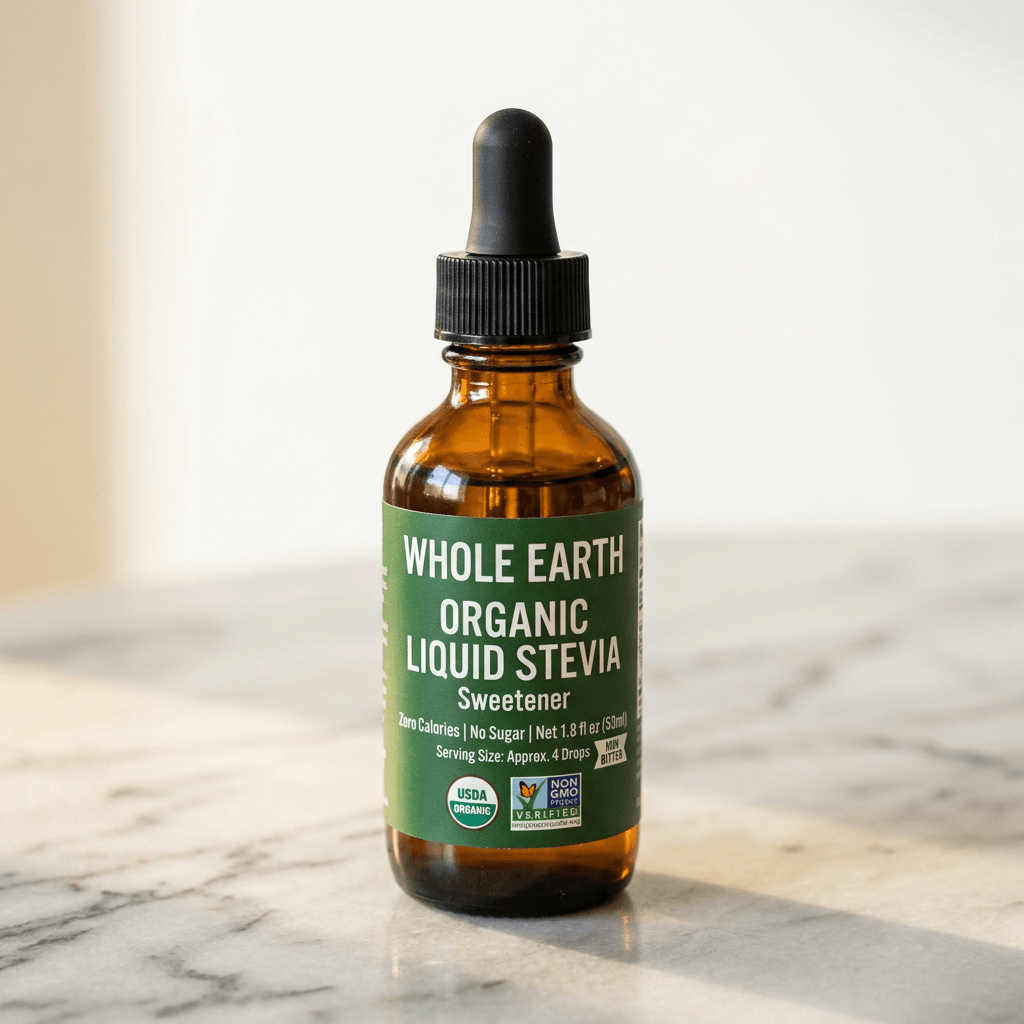
My daughter Mia is eleven and deeply suspicious of anything labeled “healthy.” So when she asked me — completely unprompted — to put stevia in her afternoon tea instead of sugar, I nearly dropped the kettle. She’d been reading labels at the grocery store that afternoon, and she’d noticed something about the small amber bottle of Whole Earth Organic Liquid Stevia sitting in our pantry. “Mom,” she said, holding it up, “it’s just two things. That’s it. Two.” She set it next to a box of store-brand stevia packets and raised an eyebrow like she’d just won an argument I didn’t know we were having.
That moment happened about six months ago. It’s the reason this review exists.
I’ve been using liquid stevia drops for years — mostly SweetLeaf, which I still think is excellent — but Whole Earth caught my eye at our local Sprouts one afternoon when I was grabbing a few things before school pickup. It was priced a little under what I usually pay, the bottle looked clean and approachable, and the “USDA Organic” seal was front and center. I tossed it in the basket mostly on instinct. Six months and four bottles later, I’m ready to tell you exactly what I think.
First Impressions
The bottle is small and satisfying in your hand — a 1.8-ounce amber glass dropper bottle with a metal cap and a rubber-tipped pipette. It doesn’t rattle around or feel hollow. The label is minimal: deep forest green with clean white typography, the Whole Earth branding understated and confident, and the certification seals stacked neatly at the bottom. It looks like something you’d find at a boutique health food shop, not something assembled by a committee of marketing people trying to catch your eye at Walmart.
The liquid itself is pale straw-yellow and completely clear. No cloudiness, no sediment, no particulates swirling when you tip it. It smells faintly herbal — green and lightly sweet — in a way that’s pleasant rather than medicinal.
My first taste test was the same one I run with every liquid stevia: one drop on a small spoon of room-temperature water. The sweetness arrived cleanly and quickly, with a brief herbal note that faded within a few seconds. No harsh licorice burn, no prolonged metallic echo. That first impression held up across every bottle I’ve used since.
What Makes It Different

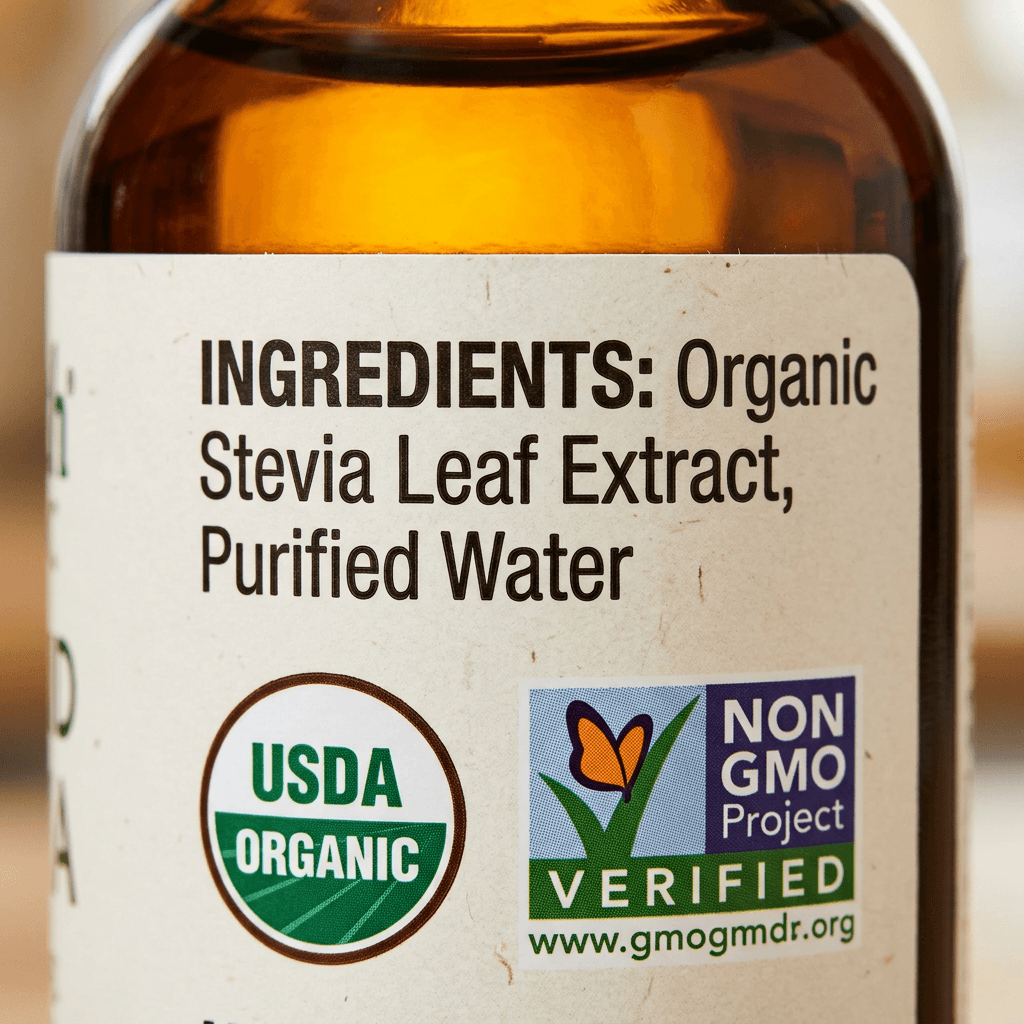
In a market crowded with liquid stevia options, Whole Earth earns its shelf space by doing very little — and doing it well. The ingredient list is two items long: organic stevia leaf extract and purified water. That’s it. No vegetable glycerin, no grain alcohol, no “natural flavors” (a phrase that covers a lot of territory), no preservatives. When I compared this to SweetLeaf’s unflavored drops — which list organic stevia leaf extract and water — the formulations are essentially identical. That’s not a knock on either brand. It means the product is precisely what it says it is.
What separates Whole Earth from lower-tier brands is the certification stack. The bottle carries a USDA Organic seal, which means the stevia leaf was grown without synthetic pesticides or fertilizers, and the processing facility meets organic handling standards. This isn’t self-declared; it’s issued by an accredited certifying agent. It also carries Non-GMO Project Verified status. Both of these things matter more than they might seem — cheaper stevia products sometimes use extract sources where growing conditions are harder to trace.
The brand itself is a division of Whole Earth Sweetener Co., owned by Merisant — the same company behind Equal. This occasionally gives pause to people who want their sweetener sourced from a small, independent operation. Fair enough. But practically speaking, it means the supply chain is professional and quality-controlled. I’ve never had a batch that tasted noticeably different from the previous one, which is more than I can say for a couple of smaller-operation brands I’ve tried.
One thing that makes Whole Earth genuinely distinct in its category: sweetness concentration that mirrors SweetLeaf’s. At six drops per serving, you’re getting roughly the sweetness of one teaspoon of sugar. I usually need only four drops for my morning coffee and about eight for baking applications. The potency is real and consistent, which means the bottle lasts and the per-serving cost stays reasonable.
The price point is another quiet differentiator. Whole Earth tends to run a dollar or two less than SweetLeaf at the shelf. For people who don’t want to plan ahead or maintain an Amazon subscribe-and-save situation, finding it at Sprouts or Whole Foods has genuine day-to-day value.
Real-World Performance
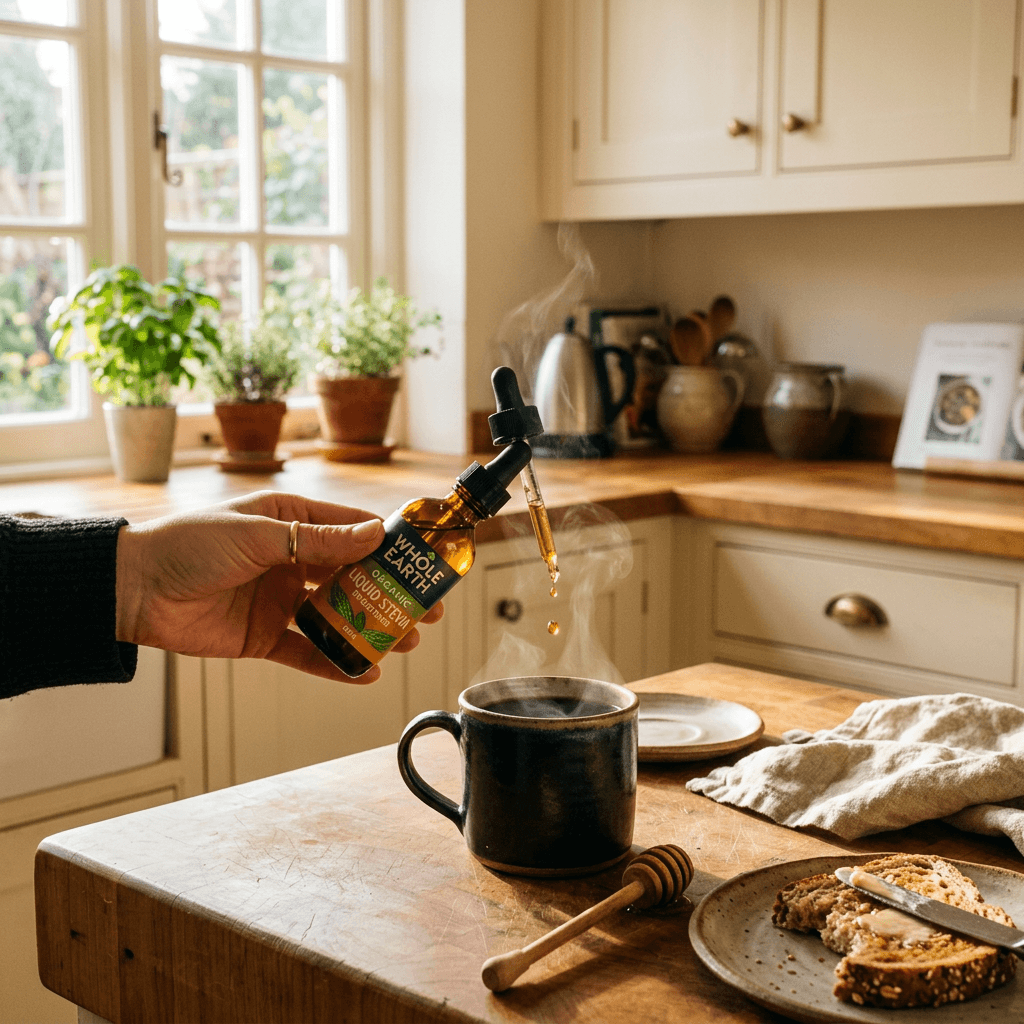
I run every liquid stevia I review through the same four tests: hot coffee, iced tea, plain oatmeal, and at least one baking application. It’s imperfect methodology, but it replicates how I and most people I know actually use this stuff. Whole Earth performed well across all four, with a few nuances worth knowing.
Hot Coffee
This is where most liquid stevia products live or die for me. I drink two cups in the morning, usually medium-dark roast, no cream. Four drops of Whole Earth dissolved instantly without any stirring — they simply dispersed into the hot liquid and disappeared. The sweetness came through cleanly without competing with the roast character of the coffee. There was a brief herbal note in the first few sips, but it integrated within thirty seconds. No bitterness on the back end, which is the real test for stevia quality in hot beverages. Four drops is my sweet spot; six makes it noticeably sweeter than I prefer.
Iced Tea
Cold liquids sometimes blunt sweetness and make aftertastes more prominent. With Whole Earth, I used six drops per sixteen-ounce glass of unsweetened black tea. The sweetness level landed just right — noticeable without being cloying — and the herbal note that shows up faintly in hot coffee was essentially invisible in cold tea. The tea tasted like tea. That might sound like a low bar, but some stevia products actively clash with tea tannins in a way that creates something almost medicinal. Whole Earth didn’t do that.
Oatmeal
For oatmeal I use eight drops alongside cinnamon and almond butter. The stevia sweetened the oats well, though I’ll note that thick, warm, fat-rich foods can mask minor aftertaste issues, so I weight this test a bit less heavily. Eight drops delivered what I was looking for: gentle background sweetness without turning breakfast into dessert.
Baking
I made a batch of almond flour banana muffins using Whole Earth as my primary added sweetener. I used about twenty drops for a batch of twelve, leaning on the bananas for most of the natural sweetness. The muffins came out moist and lightly sweet, with no off-notes in the finished product. Standard caveat: baking with liquid stevia requires adjusting your liquid ratios slightly, and stevia doesn’t caramelize or add structure. You’re working with it as a supporting flavor element, not a straight sugar substitute. Within those parameters, Whole Earth handled itself gracefully.
Smoothies
This has become my most frequent everyday use, almost by accident. Five or six drops in a blended green smoothie lifts the bitterness of leafy greens without turning the whole drink sweet. It’s a subtle, balancing role — and Whole Earth plays it better than any product I’ve tried for this specific application.
Long-Term Value
A 1.8-ounce bottle contains approximately 180 servings at the label-suggested six drops. I use it at four to six drops per application and go through roughly fifteen to twenty drops a day, which puts my personal bottle lifespan at about two to three weeks of regular use. Your usage will vary significantly based on how sweet you like things and how many beverages you sweeten daily.
At around eight to nine dollars a bottle, the per-serving cost works out to roughly four to five cents per serving — less than a penny per drop. Compare that to stevia packets at ten to twenty cents each, and you’re saving meaningfully over time. The liquid format is simply more economical for daily use, and Whole Earth’s pricing makes it one of the better values in the organic liquid stevia category.
There’s also a packaging waste consideration that matters more than it might seem. The dropper bottle produces no individual packaging waste — no paper wrappers, no tiny plastic pouches to throw away after every use. Our household has reduced sweetener-related trash to almost nothing since switching from packets to a liquid dropper years ago, and Whole Earth fits that lifestyle.
Shelf life is generous: the bottle currently in my pantry has a best-by date just over two years from purchase. The amber glass protects the extract from light degradation. I store mine at room temperature and haven’t experienced any change in flavor or potency across the four bottles I’ve used.
One honest note: this isn’t a budget product. Non-organic stevia drops exist for less money, and if certification doesn’t factor into your buying decisions, those might serve you well. But within the organic liquid stevia segment, Whole Earth consistently lands on the more accessible end of the price range without compromising on quality.
Final Verdict: 8.7/10
Whole Earth Organic Liquid Stevia has earned a permanent place in my pantry, and that’s not something I say lightly. It delivers clean sweetness, a minimal ingredient list, certified organic sourcing, and real-world versatility at a price that feels fair. It’s not going to displace SweetLeaf as my top recommendation for anyone who wants a wide catalog of flavored drops — SweetLeaf simply has more variety. But for unflavored, everyday use — particularly if you’re shopping in natural grocery stores rather than ordering specialty products online — Whole Earth is an excellent choice and often the smarter buy.
- Taste — 8.8/10: Clean, neutral sweetness with only a brief herbal note that integrates quickly in hot beverages; no lingering bitterness or metallic finish.
- Value — 9.0/10: Priced slightly below SweetLeaf with comparable potency and purity; strong cost-per-serving math for anyone using it daily.
- Purity — 8.9/10: Two-ingredient formula backed by USDA Organic and Non-GMO Project Verified certifications — exactly what a pure liquid stevia should look like.
- Daily Usability — 8.5/10: Dropper delivers consistent drops, dissolves easily in hot and cold liquids, and performs well across a wide range of applications.
- Packaging — 8.3/10: Amber glass bottle is functional and environmentally considerate, though the rubber dropper cap can be slightly stiff when first opening a new bottle.
Tips for Success
After six months of daily use across multiple formats, here’s what I’d tell anyone starting with Whole Earth Organic Liquid Stevia:
- Start at four drops, not six. The label says six drops per serving, but four is often enough for an eight-ounce cup of coffee or tea. Give yourself room to dial up rather than starting too sweet — liquid stevia is easy to over-add and harder to balance back once you’ve gone too far.
- Hold the bottle vertically and let the drop form slowly. Squeezing too fast releases two or three drops at once. Gentle, consistent pressure gives you precise, countable drops every time.
- For hot beverages, add the drops before the liquid. Dropping stevia into an empty mug, then pouring your hot coffee or tea over it, helps distribute the sweetener more evenly than stirring alone. The heat does the work for you.
- In cold drinks, stir briefly after adding. Stevia doesn’t disperse as readily in cold liquids. A quick ten-second stir ensures even distribution in iced tea or cold brew.
- Store it upright, cap fully closed. The rubber dropper tip can dry out if left uncapped. I keep mine on a small tray next to my coffee station — upright, sealed, accessible.
- Refrigeration is optional, not required. The formula is stable at room temperature for the life of the bottle. Cold can make the liquid slightly more viscous, which doesn’t affect flavor but can make drop control harder.
- For baking, measure into a small dish first. Counting drops over a bowl of batter is a recipe for losing count. Count into a ramekin or small dish, then tip it into your recipe. Much easier to verify before it’s mixed in.
Pros and Cons Values
Pros
- Clean two-ingredient formula — organic stevia leaf extract and purified water, with no fillers, glycerin, alcohol, or vague “natural flavors.”
- Dual certification stack — USDA Organic and Non-GMO Project Verified, providing documented traceability from the stevia leaf through processing to the bottle.
- Excellent everyday taste — neutral, clean sweetness with minimal herbal aftertaste, making it one of the more pleasant unflavored liquid stevias available at this price point.
- Strong retail availability — regularly stocked at Sprouts, Whole Foods, and Natural Grocers, so you’re not dependent on online ordering to keep it on hand.
- Competitive pricing — consistently runs one to two dollars less per bottle than SweetLeaf, with comparable sweetness potency and purity.
Cons
- No flavored varieties — Whole Earth’s liquid line is unflavored only. If you want vanilla cream, lemon, or English toffee drops, you’ll need to look at SweetLeaf’s extensive flavored catalog instead.
- Dropper cap can be stiff when new — the rubber tip requires firm pressure on a fresh bottle, which can result in an unintended double-drop until you get the feel of it. It loosens with a few uses.
- No large-bottle option — the 1.8 oz format is the standard offering; heavy users who prefer buying a 4 oz bulk bottle will need to look at brands like NOW Foods or NuNaturals for that option.
Product Specification
| Specification | Detail |
|---|---|
| Product Name | Whole Earth Organic Liquid Stevia Drops |
| Size | 1.8 fl oz (53 mL) |
| Servings Per Bottle | ~180 (at 6 drops per serving) |
| Calories Per Serving | 0 |
| Total Carbohydrates | 0 g |
| Ingredients | Organic stevia leaf extract, purified water |
| Sweetness Equivalency | 6 drops ≈ 1 teaspoon granulated sugar |
| Erythritol-Free | Yes |
| Organic | Yes — USDA Certified Organic |
| Non-GMO | Yes — Non-GMO Project Verified |
| Gluten-Free | Yes |
| Vegan | Yes |
| Keto-Friendly | Yes |
| Country of Origin | USA (processed); stevia leaf extract internationally sourced |
| Packaging | Amber glass dropper bottle with rubber-tipped pipette |
| Shelf Life | Approximately 2 years from manufacture date |
| Recommended Storage | Room temperature; refrigeration optional after opening |
Safety & Third-Party Testing
Stevia leaf extract — specifically the high-purity rebaudioside A (Reb-A) and related steviol glycosides derived from Stevia rebaudiana — has been recognized as Generally Recognized As Safe (GRAS) by the FDA when produced to defined purity standards. Whole Earth uses a refined extract that meets those standards. This isn’t a supplement or a gray-area compound. It’s a well-studied sweetener with decades of safety data behind it, used by hundreds of millions of people globally.
The USDA Organic certification carries specific, verifiable weight here. It requires that the stevia leaf was grown without synthetic pesticides, herbicides, or fertilizers, and that the processing facility meets USDA organic handling requirements. This certification is issued by an accredited third-party certifying agent — not self-declared — and the certifying body conducts periodic audits. For people concerned about pesticide residues from conventionally grown stevia, this seal addresses that concern in a documented, auditable way.
The Non-GMO Project Verified seal adds a second layer of supply chain accountability. The Non-GMO Project conducts independent testing of at-risk inputs and requires participating companies to maintain documented protocols against GMO cross-contamination. Stevia is a plant, not a genetically modified organism, but the verification process ensures that processing environments and sourced ingredients meet non-GMO standards throughout the production chain.
Whole Earth Sweetener Co. operates under the Merisant umbrella, a large commercial food ingredient company with professional quality control infrastructure. This isn’t the same as a boutique brand publishing batch-specific certificates of analysis on their website — and that’s a mild limitation for the most rigorous buyers. If lot-specific COA transparency is a priority for you, some nutraceutical stevia suppliers offer more granular documentation. For the majority of consumers, the dual certification stack is a sufficient and credible assurance of quality.
Pure stevia extract has no known interactions with common medications, and it does not raise blood glucose or stimulate insulin response — which is why it’s widely used by people managing diabetes, metabolic syndrome, or simply reducing sugar intake. As always, if you have a specific medical condition or take medications that affect blood sugar regulation, check with your doctor or registered dietitian before making significant dietary changes.
Compare with Other
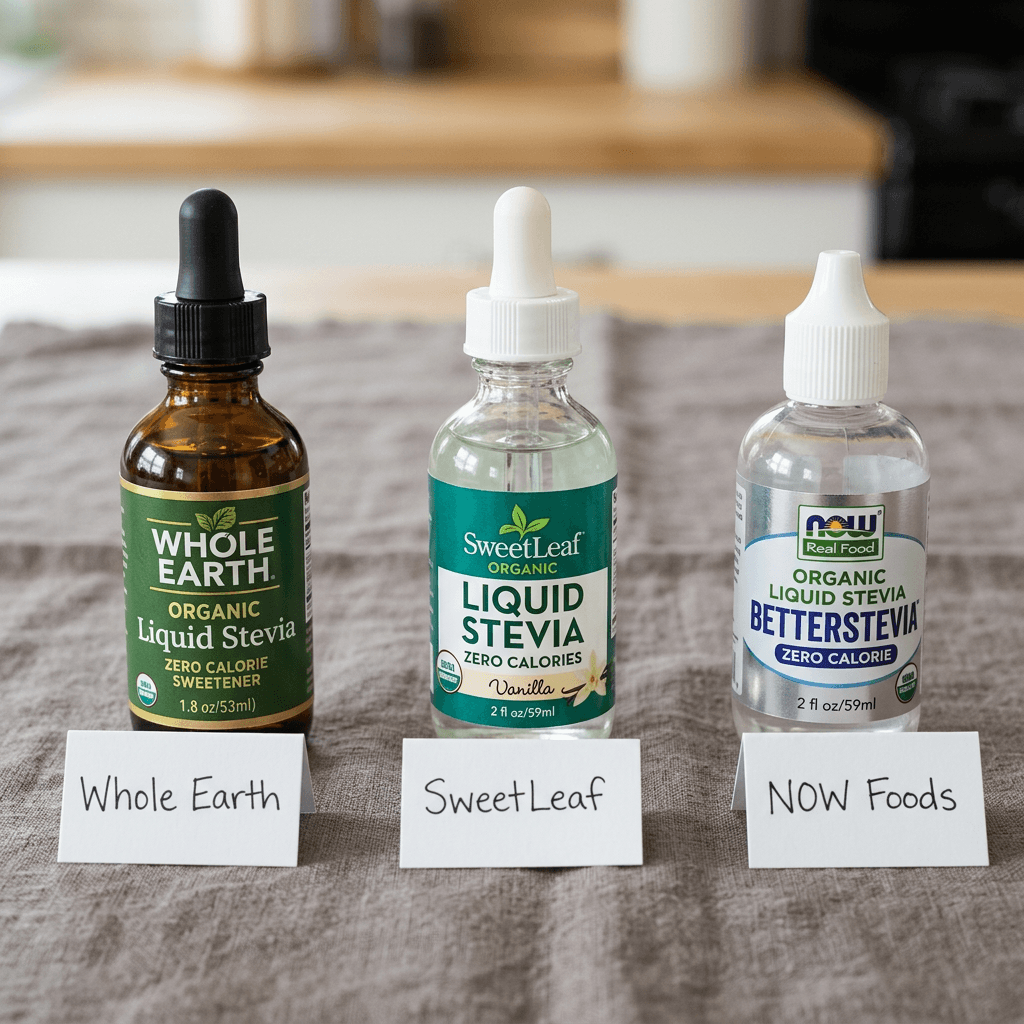
Knowing where Whole Earth sits relative to its competition is the most useful context I can give you, especially if you’re choosing between brands for the first time.
Whole Earth vs. SweetLeaf Organic Liquid Stevia
SweetLeaf is the most widely distributed organic liquid stevia on the market and the product most people encounter first. In terms of base formula, the two are nearly identical: organic stevia leaf extract and water. Taste profiles are also close, though I’ve found SweetLeaf’s unflavored drops to be marginally cleaner — the herbal note fades a fraction faster. The bigger differentiator is SweetLeaf’s flavored drop lineup: over twenty varieties, from vanilla cream to lemon and peppermint, while Whole Earth offers unflavored only. If variety matters to you, SweetLeaf wins that comparison outright. For plain everyday use, Whole Earth holds its own completely and usually costs less. My honest take: if you cook and bake and want options, go SweetLeaf. If you just sweeten coffee and tea, Whole Earth is the smarter buy.
Whole Earth vs. NuNaturals Liquid Stevia
NuNaturals has a devoted following in keto and low-carb communities, partly because of its high potency — you might use three to four drops where you’d use six of Whole Earth. Some NuNaturals formulations include vegetable glycerin (glycerite), which creates a creamier mouthfeel and arguably more stable drops but changes the ingredient profile away from the pure stevia-and-water standard. For purists who want only stevia and water, Whole Earth is the cleaner choice. For those who prefer maximum sweetness concentration and don’t mind glycerin, NuNaturals is worth a look.
Whole Earth vs. NOW Foods Organic Liquid Stevia
NOW Foods makes a solid organic liquid stevia at a comparable price point, and it’s available in larger two-ounce and four-ounce bottles — a real advantage for heavy users. The taste is competent, but in my testing NOW’s extract has a slightly more pronounced herbal aftertaste than Whole Earth, particularly noticeable in hot black tea. NOW’s broad retail distribution and bundling potential with other NOW supplements are genuine strengths. But on pure taste, I give the edge to Whole Earth.
Whole Earth vs. Trader Joe’s Organic Liquid Stevia
If you have a Trader Joe’s nearby, their house-brand organic liquid stevia is priced lower than Whole Earth and uses a similar two-ingredient formula. The quality is decent. The dropper, however, is noticeably less precise — I consistently over-dropped with the TJ’s bottle in a way I don’t with Whole Earth’s design. The finish is also slightly more bitter. For budget-conscious shoppers with a TJ’s nearby, it’s a reasonable option. But comparing them side by side, Whole Earth wins on taste and dropper ergonomics.
Where to Buy and Price List
Whole Earth Organic Liquid Stevia is one of the easier organic drops to find both in-store and online. Here are the most reliable options:
In-Store Retailers
- Sprouts Farmers Market — Consistently stocked in the supplements and natural sweetener aisle. Typical price: $8.49–$9.29 per bottle.
- Whole Foods Market — Available in the baking and sweetener section. Usually $9.49–$10.99, reflecting Whole Foods pricing.
- Natural Grocers / Vitamin Cottage — Stocked in many locations, often featured in quarterly sales. Prices comparable to Sprouts.
Online
-
Amazon
ASIN:B09WMLXK4T
Price: $8.97 per bottle (Prime eligible, typically ships same day)
Subscribe & Save: approximately $8.07 per bottle (10% discount)
Multi-packs of three or six bottles are often available at better per-unit pricing — worth checking if you know you’ll use it regularly. -
enzostevia.com
Price: $9.49 per bottle
Use coupon code AWESOME at checkout for 3% off, bringing your price to approximately $9.21.
A good option if you want to shop from a stevia-focused retailer with a curated selection and the ability to compare similar products side by side. They also carry related liquid stevias and alternative sweeteners if you want to explore while you’re there.
My general advice: if you’re trying Whole Earth for the first time, grab it at Sprouts or Whole Foods where you can return it easily if it’s not for you. Once you know it works for your palate, Amazon Subscribe & Save or the enzostevia.com coupon will save you a few dollars per bottle over time.
People Also Ask
How many drops of Whole Earth liquid stevia equal a teaspoon of sugar?
According to the product label, six drops of Whole Earth Organic Liquid Stevia equals approximately one teaspoon of granulated sugar in sweetness. In practice, many users — myself included — find four to five drops sufficient for a standard eight-ounce cup of coffee or tea, especially if you prefer a lighter sweetness level. Start at four drops and adjust upward rather than beginning at six, because stevia sweetness is easy to add and very hard to walk back once you’ve overdone it.
Does Whole Earth liquid stevia have an aftertaste?
There is a mild herbal note that appears briefly right after the initial sweetness — this is characteristic of stevia’s natural steviol glycoside compounds. Most people describe it as “green” rather than bitter or metallic, and it fades within a few seconds, particularly in hot beverages. Compared to competing brands, Whole Earth’s aftertaste is on the cleaner end of the spectrum. People who are highly sensitive to stevia’s natural herbal quality in general may still detect it, but the majority of everyday users find it unobtrusive in coffee, tea, and blended drinks.
Is Whole Earth liquid stevia safe for people with diabetes?
Stevia leaf extract does not raise blood glucose or trigger an insulin response, and it contains zero carbohydrates and zero calories. It is widely used by people with Type 1 and Type 2 diabetes as a daily sugar alternative. Whole Earth’s formula uses only pure organic stevia extract and purified water — there are no added sugars, no maltodextrin, and no dextrose-based carriers that could affect glycemic response. That said, if you are actively managing diabetes with insulin or medication, a quick check with your healthcare provider before making significant dietary changes is always worth the conversation, as individual metabolic responses can vary.
How long does a bottle of Whole Earth liquid stevia last?
At the suggested six drops per serving, a 1.8-ounce bottle contains approximately 180 servings. For a single daily coffee user adding six drops per cup, that’s about six months per bottle. For heavier users sweeten two or three beverages a day plus occasional cooking, expect a bottle to last two to four weeks. I personally go through one bottle every three to four weeks with moderate daily use across coffee, tea, and smoothies. The printed shelf life is typically two years from manufacture, so buying two or three bottles at a time makes good sense and poses no risk of waste.
SERP
When I searched “whole earth liquid stevia drops review” to see what the existing content landscape looked like before writing this piece, the first result was the Amazon product listing for the drops themselves — which dominated the top position and pulled in Q&A schema from verified purchasers. Just below that sat Whole Earth Sweetener Co.’s own brand page, which describes the product and its certifications but functions as marketing copy rather than an independent assessment. The third and fourth results were a roundup comparison article on a keto lifestyle blog that grouped Whole Earth alongside four other liquid stevias in a quick chart format, and a post from a registered dietitian’s website that covered the safety profile and glycemic data in depth but said little about actual taste or everyday usability. A Reddit thread from r/zerocarb also appeared near the bottom of page one, where users were split on whether Whole Earth or SweetLeaf had the cleaner finish in hot coffee — and that debate, more than anything else, was what motivated me to write something longer and more grounded. There’s a clear gap in the existing content for a sustained, real-world review from someone who has used this specific product consistently over months and tested it across multiple use cases. I hope this fills that gap.
Top 20 Topics
- Whole Earth liquid stevia drops vs. SweetLeaf — which tastes better in coffee?
- Best organic liquid stevia for everyday use
- How to use liquid stevia drops without overpowering your drink
- Stevia drops for people with diabetes — what to look for on the label
- Does liquid stevia break a fast? What the research actually says
- Whole Earth Sweetener Co. brand overview and ingredient quality
- Organic stevia leaf extract vs. stevia glycerite — which is purer?
- Best liquid stevia for baking — conversion ratios and tips
- What Non-GMO Project Verified actually means for sweetener products
- Liquid stevia drops vs. stevia packets — cost comparison and daily convenience
- Why does stevia have an aftertaste, and how do you minimize it?
- Zero-calorie sweeteners compared — stevia, monk fruit, erythritol, allulose
- Whole Earth liquid stevia for iced tea — how many drops for a 16 oz glass?
- Is USDA Organic certification worth paying extra for in stevia products?
- Liquid stevia drops in smoothies — best brands for blended drinks
- Whole Earth vs. NuNaturals vs. NOW Foods liquid stevia — a direct comparison
- Keto-friendly sweeteners ranked — where does liquid stevia fall?
- How to store liquid stevia drops — pantry vs. refrigerator
- Is liquid stevia safe for children? What parents should know
- Where to buy organic liquid stevia online at the best price per bottle