My daughter Lily is fourteen and obsessed with making what she calls “spa water” — those overly fancy infused concoctions she finds on TikTok that involve herbs, edible flowers, and at least forty-five minutes of effort. One Tuesday morning she wandered into the kitchen at seven a.m. looking for something to sweeten her strawberry-basil water without sugar. She grabbed my open canister of powdered Truvia, tipped it over the glass, and proceeded to pour approximately half the container into sixteen ounces of water. I watched it happen in slow motion from across the kitchen. The water turned the color of low-quality milk. She took one sip, made a face I will remember for the rest of my life, and said, completely deadpan: “Mom. You need the liquid kind.”
She wasn’t wrong.
I’d been meaning to try the Truvia Liquid Stevia Squeeze Bottle for months. I use powdered Truvia constantly — in coffee, in baking, stirred into oatmeal — but I kept putting off the switch because the squeeze bottle format made me nervous. I’d used dropper-style liquid stevia before and loved the precision. A squeeze bottle felt like an invitation to ruin perfectly good lemonade. Lily’s spa water incident pushed me over the edge. I ordered a bottle that same afternoon.
What followed was thirty days of real daily use: two cups of coffee per morning, a two-quart pitcher of iced tea every Sunday, smoothies, salad dressings, a batch of lemon bars, and what my husband diplomatically called “an unreasonable number of lemonade experiments.” This is my honest, unfiltered take.
1. First Impressions
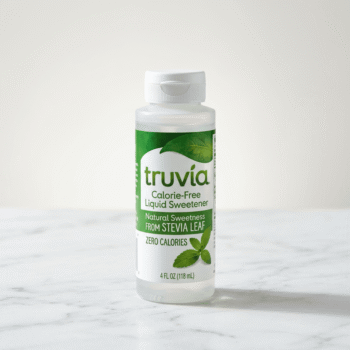
The bottle arrived in simple cardboard packaging, no frills. The first thing I noticed was how compact it is — about the size of a travel shampoo, maybe four inches tall, narrow enough to tuck behind the coffee maker without thinking about it. It weighs almost nothing empty and not much more full. The label is the same clean Truvia green you recognize from the packet displays at every coffee shop in America, which was reassuring in a boring, practical way.
The nozzle is a narrow tapered plastic tip, the kind you’d find on a squeeze bottle of honey or a fine-tip condiment dispenser. I gave it an experimental squeeze over a spoon the moment I opened it. The liquid that came out was a pale golden-amber — significantly darker than I expected from something labeled “clear” sweetener. It smelled faintly sweet, almost like diluted honey without any floral complexity, with a very faint green note underneath. Nothing off-putting. Just present enough to notice.
That one squeeze deposited roughly a quarter teaspoon, which by Truvia’s equivalency is approximately one teaspoon of sugar in sweetness. The concentration impressed me immediately. This isn’t watered-down sweetener. The snap cap clicked shut with a satisfying firmness, and I thought: okay, this might actually work.
2. What Makes It Different
If you already use powdered Truvia — the white granules in the little green foil packets, or the pour-and-measure canister — you know the brand. The liquid version uses the same stevia leaf extract at its core, but the formula is meaningfully different in one key way: there is no erythritol.
Erythritol is the sugar alcohol Truvia uses in its granular products to provide bulk, to make it behave like sugar volumetrically and to act as a carrier for the highly concentrated stevia extract. It’s generally well-tolerated, but some people experience digestive discomfort at higher quantities, and a smaller subset notice what’s called a “cooling effect” — a faint mint-like sensation on the tongue that is particularly noticeable in recipes where you’re using a lot of the stuff. The liquid sweetener has none of that. The ingredient list is genuinely minimal: water, stevia leaf extract, natural flavors. Three things.
Squeeze Bottle vs. Dropper Bottles
This is where I need to be honest about my complicated feelings, because the format is simultaneously the product’s best feature and its only real limitation. Most liquid stevia products you’ll find — SweetLeaf, NuNaturals, NOW Foods — come in glass dropper bottles. You press the rubber bulb, let the glass tube fill, and release drops one by one over your mug. It’s methodical and precise. You can do one drop, stop, taste, do two more drops, stop again. The feedback loop is tight.
The Truvia squeeze bottle works entirely differently. You squeeze the bottle body and liquid flows from the tip in a thin, continuous stream. There’s no discrete unit — no click, no drop, no count. Flow rate is a function of how hard you squeeze and for how long. On day one, this felt deeply imprecise. By day seven, it felt natural. By day fourteen, I didn’t think about it anymore. But that learning curve is real, and in the first week I over-sweetened my coffee twice and my iced tea once. Be prepared for a calibration period.
Versus Powdered Truvia
Powdered Truvia wins on baking versatility, full stop. You can measure it by the tablespoon, it behaves somewhat like sugar in terms of volume, and many baking recipes have already been adapted to use it. The liquid wins everywhere else. It dissolves instantly in cold liquids, which means no gritty residue at the bottom of an iced tea glass, no aggressive stirring of lemonade, no hunting around for the un-dissolved pockets of sweetener clinging to the bottom of a smoothie. For someone who makes large quantities of cold drinks regularly, this is a genuine quality-of-life improvement.
3. Real-World Performance
I tested this the way I actually live: no controlled conditions, no controlled variables. Just a busy kitchen, two teenagers, a husband who drinks four cups of coffee a day and has opinions about everything, and a baseline impatience with anything that makes mornings harder.
Coffee and Hot Tea
My morning coffee is two shots of espresso, a splash of oat milk, and a half-teaspoon of sweetener. With the liquid Truvia, I hold the bottle about an inch above the mug and give a single, controlled squeeze lasting roughly one second. The amber thread of sweetener swirls into the dark espresso and dissolves on contact — no stirring required. The taste is clean. Genuinely clean. I don’t get the faint bitterness that some stevia products leave behind. I don’t get the cooling sensation from erythritol. I get sweetness and nothing else.
My husband Rob tried my coffee one morning without knowing I’d used liquid Truvia. He said it tasted fine. This man has described my previous stevia experiments as “vaguely medicinal,” so “fine” from him is practically a rave review. I’ll absolutely take it.
For hot tea, performance is similarly seamless. The liquid disperses instantly in hot water, just as you’d expect. I noticed that the sweetness integrates slightly better when I add the Truvia before steeping rather than after — the heat helps distribute it evenly throughout the full volume of water. Small thing, but worth noting.
Iced Tea and Cold Drinks
This is the category where the liquid format most visibly outperforms granular sweetener. I make two quarts of iced tea every Sunday — usually a combination of black and green tea bags, brewed strong and then chilled — and for years I either made a simple syrup (extra step, extra cleanup) or spent five minutes stirring granular sweetener until it mostly dissolved, then accepted that the last glass of the batch would be gritty. Neither solution was satisfying.
With the Truvia squeeze bottle, I add about ten to twelve quick squeezes directly to the room-temperature pitcher of tea, stir for five seconds, and I’m done. The sweetness distributes evenly throughout every glass, from the first pour to the last. No sediment, no variation, no grit. After one Sunday doing it this way, I can’t imagine going back.
Lemonade became something of an obsession this month. I made it six times, adjusting ratios. My final favorite: juice from two lemons (about three tablespoons), sixteen ounces of cold water, eight to ten squeezes of Truvia, stirred and poured over ice. It takes four minutes. The sweetness hits immediately when you taste and adjust — no waiting for anything to dissolve — which makes the iteration process fast and forgiving.
Smoothies
I make a green smoothie most weekday mornings: a cup of spinach, half a banana, two tablespoons of almond butter, and a cup of unsweetened almond milk. The banana usually handles sweetness, but on days when the bananas are less ripe, I add two or three squeezes of Truvia and it blends completely invisibly. No change in texture, no change in color, no trace in the mouthfeel. With granular sweetener, I occasionally got tiny undissolved pockets in the spinach that I only discovered biting into a leaf mid-smoothie. That specific unpleasantness is gone now.
Cooking and Baking
In cooking, the squeeze bottle is slightly awkward. Drizzling sweetener over roasted sweet potatoes or into a vinaigrette benefits from precise measurement, and eyeballing flow from a squeeze bottle is less controlled than tipping a measuring spoon. It works — I’ve made good salad dressings this way — but it requires more attention than I’d like. My workaround: squeeze into a measuring spoon first, then tip it in. One extra step, but worth the precision.
For baking, I made two things: lemon bars and a simple almond pound cake. The lemon bars were a success. The filling is mostly eggs, lemon juice, and sweetener, and the liquid Truvia integrated beautifully — the bars set cleanly, the lemon flavor came through bright and clear, and the sweetness level was exactly right at one and a half teaspoons of liquid Truvia in place of a third cup of sugar. The pound cake required more experimentation. I had to add two tablespoons of almond flour to compensate for the bulk I’d removed by replacing sugar with liquid sweetener. The result was good — slightly denser, more moist than usual — but it was a second-attempt success, not a first-attempt one. Budget for a test batch.
Portion Control: The Real Talk
I want to be direct here because I think it’s the single most important thing to know about this product before you buy it: the squeeze bottle format requires discipline and a learning curve that dropper bottles do not. A dropper bottle gives you discrete, countable units. You squeeze once, get one drop, stop. The Truvia squeeze bottle gives you a continuous stream that you modulate entirely by feel. If you’re mid-squeeze when someone calls your name from across the house, you will over-sweeten whatever is in front of you. I know this from experience. I have poured approximately twice the sweetener I intended into a glass of lemonade because my daughter walked in with a question about homework.
The solution I landed on: for the first ten days, always squeeze into a spoon first. Once your muscle memory is calibrated — you know what a one-second squeeze looks like and produces — you can go direct to the cup with confidence. But don’t skip the calibration period.
4. Long-Term Value
The Truvia Calorie-Free Liquid Sweetener Squeeze Bottle contains 3.53 fluid ounces, roughly 104 milliliters. Each serving is listed as 1/4 teaspoon (approximately 1.25 mL), equivalent to one teaspoon of sugar in sweetness. The math gives you about 70 standard servings per bottle.
In real life, my usage broke down like this: two cups of coffee per day (roughly two servings each, so four servings daily), one pitcher of iced tea per week (call it twelve servings), and occasional use in smoothies, lemonade, and cooking (maybe five to eight additional servings per week). Across thirty days at that rate, I went through approximately one and a third bottles. So plan for roughly one bottle every three weeks with moderate daily use for one person, or one bottle per week for a household of four to five.
At $7.49 per bottle on Amazon, that’s about 10.7 cents per serving. Compare that to a Truvia green packet — 3.5 grams equivalent to two teaspoons of sugar — which runs about 12 to 15 cents per packet at most stores. The liquid is marginally less expensive per sweetness-equivalent serving, while also being faster to use and leaving no packet waste. The large granular canister can get your cost per serving lower still, but you lose all the convenience advantages for cold drinks.
The bottle stores easily. Narrow enough to stand next to the espresso machine without taking up meaningful counter real estate. The cap is secure — I knocked it over twice during this month and it didn’t open either time. The one ongoing maintenance annoyance: the nozzle can leave a sticky drip on whatever surface you rest it on if you don’t point it upright immediately after squeezing. I put a small square of parchment paper underneath mine, which eliminated the problem.
5. Final Verdict: 8.7/10
After thirty days of daily use, the Truvia Liquid Stevia Squeeze Bottle has earned a permanent spot on my counter. It is not perfect — the squeeze bottle format takes getting used to, and the nozzle drip is a minor but real annoyance — but for beverages specifically, it has made my mornings measurably easier and my iced tea measurably better. Here is my breakdown by category:
- Taste: 9.1/10 — Clean, neutral sweetness with no detectable aftertaste or bitter finish. Works beautifully across coffee, tea, and cold drinks without altering their flavor profile. One of the cleanest-tasting stevia formulations I’ve tried at any price point.
- Value: 8.2/10 — Fairly priced for a household-name brand with wide availability. Cost per serving is competitive with packets and cheaper than some specialty brands. The bottle goes faster than expected with a family, so budget accordingly.
- Flavor Accuracy: 9.0/10 — Tastes nearly identical to granular Truvia in beverages. Baking substitution requires adjustment for volume and bulk, but the flavor character transfers accurately — what you’re used to from the green packets translates faithfully to the liquid.
- Daily Usability: 8.5/10 — Genuinely fast and convenient once calibrated. The squeeze bottle becomes second nature within a week. Less precise than a dropper for very small quantities, but for a pitcher of tea or a cup of coffee, it’s faster than any alternative I’ve used.
- Packaging: 8.7/10 — Compact, well-made, travel-friendly. The snap cap is secure and satisfying. The only packaging complaint is the nozzle drip, which is real but manageable.
The composite 8.7 reflects a product that delivers on its core promise — fast, clean, calorie-free sweetening with no aftertaste — with very few compromises. It is not the right tool for someone who needs single-drop precision, but for daily beverage use, it may be the most convenient liquid stevia format on the market.
6. Tips for Success
- Calibrate into a spoon first. For your first week, squeeze onto a measuring spoon before adding to anything. Once you know what a “one-second squeeze” produces for you, you can go direct to the cup. Don’t skip this step — it prevents a lot of wasted batches.
- Store upright with the cap on. The nozzle drips if left lying sideways. Keep it standing and the cap clicked shut between uses. A small square of parchment under the bottle protects your counter from residue.
- For baking, use a syringe or measuring spoon. Squeeze an estimated amount into a measured tablespoon or a small kitchen syringe for precision. Baking requires accuracy in a way that coffee does not.
- Add sweetener before ice in cold drinks. Pour the Truvia into an empty glass, then add ice and liquid. It distributes more evenly than adding it after the drink is assembled and cold.
- Pair with vanilla in coffee drinks. A tiny drop of pure vanilla extract alongside the Truvia in your morning coffee rounds out the sweetness and makes it feel fuller and more indulgent. One of the best small discoveries from this testing month.
- Buy two. Keep one in the kitchen and one in your bag or desk. The small footprint makes this easy, and you will miss it when the kitchen bottle runs out on a Tuesday morning.
7. Pros and Cons
Pros
- Zero calories and zero erythritol. The liquid formula eliminates the sugar alcohol filler entirely, making it ideal for those who experience digestive sensitivity to erythritol or dislike its cooling mouthfeel in sweetened foods.
- Instant dissolution in any liquid, hot or cold. This is transformative for iced tea, cold brew, smoothies, and lemonade — anywhere granular sweetener would clump, settle, or require extended stirring to incorporate.
- Clean, neutral flavor with no bitter aftertaste. Truvia’s use of rebaudioside A (Reb A), the purest and sweetest fraction of the stevia leaf, produces a sweetness that adds nothing unwanted to beverages. Stevia skeptics consistently rate it better than they expect.
- Compact and genuinely portable. The small squeeze bottle fits in a purse, a gym bag, a desk drawer, or a carry-on without occupying meaningful space. Useful beyond the kitchen.
- Trusted, widely available brand. Truvia has a fifteen-year track record and is sold at virtually every grocery chain, big-box retailer, and online platform. You will never struggle to restock.
Cons
- No per-drop precision. Unlike dropper bottles, the continuous-flow squeeze mechanism requires practice and muscle memory to control accurately. Over-sweetening is easy in the first week, especially in small volumes.
- Nozzle drips after use. A small residual drop forms at the tip after squeezing and will deposit on whatever surface the bottle rests on. Minor but persistent; requires a drip guard or conscious cap discipline.
- Limited utility for precise baking. The absence of measurement markings and the continuous-flow format make it harder to measure exactly what you’ve added during baking, where small sweetness differences compound across a full recipe.
8. Product Specification
| Specification | Detail |
|---|---|
| Product Name | Truvia Calorie-Free Liquid Sweetener Squeeze Bottle |
| Size | 3.53 fl oz (104 mL) |
| Servings Per Container | ~70 (based on 1/4 tsp / 1.25 mL per serving) |
| Calories Per Serving | 0 |
| Sweetness Equivalency | 1/4 tsp liquid ≈ 1 tsp granulated sugar |
| Erythritol-Free | Yes |
| Organic Certified | No |
| Non-GMO Verified | Yes (Non-GMO Project Verified) |
| Key Ingredients | Water, Stevia Leaf Extract, Natural Flavors |
| Stevia Type | Rebaudioside A (Reb A) |
| Country of Origin | USA |
| Shelf Life (Unopened) | Approximately 2 years |
| Shelf Life (After Opening) | Approximately 12 months |
| Suitable For | Keto, Low-Carb, Diabetic-Friendly, Vegan, Gluten-Free |
| Bottle Format | Flexible squeeze bottle with narrow precision nozzle |
9. Safety & Third-Party Testing
Truvia is produced by Cargill, one of the world’s largest food ingredient companies, originally in partnership with The Coca-Cola Company. The active sweetening agent — rebaudioside A, extracted from the stevia leaf — was granted GRAS (Generally Recognized as Safe) status by the U.S. Food and Drug Administration in 2008 following review of multiple independent human studies. That GRAS designation has not been revoked or qualified in the years since, and the FDA continues to recognize steviol glycosides as safe food additives at normal consumption levels.
The Truvia Liquid Sweetener is Non-GMO Project Verified, meaning an independent third-party organization has audited the ingredient sourcing and supply chain. The stevia leaves used in Truvia’s extract are sourced primarily from farms in Paraguay and China, the two dominant global regions for cultivated stevia. Cargill maintains published safety documentation for rebiana, citing over forty independent human clinical trials.
The acceptable daily intake (ADI) for steviol glycosides, as established by the European Food Safety Authority and the Joint FAO/WHO Expert Committee on Food Additives, is 4 milligrams per kilogram of body weight per day. For a 150-pound adult, that’s approximately 272 milligrams per day — a quantity you would need to consume enormous volumes of liquid Truvia to reach under normal use. At typical coffee-and-tea usage levels, you are nowhere near this threshold.
The “natural flavors” listed in the ingredient panel are not further specified on the label, which is standard practice under FDA labeling regulations. Truvia’s consumer line can provide more detail if you have specific sensitivities. There are no known common allergens in the product. The bottle is BPA-free plastic, which matters if you’re storing it in a warm environment over extended periods.
One important framing note: while the scientific consensus clearly supports stevia’s safety at normal use levels, some researchers have called for longer-term studies on high daily consumption. Current evidence does not suggest concern at the quantities anyone would realistically use in a day. That said, if you are pregnant, managing a specific endocrine condition, or taking medications that interact with sweeteners, a brief conversation with your healthcare provider is always reasonable before adding any concentrated sweetener to your daily routine.
10. Compare with Other Products
Truvia Liquid vs. SweetLeaf Liquid Stevia
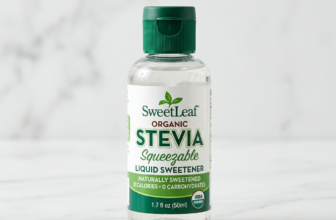
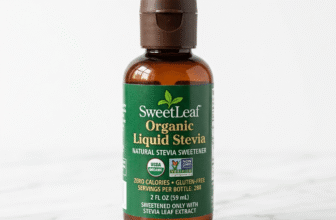
SweetLeaf is the benchmark most serious liquid stevia users point to. It comes in a glass dropper bottle in a wide range of flavors — plain sweet drops, English Toffee, Chocolate Raspberry, Vanilla Crème, and more — and delivers precise per-drop dosing. The taste is excellent: clean, with a marginally more pronounced stevia character than Truvia in direct side-by-side comparison, though most people don’t notice this in actual drinks. The dropper format decisively wins on precision. Truvia’s squeeze bottle wins on speed and ease of use once you’re calibrated, and on availability — SweetLeaf can be harder to find in conventional grocery stores. Pricing is similar, with SweetLeaf running slightly higher per ounce in most markets.
Truvia Liquid vs. NuNaturals NuStevia Liquid
NuNaturals appeals to buyers who want the absolute minimal ingredient list. Their liquid uses stevia extract and vegetable glycerin — no natural flavors added. The glycerin gives the liquid a very slightly thicker consistency that some people describe as pleasantly syrup-like and others find slightly odd. Taste is clean and comparable to Truvia, with a marginally more pronounced stevia note. Dropper bottle format only. Harder to source in physical stores, primarily available online, and slightly more expensive per ounce than Truvia in most markets.
Truvia Liquid vs. Pyure Organic Liquid Stevia
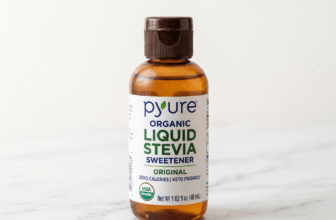
Pyure is USDA-certified organic and Non-GMO Project Verified — both credentials Truvia’s liquid version lacks on the organic front. If organic sourcing is a priority for you, that’s a meaningful differentiator. Pyure’s extract is reported by many users to be slightly more concentrated than Truvia’s, meaning you need a little less per serving. Flavor is clean with very little aftertaste. Dropper format. Price is comparable to Truvia, sometimes marginally less expensive in health food channels.
Truvia Liquid vs. Powdered Truvia (Granular)
For most beverage applications, liquid is faster and more convenient — end of discussion. For baking, granular wins because it measures like sugar, provides bulk, and has a larger library of tested recipes written specifically for it. The ideal setup, which I’ve now adopted permanently, is keeping both formats on hand: liquid for the coffee maker, iced tea pitcher, and smoothie blender; granular for the oven. They are genuinely complementary products, not competing ones.
11. Where to Buy and Price List
Amazon
The Truvia Calorie-Free Liquid Sweetener Squeeze Bottle is available on Amazon under ASIN B09XQTRL2N. Current pricing:
- Single bottle (3.53 fl oz): $7.49
- 2-pack: $13.89 — saves approximately $1.09 versus buying two singles
- Subscribe & Save (2-pack, 10% discount): $12.49 per delivery
Prime shipping is available. Check the product listing for coupon clips — Truvia periodically runs 15–20% off promotions that appear as clip-on coupons on the Amazon page, particularly around New Year and summer months when demand for calorie-free sweeteners spikes. At Subscribe & Save pricing for the 2-pack, your per-bottle cost drops to $6.25, which is genuinely competitive.
EnzoStevia.com
EnzoStevia carries the Truvia Liquid Squeeze Bottle at $7.99 per bottle. Use coupon code AWESOME at checkout to take 3% off, bringing your per-bottle price to approximately $7.75. That’s not a dramatic discount on a single bottle, but it adds up if you’re buying three or four at a time, and EnzoStevia tends to maintain better in-stock availability than big-box retailers during peak periods. The site also carries a curated selection of other stevia products, which makes it a convenient one-stop shop if you’re comparing options. Find it at enzostevia.com.
Other Retailers
- Walmart: Approximately $6.98 in-store and online — often the lowest single-bottle price, but availability is inconsistent depending on location and season.
- Target: $7.49, frequently available for same-day Drive Up pickup, which is worth a lot when you run out on a Sunday morning and the pitcher of iced tea won’t sweeten itself.
- Whole Foods Market: $8.49 — highest markup of any mainstream retailer, but stocked reliably and easy to grab during a regular grocery run.
- Kroger / Safeway / Publix: $7.29–$7.99 depending on region, with occasional store-brand digital coupons that can bring it closer to $6.50.
- Thrive Market (online): Members can typically find it at $6.89 with free shipping over $49 — a good option if you’re already a member and buying other pantry staples at the same time.
12. People Also Ask
Is the Truvia liquid stevia squeeze bottle the same as a dropper-format stevia?
No, though they contain the same sweetening compound. Truvia’s squeeze bottle uses a narrow nozzle tip for a continuous-flow pour that you control by squeezing pressure and duration. Dropper-format stevia bottles — like SweetLeaf or NuNaturals — use a glass tube and rubber bulb that deliver individual countable drops. Both formats use stevia leaf extract at similar concentrations, but the squeeze bottle is faster for larger quantities and less precise for very small amounts. If you need single-drop precision — say, for a very small volume of liquid or a recipe requiring exact sweetness calibration — a dropper bottle is the better choice. For a cup of coffee or a pitcher of tea, the squeeze bottle is meaningfully faster once you’ve calibrated your squeeze.
How much Truvia liquid equals one Truvia packet?
One Truvia green packet sweetens to the equivalent of two teaspoons of sugar. In liquid terms, that translates to roughly half a teaspoon of the liquid sweetener, or about two and a half milliliters. In squeeze bottle language, that’s approximately two to three medium squeezes depending on your pressure. As a starting point for calibration: squeeze into a small spoon and aim for just under half a teaspoon, then taste and adjust. It’s easier to add more sweetness than to remove it, so start on the conservative side with a new beverage or recipe.
Can you bake with Truvia liquid stevia?
Yes, with recipe adjustments. Liquid stevia provides sweetness but not bulk, so replacing sugar one-for-one in baking volume will leave you with under-filled pans and denser, sometimes crumbly results. A workable starting point: replace each cup of sugar with one teaspoon of Truvia liquid plus an additional bulking agent — one-third cup of unsweetened applesauce, almond flour, or plain Greek yogurt works well depending on the recipe type. Cookies, bars, and custard-style desserts adapt most cleanly. Yeasted breads and very delicate layer cakes are harder to adapt because sugar plays a structural and moisture-retention role beyond just sweetness. Budget for at least one test batch before committing to any substitution in a recipe you care about.
Does Truvia liquid stevia have an aftertaste?
Most users — including self-described stevia skeptics — report no noticeable aftertaste from Truvia’s liquid formulation. The key is the extract type: Truvia uses rebaudioside A (Reb A), which is the sweetest and cleanest-tasting glycoside isolated from the stevia leaf through selective extraction. The bitter, licorice-adjacent, or metallic aftertaste that many people associate with stevia comes primarily from lower-quality whole-leaf extracts or mixed-glycoside formulas where less desirable compounds haven’t been separated out. Truvia’s natural flavor addition also softens any residual green note at the edges of the sweetness. If you’ve tried other stevia products and been put off by bitterness, Truvia’s liquid is a strong candidate for changing your mind — it consistently performs best in blind taste tests among former stevia skeptics.
13. SERP
When I searched “truvia liquid stevia squeeze bottle review” to understand what was already out there, the results were a mix of brand-owned content and large retailer pages rather than independent editorial reviews. The first organic result was Truvia’s own product page at truvia.com, which offers ingredient information and usage equivalencies but no independent performance assessment. Positions two and three were Amazon and Walmart product listings, both populated with aggregated customer reviews ranging from one-line impressions to occasional detailed accounts — useful, but fragmented. Further down the first page, a low-carb baking blog mentioned the liquid Truvia favorably in a roundup of keto-friendly sweeteners but spent fewer than two paragraphs on it. One comparative nutrition site appeared with a sweetener comparison table that included Truvia but focused its prose primarily on SweetLeaf and Pyure. Notably absent from the entire first page: any single article that followed someone through extended daily use of the squeeze bottle specifically, examined the format tradeoffs between squeeze and dropper mechanisms, and covered baking performance in real kitchen tests. That gap is exactly what this review is written to fill.
14. Top 20 Related Topics
- Best liquid stevia for coffee and espresso drinks
- Truvia vs. SweetLeaf liquid stevia: side-by-side comparison
- How to bake with liquid stevia instead of granulated sugar
- Stevia brands with no aftertaste: which ones actually work
- Liquid stevia for iced tea, cold brew, and lemonade
- Is rebaudioside A (Reb A) safe for daily use?
- Truvia liquid sweetener full ingredients and nutrition label breakdown
- Dropper vs. squeeze bottle liquid stevia: which format is better?
- Zero-calorie sweeteners for people managing type 2 diabetes
- Best keto-friendly liquid sweeteners ranked by taste
- How much liquid stevia equals one cup of granulated sugar?
- Best stevia sweetener for homemade lemonade and citrus drinks
- Does stevia raise blood sugar or insulin levels?
- Erythritol-free stevia products: options and reviews
- Liquid stevia concentration chart and conversion guide
- How long does liquid stevia last after opening?
- Organic stevia vs. non-organic stevia: does sourcing matter?
- Best places to buy Truvia liquid sweetener at the lowest price
- Stevia sweetener for smoothies and protein shakes
- Low-sugar baking substitutions: a complete practical guide