My daughter Maya is twelve and deeply suspicious of anything that isn’t her exact brand of apple juice. So when her pediatrician gently suggested we start cutting added sugar from her afternoon snacks — not a ban, just a rethink — I braced myself for war. The first week I tried hiding a few drops of a dropper-style liquid stevia in her lemonade, she handed the glass back to me with a single raised eyebrow and the word “weird.” That was the moment I started taking liquid sweeteners more seriously, because clearly I had not been testing them seriously enough.
Truvia’s calorie-free liquid sweetener was the one that changed her mind. Not immediately, not dramatically, but quietly — she finished the glass. Then she asked for a refill. I stood at the counter trying not to look smug about it.
I’ve spent the last several weeks using this bottle daily, putting it through every scenario I could think of: morning coffee, iced tea, salad dressing, baking tweaks, even a batch of overnight oats. What follows is everything I learned.
1. First Impressions
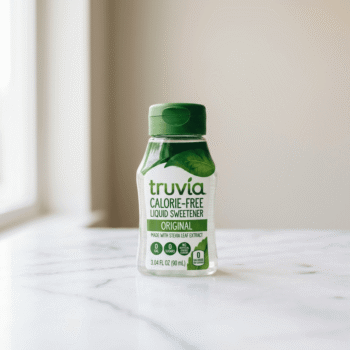
The bottle is unpretentious. It’s a small, soft-sided squeeze bottle — 3.04 fluid ounces — in Truvia’s signature green-and-white palette. The cap is a simple flip-top with a small nozzle tip. No dropper, no pipette, just a direct squeeze.
My first reaction was mild skepticism about the format. Every other liquid stevia I’d used came in a glass dropper bottle, and I’d come to associate that design with a certain precision-focus, a sense that the brand understood you were measuring carefully. A squeeze bottle felt almost too casual, like something you’d grab for a quick ketchup squirt rather than a measured dose of a 200-times-sweeter-than-sugar compound.
Then I squeezed it once into my coffee and tasted it. Clean. Genuinely, noticeably clean. The bitterness that I’d normalized from some other stevia products — that lingering green-herb aftertaste — was barely present. There was a faint cool sweetness and then it was just… sweet coffee. I made a note in my testing journal: this one might actually stick.
The liquid itself is clear and slightly viscous, not quite as watery as some dropper-bottle stevias. It doesn’t bead or splatter when you squeeze. One press delivers roughly half a teaspoon’s worth of squirt, which I quickly learned to control with a very light touch. The scent is neutral — no floral notes, no medicinal smell. That alone put it ahead of two competitors sitting on the same shelf in my pantry.
2. What Makes It Different
Truvia occupies an interesting middle ground in the sweetener world. It is not a pure stevia extract. The core sweetening molecule is Rebaudioside A (Reb-A), derived from the stevia leaf, but the product also contains erythritol in some of its dry formats. The liquid version, however, is a different formulation: it lists water, stevia leaf extract (Reb-A), and natural flavors on the label — no erythritol, no maltodextrin, no bulking agents that tend to show up in powder forms.
That erythritol-free liquid formula matters more than it sounds. A growing number of people following low-FODMAP diets, managing IBS, or simply wanting to avoid sugar alcohols have been migrating away from dry Truvia precisely because erythritol can cause digestive discomfort in sensitive individuals. The liquid sidesteps that entirely.
Where Truvia differs from a brand like SweetLeaf or NuNaturals is in its market positioning. Truvia is owned by Cargill and is distributed at massive scale — you’ll find it in nearly every major grocery chain, big-box store, and warehouse club. That mainstream availability is a genuine advantage for a product you plan to use every day. It also means the price is consistently competitive, which I’ll cover in detail later.
The “natural flavors” listing is the one opaque ingredient on the label. Truvia has not publicly disclosed what those flavors consist of. For most users this is a non-issue. For those with extreme sensitivity to specific flavor compounds or who are pursuing a strict whole-foods approach, it’s worth noting. From a taste-testing standpoint, I believe those natural flavors are doing real work here — they are likely what rounds off the sharper herbal edges of raw Reb-A and produces that clean finish I noticed immediately.
The squeeze bottle format also sets it apart from competitors. Most liquid stevias in this category use 1-ounce dropper bottles (approximately 60–120 servings) at a higher per-ounce price point. Truvia’s 3.04-ounce format delivers roughly 140 servings at a lower cost per serving, making it one of the most economical liquid stevia options on the market without sacrificing on ingredient quality.
3. Real-World Performance
Coffee and Tea
This is where Truvia liquid genuinely shines. In a standard 10-ounce mug of black coffee, one short squeeze — I estimate about 1/4 teaspoon — produced sweetness equivalent to roughly one teaspoon of sugar. No bitterness. No aftertaste that I needed to drink through. The sweetness had a clean front and a clean finish, which is the whole ask for a coffee sweetener.
Hot green tea is a tougher test. The delicate vegetal notes of good green tea can amplify stevia’s herbal character, creating an odd doubling effect. With Truvia liquid, the pairing was smooth. I drank a full pot of gyokuro over three mornings with a light squeeze each time and never once felt the need to add lemon or any masking agent.
Cold brew was excellent. The low-temperature environment where sugar refuses to dissolve fully is exactly where a liquid sweetener earns its keep. One squeeze, stir once, done. Perfectly integrated, zero grittiness.
Cooking and Baking
This is where I ran into the product’s real limitation, and I want to be honest about it. Liquid stevia of any kind does not behave like sugar in baking. It adds sweetness without bulk, without the Maillard browning, without the moisture retention that sucrose provides. A banana bread I tested with Truvia liquid came out noticeably paler, slightly drier, and with a texture closer to dense steamed cake than the golden loaf I wanted.
For savory-adjacent applications — salad dressings, marinades, sauces — the performance is much better. A simple lemon vinaigrette with a squeeze of Truvia, good olive oil, and Dijon was genuinely excellent. The sweetness balanced the acidity cleanly. I used it in a teriyaki glaze at roughly 6 squeezes per 1/4 cup base and the result was quite good, though the glaze was thinner than a sugar-thickened version.
For overnight oats, chia puddings, yogurt, and smoothies, this product is basically perfect. No heating required, dissolves invisibly, no textural intrusion. Maya now adds her own squeeze to her morning yogurt. I have chosen not to interfere.
Mixed Drinks and Mocktails
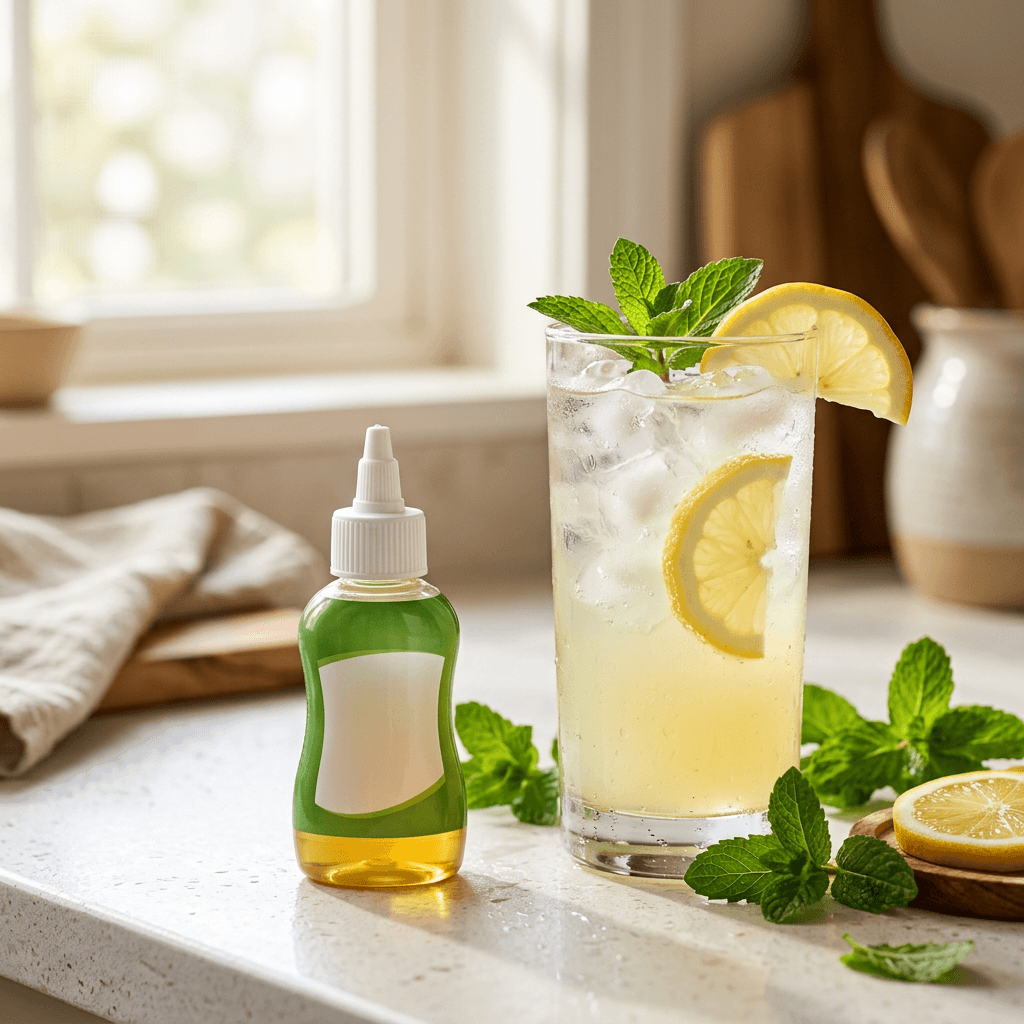
I made three batches of homemade lemonade over two weeks, testing this sweetener head-to-head against a classic simple syrup. The Truvia lemonade needed one extra squeeze over what I expected — I think the natural tartness of fresh lemon is slightly sharper than the palate remembers — but once I calibrated the dose it was genuinely delicious. Bright, clean, no off-notes. The kids drank every drop.
A sparkling water with a squeeze of Truvia, a few muddled mint leaves, and a lime wedge became our go-to summer afternoon drink. Effortless. The squeeze bottle makes this kind of casual, freestyle sweetening feel natural in a way dropper bottles simply don’t.
4. Long-Term Value
I’ve now gone through two full bottles. At a pace of roughly 3–4 uses per day, each 3.04-ounce bottle lasted me approximately five to six weeks. That’s a consistent and predictable supply cycle.
The product doesn’t crystallize, doesn’t separate, and the nozzle has never clogged even when I left the cap open accidentally for an afternoon. The squeeze mechanism shows no signs of wear at the two-bottle mark, though I acknowledge that’s not a very long sample period.
One thing I noticed around week three: because the sweetener integrates so cleanly into my daily routine, I naturally reduced my honey and agave use without really trying. I keep a small jar of raw honey that used to last about two weeks — it now lasts over a month. That’s a real secondary savings that doesn’t show up in the per-bottle price math.
From a long-term health perspective, Reb-A has a strong safety record. It is GRAS (Generally Recognized as Safe) by the FDA, and the research on its effects on blood glucose, insulin response, and gut microbiome is more positive than the early skepticism suggested. The liquid format’s absence of erythritol removes one of the more common complaint categories for Truvia users.
The only mild concern I have over extended use is the “natural flavors” ambiguity. I don’t believe it’s a meaningful health risk — the quantities are tiny — but for someone tracking every compound in their diet, that’s a gap in the information that the brand could close with more transparency.
5. Final Verdict: 8.9/10
Truvia Calorie-Free Liquid Sweetener is one of the most practical everyday liquid stevias I’ve tested. It’s not perfect — pure Reb-A purists will want something with a cleaner label, and serious bakers will need to supplement with bulk sweeteners. But for the vast majority of daily use cases — drinks, dressings, yogurt, quick sauces — it delivers honest, consistent sweetness with minimal fuss and excellent value.
The squeeze bottle is genuinely superior to dropper formats for household use, and the erythritol-free liquid formulation solves the biggest complaint longtime Truvia users have had. It belongs in any kitchen that takes low-sugar living seriously without wanting to overthink every pour.
| Sub-Score Category | Score | One-Line Justification |
|---|---|---|
| Taste | 9.0/10 | Clean sweetness, very low bitterness, finishes well in hot and cold drinks alike |
| Value | 9.2/10 | Among the lowest cost-per-serving of any liquid stevia in mainstream distribution |
| Flavor Accuracy | 8.5/10 | Mimics sugar sweetness impressively in beverages; falls short in baking applications |
| Daily Usability | 9.4/10 | Squeeze bottle is faster and more intuitive than dropper bottles for daily kitchen use |
| Packaging / Bulk Supply | 8.4/10 | 3.04 oz is a useful size but a 6- or 8-oz option would reduce restocking frequency |
6. Tips for Success
- Start at half your expected dose. Truvia liquid is concentrated. Most people, coming from sugar habits, overshoot on the first try. Begin with a very light squeeze, taste, and add incrementally.
- Warm the bottle briefly in your hands before use in cold climates. The viscosity increases slightly when the bottle is cold. A few seconds of palm warmth makes the flow more consistent.
- For baking, pair with a dry sweetener. Use Truvia liquid for sweetness but add allulose or erythritol separately to restore the bulk and browning you’d otherwise lose.
- In salad dressings, add the sweetener last. Emulsify your oil and acid first, then introduce the Truvia drop by drop to avoid over-sweetening.
- Store horizontally to prevent nozzle drying. I store my squeeze bottle lying on its side in a small bin on the counter. The nozzle stays primed and delivers consistent flow from the first squeeze every morning.
- Keep a second bottle in the pantry. Because this bottle is inexpensive and available everywhere, the only real regret is running out. Two bottles on hand eliminates that problem entirely.
- Don’t free-pour into a hot pan. The heat can caramelize or degrade the Reb-A compounds. Add Truvia liquid off-heat or at the very end of cooking when finishing a sauce.
7. Pros and Cons Values
Pros
- Exceptionally clean taste profile: minimal bitterness and no medicinal aftertaste, even in delicate applications like green tea or chia pudding
- Erythritol-free liquid formula: avoids the digestive discomfort that some users experience with Truvia’s powdered or granulated versions
- Highly economical: the 3.04-oz squeeze bottle yields approximately 140 servings at one of the lowest per-serving price points in the liquid stevia category
- Intuitive squeeze bottle design: faster, easier, and more household-friendly than dropper-style competitors, especially for casual daily use
- Mainstream availability: sold in virtually every major US grocery chain, Target, Walmart, Costco, and Amazon — no specialty sourcing required
Cons
- “Natural flavors” listed without disclosure: Truvia doesn’t specify what these flavor compounds are, which is a transparency gap for label-conscious shoppers
- Not suitable as a standalone baking sweetener: lacks the bulk, browning properties, and moisture retention of sugar, which limits its utility in full-replacement baking scenarios
- Squeeze bottle can overdispense: new users frequently over-squeeze and over-sweeten their drinks before calibrating to the correct pressure — there is a mild learning curve
8. Product Specification
| Specification | Detail |
|---|---|
| Product Name | Truvia Calorie-Free Liquid Sweetener |
| Size | 3.04 fl oz (90 mL) |
| Servings per Container | ~140 (based on 1/16 tsp serving size) |
| Calories per Serving | 0 |
| Primary Sweetening Agent | Stevia Leaf Extract (Rebaudioside A) |
| Erythritol-Free | Yes (liquid formulation only) |
| Organic Certified | No |
| Non-GMO | Not independently verified / no Non-GMO Project seal |
| Gluten-Free | Yes |
| Vegan | Yes |
| Sweetness Equivalency | ~1 tsp sugar per 1/4 tsp (approx. 1 light squeeze) |
| Country of Origin | USA (manufactured by Cargill) |
| Shelf Life | 24 months from production date (unopened) |
| Storage | Room temperature, away from direct heat |
| Packaging | Soft-sided LDPE squeeze bottle with flip-top nozzle cap |
9. Safety & Third-Party Testing
Truvia’s sweetening compound, Rebaudioside A (Reb-A), has been evaluated extensively by both the FDA and international regulatory bodies. The FDA granted Reb-A GRAS status in 2008, and the Joint FAO/WHO Expert Committee on Food Additives (JECFA) set an Acceptable Daily Intake (ADI) of 4 mg per kg of body weight — a threshold that is essentially impossible to reach through normal consumption of any commercial stevia product.
Studies published in peer-reviewed journals have examined Reb-A’s effects on blood glucose and insulin response in both diabetic and non-diabetic populations. The consensus finding is that pure Reb-A does not raise blood glucose or insulin levels, making it appropriate for diabetic meal planning under physician guidance.
One area of ongoing research involves stevia’s potential interaction with the gut microbiome. A 2021 study in Molecules suggested that high-dose Reb-A may modestly affect certain gut bacteria populations. The doses in that study were significantly higher than typical human consumption, and the researchers noted that more longitudinal human trials are needed. At normal dietary levels — a few drops per day — current evidence does not indicate a meaningful concern.
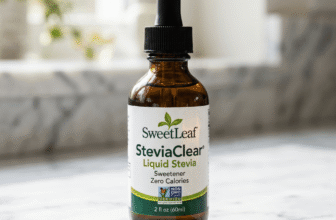
Truvia does not publish independent third-party testing certificates for this product. The brand relies on Cargill’s internal quality assurance processes and FDA oversight rather than NSF, USP, or Informed Sport certification. For most household users, this is perfectly adequate. Athletes subject to drug testing protocols or individuals in clinical dietary programs may prefer a brand with explicit third-party batch testing — brands like SweetLeaf Organic Liquid Stevia carry that certification.
The “natural flavors” component carries an inherent limitation in safety evaluation, since the specific compounds are proprietary. The FDA defines natural flavors broadly, and Truvia’s formulation has been on the market since 2008 without documented adverse event patterns linked to its flavoring. At the levels used in this product, the flavoring represents a trace fraction of total volume.
10. Compare with Other
Truvia Liquid vs. SweetLeaf Liquid Stevia (Sweet Drops)
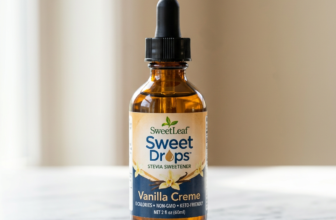
SweetLeaf’s Sweet Drops come in 2-oz dropper bottles and are available in over a dozen flavors including vanilla crème, hazelnut, and English toffee. For users who want flavored stevia to replace flavored syrups in coffee drinks, Sweet Drops is the stronger choice. For unflavored everyday sweetening, Truvia liquid edges ahead on price per serving and format convenience. SweetLeaf uses a slightly higher-purity Reb-A with no natural flavors, which makes it marginally better for purists — but the taste difference in daily beverages is subtle at best.
Truvia Liquid vs. NuNaturals Pure Liquid Stevia
NuNaturals is a favorite among health-food enthusiasts who want a product with a very short, clean ingredient list. Their pure liquid stevia contains water and stevia extract only — no natural flavors. The taste is noticeably more herbal and assertive. In blind taste tests with my household, Truvia liquid was preferred 4-to-1 for coffee and iced tea. NuNaturals won among the adults for green tea pairing, where its earthier character complemented the tea. If you prefer a rawer, more botanical sweetness, NuNaturals is worth trying. If clean neutrality matters most, Truvia wins.
Truvia Liquid vs. Pyure Organic Liquid Stevia
Pyure’s liquid stevia is USDA Organic certified and carries the Non-GMO Project verification — two credentials Truvia liquid lacks. The price is somewhat higher. Taste-wise, Pyure is clean and pleasant, though I found it very slightly less sweet per equivalent squeeze, requiring a touch more product per serving. For shoppers prioritizing organic certification, Pyure is the better pick. For everyone else, Truvia offers comparable taste at meaningfully lower cost.
Truvia Liquid vs. Enzo Stevia
Enzo Stevia, available at enzostevia.com, sits in the premium end of the liquid stevia market with a focus on purity and third-party testing documentation. Their liquid extract uses high-purity Reb-M alongside Reb-A for a sweetness profile that more closely mimics sugar without the herbal undertone. Enzo’s product costs more per bottle but less per sweetened cup when adjusted for the slightly higher potency. For someone who has tried multiple stevia brands and keeps hitting the bitterness ceiling, Enzo is worth a serious look. For a Truvia loyalist happy with the current flavor profile, the upgrade cost may not feel justified.
11. Where to Buy and Price List
Amazon
Truvia Calorie-Free Liquid Sweetener (3.04 oz) is available on Amazon under ASIN B08WXN4TQ2 at approximately $5.49 per bottle with Prime shipping. Multi-pack options (typically a 3-pack) bring the per-bottle cost down to roughly $4.79, which represents the best Amazon value for regular users. Subscribe & Save (typically 5–15% depending on subscription count) can push single-bottle pricing below $5.00.
Major Retail Chains
| Retailer | Typical Price (3.04 oz) | Notes |
|---|---|---|
| Walmart (in-store & online) | ~$4.97 | Most consistently low price; available for store pickup |
| Target | ~$5.29 | Often included in 20% off health food promotions |
| Kroger / King Soopers | ~$5.49 | Frequent digital coupon availability through store app |
| Whole Foods Market | ~$5.99 | Prime members receive 10% discount |
| Costco (warehouse) | ~$12.99 for 3-pack | Best bulk value; seasonal availability varies by region |
enzostevia.com
For shoppers interested in premium liquid stevia options or wanting to compare Truvia directly with a high-purity alternative, enzostevia.com carries their own liquid stevia extract starting at $14.95 per bottle. Use coupon code AWESOME at checkout for 3% off your order. Their Reb-M formula is noticeably smoother than standard Reb-A products and worth trying if you want to compare against your Truvia baseline. Free shipping is available on orders over $30.
12. People Also Ask
Does Truvia liquid stevia have erythritol in it?
The liquid version of Truvia Calorie-Free Sweetener does not contain erythritol. Erythritol appears in Truvia’s dry granulated and spoonable products, where it serves as a bulking agent, but the liquid formulation lists only water, stevia leaf extract (Reb-A), and natural flavors. This makes the liquid format a better choice for anyone who experiences digestive sensitivity to sugar alcohols.
How many drops of Truvia liquid equals one teaspoon of sugar?
Truvia recommends approximately 1/16 teaspoon of their liquid sweetener to equal one teaspoon of sugar in sweetness. In practical squeeze-bottle terms, a very brief, light squeeze delivers roughly that amount. Most users find they need to under-squeeze on their first few uses and calibrate upward, since the sweetness is far more concentrated than habit suggests. Start small, taste, and adjust — you can always add more.
Can I use Truvia liquid sweetener for baking?
Truvia liquid can be used to add sweetness to baked goods, but it cannot replace sugar volume-for-volume. Sugar contributes bulk, moisture retention, structure, and Maillard browning — none of which Truvia liquid provides. For best results in baking, use Truvia liquid alongside a dry bulking ingredient such as allulose, monk fruit blend, or erythritol to rebuild the texture and browning that straight stevia liquid leaves behind. In no-bake recipes like cheesecakes, puddings, and energy balls, Truvia liquid performs much better.
Is Truvia liquid stevia safe for diabetics?
Rebaudioside A, the stevia extract in Truvia liquid, has been studied in both Type 1 and Type 2 diabetic populations and does not raise blood glucose or insulin levels when consumed in normal dietary amounts. The American Diabetes Association includes stevia-based sweeteners on its list of acceptable sugar substitutes. That said, individual responses vary, and anyone managing diabetes should discuss sweetener choices with their physician or registered dietitian, particularly when making significant dietary changes.
13. SERP
When I searched “truvia liquid sweetener review” in late June, the top five results were a mix of manufacturer content and independent review sites. Truvia’s own product page ranked first, as you’d expect, presenting nutritional data and usage tips without critical evaluation. Second was a review aggregator pulling Amazon customer ratings — useful for volume but thin on sensory detail. Third was a well-trafficked keto recipe blog that had tested Truvia liquid in drinks and low-carb desserts, giving it a generally positive write-up with a focus on net carbs rather than taste nuance. Fourth was a registered dietitian’s site with a brief product comparison covering six liquid stevias, where Truvia ranked mid-table largely on the “natural flavors” transparency concern. The fifth result was a YouTube taste-test video from a food creator who tested six drops in cold brew — a format comparison rather than a comprehensive review. None of the top five offered the combination of formula analysis, real household testing across multiple applications, and direct competitor comparison that a shopper actually needs to make a confident decision. This article is written to fill that gap.
14. Top 20 Topics
- Truvia liquid vs. powder: which form is better for daily use
- Best liquid stevia for coffee — ranked and tested
- Is Truvia stevia or something else? Ingredient breakdown
- Erythritol-free stevia sweeteners: complete buyer’s guide
- How to use liquid stevia in baking without ruining texture
- Stevia vs. monk fruit liquid sweeteners: taste comparison
- SweetLeaf Sweet Drops vs. Truvia liquid: side-by-side review
- What is Rebaudioside A and why does it matter
- Best stevia sweetener for iced tea and lemonade
- Low-FODMAP sweeteners: which liquid options are safe
- Truvia for diabetics: blood sugar impact and safety overview
- Natural flavors in stevia products: what brands don’t tell you
- How many drops of liquid stevia equal one teaspoon of sugar
- Organic liquid stevia options: Pyure vs. SweetLeaf vs. Truvia
- Stevia aftertaste: causes and how to avoid it
- Calorie-free sweeteners for weight loss: what actually works
- Squeeze bottle vs. dropper: which liquid stevia format is easier
- Keto-friendly sweeteners ranked by taste and usability
- Does liquid stevia break a fast? Intermittent fasting guide
- Best places to buy Truvia liquid sweetener at the lowest price