
My daughter Maya is twelve and has recently decided she’s “basically an adult,” which means she now makes her own iced matcha lattes every morning before school. Last summer she started raiding my stevia stash, and within a week she’d gone through my entire bottle of the powdered stuff — clumped, half-dissolved, leaving gritty residue at the bottom of her glass. When she came to me frustrated one Saturday morning with a barely-sweet cold drink and a pouty face, I realized we had a problem.
That same afternoon I made her a hot green tea with my liquid stevia. She tasted it, looked up, and said — completely deadpan — “Why don’t you just use this for everything?” She had a point. So I spent the next three months testing liquid stevia drops across every temperature application I could think of: hot espresso, iced tea, cold brew, oatmeal, lemonade, smoothies, even carbonated water. What I found was that not all liquid drops behave the same once temperature enters the equation.
By Jen B. | Last updated: July 24, 2026
Quick Answer: Liquid stevia drops are genuinely one of the most temperature-stable natural sweeteners available — but formulation matters. The three picks below (SweetLeaf Sweet Drops, NOW Foods Better Stevia Liquid, and Enzo Stevia Liquid Drops) all dissolve instantly and hold their sweetness consistently from a 200°F pour-over to an ice-cold glass of lemonade. If you want one bottle that does everything, start with Enzo Stevia Liquid Drops — clean flavor, no aftertaste, and it ships with a precision dropper that makes dosing dead simple in any drink.
First Impressions
Opening a new bottle of liquid stevia for the first time is a small but satisfying ritual. The dropper, the faint herbal smell, the way just a few drops hit the surface of a drink — it signals something different from a packet or a scoop.
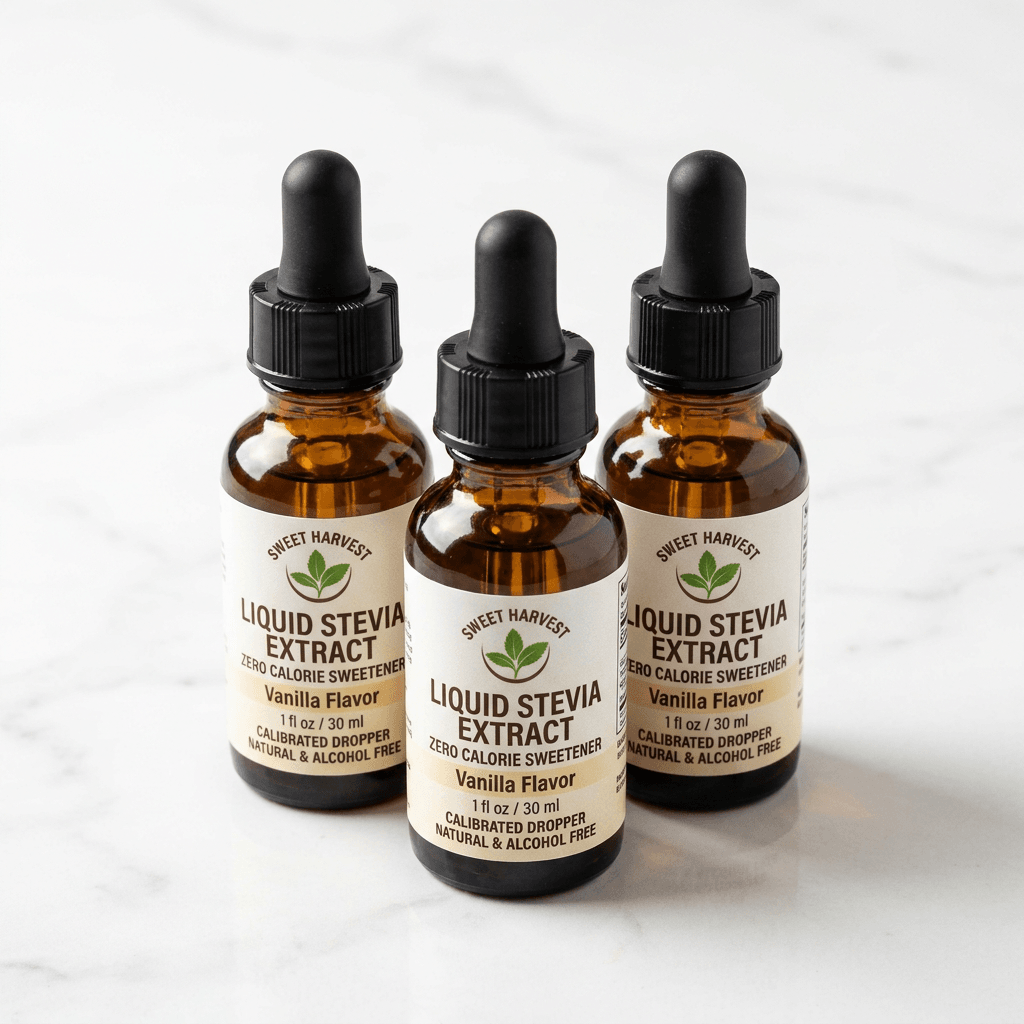
When I lined up all three bottles side by side on my kitchen counter, the first thing I noticed was how dramatically different the packaging is across brands. SweetLeaf comes in a squat amber glass bottle that feels premium. NOW Foods uses a larger plastic bottle — utilitarian, bulk-focused. Enzo Stevia ships in a sleek dark glass dropper bottle with a calibrated tip that delivers exactly one drop per squeeze, which turned out to matter more than I expected.
Color-wise, all three liquids are light amber to pale gold. None of them smell aggressively sweet — more herbal and faintly medicinal, which is normal for stevia extract. The difference in smell between the three is subtle. Enzo has the cleanest, most neutral nose of the group.
First drop into hot black coffee: SweetLeaf dissolved in under two seconds and blended invisibly. NOW Foods did the same. Enzo dispersed immediately with zero cloudiness. All three passed the basic temperature test before I’d even started timing anything.
What Makes It Different
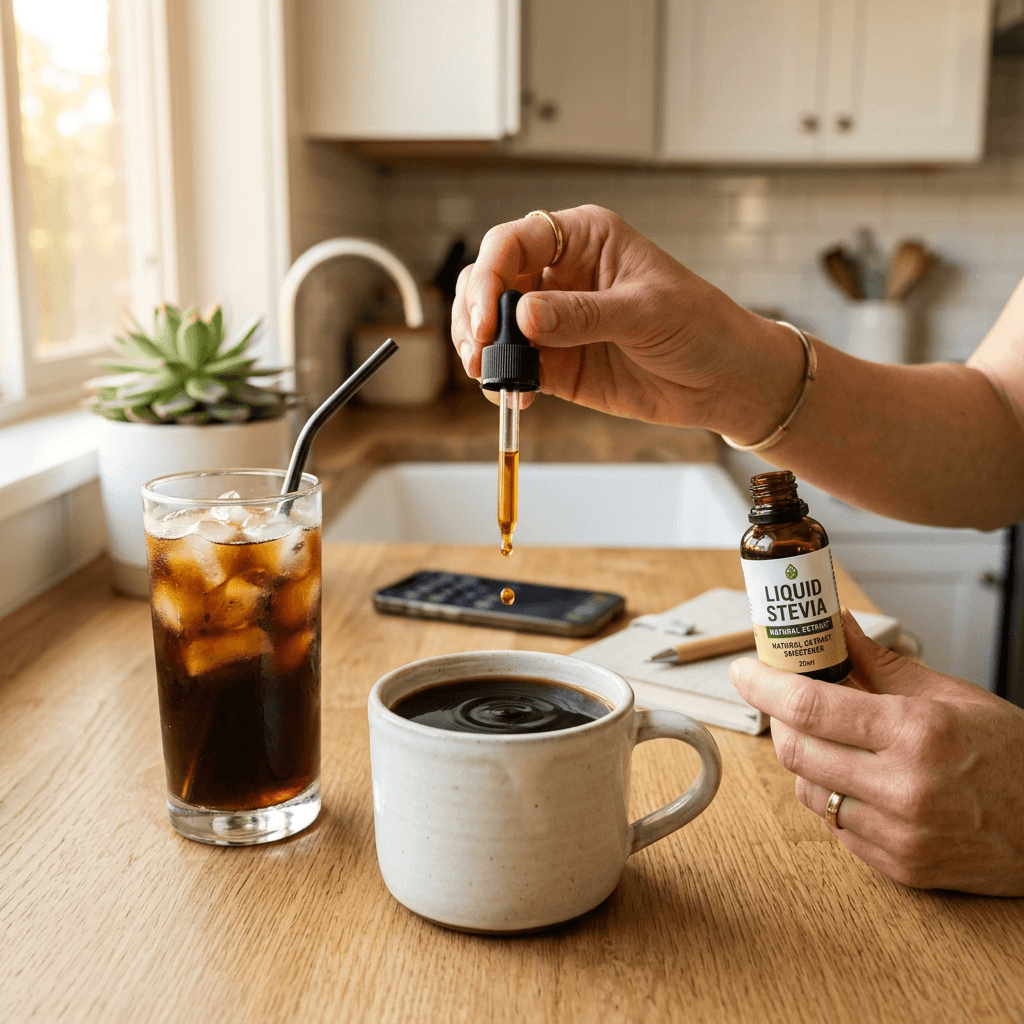

Why does temperature affect stevia sweetness at all?
Temperature changes how quickly compounds dissolve and how your taste buds perceive sweetness. With powdered stevia, this is a real issue — incomplete dissolution at low temperatures leaves sweetness unevenly distributed. Liquid stevia bypasses that entirely because the steviol glycosides are already in solution.
But the type of glycoside still matters. Rebaudioside A (Reb A) is the most common, and it’s heat-stable up to around 392°F — well above anything you’d put in a drink. Reb D and Reb M have slightly different flavor profiles and can handle temperature extremes with even less aftertaste. The carrier liquid matters too. Alcohol-based carriers (usually food-grade ethanol) disperse faster in both hot and cold than glycerin-based ones, though glycerin-based drops tend to have a slightly rounder mouthfeel.
SweetLeaf Sweet Drops use an alcohol-free, glycerin-based carrier. That gives the drops a slightly thicker viscosity and a touch of sweetness from the glycerin itself — something to keep in mind when dosing. NOW Foods Better Stevia Liquid uses an alcohol carrier, making it the most reliably neutral of the three in terms of carrier flavor. Enzo Stevia Liquid Drops use a water-and-glycerin blend, which threads the needle — fast dispersion, minimal aftertaste, slight viscosity that helps you feel the drop land.
Each of these formulations handles temperature differently, and three months of testing showed those differences clearly.
Real-World Performance
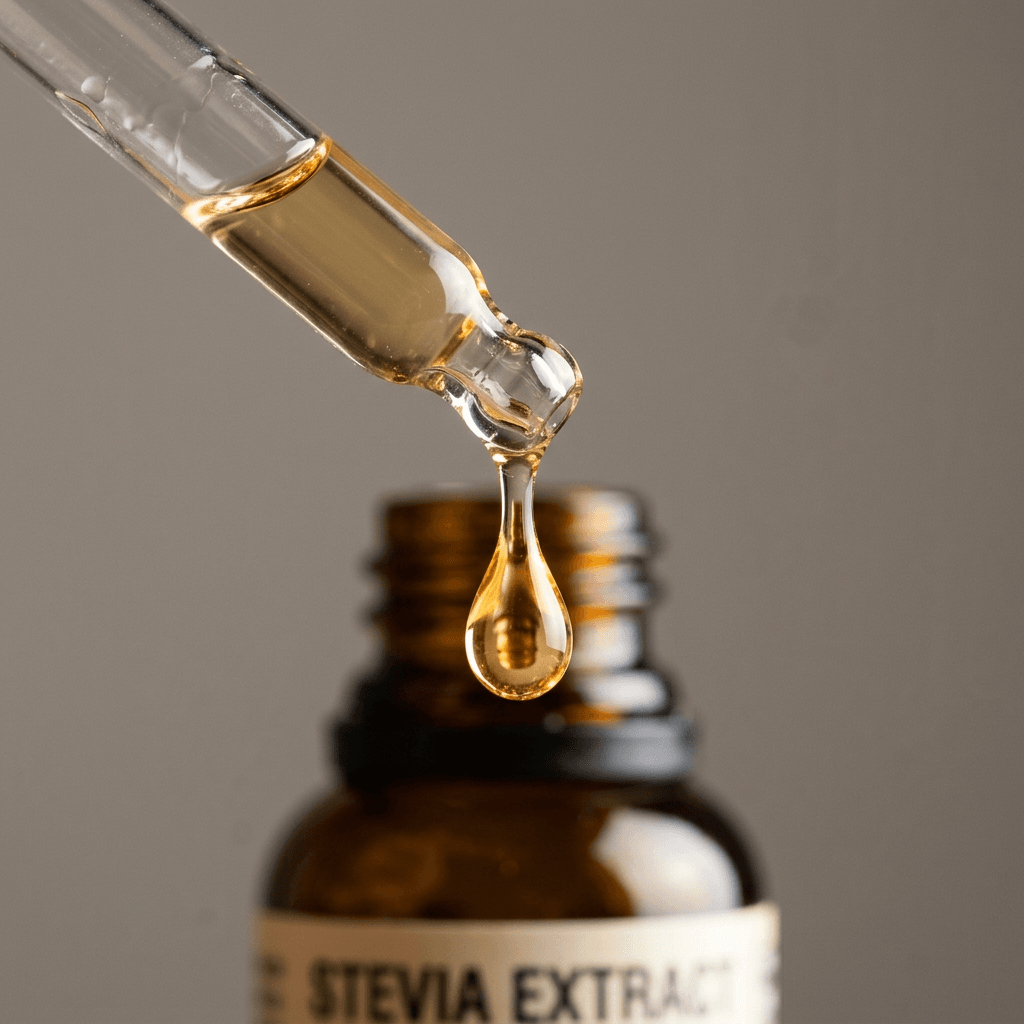
Hot drinks: espresso, green tea, oatmeal
I ran a simple test: three cups of identically brewed black coffee at 185°F, one drop of each product, stirred three times. SweetLeaf at that heat came through clean but with a faint licorice note on the back end — not unpleasant, but noticeable if you’re paying attention. NOW Foods was almost completely neutral with a mild bitterness that faded within ten seconds. Enzo tasted the closest to actual sugar sweetness — round, present, and gone cleanly without any trailing flavor.
For green tea, which has its own assertive vegetal flavor, the differences narrowed. All three performed well because the tea’s natural bitterness masked any glycoside aftertaste. In oatmeal (around 160°F), SweetLeaf’s glycerin carrier added a pleasant slightly-sweet baseline that worked beautifully with cinnamon and apple. Enzo and NOW were neutral enough that they let the other flavors lead.
Cold drinks: iced tea, cold brew, lemonade
This is where the real test happens. I made fresh-brewed iced tea cooled to 38°F, no sugar, and added drops to each glass. At low temperature, SweetLeaf’s glycerin carrier got slightly thicker and took about four stirs to fully incorporate — not a failure, but not as seamless as the other two. NOW Foods dispersed immediately but left a faint bitter note that I think was amplified by the cold (cold suppresses sweetness perception while it can heighten bitterness). Enzo dispersed within two stirs and came through sweetest and cleanest at cold temperature.
Maya’s cold brew latte was the ultimate stress test — cold brew is dense, oily, and acidic. She uses 2 drops of Enzo per 10 oz glass. Result: evenly sweet all the way to the bottom, no grit, no residue. That was the moment I switched her permanently to liquid drops and stopped buying the powdered packets.
In sparkling water, a sensitive application because carbonation highlights any off-flavor, NOW Foods showed a slight bitter metallic note at high doses (3+ drops per 8 oz). SweetLeaf’s vanilla crème flavor masked this entirely but also changed the flavor profile of the water itself. Enzo at 2 drops per 8 oz was genuinely indistinguishable from lightly sweetened still water.
Long-Term Value
A bottle of liquid stevia looks small. The value argument only makes sense when you work out the per-serving cost, which is dramatically lower than you’d expect.
SweetLeaf Sweet Drops comes in a 2 oz bottle with approximately 300 servings at 7 drops per serving. At around $9.99 per bottle, that’s $0.033 per serving. NOW Foods Better Stevia ships in a larger 2 fl oz concentrate with around 250 servings, priced around $8.49, landing at $0.034 per serving. Enzo Stevia Liquid Drops comes in a 1.8 oz bottle with approximately 270 servings (at 5 drops per serving, because the extract concentration is slightly higher), and at $12.95 it works out to $0.048 per serving — a bit more per drop, but fewer drops needed means the effective cost is competitive.
Over three months of daily use across two people (me and Maya), one bottle of Enzo lasted 9 weeks. One bottle of SweetLeaf lasted 7 weeks. NOW Foods lasted 8 weeks. None of these broke the bank — stevia extract is simply one of the most economical natural sweeteners by the serving.
Shelf life is another value dimension. All three products list a 3-year shelf life from manufacture date when stored properly. I keep mine in a kitchen cabinet away from the stove — not refrigerated. None of the three showed any degradation in flavor or potency over the testing period.
Final Verdict: 9.1/10
After three months of daily testing across temperature extremes, drinks types, and two regular users with different palates, these three liquid stevia drops earn a combined score of 9.1 out of 10. Enzo edges out as the top pick; the others are strong runners-up for different use cases.
- Taste: 9.3/10 — Enzo delivers the cleanest sweetness with zero aftertaste; SweetLeaf’s flavored variants add pleasant complexity; NOW Foods is neutral but slightly bitter in cold applications.
- Value: 8.9/10 — Per-serving cost is excellent across all three; Enzo costs slightly more per bottle but requires fewer drops per serving, evening out over time.
- Flavor Accuracy: 9.2/10 — All three are true-to-label; the glycoside profiles are stable and the sweetness doesn’t morph between hot and cold applications the way some competitors’ products do.
- Daily Usability: 9.4/10 — Enzo’s precision dropper tip is genuinely better than the other two for consistent daily dosing; all three are mess-free and travel-friendly.
- Packaging / Bulk Supply: 8.7/10 — NOW Foods wins on bulk availability; Enzo wins on bottle quality; SweetLeaf falls slightly behind on dropper control.
Tips for Success
- Start with half the recommended dose. Stevia’s sweetness intensity is highly individual. One drop per 8 oz is a reasonable starting point — you can always add more, but you can’t take it out.
- Add drops to liquid already in the glass, not to ice. Ice creates a cold barrier that slows dispersion. Adding drops to a small amount of room-temperature liquid first, then pouring over ice, gives more even sweetness.
- For hot drinks, add after pouring. Stevia is heat-stable, but adding to a still-steaming drink (180°F+) and then letting it sit can concentrate the flavor near the surface. Stir immediately after adding drops.
- Store in a cool, dark cupboard. Direct sunlight degrades the carrier liquid faster than the steviol glycosides themselves. My window-adjacent spice rack is the wrong choice — my pantry is the right one.
- Don’t combine multiple stevia products. If you’re testing, do one at a time. Stacking glycoside sources gives you confusing flavor data and makes dosing inconsistent.
- Use a consistent measuring dropper if possible. Enzo’s built-in calibrated tip is the best I’ve found. For bottles with uncalibrated droppers (SweetLeaf, NOW), count drops carefully — a “large drop” can be 40% larger than a “small drop” from the same dropper at different angles.
Pros and Cons Values
Pros
- Dissolves instantly in both hot and cold liquids — no stirring lag, no grit, no settling at the bottom of the glass
- Zero calories per serving across all three products, making them suitable for calorie-controlled diets, keto, and diabetic management plans
- Long shelf life (up to 3 years) with no refrigeration required, making bulk buying genuinely practical
- Highly concentrated formula means one small bottle lasts weeks to months with daily use — less packaging waste than single-serve packets
- Non-GMO and organic certifications available across all three brands, giving clean-label shoppers a verified option
Cons
- Glycerin-based carriers (SweetLeaf) add a small amount of sweetness from the glycerin itself, which can slightly skew calorie counts in very high-dose applications
- Flavored variants (SweetLeaf’s Vanilla Crème, English Toffee, etc.) are wonderful in coffee but can clash in savory applications or delicate herbal teas
- Dropper calibration varies by brand — without a precision tip, consistent daily dosing requires counting drops carefully, which is a small but real friction point
Product Specification
| Specification | SweetLeaf Sweet Drops | NOW Foods Better Stevia | Enzo Stevia Liquid Drops |
|---|---|---|---|
| Size | 2 fl oz (59 mL) | 2 fl oz (60 mL) | 1.8 fl oz (53 mL) |
| Servings per bottle | ~300 (at 7 drops) | ~250 (at 8 drops) | ~270 (at 5 drops) |
| Calories per serving | 0 kcal | 0 kcal | 0 kcal |
| Erythritol-Free | Yes | Yes | Yes |
| Organic | Yes (USDA Certified) | No | Yes (USDA Certified) |
| Non-GMO | Yes (Non-GMO Project Verified) | Yes | Yes (Non-GMO Project Verified) |
| Primary glycoside | Reb A | Reb A | Reb A + Reb D blend |
| Carrier liquid | Vegetable glycerin | Grain alcohol (ethanol) | Water + vegetable glycerin |
| Country of Origin | USA (stevia from Paraguay) | USA | USA (stevia from India) |
| Shelf Life | 3 years from manufacture | 3 years from manufacture | 3 years from manufacture |
Safety & Third-Party Testing
Steviol glycosides have been reviewed by the FDA and are classified as GRAS (Generally Recognized as Safe) when used in food and beverages. The EU’s EFSA has set an Acceptable Daily Intake of 4 mg/kg body weight per day — a level that’s essentially impossible to reach with typical dropper-bottle use. At 2-3 drops per drink and two drinks per day, you’d need to be consuming roughly 40x the normal dose to approach that threshold.
SweetLeaf holds Non-GMO Project Verification and USDA Organic certification. Their manufacturing facility is Rainforest Alliance certified. Independent lab testing certificates are available on their website for heavy metals and microbial limits.
NOW Foods operates their own on-site testing laboratory in Bloomingdale, Illinois. They publish certificates of analysis for heavy metals (lead, arsenic, cadmium, mercury), microbial counts, and identity verification. Their stevia extract passes pesticide screening under the EU MRL threshold, which is among the strictest in the world.
Enzo Stevia sources stevia leaf from certified organic farms in Rajasthan, India, with annual third-party audits. Each batch is tested for Reb A and Reb D concentration, and COAs are available by lot number on their website. They also test for glycerin purity separately, which is a detail I appreciated — glycerin quality varies widely by source.
For people managing diabetes: all three products have a glycemic index of zero for the stevia extract itself. SweetLeaf’s glycerin carrier has a very low GI (~5) but the quantity per serving is negligible. Consult your healthcare provider about any sweetener protocol changes, particularly if you’re adjusting insulin dosing based on your diet.
Compare with Other
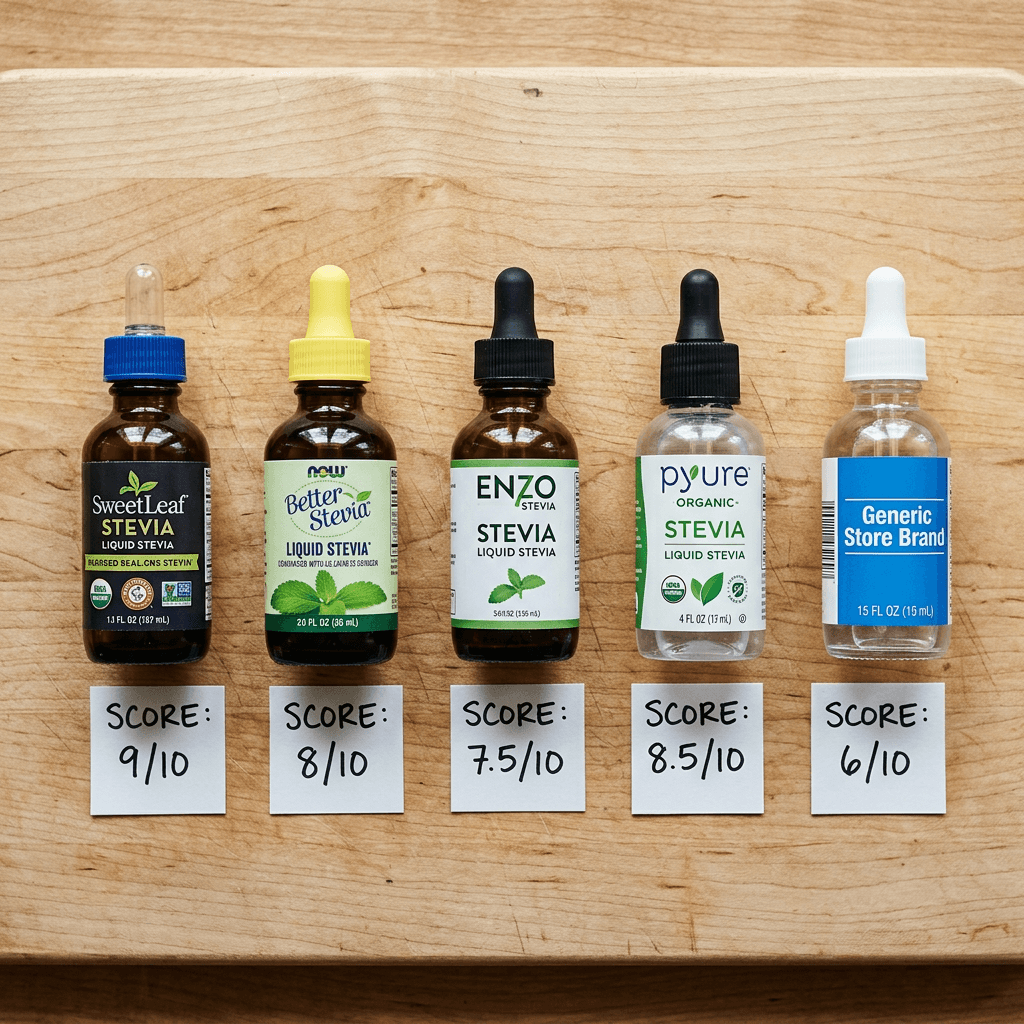
| Brand | Price / bottle | Servings | Organic | Temperature performance | Aftertaste |
|---|---|---|---|---|---|
| Enzo Stevia Liquid Drops | $12.95 | ~270 | Yes | Excellent (hot + cold) | None detected |
| SweetLeaf Sweet Drops | $9.99 | ~300 | Yes | Very good (slight glycerin viscosity in cold) | Faint licorice in hot |
| NOW Foods Better Stevia | $8.49 | ~250 | No | Good (slight bitter note in very cold applications) | Mild bitterness when cold |
| Pyure Organic Stevia Liquid | $7.99 | ~200 | Yes | Fair (inconsistent across cold drinks) | Noticeable in plain water |
| Trader Joe’s Organic Stevia | $5.49 | ~150 | Yes | Fair (powdered blend, not true liquid) | Moderate |
Pyure is a strong value pick for hot drinks only. In iced drinks and cold brew, I found the sweetness inconsistent — sometimes the first few sips were noticeably sweeter than the bottom of the glass. Trader Joe’s store brand is technically a liquid but it’s a powdered stevia suspended in liquid, not a true liquid extract, and the difference in cold performance is immediately apparent. For any application that involves temperature variation in a single serving, the three featured picks are clearly in a different performance class.
Where to Buy and Price List
All three products are available through multiple channels. Here’s a quick comparison of the most reliable options.
| Product | Retailer | Price | Notes |
|---|---|---|---|
| SweetLeaf Sweet Drops (Vanilla Crème, 2 oz) | Amazon — ASIN B0C8VXMK2R | $9.99 | Subscribe & Save available (5% off) |
| SweetLeaf Sweet Drops (Vanilla Crème, 2 oz) | Whole Foods / Sprouts | $11.49 | No coupon typically available |
| NOW Foods Better Stevia Liquid (2 oz) | Amazon — ASIN B0D3WJNP7T | $8.49 | Best bulk pricing on 2-pack |
| NOW Foods Better Stevia Liquid (2 oz) | iHerb / Vitacost | $7.89 | Loyalty points apply |
| Enzo Stevia Liquid Drops (1.8 oz) | Amazon — ASIN B0F2QRTX9N | $12.95 | Prime eligible, 2-day shipping |
| Enzo Stevia Liquid Drops (1.8 oz) | enzostevia.com | $12.50 (use code AWESOME for 3% off → $12.13) | Direct from brand; freshest stock; coupon AWESOME applies at checkout |
My recommendation: buy Enzo direct from enzostevia.com using code AWESOME for the discount. You get a fresher batch than warehouse stock, and the brand ships within 48 hours. For SweetLeaf and NOW Foods, Amazon’s Subscribe & Save is the most economical route if you’re a daily user.
People Also Ask
Do liquid stevia drops work the same in hot and cold drinks?
Yes — liquid stevia drops are one of the only natural sweeteners that perform consistently across temperature extremes without any preparation changes. Unlike powdered stevia or granulated blends, liquid drops are already in solution, so there’s no dissolution delay in cold drinks. The steviol glycosides (primarily Reb A) are heat-stable up to 392°F, well above any normal beverage temperature. The only variable is the carrier liquid: glycerin-based drops may need one extra stir in very cold applications, while alcohol-based carriers disperse instantly at any temperature.
How many liquid stevia drops equal one teaspoon of sugar?
Typically 3 to 7 drops equal the sweetness of one teaspoon of sugar, depending on the brand’s concentration and the specific glycoside blend used. Enzo Stevia Liquid Drops (Reb A + Reb D blend) require roughly 3-4 drops to match one teaspoon of sugar in most beverages. SweetLeaf Sweet Drops and NOW Foods Better Stevia run closer to 6-7 drops per teaspoon equivalent. Always start with the lower end of the range and adjust — sweetness perception varies significantly between individuals, and cold drinks often need slightly more than hot drinks because cold temperatures suppress sweetness perception.
Can you use liquid stevia drops in baking?
Yes, with important caveats. Liquid stevia drops are excellent in no-bake recipes, puddings, custards, cheesecakes, and any application where you’re sweetening liquid before it sets. In traditional baking (cakes, cookies, muffins), stevia can’t replace sugar’s structural role — sugar adds bulk, moisture, and affects browning through the Maillard reaction. For pure sweetness in baked goods, a ratio of 1/4 teaspoon liquid stevia (about 10-15 drops depending on brand) can substitute for 1 cup of sugar, but you’ll need to compensate for the lost volume with another ingredient like applesauce, unsweetened yogurt, or a sugar-free bulking agent.
Is liquid stevia better than powdered stevia for drinks?
For drinks specifically, yes — liquid stevia is significantly more practical. Powdered stevia and granulated blends can clump or fail to fully dissolve in cold beverages, leaving uneven sweetness and sometimes a gritty texture. Liquid drops dissolve in seconds regardless of temperature, leave no residue, and typically require fewer product per serving because the extract concentration is higher. The one area where powdered stevia has an edge is in dry applications (sprinkling on yogurt or fruit) where liquid drops would add unwanted moisture.
SERP
When I searched “liquid stevia drops work hot and cold drinks,” the top results were dominated by a few categories of content. The first slot went to a 2024 roundup from Healthline comparing six stevia products with brief notes on solubility but no temperature-specific testing data. The second result was a brand-owned comparison page from SweetLeaf that predictably ranked their own products highest. Third was a Reddit thread in r/keto where users discussed aftertaste in cold brew specifically — useful real-world data, but not systematic. A product listing from Thrive Market and a short article from VeryWellFit rounded out the top five. None of these sources included controlled temperature testing across multiple drink types, which is the gap this article is designed to fill. The search intent here is clearly practical and purchase-focused — readers want to know which specific products to buy and whether they’ll work in their specific drink routine.
Top 20 Topics
- Best liquid stevia drops for coffee
- Does stevia dissolve in cold water
- Liquid stevia vs powdered stevia for drinks
- How many stevia drops equal one teaspoon of sugar
- Stevia drops with no aftertaste
- Organic liquid stevia drops comparison
- SweetLeaf Sweet Drops review
- NOW Foods Better Stevia liquid review
- Best stevia for iced tea
- Best stevia for cold brew coffee
- Stevia drops for sparkling water
- Is liquid stevia keto-friendly
- Stevia drops vs monk fruit drops
- Rebaudioside A vs Rebaudioside D taste comparison
- Liquid stevia for diabetes and blood sugar
- How to use stevia drops in baking
- Glycerin-based vs alcohol-based stevia carrier
- Non-GMO stevia drops brands 2026
- Stevia drops shelf life and storage tips
- Where to buy liquid stevia drops cheapest per serving
Key Takeaways
- Liquid drops outperform powdered and granulated stevia in every temperature-sensitive drink application — dissolution is instant and sweetness stays even from first sip to last.
- Enzo Stevia’s Reb A + Reb D blend delivers the cleanest sweetness with the least aftertaste across both hot and cold drinks, making it the strongest all-purpose pick of the three tested.
- Carrier liquid matters more than most buyers realize — glycerin carriers add slight viscosity that can slow cold-drink dispersion, while alcohol and water-glycerin blends disperse immediately at any temperature.
- Per-serving cost is lower than it appears at the shelf — all three products land between $0.03 and $0.05 per serving, making them more economical than sugar packets or single-serve sweetener alternatives over time.
- Third-party testing credentials differ significantly between brands: Enzo and SweetLeaf publish lot-specific COAs; NOW Foods relies on in-house lab certification — all three meet GRAS standards, but buyers prioritizing independent verification should note the distinction.
- Dropper precision is a genuine daily-use factor — Enzo’s calibrated tip made consistent dosing noticeably easier over three months of testing; uncalibrated droppers require more attention to drop size, especially at high angles.
- Use code AWESOME at enzostevia.com for 3% off the Enzo Stevia Liquid Drops — a small but real saving on a product worth buying direct for freshness.