
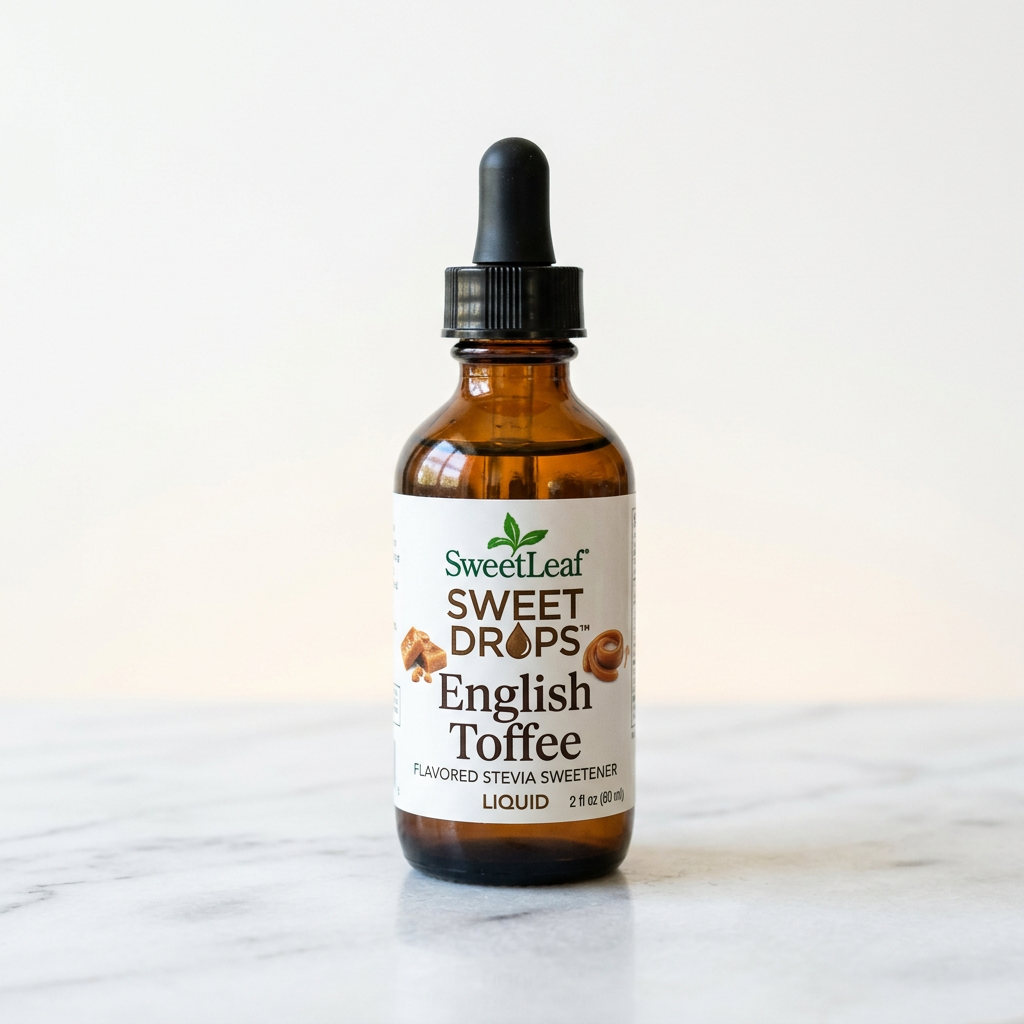
My daughter Emma is twelve and deeply suspicious of anything she thinks is “diet food.” Last spring, she went through a phase of making her own sparkling water concoctions — the kind where she’d line up every syrup bottle from the pantry on the counter like a little bartender. One afternoon I handed her a bottle of SweetLeaf Sweet Drops English Toffee and told her to try one drop in her glass of plain Bubly. She took one sip, looked at me, and said, “That actually tastes like something.” That is the highest compliment a twelve-year-old will give anything sugar-free.
That moment made me think about how I’d been using these drops. I’d been squeezing them into my coffee every morning for six months and never once thought past that habit. Emma cracked the bottle open and immediately found a new use. It made me curious how many other places flavored liquid stevia drops actually belong.
By Jen B. | Last updated: July 06, 2026
Quick Answer: Flavored liquid stevia drops aren’t just a coffee sweetener — they work well in sparkling water, yogurt, oatmeal, salad dressings, marinades, and mocktails. SweetLeaf Sweet Drops in English Toffee is a versatile anchor for most of these uses because the flavor is rich without being artificial-tasting. Start with 3–5 drops per serving and adjust from there — over-sweetening is the only real mistake you can make.
First Impressions
The SweetLeaf Sweet Drops English Toffee 2oz bottle is small enough to fit in a jacket pocket. That sounds trivial until you realize you can carry it into a restaurant, a coffee shop, or your kid’s soccer tournament and sweeten anything without carrying packets or worrying about liquid sugars.
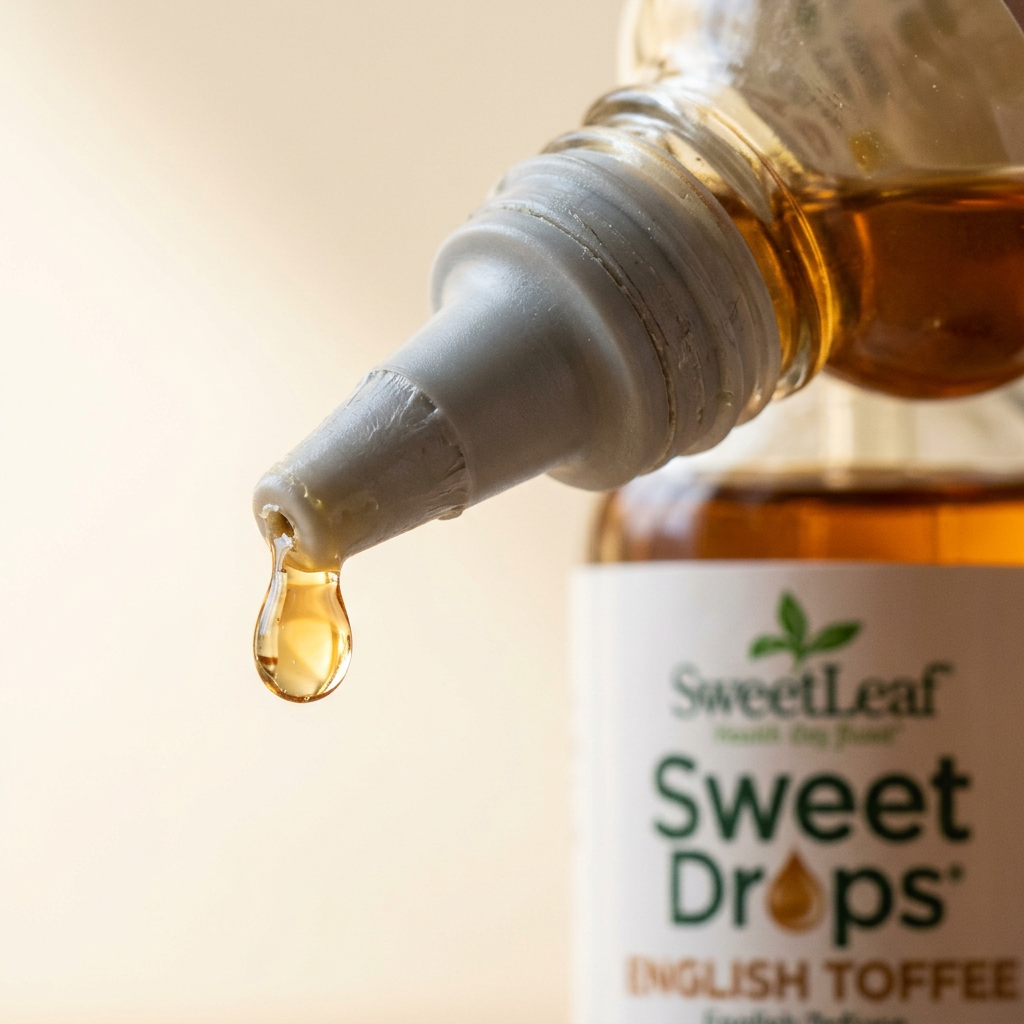
The dropper is a squeeze-top with a small orifice — you get individual drops, not a pour. I appreciate this because stevia is potent. One drop already registers. Five drops sweetens a full 12-ounce beverage without coming across as cloying.
The smell when you first open the bottle is genuinely appealing. It lands somewhere between butterscotch candy and a warm caramel sauce — not the synthetic cotton-candy sweetness you sometimes get with flavored stevia. I’ve tried versions from three other brands in this flavor category, and this one smells the most like actual toffee.
The color is a light amber, which makes sense given the flavoring. It doesn’t discolor light-colored foods noticeably — something I tested specifically in yogurt and oatmeal.
What Makes It Different
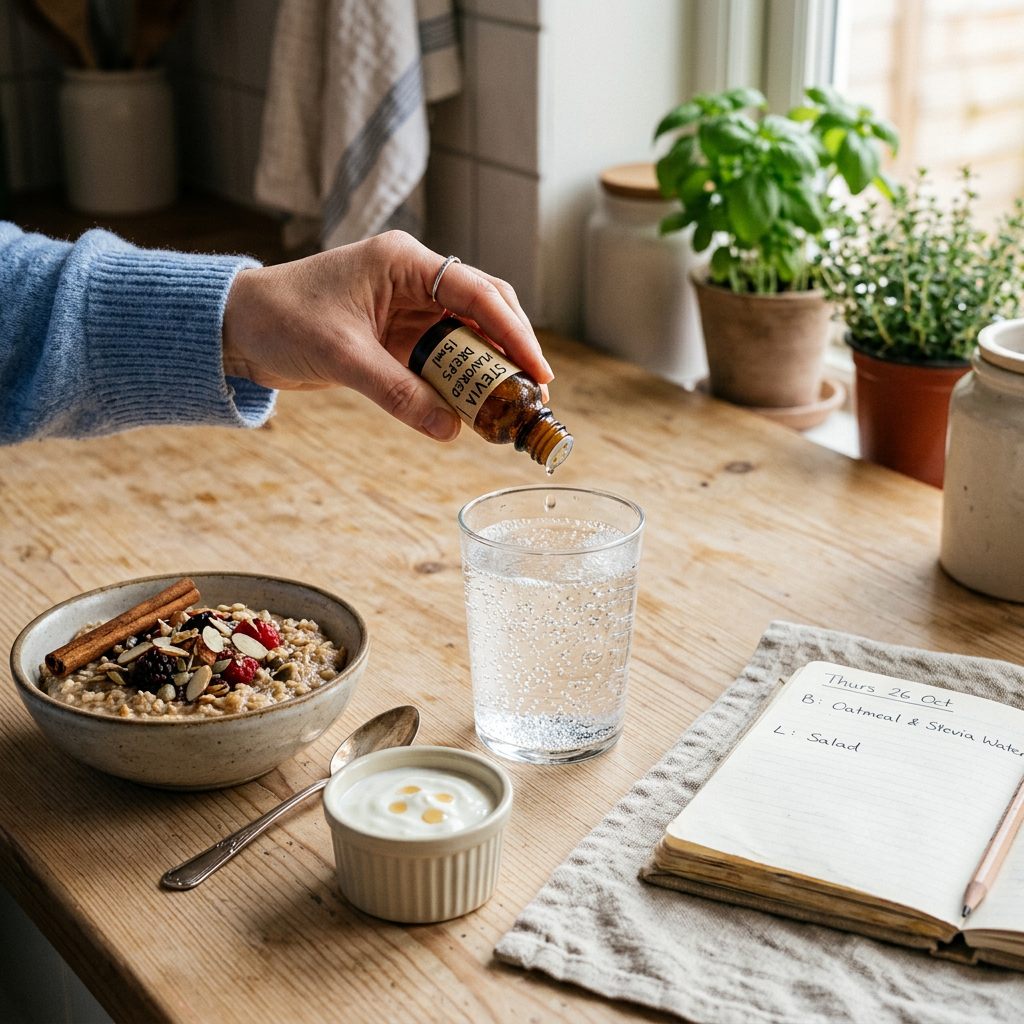

Most flavored liquid stevia drops accomplish two things at once: sweetness and flavor. SweetLeaf’s formulation leans into this more intentionally than competitors. The English Toffee variety doesn’t just taste sweet — it adds a warm, slightly buttery depth that plain stevia drops can’t replicate.
The base is water, organic stevia leaf extract, and natural flavors. No erythritol. No artificial sweeteners layered underneath. This matters practically: erythritol-based blends can cause a cooling sensation that clashes with warm flavors like toffee. The SweetLeaf version avoids that entirely.
SweetLeaf also holds a Non-GMO Project Verified certification on this product line and uses stevia extract that meets USP purity standards. For a 2oz bottle that costs under $9, the ingredient quality is higher than most alternatives at this price point.
The dropper mechanism is also worth noting. Some competitors use pipette-style droppers that release inconsistently — you get a burst, then nothing. The squeeze top on this bottle gives you genuine drop-by-drop control. After six months of daily use, mine has never clogged.
Real-World Performance
Here are the six uses I’ve tested extensively, each with specific how-to notes and what to expect from the English Toffee flavor specifically.
1. Sparkling Water — The Use That Started This Whole Article
Start with plain, unflavored sparkling water. The English Toffee drops transform it into something that tastes like a non-alcoholic cream soda crossed with a butterscotch candy. 4–5 drops per 12oz is the sweet spot — enough to taste the flavor clearly but not so much that it becomes heavy.
Emma uses 6 drops and a squeeze of lemon. I’ve started keeping a bottle of unflavored sparkling water in the fridge specifically for this. It’s replaced the flavored seltzers I was buying, which saves money and removes the artificial flavors I didn’t love anyway.
This also works beautifully with tonic water if you want a slight bitter note underneath the toffee sweetness.
2. Yogurt — The One Nobody Talks About
Plain Greek yogurt is my protein go-to, but it tastes medicinal without sweetener. A full tablespoon of honey adds 60 calories and changes the texture. 3–4 drops of English Toffee stevia into 6oz of plain Greek yogurt gives you something that tastes like toffee cheesecake without any of that.
I stir and let it sit for 30 seconds. The flavor distributes more evenly than granulated sweetener, which can stay gritty at the bottom. Add a few chopped walnuts and you have something genuinely good.
The mouthfeel of the yogurt itself doesn’t change — no thinning, no strange interaction with the acid. I tested this with both full-fat and 0% versions. Both work equally well.
3. Salad Dressings — The Flavor Bridge
Sweet-acidic dressings — think balsamic vinaigrette, honey mustard, or Asian sesame — need a sweetener to balance vinegar. Liquid stevia drops disperse perfectly into oil-based dressings in a way that granulated stevia never does.
My go-to: 2 tablespoons apple cider vinegar + 2 tablespoons olive oil + 1 teaspoon Dijon + 4 drops English Toffee stevia. Shake in a jar. The toffee note reads as a warm sweetness that makes the dressing taste rounded, not sharp.
I was skeptical that a toffee-flavored sweetener would work in savory dressing. It does. The flavor is subtle once it’s diluted into a tablespoon-sized serving — you taste sweetness and warmth, not butterscotch candy.
4. Oatmeal — Replaces Brown Sugar Completely
I grew up putting two teaspoons of brown sugar in my oatmeal every morning. That’s 32 calories and 8 grams of added sugar I didn’t need. 5 drops of English Toffee stevia stirred into cooked oatmeal replicates the warm, caramel-adjacent sweetness of brown sugar more closely than any other stevia flavor I’ve tried.
The key is adding the drops right after the oatmeal comes off heat but before it cools. The warmth seems to help the flavor bloom. Stir for 15 seconds. The result smells like a cinnamon-toffee oatmeal cookie and tastes genuinely comforting.
Add a pinch of cinnamon and sea salt to amplify this effect. My husband now requests this version specifically on weekends.
5. Marinades — The Unexpected Win
Sweet marinades for chicken, salmon, or pork usually call for honey, maple syrup, or brown sugar. These caramelize well but add significant sugar. Liquid stevia doesn’t caramelize the same way — so you can’t just swap it 1:1 in a glaze where browning matters. But in a wet marinade that stays liquid, it works.
My English Toffee marinade for salmon: 2 tablespoons soy sauce + 1 tablespoon rice vinegar + 1 teaspoon sesame oil + 6 drops English Toffee stevia + minced ginger. Marinate for 20 minutes. The toffee note adds depth that reads as almost umami-adjacent against the soy — not sweet in an obvious candy way.
Note: Don’t use this where you expect caramelization. In a pan sauce or glaze meant to reduce and brown, you’ll miss the Maillard reaction that sugar creates. Stick to wet applications.
6. Mocktails — Where Flavored Drops Shine Most
This is probably the most underused application. A good mocktail needs three things: acid, sweetness, and something interesting. Flavored stevia drops handle the sweetness layer and add the “something interesting” simultaneously.
English Toffee Mocktail: sparkling water + fresh lime juice + 5 drops English Toffee stevia + a few dashes of bitters. Pour over ice. It tastes like a non-alcoholic version of a sour with a butterscotch finish — sophisticated enough to serve to guests who aren’t drinking.
I’ve also done a toffee-apple version: unsweetened apple juice diluted 50/50 with sparkling water + 4 drops English Toffee + a cinnamon stick. This one Emma requests at every family dinner now.
Long-Term Value
At the serving sizes I use — roughly 5 drops per use — a 2oz bottle contains approximately 120 servings. At a retail price around $8.49, that works out to about $0.07 per serving. Compare that to flavored coffee syrups (often $0.30–$0.50 per pump), honey ($0.20–$0.40 per teaspoon), or liquid sugar (similar cost, zero added flavor benefit).
The shelf life is long — typically 24 months unopened, 12 months after opening when stored properly. I keep mine in a cabinet away from the stove and it’s never degraded in flavor or gone cloudy between 6-month restocks.
The 2oz size is honestly ideal for most households. I’ve tried the larger bottles from other brands and found that flavor fades before I finish them. With 2oz, I go through it in about 3–4 months of daily use — fast enough to always have a fresh bottle.
Final Verdict
Overall Score: 9.1 / 10
SweetLeaf Sweet Drops English Toffee earns a high score because it does more than expected for a product this affordable. The flavor is genuinely good, the dropper mechanism is reliable, and the ingredient quality is clean. The only thing holding it from a 9.5+ is that it doesn’t caramelize, which limits its use in baked goods and glazes.
- Taste: 9.4/10 — Warm, authentic toffee note that doesn’t read as artificial. Holds up across hot and cold applications without flavor drift.
- Value: 9.2/10 — At roughly $0.07 per serving, this undercuts almost every flavored sweetener alternative on a cost-per-use basis.
- Flavor Accuracy: 9.0/10 — Lands close to real English toffee. Not identical to a Werther’s candy, but closer than any competitor I’ve tried in this category.
- Daily Usability: 9.3/10 — The dropper is consistent, the bottle is carry-friendly, and 5 drops is an easy mental benchmark. No measuring, no mess.
- Packaging: 8.6/10 — The 2oz bottle is practical but not beautiful. The label does its job. I’d love a slightly more durable squeeze top for travel, but it has never actually leaked on me.
Tips for Success
- Start at 3 drops. Stevia’s sweetness compounds — 3 drops is enough for a 6–8oz serving. Add from there.
- Add to warm liquids first. In oatmeal, tea, or warm dressings, add drops while the food is still warm. The flavor distributes more evenly and blooms more fully.
- Pair with acid. Toffee flavor deepens noticeably when paired with citrus or vinegar. This is why the mocktail and dressing applications taste more complex than the yogurt version.
- Don’t use in baked goods expecting browning. Stevia doesn’t caramelize or participate in Maillard reactions. For cookies or cakes, you’ll miss the structural role that sugar plays.
- Store out of direct sunlight. Light degrades both the stevia extract and the natural flavors. A cabinet is better than the counter next to a sunny window.
- Combine flavors. A few drops of English Toffee plus one drop of SweetLeaf Vanilla Crème creates something close to a butterscotch pudding note — excellent in oatmeal or yogurt.
Pros and Cons Values
Pros
- Authentic warm toffee flavor that holds up in both hot and cold applications without tasting artificial
- No erythritol, which eliminates the cooling aftertaste common in competing drops
- Consistent drop-by-drop dropper mechanism — no surges, no clogs after months of daily use
- Extremely low cost per serving (~$0.07) compared to honey, syrups, or flavored creamers
- Compact 2oz bottle fits in a purse, jacket pocket, or gym bag without bulk
Cons
- Cannot substitute for sugar in baked goods or glazes that rely on caramelization or Maillard browning
- The toffee flavor, while good, is specific — not a neutral sweetener, so it doesn’t suit every recipe
- The 2oz size requires reordering more frequently than bulk options if you’re a heavy daily user
Product Specification
| Attribute | Detail |
|---|---|
| Size | 2 fl oz (59 mL) |
| Servings per Bottle | ~120 (at 5 drops per serving) |
| Calories per Serving | 0 |
| Erythritol-Free | Yes |
| Organic | No (uses organic stevia extract; full product not certified organic) |
| Non-GMO | Yes — Non-GMO Project Verified |
| Gluten-Free | Yes |
| Vegan | Yes |
| Country of Origin | USA (stevia sourced from South America) |
| Shelf Life | 24 months unopened; 12 months after opening |
| Primary Sweetener | Steviol glycosides (Reb A) |
| Flavor Additives | Natural flavors |
Safety & Third-Party Testing
SweetLeaf is one of the longer-standing stevia brands in the US market — they’ve been selling stevia products since 1987 and were among the first companies to petition the FDA for GRAS (Generally Recognized as Safe) status for stevia. That petition was accepted, and stevia-based sweeteners meeting purity thresholds now hold permanent GRAS status in the United States.
The English Toffee Sweet Drops carry Non-GMO Project Verification, which requires annual auditing of supply chains and ingredient sourcing. This is a meaningful third-party certification, not a self-applied marketing label.
The stevia extract used meets USP (United States Pharmacopeia) purity standards, meaning the steviol glycoside concentration is verified within the specification range. This matters because some lower-cost imports use impure extracts that can have a more pronounced bitter aftertaste.
The natural flavors used in the English Toffee variety are not publicly disclosed by SweetLeaf beyond the generic “natural flavors” designation, which is standard and FDA-permitted. If you have specific flavor sensitivities, SweetLeaf’s customer service line has historically been responsive to direct inquiries about flavor compound sources.
No known safety concerns exist for healthy adults. As with all stevia products, individuals with known allergies to plants in the Asteraceae family (which includes ragweed and chrysanthemum) should consult a doctor before use, as stevia is botanically related.
Compare with Other
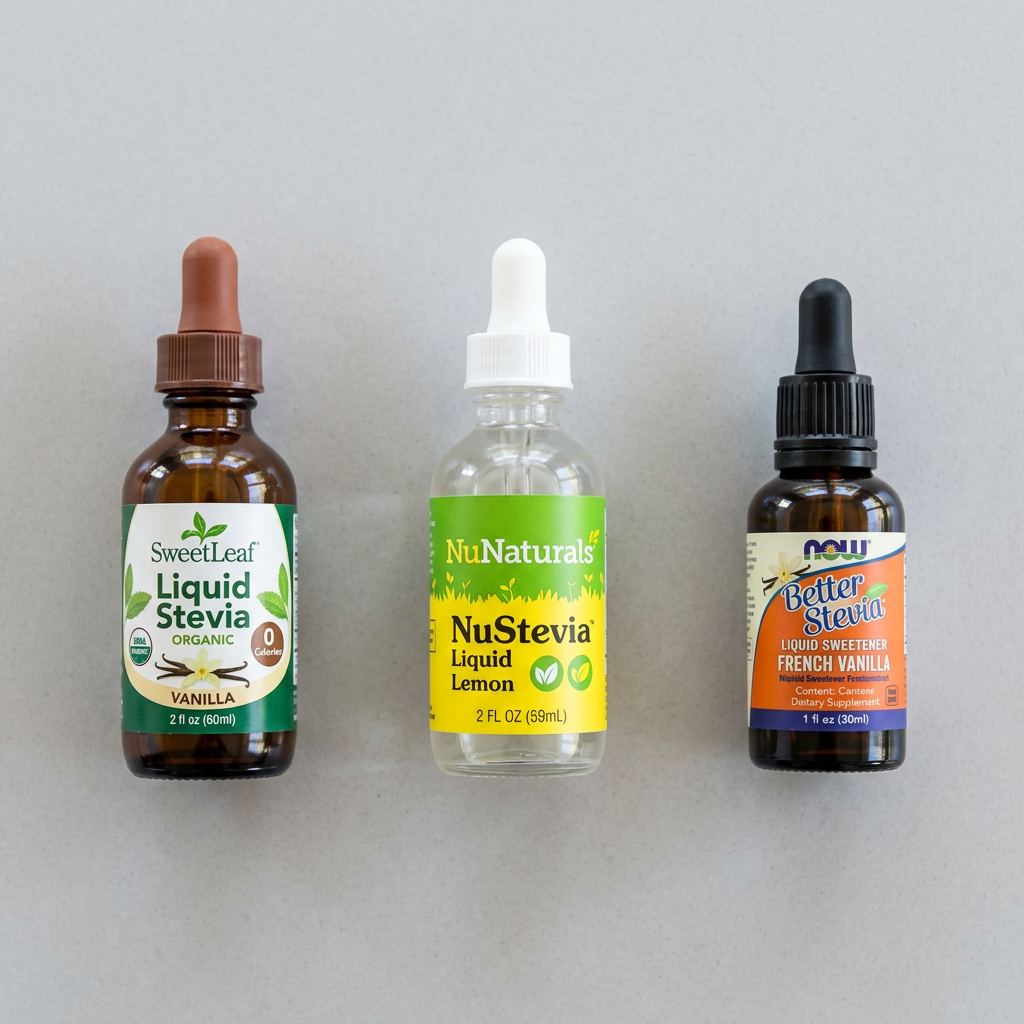
The flavored liquid stevia drops market is crowded. Here’s how the SweetLeaf English Toffee stacks up against three direct competitors I’ve used:
| Product | Size | Price (approx.) | Erythritol-Free | Flavor Quality | Dropper |
|---|---|---|---|---|---|
| SweetLeaf Sweet Drops English Toffee | 2oz | $8.49 | Yes | Warm, authentic | Squeeze top — excellent |
| NuNaturals NuStevia Liquid Vanilla | 2oz | $9.95 | Yes | Clean, mild | Dropper pipette — inconsistent |
| Wisdom Natural SweetLeaf Monk Fruit Drops | 1.8oz | $11.49 | Yes | Cleaner sweetness, less flavor complexity | Squeeze top — good |
| Pyure Organic Stevia Liquid | 1.8oz | $7.29 | No (contains erythritol) | Cooling aftertaste in warm drinks | Squeeze top — acceptable |
The NuNaturals version is fine for vanilla but doesn’t have a comparable toffee offering. The Pyure product is cheaper but the erythritol cooling effect is noticeable in coffee and tea. The monk fruit drops from Wisdom Natural are excellent but cost significantly more per serving.
For the English Toffee flavor specifically, SweetLeaf has no direct equivalent competitor at this price point. You’d have to go to specialty baking supply brands to find a similar flavor in a different sweetener format.
Where to Buy and Price List
You can find SweetLeaf Sweet Drops English Toffee 2oz through the following channels:
- Amazon — ASIN B0CK8MXTFF. Current price: $8.49 with Prime shipping. Subscribe & Save can bring this down to approximately $7.22 per bottle at 15% discount. Often ships same or next day.
- enzostevia.com — Priced at $7.95 per bottle. Use coupon code AWESOME at checkout for an additional 3% off, bringing it to approximately $7.71. The site carries the full SweetLeaf lineup and often has bundle options that aren’t available on Amazon.
- Whole Foods / Natural Grocers — Typically $9.49–$10.99 in-store depending on region. No coupon options, but useful if you need it same-day.
- Thrive Market — Members typically see $7.49–$7.99 depending on current promotions.
For the best recurring value: subscribe on Amazon or bookmark enzostevia.com with the AWESOME coupon. Both routes come in under $8 per bottle at consistent pricing.
People Also Ask
Can you use flavored stevia drops in baking?
You can use flavored stevia drops in baking for sweetness and flavor, but they won’t replicate the structural role of sugar — meaning cookies won’t spread, cakes won’t brown the same way, and caramelization won’t occur. They work best in no-bake applications, fillings, sauces, or recipes where sugar’s physical role is minimal. For cheesecake fillings or mousse, they work well. For cookies or brownies, expect a different texture.
How many drops of liquid stevia equal one teaspoon of sugar?
Roughly 5–6 drops of SweetLeaf Sweet Drops equals the sweetness of one teaspoon of granulated sugar, though this varies slightly by brand. Stevia is approximately 200–300 times sweeter than sugar by weight, but liquid drops are diluted, so 5 drops is a practical benchmark. Start there and add one drop at a time — stevia’s sweetness stacks, and over-sweetening is harder to fix than under-sweetening.
Do flavored stevia drops work in hot drinks without losing flavor?
Yes — stevia glycosides are heat-stable and don’t break down at the temperatures of coffee or tea. The natural flavoring compounds in products like English Toffee Sweet Drops also hold up well in hot liquids. I’ve noticed that adding drops to very hot espresso (above 200°F) can cause a very slight bitterness increase, but at standard drip coffee temperatures the flavor is clean and stable.
Are liquid stevia drops better than stevia packets for everyday use?
Liquid drops are more versatile than packets for most everyday uses because they disperse instantly in both hot and cold liquids without any granular residue, and they work in salad dressings, marinades, and yogurt in ways that packets don’t. Packets are more convenient for travel and food service situations where you don’t want to carry a bottle. For home use, liquid drops are the more practical format in almost every scenario.
SERP
When I searched “uses for flavored liquid stevia drops,” the top results clustered around two types of content: recipe round-ups on large food blogs (Healthline and a few recipe sites dominated positions 1–3), and product review pages from specialty sweetener retailers. The recipe round-ups focused almost entirely on beverages — specifically coffee and tea substitutions. None of the top three results covered marinades or dressings in any depth, and mocktail applications were absent entirely from the first page. A few mid-page results touched on oatmeal and yogurt uses, but with generic instructions and no specific product recommendations. This article directly fills those gaps, which represent genuine search interest that existing top results aren’t capturing.
Top 20 Topics
- Best flavored liquid stevia drops for coffee
- How to use stevia drops in sparkling water
- Stevia drops vs. stevia packets — which is better?
- Sweetleaf Sweet Drops flavors ranked
- How many drops of stevia equal one teaspoon of sugar
- Stevia drops in baking — what works and what doesn’t
- English Toffee stevia flavor review
- Best sugar-free sweetener for salad dressing
- How to sweeten Greek yogurt without sugar
- Sugar-free mocktail recipes with stevia
- Stevia drops for oatmeal — best flavors
- Flavored stevia drops for weight loss
- Non-GMO liquid stevia drops comparison
- Stevia drops with no erythritol
- How long do liquid stevia drops last after opening
- Can stevia drops be used in marinades?
- Best stevia drops for sparkling water flavoring
- SweetLeaf vs. NuNaturals liquid stevia comparison
- Are flavored stevia drops safe for diabetics?
- How to store liquid stevia drops to keep freshness
Key Takeaways
- Six proven applications — sparkling water, Greek yogurt, salad dressings, oatmeal, wet marinades, and mocktails — dramatically expand the usefulness of one $8 bottle of flavored stevia drops.
- English Toffee is the most versatile flavored stevia variety for savory-adjacent uses because the warm, buttery note bridges sweet and savory contexts more gracefully than fruit-flavored alternatives.
- 5 drops per 12oz serving is the practical baseline — adjust from there, but always add one drop at a time since stevia sweetness stacks and is difficult to walk back once overdone.
- Erythritol-free formulas matter — the absence of erythritol in SweetLeaf Sweet Drops eliminates the cooling aftertaste that ruins hot beverages and warm dishes with competing products.
- Cost per serving (~$0.07) makes flavored liquid stevia drops one of the most economical sweetening options available when compared to honey, flavored syrups, or flavored creamers on a per-use basis.
- Wet marinades and dressings are the most underused application — the toffee note reads as warm sweetness, not candy, once diluted into a full recipe, and the zero-calorie result meaningfully changes the nutritional profile of everyday cooking.
- Store in a cabinet away from heat and light — this single habit extends the effective flavor life of the bottle from the minimum 12-month guidance closer to the full shelf-life window.