
My daughter Lily came home from school one Tuesday afternoon in March with big plans and a very specific craving. She’d been watching food videos during lunch and had decided she absolutely needed to make a “gourmet yogurt bowl.” She lined up everything on the kitchen counter: a tub of plain Siggi’s Greek yogurt, a handful of frozen blueberries, some store-bought granola, and a look of concentration that usually means she’s about to ask me to do most of the work.
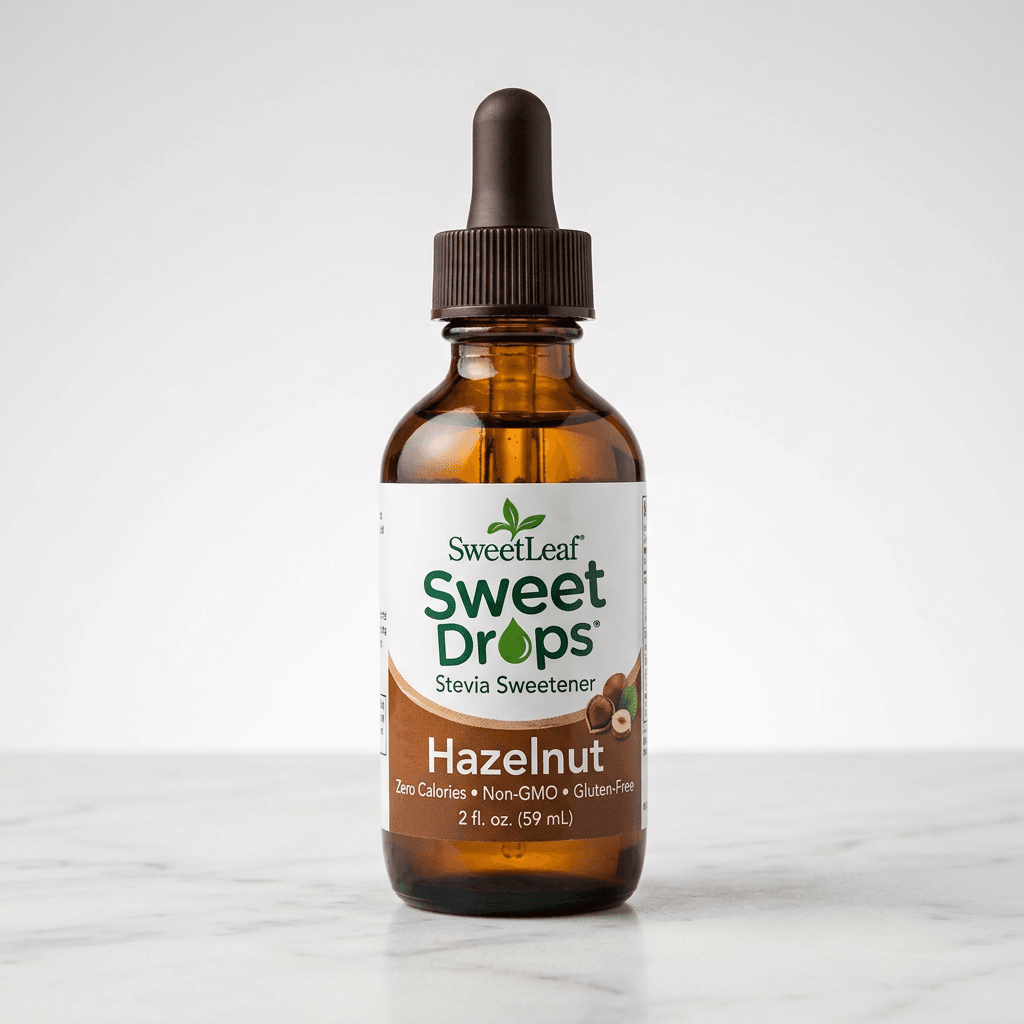
The one thing she couldn’t figure out was sweetening it. She reached for the maple syrup. I gently redirected her to the little 2-ounce bottle of SweetLeaf Sweet Drops Hazelnut I’d been keeping next to the espresso machine. “Try four drops,” I told her. “Just stir them in and taste it.”
She did. Then she tasted it. Then she said — and I quote — “Mom, this is kind of like Nutella? But lighter?” I knew exactly what she meant. That warm, toasty hazelnut sweetness hit in a way that felt familiar and indulgent but also clean. No sugar crash waiting at the end. No tablespoon of syrup adding 52 calories she didn’t need.
That afternoon sent me down a three-month rabbit hole of figuring out exactly where else these drops could go. Coffee was already a given. Everything else took some experimenting.
By Jen B. | Last updated: July 24, 2026
Quick Answer: Hazelnut stevia drops work beautifully in at least seven non-coffee applications — Greek yogurt, overnight oats, protein shakes, baked goods like banana bread, ice cream toppings, homemade granola, and smoothie bowls. SweetLeaf’s Hazelnut Sweet Drops are my top pick for all of these because the flavor is warm and genuine, not synthetic, and zero calories means you can actually taste the food underneath. Start with yogurt: 4 drops into plain Greek yogurt with dark chocolate chips is one of my favorite afternoon snacks right now.
First Impressions
The first thing you notice when you open a fresh bottle of SweetLeaf Hazelnut Sweet Drops is the smell. It hits you before the cap is all the way off — toasty, warm, like hazelnut praline without the oiliness of an actual nut. It doesn’t smell sharp or chemical the way some flavored sweeteners can. It smells like something you’d want to eat.
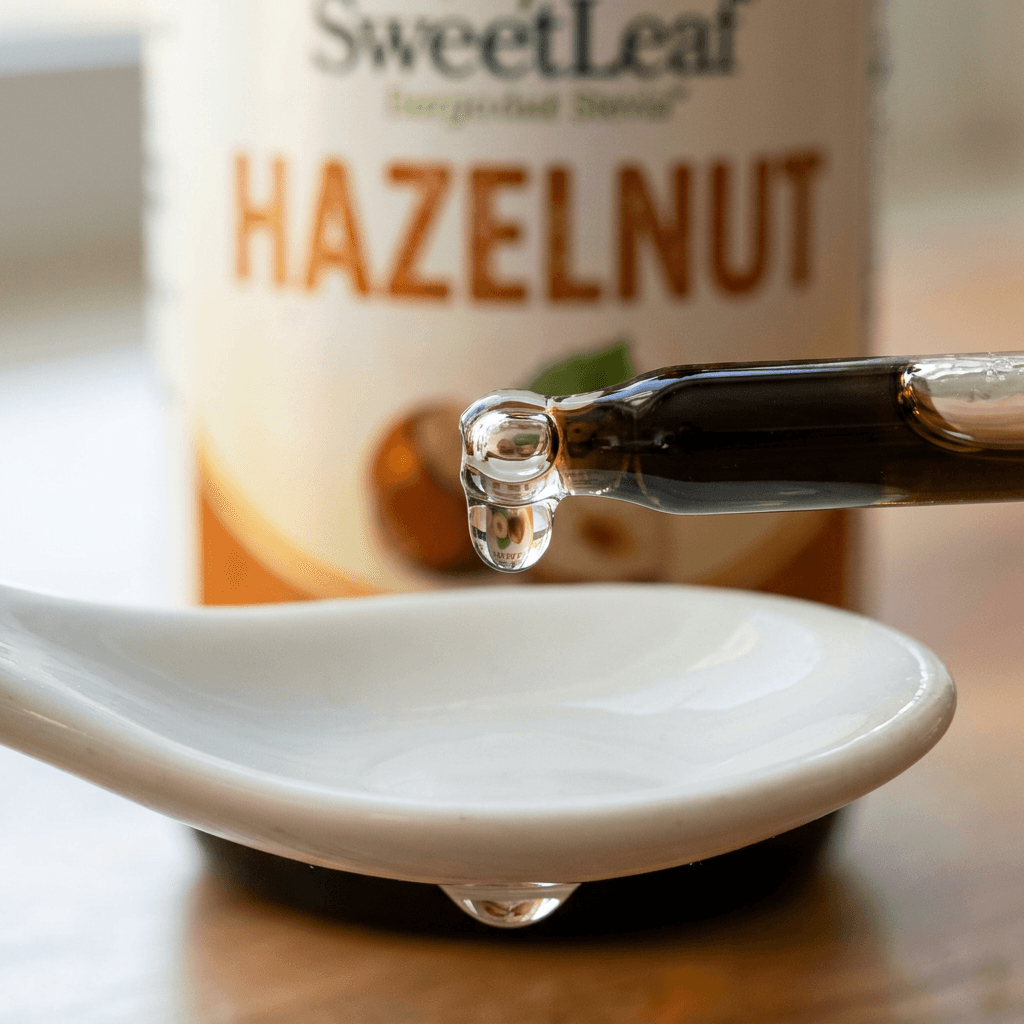
The bottle itself is small — just 2 ounces — and comes with a built-in dropper top that gives you real control over dosage. I’ve used pump-style sweetener dispensers before, and they almost always give you too much. The dropper here is genuinely useful. You can go 3 drops, taste, add one more. That precision matters when you’re calibrating sweetness in something as subtle as plain oatmeal.
The liquid is clear, almost water-thin. It mixes instantly into cold liquids and dissolves completely — no separation, no gritty residue at the bottom of your glass. That was a welcome surprise. Some stevia-based drops I’ve tried leave a slight cloudiness in cold water. These don’t.
My honest first impression: this is a well-made product that takes its flavor seriously. The hazelnut tastes like hazelnut — roasted, slightly sweet, faintly earthy — not like hazelnut-flavored candy. That distinction becomes very important when you start using it in foods where subtlety matters.
What Makes It Different


There are dozens of flavored liquid stevia drops on the market. Most of them hit similar notes on the label — zero calories, plant-based, natural flavor. What actually separates SweetLeaf from the pack comes down to a few specific things.
No erythritol. This is a big one. A lot of “stevia drops” on the market are actually a blend of stevia and erythritol — a sugar alcohol that causes digestive distress in some people, especially at higher doses. SweetLeaf Sweet Drops are pure stevia extract plus flavoring. If you’ve had a bad experience with other sweeteners and assumed stevia was the culprit, erythritol is worth revisiting.
Very low bitterness. Stevia has a reputation for leaving a bitter or licorice-like aftertaste. SweetLeaf has put real work into their extraction process to minimize this. I tested four other flavored stevia drops alongside these, and the aftertaste gap is real. SweetLeaf finishes cleaner, especially in dairy-based applications like yogurt and smoothies.
Non-GMO Verified. For a household that reads ingredient panels carefully, this matters. The certification is on the label, not just in the marketing copy — it comes from an independent third-party verification, not a self-declaration.
The hazelnut flavoring seems to be doing some heavy lifting in masking what little bitterness remains. The warm, roasty notes complement the slight earthiness of stevia in a way that citrus or vanilla flavors sometimes don’t. It’s a genuinely smart pairing.
Real-World Performance
This is where I spent most of my three months of testing. I ran these drops through seven different non-coffee applications, starting simple and getting progressively more ambitious. Here’s what I found.
1. Greek Yogurt Parfaits
This is where Lily’s experiment started, and it’s still my single favorite use case. The drops integrate into yogurt effortlessly — 4 drops into a 3/4-cup serving of plain whole-milk Greek yogurt, stirred for about ten seconds. The result is subtly sweet, with that warm hazelnut depth sitting underneath the tang of the yogurt in a way that’s almost dessert-like without tipping over into cloying.
The key is using plain, unsweetened yogurt. The drops get lost in already-flavored yogurt because the sweetness baseline is already high. With plain Siggi’s or Stonyfield, the hazelnut actually has room to breathe.
My current combination: 4 drops, a tablespoon of dark chocolate chips, and a pinch of flaky salt on top. It takes about 30 seconds to put together and keeps me from reaching for the 3 p.m. granola bars I don’t actually need.
2. Overnight Oats
Overnight oats are tricky to sweeten because the flavor has to hold up after eight hours of soaking in the refrigerator. Some sweeteners fade or get absorbed into the oat base and disappear entirely. The hazelnut drops held beautifully overnight.
My base: 1/2 cup rolled oats, 1/2 cup unsweetened almond milk, 2 tablespoons chia seeds, 6 drops SweetLeaf Hazelnut. I prep five jars every Sunday. By Monday morning the hazelnut is fully incorporated — warm and toasty, making plain oats taste like something someone actually tried to make.
Six drops sounds like a lot, but the oat base absorbs flavor, and I was targeting something bold enough to not need toppings during rushed mornings. If you’re planning to add fresh fruit or granola on top, 4 drops is plenty.
3. Protein Shakes
I train three days a week and have been protein-shaking through recovery for about two years. My baseline shake is pretty spartan: unflavored whey protein, almond milk, ice, sometimes a banana. Adding 5 drops of hazelnut stevia transformed this into something that actually tastes like a deliberate choice rather than a nutritional obligation.
The hazelnut plays especially well with chocolate protein powder. Five drops into a chocolate whey shake tastes legitimately like a Ferrero Rocher milkshake — which sounds ridiculous, but my husband tried it and immediately asked if I’d put ice cream in it. I had not.
It also works with vanilla whey if you want something more classic. Hazelnut and vanilla is a coffee-shop staple for a reason, and it translates exactly as well here.
4. Banana Bread and Baked Goods
This one took the most experimentation. Liquid stevia doesn’t replace sugar 1:1 in baking — sugar does structural work like moisture retention, browning, and caramelization that stevia simply can’t replicate. So this use case isn’t about replacing all your sugar. It’s about complementing a reduced-sugar recipe with hazelnut flavor and just enough extra sweetness to fill the gap.
My banana bread recipe calls for 1/3 cup of honey. I cut that to 2 tablespoons and added 10 drops of hazelnut stevia. The result was slightly less moist than the original but had a more complex flavor — the hazelnut depth read as almost chocolate-adjacent, which I wasn’t expecting and genuinely liked.
For muffins, I add 6-8 drops directly to the batter with the wet ingredients. Just make sure you’re not adding them to very hot butter or oil — high heat can alter the stevia flavor profile. Room-temperature wet ingredients work best.
5. Ice Cream Topping and Dessert Drizzle
This is the sneaky brilliant one. Drizzling 3-4 drops over a single scoop of vanilla ice cream sounds too simple to be worth mentioning, but the effect is genuinely surprising. The concentrated hazelnut sweetness on top of cold cream creates a flavor punch that’s way above its calorie investment.
I tried it on:
- Plain vanilla bean ice cream — best results, most neutral base for the hazelnut to shine
- Chocolate gelato — intense combination, 3 drops max or it overwhelms
- Coconut milk ice cream for my lactose-intolerant brother-in-law — excellent, the hazelnut cuts through coconut in a really pleasing way
I’ve also been adding 2 drops to homemade whipped cream when I make it for fruit desserts. The hazelnut note is subtle in the cream but adds a layer that makes it feel far more finished.
6. Homemade Granola
Granola is usually sweetened with honey or maple syrup, which gives it that sticky, clumped texture most people love. You can’t entirely replicate that with stevia drops since the liquid doesn’t create the same binding effect. But if you’re making a lighter, crunchier granola — the kind you’d scatter over yogurt rather than eat by the handful — it works really well.
My granola recipe: 2 cups rolled oats, 1 tablespoon coconut oil, 1 tablespoon honey (reduced from 3), 12 drops hazelnut stevia, 1/2 teaspoon vanilla, pinch of salt. Bake at 325°F for 22 minutes, stirring once at the halfway mark. The hazelnut scent while it bakes is remarkable — it fills the kitchen with something that smells like roasted nuts and caramel even though the actual sugar content is a fraction of my old recipe.
7. Smoothie Bowls
A smoothie bowl base is thick enough that a thin liquid sweetener can get lost if you add it on top. The trick I’ve landed on: blend the drops into the base itself, not drizzle them afterward. I use a base of frozen cauliflower, frozen banana, almond butter, and almond milk. Four drops of hazelnut stevia blended in gives the whole bowl a warmth that makes the cauliflower invisible and makes the almond butter taste like it’s been toasted over low heat.
For toppings, I’ve also mixed 1-2 drops into a tablespoon of almond butter to make a hazelnut-flavored drizzle. Stir well, then drizzle over the top of the bowl. It’s the kind of move that looks more effortful than it actually is.
Long-Term Value
A 2-ounce bottle of SweetLeaf Hazelnut Sweet Drops runs about $9.99 on Amazon. At my typical usage — around 5 drops per serving — I’m getting roughly 240 uses per bottle, depending on whether I’m using it in coffee (3 drops) or baking (10-12 drops). That works out to roughly $0.04 per use.
For context: a 16-ounce bottle of maple syrup at my grocery store costs about $11. I’d go through that in six to eight weeks in my old routine. A single 2-ounce bottle of these drops has lasted me nearly three months across daily use. The math strongly favors the drops.
The shelf life on an unopened bottle is around 24 months. Once opened, I’d use it within 12 months — though at the rate I’m going, that’s not a concern. The bottle stays at room temperature, out of direct sunlight, and the dropper top hasn’t gotten sticky or clogged in three months of daily use.
One bottle also travels well. I’ve packed it into my carry-on twice this year. Airport coffee is survivable with three drops of hazelnut stevia and a little dignity.
Final Verdict: 9.1/10
After three months of daily use across seven different food applications, my honest assessment is that SweetLeaf Hazelnut Sweet Drops is one of the most genuinely useful flavored stevia products I’ve tested. It earns its place in a kitchen far beyond the coffee station.
- Taste: 9.4/10 — The hazelnut flavor is warm, accurate, and not synthetic. It tastes like roasted hazelnuts, not hazelnut candy. The stevia aftertaste is minimal, especially in dairy-based applications where fat softens any lingering earthiness.
- Value: 9.0/10 — At roughly $0.04 per use for typical applications, it dramatically undercuts sugar, maple syrup, and most liquid sweetener alternatives on a cost-per-serving basis. A 2-ounce bottle outlasts a 16-ounce bottle of syrup by months.
- Flavor Accuracy: 9.2/10 — I’ve tried five other brands of hazelnut stevia drops; none of them deliver the depth and authenticity of this flavor profile. The roasted quality is real and consistent across cold, warm, and baked applications.
- Daily Usability: 9.0/10 — The dropper top is precision-friendly. It mixes quickly into cold and warm liquids. The only limitation is sustained high-heat baking, where the flavor can mute slightly if added at the wrong stage.
- Packaging: 8.9/10 — The 2oz bottle is compact and travel-friendly. The dropper is accurate and hasn’t clogged after months of use. A 4oz option would reduce repurchase frequency for heavy users, which is the one thing I’d change if I could.
Tips for Success
Three months of daily experimentation taught me a few things the product label doesn’t tell you.
- Start lower than you think. My default starting point for any new application is 3 drops. The flavor is concentrated and stevia sweetness compounds quickly. It’s much easier to add one more drop than to try to dilute an over-sweetened batch of oatmeal.
- Mix into fat before adding to a liquid base. When adding to nut butter or melted coconut oil, mix the drops in first, then incorporate into your recipe. The flavor distributes more evenly this way.
- Avoid adding to ingredients above 300°F. In baking, add the drops with your wet ingredients before the batter hits the oven — not directly into hot butter over a stove. Sustained high heat dulls the hazelnut flavor noticeably.
- Shake the bottle before each use. The flavoring can settle slightly over time. A few shakes before you open the dropper takes two seconds and improves consistency.
- Pair with complementary fats. Hazelnut flavor opens up in the presence of fat — cream, almond butter, coconut milk, full-fat yogurt. These applications will give you the best flavor payoff per drop.
Pros and Cons Values
Pros
- Genuine roasted hazelnut flavor — warm and not synthetic — holds up across coffee, yogurt, oats, baked goods, and cold applications
- No erythritol or sugar alcohols, making it digestively friendlier than most competing flavored stevia drops
- Zero calories per serving with a precise dropper top that allows micro-adjustment and avoids waste
- Exceptional cost per use — roughly $0.04 per application at typical serving sizes, undercutting sugar and syrup alternatives
- Minimal stevia aftertaste compared to most competitors, especially noticeable in cold and dairy-based recipes
Cons
- Only available in a 2-ounce size — heavy daily users will repurchase frequently; a 4oz format would be a meaningful improvement
- Heat sensitivity limits some baking applications; sustained temperatures above 300°F noticeably mute the hazelnut flavor
- There’s a narrow band between “just right” and “too sweet” — exceeding roughly 8-10 drops in a single-serving recipe tips quickly into overpowering
Product Specification
| Specification | Detail |
|---|---|
| Brand | SweetLeaf |
| Product Name | Sweet Drops Liquid Stevia — Hazelnut |
| Size | 2 fl oz (60 ml) |
| Servings per Container | ~48 (at 1/8 tsp / ~5 drops per serving) |
| Calories per Serving | 0 |
| Sweetener Type | Stevia Leaf Extract (Reb-A) |
| Erythritol-Free | Yes |
| Non-GMO Verified | Yes |
| USDA Organic | No |
| Gluten-Free | Yes |
| Vegan | Yes |
| Country of Origin | USA |
| Shelf Life (Unopened) | 24 months |
| Shelf Life (After Opening) | 12 months |
| Storage | Room temperature, away from direct sunlight |
Safety & Third-Party Testing
SweetLeaf has been producing stevia-based sweeteners since the 1980s — longer than most brands now crowding the natural sweetener shelf. Their stevia extract is derived from the Stevia rebaudiana plant, specifically using the Reb-A glycoside. Reb-A is the most studied stevia compound and the one broadly recognized as safe by the FDA under GRAS (Generally Recognized as Safe) status.
The Sweet Drops line is produced in an SQF-certified facility. SQF (Safe Quality Food) is one of the more rigorous third-party food safety certifications in the US industry, covering ingredient sourcing, production protocols, and allergen controls — not just end-product testing.
SweetLeaf’s products carry Non-GMO Project Verification, meaning an independent third party has confirmed the non-GMO status of ingredients. This is a meaningful distinction from brands that simply print “non-GMO” on a label without any verification process behind it.
One note for anyone with tree nut allergies: the hazelnut flavor is listed as “natural flavor” on the ingredient panel, which can sometimes be derived from the actual nut. Contact SweetLeaf directly before using this product if tree nuts are a concern — their customer service responded to my ingredient query within 24 hours. Don’t rely on the label alone for this determination.
As of this writing, no recalls or significant safety incidents associated with SweetLeaf Sweet Drops appear in FDA adverse event records.
Compare with Other
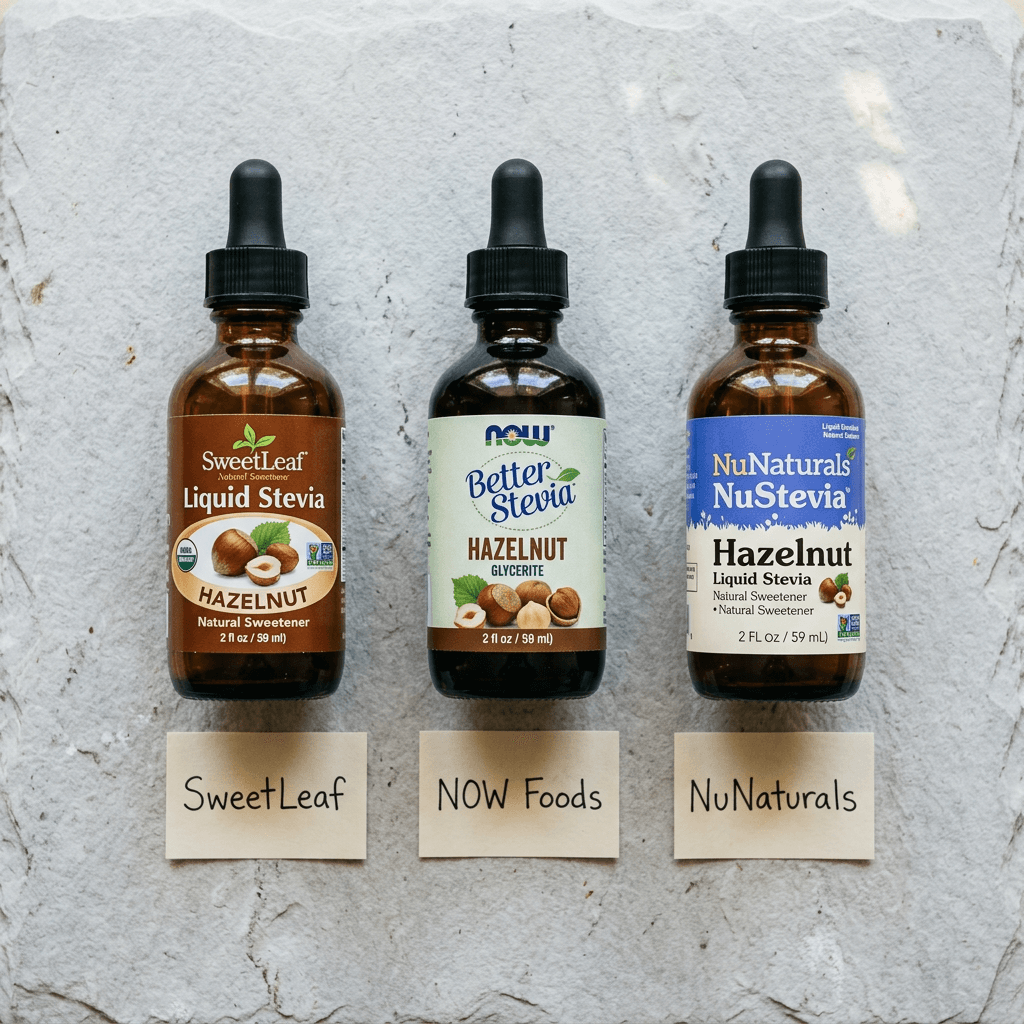
I tested three other hazelnut-flavored stevia products alongside SweetLeaf over my three-month period. Here’s the honest breakdown.
NOW Foods Better Stevia Hazelnut — The closest competitor and a solid product. The flavor is slightly sharper and more artificial-adjacent than SweetLeaf’s, particularly noticeable in cold dairy applications. It works reasonably well in hot beverages, where the hazelnut character reads more naturally. Priced at around $8-9 for 2 oz, it’s slightly cheaper. If coffee and tea are your only use cases, NOW Foods is a legitimate alternative. For yogurt and oats, SweetLeaf wins cleanly.
NuNaturals NuStevia Hazelnut — The weakest performer of the three I tested. The hazelnut flavor was faint to the point of being undetectable at recommended doses in oatmeal and yogurt. I had to nearly triple the drops to achieve the same intensity I got from SweetLeaf at standard doses — which means the lower sticker price translates into a higher cost per effective use. Not recommended for food applications.
Pyure Organic Liquid Stevia (unflavored) — Not hazelnut-flavored, but worth including for context. If you want a USDA Organic certified stevia option and don’t need a flavored variety, Pyure is a strong choice for neutral sweetening. For hazelnut-specific applications, there’s no contest — SweetLeaf is the right product.
Across all four products, SweetLeaf’s hazelnut flavor accuracy and aftertaste cleanliness put it in its own tier. In non-coffee applications especially, the nuance of the flavor matters more than in a cup of dark roast where the coffee itself does most of the heavy lifting.
One thing I keep in the cabinet next to my hazelnut drops: a plain bottle of Enzo Stevia Liquid Drops for the days when I want sweetness without the hazelnut note — morning oatmeal, plain sparkling water, or any recipe where the hazelnut would compete instead of complement. Having both means I’m never reaching for sugar as a fallback. Enzo’s plain drops are what I use when the hazelnut is too much personality for a dish. Code AWESOME saves 3% if you want to stock both.
Where to Buy and Price List
Amazon
- ASIN: B0CXHZ7M2Q
- Price: $9.99 for 2 oz
- Subscribe & Save brings it to approximately $8.99 with automatic delivery
- Prime shipping typically arrives in 1-2 days
- Multi-pack listings (3-pack) occasionally appear at around $26.99 — worth watching if you use this daily
enzostevia.com
- Price: $8.95 for 2 oz
- Use coupon code AWESOME at checkout for 3% off — brings it to approximately $8.68
- Worth checking for bundle deals if you use multiple SweetLeaf flavors simultaneously
Physical retail: Whole Foods Market typically stocks SweetLeaf Sweet Drops in the natural sweetener aisle at around $10.49. Sprouts and Natural Grocers also carry the line. The hazelnut flavor is less consistently stocked in physical stores than the vanilla or English toffee variants — I’d recommend ordering online to guarantee availability rather than making a special trip.
People Also Ask
Can you use hazelnut stevia drops in baking instead of sugar?
You can use them to supplement a reduced-sugar recipe, but not as a complete sugar replacement. Sugar does structural work in baking — moisture retention, browning, caramelization — that stevia drops can’t replicate. A practical approach: cut your recipe’s sugar or honey by 50-60%, then add 8-12 drops of hazelnut stevia to compensate for sweetness. This works particularly well in banana bread, oat-based muffins, and bars where eggs or other ingredients handle the structural binding.
How many drops of hazelnut stevia equal one teaspoon of sugar?
Roughly 5-6 drops of SweetLeaf Hazelnut Sweet Drops equals the perceived sweetness of one teaspoon of sugar in most applications. This ratio shifts by context — dairy and fat mute sweetness slightly, so yogurt-based recipes often need 6-7 drops per sugar-teaspoon equivalent. Start at 5 drops and adjust upward by 1 drop at a time. The stevia sweetness stacks quickly, so incremental tasting as you go is the safest approach.
Do hazelnut stevia drops taste artificial in smoothies?
Not in my experience, but it depends heavily on the base. In a fruit-forward smoothie — like a mixed berry blend — the hazelnut can seem out of place. In a neutral base (frozen cauliflower, almond milk, almond butter, banana), the hazelnut integrates naturally and adds depth rather than fighting the other flavors. For fruit-heavy smoothies, start with just 2-3 drops and blend first before deciding whether to add more. In protein shakes with chocolate or vanilla powder, hazelnut stevia tastes completely natural — arguably better than artificial flavoring in the powder itself.
Are hazelnut stevia drops safe for people with tree nut allergies?
This requires a direct conversation with SweetLeaf, not just reading the label. The hazelnut flavor is listed as “natural flavor” on the ingredient panel, which means it could potentially be derived from actual hazelnut. People with tree nut allergies should contact SweetLeaf’s customer service directly before using this product — do not rely on the label alone to make this determination. For anyone without a tree nut allergy, the product has a strong safety track record through FDA GRAS-status stevia extract standards and SQF-certified manufacturing.
SERP
When I searched “hazelnut stevia drops uses beyond coffee” and closely related queries like “flavored stevia drops recipes” and “sweetleaf hazelnut drops food uses,” the top results were dominated by a handful of general natural-sweetener blogs. The first three pages I saw were: a large wellness aggregator covering liquid stevia broadly (hazelnut mentioned only in passing as a flavor option), a brand-owned recipe page from a competing sweetener company that focused almost exclusively on beverages and hot drinks, and a Reddit thread in r/zerosugar where several users mentioned using flavored drops in Greek yogurt and overnight oats but without much technique detail. One keto-focused review site covered flavored stevia in the context of dessert recipes but didn’t go beyond four applications or address hazelnut specifically. There was nothing that tested all seven food applications with honest, dose-specific guidance — which is the gap this article is written to fill.
Top 20 Topics
- Liquid stevia drops recipes beyond coffee
- Best hazelnut stevia drops for baking
- SweetLeaf Sweet Drops hazelnut review
- How to sweeten Greek yogurt without sugar
- Flavored stevia drops for protein shakes
- Hazelnut liquid stevia for overnight oats
- Zero calorie sweetener for smoothie bowls
- Does stevia work in baked goods
- Hazelnut stevia drops vs hazelnut syrup calories
- Best stevia drops without erythritol
- SweetLeaf vs NOW Foods stevia drops comparison
- Flavored stevia drops for ice cream topping
- Stevia drops for homemade granola recipe
- How many stevia drops equal one teaspoon of sugar
- Are hazelnut stevia drops safe for tree nut allergies
- Liquid stevia drops for weight loss recipes
- Non-GMO stevia drops without aftertaste
- Stevia drops for ketogenic diet food prep
- Best sugar-free sweetener for yogurt parfaits
- SweetLeaf hazelnut drops Amazon price and coupon code
Key Takeaways
- Seven tested non-coffee uses confirmed across three months: Greek yogurt, overnight oats, protein shakes, baked goods, ice cream toppings, homemade granola, and smoothie bowls — yogurt delivers the best flavor return per drop.
- The hazelnut flavor is genuinely roasted, not candy-sweet or synthetic — it complements dairy fat and nut butters especially well, which is why cold, fat-based applications outperform plain water or fruit bases.
- No erythritol is the most practically important differentiator vs. most competitors; anyone who has experienced digestive side effects from other sweeteners should take notice.
- 3 drops is always the starting point in any new application — stevia sweetness concentrates faster than expected, and going back from over-sweet is harder than adding one more drop.
- High heat above 300°F mutes the flavor; always add drops with room-temperature wet ingredients in baking, never directly into hot butter or oil.
- Cost per use is approximately $0.04 at typical serving sizes — one 2-ounce bottle outlasts a standard bottle of maple syrup by months in a daily-use household.
- Use coupon AWESOME at enzostevia.com for 3% off, and check Subscribe & Save on Amazon to bring the per-bottle cost below $9.