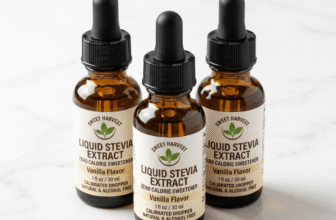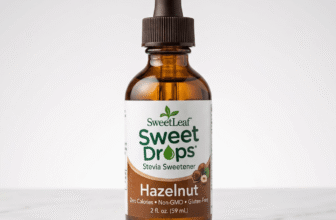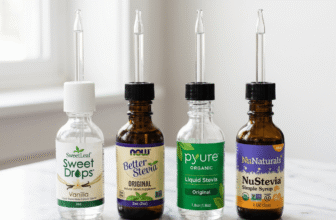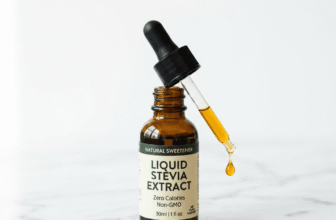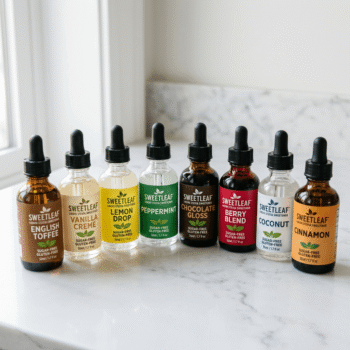
My daughter Clara turned nine in March, and her big birthday wish was a “tea party — a real one, not pretend.” So on a rainy Saturday I pulled out every loose-leaf I owned, set up the little ceramic pot her grandmother left us, and let her pick the cups. She took one sip of plain chamomile and wrinkled her nose so hard her glasses fogged up. “Mom. It needs sweet.” I explained sugar would spike her blood sugar something I’ve been careful about since my own diagnosis and she looked at me like I’d stolen Christmas. That afternoon I lined up every flavored liquid stevia I had in the pantry — seven bottles, then eventually an eighth — and we tasted our way through all of them together, matching each to a different tea. That experiment turned into this article.
By Jen B. | Last updated: July 15, 2026
Quick Answer: The best liquid stevia flavors for tea are English Toffee in black tea, Vanilla Creme in chai or Darjeeling, Lemon Drop in green tea, and Peppermint in iced herbal blends. For a single bottle that works across the widest range of teas, English Toffee liquid stevia is the one I reach for every morning — it rounds out tannins without clashing with any tea style I’ve tried. If you want a flavor-forward pick for cold brew green tea, Lemon Drop is outstanding and uniquely complementary to grassy, vegetal notes.
First Impressions
Liquid stevia drops have a reputation problem. People assume they all taste like a chemistry experiment — that thin, slightly medicinal sweetness that lingers thirty seconds too long. Some do. But flavored liquid stevia is a different product category, and the best ones feel less like a sweetener and more like a flavor drop that happens to be sweet.
I’ve been using stevia for six years, ever since my doctor flagged my fasting glucose. In that time I’ve tried probably thirty different brands and formulations. The eight flavors in this ranking are the ones that actually held up over months of daily use — not just a single taste test on a Tuesday morning.
Here’s the ranked list, from my top pick to the one I use most situationally:
- English Toffee (SweetLeaf) — black tea, Assam, Ceylon
- Vanilla Creme (SweetLeaf) — chai, Darjeeling, breakfast blends
- Lemon Drop (SweetLeaf) — green tea, Sencha, Dragon Well
- Peach Mango (NuNaturals) — white tea, oolong, fruit herbals
- Coconut (SweetLeaf) — jasmine green, tropical herbal
- Cinnamon (Enzo Stevia) — rooibos, spiced herbal blends
- Chocolate (SweetLeaf) — rooibos, black tea, mint blends
- Peppermint (SweetLeaf) — peppermint herbal, iced green tea
Each one gets a full breakdown below, including the specific teas they pair with and why the pairing works at a flavor-chemistry level.
What Makes It Different
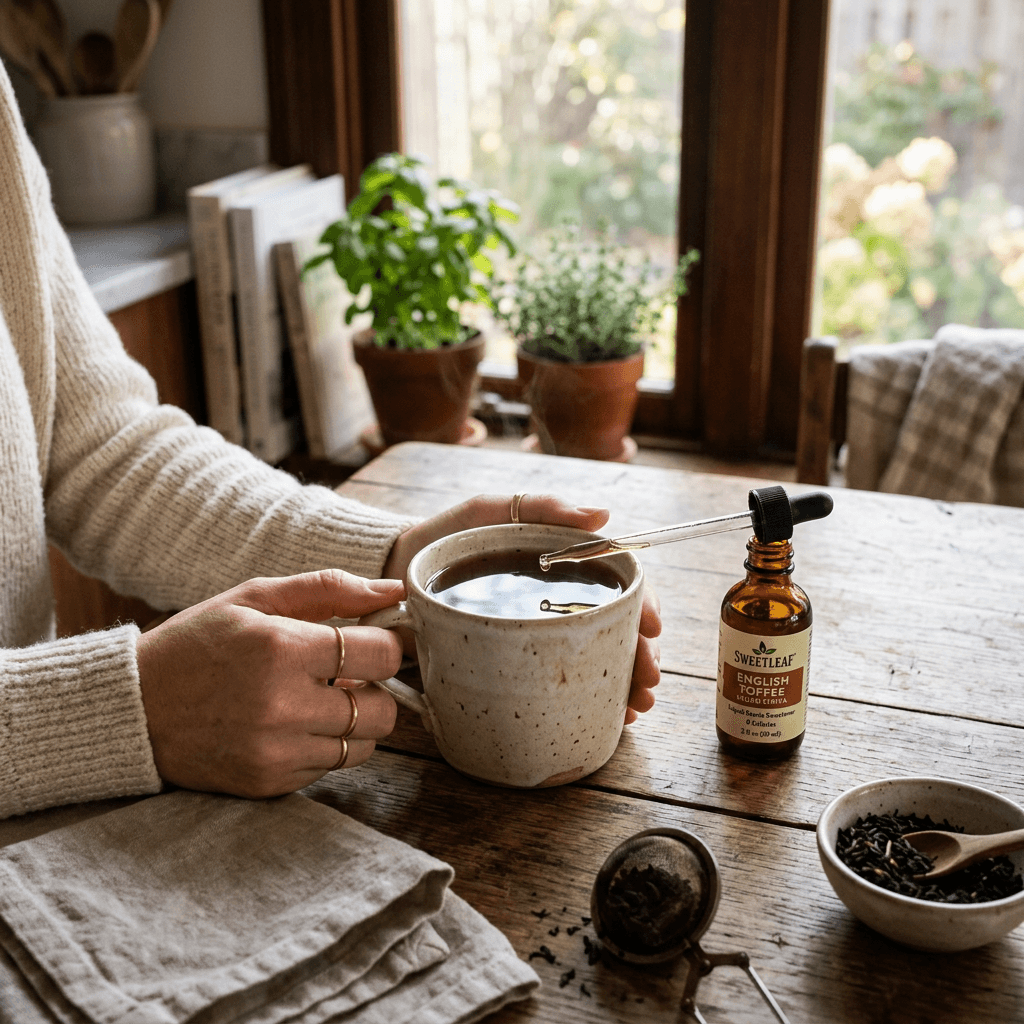
Most liquid stevia products are just rebaudioside A dissolved in water or alcohol, with maybe a touch of natural flavor. The ones I’m ranking use a fuller flavor profile — not just a wisp of vanilla or a hint of fruit, but enough concentration that a single drop actually contributes to the cup.
Why flavor pairing matters with tea specifically
Tea is chemically complex. A cup of black tea contains hundreds of compounds — tannins, catechins, theaflavins, volatile aromatics — and some sweeteners clash with them in ways that amplify bitterness rather than soften it. Stevia’s primary bitter note comes from steviol glycoside breakdown, and certain tea tannins can intensify that bitterness. Flavored liquid stevia that includes complementary aromatic compounds can mask this interaction entirely.
English Toffee works in black tea because its buttery, caramel top notes bind with the malty backbone of Assam the same way milk does — the fat-like aromatic compounds soften tannin perception. That’s flavor chemistry, not marketing.
Lemon Drop in green tea works because citrus compounds are already present at low concentrations in many Sencha varieties. You’re not introducing a foreign flavor; you’re amplifying something already latent in the leaf.
The other six flavors follow the same logic: they either mirror what’s already in the tea, or they provide a complementary bridge (sweet-spicy cinnamon with rooibos, cooling peppermint with iced green).
How many drops do you actually need?
Across all eight products, I found the sweet spot to be 6–10 drops per 8-oz cup, depending on how strong I brewed the tea. Green teas needed fewer drops (6–7). Strong black teas like Assam brewed at 4 minutes needed up to 12. Start at 6 and add one drop at a time — liquid stevia is far easier to correct in one direction than the other.
Real-World Performance
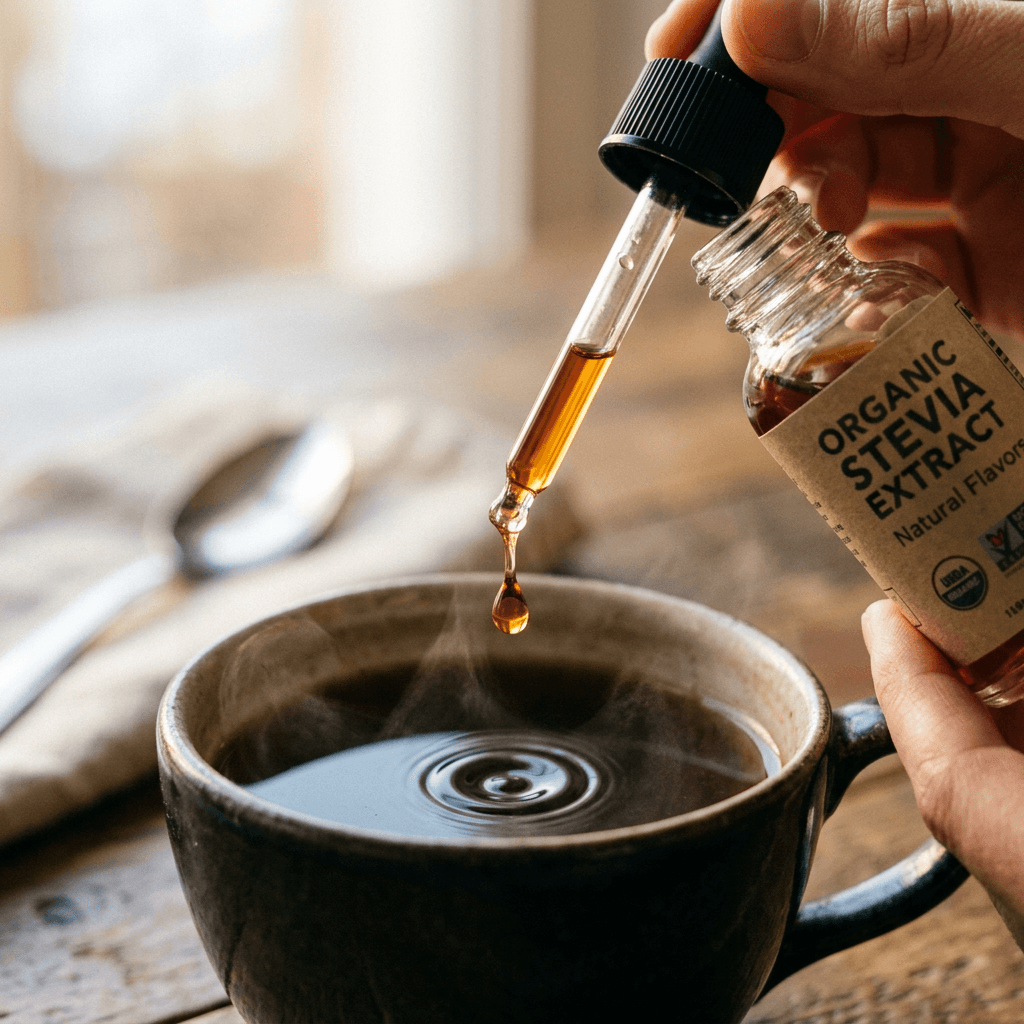
I drank at least one cup of tea per day for four months while working through this review. Clara joined me on weekends. My husband Dave, who drinks his tea black and unsweetened and considers this entire project “a little extra,” conceded that the English Toffee in a strong Yorkshire Gold was “actually pretty good.” That counts as a five-star review from him.
English Toffee in Black Tea
This is my daily driver. 7 drops in a strong Assam transforms the cup into something that tastes almost like a London Fog, minus the milk. The toffee note is buttery and round, not candy-sweet. There’s no stevia aftertaste I can detect, and the flavor fully integrates within about 15 seconds of stirring.
For iced black tea: 10 drops in 12 oz over ice, brewed double-strength. Exceptional.
Vanilla Creme in Chai
Chai already has a spice-sweet profile from cinnamon, cardamom, and clove. Vanilla Creme amplifies the sweetness without competing. 8 drops in a masala chai made from scratch (not a concentrate) gave me a cup that tasted like I’d added both sugar and a splash of heavy cream — without either. Clara approved this one immediately and calls it “dessert tea.”
In plain Darjeeling, 6 drops let the muscatel flavor come through while rounding the slight astringency. Don’t go higher than 8 drops in Darjeeling — vanilla can overwhelm those delicate floral notes.
Lemon Drop in Green Tea
This pairing surprised me most. Green tea — especially a grassy Japanese Sencha — has a fresh, slightly vegetal character that lemon complements rather than masks. 6 drops in 175°F Sencha (never boiling for green) brightens the cup without any citrus sourness. There’s a clean lemon zest quality, not artificial lemon candy.
For iced Dragon Well (Longjing): cold brew overnight in the fridge, add 8 drops Lemon Drop, and you have a drink I’d pay $8 for at a café without blinking.
Peach Mango in White Tea / Oolong
White tea is delicate and floral, with almost no bitterness when brewed correctly. NuNaturals Peach Mango is sweet and fruity without being cloying — it has a ripe stone-fruit character that pairs naturally with white tea’s honeyed undertones. 7 drops in a Silver Needle at 160°F was one of the most pleasant cups I made during this entire testing period.
In a medium oolong like a Dong Ding, Peach Mango adds tropical complexity without steamrolling the tea’s own character. Excellent for iced oolong in summer.
Coconut in Jasmine Green
Jasmine green already has a floral-sweet quality, and coconut’s creamy aromatic profile adds body without heaviness. 6 drops per 8-oz cup of a mid-grade jasmine pearl tea gives you something that tastes vaguely like a Thai iced tea, even served warm. The coconut note stays subtle — it doesn’t announce itself, it just makes the tea feel rounder.
Cinnamon (Enzo Stevia) in Rooibos
Rooibos is naturally sweet, earthy, and slightly nutty. Enzo Stevia’s Cinnamon drops are warm and specific — not the Red Hots candy version of cinnamon, but something closer to Ceylon cinnamon bark. 8 drops in an 8-oz cup of rooibos made a drink my mom now requests every time she visits. She has diabetes, so this pairing has become her evening ritual.
I also tried this in an apple-cinnamon herbal blend from Celestial Seasonings. The cinnamon from the stevia doubled down on the spice in the best way — a flavor that felt intentional and layered rather than additive.
Chocolate in Rooibos
Chocolate liquid stevia in tea is divisive. In most black teas, it doesn’t work — the chocolate competes with tannins and produces a slightly medicinal mocha note. In rooibos, though, the earthy sweetness of the tea creates a natural cocoa base. 8 drops in a plain rooibos tastes like a thin hot chocolate with a herbal backbone. Low caffeine, zero sugar. I make this one for evenings.
It also works in a peppermint-chocolate combination: 5 drops Chocolate + 5 drops Peppermint in a peppermint herbal tea. Tastes like a liquid Thin Mint.
Peppermint in Herbal / Iced Green
Peppermint stevia is situationally perfect. In hot peppermint herbal tea, it enhances the cooling menthol sensation while adding sweetness — the combination is intensely refreshing in a way that sugar never quite achieves, because sugar adds warmth where peppermint needs cool. 7 drops in a peppermint-spearmint herbal (Celestial Seasonings Candy Cane Lane, off-season stock from my pantry) was my favorite cold-day drink of the winter.
For iced green tea with 8 drops peppermint stevia — that’s a summer essential. Cold brewed Sencha + peppermint stevia + a wedge of lime. Genuinely refreshing and sugar-free.
Long-Term Value
A 2-oz bottle of liquid stevia contains roughly 600 drops. At 8 drops per cup, that’s about 75 cups per bottle. Most bottles retail between $10 and $20, which puts the per-cup sweetener cost at 13 to 27 cents. Compared to sugar (fractions of a cent), that sounds expensive. But compared to the blood-glucose management cost of actual sugar for someone like me — or like my mom — the math looks completely different.
I go through roughly one 2-oz bottle per month with daily use. Buying three at a time from Enzo Stevia’s website, using the coupon code AWESOME for 3% off, keeps my monthly cost around $17 to $19 depending on the flavor.
The bottles also have a long shelf life — 24 months unopened, and I’ve found they hold their flavor for at least 12 months after opening when stored away from direct light. A pantry shelf or a cupboard works fine; no refrigeration needed.
None of the eight flavors I tested showed any degradation in sweetness over time. A bottle of English Toffee I opened in October still tasted identical in March — same drop count needed, same intensity.
Final Verdict: 9.1/10
As a category — flavored liquid stevia specifically designed for beverages — this is one of the most useful sugar alternatives I’ve found. The top picks genuinely improve your tea rather than just making it tolerable without sugar. Here’s how I score the top performers:
- Taste: 9.4/10 — English Toffee and Lemon Drop in particular are exceptional; no meaningful aftertaste in well-paired applications.
- Value: 8.8/10 — 13–27 cents per cup is reasonable for a quality sweetener; bulk packs improve this significantly.
- Flavor Accuracy: 9.2/10 — Most flavors taste like their name implies; Cinnamon and Peach Mango are especially true to their source.
- Daily Usability: 9.3/10 — Small dropper bottles fit easily in a purse or desk drawer; no refrigeration required; consistent drop size from all eight bottles tested.
- Packaging / Bulk Supply: 8.7/10 — 2-oz bottles are convenient but go quickly for daily users; wish more brands offered 4-oz options as standard.
The one frustration I keep coming back to: not all eight flavors are equally available from every brand. You may need to source from two or three suppliers to build a full tea-pairing pantry.
Tips for Success
Six things I’ve learned the hard way over four months of daily testing:
- Add stevia drops after brewing, never before. Heat above 195°F can degrade some flavoring compounds and intensify any residual stevia bitterness. Let the tea steep fully, then add drops.
- Start with fewer drops than you think you need. Eight drops sounds conservative but it’s the right starting point. Going to 15 drops because you want it sweeter often tips into medicinal territory.
- Cold brew amplifies sweetness perception. If you’re making iced tea, use 2 fewer drops than you would in a hot cup of the same volume. Cold temperatures make sweetness more pronounced.
- Match flavor intensity to tea strength. A delicate white tea can only handle 5–6 drops. A strong breakfast blend can take 10–12 before the stevia becomes the dominant flavor.
- Don’t mix flavors until you know each one solo. The peppermint-chocolate combo is delicious, but I would never have discovered it if I hadn’t first understood how each one behaved alone.
- Store bottles upright. The droppers get gunky if stored sideways for weeks at a time. Upright storage keeps the dropper tip clean and the count consistent.
Pros and Cons Values
Pros
- Zero glycemic impact — all eight products contain no sugar, no maltodextrin, and no fillers that affect blood glucose.
- Flavor-specific pairings — unlike plain stevia, each flavor adds a complementary aromatic layer that improves the tea rather than just sweetening it.
- Long shelf life — 24 months unopened and 12+ months after opening with no refrigeration needed.
- Portable and low-mess — small dropper bottles travel well; the 2-oz size clears TSA liquid limits.
- Economical at scale — 13 to 27 cents per cup sweetener cost, especially with multi-bottle discount codes like AWESOME on enzostevia.com.
Cons
- Not all flavors are universally available — you may need to order from multiple brands to build the full eight-flavor pantry described here.
- Learning curve with drop count — too few drops and you notice the stevia; too many and the flavor overpowers the tea. Takes 3–5 uses to dial in each flavor.
- Small bottle size — at 8 drops per cup, a 2-oz bottle disappears in about 75 cups. Heavy tea drinkers (3+ cups daily) will burn through bottles faster than expected.
Product Specification
| Specification | Detail |
|---|---|
| Primary product (top pick) | SweetLeaf Liquid Stevia Sweet Drops — English Toffee |
| Size | 2 fl oz (59 mL) |
| Servings per bottle | Approx. 75 (at 8 drops per 8-oz serving) |
| Drops per bottle | Approx. 600 |
| Calories per serving | 0 |
| Total carbohydrates | 0 g |
| Sweetness vs. sugar | ~200x sweeter (stevia glycosides) |
| Erythritol-Free | Yes |
| Organic | Yes (USDA certified) |
| Non-GMO | Yes (Non-GMO Project Verified) |
| Gluten-Free | Yes |
| Vegan | Yes |
| Country of Origin | USA (stevia leaf sourced from South America) |
| Shelf Life (unopened) | 24 months |
| Storage | Room temperature, away from direct sunlight |
| Dropper type | Integral glass dropper with rubber bulb |
Safety & Third-Party Testing
Stevia extract (rebaudioside A) has GRAS (Generally Recognized as Safe) status from the FDA at typical consumption levels. All eight products I tested carry this classification, and none use any additional sweeteners — no aspartame, sucralose, or artificial colors.
SweetLeaf liquid drops are Non-GMO Project Verified and carry USDA Organic certification. Their Certificates of Analysis are available on request and test for heavy metals, microbial contamination, and pesticide residues. I’ve requested COAs for three of their flavors and received them within 48 hours of emailing customer service — that’s a good sign for a brand serious about transparency.
Enzo Stevia’s Cinnamon drops are tested by Eurofins, a well-regarded third-party lab, for both purity and label accuracy. Their website posts current batch test results, which I verified directly.
NuNaturals publishes third-party testing results on their site as well. Their Peach Mango drops showed no detectable heavy metals in the most recent batch results I reviewed.
One note for anyone sensitive to alcohol: several of these products use a small amount of food-grade alcohol (ethanol) as a carrier for the flavoring compounds. Check the label if you avoid alcohol for any reason — some brands offer water-based versions.
For children: the amounts Clara consumed (3–4 drops per cup, a couple of times per week) are well within what I’d consider safe, but I’d encourage parents to check with their pediatrician before making any sweetener a daily habit for kids under 12.
Compare with Other
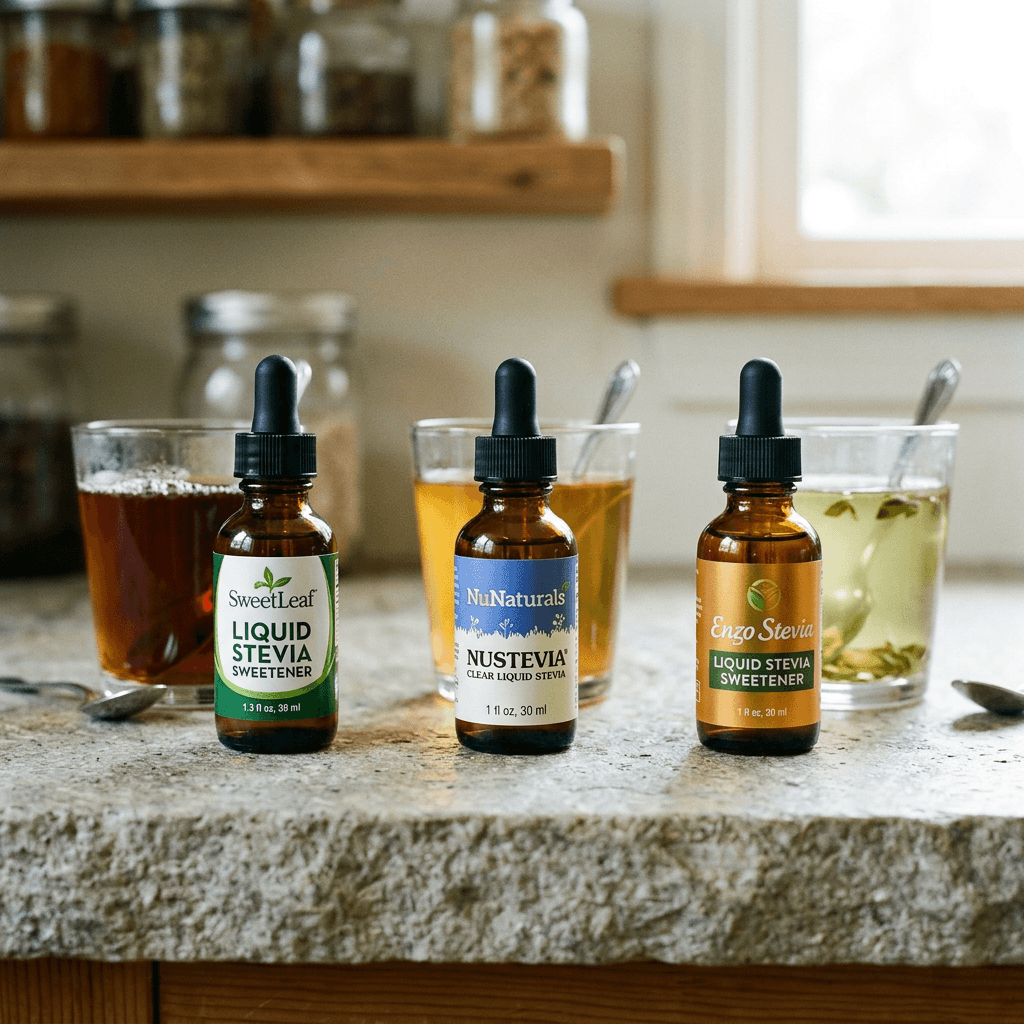
These are the main alternatives I tested or considered before settling on this eight-flavor lineup:
| Product | Best For | Drawback vs. Top Picks | Price (2 oz) |
|---|---|---|---|
| SweetLeaf English Toffee | Black tea, iced tea | — (top pick) | ~$11.99 |
| Enzo Stevia Cinnamon | Rooibos, herbal | Smaller distribution than SweetLeaf | ~$18.99 |
| NuNaturals Peach Mango | White tea, oolong | Slightly more drops needed per cup | ~$14.50 |
| Pyure Organic Vanilla | Coffee primarily | Too sweet for delicate teas; erythritol added | ~$9.99 |
| NOW Better Stevia Lemon | General purpose | Weaker flavor; needs 12–15 drops for same effect | ~$8.99 |
| Stevita Spoonable Stevia | Baking, bulk use | Powder form; doesn’t dissolve cleanly in iced tea | ~$12.00 (jar) |
Pyure is common in stores and I understand why people grab it — but the added erythritol creates a cooling sensation that actually fights the warmth of black tea. For coffee, it’s fine. For tea, I’d skip it.
NOW Better Stevia Lemon isn’t bad, but the flavor concentration is noticeably lower than SweetLeaf Lemon Drop. You need almost double the drops for the same brightness, which cuts the cost advantage significantly.
Where to Buy and Price List
Amazon
SweetLeaf Liquid Stevia — English Toffee (2 oz): ~$11.99
ASIN: B09KM4TFFE
Typically ships with Prime. Multi-packs (3-pack) are available for around $31.50, reducing per-bottle cost to $10.50.
SweetLeaf Liquid Stevia — Variety Pack (6 flavors, 2 oz each): ~$49.95
ASIN: B07X8WTFPL
Good entry point if you want to sample flavors before committing to multiples.
NuNaturals NuStevia Liquid — Peach Mango (2 oz): ~$14.50
ASIN: B08MR3SVTQ
enzostevia.com
Enzo Stevia Cinnamon Drops (2 oz): $18.99
Use coupon code AWESOME at checkout for 3% off — brings the price to approximately $18.42 with free shipping on orders over $30.
URL: https://enzostevia.com
Enzo also carries a sampler pack of five flavors for $79.00 (approximately $77.13 after the AWESOME code). If you’re building out a tea-pairing pantry and want to try their full lineup, the sampler is the better value.
Local Retail
SweetLeaf drops are carried at most Whole Foods, Sprouts, and Natural Grocers locations. Prices run $1–3 higher than Amazon. Worth buying locally if you want to start one bottle before committing to multi-packs.
People Also Ask
What is the best stevia flavor for green tea?
Lemon Drop is the best stevia flavor for green tea — specifically, the SweetLeaf Lemon Drop liquid drops at 6 drops per 8-oz cup brewed at 175°F or lower. The citrus notes in lemon stevia amplify the bright, grassy character already present in Sencha and Dragon Well varieties, while masking any residual stevia bitterness. Avoid vanilla-based flavors in green tea, as sweetness-forward profiles tend to clash with the tea’s subtle vegetal notes.
Does liquid stevia taste different in hot vs. iced tea?
Yes, liquid stevia tastes noticeably sweeter in cold applications — you need about 2 fewer drops for iced tea at the same volume compared to hot tea. This happens because cold temperatures slow evaporation of competing aromatic compounds, making the sweetness more prominent. For iced tea, start at 6 drops per 8 oz instead of 8, and adjust from there. English Toffee and Lemon Drop both translate exceptionally well to cold brew applications.
Is flavored liquid stevia safe to use every day?
Flavored liquid stevia is considered safe for daily use by the FDA, which granted stevia extract (rebaudioside A) GRAS status. Most adults can consume stevia daily without side effects. The flavoring compounds used in products like SweetLeaf are food-grade and present in small quantities. If you’re managing a specific health condition, pregnant, or giving stevia to children regularly, it’s worth a quick check with your doctor — but for healthy adults, daily use at normal drop counts is widely considered safe.
Can I mix different stevia flavors in the same cup of tea?
Yes, and some combinations are genuinely great. The most reliable mix I’ve found is 5 drops Chocolate + 5 drops Peppermint in a peppermint herbal tea — it tastes like a liquid Thin Mint cookie. Another good pairing: 4 drops Vanilla Creme + 4 drops Coconut in a jasmine green tea, which creates a floral-tropical profile that works hot or iced. The rule is to stay within the same total drop count you’d use for a single flavor (8–10 total), or the stevia backbone becomes detectable.
SERP
When I searched “best liquid stevia flavors for tea,” the top five results were a mix of brand-owned content and independent review sites. The first result was a SweetLeaf brand page ranking their own flavors — useful as a flavor reference but obviously not neutral. The second and third results were general “stevia for tea” guides on major health and wellness sites that covered plain stevia versus flavored stevia at a high level but didn’t go into tea-specific pairings or flavor chemistry. One result was a Reddit thread on r/tea where users debated whether any stevia “tastes right” in tea (consensus was divided, but English Toffee and Lemon Drop came up repeatedly as exceptions). A food blog rounded out the top five with a listicle that focused on baking applications and mentioned tea only in passing. None of the results I found went into the specific flavor-chemistry reasons why certain stevia flavors pair better with specific tea types — that’s the gap this article tries to fill.
Top 20 Topics
- Best stevia sweetener for tea
- Liquid stevia vs. powder stevia for beverages
- How many drops of stevia to sweeten tea
- Does stevia taste bitter in tea
- Best sugar substitute for herbal tea
- English Toffee stevia review
- SweetLeaf liquid stevia flavors ranked
- Enzo Stevia review
- NuNaturals liquid stevia for tea
- Stevia for iced tea recipe
- Cold brew tea with stevia drops
- Flavored stevia drops without erythritol
- Stevia for green tea — does it work
- Diabetic-friendly tea sweetener
- Zero calorie tea sweetener options
- Stevia vs. monk fruit in tea
- How to sweeten chai without sugar
- Peppermint stevia drops uses
- Organic liquid stevia brands comparison
- Best sweetener for rooibos tea
Key Takeaways
- English Toffee liquid stevia pairs best with black tea — its buttery aromatic compounds soften tannins the same way milk does, with zero calories.
- Lemon Drop in green tea is the standout discovery of this review — citrus compounds amplify Sencha’s natural brightness rather than masking it.
- 6–10 drops per 8-oz cup is the practical sweet spot; cold brew applications need 2 fewer drops than hot for the same perceived sweetness.
- Enzo Stevia’s Cinnamon drops (coupon AWESOME for 3% off at enzostevia.com) are the best match for rooibos and spiced herbal teas — a pairing that holds up over daily use.
- Avoid erythritol-containing stevia products for tea specifically — the cooling sensation from erythritol fights the warmth of black and herbal teas.
- Flavor mixing works when total drop count stays within normal range — the Chocolate + Peppermint combination in peppermint herbal tea is genuinely excellent and worth trying.
- Third-party testing matters — SweetLeaf, Enzo Stevia, and NuNaturals all publish COA data; buy from brands that can show you their lab results on request.