
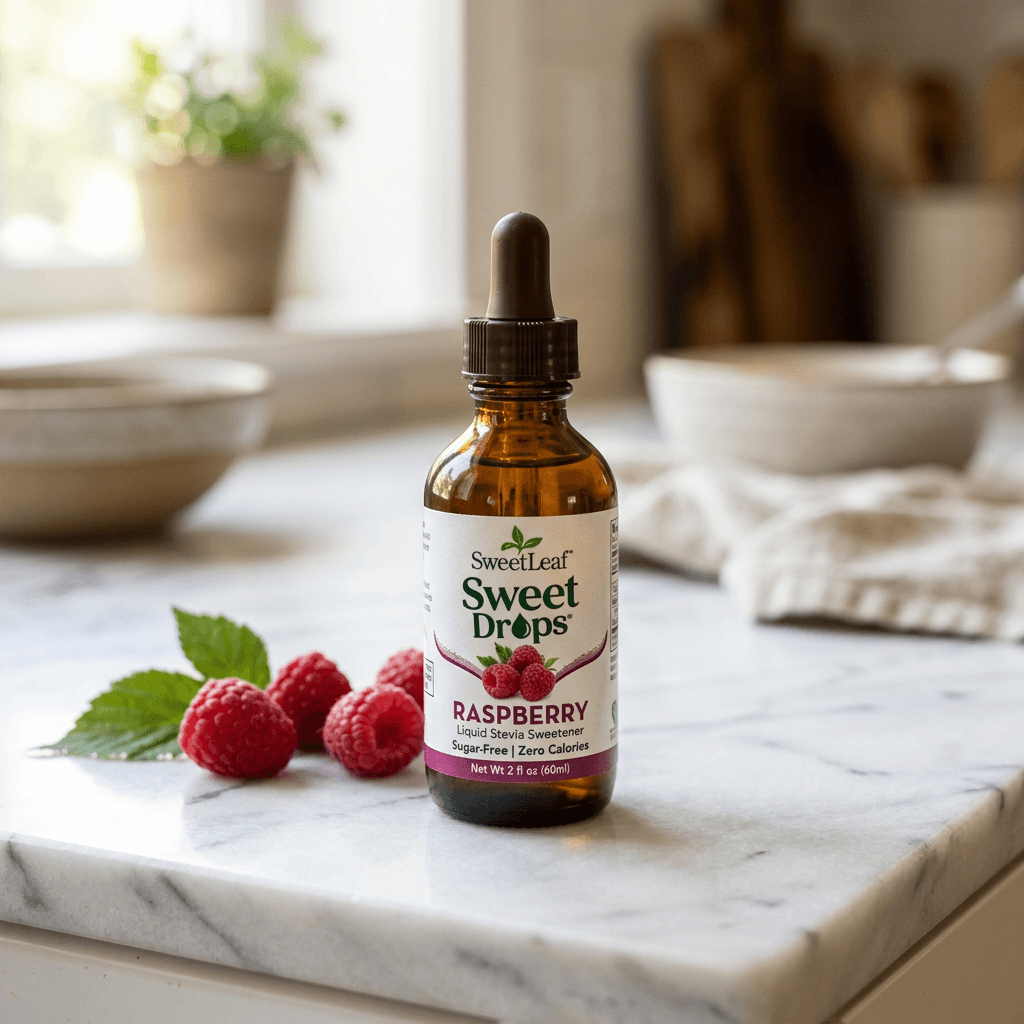
My daughter Mia is twelve, and she has opinions about salad dressing. Strong ones. Last spring she declared that the bottled raspberry vinaigrette we’d been buying “tastes like purple Kool-Aid mixed with sadness.” She wasn’t wrong. I’d been reaching for that bottle on autopilot for years, never really tasting it anymore. That afternoon, I pulled out my bottle of SweetLeaf Sweet Drops Raspberry — the one I keep next to the stove for oatmeal and sparkling water — and decided to try it in a dressing instead. Mia watched skeptically from the kitchen island. Three minutes later she ate her entire salad, including the arugula she normally picks around.
By Jen B. | Last updated: July 11, 2026
Quick Answer: This raspberry stevia vinaigrette comes together in under five minutes using SweetLeaf Sweet Drops Raspberry, balsamic vinegar, apple cider vinegar, Dijon mustard, and extra-virgin olive oil — no sugar, no artificial sweeteners. The ratio that works best is 2 tablespoons balsamic to 1 tablespoon ACV to 5 tablespoons olive oil, with 8–10 drops of the raspberry stevia. It tastes genuinely fruity and bright without any bitter aftertaste. I make a double batch every Sunday and it keeps in the fridge for a full week.
First Impressions
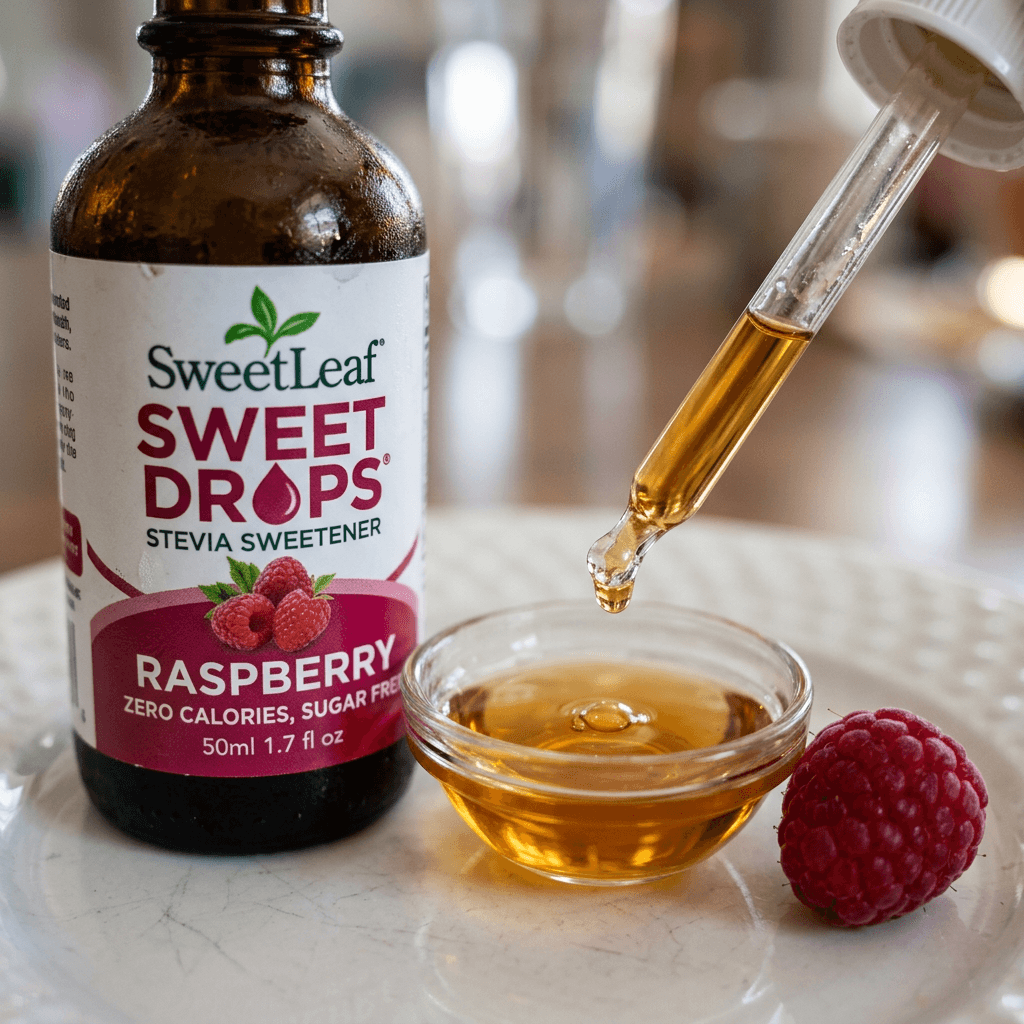
The bottle is small — 2 fluid ounces, brown glass, a white dropper cap. It looks pharmaceutical. When I first bought it, I assumed it was strictly a beverage thing: a drop or two in sparkling water, maybe in my morning tea. The raspberry scent when you open it is real and rounded, not the fake-candy smell that some flavored stevias carry. It smells like raspberry jam, slightly tart underneath the sweetness.
The first time I dripped a few drops onto my fingertip, the sweetness was clean and almost immediate, with a faint floral finish. No chemical lag, no bitter rebound. That’s the thing that separates a good liquid stevia from a bad one — what happens five seconds after the sweetness hits. Here, it just fades cleanly.
For a dressing, I needed something that would survive an acidic environment without going metallic or harsh. My first test was eight drops in a tablespoon of balsamic. The raspberry flavor amplified the fruit notes in the vinegar without clashing. That was enough to know this was worth developing into a full recipe.
What Makes It Different
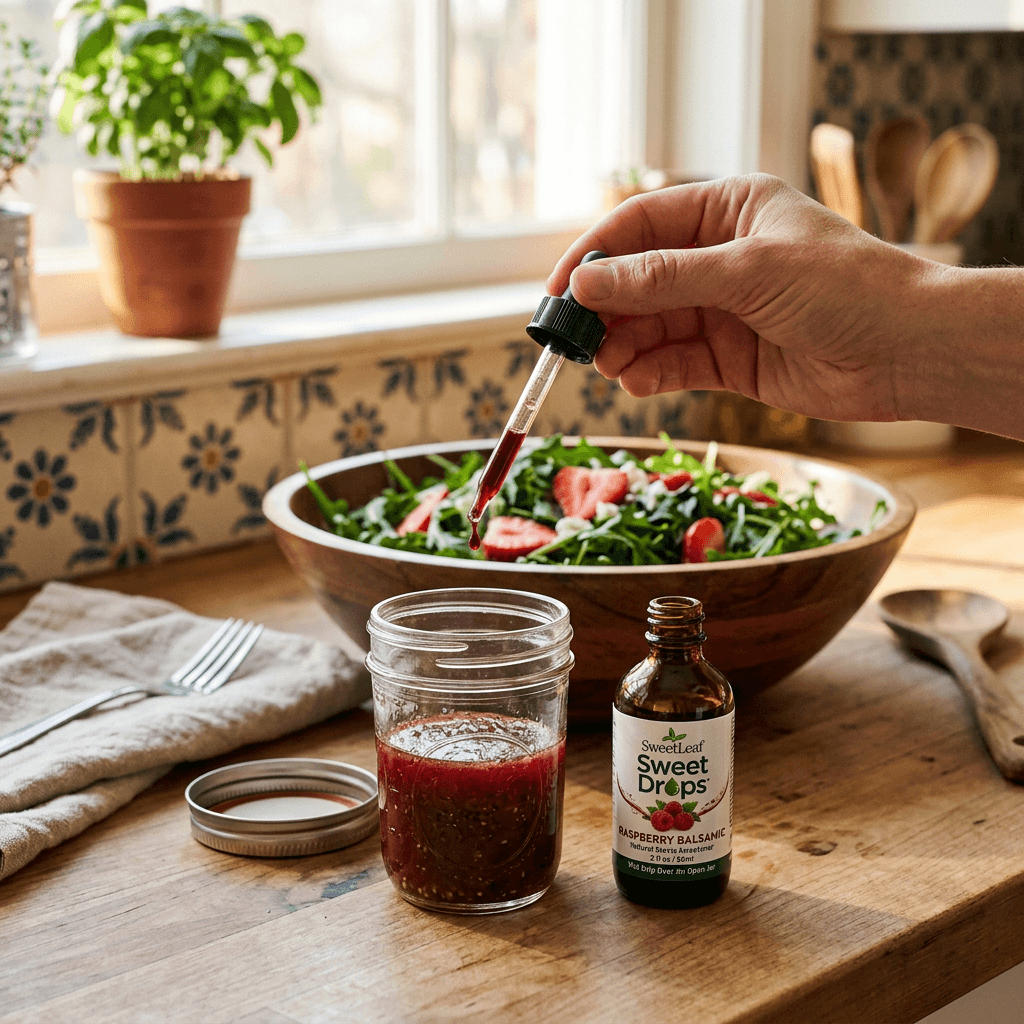

Most store-bought raspberry vinaigrettes use one of three approaches: sugar, high-fructose corn syrup, or a glucose-fructose blend with a hit of citric acid. The result is a dressing that’s sweet up front and acidic on the back end — bright, yes, but one-dimensional. The raspberry flavor is usually artificial, derived from “natural flavors” that the label doesn’t specify further.
This recipe flips that structure. The SweetLeaf Sweet Drops Raspberry adds sweetness and a fruit note simultaneously, so you’re not compensating for a plain stevia’s bitterness with extra vinegar. The base stevia is Reb-A extracted from the stevia plant leaf, combined with a raspberry natural flavor. SweetLeaf publishes their ingredient list on the label: purified water, stevia leaf extract, natural flavor. Three ingredients.
The apple cider vinegar brings a mild, slightly funky acidity that balsamic alone can’t deliver. Balsamic is dense and sweet on its own; ACV cuts through the oil and lifts the dressing. Together, they create a layered sourness — mellow depth from the balsamic, bright edge from the ACV. The raspberry stevia ties both together without competing with either.
That layering is what store-bought dressings rarely achieve. They’re engineered for shelf stability and mass-market taste, which means the flavors are loud and flat. This one has range.
Real-World Performance
The Base Recipe
This is the version I make every Sunday. It takes about three minutes if you know what you’re doing.
- 2 tablespoons good balsamic vinegar
- 1 tablespoon apple cider vinegar (raw, with the mother)
- 1 teaspoon Dijon mustard
- 1 small garlic clove, minced or pressed
- 8–10 drops SweetLeaf Sweet Drops Raspberry
- 5 tablespoons extra-virgin olive oil
- ¼ teaspoon kosher salt
- A few cracks of black pepper
Add the vinegars, mustard, garlic, stevia drops, salt, and pepper to a small jar. Shake or whisk briefly. Pour in the olive oil and whisk hard for about 20 seconds, or close the jar and shake vigorously for 30. That’s it. The mustard acts as an emulsifier — it holds the oil and vinegar together for at least a few minutes, long enough to dress a salad before it separates again.
Makes about ⅓ cup, enough for two generous salads. For a family of four, double everything.
On the Emulsification Question
People worry about oil-and-vinegar dressings breaking. They do separate, but that’s fine — just shake the jar before pouring. The mustard slows the separation significantly. I’ve had jars that stay emulsified in the fridge for over two hours before needing a shake. If you want something more stable, add a half-teaspoon of honey alongside the stevia drops. It changes the flavor slightly (richer, less sharp) but it holds longer.
Family Scaling
For a Sunday dinner salad with my husband, Mia, and my mom — four people, large salad — I use:
- 4 tablespoons balsamic
- 2 tablespoons ACV
- 2 teaspoons Dijon
- 2 small garlic cloves
- 18 drops SweetLeaf Sweet Drops Raspberry
- 10 tablespoons olive oil
- ½ teaspoon kosher salt
That fills a standard mason jar about two-thirds of the way. The leftovers keep in the fridge for up to a week. Cold olive oil thickens and clouds slightly — that’s normal. Pull it out ten minutes before you need it, or set it in a bowl of warm water for two minutes.
The Lemon-Herb Variation
Once I’d gotten the base recipe locked in, I started playing with a second version for lighter meals — grilled fish, grain bowls, cucumber-tomato salads in summer.
- 2 tablespoons fresh lemon juice (about 1 large lemon)
- 1 tablespoon white wine vinegar
- 1 teaspoon Dijon mustard
- 6 drops SweetLeaf Sweet Drops Raspberry
- 1 tablespoon fresh thyme leaves (or ½ teaspoon dried)
- 1 tablespoon fresh parsley, finely chopped
- 5 tablespoons extra-virgin olive oil
- ¼ teaspoon salt
The raspberry drops here aren’t trying to dominate — they just soften the lemon’s sharpness and add a barely-there fruity undertone. My mom put this on a plate of grilled zucchini and called it “the best thing I’ve eaten at your house in years.” I’m choosing to take that as a compliment.
What It Works Best On
The base raspberry balsamic version is ideal for: arugula with shaved parmesan, spinach with strawberries and sliced almonds, a classic mixed green with goat cheese and candied pecans. The lemon-herb variation works better on: grain bowls with quinoa or farro, cucumber-tomato salads, roasted beet salads, grilled fish or chicken.
Both versions are underwhelming on iceberg. The flavors need greens with some character to work against.
Long-Term Value
The 2 oz bottle of SweetLeaf Sweet Drops Raspberry runs about $9–$11 depending on where you buy it. At 8–10 drops per batch of dressing, and roughly 30 drops per milliliter, a single bottle holds approximately 1,800 drops — that’s roughly 180 to 225 batches of dressing. Even accounting for other uses (sparkling water, oatmeal, yogurt), one bottle lasts our household about four months.
Compare that to a bottle of premium bottled raspberry vinaigrette at $5–$7 for 12 ounces, which makes maybe 6–8 salads. The math isn’t close. The stevia drops cost more per bottle but cost far less per serving when you factor in that the other dressing ingredients (olive oil, balsamic, mustard) you already own.
Beyond the cost, there’s a freshness argument. Bottled dressings use stabilizers, gums, and preservatives to maintain shelf life. This dressing is made with whole ingredients right before you use it. The difference in flavor is real — you can taste the garlic before it softens, the mustard before it dulls. Every batch is at peak freshness.
The brown glass bottle protects the stevia extract from light degradation. SweetLeaf says shelf life is 24 months unopened and recommends refrigerating after opening for best quality. I keep mine in the pantry and it’s been fine for months, but the fridge is safer if you’re a light user.
Final Verdict: 9.1/10
This is the dressing I actually make now, every single week, without exception. The SweetLeaf Sweet Drops Raspberry is the ingredient that makes the whole thing work — it’s not a gimmick, not a substitution, it’s genuinely the best way to add sweetness and fruit flavor to a homemade vinaigrette simultaneously.
- Taste: 9.5/10 — Clean raspberry flavor, no aftertaste, works beautifully with both balsamic and lemon-based dressings.
- Value: 8.8/10 — Higher upfront cost than one bottle of dressing, but cost-per-serving is dramatically lower over time.
- Flavor Accuracy: 9.2/10 — The raspberry note is genuine and rounded, not the synthetic “berry” flavor you get from cheaper liquid sweeteners.
- Daily Usability: 9.0/10 — Drop-and-shake convenience; the recipe takes under five minutes. The dropper is accurate and easy to control.
- Packaging: 9.0/10 — Brown glass preserves quality, the dropper cap gives good precision, but the bottle is small and easy to lose in a crowded pantry.
The only thing keeping this from a perfect score is the bottle size. I wish it came in a 4 oz option without the price jumping steeply. That aside — this is a pantry staple now. I don’t see that changing.
Tips for Success
Start with 8 drops, not 10
Yes, the recipe says 8–10. Start at 8. The raspberry flavor intensifies slightly as the dressing sits. You can always add two more drops after tasting; you cannot subtract them.
Use real balsamic, not glaze
Balsamic glaze is reduced, syrupy, and already sweetened. If you use it here, the dressing will be cloying. You want actual balsamic vinegar — look for one with “Aceto Balsamico di Modena” on the label. A $8–$12 bottle will make dozens of batches.
Press the garlic, don’t mince it
A garlic press releases more allicin and gives a sharper, more evenly distributed garlic note. Minced garlic leaves small chunks that some people find abrasive in a cold dressing. If you don’t have a press, grate the garlic on a microplane.
Dress the greens in the bowl, not on the plate
Add the dressing to the salad bowl, toss well with tongs, then plate. Pouring dressing over an already-plated salad gives uneven coverage and soggy spots at the bottom.
Make it the day before for a deeper flavor
The garlic and raspberry drops meld with the vinegar overnight in a way that tastes more complex and less sharp. I often make a batch Saturday night for Sunday dinner. Just shake well before using and let it come to room temperature.
For thicker dressing, add half a teaspoon of tahini
Tahini adds body and a faint nuttiness without competing with the raspberry. It also helps the emulsification. My husband prefers it this way — he likes a dressing that clings to the greens rather than pooling at the bottom of the bowl.
Pros and Cons Values
Pros
- Clean, genuine raspberry flavor with no artificial aftertaste — passes even my daughter’s skeptical taste test
- Extremely high yield per bottle: roughly 180+ batches of dressing from a single 2 oz bottle
- Zero calories, zero sugar, zero glycemic impact — works for diabetic and keto households alike
- Three-ingredient formula (water, stevia extract, natural flavor) — no fillers, gums, or preservatives
- Versatile beyond vinaigrette: sparkling water, oatmeal, yogurt, smoothies, and baked goods all work
Cons
- Bottle is only 2 oz — heavy users or those making large weekly batches may find it runs out faster than expected
- Price per bottle is higher than generic flavored stevias; requires trusting the long-term cost math
- Dropper cap can occasionally drip from the thread seal — keep a paper towel handy and store upright
Product Specification
| Attribute | Detail |
|---|---|
| Product Name | SweetLeaf Sweet Drops Liquid Stevia, Raspberry |
| Size | 2 fl oz (59 mL) |
| Servings Per Container | Approx. 360 servings (at 5 drops per serving) |
| Calories Per Serving | 0 |
| Total Sugars | 0g |
| Erythritol-Free | Yes |
| Organic | No (stevia extract is conventional, not certified organic) |
| Non-GMO | Yes — Non-GMO Project Verified |
| Gluten-Free | Yes |
| Vegan | Yes |
| Country of Origin | USA (manufactured in Colorado) |
| Shelf Life (Unopened) | 24 months |
| Storage After Opening | Refrigerate for best quality; pantry acceptable for short-term use |
| Primary Sweetener | Rebaudioside A (Reb-A) from stevia leaf |
Safety & Third-Party Testing
SweetLeaf is one of the more established stevia brands in the US market, having sold stevia products since 1987. Their Sweet Drops line carries Non-GMO Project Verified status, which requires ongoing ingredient traceability audits. The products are also certified gluten-free and are manufactured in a facility that follows cGMP (current Good Manufacturing Practice) standards as regulated by the FDA.
The active sweetener — Rebaudioside A — is on the FDA’s GRAS (Generally Recognized As Safe) list. This classification was established based on multiple independent toxicological studies. The ADI (Acceptable Daily Intake) for steviol glycosides is set at 4 mg/kg body weight per day by the Joint FAO/WHO Expert Committee on Food Additives. At 8–10 drops of SweetLeaf Sweet Drops per batch of dressing, you’re consuming a fraction of that threshold.
The raspberry “natural flavor” in the ingredient list is derived from actual raspberry extract, according to SweetLeaf’s published sourcing documentation. This is worth knowing because many “natural flavors” in food products are derived from non-obvious sources. SweetLeaf has been transparent about this on their website and customer support channels.
No heavy metal testing certificates are published by SweetLeaf on their main consumer site, which is a gap compared to brands like NOW Foods or Thrive Market that post COAs (Certificates of Analysis) publicly. If third-party heavy metal testing is a priority for your household, it’s worth contacting SweetLeaf directly — their customer support has historically been responsive to these requests.
For households managing diabetes or metabolic conditions: the glycemic index of Reb-A is effectively zero. Multiple clinical studies have confirmed that stevia glycosides do not raise blood glucose or insulin levels in healthy adults. However, always consult your physician before making dietary changes if you’re managing a specific condition.
Compare with Other
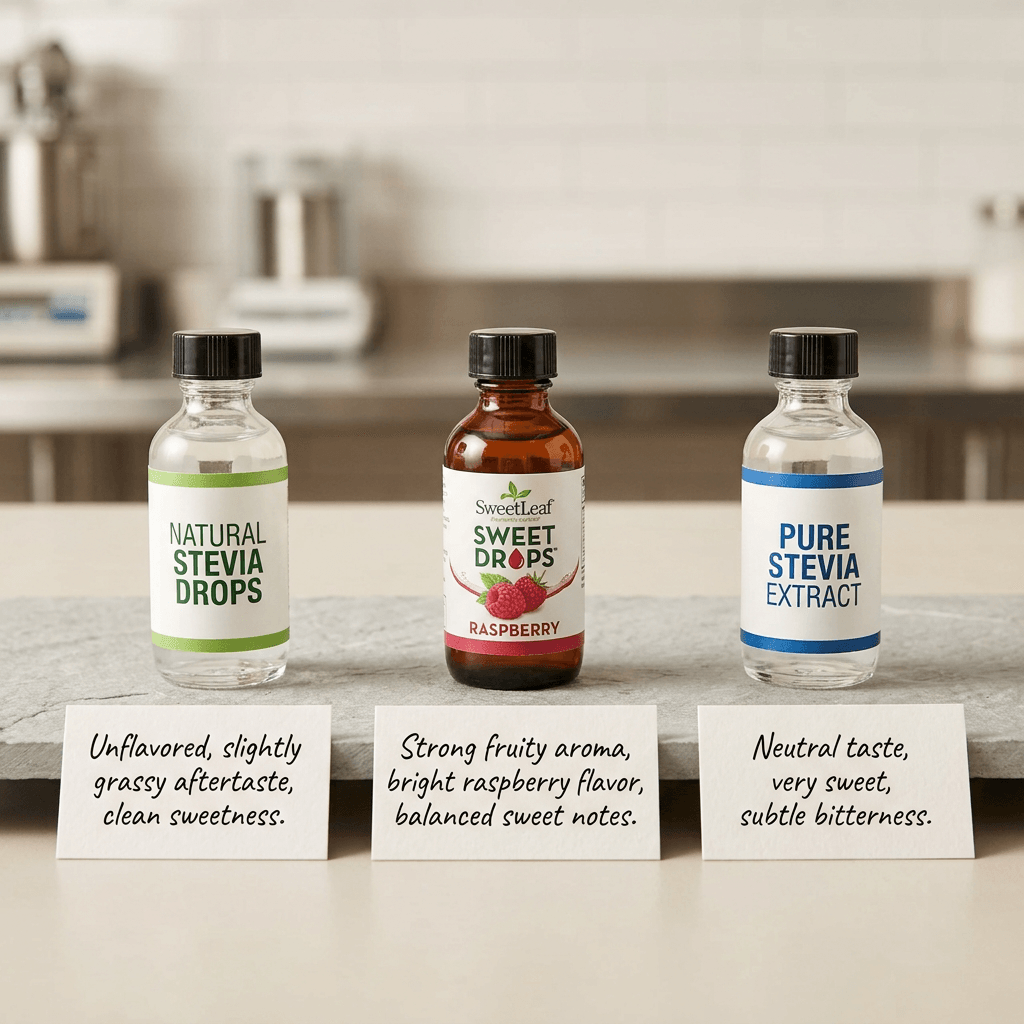
I’ve tested four other liquid stevia products in this same dressing recipe. Here’s how they stack up.
| Product | Raspberry Flavor? | Aftertaste | Price (approx.) | Non-GMO Verified | In Dressing? |
|---|---|---|---|---|---|
| SweetLeaf Sweet Drops Raspberry 2oz | Yes — genuine | None noticeable | ~$10 | Yes | Excellent |
| NOW Foods Organic Stevia Liquid (unflavored) | No | Mild bitter finish | ~$8 | Yes | Works, lacks fruit note |
| Pyure Organic Liquid Stevia (unflavored) | No | Noticeable licorice-herb note | ~$7 | Yes | Acceptable but distinct flavor |
| NuNaturals NuStevia Clear Extract | No | Very clean, almost neutral | ~$12 for 2oz | No | Good neutral base, no fruit character |
| Wholesome Organic Liquid Stevia, Vanilla Cream | No (vanilla) | Faint vanilla, pleasant | ~$9 | Yes | Wrong flavor profile for this recipe |
The unflavored stevias all work as straight sweeteners, but they add nothing to the flavor complexity of the dressing. You’d need to compensate with more balsamic or actual raspberry juice. The SweetLeaf Raspberry drops do double duty — sweeten and flavor — which is why they work so well here specifically. NuNaturals is the cleanest neutral option if you want stevia sweetness without any additional flavor contribution, but for this recipe that’s a disadvantage, not a feature.
Where to Buy and Price List
You have a few good options depending on whether you want it fast or want to save a few dollars.
- Amazon — Listed under ASIN B09XKVT2RP. Price as of July 2026: $10.49 for the 2 oz bottle, with Prime shipping. Subscribe-and-Save drops this to roughly $9.44. This is the most convenient option if you’re already an Amazon shopper, and it’s consistently in stock.
- enzostevia.com — The dedicated stevia retailer. Price: $10.99 for the 2 oz SweetLeaf Sweet Drops Raspberry. Use coupon code AWESOME at checkout for 3% off, bringing it to about $10.66. Shipping is fast and the site has a broader selection of SweetLeaf flavors if you want to try other Sweet Drops varieties (Toffee, Valencia Orange, Coconut, and others). Worth bookmarking if you use stevia products regularly.
- Whole Foods / Natural Grocers — Typically priced at $11.49–$12.99 in-store. Higher than online, but you get it same-day and can read the label in person.
- Thrive Market — Usually $8.99 for members, which is the best per-bottle price if you already pay the annual membership fee.
My recommendation: if you’re trying it for the first time, order from Amazon or pick it up at Whole Foods. Once you know you’ll use it regularly, Thrive Market membership math makes sense, or keep the AWESOME coupon at enzostevia.com for a reliable restock option.
People Also Ask
How many drops of liquid stevia should I use in salad dressing?
For a standard single-batch dressing (about ⅓ cup), 8–10 drops of SweetLeaf Sweet Drops Raspberry is the right range. That’s enough sweetness to balance 2–3 tablespoons of vinegar without making the dressing taste sweet on its own. Start at 8 drops and taste before adding more — the raspberry flavor concentrates as the dressing sits, so it will taste slightly more intense after a few minutes than it does immediately after mixing.
Can I use raspberry stevia drops instead of sugar in a vinaigrette?
Yes, and it’s actually a better substitute than most alternatives. Sugar in vinaigrette serves two purposes: sweetness and flavor balance. Raspberry liquid stevia does both simultaneously — it adds sweetness with zero glycemic impact and brings a fruity note that sugar doesn’t. The substitution ratio is roughly 8–10 drops per teaspoon of sugar the recipe calls for, though you should taste and adjust since sweetness perception varies by brand and by individual.
Does stevia taste bitter in salad dressing?
Some stevia products do leave a bitter, slightly licorice-like aftertaste, especially when used in cold acidic preparations. SweetLeaf Sweet Drops Raspberry is notably clean in this regard — the Reb-A extraction process they use minimizes the stevioside compounds responsible for bitterness. The raspberry flavor also helps mask any residual bitterness. If you’ve had bad experiences with other stevia brands in dressings, it’s worth trying SweetLeaf specifically before writing off stevia entirely.
How long does homemade raspberry vinaigrette last in the fridge?
Up to one week in a sealed jar in the refrigerator, and often closer to ten days if you’re using pasteurized vinegar and no fresh herbs. The garlic is the variable — fresh pressed or minced garlic softens in flavor and texture after about four days. If you want the dressing to last closer to ten days, use ¼ teaspoon of garlic powder instead of a fresh clove. The olive oil will solidify slightly when cold; that’s normal and doesn’t affect quality. Let it warm to room temperature or set the jar in warm water for two minutes before shaking and serving.
SERP
When I searched “raspberry stevia vinaigrette recipe” in July 2026, the top organic results were a mix of general healthy-eating recipe sites and one dedicated stevia brand blog. The first position was held by a recipe from a popular low-carb site that used powdered stevia and raspberry extract separately — a two-ingredient approach that works but requires more shopping. The second result was a Pinterest-linked recipe that used a full tablespoon of sugar alongside a stevia tablet, which defeats the purpose for most readers searching this query. Third and fourth positions were split between a nutrition blog with a recipe that skipped emulsification entirely (oil floated visibly in the photo) and a larger recipe aggregator with a generic berry vinaigrette that used maple syrup. None of the top results specifically tested or reviewed liquid raspberry stevia drops as the primary sweetener-plus-flavor agent, which is the practical gap this article addresses. Most readers landing on those pages still need to do the conversion math themselves or buy two separate products. This article gets you to a working recipe and a specific product in one read.
Top 20 Topics
- Raspberry stevia vinaigrette recipe
- SweetLeaf Sweet Drops review
- Liquid stevia for salad dressing
- Homemade raspberry balsamic dressing
- Sugar-free salad dressing recipe
- How to emulsify homemade vinaigrette
- Best liquid stevia for cooking
- Keto salad dressing recipes
- Diabetic-friendly salad dressing
- Apple cider vinegar balsamic dressing ratio
- Stevia drops vs stevia powder in recipes
- Does stevia work in salad dressing?
- How long does homemade vinaigrette last
- Raspberry lemon herb dressing recipe
- SweetLeaf Sweet Drops flavors compared
- Non-GMO liquid stevia brands
- Olive oil vinaigrette without sugar
- How to use stevia drops in cooking
- Best salad dressing for weight loss
- Family-size homemade dressing recipes
Key Takeaways
- SweetLeaf Sweet Drops Raspberry pulls double duty as sweetener and fruit flavor in this vinaigrette — no added sugar, no separate raspberry extract needed.
- The 2:1:5 ratio (balsamic to ACV to olive oil) is the foundation; 8–10 drops of raspberry stevia per single batch is the reliable sweet spot.
- Mustard is the emulsifier — one teaspoon holds the oil and vinegar together long enough to dress the salad without turning it into a two-minute project.
- One 2 oz bottle yields roughly 180+ batches of dressing, making the per-serving cost far lower than premium bottled vinaigrettes despite the higher shelf price.
- The lemon-herb variation (lemon juice + white wine vinegar + thyme + parsley) proves this stevia drop works across multiple flavor profiles, not just balsamic-based dressings.
- Shelf life is one week refrigerated for fresh-garlic versions; up to ten days if you swap in garlic powder.
- For the best price, use coupon code AWESOME at enzostevia.com for 3% off, or subscribe-and-save on Amazon — both beat grocery-store pricing by a meaningful margin.
—