Last Fourth of July, my daughter Mia sprinted inside from the backyard with grass-stained knees and a very specific demand: lemonade. Not the powder kind, not the store-bought kind. She’d watched me squeezing lemons on the counter all morning, and she’d been patient for exactly as long as a seven-year-old can be patient — which is to say, not very. The problem was my husband Dan had gotten a prediabetes diagnosis six months earlier, and I’d been quietly removing sugar from almost everything we made. Lemonade, though, had beaten me. Every sugar substitute I tried seemed to amplify in a cold, acidic drink — the bitterness louder, the chemical aftertaste longer. I handed Mia a glass of my erythritol version. She took one sip, looked at me, and set the glass down on the counter without saying a word. That look.
I went back to researching. Found SweetLeaf Sweet Drops Lemon Drop. Made a test batch the next morning. Dan drank the whole glass and asked if I’d finally just used real sugar. Mia asked for seconds. That was the moment I knew I needed to write about this one.
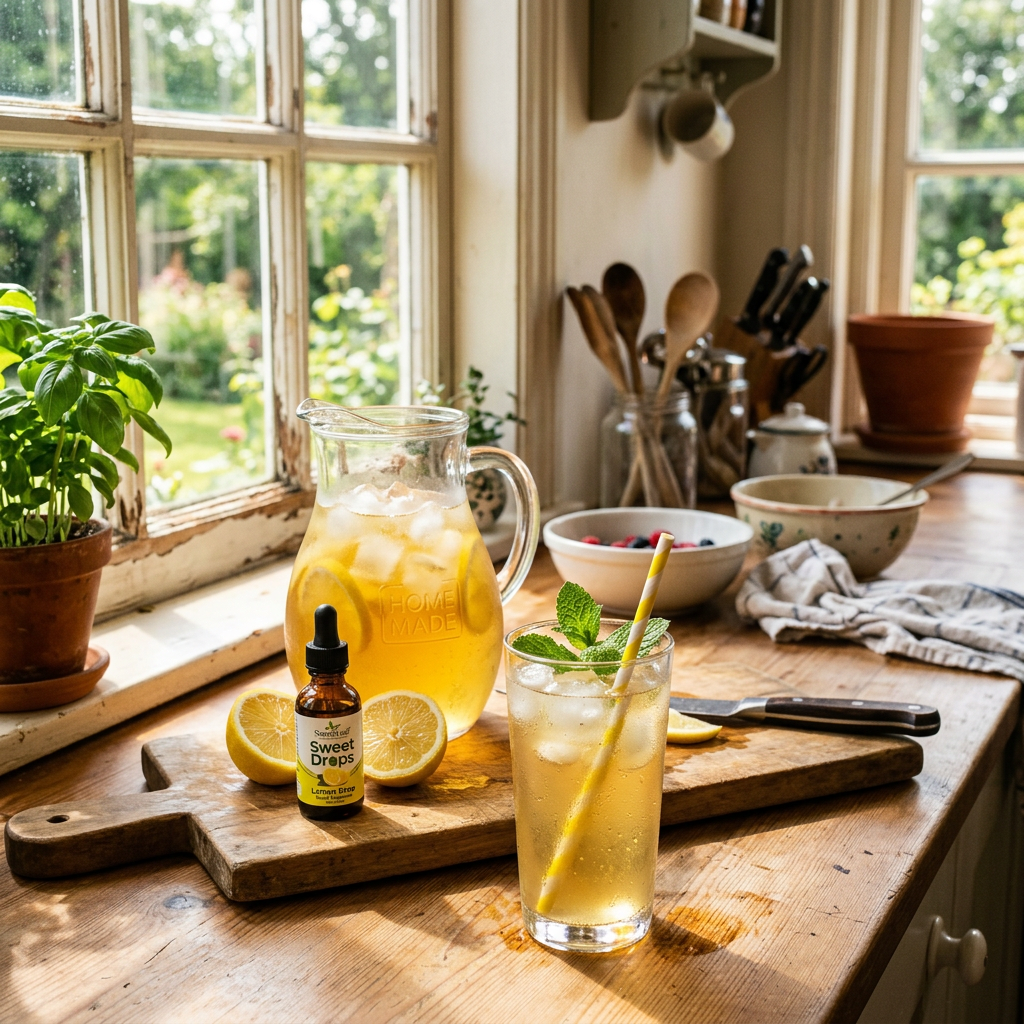
By Jen B. | Last updated: July 05, 2026
Quick Answer: SweetLeaf Sweet Drops Lemon Drop is the best liquid stevia I’ve tested for making sugar-free lemonade at home. For a 64-ounce pitcher, use 36 drops of Lemon Drop, the juice of 6 medium lemons, and cold filtered water — no sugar, no artificial sweeteners, no aftertaste. It works equally well with still or sparkling water, and the lemon flavor in the drops actually amplifies the fresh-squeezed taste rather than fighting it. If you’re cutting sugar and want a lemonade that passes the family taste test, start here.
First Impressions
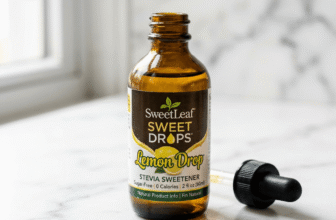
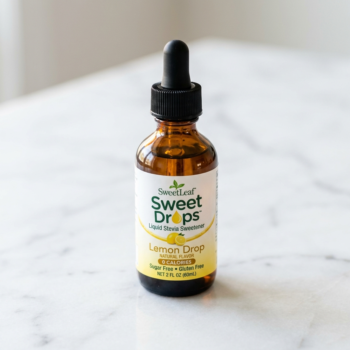
The bottle is small. That’s the first thing you notice. A 2-ounce amber glass dropper bottle that fits in the palm of your hand — it doesn’t look like it should be enough to sweeten anything significant. But that’s exactly the point with liquid stevia: the concentration is high enough that you’re working in drops, not tablespoons.
I opened the cap and took a smell. There’s a genuine lemon scent — bright and citrusy, not the synthetic candy-lemon you get from processed flavoring. It reminded me more of lemon zest than lemon candy. That’s a promising sign with flavored stevia drops, because fake-smelling products almost always taste fake too.
The dropper tip is precise. No dripping, no glugging. Each drop is controlled, which matters a lot when you’re calibrating sweetness in a drink. I’ve used squeeze-bottle stevias before and they’re genuinely hard to measure accurately. This dropper is better.
The liquid itself is clear, faintly amber. It blends instantly into cold water without stirring. No cloudiness, no sediment.
What Makes It Different
Most liquid stevias are just stevia extract in water or alcohol, with natural flavors added. What SweetLeaf does differently is source their stevia from non-GMO plants and process it without alcohol — they use water-based extraction. That matters for taste because alcohol extraction can leave a faint bitter finish, especially in cold beverages where flavor compounds stay on your palate longer.
The Lemon Drop variety also contains real lemon flavor, not synthetic citric acid masking. You can tell because the drop tastes rounded and slightly floral rather than sharp and one-dimensional. It has what I’d describe as a Meyer lemon quality — sweet citrus, a little soft, not aggressively sour.
SweetLeaf uses Reb-A stevia, which is the most refined and least bitter steviol glycoside. Cheaper brands use crude whole-leaf stevia, which has more of the grassy, licorice-adjacent bitterness that gives stevia its bad reputation with some people. Reb-A done right is genuinely clean in the aftertaste department.
There are no fillers. No maltodextrin, no erythritol, no inulin. Just stevia, water, and natural lemon flavor. That purity is meaningful when you’re making a drink where there’s nothing to hide behind — lemonade is acid, water, and sweetness. Off notes have nowhere to go.
Real-World Performance
The Base Recipe (64-oz Pitcher)
This is the recipe I’ve made at least two dozen times now. It’s calibrated to our family’s taste — medium-sweet, noticeably tart, with no detectable stevia flavor.
- 6 medium lemons, juiced (about ¾ cup fresh juice)
- 36 drops SweetLeaf Sweet Drops Lemon Drop
- 64 oz cold filtered water
- Pinch of fine sea salt (about ⅛ teaspoon — this is optional but it rounds out the flavor significantly)
- Ice
Juice the lemons directly into the pitcher. Add the drops. Add the salt. Pour in the water. Stir for about 20 seconds. Taste. Adjust drops by 2-4 at a time if needed — 36 is my sweet spot but lemons vary in sweetness and tartness, so the first batch may need fine-tuning.
The result is a lemonade that looks, smells, and honestly tastes like something that belongs at a summer picnic. It’s not “pretty good for sugar-free.” It’s just good.
Balancing Tartness
Tartness is the variable most people underestimate in sugar-free lemonade. When you use real sugar, the sweetness blunts your perception of the acid. Stevia doesn’t do that the same way — it sweetens without buffering, so tart lemons taste tarter in a stevia lemonade than in a sugar version.
A few fixes that actually work:
- Roll your lemons hard on the counter before cutting — this breaks down the membranes and yields more juice with slightly less bitterness from the pith.
- Add 2 extra drops if your lemons are particularly sour. Meyer lemons need fewer drops; standard grocery-store Eurekas need more.
- The salt pinch is not optional if tartness is your issue. Salt suppresses bitterness perception at a neurological level. It doesn’t make the lemonade taste salty — it makes the tartness feel more balanced.
- If the lemonade still tastes sharp, add 2 tablespoons of cold water and re-taste before adding more drops. Sometimes the flavor just needs dilution, not more sweetness.
The Sparkling Water Variation
This version has become the weekend version in our house. Mia calls it “fancy lemonade.”
- 6 medium lemons, juiced
- 32 drops SweetLeaf Sweet Drops Lemon Drop (slightly fewer — carbonation amplifies sweetness perception)
- 32 oz cold filtered water
- 32 oz plain sparkling water (added last, gently, to preserve carbonation)
- ⅛ tsp fine sea salt
Mix the lemon juice, drops, salt, and still water first. Then slowly pour in the sparkling water along the inside edge of the pitcher and stir once, gently. The carbonation stays intact much better this way. The result is a lightly effervescent lemonade that feels genuinely celebratory — the bubbles carry the lemon aroma up in a way that still lemonade doesn’t.
I’ve served this to guests who didn’t know it was sugar-free. Nobody asked.
Long-Term Value
The 2-ounce bottle contains approximately 320 drops based on the standard dropper volume of 0.05ml per drop. At 36 drops per 64-ounce pitcher, that’s roughly 8–9 pitchers per bottle. Each pitcher serves 6–8 glasses.
At around $10–12 per bottle, that works out to roughly $1.20–$1.50 per pitcher in sweetener cost. Compare that to a bag of organic cane sugar at similar cost that would sweeten maybe 2–3 pitchers — the value math on the stevia side is genuinely good.
We go through about one bottle every three to four weeks during summer. It stores fine in the pantry, no refrigeration needed until opened. The dropper cap doesn’t leak. I’ve had one bottle roll off the counter and survive without breaking (the amber glass is thick).
One thing I appreciate: because the flavor is built into the drops, you’re not buying a separate lemon extract or flavored syrup. The Lemon Drop drops handle both the sweetness and the citrus amplification in one ingredient. That’s a genuine kitchen convenience, not just marketing.
Final Verdict: 9.1/10
SweetLeaf Sweet Drops Lemon Drop is the closest I’ve found to a drop-in replacement for sugar in homemade lemonade. The Lemon Drop flavor actually improves the recipe rather than just sweetening it — which is something I didn’t expect going in.
- Taste: 9.3/10 — Clean sweetness, zero detectable bitterness at 36 drops per 64 oz, and the lemon flavor integrates naturally with fresh-squeezed juice rather than competing with it.
- Value: 8.8/10 — At $1.20–$1.50 per pitcher, it’s competitive with conventional sweeteners and vastly cheaper than specialty sugar-free syrups. Slight dock for the small bottle size when you’re making pitchers all summer.
- Flavor Accuracy: 9.4/10 — The Lemon Drop flavor is identifiably lemon, not candy-lemon. It adds a Meyer lemon softness that genuinely enhances the overall drink profile.
- Daily Usability: 9.0/10 — The dropper is precise and easy to control. Drops blend instantly into cold water. The only friction is counting drops carefully when scaling up or down.
- Packaging: 8.8/10 — The amber glass bottle protects light-sensitive compounds and feels quality. The 2oz size means frequent repurchases if you’re a heavy user. A 4oz option would be welcome.
Tips for Success
These are the things I wish someone had told me before my first batch:
- Start with 30 drops, not 36. Taste first, then add 2–4 more if needed. Everyone’s palate is different and lemons vary in natural sweetness. Going over is harder to fix than going under.
- Use room-temperature lemons. Cold lemons yield significantly less juice than room-temperature ones. Take them out of the fridge 30 minutes before juicing. You’ll get about 20% more juice.
- Don’t skip the salt. A pinch of fine sea salt doesn’t make lemonade salty — it makes everything taste more balanced. This is the single best tip I have for sugar-free lemonade specifically.
- Add the drops before the water. Mix the drops into the lemon juice first, then add water. This ensures even distribution without any pooling of the concentrated drops.
- For sparkling versions, use fewer drops. Carbonation heightens sweetness perception. Drop from 36 to 32 for sparkling versions, or you’ll find the drink sweeter than intended.
- Let it chill for 20 minutes before serving. Flavor continues to develop as the lemon oils from the juice integrate with the stevia. A freshly made pitcher tastes noticeably better after it’s sat in the fridge for 20 minutes.
- Strain the juice. If you want a clean, restaurant-style appearance, strain the lemon juice before adding it. Seeds and pulp don’t affect flavor but they settle to the bottom of the pitcher in an unappetizing way.
Pros and Cons Values
What I Love
- Zero aftertaste at recipe-appropriate quantities — the clean Reb-A extraction is genuinely different from bottom-shelf stevia products.
- Lemon flavor genuinely enhances the recipe — it’s not neutral drops plus lemon; the Lemon Drop flavor adds a soft citrus note that makes the finished lemonade taste more complex.
- Precise dropper tip means consistent results batch to batch — no guesswork, no accidentally over-sweetening.
- No filler ingredients — no erythritol, no maltodextrin, no alcohol, nothing that introduces off-flavors or digestive effects.
- Excellent value per pitcher — at about $1.40 per 64-ounce batch, it costs less than conventional sweeteners on a per-use basis for lemonade specifically.
What Could Be Better
- The 2-ounce bottle runs out fast if you’re making pitchers multiple times a week through summer — a 4-ounce option at a proportional price would reduce repurchase frequency meaningfully.
- Lemon flavor is pleasant but present — if you want completely neutral stevia drops for other recipes, the Lemon Drop variety isn’t the right tool. It’s specialized, not all-purpose.
- Drop counting requires attention — this isn’t a shake-and-pour sweetener. Dialing in your exact preference takes one or two test batches, which some users find frustrating initially.
Product Specification
| Attribute | Detail |
|---|---|
| Product Name | SweetLeaf Sweet Drops Lemon Drop Liquid Stevia |
| Size | 2 fl oz (59 mL) |
| Servings | Approx. 320 drops per bottle (1 serving = 5 drops / 0 cal) |
| Calories per Serving | 0 |
| Sweetener Type | Reb-A Stevia (water-extracted) |
| Erythritol-Free | Yes |
| Organic | No (non-GMO verified, but not certified organic) |
| Non-GMO | Yes — Non-GMO Project Verified |
| Alcohol-Free | Yes (water-based extraction) |
| Gluten-Free | Yes |
| Vegan | Yes |
| Country of Origin | USA (distributed by SweetLeaf, Phoenix, AZ) |
| Shelf Life | 24 months unopened; 12 months after opening (store at room temp, away from heat) |
| Packaging | Amber glass bottle with precision dropper cap |
Safety & Third-Party Testing
SweetLeaf is one of the longer-standing stevia brands in the US market — they’ve been operating since 2000 and their production facility is based in Phoenix, Arizona. That matters because domestic production is subject to FDA facility oversight and Good Manufacturing Practice (GMP) regulations in a way that imports aren’t always.
Their stevia extract is Non-GMO Project Verified, which requires third-party audits of the supply chain, not just a label claim. This is meaningful because stevia plant cultivation can involve herbicide-tolerant GMO varieties that aren’t disclosed on generic “stevia” labels.
The FDA classifies Reb-A stevia (the type SweetLeaf uses) as Generally Recognized as Safe (GRAS). This is the highest safety designation for food additives and covers typical consumption levels with no upper limit concerns for most adults. For people with ragweed allergies, it’s worth noting that stevia is botanically related to ragweed — cross-reactivity is possible but rare.
SweetLeaf doesn’t publish independent certificate-of-analysis (COA) documents publicly, which is a minor transparency gap compared to some newer brands. They do hold Informed Choice certification on some product lines, which tests for banned athletic substances. For a kitchen sweetener, this level of oversight is more than adequate for most users.
There are no reports of heavy metal contamination concerns with this specific product line. The water-based extraction process reduces the risk of solvent residues that can appear in alcohol-extracted stevia products.
Compare with Other
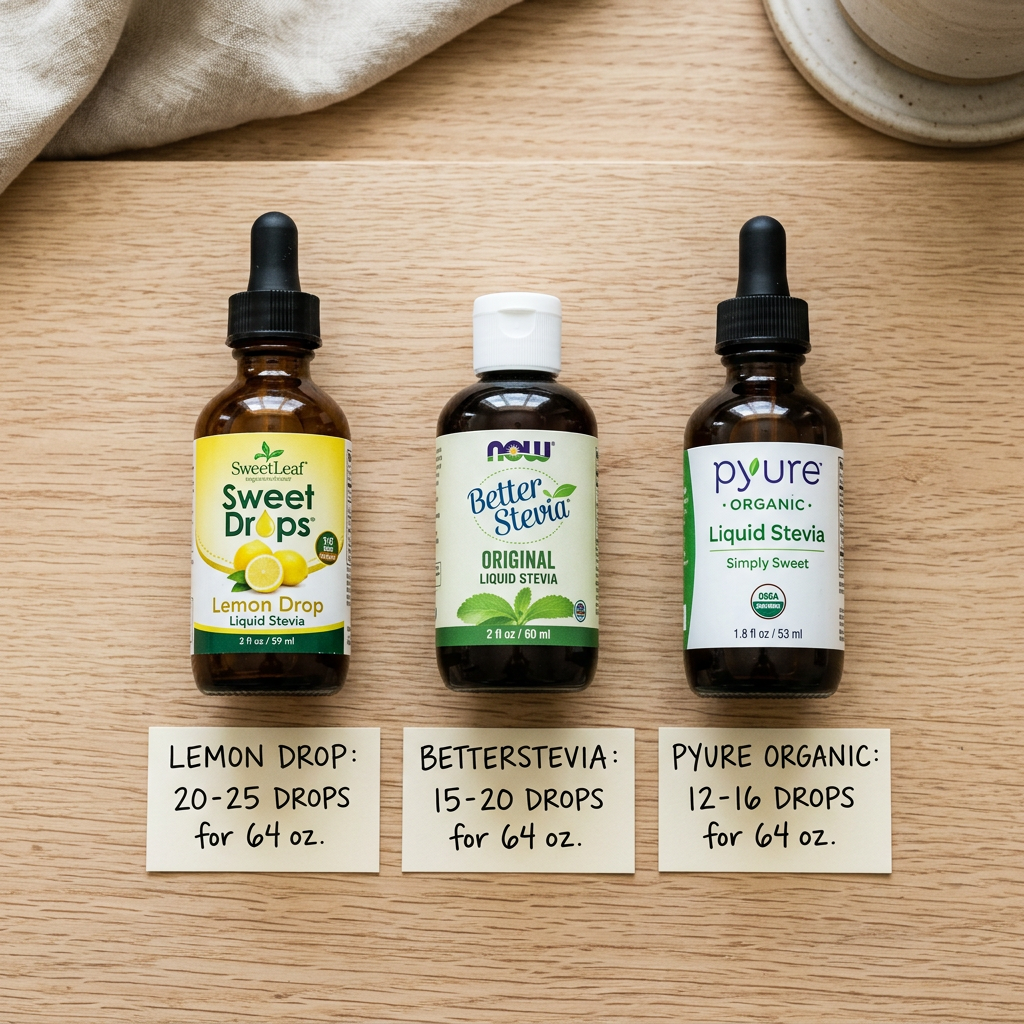
I’ve tested four other liquid stevia products in the same lemonade recipe to give this comparison real grounding.
| Product | Drops per 64 oz | Aftertaste (1–5, lower = cleaner) | Lemon Flavor | Price per Bottle | Best For |
|---|---|---|---|---|---|
| SweetLeaf Lemon Drop | 36 | 1.5 | Yes (Meyer lemon) | ~$11 | Lemonade, citrus drinks |
| NOW Foods Liquid Stevia (plain) | 40–48 | 2.5 | No | ~$9 | Neutral sweetening, coffee |
| Pyure Organic Liquid Stevia | 32 | 2.0 | No | ~$10 | Baking, neutral applications |
| Trader Joe’s Organic Stevia (liquid) | 45+ | 3.5 | No | ~$6 | Budget option, strongly flavored drinks |
| Omica Organics Liquid Stevia | 28–32 | 1.0 | No | ~$18 | Ultra-clean palates, purists |
The Omica Organics product is the cleanest-tasting neutral stevia I’ve found, but it costs nearly twice as much and lacks a lemon flavor variant. For lemonade specifically, SweetLeaf Lemon Drop outperforms everything in this list because the flavor synergy is built in — you’re not trying to get two separate ingredients to cooperate.
The Trader Joe’s option works in a pinch but requires more drops and has a noticeable bitter finish in cold acidic drinks. That aftertaste is the thing that makes kids set down their glasses without a word.
Where to Buy and Price List
SweetLeaf Sweet Drops Lemon Drop is widely available. Here’s where I’d look and what to expect to pay:
| Retailer | Price (2 oz) | Notes |
|---|---|---|
| Amazon | ~$10.97 | ASIN: B00B4O1HQI — Prime eligible, subscribe & save available (typically 5–15% off). Fulfilled by Amazon; check the seller to ensure it’s not a third-party gray-market listing. |
| enzostevia.com | ~$11.49 | Use coupon code AWESOME at checkout for 3% off your order. Ships direct; good option if you’re ordering multiple bottles or want to bundle with other stevia products. Final price with coupon: ~$11.15. |
| Whole Foods Market | ~$12.99 | Usually stocked in the sweetener aisle or near the health supplements. Prime member discount may apply via the Whole Foods app. |
| Sprouts Farmers Market | ~$11.49 | Frequently goes on sale during their weekly ad cycle. Worth checking before ordering online. |
| iHerb | ~$9.80 | Good for international buyers; US buyers can find comparable pricing on Amazon. Shipping times vary. |
My personal recommendation: start with Amazon if you want it fast and want the Prime return guarantee. If you’re building a pantry supply and ordering a few bottles at once, the enzostevia.com route with code AWESOME is worth the few minutes of extra checkout.
People Also Ask
How many drops of liquid stevia should I use in a 64-ounce pitcher of lemonade?
For SweetLeaf Sweet Drops Lemon Drop, 36 drops is the sweet spot for a 64-ounce pitcher with 6 medium lemons’ worth of juice. Start at 30 drops, taste, and add 2–4 more if you want more sweetness — lemon tartness varies enough between batches that tasting before serving is worth the 30 seconds it takes.
Does liquid stevia taste good in lemonade, or does it leave an aftertaste?
It depends heavily on the brand and the type of stevia extract. High-quality Reb-A stevia like SweetLeaf’s water-extracted formula leaves no detectable aftertaste at normal quantities in lemonade. Cheaper whole-leaf or alcohol-extracted stevia products can taste bitter or grassy in cold acidic drinks — that’s the aftertaste most people associate with stevia, but it’s not inevitable.
Can I make sugar-free lemonade with sparkling water instead of still water?
Yes, and it’s genuinely better. Use 32 drops instead of 36 for sparkling versions — carbonation heightens sweetness perception, so the same quantity will taste sweeter in a fizzy drink. Add the sparkling water last and pour gently along the side of the pitcher to preserve carbonation. Stir once, slowly.
How long does a bottle of SweetLeaf Sweet Drops last if I’m making lemonade every week?
One 2-ounce bottle contains roughly 320 drops and makes about 8–9 pitchers at 36 drops each. If you’re making one pitcher per week, that’s about two months per bottle. If summer means multiple pitchers per week, budget for one bottle every three to four weeks. The shelf life after opening is 12 months stored at room temperature away from heat and direct light.
SERP
When I searched “sugar free lemonade with liquid stevia,” the top results were a mix of general recipe blogs and a couple of keto-focused sites. The first two pages were dominated by recipes from Wholesome Yum (a classic keto recipe site that ranks for nearly every low-carb term imaginable), a recipe on The Big Man’s World, and a Pinterest roundup linking back to several smaller recipe blogs. Most of the top-ranking pages focus on stevia powder rather than drops, which leaves a genuine gap for recipes calibrated specifically to liquid stevia drop counts. There’s also a page from Diabetes Strong that focuses on diabetic-friendly lemonade options but doesn’t get into the specifics of brand selection or drop-to-volume ratios. No current top-ten result covers SweetLeaf’s Lemon Drop variety specifically or the sparkling water variation — which tells me there’s real room for a recipe that goes a level deeper on the technical details of making drops-based stevia lemonade work.
Top 20 Topics
- How to sweeten lemonade without sugar
- Best liquid stevia brands for drinks
- Keto lemonade recipe with stevia drops
- Diabetic-friendly lemonade for summer
- SweetLeaf Sweet Drops flavor review
- How many drops of stevia equal one teaspoon of sugar
- Sugar-free lemonade for kids
- Sparkling sugar-free lemonade recipe
- Stevia vs monk fruit in lemonade
- Does stevia taste bitter in cold drinks
- How to fix bitter stevia taste in drinks
- SweetLeaf Lemon Drop vs plain stevia drops
- Zero calorie lemonade recipe
- How to make a 64-ounce pitcher of lemonade
- Whole30 and Paleo lemonade sweetener options
- Stevia lemonade concentrate recipe
- Low glycemic summer drinks for diabetics
- Fresh squeezed lemonade without sugar
- How long does homemade sugar-free lemonade last in the fridge
- Best stevia for iced tea and lemonade blend
Key Takeaways
- 36 drops per 64 oz is the calibrated starting point for SweetLeaf Lemon Drop in a full pitcher of fresh lemonade — adjust by 2–4 drops based on lemon tartness.
- Lemon Drop flavor is purpose-built for citrus drinks; it adds Meyer lemon softness that amplifies fresh-squeezed juice rather than competing with it, making it more effective here than neutral stevia drops.
- A pinch of sea salt is the single highest-impact tip for sugar-free lemonade — it suppresses bitterness perception and balances tartness without making the drink taste salty.
- Carbonation amplifies sweetness — drop to 32 drops for sparkling water versions, and add the sparkling water last, poured gently along the pitcher’s edge.
- One 2-oz bottle sweetens 8–9 pitchers at recipe quantities, making the per-pitcher cost around $1.40 — competitive with conventional sweeteners and significantly cheaper than flavored sugar-free syrups.
- Water-based extraction and Reb-A stevia are the two quality markers that separate clean-tasting liquid stevia from the bitter or grassy alternatives — SweetLeaf uses both.
- The sparkling version is the crowd-pleaser — guests who didn’t know it was sugar-free didn’t ask; guests who did were genuinely surprised.