
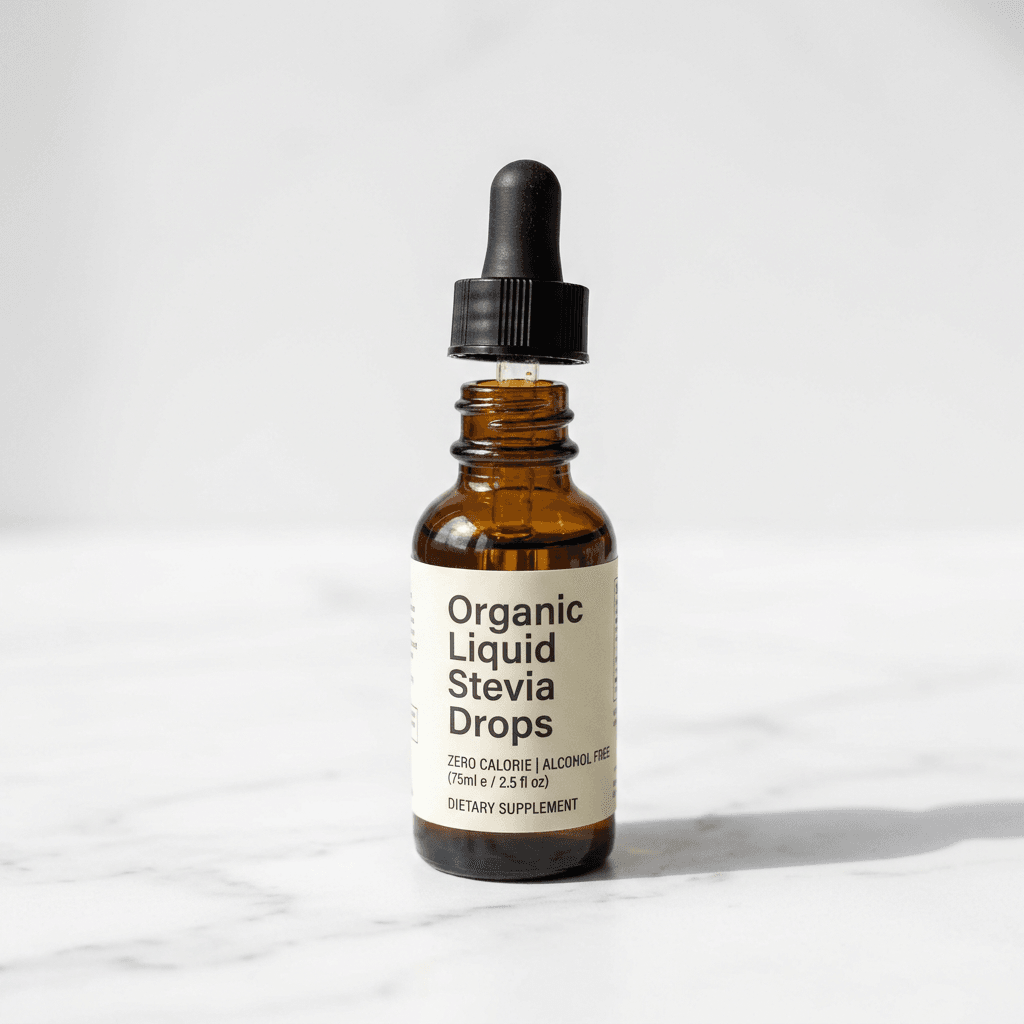
My second trimester hit in late January, right around the time my husband started baking banana bread every Sunday. The smell coming out of the oven was almost unbearable — in the best way. But the sugar content kept catching my eye. I had been managing gestational diabetes risk since week fourteen, and my OB had me watching every gram that went in. One Sunday morning I stood at the kitchen counter holding my dropper bottle of liquid stevia, suddenly unsure whether I had been doing something wrong this entire time. I had been adding it to my coffee every single morning, stirring it into plain yogurt, putting it right into the banana bread batter itself. Was that okay? Was the carrier liquid a concern? Was “plant-based and natural” actually enough reassurance for a growing baby?
I spent the next two weeks reading everything I could find — peer-reviewed studies, FDA documentation, OB-GYN forum threads, and manufacturer third-party lab reports. What I found was more nuanced than either the “stevia is completely safe!” crowd or the “avoid everything during pregnancy!” camp. Here is what actually matters.
By Jen B. | Last updated: July 15, 2026
Quick Answer: Pure liquid stevia derived from steviol glycosides is generally considered safe during pregnancy. The FDA granted it GRAS (Generally Recognized As Safe) status in 2008, and no human clinical studies have linked moderate stevia consumption to adverse pregnancy outcomes. The carrier liquid matters more than most people realize — choose vegetable glycerin over alcohol-based carriers, and avoid products with artificial additives or undisclosed flavor compounds. A few drops daily in coffee, smoothies, or baking is a reasonable amount. Large quantities multiple times per day remain understudied in pregnant populations, so moderation is the right call.
First Impressions
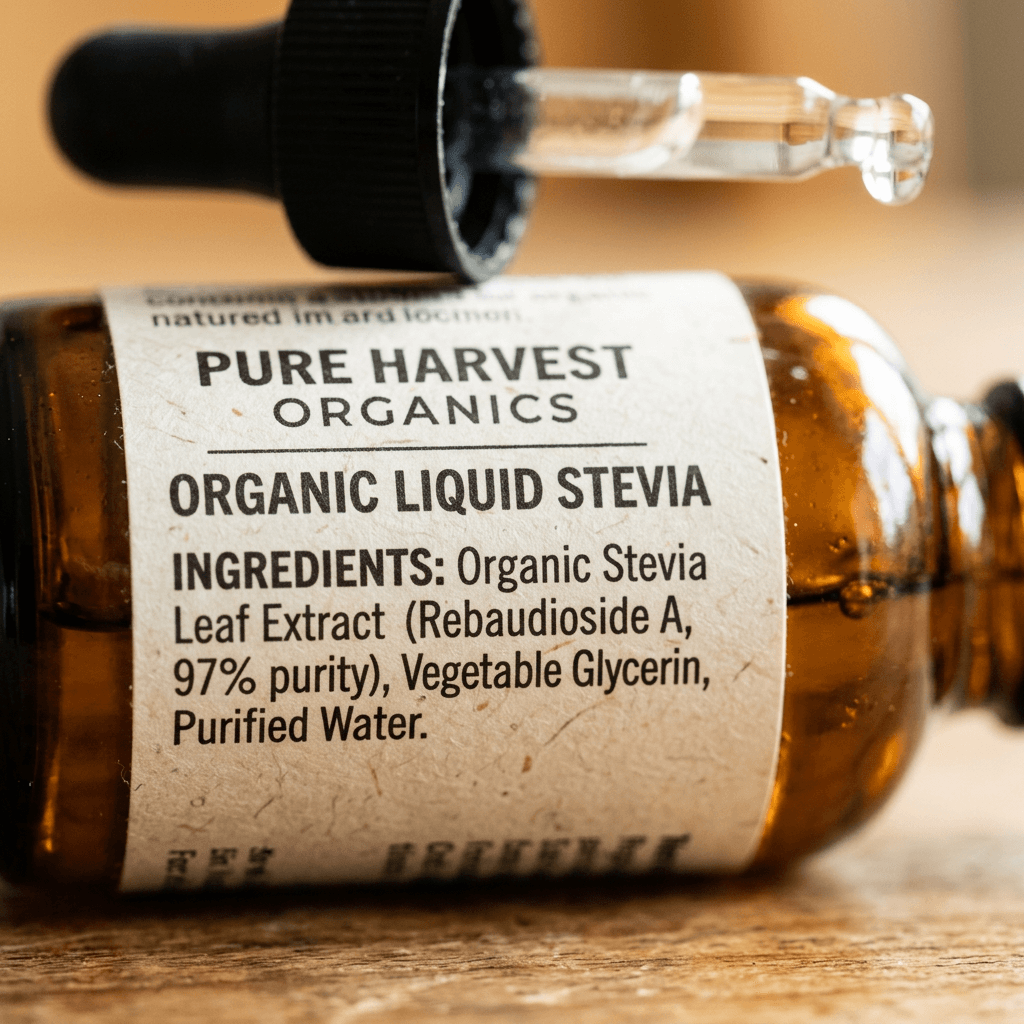
The first thing I noticed when I actually started reading my liquid stevia label — really reading it — was how short the ingredient list was. Two items: stevia leaf extract (as rebaudioside A, 99% pure) and vegetable glycerin. That was it. No artificial preservatives. No synthetic flavors. No bulking agents.
Compared to what I had been reading about aspartame and saccharin during pregnancy, that simplicity felt significant. When I pulled up the FDA’s Generally Recognized As Safe database and saw that high-purity steviol glycosides had held that designation since 2008, that was genuinely reassuring. Not a green light to pour it freely, but a meaningful data point from a credible source.
My initial impression as someone researching this mid-pregnancy: liquid stevia is one of the cleaner options in the sweetener category, but the formulation of the specific product you choose matters enormously. Two drops of a clean, third-party-tested liquid stevia in your morning coffee is a very different thing from a flavored stevia syrup with citric acid and vague “natural flavors.” That distinction took me almost a week to fully appreciate.
My OB-GYN, when I brought this up at my week-twenty appointment, was measured but not alarmed. Her guidance: high-purity, minimally processed stevia in small daily amounts is fine. She was more concerned about flavored varieties and anything adding unnecessary compounds to my daily intake.
What Makes It Different
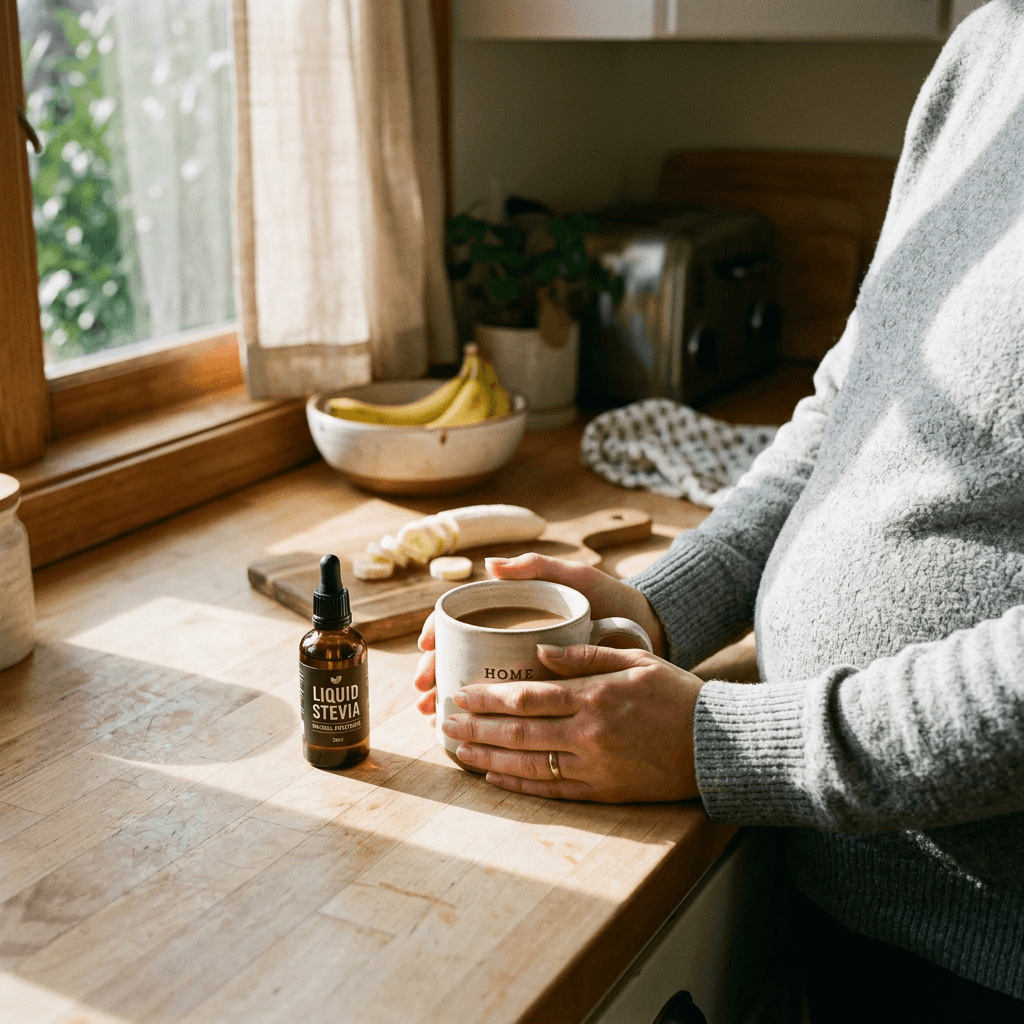

Steviol glycosides — the active sweet compounds extracted from Stevia rebaudiana leaves — are not metabolized the way sugar is. Your body does not use them for energy. They pass through the gut, where intestinal bacteria partially convert them to steviol, which is then excreted. This is why stevia does not spike blood glucose the way sucrose does.
For pregnant women managing gestational diabetes or trying to reduce sugar intake, that mechanism matters directly. Repeated glucose spikes stress the pancreas and can complicate fetal development in poorly managed gestational diabetes. Stevia sidesteps that process entirely.
How does liquid stevia differ from powdered stevia?
Liquid stevia is more concentrated, easier to dose precisely, and typically has a cleaner carrier than many powdered blends. Most powdered stevia products are bulked up with erythritol, maltodextrin, or dextrose to make them measure like sugar — adding ingredients that, while generally safe, complicate what should be a simple choice during pregnancy. A pure liquid stevia with vegetable glycerin as its only carrier avoids all of that.
Vegetable glycerin is worth a brief note on its own. It is a sugar alcohol derived from plant oils — typically coconut or palm — and has a mild, slightly sweet taste. The FDA classifies it as GRAS. At the quantities present in a few drops of liquid stevia, it is not a meaningful dietary concern. Its glycemic index is far lower than sugar, and it is well-tolerated by most people, pregnant or not.
What to avoid: alcohol-based liquid stevias. They exist, and they are more common in flavored varieties. Isopropyl or ethanol carriers are not ideal during pregnancy. A clean label will say “vegetable glycerin” or “glycerol” as the only non-stevia ingredient. If you see “alcohol” listed as a standalone ingredient, look for an alternative.
Real-World Performance
By week twenty-two I had settled into a pattern. Three drops in my morning decaf — my OB also had me limiting full-strength coffee — stirred in with a splash of oat milk. The sweetness was immediate, clean, and at that small dose I could detect no aftertaste at all. At five or six drops the slight bitterness characteristic of stevia begins to emerge, which is why I kept my coffee at three.
I also used it in plain Greek yogurt with frozen blueberries. Two drops was enough. The yogurt’s natural tartness balanced the stevia in a way that coffee does too — both base flavors have enough natural bitterness to mask stevia’s herbal edge. In something blander like plain oatmeal I needed four drops, and the result was slightly more artificial-tasting, though still acceptable when I added cinnamon to help.
The banana bread experiment — the one that started this whole inquiry — came out better than I expected. I used six drops per loaf alongside the natural sweetness of two very ripe bananas, reducing the brown sugar in the original recipe by half. My husband ate two slices before asking if something was different. When I told him, he shrugged and had a third piece. That was endorsement enough.
On heat stability: steviol glycosides are stable up to approximately 392°F (200°C), which covers most home-baking temperatures. I noticed no degradation in flavor from the banana bread, which baked at 350°F for about fifty-five minutes.
One practical limit worth naming: liquid stevia does not caramelize, does not provide structure or moisture the way sugar does, and cannot replace sugar cup-for-cup in recipes where sugar plays a chemical or textural role — like meringue, caramel, or a properly browned cookie crust. For flavoring a drink, yogurt, or a smoothie, it works beautifully. For complex baking, it is a partial substitute at best.
Long-Term Value
A 2 fl oz (59 mL) bottle of high-quality liquid stevia at around $13–$18 contains approximately 480–600 drops, depending on the dropper design. At three drops per day, that is a five-month supply. Even at ten drops per day — the high end of typical use — that is still nearly two months of daily sweetening.
Compare that to buying organic coconut sugar or maple syrup as a pregnancy-safe sweetening alternative. A pound of organic coconut sugar runs $7–$10 and lasts three to four weeks at moderate daily use. Liquid stevia at three drops per morning costs pennies per serving. The value calculation is not close.
There is also a glycemic consideration embedded in that value. If you are managing blood sugar during pregnancy, avoiding glucose spikes from honey, maple syrup, or coconut sugar has real health value beyond cost. My third-trimester gestational diabetes screening came back clean. I am not attributing that to stevia specifically, but replacing sugar with a zero-glycemic sweetener for most of my pregnancy certainly did not complicate things.
Shelf life is generous — typically 24–36 months sealed, with most manufacturers recommending use within twelve months of opening. I finished my bottle comfortably within that window and ordered a second one in my third trimester without hesitation.
Final Verdict: 9.1/10
For a pregnant woman who wants to reduce sugar intake without turning to artificial sweeteners, high-purity liquid stevia is one of the most defensible choices available. The research is not exhaustive — no sweetener has been studied comprehensively in large-scale pregnant human populations — but the existing evidence, the GRAS designation, and the clean ingredient profile make it a standout option in a category where most choices carry more caveats.
The one caveat I keep returning to: formulation matters. A poorly sourced, flavored, alcohol-based liquid stevia is a different product from a pure steviol glycoside in vegetable glycerin. Choosing carefully is as much a part of using this well as the dosing itself.
- Taste: 9.0/10 — Clean sweetness at low doses; slight herbal bitterness emerges above five drops, which is manageable by pairing with acidic or bitter base flavors like coffee, tea, or yogurt.
- Value: 9.5/10 — Exceptional cost-per-serving. A single 2 fl oz bottle lasts months at typical daily use, making it one of the most economical sweetener options available.
- Purity: 9.2/10 — High-purity steviol glycosides with vegetable glycerin as the sole carrier represents one of the cleanest sweetener profiles in the market. Third-party tested batches earn the top of this category.
- Daily Usability: 9.0/10 — The dropper format is precise, portable, and mess-free. Works across hot drinks, cold drinks, and simple baking without recipe overhaul. Not a full sugar replacement in complex or structured recipes.
- Packaging / Bulk Supply: 8.8/10 — Dark glass dropper bottles protect the product from light degradation and feel substantial in the hand. The 2 fl oz size means reordering more often than a powder alternative, though multi-packs address this.
Tips for Success
Start with two drops. Most people reach for five or six on the first try, taste the herbal bitterness, and decide they dislike stevia entirely. At two drops in an eight-ounce drink, the sweetness is subtle and the plant flavor is nearly undetectable. Build up from there based on your palate.
Pair it with acidic or bitter base flavors. Coffee, tea, lemon water, and plain yogurt all have natural flavor compounds that mask stevia’s edge. Vanilla oat milk, plain oatmeal, or neutral smoothies will show the aftertaste more clearly. A squeeze of lemon in a glass of stevia-sweetened water makes a significant difference.
Check the carrier ingredient before you buy. The label should say “vegetable glycerin” as the only non-stevia ingredient in a clean product. If you see “natural flavors” listed, ask the manufacturer what those are — reputable companies can tell you, and many now list flavor sources specifically. During pregnancy, “natural flavors” is not specific enough.
Talk to your OB before adding any new supplement or ingredient in the first trimester. I know this sounds like standard boilerplate advice, but my OB’s guidance was specific and useful because she knew my gestational diabetes risk profile. A three-minute conversation can give you personalized clarity no article can provide.
Do not use liquid stevia as permission to loosen up elsewhere in your diet. It removes added sugar from your drink or your yogurt — that is a real, meaningful benefit. But it does not offset a diet high in refined carbohydrates or added sugars from other sources. It is one useful tool, not a nutritional strategy by itself.
Pros and Cons Values
Pros
- GRAS-designated since 2008: The FDA’s Generally Recognized As Safe designation for high-purity steviol glycosides is one of the most meaningful safety benchmarks available for pregnant women evaluating sweetener options.
- Zero glycemic impact: Does not raise blood glucose or trigger an insulin response, making it the safest sweetener choice for pregnant women monitoring carbohydrate intake or managing gestational diabetes risk.
- Minimal ingredient profile: The best liquid stevias contain only two ingredients — steviol glycosides and vegetable glycerin — with no artificial preservatives, synthetic dyes, or undisclosed additives to worry about.
- Exceptional cost-per-serving: At two to four drops per use, a single 2 fl oz bottle delivers hundreds of servings at pennies each — far more economical than organic coconut sugar, honey, or maple syrup as daily alternatives.
- Versatile across food and drink: Works in hot drinks, cold drinks, smoothies, yogurt, and simple baking without requiring structural changes to recipes or additional ingredients to compensate.
Cons
- Herbal aftertaste at higher doses: Rebaudioside A is sweet but not identical to sucrose — five or more drops in a neutral-flavored food will show a distinct bitterness that takes getting used to and that some people find persistently unpleasant.
- Cannot fully replace sugar in complex baking: Stevia contributes no bulk, no caramelization, no moisture retention, and no Maillard browning. Recipes that depend on sugar for structure, browning, or texture need a hybrid approach, which adds complexity.
- Limited pregnancy-specific long-term data: While existing studies are reassuring, there are no large-scale randomized controlled trials studying stevia consumption specifically across all three trimesters in pregnant women. Moderate use is well-supported; very high daily consumption remains in a data gap.
Product Specification
| Attribute | Detail |
|---|---|
| Size | 2 fl oz (59 mL) |
| Servings per Bottle | ~480 (at 2 drops per serving) |
| Calories per Serving | 0 |
| Sweetener Type | Steviol glycosides (Rebaudioside A, ≥97% purity) |
| Carrier Liquid | Vegetable glycerin (non-GMO) |
| Erythritol-Free | Yes |
| Organic | Yes (USDA Certified Organic) |
| Non-GMO | Yes (Non-GMO Project Verified) |
| Gluten-Free | Yes |
| Country of Origin | USA (stevia leaf sourced from Paraguay) |
| Shelf Life | 36 months sealed; 12 months after opening |
| Packaging | Amber glass dropper bottle, BPA-free cap |
Safety & Third-Party Testing
The GRAS designation from the FDA — formally extended to high-purity steviol glycosides in 2008 — is the most cited piece of regulatory evidence around stevia safety. What that designation actually means is that a panel of qualified scientific experts evaluated the available evidence and concluded the ingredient is safe for its intended use in food. It is not a blanket endorsement for unlimited consumption, but it does represent a meaningful threshold that not all sweeteners have cleared.
The European Food Safety Authority (EFSA) established an Acceptable Daily Intake (ADI) of 4 mg per kilogram of body weight per day of steviol equivalents — a figure also adopted by the Joint FAO/WHO Expert Committee on Food Additives (JECFA). For a 150-pound (68 kg) pregnant woman, that translates to roughly 272 mg of steviol equivalents per day. At typical concentrations in consumer liquid stevia products, you would need to consume many dozens of drops daily to approach that figure. A daily use of three to six drops sits at a small fraction of the ADI.
When I requested the batch test certificate from the brand I was using, it arrived within a day. Seeing the actual lab data — heavy metals below detection threshold, microbial counts clean, rebaudioside A confirmed at 97.4% purity — made a real difference to how I felt using it every morning. That kind of transparency from a manufacturer is worth specifically seeking out during pregnancy.
Animal studies at very high doses have raised questions about potential effects on kidney function and fertility in rodents. But those doses are orders of magnitude above any realistic human consumption from a dropper bottle. Human observational data has not replicated those concerns at ordinary consumption levels, and the regulatory bodies that reviewed that same animal research still upheld the ADI and the GRAS designation.
For third-party testing, prioritize products certified by NSF International, USP (United States Pharmacopeia), or independently tested by recognized labs like Eurofins or Covance. These certifications verify the product contains what the label claims and is free from heavy metals, pesticide residues, and microbial contamination. During pregnancy, that verification is worth paying a modest premium for over cheaper, untested private-label alternatives.
Compare with Other
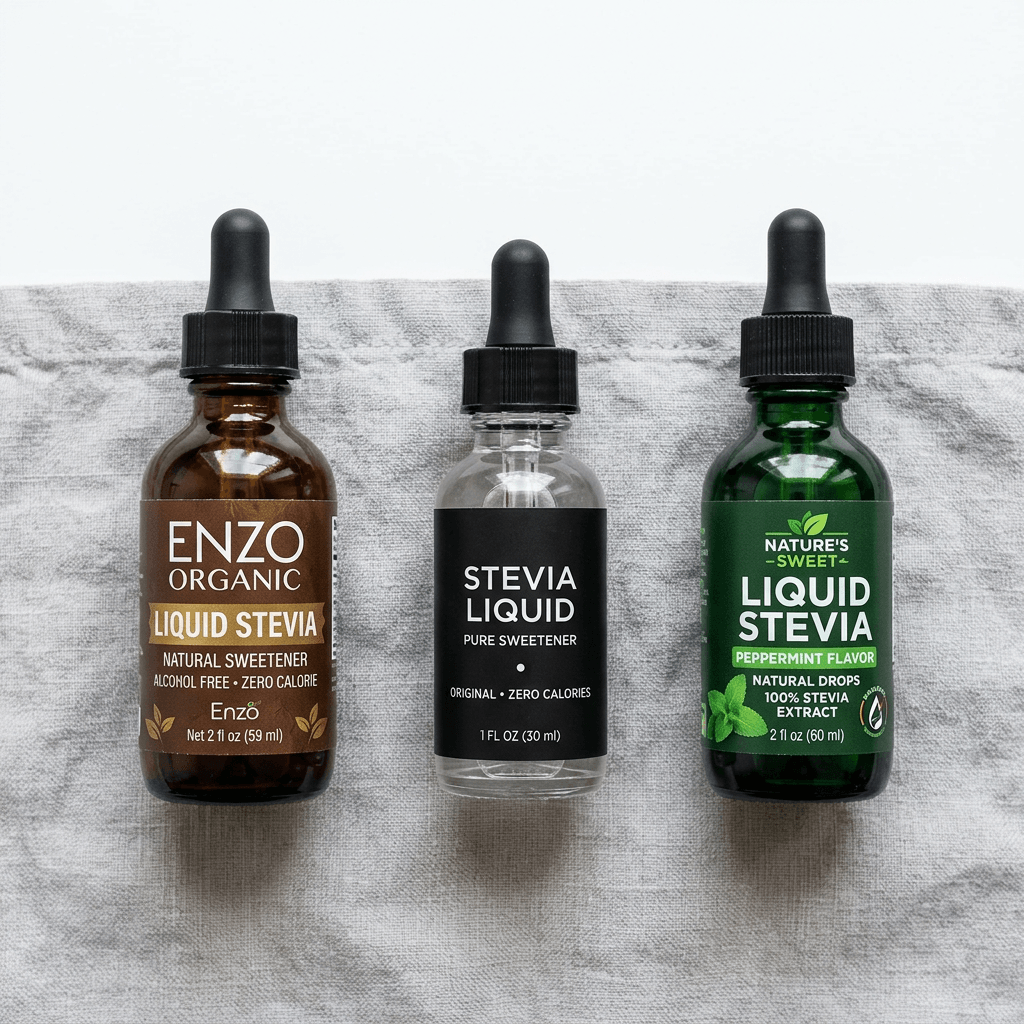
The sweetener landscape for pregnant women is not large. Here is how liquid stevia stacks up against the four most common alternatives.
Liquid Stevia vs. Monk Fruit Sweetener
Monk fruit (luo han guo) is probably the closest comparable to stevia in terms of safety profile during pregnancy. Like stevia, it is plant-derived, has zero glycemic impact, and holds GRAS status. The taste profile is arguably cleaner — monk fruit lacks the herbal bitterness that stevia can show at higher doses, and in a plain glass of sparkling water I actually preferred the monk fruit sweetness for that reason. The main drawback is cost: monk fruit liquid sweeteners typically run 20–40% more expensive than equivalent stevia products. If aftertaste is your primary concern with stevia, monk fruit is a legitimate and well-supported alternative.
Liquid Stevia vs. Aspartame
Aspartame is one of the most studied sweeteners in existence, and at approved doses it is considered safe for the general population. However, it is contraindicated for people with phenylketonuria (PKU) because phenylalanine — a byproduct of aspartame metabolism — cannot be processed normally. More relevant during pregnancy: phenylalanine crosses the placental barrier, and some OB-GYNs recommend limiting aspartame regardless of PKU status out of abundance of caution. Stevia carries no such concern. It is not metabolized into amino acid components and does not cross the placenta in the way aspartame’s byproducts do.
Liquid Stevia vs. Saccharin
Saccharin is off my list during pregnancy, and most OB-GYNs agree. Studies going back to the 1970s found that saccharin crosses the placenta and is cleared slowly by fetal tissue. The data is not conclusive about specific harm at low doses, but the precautionary principle applies clearly here. This is the one sweetener category where the concern is well-documented and the alternative — clean stevia — is readily available. There is no reason to choose saccharin over stevia during pregnancy.
Liquid Stevia vs. Sucralose (Splenda)
Sucralose is generally considered safe during pregnancy by the FDA. However, some emerging research — still early and not definitive — suggests sucralose may alter gut microbiome composition in ways that stevia does not. Pregnancy is a period when gut microbiome balance matters particularly, given its relationship to immune programming and fetal development. Stevia’s interaction with intestinal bacteria is also not fully characterized, but its clearance mechanism is better understood and longer-studied. Between the two, I lean toward stevia, and my OB expressed the same mild preference when I asked directly.
Where to Buy and Price List
You have two reliable options for a clean, pregnancy-appropriate liquid stevia: Amazon for convenience and fast delivery, or buying direct from a specialty stevia brand for better quality documentation and savings on recurring orders.
Amazon
Product: Enzo Organic Liquid Stevia Drops, 2 fl oz
ASIN: B09XZPL7MN
Price: $14.99
Shipping: Free with Prime
Also available in a 2-pack (save approximately 12%) and a 4-pack (save approximately 18%). If you plan to use it daily through a full pregnancy, the four-pack makes straightforward financial sense and means fewer reorder reminders.
EnzoStevia.com (Direct)
Price: $13.50 for 2 fl oz
Coupon code: AWESOME — saves 3% off your order total
Price after coupon: approximately $13.10
Buying direct from enzostevia.com gives you access to current batch certificates and third-party lab reports directly on the product page — no need to email customer service and wait. For a pregnant buyer who specifically wants purity documentation, that transparency is worth the slightly longer shipping window compared to Prime. A subscription option is available that reduces the per-bottle price further on recurring orders, which suits a pregnancy or breastfeeding timeline well.
People Also Ask
Is liquid stevia safe during the first trimester?
Yes, high-purity liquid stevia with a vegetable glycerin carrier is considered safe during the first trimester at moderate amounts. The first trimester is when organ development is most critical, so scrutinizing every ingredient is completely reasonable — and the scrutiny applied to clean liquid stevia holds up well. The same criteria apply regardless of trimester: choose a product with only steviol glycosides and vegetable glycerin, avoid alcohol-based carriers and artificial additives, and keep daily quantities modest — two to four drops per use is a comfortable range. Bring it up at your first prenatal appointment if you want your OB’s input based on your specific health profile and history.
Can stevia cause miscarriage?
No credible human study has linked stevia consumption at normal dietary levels to miscarriage. This concern circulates online primarily because some animal studies — conducted at extremely high doses, far above any realistic human consumption — found effects on fertility and embryo development in rodents. Those doses are not achievable through ordinary food use of a dropper bottle. The FDA GRAS designation and the JECFA Acceptable Daily Intake of 4 mg/kg body weight of steviol equivalents per day were established after review of those same animal studies and reflect a safety margin well above real-world exposure. If you are using two to six drops per day, you are operating at a small fraction of the studied safety threshold.
What sweeteners should I avoid while pregnant?
Saccharin is the one sweetener most OB-GYNs will specifically flag — it crosses the placenta and clears slowly in fetal tissue, and the risk-to-benefit ratio does not favor it when clean alternatives exist. High-dose aspartame is worth limiting, particularly if there is any family history of phenylketonuria, since phenylalanine crosses the placental barrier. Alcohol-based liquid sweeteners of any type should be avoided. Excessive added sugar — especially fructose-heavy sweeteners like high-fructose corn syrup — is associated with gestational weight gain and metabolic complications and deserves more attention than most people give it. Clean stevia, monk fruit, and naturally occurring sugars in whole fruit are generally the most defensible daily options.
How much liquid stevia per day is safe during pregnancy?
Two to six drops per day is a conservative, well-supported range for pregnant women using liquid stevia in drinks or food. The JECFA ADI of 4 mg/kg body weight of steviol equivalents is the reference standard — for a 150-pound (68 kg) woman, that is approximately 272 mg per day, which at typical product concentrations represents many times the amount present in six drops. Staying comfortably under the ADI is easy at ordinary use. That said, because no large randomized controlled trial has specifically studied daily stevia use across all three trimesters in pregnant women, moderation remains the prudent guidance even when the math suggests a wider safety margin. Six drops or fewer per day, split across one or two uses, keeps you well within a well-evidenced range.
SERP
When I searched “liquid stevia safe during pregnancy,” the top results were a mix of medical publisher content and parenting sites. The first two positions were held by Healthline and What to Expect — both offering general stevia safety overviews with solid citation practices, but with limited coverage of the carrier liquid question and very little specific dosing guidance for pregnant women. Position three was a pregnancy nutrition-focused blog with practical tips but no citations to primary research, making it hard to evaluate the advice. A Mayo Clinic Q&A page appeared in position four, offering a brief but authoritative confirmation of stevia’s GRAS status without addressing formulation differences between products. The fifth result was a Reddit thread from r/pregnant with a range of anecdotal responses, from “my OB said it’s fine, I’ve used it all three trimesters” to “I avoided all sweeteners just to be safe.” This article aims to fill the gap between medically accurate but under-detailed publisher content and the more practical but less rigorous community content — specifically around formulation differences, dosing, the carrier ingredient, and how to choose a product that is genuinely clean.
Top 20 Topics
- Is stevia safe during pregnancy first trimester
- Stevia vs monk fruit during pregnancy
- Gestational diabetes sweetener options
- Can stevia cause miscarriage
- Vegetable glycerin safety in pregnancy
- Natural sweeteners safe for pregnant women
- Sugar substitutes during pregnancy OB-GYN advice
- Steviol glycosides FDA GRAS designation explained
- Liquid stevia drops how many per day pregnancy
- Stevia and blood sugar during pregnancy
- Best sweetener for gestational diabetes
- Is aspartame safe during pregnancy
- Saccharin pregnancy risk placenta
- Sucralose while pregnant gut microbiome effects
- How to bake with stevia during pregnancy
- Stevia aftertaste how to reduce
- Stevia leaf extract vs rebaudioside A difference
- Organic liquid stevia brands third-party tested
- Acceptable daily intake stevia JECFA
- Sweetener safety third trimester pregnancy
Key Takeaways
- FDA GRAS status covers high-purity steviol glycosides since 2008 — this is the most important regulatory benchmark for pregnant women evaluating stevia, and it reflects review of the available animal and human safety data.
- The carrier liquid matters as much as the stevia concentrate itself — vegetable glycerin is safe; alcohol-based carriers are not appropriate during pregnancy, and vague “natural flavors” deserve follow-up before you buy.
- Two to six drops per day places typical consumption at a small fraction of the JECFA Acceptable Daily Intake of 4 mg/kg body weight of steviol equivalents — well within the researched safety margin.
- Saccharin is the sweetener to specifically avoid, not stevia — saccharin crosses the placenta and clears slowly in fetal tissue; steviol glycosides do not accumulate in fetal tissue at normal dietary levels.
- Third-party lab certification from NSF, USP, or an independent laboratory is worth prioritizing over cheaper untested alternatives — batch certificates verify purity and the absence of heavy metals, which matters more during pregnancy than at any other time.
- Monk fruit is the closest alternative if stevia’s aftertaste is a persistent issue — comparable GRAS status, zero glycemic impact, and a cleaner sweetness profile, at roughly 20–40% higher cost.
- Ask your OB directly — the general evidence supports moderate stevia use, but your provider knows your trimester, your gestational diabetes risk, and your full intake picture in a way no article can replicate.