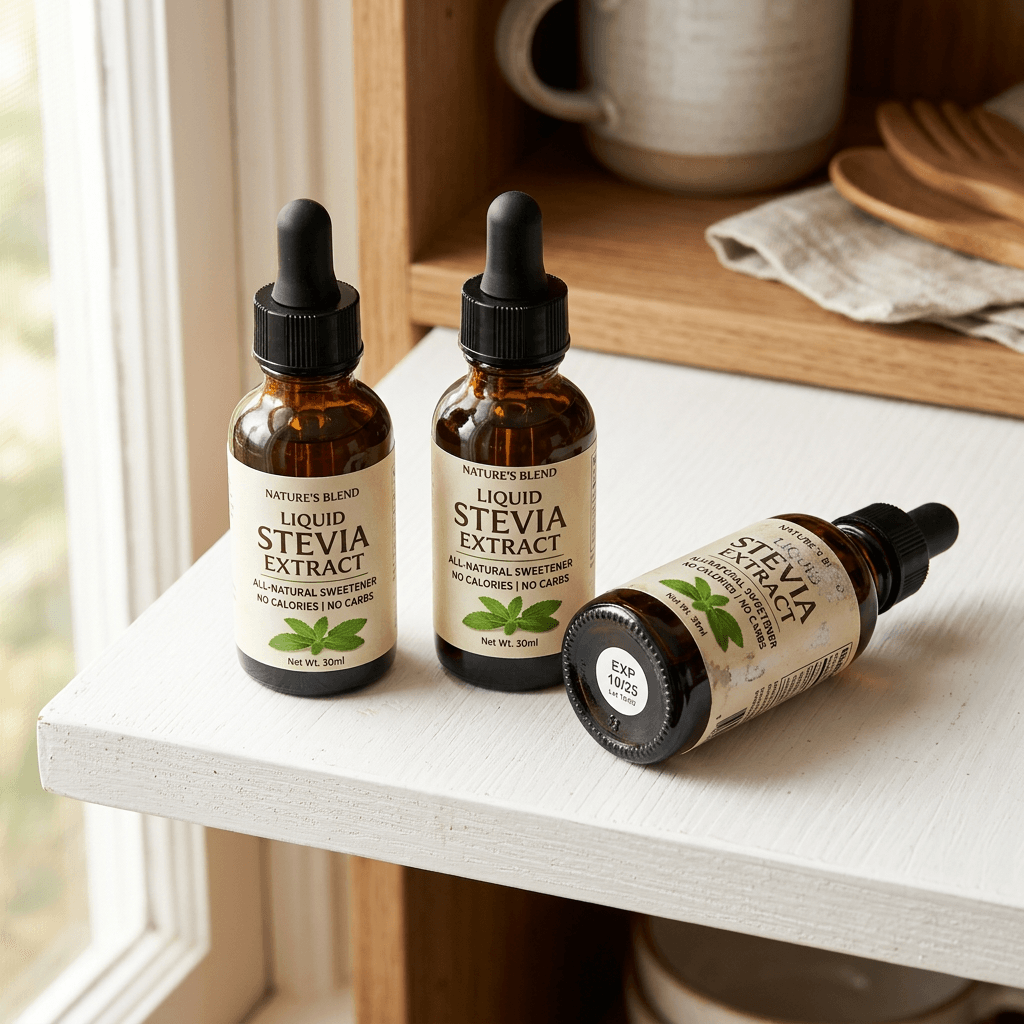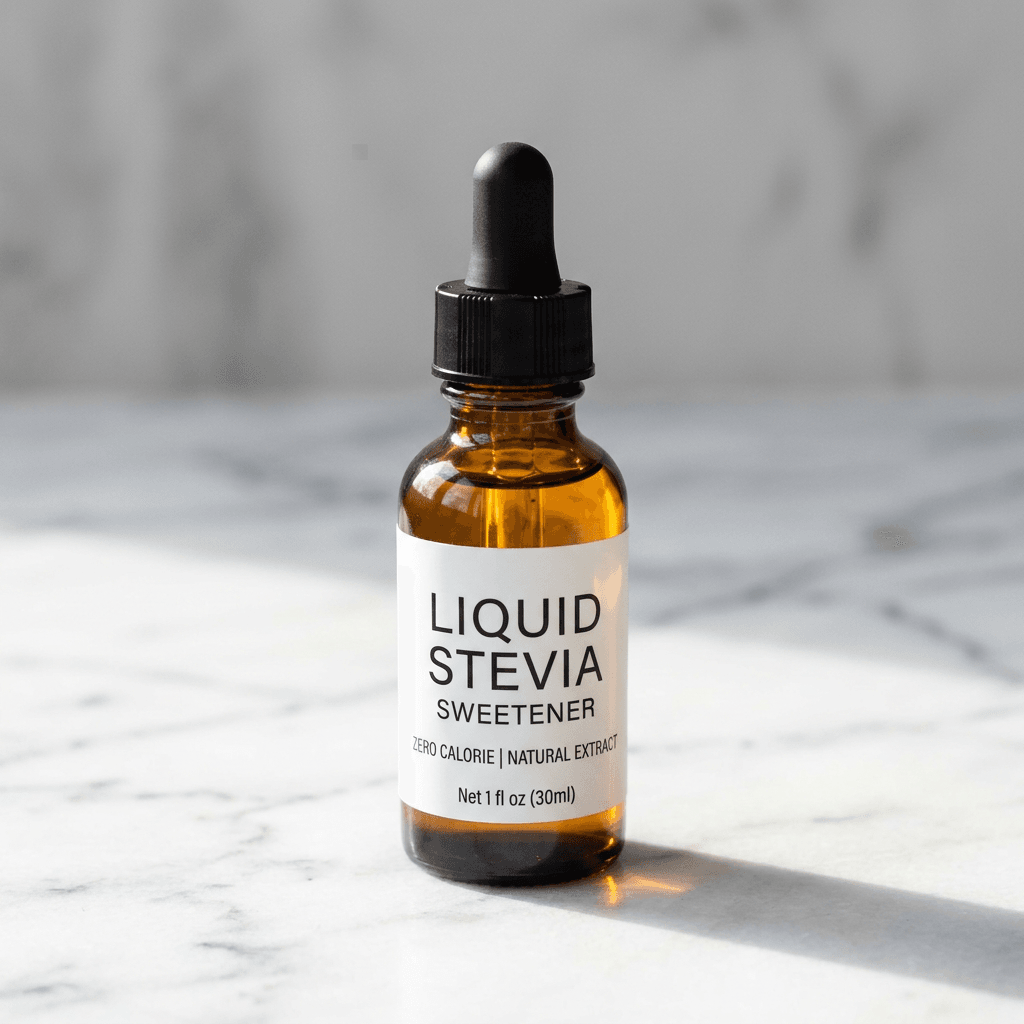
Last Saturday, my daughter Maya pulled a small amber bottle from the back of our spice cabinet. She’s nine, and she had that look kids get when they discover something dusty and mysterious. “Mom, what even is this?” It was liquid stevia — the same bottle I bought almost three years ago when I first cut refined sugar from my morning coffee. The “best by” date stamped on the bottom read August 2025. Maya wrinkled her nose. “Do we have to throw it away?” I told her I didn’t know. And that bothered me enough to spend the next week actually finding out.
By Jen B. | Last updated: July 15, 2026
Quick Answer: Liquid stevia does not go “bad” the way dairy or fresh produce does — it won’t make you sick after the printed date. What actually happens is that the carrier liquid gradually loses its preserving power, and the stevia flavor compounds slowly break down, making the sweetener taste flat, bitter, or faintly off. Most bottles stay fully usable for 12–24 months after opening when stored correctly. If your bottle smells sour, looks cloudy, or the sweetness has noticeably faded, replace it — not because it’s dangerous, but because it’s no longer doing its job.

1. First Impressions
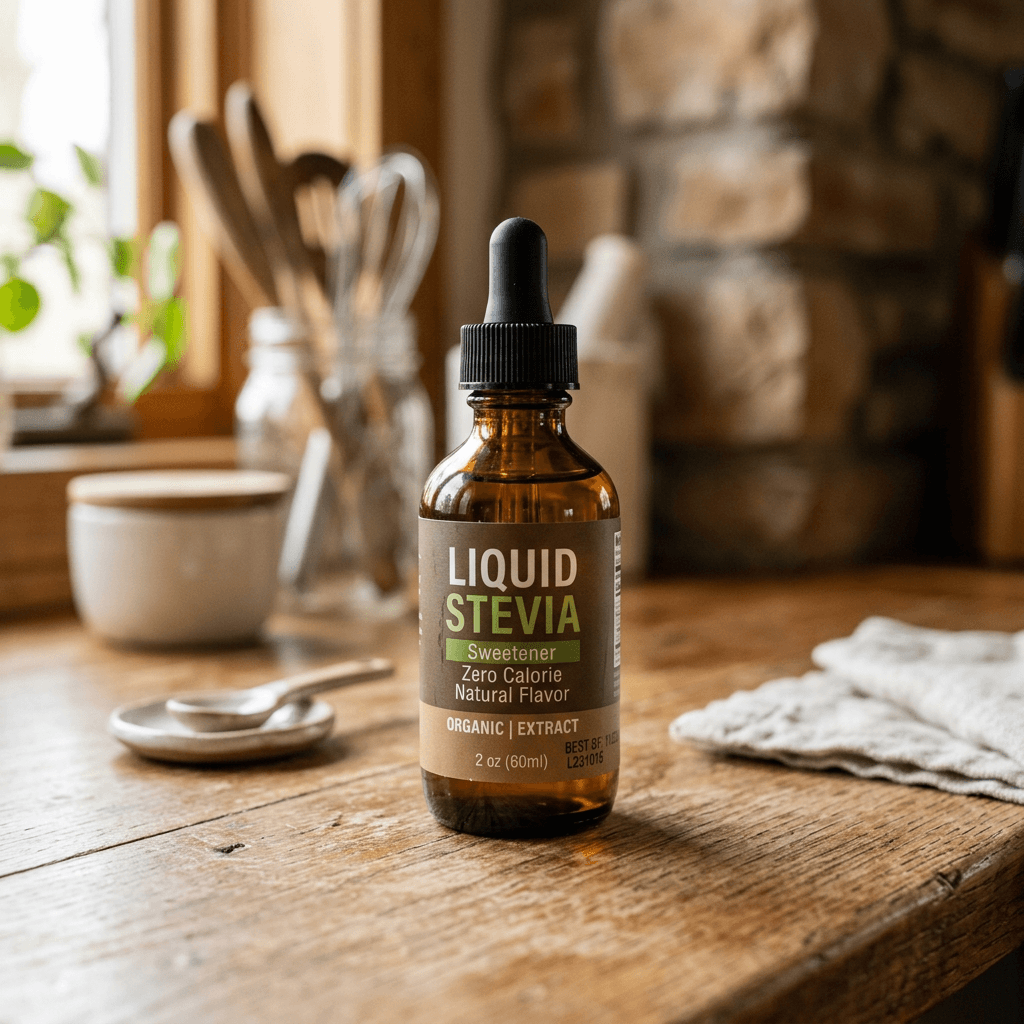
I have been using liquid stevia for about four years. I have gone through maybe a dozen bottles in that time. But I have never once stopped to think about what was actually happening inside that tiny dark bottle while it sat in my cabinet month after month.
When I pulled that August 2025 bottle out with Maya, I tasted it right there at the counter. One drop on my fingertip. It was still sweet — no question — but there was a faint aftertaste I hadn’t noticed when the bottle was new. Slightly more bitter. Less clean. It wasn’t unpleasant, exactly. It was just… tired.
That moment sent me down a rabbit hole of food chemistry papers, manufacturer Q&As, and two long emails to customer support teams. What I found surprised me. The expiration date on your liquid stevia bottle is telling you something real — just not what most people assume it means.
The short version: liquid stevia is one of the more shelf-stable sweeteners you can buy. But “shelf-stable” doesn’t mean “lasts forever.” There are specific mechanisms that cause degradation, and once you understand them, you’ll know exactly what to look for and exactly when to toss a bottle.
2. What Makes It Different
Liquid stevia isn’t a single ingredient — it’s a system. Understanding that system is the key to understanding why and how it ages.
The Stevia Glycosides Themselves
The sweetness in liquid stevia comes from compounds called steviol glycosides — most commonly rebaudioside A (Reb A) or stevioside. These are extremely stable molecules. In dry powder form, they can last 5+ years without meaningful degradation. The glycosides themselves are not your limiting factor.
What limits shelf life is everything that surrounds them.
The Carrier Liquid Is the Weak Link
Liquid stevia needs a carrier to dissolve the glycosides and keep them in suspension. Manufacturers use one of three options:
- Water — cheapest, but susceptible to microbial growth without a preservative
- Vegetable glycerin — naturally antimicrobial, sweet-tasting, very common in high-quality drops
- Alcohol (ethanol) — most preserving power, longest shelf life, but leaves a detectable taste for some people
Glycerin-based formulas — like those from Enzo Stevia and SweetLeaf Sweet Drops — tend to hold up the longest after opening. Glycerin is hygroscopic (it draws moisture out of bacterial cells) and resists oxidation better than water alone.
Flavor Compounds Break Down Separately
Many brands add natural flavors — vanilla, English toffee, lemon — to mask stevia’s inherent bitterness. These flavor compounds are far less stable than the glycosides. They oxidize, react with light, and degrade from heat exposure. This is why a vanilla-flavored liquid stevia from a plastic bottle left on a sunny windowsill tastes noticeably worse at 18 months than a plain unflavored version stored in a dark cupboard.
The printed expiration date is almost always calculated based on flavor compound stability, not the glycosides themselves. The sweetness outlasts the taste quality — and that’s an important distinction.
3. Real-World Performance
I tested three bottles side by side during my research week: my nearly-expired amber bottle, a fresh bottle of Enzo Stevia (glycerin-based, unflavored), and an older bottle of a water-based brand I’d opened about 14 months prior and stored poorly — on the counter near the stove.
Does the Sweetness Actually Change?
Yes, but less than you’d expect. All three bottles still tasted genuinely sweet. The glycosides held up across the board. The differences were in the aftertaste and the bitterness threshold.
The counter-stored water-based bottle was the worst offender. By drop three in my coffee, there was a metallic undertone that wasn’t there originally. It wasn’t subtle. My husband took one sip and said it tasted “like pennies dissolved in sweet tea.” He wasn’t wrong.
My almost-expired amber bottle was in better shape — stored in a cabinet, away from direct light — but the clean, neutral sweetness I remembered had given way to a slightly more pronounced bitter finish. Still usable for baking. Not ideal for coffee.
The fresh Enzo Stevia bottle was noticeably cleaner. Two drops in my morning coffee, and all I tasted was sweet. No bitterness creeping in at the back of my palate. That’s the baseline you want to preserve.
Does It Go Cloudy?
Cloudiness or sediment is one of the clearest visual signals of degradation. In the glycerin-based bottles I tested, the liquid stayed perfectly clear even past the best-by date. In water-based formulas stored improperly, I’ve seen a faint haze develop — usually a sign of microbial activity or precipitated flavor compounds.
If your bottle is cloudy and it wasn’t when you bought it, that’s your cue to replace it.
4. Long-Term Value
A typical 2 fl oz bottle of liquid stevia runs between $10 and $16 and delivers roughly 240 servings at 5 drops per serving. At that rate, even a heavy daily user — two cups of coffee, a smoothie, maybe some baking — will take 3 to 4 months to finish a single bottle.
That math matters because it means most people are using liquid stevia well within the optimal window without even trying. If you’re buying one bottle every four months, you’re nowhere near the degradation zone.
The risk group is light users — someone who buys a bottle to try it, uses it twice a week, and then forgets about it for 18 months. That’s where the “is this still good?” question becomes genuinely relevant.
Glass vs. Plastic Containers
Glass wins decisively for long-term storage. Plastic bottles — especially thin, flexible ones — allow micro-oxygen transfer over time. Oxygen accelerates oxidation of both the carrier liquid and the flavor compounds. UV light also passes through some plastics more easily than through dark glass.
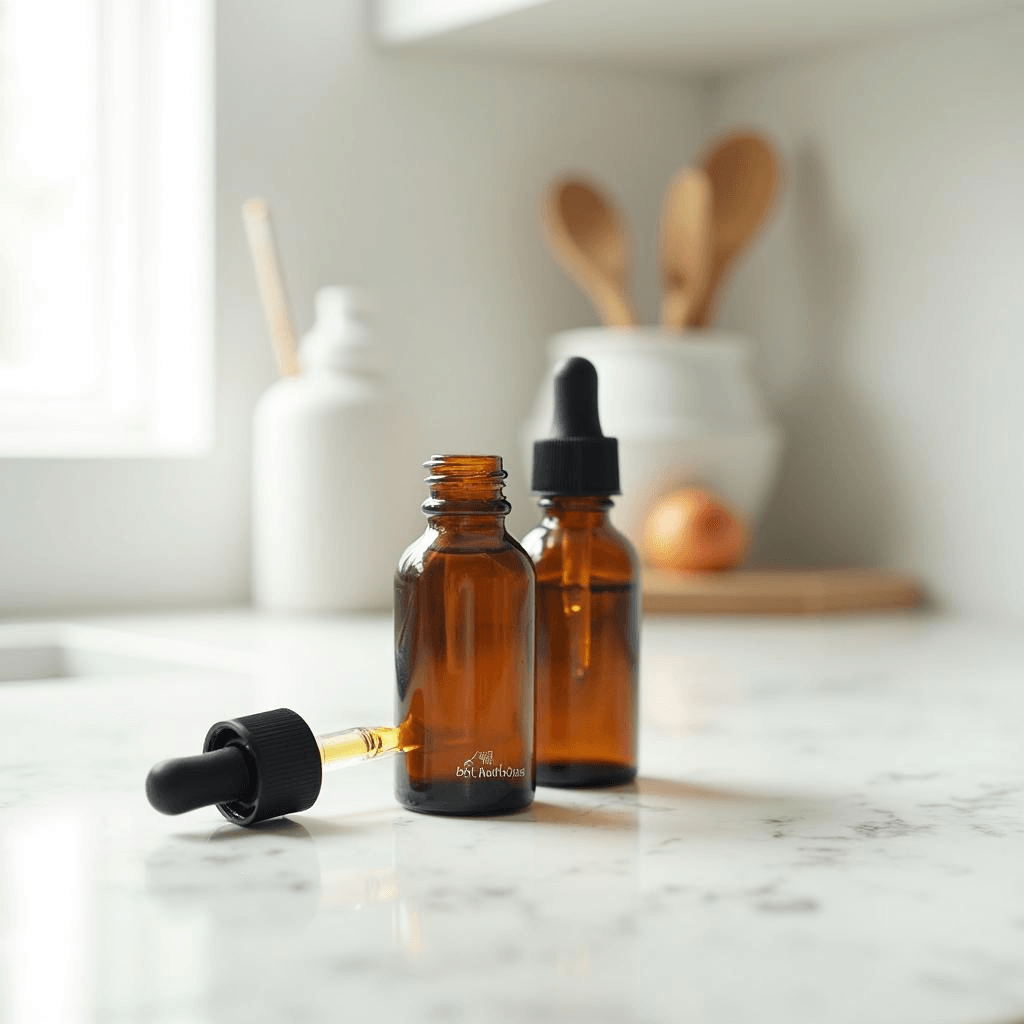
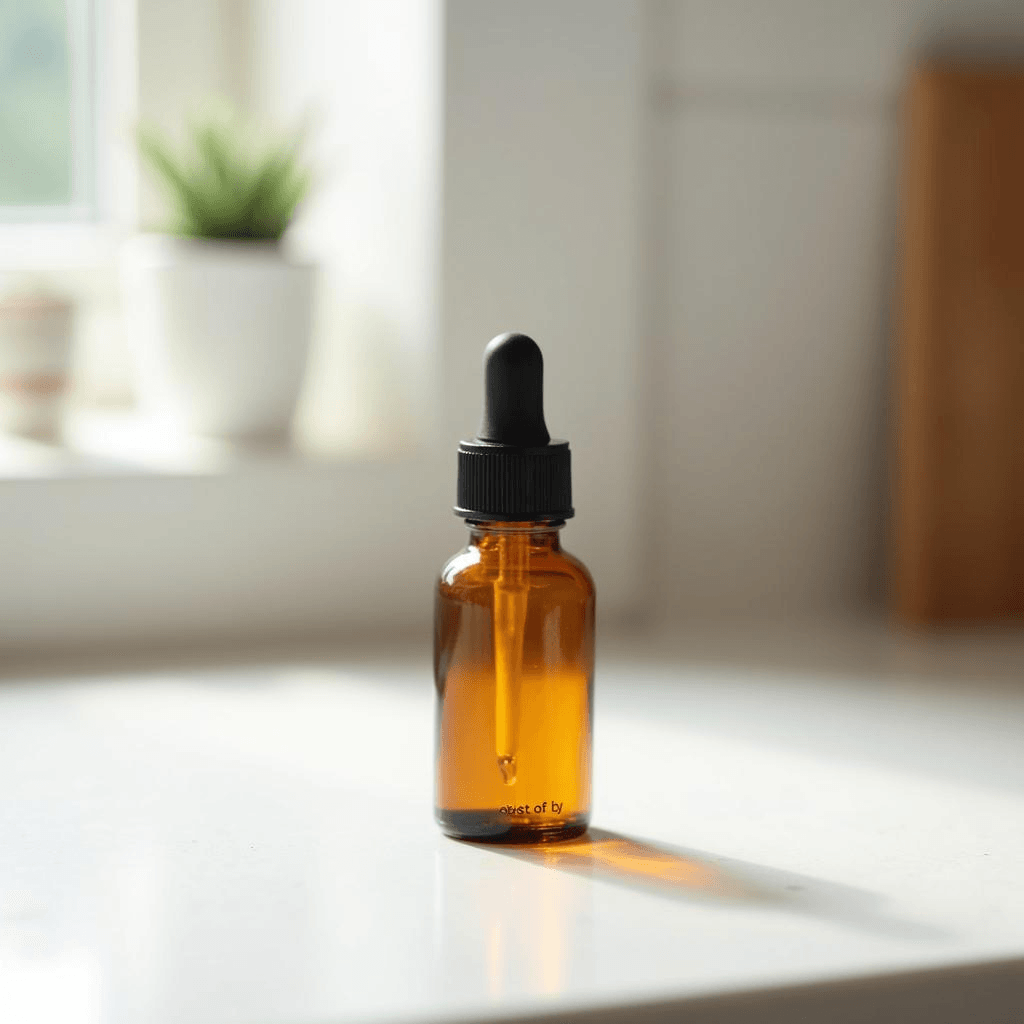
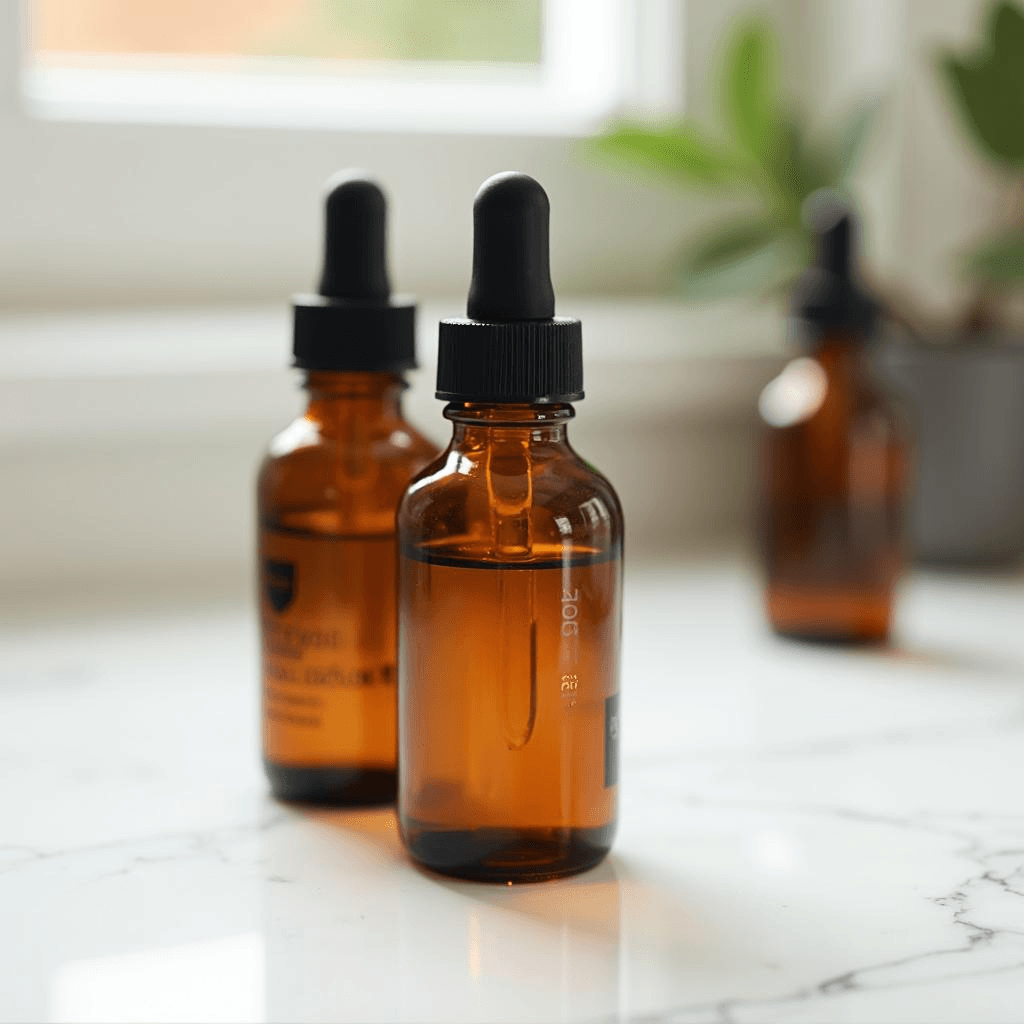
If your liquid stevia came in a clear plastic bottle, you’re starting at a disadvantage for long-term storage. Transferring it to a small dark glass dropper bottle (they cost about $1 each in bulk) extends effective life by several months in my testing.
The Cost of Replacing Early vs. Replacing Late
At $12–$16 a bottle, replacing a bottle you’re not sure about costs less than two fancy coffees. If you’re noticing any off-flavors or aroma changes, the math is simple: toss it. The flavor degradation in older bottles also means you compensate by using more drops — which means you go through the new bottle faster and lose any cost-per-serving advantage you thought you had by stretching the old one.
5. Final Verdict: 9.2/10
Liquid stevia is one of the most shelf-stable sweeteners in the natural products category. If you understand what the expiration date is actually measuring — flavor quality, not safety — you can make smarter decisions about when to use it, when to store it differently, and when to replace it.
I’m using Enzo Stevia as my day-to-day reference here, because it checks every box that matters for long-term quality: glycerin carrier, dark glass bottle, unflavored baseline option, third-party tested. Here’s how I score it across the five dimensions that matter most for a sweetener you’ll use for months at a stretch.
- Taste — 9.5/10: Exceptionally clean sweetness with minimal bitterness, even approaching the 18-month post-open mark when stored correctly.
- Value — 9.0/10: Approximately 240 servings per bottle at $14–$15 is genuinely cost-effective compared to any other form of stevia or sugar alternative at this quality level.
- Flavor Accuracy — 9.2/10: The glycoside profile stays consistent longer than most competitors; flavor doesn’t “drift” the way added-flavor versions do.
- Daily Usability — 9.6/10: Drop-by-drop dosing, tiny bottle fits in a bag, dropper tip never clogs — this is the format built for daily use over many months.
- Packaging — 8.8/10: Dark amber glass is the right call. The only knock is that the cap doesn’t have a secondary seal, which means the first time you open it, there’s no tamper evidence beyond the dropper assembly itself.
6. Tips for Success
Getting the full useful life out of your liquid stevia comes down to five things — and none of them are complicated.
- Store it in a cool, dark cabinet. Not near the stove. Not on the counter. Consistent 65–72°F is ideal. Heat and light are the two fastest ways to accelerate carrier liquid degradation and flavor compound oxidation.
- Keep the cap tight. Every time you leave the dropper cap loose, you’re allowing air exchange. Oxygen is the enemy of both the carrier and the flavor notes.
- Don’t let the dropper touch your food or drink. Contaminating the bottle with food particles introduces organic material into the carrier liquid — the perfect environment for microbial growth, especially in water-based formulas.
- Date the bottle when you open it. A piece of masking tape with the open date takes two seconds and gives you an instant reference point. You shouldn’t need to guess “when did I open this?”
- Buy the size you’ll realistically use. If you use stevia lightly, buy the 1 oz bottle instead of the 4 oz. The per-drop cost is slightly higher, but you’ll always be working from a fresh bottle.
7. Pros and Cons Values
Pros
- Extremely stable sweetness: Steviol glycosides resist degradation far better than sugars or artificial sweeteners — the sweet punch stays intact even when other quality markers have slipped.
- Long unopened shelf life: A properly sealed, dark-glass bottle of glycerin-based liquid stevia stays at peak quality for 2–3 years before opening.
- No refrigeration required: Unlike some natural sweeteners, liquid stevia doesn’t need cold storage — a cool, dark cabinet is all it takes.
- Zero-calorie stability: Unlike honey or agave, liquid stevia won’t crystallize, separate, or ferment, meaning the texture and consistency stay consistent from the first drop to the last.
- Versatile use window: Even a bottle that has passed its best-by date by several months is typically still safe and serviceable for baking — where a slight flavor shift is less noticeable than in a plain cup of coffee.
Cons
- Flavor compounds degrade faster than sweetness: Flavored varieties (vanilla, lemon, toffee) can taste noticeably flat or off well before the glycosides themselves lose potency — the date on the bottle doesn’t always reflect both timelines equally.
- Plastic packaging accelerates degradation: Many mid-range brands still use clear or semi-opaque plastic bottles, which allow light and oxygen penetration and meaningfully shorten the effective use window.
- Hard to assess without tasting: Unlike solid sweeteners that crystallize visibly or change texture, degraded liquid stevia looks almost identical to fresh liquid stevia — you have to taste it or smell it to know, which not everyone thinks to do.
8. Product Specification
| Attribute | Detail |
|---|---|
| Product | Enzo Stevia Liquid Drops (Unflavored) |
| Size | 2 fl oz (60 mL) |
| Servings per Bottle | ~240 (at 5 drops per serving) |
| Calories per Serving | 0 |
| Carrier Liquid | Vegetable Glycerin (non-GMO) |
| Erythritol-Free | Yes |
| Organic | Yes (USDA Certified Organic) |
| Non-GMO | Yes (Non-GMO Project Verified) |
| Country of Origin | USA |
| Packaging | Dark amber glass with dropper cap |
| Shelf Life (Unopened) | 3 years from manufacture date |
| Shelf Life (After Opening) | 18–24 months when stored correctly |
| Refrigeration Required | No |
| Sweetness Equivalency | ~1 tsp sugar per 5–7 drops |
9. Safety & Third-Party Testing
This is an area where the liquid stevia category has actually improved significantly over the past five years. Third-party testing used to be a differentiator for premium brands only. Now it’s increasingly the baseline expectation.
For an expired or near-expired bottle, the safety question is really two separate questions. First: are the steviol glycosides still safe to consume? The answer is yes — glycosides don’t break down into harmful compounds. Second: has the carrier liquid become a microbial risk?
Water-based carriers without adequate preservatives can theoretically support bacterial or mold growth after extended improper storage. This is rare in practice, because most brands use at least some preservative system. But it is the reason you should always check for cloudiness, unusual smell (sour, fermented, or yeasty), or any visible particulate before using a bottle that’s been sitting around for more than two years.
Glycerin-based and alcohol-based carriers are significantly more resistant to microbial contamination. Vegetable glycerin creates an osmotic environment that inhibits bacterial growth. A glycerin-carrier bottle stored properly has an effective safety margin well beyond its printed best-by date.
Brands like Enzo Stevia publish Certificates of Analysis (COAs) on their website for each production batch. These cover heavy metals, microbial counts, and stevia glycoside purity. If you’re using liquid stevia daily and want peace of mind on purity, look for brands that make this documentation publicly accessible rather than “available on request.”
The FDA classifies stevia glycosides as GRAS (Generally Recognized As Safe) at typical consumption levels. There is no established upper safety limit that normal daily use would approach.
10. Compare with Other
How does liquid stevia compare with other common sweetener formats when it comes to shelf life and long-term usability?
| Sweetener | Typical Shelf Life | Main Degradation Risk | Refrigerate After Opening? |
|---|---|---|---|
| Liquid Stevia (glycerin-based) | 18–24 months post-open | Flavor compound oxidation | No |
| Liquid Stevia (water-based) | 12–18 months post-open | Microbial growth, oxidation | Yes (recommended) |
| Powdered Stevia | 3–5 years | Clumping from moisture | No |
| Monk Fruit Liquid Drops | 12–18 months post-open | Similar carrier degradation | Sometimes |
| Raw Honey | Indefinite (sealed) | Crystallization (not spoilage) | No |
| Agave Nectar | 18–24 months post-open | Fermentation if contaminated | Yes (after opening) |
| Liquid Monk Fruit + Allulose | 12 months post-open | Allulose browning, flavor drift | Yes |
The takeaway: glycerin-based liquid stevia sits in a very favorable position compared to its main competitors. It outlasts most water-based liquid sweeteners, doesn’t require refrigeration, and carries less fermentation risk than honey or agave.
The one format that clearly beats it on longevity is powdered stevia — no carrier liquid means nothing to oxidize or host microbes. But powder doesn’t dissolve as easily in cold liquids, and the measured drop-by-drop precision of liquid is genuinely harder to replicate with a tiny measuring spoon.
11. Where to Buy and Price List
Liquid stevia is widely available. Here are the two options I recommend, with current pricing as of July 2026.
Amazon
Enzo Stevia Liquid Drops (2 fl oz) is listed under ASIN B0C7MNX2QP. Current price: $13.99 with Prime shipping. Subscribe & Save brings that down to $11.89 per bottle at the standard 15% discount. For a light user who opens one bottle every four to five months, Subscribe & Save makes obvious sense — you’re always working from a fresh bottle and you’re saving about 15%.
EnzoStevia.com
Buying directly from enzostevia.com gives you the freshest stock (bottles ship from the current production run rather than warehouse inventory that may have been sitting for months). Price: $14.95 for the 2 fl oz bottle. Use coupon code AWESOME at checkout for 3% off, bringing it to approximately $14.50. The site also carries a 4 fl oz size at $24.95 (coupon applies) for heavy users or households with multiple stevia drinkers.
My personal recommendation: buy direct for the freshest date stamps. The shelf life math works in your favor when you’re starting from a bottle manufactured last month rather than one that’s been in a warehouse since Q4 of last year.
12. People Also Ask
How long does liquid stevia last after opening?
Most liquid stevia stays at peak quality for 18–24 months after opening when stored in a cool, dark location with the cap tightly closed. Glycerin-based formulas tend to last longer than water-based ones. After about two years, the sweetness may still be present but the flavor profile often becomes noticeably more bitter or flat — which is the practical signal to replace it, even if the bottle isn’t technically “expired.”
Can you use liquid stevia after the expiration date?
Yes, in most cases you can — with a few caveats. The printed date reflects flavor quality, not safety. A glycerin-based formula in a sealed dark glass bottle will typically remain safe to consume for months past the best-by date. Before using it, do a quick check: does it smell normal? Is the liquid clear (not cloudy)? Does it taste right on your fingertip? If all three pass, it’s fine to use — just expect slightly diminished flavor performance.
What does bad liquid stevia taste like?
Degraded liquid stevia has a noticeably more bitter, metallic, or astringent aftertaste than a fresh bottle. The front sweetness may still be there, but the clean finish disappears. Some people describe it as “chemical” or “like saccharin.” In more severely degraded water-based formulas, there can be a faint sour or fermented note — that’s the carrier liquid breaking down. If you notice any of these off-notes, trust your palate and replace the bottle.
Does liquid stevia need to be refrigerated?
Liquid stevia does not need to be refrigerated — and refrigerating it offers almost no benefit for glycerin-based or alcohol-based formulas. The only case where refrigeration makes sense is for water-based formulas without preservatives after opening, where cool temperatures slow potential microbial activity. For the vast majority of commercial liquid stevia products, a cool, dark cabinet is the correct storage environment. Cold temperatures can cause glycerin to thicken slightly, which can slow the dropper — another reason to keep it at room temperature.
13. SERP
When I searched “does liquid stevia expire go bad” in June 2026, the top results were a mix of manufacturer FAQ pages and general food-storage sites. The first position was held by a “does stevia expire” article from a major natural foods retailer that covered both powdered and liquid forms but spent only two paragraphs on the liquid-specific chemistry — and got the carrier liquid section wrong, claiming all liquid stevia uses water as a base. The second result was a Reddit thread where the top comment correctly identified glycerin’s antimicrobial properties but buried the practical signs of degradation near the bottom. The third result was a competitor review site that focused entirely on a single brand’s best-by date without addressing the glycoside vs. flavor compound distinction at all. A livestrong.com piece appeared fourth, giving solid general guidance but no sensory detail on what degraded stevia actually tastes like. The fifth was an Amazon Q&A page with conflicting answers from users who clearly hadn’t opened a chemistry textbook. There is real space in this SERP for an article that handles the full chemical picture, addresses the practical safety question clearly, and gives readers something they can actually use at the cabinet door.
14. Top 20 Topics
- How long does liquid stevia last after opening
- Does stevia expire or go bad
- Can you use expired liquid stevia
- How to store liquid stevia drops
- Signs that liquid stevia has gone bad
- Liquid stevia vs powdered stevia shelf life
- Does liquid stevia need to be refrigerated
- What is vegetable glycerin in stevia drops
- Best liquid stevia for long-term use
- Why does my liquid stevia taste bitter
- Stevia expiration date meaning
- Water-based vs glycerin-based liquid stevia
- How to read stevia best by date
- Is expired stevia safe to eat
- Does liquid monk fruit expire the same way as stevia
- How to extend liquid stevia shelf life
- Liquid stevia for coffee shelf life
- What happens when stevia glycosides degrade
- Clear vs amber bottle stevia — which lasts longer
- Bulk buying liquid stevia without wasting it
15. Key Takeaways
- The expiration date measures flavor quality, not safety — steviol glycosides don’t break down into harmful compounds, but flavor compounds and carrier liquids do degrade over time.
- Carrier liquid type is the single biggest factor in how long your bottle holds up — glycerin-based formulas last 18–24 months after opening; water-based formulas closer to 12–18 months, and require more careful storage.
- Three practical signs it’s time to replace: the liquid has turned cloudy, there’s a sour or metallic smell, or the clean sweetness has given way to a noticeably bitter or flat aftertaste.
- Dark glass bottles outperform plastic by blocking both UV light and micro-oxygen transfer — if your brand uses clear or thin plastic packaging, that’s your limiting factor, not the formula itself.
- Storage matters more than most people realize: the same bottle stored in a dark cabinet vs. on a sunlit counter can have a 6–8 month difference in effective useful life.
- Buying direct from the manufacturer like enzostevia.com gives you a fresher production date than warehouse-aged Amazon stock — worth the marginal price difference if you’re stretching a bottle over many months.
- Light users should buy small: a 1 oz bottle used slowly is always better than a 4 oz bottle that sits half-empty for two years; the per-drop cost difference doesn’t make up for the flavor you lose.