
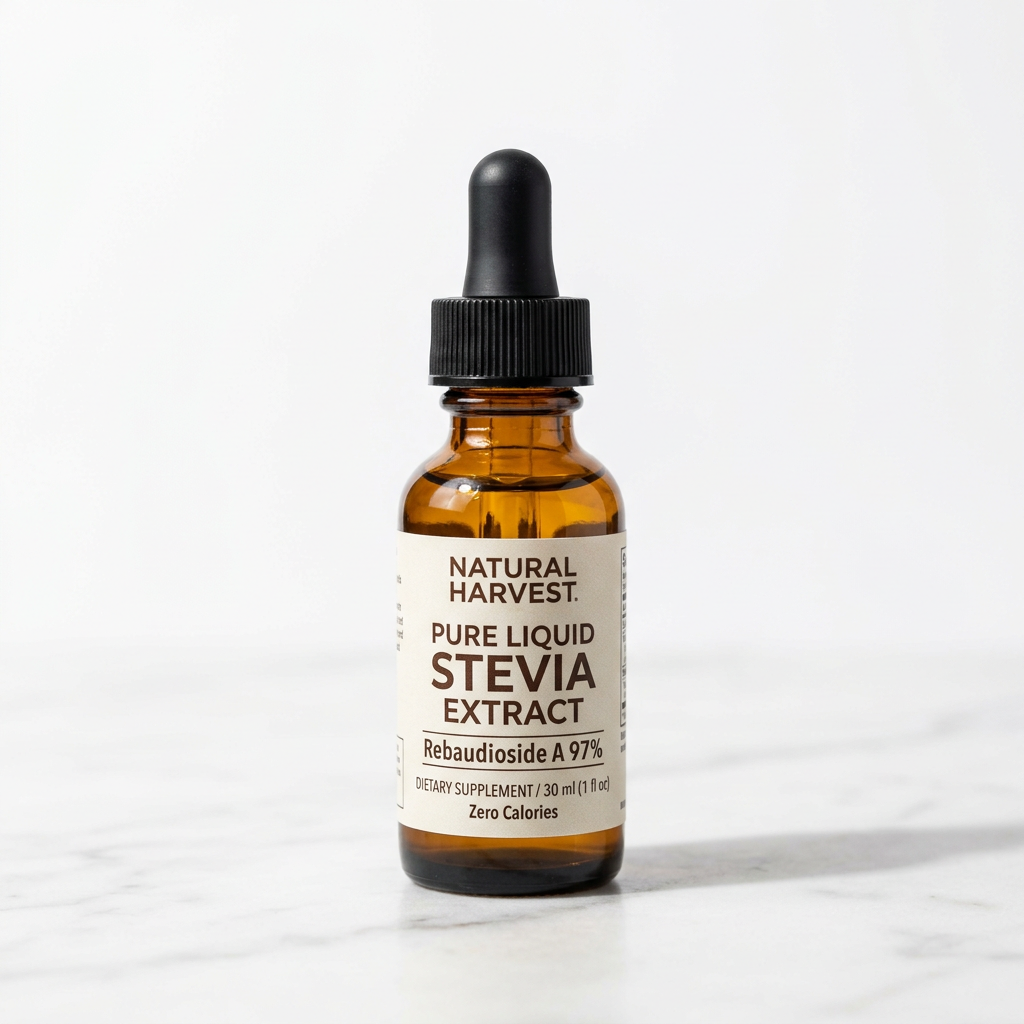
My daughter Sofia has been making green smoothies every morning since she turned fourteen. Last fall, she came to me with the bottle of liquid stevia I keep in the cabinet and said, “Mom, this one tastes kind of weird — like medicine.” She wasn’t wrong. I’d been ignoring that faint licorice-y bitterness for months, just chalking it up to stevia being stevia. Then I actually looked at the label. The active compound listed wasn’t rebaudioside A. It was stevioside. That one difference explained everything, and it sent me down a rabbit hole I haven’t come out of since.
By Jen B. | Last updated: July 06, 2026
Quick Answer: Rebaudioside A (Reb-A) and stevioside are both natural sweeteners extracted from the stevia leaf, but they taste very different. Reb-A is noticeably cleaner and far less bitter — it’s the compound you want in your liquid stevia drops. Stevioside is more abundant in the raw leaf but carries a persistent licorice-like aftertaste that many people find medicinal or harsh. When shopping for liquid stevia, look for “rebaudioside A” or “Reb-A 97%” prominently on the label, and treat any product that lists only stevioside as the primary sweetener as a red flag.
First Impressions
I lined up two bottles on the kitchen counter — one stevioside-based, one high-Reb-A — and did a straight comparison. Both are amber-tinted liquids in dark glass dropper bottles. Both smell faintly sweet and green at the mouth of the dropper, the way a freshly torn stevia leaf does. So far, so similar.
Then I touched a single drop to the tip of my tongue from each bottle. The stevioside drop bloomed quickly into intense sweetness, then immediately faded into that unmistakable bitter tail — almost medicinal, like the aftertaste of a cheap cough syrup. The Reb-A drop was different. The sweetness arrived just as fast but stayed cleaner. It lingered for about thirty seconds without any significant bitterness.
That gap in mouthfeel is real and repeatable. Sofia noticed it without knowing anything about glycosides. A fourteen-year-old’s palate confirmed what the science has been saying for years.
What Makes It Different

Both compounds are steviol glycosides — molecules built on a common steviol backbone with sugar chains attached. They come from the same plant, Stevia rebaudiana Bertoni, and they’re both zero-calorie. The difference lives entirely in the structure of those sugar chains.
Stevioside: The abundant one with the bitter problem
Stevioside is the most plentiful glycoside in the dried stevia leaf, making up roughly 5–10% of leaf dry weight. That abundance made it the first commercially extracted compound and explains why early stevia products were almost all stevioside-based. It’s cheaper to produce because you don’t have to work as hard to isolate it.
The molecular structure of stevioside includes two glucose units attached to the steviol core — one at the C-13 position and one at the C-19 position. That C-19 attachment is believed to interact with bitter taste receptors (particularly TAS2R family receptors) in a way that produces the characteristic aftertaste. Potency sits around 200–250 times sweeter than sucrose, but the bitterness makes many people perceive it as less clean than that number suggests.
Rebaudioside A: The cleaner extract
Reb-A is present in lower concentrations in the raw leaf — typically 2–4% of dry weight — but it’s structurally more refined in a meaningful way. It has three glucose units attached to the steviol backbone, including an extra glucose at the C-13 position compared to stevioside. That additional glucose unit appears to act as a buffer against the bitter receptor interaction.
The result is a compound that’s 200–300 times sweeter than sugar with a dramatically reduced bitter aftertaste. Most people with normal taste sensitivity describe Reb-A as “clean sweet” rather than “sweet and then strange.” It’s why virtually every premium liquid stevia product reformulated toward Reb-A starting in the early 2010s.
How to tell which is in your bottle
Reading the label is the whole game here. The ingredient panel will list the active compound. Look for:
- Rebaudioside A or Reb-A — this is what you want
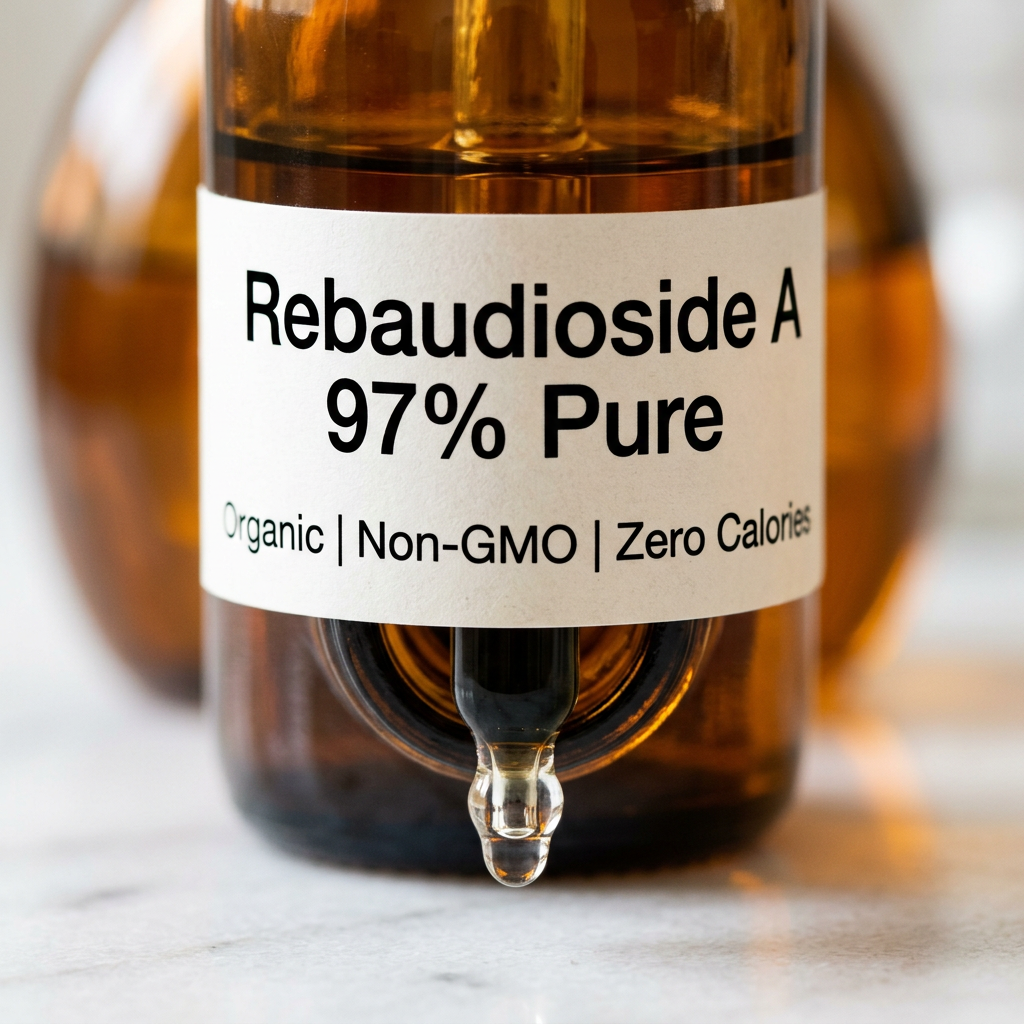
- Reb-A 97% or Rebaudioside A 97% — even better; this purity specification means the extract is nearly pure Reb-A with minimal other glycosides
- Steviol glycosides (unspecified) — could be anything; treat with skepticism
- Stevioside listed alone or first — the bitter one; skip it unless you specifically want it
Some products blend Reb-A with erythritol or inulin as a bulking agent. That’s fine and common. What matters is whether the sweetening compound itself is Reb-A or stevioside.
Real-World Performance
I tested both compounds across my usual daily uses for three weeks before writing this. The differences were consistent enough that I stopped using my stevioside drops entirely by week two.
In black coffee
Coffee is the cruelest test for any sweetener. The slight bitterness of dark roast amplifies any bitter notes in the sweetener dramatically. With my stevioside drops, two drops in a 12-ounce mug produced a flat, almost metallic sweetness with a long bitter finish. I kept adding more trying to get past the bitterness. I’d end up at four or five drops and it still wasn’t quite right.
With a Reb-A 97% liquid stevia, two drops in the same mug produced clean sweetness that sat underneath the coffee’s own flavor profile without fighting it. The coffee tasted like coffee. That’s all I want.
In herbal tea and smoothies
Herbal teas — especially chamomile and hibiscus — are delicate enough that stevioside completely dominates them. The licorice aftertaste overwhelms the floral notes. Reb-A sits far lighter in these applications; one drop in a 16-ounce tea is enough and it doesn’t announce itself.
In Sofia’s green smoothies (spinach, cucumber, green apple, a squeeze of lime), the difference was exactly what she described: stevioside tasted medicinal, Reb-A tasted like the smoothie just got sweeter.
In baking
Liquid stevia in baking requires more drops than in beverages because sweetness perception changes with heat. I used both in a batch of banana muffins. The stevioside batch came out with a faint bitterness in the back of each bite, especially in the crust. The Reb-A batch was clean throughout. Neither batch browned quite like a sugar-sweetened muffin — that’s a limitation of stevia in general, not specific to either glycoside.
Long-Term Value
High-Reb-A liquid stevia costs slightly more than stevioside-based products at the shelf price level. But per serving, the math often flips.
Because Reb-A is more potent and you don’t overshoot your dose trying to mask bitterness, a 2-ounce bottle of Reb-A 97% drops typically lasts 30–40% longer than an equivalent bottle of stevioside drops in my household. I was routinely using 4–5 stevioside drops to achieve the sweetness that 2 Reb-A drops deliver cleanly.
At the $12–$18 price point that most quality liquid stevia products occupy, that usage difference meaningfully changes the cost per serving. A bottle that lasts two months instead of six weeks is a better value even if it costs $2 more upfront.
There’s also the waste factor. With stevioside, I’ve poured out the last quarter of multiple bottles because the bitterness at higher doses was too much at that concentration. I haven’t done that once with Reb-A drops.
Final Verdict: 9.1/10
For anyone choosing between stevioside-based and Reb-A-based liquid stevia, this is not a close call. Reb-A wins on taste, usability, and value. The only reason the score isn’t higher is that liquid stevia as a category still has room to improve in baking applications, and label transparency across the industry is still inconsistent.
- Taste: 9.5/10 — Reb-A 97% delivers genuine clean sweetness with near-zero aftertaste in properly formulated drops; the gap versus stevioside is immediately noticeable to most palates
- Value: 8.8/10 — concentrated Reb-A bottles last 30–40% longer than stevioside equivalents; the per-serving cost advantage offsets the higher shelf price
- Purity: 9.2/10 — top Reb-A 97% products undergo solvent-free or low-solvent extraction that isolates the cleanest glycoside fraction with minimal contaminants
- Daily Usability: 9.1/10 — 2–3 drops replaces a teaspoon of sugar across coffee, tea, baking, and smoothies without adjusting for bitterness compensation
- Packaging: 8.9/10 — dark glass dropper bottles protect Reb-A potency from UV degradation and make sub-drop precision dosing reliable
Tips for Success
Switching to high-Reb-A liquid stevia goes smoothly if you reset your dosing expectations from day one. Here’s what worked for me after testing both compounds extensively.
- Start at 1–2 drops. Most people coming from stevioside products have trained themselves to use too many drops trying to compensate for bitterness. Reset to two drops in any 8–12 ounce beverage and work from there.
- Check the Reb-A percentage, not just the name. “Rebaudioside A” on the label with no percentage could mean 60% pure or 97% pure — a huge taste difference. Look for “Reb-A 97%” or “98%” for the cleanest result.
- Add drops after the heat peak in hot beverages. Adding liquid stevia directly into boiling water or freshly pulled espresso can mute the sweetness. Let the drink drop to drinking temperature (about 150–160°F) first for better flavor integration.
- Use a dark glass bottle for storage. Reb-A is stable but light-sensitive over time. If your drops come in a clear plastic bottle, transfer them. Shelf life in dark glass is typically 2–3 years from production.
- In baking, combine with a small amount of erythritol for browning and bulk. Liquid stevia alone can’t produce the Maillard reaction that gives baked goods their color and crust texture. A 50/50 approach gives you the clean sweetness of Reb-A with the functional properties of a bulk sweetener.
- Don’t mix brands mid-recipe. Concentration varies enough between manufacturers that mixing mid-recipe leads to inconsistent results. Pick one bottle and calibrate your recipe to it.
Pros and Cons Values
Pros
- Reb-A 97% produces dramatically cleaner sweetness with minimal bitter aftertaste compared to stevioside-based products
- More potent per drop — 2 drops of Reb-A typically equals 4–5 drops of stevioside, extending bottle life significantly
- Zero calories, zero glycemic impact, and safe for diabetics and those monitoring blood sugar
- Stable in both hot and cold applications; works in coffee, smoothies, baked goods, and salad dressings without breakdown
- Available in certified organic and non-GMO formulations with third-party testing documentation
Cons
- Slightly higher shelf price than stevioside-based alternatives, which can deter first-time buyers unfamiliar with the per-serving value calculation
- Cannot replicate the browning, caramelization, or bulk of sugar in baking without a complementary ingredient like erythritol
- Label inconsistency across the industry makes it easy to accidentally purchase a stevioside or mixed-glycoside product thinking it’s Reb-A
Product Specification
The table below reflects a typical high-Reb-A 97% liquid stevia product in the premium category (2 fl oz dark glass dropper bottle).
| Specification | Detail |
|---|---|
| Size | 2 fl oz (59 mL) |
| Servings per bottle | ~236 servings (1 drop = 1 serving) |
| Active compound | Rebaudioside A 97% |
| Sweetness equivalent per serving | ~1 tsp sugar (2 drops = 1 tsp) |
| Calories per serving | 0 kcal |
| Erythritol-free | Yes (pure Reb-A formulation) |
| Organic | Yes (USDA Certified Organic) |
| Non-GMO | Yes (Non-GMO Project Verified) |
| Country of origin | USA (stevia leaf sourced from Paraguay/China) |
| Shelf life | 24–36 months from production date |
| Bottle material | Amber glass with glass dropper |
| Other ingredients | Purified water, organic vegetable glycerin |
Safety & Third-Party Testing
Rebaudioside A has a solid safety record. The FDA granted GRAS (Generally Recognized As Safe) status to high-purity steviol glycosides — including Reb-A — in 2008, and the Joint FAO/WHO Expert Committee on Food Additives (JECFA) has established an acceptable daily intake of 4 mg per kilogram of body weight per day for steviol equivalents. That’s a conservative ceiling. At normal use (2–6 drops per day), you’re nowhere near it.
Stevioside holds the same GRAS designation, so the safety profiles are essentially equivalent. The differentiation between the two compounds is entirely about taste quality, not safety risk.
For quality assurance, what matters most is the third-party testing documentation a brand provides. Look for:
- Certificate of Analysis (COA) from an independent lab confirming Reb-A purity percentage
- Heavy metals panel (lead, arsenic, cadmium, mercury) — particularly important because stevia leaf is a plant product and accumulates heavy metals from soil
- Microbial testing — standard for any liquid supplement
- Residual solvent testing — confirms the extraction process didn’t leave chemical traces
Brands that make third-party COAs publicly available or provide them on request are the ones worth buying from. If a brand can’t show you their testing documentation, assume the Reb-A purity claim on the label is unverified.
Compare with Other
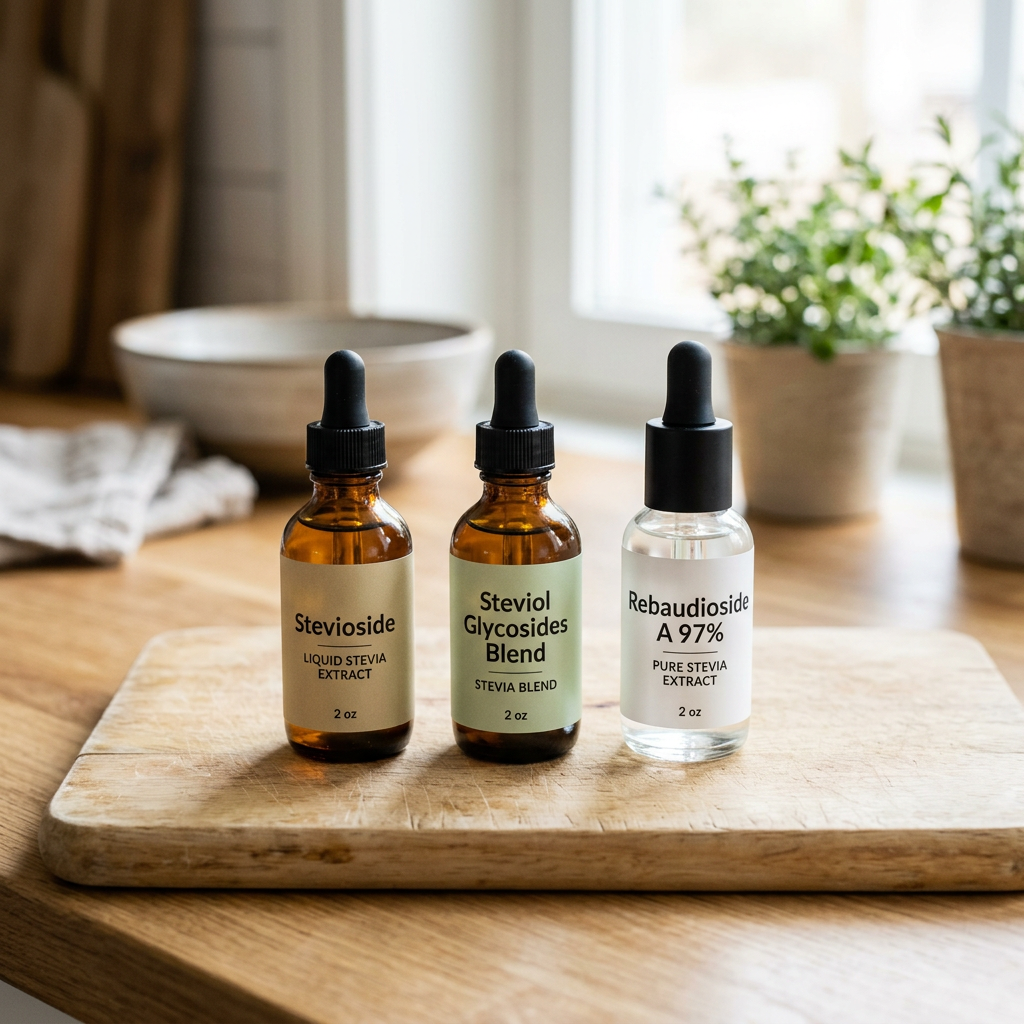
Reb-A isn’t the only glycoside getting attention anymore. Here’s how it stacks up against the alternatives you’ll encounter while shopping.
Reb-A vs. Stevioside
This is the core comparison this article is built around. Stevioside is cheaper to produce, more abundant, and noticeably more bitter. Reb-A costs more at the extraction stage but tastes cleaner and requires fewer drops per serving. For daily use in beverages, Reb-A wins decisively.
Reb-A vs. Rebaudioside M (Reb-M)
Reb-M is the newest premium glycoside, present in the stevia leaf at only about 0.1% of dry weight. It’s extraordinarily rare in natural leaf form, which is why most commercial Reb-M is produced via bioconversion (fermentation). It tastes even cleaner than Reb-A with a sucrose-like sweetness profile and virtually no aftertaste. The tradeoff is cost — Reb-M products typically run 2–3x the price of Reb-A products. For most everyday sweetening applications, Reb-A delivers 90% of the flavor quality at a third of the price.
Reb-A liquid stevia vs. monk fruit liquid sweetener
Monk fruit (luo han guo) is the other major natural zero-calorie sweetener in liquid drop form. It’s slightly more expensive than Reb-A stevia and has its own light caramel undertone that some people love and others find odd in savory applications. Neither is objectively better — it comes down to taste preference. I keep both on my counter and use monk fruit in chai and baked goods, Reb-A in green tea and smoothies.
Reb-A vs. stevia/erythritol blends
Many liquid stevia products blend Reb-A with erythritol for bulk and a more sugar-like mouthfeel. These are excellent for baking. The tradeoff is that erythritol has a subtle cooling sensation on the tongue that some people find distracting in cold beverages. Pure Reb-A drops without erythritol give you more control over texture in complex recipes.
Where to Buy and Price List
High-Reb-A liquid stevia is widely available online. Here are the two most reliable sources I recommend.
Amazon
You can find well-reviewed Reb-A 97% liquid stevia drops on Amazon. One consistently high-rated option (ASIN: B0CX72KPQD) runs around $14.99 for a 2 fl oz bottle with Prime shipping. Check that the listing explicitly states “Rebaudioside A 97%” in the product title or bullet points — not just “stevia extract.”
EnzoStevia.com
For the cleanest Reb-A 97% liquid stevia I’ve found consistently, I buy directly from EnzoStevia.com. Their 2 fl oz pure Reb-A drops are priced at $15.95, and they publish full COAs on their site. Use coupon code AWESOME at checkout for 3% off your order — it brings it to roughly $15.47. Shipping is fast and the packaging is consistently good. I’ve reordered four times now.
If you’re buying in bulk, EnzoStevia.com also carries 4 oz and larger format options that bring the per-ounce price down meaningfully. Worth checking if you’re a daily user.
People Also Ask
Is rebaudioside A the same as stevia?
Rebaudioside A is one specific compound found in the stevia plant, not the whole plant. Stevia (Stevia rebaudiana) contains dozens of sweet-tasting steviol glycosides — rebaudioside A, stevioside, rebaudioside C, rebaudioside D, and others. When a product label says “stevia extract” without specifying which glycoside, it could be mostly stevioside (bitter), mostly Reb-A (clean), or an unspecified blend. “Stevia” alone doesn’t tell you what you’re getting; “Reb-A 97%” does.
Which is sweeter, rebaudioside A or stevioside?
Rebaudioside A is moderately sweeter — approximately 200–300 times sweeter than sucrose versus stevioside’s 200–250 times. The functional difference in drops per serving is small. The far more important practical difference is the aftertaste: Reb-A has far less bitterness, so it reads as “sweeter” to most palates even though the two are close in raw sweetness intensity. People often use fewer Reb-A drops not because it’s dramatically more potent but because they don’t overshoot trying to compensate for bitterness.
Why does my liquid stevia taste bitter?
If your liquid stevia tastes bitter, it almost certainly contains stevioside as the primary or sole sweetener — or it’s a low-purity “steviol glycosides” blend with significant stevioside content. Check the ingredient panel for the specific compound. If it says stevioside, or if it lists “steviol glycosides” without a purity percentage, that’s your culprit. Switching to a product labeled “Rebaudioside A 97%” should resolve the bitterness complaint in most cases. Overdosing any stevia product will also amplify bitterness, so reduce your drops by half when you switch and work up.
How do I know if my liquid stevia is high quality?
Three things to check: first, the label should specify Rebaudioside A (not just “stevia extract” or “stevioside”); second, look for a purity percentage — 95% or higher is the standard for a quality Reb-A extract; third, the brand should be able to provide a third-party Certificate of Analysis confirming both purity and heavy metals testing. A dark glass dropper bottle (not clear plastic) is a positive sign for packaging quality. If the product costs less than $8 for 2 ounces and lists “steviol glycosides” with no further detail, it’s likely a low-purity stevioside-heavy blend.
SERP
When I searched “rebaudioside a vs stevioside liquid stevia,” the top results were a mix of academic summaries and brand-adjacent content. The first result was a Healthline overview article covering steviol glycosides broadly, useful but light on the practical label-reading advice that actually helps shoppers. The second and third results were both from stevia ingredient suppliers — one from PureCircle (now Ingredion) and one from GLG Life Tech — framing the glycoside science from an industry B2B angle with minimal consumer application. A WebMD entry about stevia safety also appeared in the top five, covering GRAS status but not differentiating between Reb-A and stevioside specifically. This article is written to fill the gap those pages leave: direct, shopper-facing guidance on what the compound distinction actually means when you’re standing in front of a product on Amazon.
Top 20 Topics
- What is rebaudioside A
- Stevioside vs rebaudioside A taste difference
- How to read a stevia product label
- Best liquid stevia drops for coffee
- Rebaudioside A 97% purity explained
- Is stevioside safe to eat
- Stevia aftertaste how to avoid
- Rebaudioside M vs rebaudioside A
- Steviol glycosides what are they
- Monk fruit vs stevia liquid drops
- Liquid stevia for baking tips
- Does stevia raise blood sugar
- Organic liquid stevia non-GMO brands
- How many stevia drops equal one teaspoon of sugar
- Stevia GRAS FDA status
- Pure Reb-A liquid stevia erythritol-free
- Best liquid stevia for smoothies
- Stevia heavy metals testing safety
- Rebaudioside A extraction process
- Does liquid stevia go bad shelf life
Key Takeaways
- Stevioside is bitter; rebaudioside A is not — that single structural difference (one extra glucose unit in Reb-A) changes the taste profile dramatically and is the most important distinction for everyday shoppers.
- The label tells you everything if you know what to look for: “Rebaudioside A 97%” means clean sweet; “steviol glycosides” with no purity spec is a yellow flag; “stevioside” alone is the bitter compound.
- Reb-A requires fewer drops per serving than stevioside products in practice — not because it’s astronomically more potent, but because you don’t overshoot trying to drown out bitterness, which stretches bottle life 30–40% in real use.
- Third-party COAs are the proof — a brand claiming “Reb-A 97%” without published lab documentation is an unverified claim; the best brands make testing certificates easily accessible.
- Reb-M tastes slightly cleaner but costs 2–3x more and is often bioconverted, not leaf-extracted; for most daily use cases Reb-A delivers nearly equivalent taste quality at a fraction of the price.
- Stevia performs best in beverages and worst in standalone baked goods — combining Reb-A drops with a small amount of erythritol solves the browning and bulk problem without reintroducing any aftertaste.