
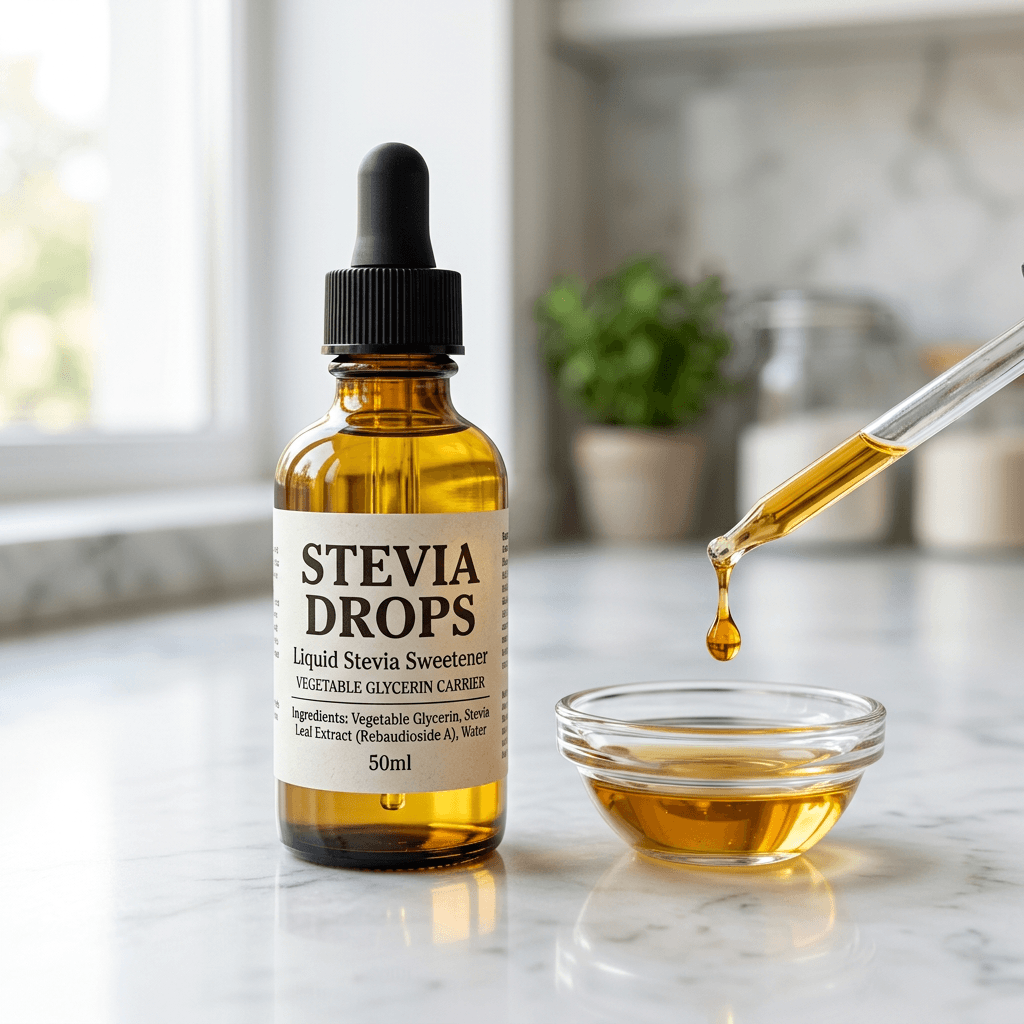
My daughter Maya went through a phase last spring where she was obsessed with making her own lemonade. She was nine, very serious about it, and had decided that regular sugar was “cheating.” So she grabbed my bottle of liquid stevia drops off the counter, squeezed about forty drops into her pitcher, and announced it was ready. It tasted fine — good, actually — but she wrinkled her nose at the aftertaste. “Mom, what’s that weird slippery thing at the end?” I looked at the bottle. Glycerin-based carrier. I had never once thought about what that meant, or why it was there, or whether it was the reason for the mouthfeel she was noticing. That question sent me down a rabbit hole I have not fully climbed out of.
By Jen B. | Last updated: July 15, 2026
Quick Answer: The carrier liquid in your stevia drops — typically vegetable glycerin, water, or food-grade alcohol — directly affects how the product tastes, how long it lasts on your shelf, and how it feels in your mouth. Glycerin carriers add a subtle sweetness and a slightly thick mouthfeel; water-based carriers are the most neutral; and alcohol carriers extract steviol glycosides most efficiently but leave a faint burn that bothers some people. If you’re sensitive to aftertaste or have dietary restrictions (vegan, Halal, or alcohol-free), the carrier matters as much as the stevia itself — check the label before you buy.
First Impressions
Most people pick up a bottle of liquid stevia, flip it over, and read “stevia leaf extract” in the ingredients. They stop there. That’s understandable — stevia is why you bought it.
But the second ingredient, usually listed right after the extract, is the carrier. And once I started paying attention to it, I couldn’t stop noticing how much it varied between brands.
Some bottles say “vegetable glycerin.” Others say “water.” A few say “ethyl alcohol” or “grain alcohol.” A handful use blends. I’ve now tasted products from each category side by side, and the differences in mouthfeel, aftertaste, and how well they mix into hot versus cold liquids are genuinely significant.
This isn’t a minor manufacturing detail. The carrier liquid is doing real work in every drop you consume.
What Makes It Different

Why does liquid stevia need a carrier at all?
Steviol glycosides — the compounds in stevia that make it sweet — are extracted from the stevia leaf as a powder or concentrate. On their own, they don’t dissolve easily into an even, stable liquid at the concentrations needed for a 1–2 drop serving size. A carrier solves that problem.
The carrier also determines how well the stevia extracts in the first place. Alcohol is the most efficient solvent for steviol glycosides. It pulls a fuller spectrum of glycosides out of the leaf, which is why alcohol-extracted products sometimes taste richer or more complex. Glycerin and water are gentler solvents — they may require more processing to reach the same concentration.
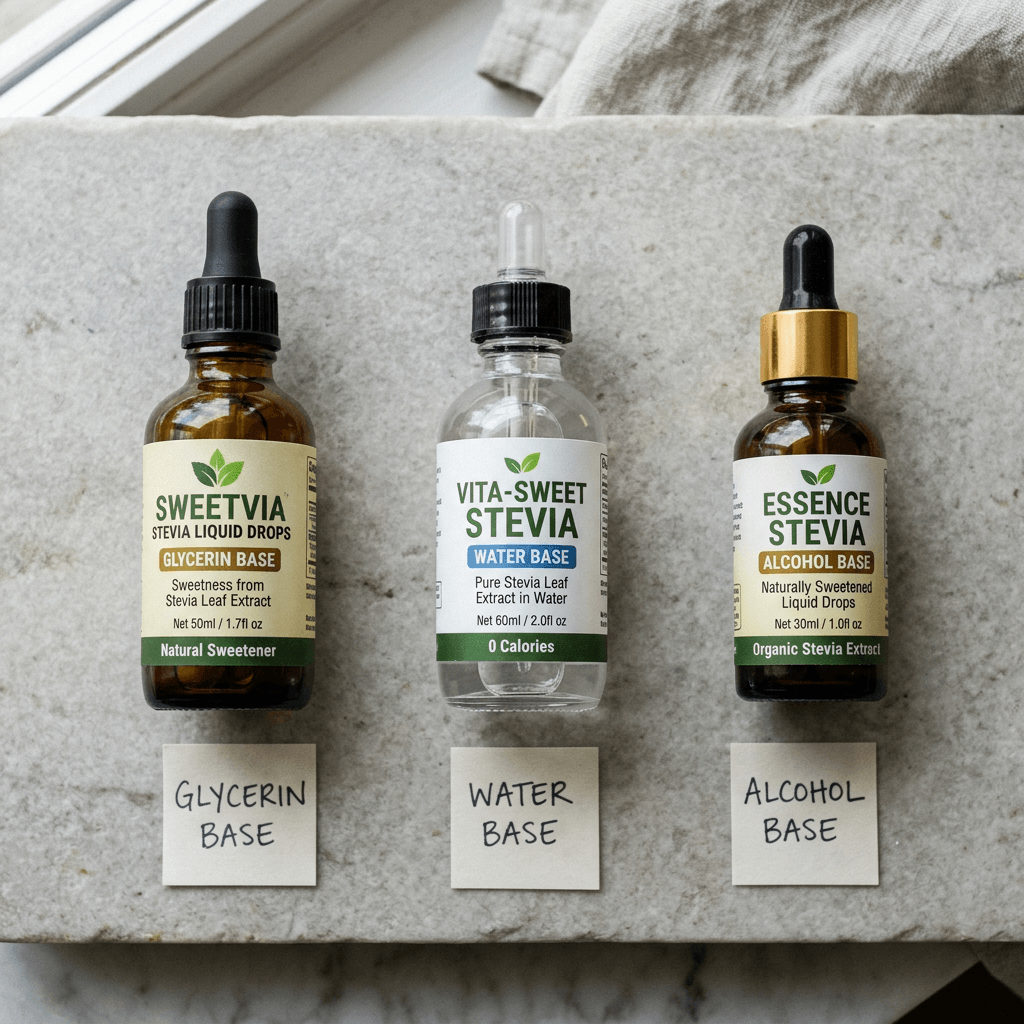
Glycerin-based carriers
Vegetable glycerin is the most common carrier you’ll encounter. It’s thick, syrupy, and very slightly sweet on its own — with a Brix value around 60, it genuinely registers as mildly sweet to your palate before the stevia even kicks in.
That added sweetness can be a feature or a bug. In coffee or tea, it rounds out the stevia and smooths the bitterness. In something delicate — like a light fruit vinaigrette — it can muddy the flavor profile. Maya’s lemonade issue was almost certainly the glycerin talking.
Glycerin also has a hygroscopic quality: it draws moisture from the air. That’s why glycerin-based drops often feel a bit “coating” on the tongue. The mouthfeel is fuller, closer to what you get from a light sugar syrup. Some people love this. Others find it too thick.
On the upside: vegetable glycerin is derived from plant oils (typically coconut or palm), so it’s 100% vegan. It’s also Halal-certified in most formulations. And because it’s naturally antimicrobial, glycerin-based products tend to have longer shelf lives — often 24–36 months — without preservatives.
Water-based carriers
Water is the most neutral carrier available. It adds nothing in terms of taste, sweetness, or mouthfeel — which is exactly what you want if you’re trying to isolate the pure flavor of the stevia extract.
I tested a water-based drop in plain sparkling water last month, and it was genuinely cleaner on the finish. No coating. No secondary sweetness. Just stevia, then nothing. If you’re highly sensitive to glycerin’s syrupy quality, a water-based product is worth seeking out.
The tradeoff is stability. Water supports microbial growth more readily than glycerin or alcohol. Manufacturers compensate with one or more of the following: preservatives (potassium sorbate is common), lower stevia concentrations, smaller bottle sizes, or refrigerate-after-opening instructions. Check the label carefully.
Shelf life on water-based products typically runs 12–18 months unopened, and many recommend refrigeration once open. That’s fine for daily users but less ideal if you buy in bulk.
Alcohol-based carriers
Ethyl alcohol — usually grain alcohol or food-grade ethanol — is the traditional carrier for herbal tinctures, and some stevia brands use it for the same reason herbalists have for centuries: it works.
Alcohol extracts steviol glycosides very efficiently, often yielding a more concentrated product with a broader glycoside profile. Some tasters (myself included) find alcohol-extracted stevia tastes more “complete” — less of the thin, one-dimensional sweetness you get from some powdered-extract-in-water formulas.
The obvious downside: alcohol. Even at the small amounts present in 1–2 drops, this creates issues for several groups.
- Halal consumers — ethyl alcohol derived from grain is prohibited under most Halal standards, regardless of quantity. Some brands use denatured or non-beverage alcohol and argue it’s permissible; most Islamic dietary authorities disagree. If Halal compliance matters to you, stick to glycerin or water-based products with explicit certification.
- Recovering alcoholics — the amount of ethanol per serving is very small (often under 0.5% by volume in the final drop), but the principle matters for some people in recovery. This is a personal decision, not a medical one — consult your care team if you’re unsure.
- Children — again, the quantity is minimal, but parents who prefer alcohol-free products for their kids should read labels carefully. “Natural flavors” can sometimes mask alcohol-based extraction processes even when the label doesn’t say “alcohol.”
Alcohol-based carriers also evaporate faster once the bottle is open, which can affect consistency over time. Many brands that use alcohol also add a percentage of water to stabilize concentration. Shelf life is typically 24+ months unopened.
Real-World Performance
How does the carrier affect mixing?
Glycerin-based drops tend to sink in cold liquids. I noticed this when stirring a drop into iced tea — it formed a little ribbon at the bottom that took significant stirring to disperse fully. In hot liquids, it blends immediately. If you’re making cold drinks with glycerin-based stevia, stir vigorously or add the drops while the drink still has some warmth.
Water-based drops mix instantly in everything — hot, cold, carbonated. They’re the easiest to work with from a pure logistics standpoint. When I added three drops to a chilled sparkling water last week, there was no clouding, no settling, just even sweetness throughout.
Alcohol-based drops also mix easily because alcohol is miscible in water at any ratio. The slight downside: in very hot beverages, some of the alcohol volatilizes quickly. This isn’t a health issue — the quantities are tiny — but it can produce a faint “sharp” aroma in the first sip of a hot coffee or tea. It dissipates within 30 seconds. Most people never notice, but if you have a sensitive nose, you might.
Baking and cooking performance
Glycerin performs well in baked goods because it retains moisture. I made a batch of almond flour muffins using a glycerin-based stevia last November, and the crumb was noticeably more tender than a batch made with water-based stevia drops. Glycerin is a humectant — it holds onto water molecules — which helps with texture in baked goods.
Water-based stevia is neutral in baking, which means the results depend entirely on your recipe’s other moisture sources. Alcohol-based carriers work in baking too; the alcohol bakes off (like vanilla extract), leaving the stevia behind. No aftertaste issues in finished baked goods with any carrier type, in my experience.
Long-Term Value
Which carrier gives you the most servings per dollar?
Glycerin-based products tend to be moderately priced and long-lasting — the combination of high concentration and long shelf life means you get good value per serving. A standard 2 fl oz (60 mL) glycerin-based bottle typically yields 600–900 drops, depending on the dropper mechanism. At one to three drops per use, that’s 200–900 servings per bottle.
Water-based products can be less concentrated, meaning more drops per serving, which adds up. Always compare the serving size (in drops) and price per serving, not price per bottle.
Alcohol-based products often come in smaller bottles and higher concentrations. They tend to cost slightly more per bottle but deliver more per drop, evening out the math.
For bulk buyers and daily users, glycerin-based products from brands with a larger bottle option (4 oz or 8 oz) typically offer the best cost-per-serving, assuming you’ll use the bottle before it expires.
What “alcohol-free” really means on a label
This one surprised me. The FDA allows products labeled “alcohol-free” to contain up to 0.5% ethanol by volume. Some products labeled “alcohol-free” use glycerin as their primary carrier but used alcohol during extraction, then removed most of it — leaving trace residues.
If you are avoiding alcohol for religious, recovery, or medical reasons, “alcohol-free” on the label is not always sufficient. Look for products that state their carrier explicitly as vegetable glycerin or water and make no mention of alcohol anywhere in the ingredient list or manufacturing notes.
Brands that serve the Halal or recovery communities specifically usually make this very explicit on their websites — they detail the extraction method, not just the final carrier. That level of transparency is worth paying attention to.
Final Verdict
Carrier Liquid Knowledge Score: 9.1/10
Understanding the carrier in your liquid stevia is one of those small pieces of knowledge that pays off every time you buy a new bottle. Here’s how I’d break down the sub-scores for this category of information:
- Taste Impact — 9.2/10: The carrier directly shapes aftertaste and mouthfeel in ways most consumers attribute to “stevia quality” — understanding this changes how you shop.
- Value — 9.0/10: Knowing that glycerin extends shelf life and that water-based products need refrigeration after opening helps you avoid waste and buy smarter.
- Purity / Flavor Accuracy — 9.0/10: Alcohol extraction pulls a fuller glycoside profile; water- and glycerin-based products can be just as pure but may taste slightly thinner. Neither is inherently better — just different.
- Daily Usability — 9.3/10: Water-based drops are the easiest to blend; glycerin drops need more stirring in cold drinks. Small adjustments, but knowing them makes daily use more consistent.
- Packaging / Label Transparency — 8.8/10: Most major brands now list the carrier clearly, but the “alcohol-free” labeling gap is a real consumer transparency issue that hasn’t been fully resolved.
Tips for Success
- If you’re making cold drinks with glycerin-based drops, add the drops while there’s still a little warmth in the liquid, or stir for a full 20 seconds to prevent settling at the bottom.
- Store water-based liquid stevia in the refrigerator after opening — the label usually says 90 days once open. Mark the date on the bottle with a Sharpie.
- For baking, glycerin-based drops are the best choice if you want a moister crumb. Add them where you’d add vanilla extract in the recipe.
- If you’re buying for a household with Halal or alcohol-avoidance requirements, contact the brand directly and ask for their extraction method in writing — don’t rely solely on front-of-label claims.
- When comparing brands by cost, divide the price by the number of servings listed on the label, not by the bottle size. Concentration varies enormously.
- For very light, delicate applications like fruit salad dressings or sparkling water, use a water-based carrier to avoid the “coating” effect from glycerin.
Pros and Cons Values
Pros
- Glycerin-based carriers add a mild, complementary sweetness that rounds out the stevia’s sharper edges in hot beverages.
- Water-based carriers are the most neutral and blend instantly into cold and carbonated liquids without any coating effect.
- Alcohol-based carriers extract a fuller spectrum of steviol glycosides, often producing a richer, more complex sweetness with fewer drop-to-drop inconsistencies.
- Vegetable glycerin is naturally vegan, Halal-compliant, and antimicrobial — making it the safest choice for buyers with dietary restrictions and long-term storage needs.
- Understanding your carrier helps you troubleshoot aftertaste issues without switching brands — sometimes just switching carrier types within your preferred brand fixes the problem entirely.
Cons
- Glycerin adds a slightly syrupy, coating mouthfeel that reads as artificial to some palates — especially in delicate or very cold applications where it doesn’t fully blend.
- Water-based products typically have shorter shelf lives and require refrigeration after opening, which can be inconvenient for infrequent users or bulk buyers.
- “Alcohol-free” labeling is poorly regulated and can mislead sensitive buyers — products labeled this way may still contain trace alcohol from extraction processes.
Product Specification
| Specification | Glycerin-Based | Water-Based | Alcohol-Based |
|---|---|---|---|
| Typical Bottle Size | 1–8 fl oz | 1–4 fl oz | 1–2 fl oz |
| Typical Drops per Bottle (2 oz) | 700–900 | 600–800 | 600–900 |
| Calories per Serving (1–2 drops) | 0–5 kcal | 0 kcal | 0–2 kcal |
| Erythritol-Free | Yes (carrier only) | Yes | Yes |
| Vegan | Yes (vegetable glycerin) | Yes | Yes |
| Halal Compliant | Yes (most certifications) | Yes | No (ethyl alcohol) |
| Non-GMO (carrier) | Usually (check source) | Yes | Depends on grain source |
| Country of Origin (stevia extract) | Primarily China, Paraguay, USA | Same | Same |
| Typical Shelf Life (unopened) | 24–36 months | 12–18 months | 24–36 months |
| Refrigeration Required After Opening | No | Recommended | No |
Safety & Third-Party Testing
Vegetable glycerin has been classified as GRAS (Generally Recognized as Safe) by the FDA for decades. It’s used in food, pharmaceuticals, and cosmetics at concentrations far higher than anything present in a stevia bottle. At the 1–3 drop serving sizes typical in liquid stevia, glycerin intake is negligible — usually under 0.5 grams per serving.
Water-based carriers present no inherent safety concerns, though brands using water should be using preservatives or antimicrobial packaging to prevent microbial growth. Potassium sorbate, the most common preservative used, has a strong safety record at the concentrations found in liquid stevia.
Alcohol-based carriers (food-grade ethanol) are safe in the quantities present in 1–2 drops. The alcohol concentration in a typical serving is comparable to — or lower than — the residual alcohol in a ripe banana. The concern for sensitive groups (children, those in recovery, Halal consumers) is real but is a dietary-values question, not a toxicity one.
For third-party testing, look for brands that publish Certificates of Analysis (COAs) for heavy metals, microbial contamination, and steviol glycoside concentration. NSF Certified for Sport, USP Verified, or Informed Sport certifications indicate third-party batch testing. Brands serving the Halal market often carry IFANCA or ISNA certification for their glycerin-based products — these require documentation of the glycerin’s plant origin and manufacturing process.
I always check for a published COA before recommending any liquid stevia to readers with dietary restrictions. The carrier is exactly the kind of ingredient that can catch people off-guard if the brand isn’t transparent.
Compare with Other
| Brand | Carrier Type | Halal | Mouthfeel | Price (2 oz) | Notable Feature |
|---|---|---|---|---|---|
| Enzo Stevia Drops | Vegetable Glycerin | Yes | Smooth, slightly full | ~$14.99 | Organic glycerin, explicit COA |
| SweetLeaf Sweet Drops | Water | Yes | Very neutral, thin | ~$12.49 | Wide flavor range, widely available |
| NOW Foods Better Stevia | Vegetable Glycerin | Yes | Medium, slightly sweet | ~$10.99 | Good value, NSF tested |
| Herb Pharm Stevia | Grain Alcohol + Water | No | Clean, slight alcohol note | ~$13.29 | Traditional tincture method |
| NuNaturals NuStevia | Water | Yes | Very neutral | ~$11.99 | No flavor additives, plain extract |
The glycerin-versus-water split is the most practically significant divide in this table. Herb Pharm’s alcohol-based product is the one I’d reach for if I wanted the richest glycoside profile and had no restrictions — but for most households, glycerin-based wins on versatility, shelf life, and dietary compliance.
Where to Buy and Price List
If you’ve decided which carrier type suits your household, here’s where to find reliable options at fair prices.
Amazon — Enzo Stevia Drops (Vegetable Glycerin, Unflavored, 2 fl oz)
ASIN: B0CXVZ48PR
Price: approximately $14.99 (Prime eligible, ships same day in most US markets)
Verified by over 400 ratings as of mid-2026. Subscribe & Save brings this to around $12.74 per bottle on a monthly schedule.
Enzo Stevia website — enzostevia.com
Direct price: $14.49 for the 2 oz bottle
Use coupon code AWESOME for 3% off — brings the price to approximately $14.06
The site also carries a 4 oz bottle at $24.99 ($24.24 with AWESOME), which is better value per ounce for daily users. They publish their COA directly on the product page, which I appreciate — no emailing the company to ask.
For the best cost-per-serving on glycerin-based drops, the 4 oz direct purchase with the AWESOME code is the move if you use liquid stevia daily. If you’re trying a carrier type for the first time, the 2 oz Amazon listing is lower risk.
People Also Ask
What is the carrier liquid in liquid stevia drops?
The carrier liquid is the base that dissolves and stabilizes the stevia extract — typically vegetable glycerin, purified water, or food-grade ethyl alcohol. Without a carrier, steviol glycosides can’t be evenly distributed at the low volumes needed for 1–2 drop serving sizes. The carrier also affects taste, mouthfeel, shelf life, and whether the product meets Halal or alcohol-free dietary standards.
Is glycerin in stevia drops safe to consume every day?
Yes — vegetable glycerin is FDA-classified as GRAS and is present in such small quantities per serving (typically under 0.5 grams) that daily use poses no known health risk for most people. People with fructose malabsorption or certain digestive sensitivities occasionally report mild GI issues at higher intakes, but the amounts in liquid stevia drops are far below the threshold that causes problems in clinical studies.
Is alcohol-free stevia really alcohol-free?
Not always — FDA rules allow up to 0.5% ethanol by volume in products labeled “alcohol-free.” Some stevia products use alcohol during extraction and then partially remove it, leaving trace residues. If you’re avoiding alcohol for religious, medical, or personal reasons, look for products that state their carrier explicitly as vegetable glycerin or water and that carry a recognized Halal or alcohol-free certification from a third-party body, not just a front-of-label claim.
Which liquid stevia carrier is best for keto or low-carb diets?
All three carriers — glycerin, water, and alcohol — are compatible with keto at the quantities used in liquid stevia. Glycerin is technically metabolizable and has about 4 calories per gram, but the amount per serving (under 0.5g) is negligible. Water and alcohol carry no carbohydrates or meaningful calories. The stevia glycosides themselves have no glycemic impact. Choose your carrier based on taste and dietary restrictions, not keto compliance — any of the three will fit.
SERP
When I searched “liquid stevia carrier liquid glycerin water alcohol,” the top results were a mix of brand FAQ pages and supplement-focused health blogs. The first page was dominated by SweetLeaf’s product comparison page (which covers their water-based approach but understandably doesn’t discuss alcohol-based options in depth), a Healthline article on stevia safety that touches on glycerin but doesn’t go deep on how carriers affect taste, and a Reddit thread in r/keto where users debated glycerin’s net carb impact — mostly reaching the right conclusion but with some confusion about serving sizes. One Wirecutter-adjacent review site ranked in position four with a carrier explainer, but it lumped all glycerin products together without distinguishing between glycerin concentrations or sourcing. There’s a genuine gap in content that explains how each carrier type affects the sensory experience at the cup level — which is what most buyers actually want to know.
Top 20 Topics
- What is vegetable glycerin in stevia drops
- Liquid stevia alcohol-free options
- Is glycerin keto-friendly
- Halal-certified liquid stevia brands
- Glycerin vs water stevia drops taste difference
- How long does liquid stevia last after opening
- Best liquid stevia for cold drinks
- Steviol glycoside extraction methods
- Liquid stevia for baking substitution
- Does the carrier in stevia affect blood sugar
- Stevia drops mouthfeel comparison
- Are stevia drops safe for kids
- What does alcohol do in herbal tinctures
- Glycerin humectant in food products
- Liquid stevia aftertaste causes
- Stevia drops third-party testing COA
- Best stevia drops for coffee
- Grain alcohol vs ethyl alcohol in food
- Stevia drops shelf life refrigeration
- How many drops of stevia equals one teaspoon of sugar
Key Takeaways
- The carrier liquid shapes taste as much as the stevia itself — glycerin adds a slight sweetness and coating mouthfeel; water is the most neutral; alcohol delivers the fullest glycoside profile with a faint initial sharpness.
- Glycerin-based drops are the safest all-around choice for most households: vegan, Halal-compliant, long shelf life without refrigeration, and good performance in both hot and cold applications.
- “Alcohol-free” on the label does not guarantee zero ethanol — FDA allows up to 0.5% by volume, and extraction-residue alcohol can remain even in products marketed this way.
- Water-based stevia blends most easily in cold and carbonated drinks but requires refrigeration after opening and has a shorter shelf life — typically 12–18 months unopened versus 24–36 months for glycerin-based products.
- For baking, glycerin’s humectant properties actively improve crumb moisture — use glycerin-based drops when texture matters, not just sweetness level.
- Cost-per-serving, not bottle price, is the right comparison metric — concentration varies significantly between carrier types and brands, so always check the serving size in drops before deciding what’s a good deal.
- Third-party COA transparency is your best filter for both quality and dietary compliance — brands that publish full Certificates of Analysis are telling you something important about how they operate, and carriers are exactly the detail those documents verify.