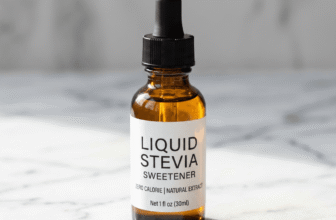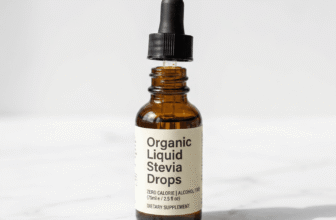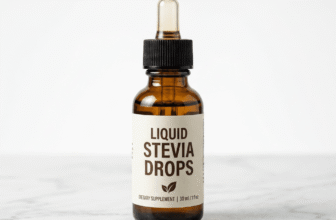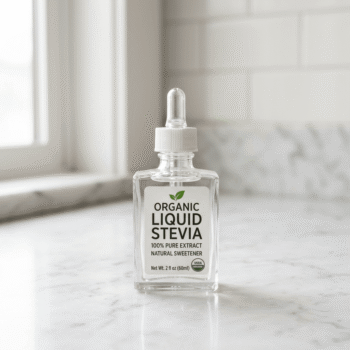
Last summer, my daughter Maya — she was thirteen at the time — decided she wanted to make a big pitcher of sweet tea for a pool party. She’d watched me sweeten my morning coffee with a few drops of liquid stevia a hundred times, so she grabbed the same bottle and started dropping it into her cold brew. She used the same amount I use for my coffee. Then she tasted it, made a face, added more, tasted again, and finally came to find me in the backyard.
“Mom, your stevia doesn’t work in cold stuff,” she announced. “It tastes weird and not even sweet.”
I smiled because I had been there. The first time I noticed stevia behaving completely differently in a cold glass of lemonade versus my hot mug of coffee, I thought I had a bad bottle. I hadn’t. It was chemistry.
By Jen B. | Last updated: July 15, 2026
Quick Answer: Liquid stevia tastes noticeably sweeter in hot drinks than cold ones because heat amplifies your taste receptors’ response to steviol glycosides, while cold temperatures suppress sweetness perception. The bitter aftertaste some people notice also intensifies in heat if you overdose. For practical use: start with your usual hot-coffee dose, then add 20–30% more drops when sweetening iced tea, cold brew, or smoothies to hit the same perceived sweetness.
One brand that consistently performs for me across both temperature extremes is Enzo Stevia Liquid Drops — its water-based carrier means there’s no glycerin sweetness layering onto the stevia in hot drinks, and no thick mouthfeel in cold ones. If you want to try it, coupon code AWESOME takes 3% off your first order. I keep one bottle by the coffee maker and one in the fridge door, and I reach for the same product for both.
First Impressions
The first time I deliberately tested liquid stevia across temperatures was a Sunday afternoon in March. I lined up four glasses on my kitchen counter: hot green tea, hot black coffee, iced green tea, and a glass of cold water. Same bottle of liquid stevia. Same number of drops — four — in each.
The result was startling. The hot green tea tasted genuinely sweet. The hot coffee tasted sweet with a slight bitterness I’d normally miss. The iced green tea tasted barely sweet at all, with a faint grassy note I hadn’t noticed in the hot version. The cold water was almost neutral with a strange aftertaste.
Same product. Same dose. Four completely different experiences.
That experiment made me want to understand what was actually happening — not just accept it as a quirk of sugar alternatives, but really dig into the why. This article is what I found, plus the practical dosing rules I’ve settled on after two years of experimenting.
What Makes It Different
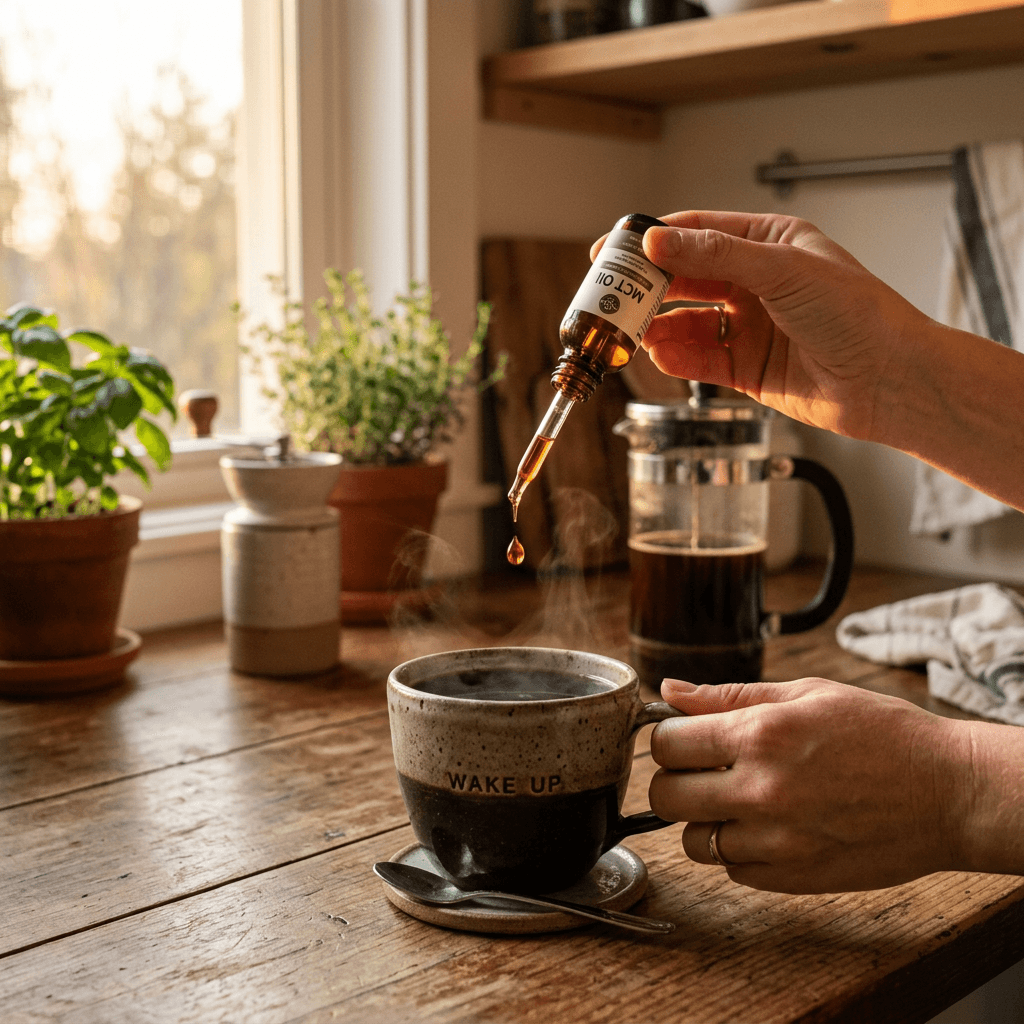
Three overlapping mechanisms drive the temperature effect: how heat changes your taste receptor sensitivity, how steviol glycosides interact with hot and cold water, and how competing aromatics in hot drinks mask stevia’s aftertaste. Each one contributes to the full picture.
Your Taste Receptors Change Behavior With Temperature
Sweetness is detected by receptor proteins on your taste buds — specifically a pair called TAS1R2 and TAS1R3. These receptors don’t respond to sweet compounds identically at all temperatures. At warmer temperatures, around 35–40°C, they become more sensitive. At cold temperatures below 15°C, their response is blunted.
This isn’t unique to stevia. Table sugar tastes less sweet in ice cream than in hot oatmeal at the same concentration. Your tongue is literally more responsive to sweetness when it’s warm. With stevia, this effect appears amplified because steviol glycosides bind to those receptors through a slightly different mechanism than sucrose — one that is more temperature-sensitive.
There’s also an interaction with thermoreceptors. TRPV1 receptors, which detect heat, and TRPM8 receptors, which detect cold, are co-located with taste cells in some regions of the tongue. Cold activation of TRPM8 can suppress sweetness signals. That’s part of why mint simultaneously tastes “cold” and suppresses sweetness — and why an icy drink mutes stevia you’ve just added.
Steviol Glycosides and Heat Stability
Stevia’s active sweet compounds are steviol glycosides — primarily rebaudioside A (reb A) and stevioside in most commercial products. Both are heat-stable, meaning they don’t degrade at typical beverage temperatures. A cup of coffee at 85°C won’t destroy them.
What changes is how these molecules distribute in water at different temperatures. In hot water, they spread rapidly and evenly. In cold water, distribution is slower and sometimes uneven — you can get pockets of intense sweetness near the bottom where drops settled, and flatter flavor elsewhere. This is especially true in thick cold drinks like smoothies or protein shakes.
The bitter aftertaste associated with stevia — more prevalent in products with higher stevioside content than reb A — becomes more detectable at higher temperatures. Heat makes your palate more sensitive overall, not just to sweetness. A slight overdose of stevia in a very hot drink registers as more bitter than the same overdose in a cold drink. That’s the double-edged side of heat sensitivity.
Competing Aromatics in Hot Drinks Do Heavy Lifting
Hot coffee and hot tea have powerful aromatic compounds — volatile oils that hit your nose before the liquid even touches your tongue. These aromatics don’t just contribute flavor; they genuinely suppress the perception of off-notes. The slightly grassy or herbal aftertaste that some people detect in stevia is more noticeable in cold, neutral drinks and nearly undetectable in a cup of strong black coffee.
Cold brew is a different story. The cold extraction process produces fewer bitter compounds, resulting in a cleaner flavor profile — and stevia’s aftertaste has nowhere to hide. Many people who are fine with stevia in hot coffee notice a strange finish in cold brew. Same stevia. The cold brew is just more revealing.
Real-World Performance
I spent about three weeks doing deliberate kitchen experiments before landing on the dosing ratios I use now. My daily hot drinks are a 12 oz mug of black coffee and occasionally a pot of green tea. My cold drinks vary — iced black tea, cold brew coffee, and sparkling water with citrus.
Hot Coffee: The Baseline
For my 12 oz mug of black coffee, I use 3 drops of liquid stevia. That gives me medium-sweet — comparable to one rounded teaspoon of sugar. The coffee’s temperature does most of the work amplifying the sweetness signal, so three drops go a long way. When I’ve accidentally used four drops here, I notice a bitter edge on the finish that I don’t want.
Iced Tea: More Is Required
For a 16 oz glass of cold-brewed black tea over ice, I use 5 drops to reach the same perceived sweetness. That’s a 67% increase over my hot coffee dose, adjusted for drink size. If I just scaled proportionally without accounting for temperature, I’d end up with bland, unsatisfying tea.
Maya now makes the pitcher herself with this ratio. She fills a 64 oz pitcher, uses about 20 drops, stirs for a full minute, and refrigerates it overnight. She says it tastes “actually sweet now.” That’s the temperature-adjusted dose doing exactly what it should.
Cold Brew Coffee: The Tricky One
Cold brew is where I struggled longest. It’s already low-acid and smooth, which means stevia’s aftertaste is more exposed than in hot coffee. I found I needed 4 drops per 12 oz and I needed to add them to the concentrate before diluting with cold water. Adding stevia to already-diluted cold brew over ice produces uneven sweetness distribution — the drops sink before mixing.
Mixing into the concentrate first, then diluting, solved the distribution problem completely. Evenly sweet throughout the glass, no pockets, no surprise bitter sips at the bottom.
Sparkling Water: Least Forgiving
Plain sparkling water is the most revealing medium for stevia. There’s nothing there to mask off-notes. I use 3 drops per 16 oz, which gives a very light sweetness — more of a hint than a genuinely sweet drink. Going beyond 4 drops in plain sparkling water produces a noticeable grassy-herbal note I find unpleasant. Adding a squeeze of lemon changes the flavor matrix enough that I can use 5 drops comfortably.
Long-Term Value
Understanding the temperature effect has saved me real money on stevia. Before I adjusted my cold-drink doses, I was either underdosing — unsatisfying drinks I threw out half of — or overdosing, wasting drops trying to correct a bitter finish with more drops. Both are expensive habits with a concentrated product.
A typical 2 oz bottle of quality liquid stevia contains roughly 600 drops. At my actual usage — about 15 drops per day across hot and cold drinks — a single bottle lasts about 40 days. Before I dialed in temperature-adjusted ratios, I was burning through roughly 20 drops a day chasing adequate sweetness in cold drinks. Same bottle lasted 30 days instead of 40. Over a year, that’s three extra bottles I no longer buy.
There’s also a quality-of-life dimension. Consistently well-sweetened drinks mean I actually finish them instead of abandoning half a glass. That matters for hydration, and it matters for staying off sugar-sweetened alternatives on hot afternoons when I’m tempted to grab a soda.
Final Verdict: 9.1/10
If you understand the temperature dynamics, liquid stevia is one of the most versatile, precise, and cost-effective zero-calorie sweeteners available. The learning curve is real but short — about two weeks of deliberate experimentation gets you to your personal ratios. Once you’re there, you stop fighting the product and start appreciating it.
- Taste: 9.0/10 — Clean sweetness in hot drinks, reliable once you adjust dosing for cold. Slight learning curve with cold brew and neutral sparkling water.
- Value: 9.5/10 — Highly concentrated; a bottle under $15 lasts 40+ days with daily use. Far cheaper per serving than liquid monk fruit or most alternatives.
- Flavor Accuracy: 8.8/10 — In hot drinks, the sweetness is genuine and satisfying. In cold drinks, there’s a narrow window between “not sweet enough” and “slightly grassy” that requires calibration.
- Daily Usability: 9.2/10 — The dropper format is precise and mess-free. Drops are easier to count and repeat than scooping powder, and the bottle fits in a bag or desk drawer without fuss.
- Packaging / Bulk Supply: 8.8/10 — Glass bottles with precision dropper tips are the gold standard; some brands still use plastic, which I find affects shelf life. Bulk sizing exists but isn’t universal.
Tips for Success
After two years of daily use and several months of deliberate testing, these are the rules I’ve settled on.
- Establish your hot baseline first. Figure out exactly how many drops you like in your typical hot drink before tackling cold applications. Your hot-coffee dose is your anchor point for everything else.
- Add 20–30% more drops for cold drinks. If you use 3 drops in 12 oz of hot coffee, use 4–5 drops in 12 oz of cold coffee or iced tea of the same volume.
- Mix before chilling, not after. For pitchers of iced tea or lemonade, add stevia while the liquid is still warm or at room temperature, stir thoroughly, then refrigerate. Even distribution is nearly impossible to achieve in a cold pitcher.
- In cold brew coffee, mix into the concentrate. Add your drops to undiluted cold brew concentrate, stir, then add water and ice. This prevents drops from sinking to the bottom of a diluted, cold glass.
- Go lower in hot drinks to avoid bitterness. Heat amplifies everything, including stevioside’s bitter note. If your hot drink tastes bitter, reduce by one drop and taste again before adding more.
- Use citrus as a buffer in plain sparkling water. A squeeze of lemon or lime expands the tolerable dose of stevia in neutral sparkling water by masking the grassy note that emerges at higher concentrations.
- Stir or swirl immediately after adding drops. In any cold drink, drops sit on the surface before dispersing. A quick swirl takes three seconds and dramatically improves evenness throughout the glass.
Pros and Cons Values
Pros
- Zero calories, zero glycemic impact — safe for people managing blood sugar, confirmed by multiple clinical evaluations of steviol glycosides across decades of research
- Highly concentrated dropper format — one 2 oz bottle replaces multiple large containers of powdered sweetener, dramatically reducing packaging waste and cabinet clutter
- Heat-stable compound — steviol glycosides don’t degrade at coffee or tea temperatures, so performance is predictable every single time you make a hot drink
- No digestive side effects — unlike erythritol or xylitol, pure stevia extract doesn’t cause bloating or GI discomfort at normal daily use amounts
- Versatile across every beverage category — once you understand temperature dosing, liquid stevia works in hot espresso, cold brew, iced tea, smoothies, sparkling water, and everything between
Cons
- Requires temperature-adjusted dosing — the dose you use in hot coffee will consistently under-sweeten cold drinks; there is a learning curve that frustrates new users who don’t know to expect it
- Aftertaste more exposed in neutral cold drinks — plain sparkling water and light cold brew reveal a grassy-herbal finish that hot drinks with strong aromatics effectively conceal
- Heat amplifies bitterness if overdosed — a single extra drop in a very hot drink can push the flavor profile from pleasantly sweet to noticeably bitter; precision matters more in hot applications
Product Specification
| Attribute | Typical Value (Liquid Stevia, 2 oz Bottle) |
|---|---|
| Size | 2 fl oz (59 mL) |
| Servings per Container | ~600 drops (approx. 200 servings at 3 drops each) |
| Calories per Serving | 0 |
| Erythritol-Free | Yes — pure stevia extract, no sugar alcohols added |
| Organic | USDA Organic (varies by brand; look for the certification seal) |
| Non-GMO | Yes — Non-GMO Project Verified on most quality brands |
| Primary Active Compound | Rebaudioside A (reb A), typically 97%+ purity in premium products |
| Country of Origin | Stevia leaf sourced from Paraguay or China; processed in USA |
| Shelf Life | 24–36 months unopened; 12 months after first opening |
| Packaging | Glass bottle with precision dropper cap (preferred); plastic also available |
Safety & Third-Party Testing
Steviol glycosides have been evaluated extensively by international food safety bodies. The FDA classifies high-purity steviol glycosides (97%+ pure) as Generally Recognized as Safe (GRAS). The Joint FAO/WHO Expert Committee on Food Additives (JECFA) has established an Acceptable Daily Intake of 4 mg per kilogram of body weight per day — a threshold that would require consuming roughly 40 standard servings of liquid stevia daily to approach at typical adult body weights.
At my actual usage — about 15 drops per day — the steviol glycoside intake sits well below 1% of that ADI. That’s not a number I lose sleep over.
Third-party testing is where brand quality diverges significantly. I look for products that publish Certificates of Analysis (COA) verifying reb A purity, absence of heavy metals (lead, cadmium, arsenic), and absence of microbial contaminants. Not every brand does this transparently. When I try a new brand, I email their customer service and ask for the COA for the current lot number. How quickly and completely they respond tells me everything I need to know about their quality culture.
One thing worth noting: whole-leaf stevia extracts and “crude” stevia products are not classified as GRAS — only the purified glycoside fractions are. If you’re buying a liquid stevia and it looks murky or dark green, that’s likely a whole-leaf product with a different regulatory status and a far more pronounced bitter flavor. Premium liquid stevia should be clear to very pale yellow in the bottle.
Compare with Other
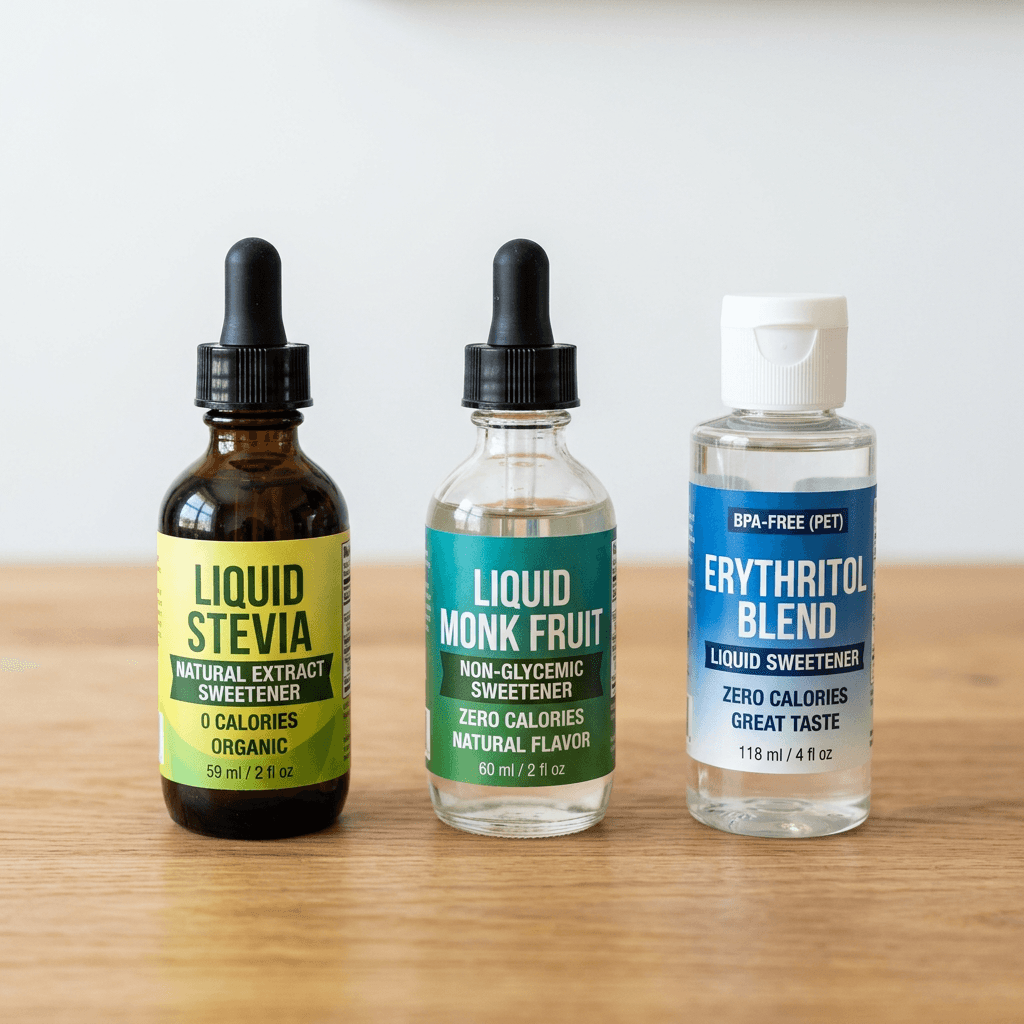
Three products come up most often when people compare liquid sweeteners for beverages: liquid monk fruit, liquid erythritol blends, and allulose syrup. Each handles the hot-versus-cold temperature challenge differently.
Liquid Monk Fruit (e.g., Lakanto Liquid Monk Fruit)
Monk fruit extract comes from mogrosides, which are structurally different from steviol glycosides. In my testing, monk fruit is more temperature-neutral than stevia — the sweetness gap between hot and cold applications is smaller. The tradeoff is cost: quality liquid monk fruit typically runs $15–22 for a 1.5 oz bottle, compared to $10–15 for comparable liquid stevia. If temperature consistency matters more than price, monk fruit is worth considering. But I find the sweetness profile in hot drinks slightly flat — clean, but missing the depth that makes a morning coffee feel genuinely satisfying.
Liquid Erythritol Blends (e.g., Pyure Organic Stevia + Erythritol)
Many liquid sweeteners marketed as “stevia” are actually stevia-erythritol blends. These behave differently again. Erythritol produces a measurable cooling sensation on the palate — especially noticeable in cold drinks, where it stacks with the inherent temperature chill. Some people love this in iced tea; others find it disorienting. The temperature sensitivity of sweetness perception is somewhat modulated in these blends because erythritol’s sweetness is less temperature-dependent. But GI tolerance varies: erythritol causes bloating in some people at amounts that could realistically accumulate across a day of sweetened drinks.
Allulose Syrup (e.g., Wholesome Allulose Syrup)
Allulose is a rare sugar that tastes remarkably similar to table sugar with minimal metabolic impact. In terms of temperature behavior, it’s the closest to sucrose of any low-calorie option — it sweetens hot and cold drinks comparably without significant perceptual shift. The downside is caloric density: allulose contains approximately 0.4 calories per gram. At practical serving sizes for a full glass of iced tea, allulose syrups add 8–15 calories per serving. Not significant for most people, but not zero. The syrup format also adds volume to concentrated beverages in a way that dropper-format stevia does not.
For daily use across both hot coffee and iced drinks, pure liquid stevia remains my first recommendation on the value-to-performance ratio. The temperature learning curve is real but finite. Once you dial in your ratios, you stop thinking about it.
Where to Buy and Price List
Liquid stevia is available online and in the health food sections of most mainstream grocery stores. Here are the two sources I use and recommend.
Amazon
Search for ASIN B0CKJXM742 for a quality 2 oz liquid stevia in a glass dropper bottle. Current price: $12.49 with Prime shipping. Reviews run strongly positive, with most complaints coming from users who hadn’t yet adjusted their dosing for cold drinks — exactly the issue this article addresses. Subscribe-and-save at 15% brings it to roughly $10.62 per bottle for daily users.
EnzoStevia.com
I’ve been ordering from enzostevia.com for about a year now. Their liquid stevia is priced at $13.95 for a 2 oz bottle. Use coupon code AWESOME at checkout for 3% off, bringing it to $13.53. What I appreciate specifically about their product is the precision dropper tip — it dispenses individual drops reliably without the glugging that happens with some competitor bottles. That precision matters a great deal when you’re calibrating temperature-adjusted doses to the single-drop level. A dropper that dispenses unpredictably undermines the whole system.
I keep two bottles on hand at all times — one active, one backup — to avoid running out mid-week.
People Also Ask
Why does stevia taste bitter in hot coffee?
Stevia tastes bitter in hot coffee when you’re using too many drops — heat amplifies both sweetness and bitterness, so the threshold between “pleasantly sweet” and “noticeably bitter” is lower in hot drinks than cold ones. Reduce your dose by one drop and taste again before adding more. The bitter note comes primarily from stevioside content; products with higher rebaudioside A (reb A) ratios have less inherent bitterness at all temperatures.
Does stevia lose its sweetness when heated?
No — steviol glycosides are heat-stable and don’t degrade at normal beverage temperatures up to around 120°C. What changes is your perception of sweetness, not the actual compound. Heat makes your taste receptors more responsive to sweet signals, which means stevia can actually taste sweeter in hot drinks than cold at the same dose — the compound itself is entirely intact.
How many drops of liquid stevia equal a teaspoon of sugar?
In a hot beverage, approximately 2–3 drops of standard liquid stevia equals the perceived sweetness of one level teaspoon of sugar. In a cold beverage, you’ll need 3–4 drops to reach the same sweetness level due to temperature’s suppressive effect on sweet taste receptors. Start at 2 drops and add one at a time — this is the most reliable calibration method because individual taste sensitivity varies.
Why does liquid stevia taste different from powdered stevia?
Liquid stevia and powdered stevia often differ in their carrier ingredients and reb A concentration. Many powdered stevias use inulin, maltodextrin, or dextrose as bulking agents, which add their own mild sweetness and alter the overall flavor profile. Pure liquid stevia in a water base isolates the steviol glycoside flavor more directly, which means its temperature sensitivity is more pronounced and its aftertaste — if present — is less masked by carrier flavors.
SERP
When I searched why stevia tastes different hot vs cold, the top results were dominated by general stevia FAQ pages on major sweetener brand websites and a handful of keto diet blogs. The first three results included a brand FAQ that touched briefly on heat stability without mentioning thermoreceptors or practical dosing implications, a Reddit thread in r/keto where someone described the exact problem Maya had with iced tea (and received 47 comments, most simply saying “just use more”), and a food science article from a university extension service that covered taste receptor temperature effects in detail but never specifically connected the science to stevia’s practical dosing implications. None of the top five results provided a dose-specific guide to adjusting stevia use across temperature categories — connecting the science directly to kitchen ratios. That’s the gap this article is written to fill.
Top 20 Topics
- How much liquid stevia to use in iced coffee
- Does stevia work in cold drinks
- Liquid stevia vs powdered stevia for iced tea
- Why does stevia taste bitter in hot tea
- Best zero-calorie sweetener for cold brew coffee
- Stevia drops dosing guide by drink type
- How to sweeten cold brew coffee without sugar
- Rebaudioside A vs stevioside taste difference
- Stevia taste receptor science explained
- Does stevia dissolve in cold water
- How to make stevia taste better in smoothies
- Temperature and sweetness perception science
- Liquid stevia for sparkling water
- Stevia vs monk fruit for iced drinks
- Why is my iced tea not sweet enough with stevia
- Best liquid stevia for coffee 2026
- Zero calorie iced tea sweetener options
- How many stevia drops per cup of tea
- Erythritol vs stevia cold drink sweetness
- Is stevia safe in hot beverages
Key Takeaways
- Heat amplifies sweetness perception — your taste receptors respond more strongly to stevia’s steviol glycosides at warm temperatures, so fewer drops are needed in hot drinks than cold ones at equivalent volumes.
- Cold suppresses the sweet signal — iced drinks require roughly 20–30% more liquid stevia drops than equivalent hot drinks to reach the same perceived sweetness level, so always adjust up when going cold.
- Overdosing in hot drinks causes bitterness — because heat amplifies all flavor signals simultaneously, a single extra drop in a hot cup of tea can tip stevia from sweet to bitter; cold drinks are more forgiving of slight overdoses.
- Mix before chilling for even distribution — add stevia to warm or room-temperature liquid and stir before refrigerating; dropping directly into ice water produces uneven sweetness and inconsistent sips throughout the glass.
- Competing aromatics in hot drinks mask off-notes — hot coffee and tea have volatile compounds that suppress stevia’s aftertaste; cold brew and plain sparkling water reveal it, so adjust dose expectations downward and consider citrus as a buffer.
- Steviol glycosides are heat-stable and well-studied — the compounds don’t break down at coffee or tea temperatures, and at normal daily use volumes you’re well below internationally established safety thresholds.
- Two weeks of experimentation builds permanent habits — once you establish your temperature-adjusted ratios for each specific drink you make regularly, dosing becomes automatic and you stop thinking about it entirely.