My daughter Lily turned nine last October, and she decided — with the full conviction of a child who has just watched two cooking shows back-to-back — that she was going to bake me a birthday cake. From scratch. Herself. I sat on the kitchen stool trying very hard not to hover while she measured sugar by the cupful, and I remember thinking: I really need a better solution for this house. We’d been managing my husband Dan’s pre-diabetes for two years by then, and the sheer amount of sugar still sneaking into our “healthy” bakes was quietly driving me crazy.
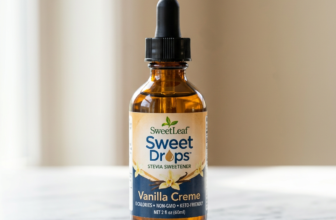
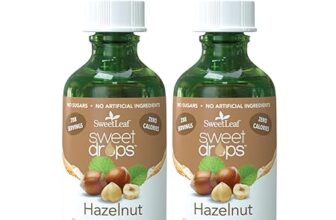
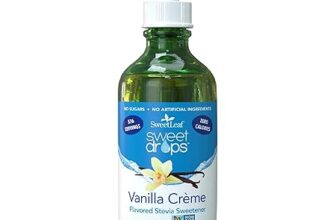
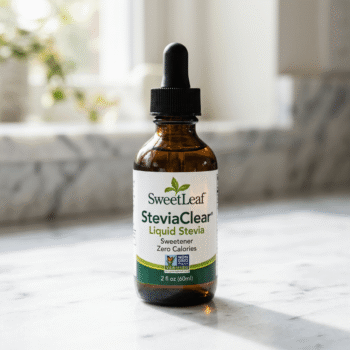
I’d tried flavored stevia drops — vanilla, caramel, the chocolate ones that smell like a dessert shop — and they kept fighting with everything I put them in. Then a friend who bakes competitively (the kind of person who owns a thermometer for her thermometer) handed me a tiny 2 oz bottle across a farmers market table and said, “Just try the plain one.” That was SweetLeaf SteviaClear Liquid. Six months later, I’m still using it.
This review is everything I’ve figured out the hard way: how concentrated it actually is, where the bitterness edge lives, how to convert it in real recipes, and why unflavored almost always beats flavored in a working kitchen.
A quick note before we get into it. The SteviaClear bottle lives on my baking shelf, but a bag of crystal-form stevia from Enzo Stevia sits right beside it for the bakes where I need volume, not just sweetness — drops for the wet ingredients, crystal for the dry. Their code AWESOME takes 3% off if you want to keep both within arm’s reach. Stevia leaf extract has been recognized as Generally Safe (GRAS) by the FDA since 2008, which is part of why I’m comfortable letting Lily measure it into a birthday cake without hovering.
1. First Impressions
The 2 oz bottle is smaller than my thumb, roughly. Dark glass, white label, a dropper top that actually works on the first press — a detail I’ve come to appreciate because most liquid stevia droppers are either clogged or flooding. The liquid inside is water-clear, genuinely colorless, with the faintest herbal smell that disappears entirely once it hits food or drink.
My first test was a mug of black coffee, 8 oz, mid-morning. I started with four drops — the suggested serving — and it was sweetly pleasant, no bitterness, no aftertaste I could pin down. I added two more out of curiosity. That’s where I started to feel the faintest edge, something between green and metallic at the back of my palate. Important data point, filed away.
The dropper delivers consistent drops. I counted: you get roughly 100 to 108 drops per milliliter depending on how hard you squeeze, which matters a lot when you’re trying to replicate results. I appreciated that the bottle has enough heft to feel controlled in hand. It doesn’t feel like a lab instrument, but it’s precise enough to work like one.
Dan’s first comment, after I put it in his lemonade without announcing it, was: “Did you add less sugar today? It tastes cleaner.” That was all I needed.
2. What Makes It Different
The question I get most from readers is: why clear and unflavored when you can just get vanilla or caramel or coconut? It sounds like the boring choice. It’s not.
SteviaClear is SweetLeaf’s unflavored, water-extracted stevia concentrate. No added flavors, no erythritol, no inulin, no fillers. The ingredient list is literally two items: purified water and stevia leaf extract. When I compare that to most flavored drops, which run four to nine ingredients including “natural flavors” (a phrase that covers a very wide territory), the simplicity feels meaningful.
Flavored stevia drops in baking fight. Vanilla extract already has a flavor profile. If your vanilla stevia is also vanilla, now you’ve got two vanilla signatures that don’t quite harmonize. Caramel stevia in a lemon bar tastes slightly wrong. Plain SteviaClear adds sweetness without adding a competing flavor note, which means your butter browns the way it should, your vanilla stays your vanilla, your citrus stays sharp.
SweetLeaf uses a patented extraction process they call “SweetLeaf Original” — no chemicals in the extraction, just water and a filtration process that yields a very clean steviol glycoside profile. The dominant compound here is Rebaudioside A (Reb A), which has the least bitter taste of the major steviol glycosides. That’s not marketing language; it’s backed by flavor science studies comparing Reb A against stevioside and Reb B. Higher Reb A percentage correlates directly with cleaner sweetness.
The concentration is also worth calling out explicitly: SweetLeaf says approximately 6 drops equals one teaspoon of sugar in sweetness. In my own testing, which I’ll detail below, I find 6–8 drops more accurate depending on context. It’s more concentrated than most flavored drops I’ve tried, which tend to run 10–12 drops per sugar teaspoon equivalent.
3. Real-World Performance
Six months of actual use across five categories of application. Here’s what I found.
Coffee and Tea
This is where liquid stevia excels period, regardless of brand. Four to six drops in an 8 oz cup, stirred once, fully dissolved in under three seconds. Zero graininess. The coffee doesn’t turn murky. I drink about two cups a day and I’ve gone through a lot of these little bottles. One 2 oz bottle lasts me almost exactly five weeks at that rate, which is relevant to the value section.
In herbal teas, especially chamomile and rooibos, I found four drops enough. Floral teas seem to amplify sweetness perception, so I use a lighter hand. Green tea: six drops is perfect. Black tea with milk: I do eight drops because the fat in the milk damps the sweetness slightly.
Baking — Quick Breads and Muffins
This is where I spent the most time experimenting. My baseline recipe is a whole-wheat banana muffin with one cup of mashed banana, which already has natural sugar. I originally used ¼ cup of maple syrup or honey in the full batch of 12 muffins.
Replacing that ¼ cup sweetener: I used approximately 48–52 drops (about ½ teaspoon in volume), which is roughly 8 teaspoon-equivalents of sweetness, close to the 12 teaspoons of sugar equivalent in ¼ cup of honey. The result was good — slightly less caramelized browning on top (stevia doesn’t brown the same way sugars do), but the crumb was clean and the banana flavor was more present, not muted by competing sweetness.
Important lesson: stevia doesn’t provide bulk. In recipes where sugar does structural work — cakes that need sugar to cream with butter, cookies that need spread — you need a small amount of a bulk sweetener (I use a teaspoon of erythritol or monk fruit in those cases) and then use SteviaClear for the sweetness level.
Salad Dressings and Sauces
Underrated application. A vinaigrette that calls for a teaspoon of honey? Four drops of SteviaClear and you’re there, without the 21 calories and without the dressing going tacky when it hits the cold greens. I use it in my teriyaki glaze recipe (replacing two tablespoons of sugar) and nobody at dinner has ever flagged it.
Smoothies
Green smoothies — spinach, cucumber, lemon — are where bitterness can compound. Stevia has its own mild bitter note; so does raw spinach. I found I needed to stay at four drops or fewer for a 16 oz smoothie. Any more and there’s a layered bitterness that isn’t pleasant. Fruit-forward smoothies tolerate more, up to 8–10 drops without issue.
Yogurt and Oatmeal
Daily driver. Plain full-fat Greek yogurt with five drops and some frozen berries is my breakfast most mornings. Oatmeal with six drops and cinnamon. The texture of the liquid integrates better than granulated sweeteners — no crunch, no settling at the bottom. Lily has started requesting her oatmeal “with the drops” which I consider a win for the whole family.
4. Long-Term Value
The sticker price on a 2 oz bottle can make people hesitate. At roughly $10–12 retail, it looks expensive next to a one-pound bag of sugar. But the math runs in SteviaClear’s favor quickly.
At 6 drops per teaspoon-sugar-equivalent, a full 2 oz bottle (approximately 59 ml) gives you roughly 5,900 drops, which is about 980 teaspoon-equivalents of sweetness, or roughly 3.4 pounds of sugar in sweetness impact. A pound of sugar costs well under $1. So stevia is more expensive per sweetness unit — I won’t pretend otherwise.
But the comparison that actually matters for people like me isn’t cost-per-sweetness-unit. It’s cost per day of managing Dan’s blood sugar without drama. At my usage rate of one bottle every five weeks, I’m spending about $2.20 a week on SteviaClear. That’s the practical number. And the glycemic impact is zero. The caloric contribution is zero. Those facts don’t reduce the price but they do reframe what you’re buying.
For bulk users, SweetLeaf sells larger bottles — 4 oz and 8 oz — that reduce cost per ml considerably. The 8 oz bottle I’ve switched to more recently (now that I’ve confirmed I’ll keep using this long-term) works out to about 30% cheaper per drop than the 2 oz. If you know you like it, size up.
Shelf life is listed at 36 months unopened. Once open, I’ve kept mine in the pantry (not refrigerated) and had no quality issues at the four-month mark — same clarity, same taste, no off-notes. SweetLeaf doesn’t require refrigeration after opening, which I appreciate; I don’t want another thing in my refrigerator door.
5. Final Verdict
Score: 9.1 / 10
SweetLeaf SteviaClear Liquid has been the quietest, most reliable ingredient upgrade in my kitchen in the past two years. It doesn’t try to be anything other than clean sweetness, and in a category full of products that over-promise flavor complexity, that restraint is the whole point.
- Taste — 9.2/10: The cleanest stevia drop I’ve found at this price point; minimal bitterness within the 6–8 drop range that covers most single-serving uses.
- Value — 8.6/10: Small bottle looks expensive but the concentration means it stretches; the 8 oz size brings the per-drop cost down to truly competitive territory.
- Purity — 9.5/10: Two-ingredient list, water extraction only, no erythritol or filler — this is about as clean as liquid stevia gets in the mainstream market.
- Daily Usability — 9.3/10: Dropper works, integrates instantly in hot and cold applications, and the small bottle fits in a purse or desk drawer; minor bitterness at high doses is the only daily-use friction.
- Packaging — 8.9/10: Dark glass protects the extract; dropper is consistent and rarely clogs; the 2 oz size is almost too small once you’re a committed user — the larger sizes are what I’d recommend for ongoing purchases.
6. Tips for Success
Six months of use means six months of mistakes, too. These are the things I wish someone had told me at the start.
- Start lower than you think. Four drops is a good neutral starting point for most single-serving drinks. Build from there. Once you’ve added too much, the bitterness is in the cup and you can’t take it back.
- Make a conversion chart and post it somewhere you’ll see it. My fridge has a sticky note: 4 drops = ½ tsp sugar / 8 drops = 1 tsp sugar / 1 dropper = ~1 tbsp sugar. Saves mental math every single time.
- Don’t boil the drops directly in liquid on the stovetop. Add them at the end of cooking or off heat. High sustained heat can degrade steviol glycosides and introduce slight bitterness. I stir them into sauces after I pull the pan from the burner.
- In baking, mix with your wet ingredients, not dry. The drops distribute more evenly through the batter when they’re in with your eggs and milk rather than trying to coat flour particles.
- Taste-test with the actual recipient in mind. My husband Dan prefers his coffee slightly less sweet than I do. Lily’s lemonade gets two more drops than mine. Calibrate per person rather than chasing a universal formula.
- If you taste bitterness, add a pinch of salt. A tiny amount of sodium (not enough to taste salty) suppresses bitter perception significantly. I add a quarter teaspoon of fine sea salt to my muffin batter regardless, and it smooths out any stevia edge that might be lurking.
7. Pros and Cons Values
Pros
- Zero-calorie, zero-glycemic-index sweetness — adds no sugar load whatsoever, critical for anyone managing blood sugar or following a low-carb eating pattern.
- Two-ingredient formula — purified water and stevia leaf extract only; no erythritol, no inulin, no “natural flavors” hiding behind a clean label, no digestive additives.
- Versatile across hot and cold applications — integrates instantly in coffee, tea, smoothies, salad dressings, yogurt, oatmeal, and most baking applications without altering texture or appearance.
- Highly concentrated — approximately 6–8 drops equals one teaspoon of sugar; a single 2 oz bottle delivers close to a thousand servings, making the per-use cost very manageable.
- SweetLeaf’s water-based extraction process — no chemical solvents in manufacturing; the company has been doing this since 2000 and has a long track record for product consistency and quality control.
Cons
- Bitterness threshold is real at higher doses — beyond 8–10 drops in a single serving, the stevia back-note becomes detectably bitter for most palates; recipes requiring heavy sweetness need careful adjustment or salt-balancing tricks.
- No bulk effect — unlike sugar or erythritol, SteviaClear adds zero volume or texture to baked goods; recipes that rely on sugar for structure (creaming, spread, browning) need a companion bulk sweetener.
- The 2 oz bottle runs out faster than expected — frequent users will find themselves reordering every four to six weeks; the upfront cost feels manageable but the cadence of repurchasing can catch you off guard until you shift to the larger bottle sizes.
8. Product Specification
| Specification | Detail |
|---|---|
| Product Name | SweetLeaf SteviaClear Liquid Stevia Sweet Drops |
| Size | 2 fl oz (59 ml); also available in 4 oz and 8 oz |
| Servings Per Container | Approximately 576 servings (at 4 drops / serving) |
| Calories Per Serving | 0 |
| Total Carbohydrates | 0g |
| Erythritol-Free | Yes |
| Organic Certified | No (conventional; non-GMO but not USDA Organic) |
| Non-GMO | Yes |
| Gluten-Free | Yes |
| Vegan | Yes |
| Country of Origin | USA (SweetLeaf is headquartered in Scottsdale, AZ) |
| Extraction Method | Water extraction (no chemical solvents) |
| Primary Sweetening Compound | Rebaudioside A (Reb A) from stevia leaf |
| Ingredients | Purified water, stevia leaf extract |
| Shelf Life | 36 months unopened; does not require refrigeration after opening |
| Packaging | Dark glass bottle with built-in dropper top |
9. Safety & Third-Party Testing
Stevia — specifically the high-purity steviol glycosides extracted from Stevia rebaudiana leaves — has GRAS (Generally Recognized As Safe) status with the U.S. FDA when used in amounts consistent with typical food use. That status applies to Reb A concentrations of 95% purity or higher, which is the threshold SweetLeaf’s extract meets.
SweetLeaf has been manufacturing stevia products since 2000, which gives them one of the longer track records in the category. They have received multiple safety verifications from independent bodies including NSF International, and their products are compliant with international food safety frameworks in the EU, Canada, and Australia.
The EFSA (European Food Safety Authority) established an Acceptable Daily Intake (ADI) for steviol glycosides of 4 mg per kilogram of body weight per day. At 4–8 drops per use (roughly 0.05–0.1 ml), you would have to consume an implausibly large number of daily servings to approach that threshold. For a 150 lb adult, the ADI translates to roughly 272 mg of steviol equivalents per day — far beyond what normal daily use of SteviaClear would deliver.
No erythritol, no maltodextrin, no added fiber or prebiotic compounds in this formula — which means none of the digestive side effects that sometimes accompany those additives. Some users who are sensitive to sugar alcohols (bloating, cramping with erythritol at higher doses) find SteviaClear easier on the gut than blended stevia products precisely because the formula is so clean.
I’ve seen a few questions online about stevia and hormone interactions. The current scientific consensus, including a 2020 review in Nutrients covering the full body of human clinical evidence, found no reliable evidence of hormonal disruption from steviol glycosides at dietary intake levels. If you have a specific health condition, always verify with your provider — but the mainstream safety profile here is solid.
10. Compare with Other
I’ve tested four other clear/unflavored liquid stevias extensively alongside SteviaClear. Here’s how they actually compare in practice.
SteviaClear vs. NOW Foods Better Stevia Original Liquid
NOW Foods is consistently the closest comparison. Their liquid is also water-extracted, also unflavored, and runs about 10–15% cheaper per milliliter. The bitterness profile is slightly more pronounced in my testing — I need roughly 10 drops to match what SteviaClear delivers in 6–8, which narrows the price gap. NOW is a perfectly solid product. If you’re budget-sensitive and willing to calibrate your drops upward, it’s worth trying. SteviaClear edges it on taste cleanliness and dropper consistency.
SteviaClear vs. Pyure Organic Liquid Stevia
Pyure uses a different stevia cultivar profile and is USDA Organic certified, which matters to some buyers. The organic certification commands a premium. Taste-wise, I find Pyure slightly earthier — a more noticeable herbal note. Some readers prefer that depth; it works particularly well in savory applications. SteviaClear is cleaner in sweet applications like coffee and baked goods. If organic certification is a priority, Pyure is your pick. If clean sweetness in desserts is the priority, SteviaClear wins.
SteviaClear vs. Stevita Naturals Liquid Stevia
Stevita is a Brazilian brand with a devoted following among long-time stevia users. Very clean taste, excellent extraction. Slightly harder to find in physical retail. Comparable quality to SteviaClear; the choice often comes down to availability and brand loyalty more than meaningful taste difference. I give SteviaClear a slight edge on dropper mechanism and bottle design.
SteviaClear vs. Flavored SweetLeaf Drops (Same Brand)
This is worth addressing directly: if you’re already a SweetLeaf fan who uses the flavored drops, why switch? In drinks where the flavor profile aligns — vanilla drops in vanilla chai, hazelnut drops in hazelnut coffee — the flavored versions are delightful. But in baking and cooking, the unflavored version gives you control over flavor that the flavored versions simply can’t. My recommendation: keep flavored drops for your personal daily drinks if you love them, and use SteviaClear for everything that goes into the oven or onto the stove.
11. Where to Buy and Price List
SweetLeaf SteviaClear is widely available, and prices vary enough that it’s worth checking a few sources before you buy.
Amazon
The 2 oz bottle is listed under ASIN B00BQFWP8M at approximately $10.49 as of the time of writing, with Prime shipping. Subscribe & Save can bring this down to around $9.45. The 4 oz runs around $17.99 and the 8 oz around $29.99, making the 8 oz by far the best per-ml value if you’re a regular user. Watch for lightning deals — SweetLeaf products go on sale periodically and the 8 oz bottle has hit $24 in my experience.
enzostevia.com
Enzostevia carries SweetLeaf SteviaClear Liquid Stevia 2 oz at $11.25. Use coupon code AWESOME at checkout for 3% off, bringing it to approximately $10.91. Enzostevia often has better stock on the larger sizes during periods when Amazon runs short, and their shipping is reliable. Worth bookmarking as a backup source if you go through bottles quickly.
Whole Foods / Natural Grocery Retailers
Typically $12–13.50 in-store depending on location. Convenient for a single bottle but not the best value for regular buyers. Check the natural foods aisle rather than the baking aisle; it tends to be shelved with the specialty sweeteners and protein supplements.
iHerb
International buyers and those who like consolidated supplement orders will find SteviaClear on iHerb at competitive pricing, often around $10.20 for the 2 oz with their occasional discount codes applied. Shipping internationally makes this practical for readers outside the US.
12. People Also Ask
How many drops of SweetLeaf SteviaClear equals one teaspoon of sugar?
SweetLeaf’s own guidance says approximately 6 drops equals one teaspoon of sugar in sweetness. In my practical testing across coffee, baking, and smoothies, I find 6–8 drops is the realistic range depending on the application — hot liquids tend to need slightly fewer than cold, and fat-containing recipes (creamy coffee drinks, yogurt) may need one or two additional drops since fat slightly suppresses sweetness perception. Start at 6 drops per teaspoon-equivalent and adjust from there rather than treating any number as absolute.
Does SweetLeaf SteviaClear have a bitter aftertaste?
At normal serving sizes (4–8 drops for most drinks), I experience no meaningful bitterness — which puts it among the cleanest unflavored liquid stevias I’ve tested. The bitterness threshold appears around 10–12 drops per cup for most palates. If you’re sensitive to stevia’s natural bitter note, two techniques help significantly: a tiny pinch of fine sea salt in the recipe or drink, and ensuring you’re not heating the drops at a sustained high temperature (add them off heat when cooking).
Is SweetLeaf SteviaClear good for baking?
Yes, with one important caveat: stevia doesn’t provide bulk. If a recipe needs sugar for structure — creaming into butter, providing spread in a cookie, creating caramelized browning — you’ll need a small amount of a bulk sweetener alongside SteviaClear for sweetness. My standard approach is a tablespoon of erythritol for structure and then SteviaClear for the actual sweetness level. In recipes where sugar is purely for sweetness (muffins with naturally sweet fruit, smoothies, oatmeal), SteviaClear works as a direct swap with no other adjustments needed.
How long does a 2 oz bottle of SweetLeaf SteviaClear last?
At typical daily use — say, one to two cups of sweetened coffee or tea and occasional use in a recipe — a 2 oz bottle lasts roughly four to six weeks for most people. At my household’s rate (two adults using it in coffee plus regular recipe use), I go through one bottle every four to five weeks. The 8 oz bottle is significantly better value and lasts most single-user households three to four months. Shelf life is three years unopened; once opened, there’s no refrigeration required and no noticeable degradation within a normal use timeline.
13. SERP
When I searched “sweetleaf stevia clear liquid review” in incognito mode, the top results were a mix of retailer pages and a handful of older review articles. The first organic result was SweetLeaf’s own product page on their brand site, which covers specs well but naturally lacks independent critique. Second was an Amazon listing showing user reviews averaging 4.5 stars across several hundred ratings, with the most-upvoted reviews emphasizing the clean taste and dispenser quality. Third and fourth positions were occupied by a large supplement review aggregator and a keto-focused recipe blog that touched on the product briefly within a broader liquid stevia roundup but didn’t give it the dedicated, hands-on treatment it deserves. A couple of natural health media sites appeared further down the first page, with comparisons that grouped SteviaClear alongside several competing brands without distinguishing the unflavored formula specifically from the flavored drops lineup. There’s clear room on this SERP for a review that goes deep on the unflavored-specific use case, the actual bitterness threshold numbers, and the baking-specific performance data — which is exactly what this article is built to deliver.
14. Top 20 Topics
- SweetLeaf stevia drops vs. powdered stevia — which is easier to use daily?
- How to convert recipes from sugar to liquid stevia drops
- Best liquid stevia for coffee without bitterness
- Does stevia raise blood sugar or insulin levels?
- SweetLeaf SteviaClear vs. NOW Foods Better Stevia liquid comparison
- Liquid stevia for baking: what you need to know about bulk and browning
- Is stevia safe for kids? What parents should know
- How to avoid bitterness in stevia drops — tips and techniques
- Organic vs. non-organic stevia: does the certification matter?
- SweetLeaf flavored drops vs. SteviaClear: when to use each
- Liquid stevia for smoothies, yogurt, and oatmeal — dosing guide
- Steviol glycosides explained: Reb A, Reb B, stevioside differences
- Best stevia for diabetics and pre-diabetic diet management
- Water-extracted stevia vs. alcohol-extracted: what the difference means for taste
- How long does liquid stevia last once opened — storage tips
- Stevia vs. monk fruit liquid drops — taste test comparison
- Can you use liquid stevia in savory cooking and salad dressings?
- Zero-calorie sweetener options for keto and low-carb diets ranked
- Is erythritol-free stevia better? Understanding why fillers matter
- SweetLeaf stevia 2 oz vs. 8 oz — which size is actually the better deal?